



Insecticide
Insecticide
Insecticides refer to any toxic substances used to kill insects, which exert toxic effects on pests through different mechanisms, thereby achieving the purpose of controlling pest populations and protecting crops and human health. Insecticides have both chemical and biological origins and can be classified into organochlorine insecticides, organophosphorus insecticides, carbamate insecticides, and mineral insecticides based on their chemical properties. Insecticides interact with different target and non-target sites, including receptors, enzymes, and many other known and unknown molecules. Most insecticides are neurotoxicants that target the nervous system, but they can also affect other organs and body systems. Insecticides are metabolized through different metabolic pathways and often serve as biomarkers of exposure in the form of their parent compounds or metabolites. The toxicity of insecticides can be acute, subacute, or chronic, depending on the duration of exposure and the dose involved. Therefore, selecting sensitive, accurate, and validated biomarkers of exposure, effects, and susceptibility appears to be a challenging task.
Insecticides are widely used in agriculture, horticulture, forestry, gardening, homes, offices, and other fields[1][2].
All Product Categories
-
Insecticide Produits associés (514)
Produits associés (514)

-
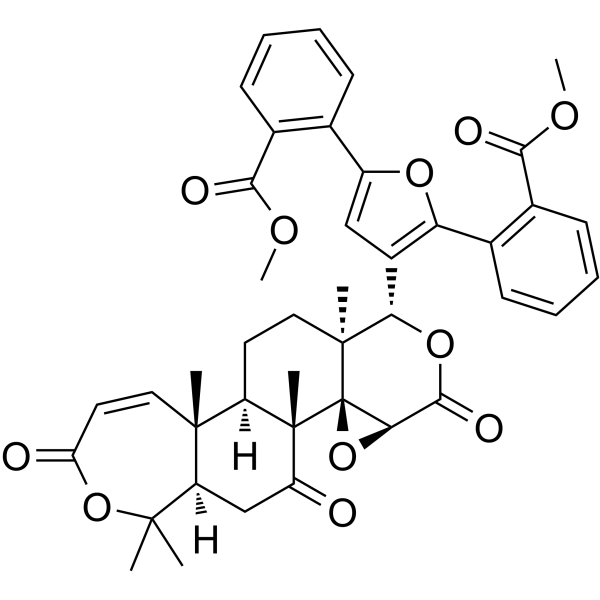
Kalecide
 0 ImagesKalecide is an isobutylamide found in Piper guineense. Kalecide shows insecticidal activity and can be used for insecticide.
-
Thiodicarb
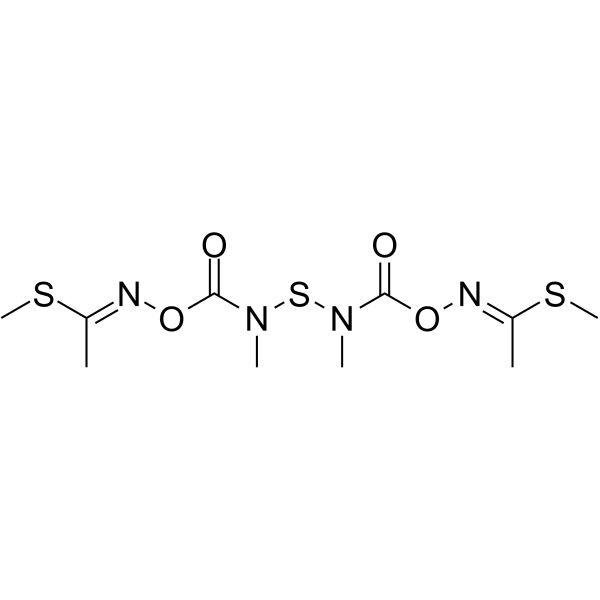 0 ImagesThiodicarb is a carbamate insecticide used to control flies in animal and poultry houses and dairies. Thiodicarb is metabolized into methomyl in animals and plants, and subsequently degraded into carbon dioxide and acetonitrile.

-
Hederacholchiside E
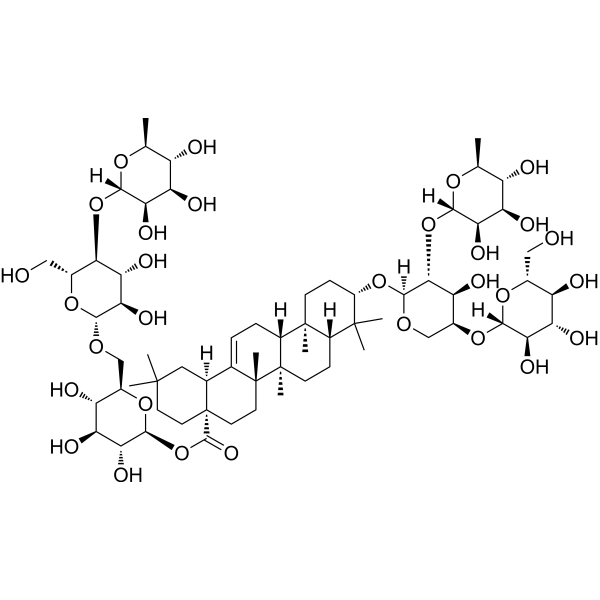 0 ImagesCat. No.: HY-107311CAS No.: 33783-82-3Hederacholchiside E (compound 6) is a kind of saponin. Hederacholchiside E can be isolated from the Anemone raddeana.
-
Spinosyn A aglycone
 0 ImagesCat. No.: HY-155252CAS No.: 149560-97-4Synonyms: (-)-Spinosyn A aglyconSpinosyn A aglycone ((-)-Spinosyn A aglycon) is an aglycone form of the insecticide Spinosyn A (HY-B0767). Spinosyn A aglycone is an acid degradation product produced by hydrolysis of both saccharide groups on spinosyn A.
-
Insecticidal agent 3
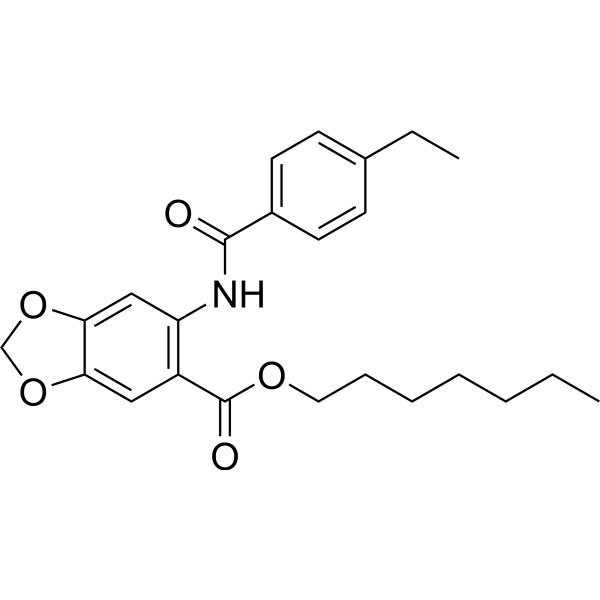 0 ImagesCat. No.: HY-149864Insecticidal agent 3 is a multichitinase inhibitors, belongs to insect growth regulators (IGRs),with Kis of 0.8μM, 11.9 μM, and 2.3 μM for Of ChtI, Of ChtII, and Of Chi-h, respectively. Insecticidal agent 3 exhibits insecticidal activity against two lepidopteran pests by interfering with normal insect growth and molting.
-
Tefluthrin
 0 ImagesCat. No.: HY-W040171CAS No.: 79538-32-2Tefluthrin is a pyrethroid insecticide. Tefluthrin prolongs the opening time of Nav1.6 sodium channels, leading to membrane depolarization and conductance block in the insect nervous system, thereby disrupting neural function.
-
Flumethrin-d5
 0 ImagesCat. No.: HY-107835SSynonyms: FCR 2769-d5Flumethrin-d5 (FCR 2769-d5) is the deuterium labeled Flumethrin (HY-107835). Flumethrin (FCR 2769) is a pyrethroid insecticide and acaricide. Flumethrin targets voltage-gated sodium channels and estrogen receptor α (ERα). Flumethrin induces cytotoxicity, apoptosis, genotoxicity and DNA damage in breast cancer cells by regulating the expression of BCL2, BAX, TP53 and P21 genes. Flumethrin is applicable to relevant studies on ectoparasite infections (tick and flea burdens) in dogs and cats, as well as breast cancer.
-
Dimefluthrin
 0 ImagesCat. No.: HY-135450CAS No.: 271241-14-6Dimefluthrin is an insecticide. Dimefluthrin exhibits contact toxicity against large red imported fire ant workers. Dimefluthrin undergoes horizontal transfer among red imported fire ant workers, causing secondary mortality in recipient workers. Dimefluthrin is a neurodevelopmental toxicant, which can reduces acetylcholinesterase activity, impairing neurotransmitter.
-
Avermectin B2a
 0 ImagesCat. No.: HY-Z8942CAS No.: 65195-57-5Avermectin B2a is an insecticide targeting glutamate-gated chloride channels (GluCls). Avermectin B2a causes hyperpolarization of nematode/insect neurons and subsequent paralysis/death. Avermectin B2a is promising for research of agricultural pests.
-
Juvocimene I
 0 ImagesCat. No.: HY-122530CAS No.: 75539-64-9Juvocimene I is a potent juvenile hormone mimic. Juvocimene I can be isolated from the essential oil of sweet basil,Ocimum basilicum L.
-
Dicyclanil (Standard)
 0 ImagesDicyclanil (Standard) is the analytical standard of Dicyclanil. This product is intended for research and analytical applications. Dicyclanil is an insect growth regulator compound with a similar chemical structure to cyromazine.
-
Clothianidin-d3,13C
 0 ImagesCat. No.: HY-W770250CAS No.: 2714272-22-5Clothianidin-d3,13C1 is the 13C-labeled Clothianidin (HY-133167). Clothianidin is a neonicotinoid insecticide. Clothianidin shows excellent long-term control effect in small doses against various insect pests such as Coleoptera, Thysanoptera, Lepidoptera, Diptera, Homoptera, Heteroptera, Orthoptera and Isoptera families. Clothianidin has various application methods and high safety for crops.
-
Bromocyclen
 0 ImagesBromocyclen is a pesticide found in the muscle tissue of rainbow trout from Danish fisheries and in three species of fish (grill, crucian carp and pike) from the River Stell in northern Germany. High concentrations were detected ranging from 0.09 to 1.23 mg/kg fat.
-
Tebufenozide (Standard)
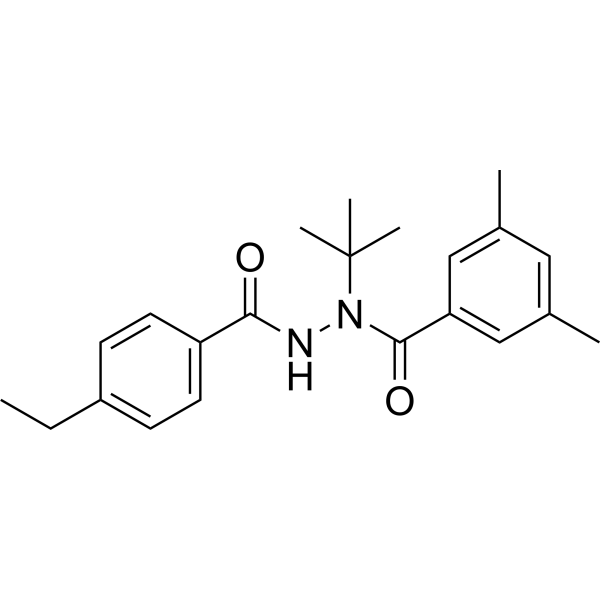 0 ImagesTebufenozide (Standard) is the analytical standard of Tebufenozide (HY-B2054). This product is intended for research and analytical applications. Tebufenozide is a nonsteroidal ecdysone agonist used to control pest. Tebufenozide has cytotoxic and induces apoptosis in HeLa and insect Tn5B1-4 cells.
-
GABA receptor antagonist 3
 0 ImagesCat. No.: HY-184987CAS No.: 3106082-79-2GABA receptor antagonist 3 is a GABA receptor antagonist with insecticidal activity. GABA receptor antagonist 3 binds deeply inside the receptor pore, forms stable interactions with key residues to disrupt channel gating, and inhibits GABA-induced currents. GABA receptor antagonist 3 exhibits insecticidal activity against Spodoptera frugiperda. GABA receptor antagonist 3 can be used in pest control research.
-
Laureatin
 0 ImagesCat. No.: HY-114720CAS No.: 18762-30-6Laureatin is an active product that can be isolated from the marine algae Laurencia nipponica. Laureatin exhibits potent insecticidal activity against mosquitos.
-
Methoxyfenozide-d9
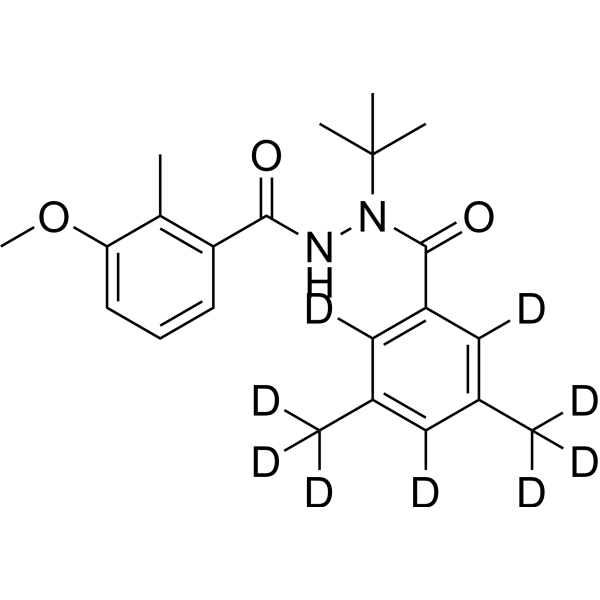 0 ImagesMethoxyfenozide-d9 is the deuterium labeled Methoxyfenozide (HY-117386). Methoxyfenozide is an orally active insecticide belonging to the diacylhydrazine and non-steroidal ecdysone agonist classes, which can interfere with the growth and development of insects. Methoxyfenozide has ovicidal and insecticidal activities against phytophagous pests.
-
1-Undecanol-d4
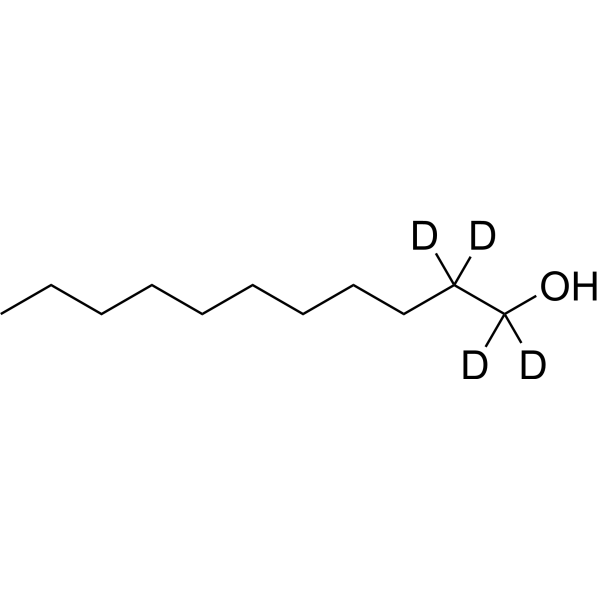 0 ImagesCat. No.: HY-W004292S1CAS No.: 1219803-47-0Synonyms: Undecyl alcohol-d41-Undecanol-d4 (Undecyl alcohol-d4) is the deuterium labeled 1-Undecanol (HY-W004292). 1-Undecanol (Undecyl alcohol) is the main product generated from the degradation of 2-tridecanone by Pseudomonas bacteria isolated from the soil. 1-Undecanol can enhance the attraction of Grapholita molesta to sex pheromone traps.



