



Insecticide
Insecticide
Insecticides refer to any toxic substances used to kill insects, which exert toxic effects on pests through different mechanisms, thereby achieving the purpose of controlling pest populations and protecting crops and human health. Insecticides have both chemical and biological origins and can be classified into organochlorine insecticides, organophosphorus insecticides, carbamate insecticides, and mineral insecticides based on their chemical properties. Insecticides interact with different target and non-target sites, including receptors, enzymes, and many other known and unknown molecules. Most insecticides are neurotoxicants that target the nervous system, but they can also affect other organs and body systems. Insecticides are metabolized through different metabolic pathways and often serve as biomarkers of exposure in the form of their parent compounds or metabolites. The toxicity of insecticides can be acute, subacute, or chronic, depending on the duration of exposure and the dose involved. Therefore, selecting sensitive, accurate, and validated biomarkers of exposure, effects, and susceptibility appears to be a challenging task.
Insecticides are widely used in agriculture, horticulture, forestry, gardening, homes, offices, and other fields[1][2].
All Product Categories
-
Insecticide Related Products (517)
Related Products (517)

-
Esfenvalerate (Standard)
 0 ImagesEsfenvalerate (Standard) is the analytical standard of Esfenvalerate. This product is intended for research and analytical applications. Esfenvalerate is one of the four isomers of the pyrethroid insecticide fenvalerate.
-
Cytosaminomycin D
 0 ImagesCat. No.: HY-N14113CAS No.: 157878-05-2Cytosaminomycin D is an anticoccidial agent that can be isolated from Streptomyces sp. Cytosaminomycin D shows anticoccidial activity at 2.5 μg/mL with a 100% inhibition rate.
-
3-Hydroxy-2-decanone
 0 ImagesCat. No.: HY-N16456CAS No.: 68113-61-13-Hydroxy-2-decanone is a minor component of sex pheromone in Xylotrechus quadripes beetles. 3-Hydroxy-2-decanone is promising for research of pests and diseases.
-
(3E)-4,8-Dimethylnona-1,3,7-triene
 0 ImagesCat. No.: HY-W585885CAS No.: 19945-61-0(3E)-4,8-Dimethylnona-1,3,7-triene, a sesquiterpene, is the major herbivore-induced plant volatile that help in defense directly by acting as repellants and indirectly by recruiting insects' natural enemies. (3E)-4,8-Dimethylnona-1,3,7-triene attractes Asian corn borer (ACB, Ostrinia furnacalis) larvae. External supplementation with (3E)-4,8-Dimethylnona-1,3,7-triene hampered the larvae's ability to locate pre-infested maize.
-
Pyridalyl (Standard)
 0 ImagesCat. No.: HY-119779RCAS No.: 179101-81-6Synonyms: S 1812 (Standard)Pyridalyl (Standard) is the analytical standard of Pyridalyl. This product is intended for research and analytical applications. Pyridalyl (S 1812) is an insecticides against Lepidoptera and Thrips. Pyridalyl is less toxic to some beneficial arthropods, and non-target organisms, such as mammals and fish, and thus be utilized in integrated pest management and resistance management.
-
ZK-PI-5
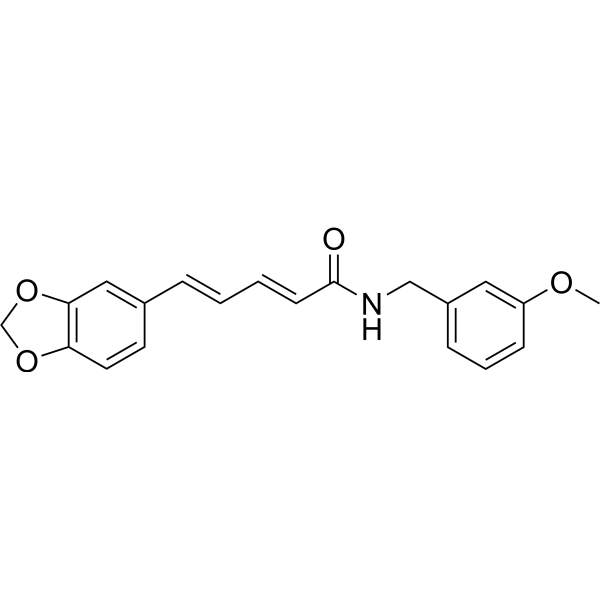 0 ImagesCat. No.: HY-155387ZK-PI-5 is a potent trehalase inhibitor and regulate the reproduction of Spodoptera frugiperda. ZK-PI-5 has the potential to be a new insecticide and has pest control potential.
-
Insecticidal agent 21
 0 ImagesCat. No.: HY-173413CAS No.: 3082443-45-3Insecticidal agent 21 (Compound 6) is an insecticide that is effective against Culex pipiens larvae (LC50: 0.4 μg/mL). Insecticidal agent 21 achieves multi-target neurotoxicity by inhibiting acetylcholinesterase (AChE) and simultaneously targeting other neural receptors (nicotinic acetylcholine receptors (nAChR), voltage-gated sodium channels (VGSC), and γ-aminobutyric acid receptors (GABAAR)). Insecticidal agent 21 has a strong insecticidal effect and can be used in the development of new insecticides to address the problem of mosquito resistance to traditional insecticides.
-
Demeton-S-methyl sulfone
 0 ImagesCat. No.: HY-107852CAS No.: 17040-19-6Demeton-S-methyl sulfone is an organophosphorus insecticide metabolite.Demeton-S-methyl sulfone serves as a substrate for metabolic breakdown.Demeton-S-methyl sulfone forms via oxidation of demeton S-methyl sulfoxide in sugar-beet cell suspension cultures.Demeton-S-methyl sulfone undergoes thioester bond cleavage, producing ethanethiols that convert into S-methylated compounds or S-glucosides.
-
Crufomate
 0 ImagesCrufomate is an organophosphate insecticide. Crufomate is used to control warble fly maggot infections and botfly infestations in dairy cows, and accumulates in milk fat. Crufomate reduces mating responses, conception rates, pup survival rates, and post-weaning body weights of offspring in mice. Crufomate is used in studies related to botfly infestations and gastrointestinal parasitic infections.

-
Zeta-Cypermethrin
 0 ImagesCat. No.: HY-W714852CAS No.: 1315501-18-8Zeta-Cypermethrin is a type II pyrethroid insecticide. Zeta-Cypermethrin primarily acts on voltage-gated sodium channels in nerve cells, causing delayed channel closure, persistent nerve excitation and convulsions. In Drosophila, Zeta-Cypermethrin rapidly induces extremely high metabolic resistance that can be screened, and exhibits in vitro genotoxicity to human peripheral blood lymphocytes.
-
Propetamphos (Standard)
 0 ImagesCat. No.: HY-119525RCAS No.: 31218-83-4Propetamphos (Standard) is the analytical standard of Propetamphos. This product is intended for research and analytical applications. Propetamphos is an organophosphorus insecticide. Propetamphos causes cytotoxicity and oxidative stress.
-
Quercetin 3-O-(2G-β-D-xylopyranosylrutinoside)
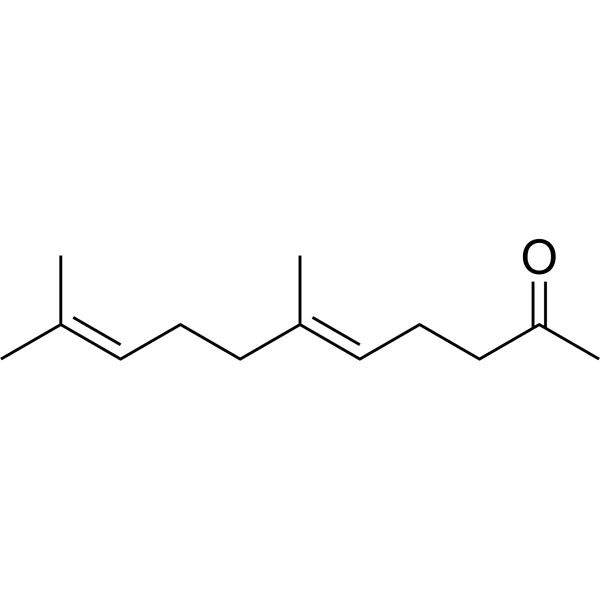
 0 ImagesCat. No.: HY-N17258CAS No.: 129235-39-8Quercetin 3-O-(2G-β-D-xylopyranosylrutinoside) is an oviposition inhibitory factor. Quercetin 3-O-(2G-β-D-xylopyranosylrutinoside) can be isolated from the leaves of Orixa japonica. When presented together with the oviposition stimulant from Citrus unshiu (Satsuma mandarin), Quercetin 3-O-(2G-β-D-xylopyranosylrutinoside) inhibits oviposition by gravid female Papilio xuthus (Asian swallowtail).
-
AI 3-23445
 0 ImagesAI 3-23445 is a compound with environmental toxicity and insecticidal activity, capable of inducing avoidance behavior in Peromyscus maniculatus and Mus musculus. AI 3-23445 can be utilized in agricultural research.

-
(Z)-11-Tetradecenyl acetate
 0 ImagesCat. No.: HY-W108424CAS No.: 20711-10-8(Z)-11-Tetradecenyl acetate is a sex pheromone component and male attractant. (Z)-11-Tetradecenyl acetate triggers strong and stable electrophysiological responses in the antennal sensilla of male Euhyponomeutoides albithoracellus. (Z)-11-Tetradecenyl acetate, when used in combination with (E)-11-tetradecenyl acetate (HY-W1067200), attracts male Euhyponomeutoides albithoracellus. (Z)-11-Tetradecenyl acetate contributes to the development of sustainable pest control strategies including monitoring and mating disruption.
-
Gibepyrone D
 0 ImagesCat. No.: HY-N15498CAS No.: 146446-08-4Gibepyrone D is an α-pyrone compound found in Gibberella fujikuroi and the endophytic fungus Fusarium oxysporum 162. Gibepyrone D exhibits significant lethal activity against nematodes with an LC50 value of 134 μg/mL (72 h) against the J2 larvae of Meloidogyne incognita. Gibepyrone D is promising for research of nematicides.
-
Sclerotigenin
 0 ImagesCat. No.: HY-116812CAS No.: 65641-84-1Sclerotigenin is an anti-insect benzodiazepine compound identified in Penicillium sclerotigenum (NRRL 3461). Sclerotigenin exhibits significant anti-insect activity against crop pest Helicoverpa zea.




