



HMGB1 Antibody (YA361)
(Synonyms: HMG1, HMGB1, High mobility group protein B1, High mobility group protein 1, HMG-1)Based on 2 publication(s) in Google Scholar
HMGB1 Antibody (YA361) is a Rabbit-derived and non-conjugated IgG monoclonal antibody, targeting to HMGB1.
-
Host:
Rabbit
-
Isotype:
IgG
-
Application:
WB, ICC/IF, IHC-P, FC
-
Reactivity :
Human, Mouse, Rat
-
Formulation:
Supplied in 1*TBS (pH7.4), 0.05% BSA and 40% Glycerol. Preservative: 0.05% Sodium Azide.
-
Conjugation:
Non-conjugated


To place orders, for customer services and technical support, please contact: MedChemExpress USA
Tel: 609-228-6898 E-mail: [email protected] [email protected]



-

HY-P8002
AF488-conjugated Goat Anti-Rabbit IgG H&L -
HY-P80043
Calreticulin Antibody (YA571) -

HY-10201
Sorafenib -

HY-K0311
GSH/GSSG Assay Kit -

HY-P73102
HMGB1/HMG-1 Protein, Human (HEK293, Fc) -
HY-P80951
FITC-conjugated Goat Anti-Rabbit IgG H&L -
HY-P80438
Beta Actin Antibody (YA823) -
HY-P80624
Cleaved-Caspase 8 Antibody (YA792) -
HY-P80765
NF-KB p65 Antibody (YA268) -
HY-P80856
Phospho-STAT1 (Tyr701) Antibody
Publications Citing Use of MedChemExpress (MCE) HMGB1 Antibody (YA361)
More

Applications
| Application |
WB

WB: Western Blot
|
ICC/IF
ICC/IF: Immunocytochemistry/
Immunofluorescence |
IHC-P
IHC-P: Immunohistochemistry-Paraffin
|
FC
FC: Flow Cytometry
|
|---|---|---|---|---|
| Dilution Ratio | 1:500-1:5000 | 1:100 | 1:5000 | 1:50 |


Product Details
HMGB1 Antibody (YA361) is a Rabbit-derived and non-conjugated IgG monoclonal antibody, targeting to HMGB1.
-
Host Rabbit

-
Clonality Recombinant,Monoclonal

-
Species ReactivityHuman, Mouse, Rat
-
Observed Molecular WeightObserved band size: 25 kDa
Note: Due to possible protein modifications or aggregation, the molecular weight should be confirmed by actual measurement, and the predicted value is for reference only.

-
Calculated Molecular Weight Predicted band size: 25 kDa

Entrez Gene: 3146 Human ; 100862258 Mouse ; 15289 Mouse ; 25459 Rat
SwissProt: P09429 Human ; P63158 Mouse ; P63159 Rat
OMIM: 163905 Human
Synthetic peptide corresponding to Human HMGB1.AA range:151-200.
Endogenous
Protein A affinity purified.
Non-conjugated
Unmodified
IgG


Product Properties
-
Appearance
Solution
-
Formulation
Supplied in 1*TBS (pH7.4), 0.05% BSA and 40% Glycerol. Preservative: 0.05% Sodium Azide.
-
Concentration
Batch-dependent, Please check the COA for the concentration of each lot. Check Lot Concentration
-
Storage & Stability
Stored at -20°C for 1 year. Avoid repeated freeze / thaw cycles.
-
Shipping
Shipping with blue ice.


Publications (2)
-
Journal Impact Factor
-
Most Recent
-
Mater Today Bio
Sodium butyrate enhances sorafenib-induced ferroptosis and immunogenic cell death by modulating IRF2-Oasl2-cGAS pathway in colorectal cancer. [Abstract]2025 Nov 1:35:102498. PMID: 41281652 -
Biochem Biophys Res Commun
Non-fused ring A-D-A-type dyes for near-infrared II fluorescence imaging guided phototherapy and immune activation of tumour. [Abstract]2026 Jun 16:829:154158. PMID: 42361740


Verification Images
-
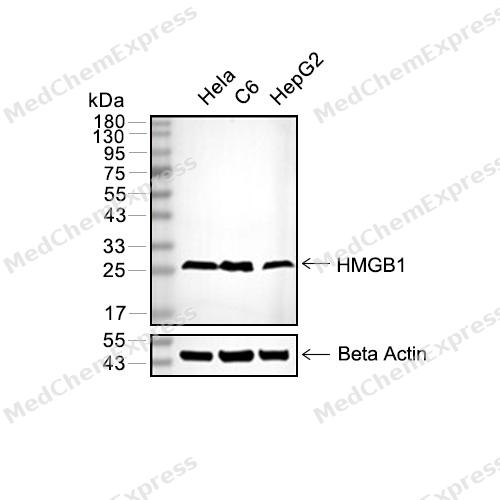 Western blot analysis of extracts from Hela(lane 2(20μg), C6 (lane 3(20μg) and HepG2(lane 4(20μg) using HMGB1 (HY-P80183) Rabbit mAb. Proteins were transferred to a PVDF membrane and blocked with 5% non-fat milk in TBST for 2 hour at room temperature. The primary antibody (1/1000) and Loading control antibody (Beta Actin, HY-P80438, 1/10000) was used in 5% non-fat milk in TBST at 4°C overnight. Goat Anti-Mouse/Rabbit IgG-HRP Secondary Antibody (1/10000) was used for 1 hour at room temperature.
 -
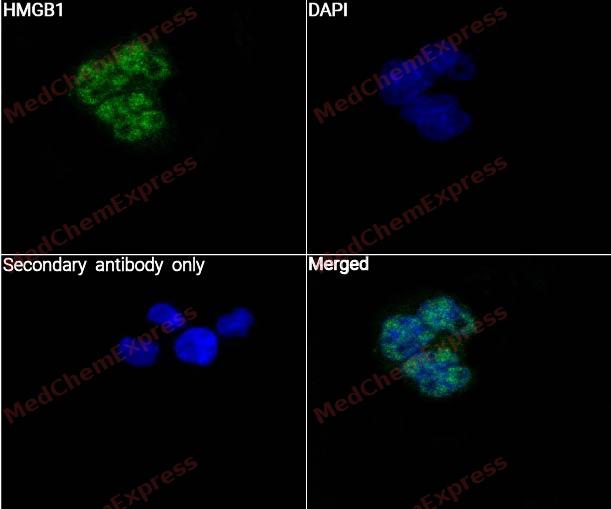 Immunocytochemistry analysis of HELA cells labeling HMGB1 with HMGB1 Antibody (HY-P80183) at 1/50 dilution. Cells were fixed in 4% paraformaldehyde for 15 minutes at room temperature, permeabilized with 0.1% Triton X-100 for 10 minutes at room temperature, then blocked with QuickBlock™ Blocking Buffer for Immunol Staining for 10 min at room temperature. Cells were then incubated with HMGB1 Antibody (HY-P80183) at 1/100 dilution in QuickBlock™ Blocking Buffer for Immunol Staining at 4 ℃. Alexa Fluor® 488-conjugated AffiniPure Goat Anti-Rabbit IgG H&L(HY-P8002, Green) was used as the secondary antibody at 1/1,000 dilution. PBS instead of the primary antibody was used as the secondary antibody only control. The Nuclear counterstain was DAPI (Blue).
 -
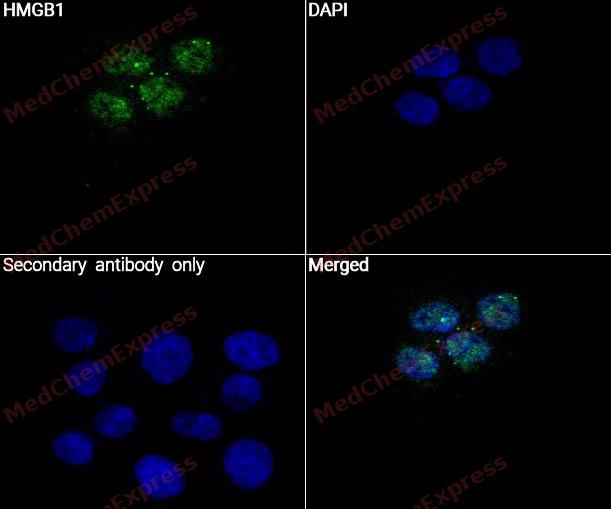 Immunocytochemistry analysis of HELA cells labeling HMGB1 with HMGB1 Antibody (HY-P80183) at 1/100 dilution. Cells were fixed in 4% paraformaldehyde for 15 minutes at room temperature, permeabilized with 0.1% Triton X-100 for 10 minutes at room temperature, then blocked with QuickBlock™ Blocking Buffer for Immunol Staining for 10 min at room temperature. Cells were then incubated with HMGB1 Antibody (HY-P80183) at 1/100 dilution in QuickBlock™ Blocking Buffer for Immunol Staining at 4 ℃. Alexa Fluor® 488-conjugated AffiniPure Goat Anti-Rabbit IgG H&L(HY-P8002, Green) was used as the secondary antibody at 1/1,000 dilution. PBS instead of the primary antibody was used as the secondary antibody only control. The Nuclear counterstain was DAPI (Blue).
 -
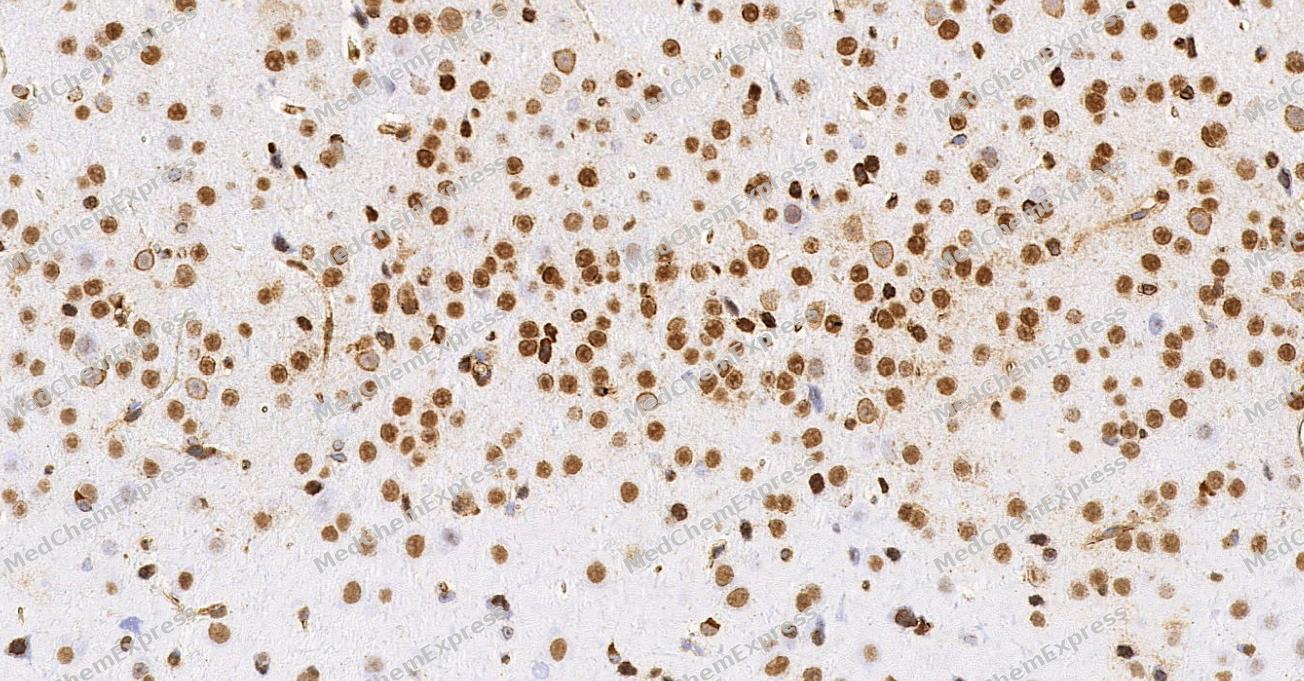 Immunohistochemical analysis of paraffin-embedded Mouse brain tissue using HMGB1 Antibody. The section was pre-treated using heat mediated antigen retrieval with sodium citrate buffer (pH 6.0) for 8 minutes. The tissues were blocked in QuickBlock for 20 minutes at room temperature, washed with ddH2O and PBS, and then probed with the primary antibody (HY-P80183, 1/5000) in 4℃ overnight. The detection was performed using an HRP conjugated compact polymer system. DAB was used as the chromogen. Tissues were counterstained with hematoxylin and mounted with DPX.
 -
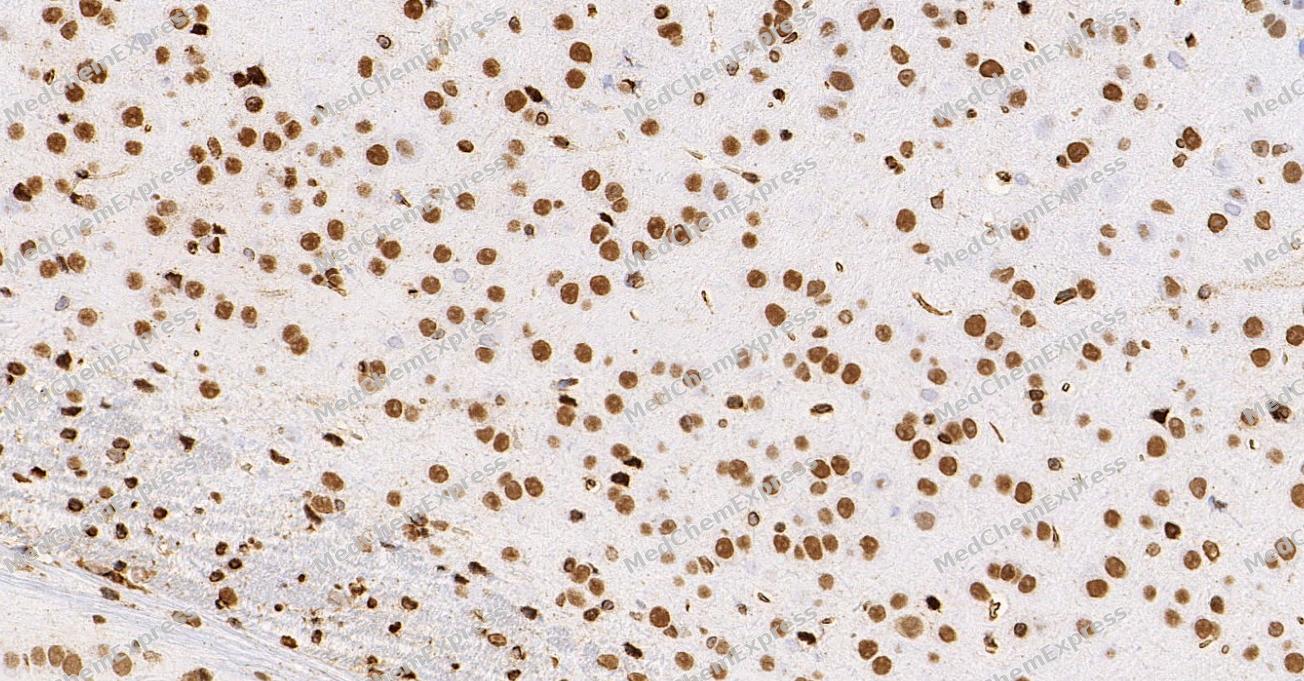 Immunohistochemical analysis of paraffin-embedded Mouse brain tissue using HMGB1 Antibody. The section was pre-treated using heat mediated antigen retrieval with sodium citrate buffer (pH 6.0) for 8 minutes. The tissues were blocked in QuickBlock for 20 minutes at room temperature, washed with ddH2O and PBS, and then probed with the primary antibody (HY-P80183, 1/5000) in 4℃ overnight. The detection was performed using an HRP conjugated compact polymer system. DAB was used as the chromogen. Tissues were counterstained with hematoxylin and mounted with DPX.
 -
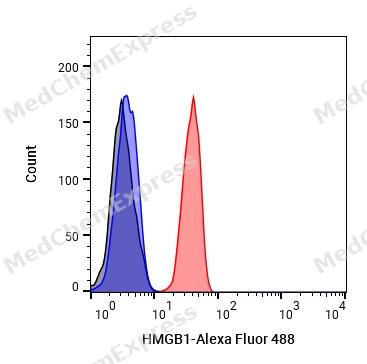 Flow cytometric analysis of 1X10^6 Hela cells labeling HMGB1 Antibody (HY-P80183, red). Cells were fixed with 4% paraformaldehyde and permeabilised with 90% methanol. Then stained with the primary antibody at 1/50 dilution for an hour at 4℃. Alexa Fluor® 488-conjugated AffiniPure Goat Anti-Rabbit IgG H&L (HY-P8002) was used as the secondary antibody at 1/1,000 dilution for 30 minutes at 4℃. Rabbit IgG Isotype Control (HY-P80879, blue) was used as the isotype control, cells without incubation with primary antibody were used as the unlabeled control (black).


Background
-
Function
HMGB1 multifunctional redox sensitive protein with various roles in different cellular compartments. In the nucleus is one of the major chromatin-associated non-histone proteins and acts as a DNA chaperone involved in replication, transcription, chromatin remodeling, V(D)J recombination, DNA repair and genome stability. Proposed to be an universal biosensor for nucleic acids. Promotes host inflammatory response to sterile and infectious signals and is involved in the coordination and integration of innate and adaptive immune responses. In the cytoplasm functions as a sensor and/or chaperone for immunogenic nucleic acids implicating the activation of TLR9-mediated immune responses, and mediates autophagy. Acts as a danger-associated molecular pattern (DAMP) molecule that amplifies immune responses during tissue injury. Released to the extracellular environment can bind DNA, nucleosomes, IL-1 beta, CXCL12, AGER isoform 2/sRAGE, lipopolysaccharide (LPS) and lipoteichoic acid (LTA), and activates cells through engagement of multiple surface receptors. In the extracellular compartment fully reduced HMGB1 (released by necrosis) acts as a chemokine, disulfide HMGB1 (actively secreted) as a cytokine, and sulfonyl HMGB1 (released from apoptotic cells) promotes immunological tolerance. Has proangiogdenic activity. May be involved in platelet activation. Binds to phosphatidylserine and phosphatidylethanolamide. Bound to RAGE mediates signaling for neuronal outgrowth. May play a role in accumulation of expanded polyglutamine (polyQ) proteins such as huntingtin (HTT) or TBP; Nuclear functions are attributed to fully reduced HGMB1. Associates with chromatin and binds DNA with a preference to non-canonical DNA structures such as single-stranded DNA, DNA-containing cruciforms or bent structures, supercoiled DNA and ZDNA. Can bent DNA and enhance DNA flexibility by looping thus providing a mechanism to promote activities on various gene promoters by enhancing transcription factor binding and/or bringing distant regulatory sequences into close proximity. May have an enhancing role in nucleotide excision repair (NER). However, effects in NER using in vitro systems have been reported conflictingly. May be involved in mismatch repair (MMR) and base excision repair (BER) pathways. May be involved in double strand break repair such as non-homologous end joining (NHEJ). Involved in V(D)J recombination by acting as a cofactor of the RAG complex: acts by stimulating cleavage and RAG protein binding at the 23 bp spacer of conserved recombination signal sequences (RSS). In vitro can displace histone H1 from highly bent DNA. Can restructure the canonical nucleosome leading to relaxation of structural constraints for transcription factor-binding. Enhances binding of sterol regulatory element-binding proteins (SREBPs) such as SREBF1 to their cognate DNA sequences and increases their transcriptional activities. Facilitates binding of TP53 to DNA. Proposed to be involved in mitochondrial quality control and autophagy in a transcription-dependent fashion implicating HSPB1; however, this function has been questioned. Can modulate the activity of the telomerase complex and may be involved in telomere maintenance; In the cytoplasm proposed to dissociate the BECN1:BCL2 complex via competitive interaction with BECN1 leading to autophagy activation. Involved in oxidative stress-mediated autophagy. Can protect BECN1 and ATG5 from calpain-mediated cleavage and thus proposed to control their proautophagic and proapoptotic functions and to regulate the extent and severity of inflammation-associated cellular injury. In myeloid cells has a protective role against endotoxemia and bacterial infection by promoting autophagy. Involved in endosomal translocation and activation of TLR9 in response to CpG-DNA in macrophages; In the extracellular compartment (following either active secretion or passive release) involved in regulation of the inflammatory response. Fully reduced HGMB1 (which subsequently gets oxidized after release) in association with CXCL12 mediates the recruitment of inflammatory cells during the initial phase of tissue injury; the CXCL12:HMGB1 complex triggers CXCR4 homodimerization. Induces the migration of monocyte-derived immature dendritic cells and seems to regulate adhesive and migratory functions of neutrophils implicating AGER/RAGE and ITGAM. Can bind to various types of DNA and RNA including microbial unmethylated CpG-DNA to enhance the innate immune response to nucleic acids. Proposed to act in promiscuous DNA/RNA sensing which cooperates with subsequent discriminative sensing by specific pattern recognition receptors. Promotes extracellular DNA-induced AIM2 inflammasome activation implicating AGER/RAGE. Disulfide HMGB1 binds to transmembrane receptors, such as AGER/RAGE, TLR2, TLR4 and probably TREM1, thus activating their signal transduction pathways. Mediates the release of cytokines/chemokines such as TNF, IL-1, IL-6, IL-8, CCL2, CCL3, CCL4 and CXCL10. Promotes secretion of interferon-gamma by macrophage-stimulated natural killer (NK) cells in concert with other cytokines like IL-2 or IL-12. TLR4 is proposed to be the primary receptor promoting macrophage activation and signaling through TLR4 seems to implicate LY96/MD-2. In bacterial LPS- or LTA-mediated inflammatory responses binds to the endotoxins and transfers them to CD14 for signaling to the respective TLR4:LY96 and TLR2 complexes. Contributes to tumor proliferation by association with ACER/RAGE. Can bind to IL1-beta and signals through the IL1R1:IL1RAP receptor complex. Binding to class A CpG activates cytokine production in plasmacytoid dendritic cells implicating TLR9, MYD88 and AGER/RAGE and can activate autoreactive B cells. Via HMGB1-containing chromatin immune complexes may also promote B cell responses to endogenous TLR9 ligands through a B-cell receptor (BCR)-dependent and ACER/RAGE-independent mechanism. Inhibits phagocytosis of apoptotic cells by macrophages; the function is dependent on poly-ADP-ribosylation and involves binding to phosphatidylserine on the cell surface of apoptotic cells. In adaptive immunity may be involved in enhancing immunity through activation of effector T cells and suppression of regulatory T (TReg) cells. In contrast, without implicating effector or regulatory T-cells, required for tumor infiltration and activation of T-cells expressing the lymphotoxin LTA:LTB heterotrimer thus promoting tumor malignant progression. Also reported to limit proliferation of T-cells. Released HMGB1:nucleosome complexes formed during apoptosis can signal through TLR2 to induce cytokine production. Involved in induction of immunological tolerance by apoptotic cells; its pro-inflammatory activities when released by apoptotic cells are neutralized by reactive oxygen species (ROS)-dependent oxidation specifically on Cys-106. During macrophage activation by activated lymphocyte-derived self apoptotic DNA (ALD-DNA) promotes recruitment of ALD-DNA to endosomes; (Microbial infection) Critical for entry of human coronaviruses SARS-CoV and SARS-CoV-2, as well as human coronavirus NL63/HCoV-NL63. Regulates the expression of the pro-viral genes ACE2 and CTSL through chromatin modulation. Required for SARS-CoV-2 ORF3A-induced reticulophagy which induces endoplasmic reticulum stress and inflammatory responses and facilitates viral infection; (Microbial infection) Associates with the influenza A viral protein NP in the nucleus of infected cells, promoting viral growth and enhancing the activity of the viral polymerase; (Microbial infection) Promotes Epstein-Barr virus (EBV) latent-to-lytic switch by sustaining the expression of the viral transcription factor BZLF1 that acts as a molecular switch to induce the transition from the latent to the lytic or productive phase of the virus cycle. Mechanistically, participates in EBV reactivation through the NLRP3 inflammasome; (Microbial infection) Facilitates dengue virus propagation via interaction with the untranslated regions of viral genome. In turn, this interaction with viral RNA may regulate secondary structure of dengue RNA thus facilitating its recognition by the replication complex[1][2][3][4][5][6][7][8][9][10][11][12][13][14][15][16][17][18][19][20][21][22][23][24][25][26][27][28][29][30][31][32][33][34].
-
Subcellular Localization
Nucleus; Chromosome; Cytoplasm; Secreted; Cell membrane; Peripheral membrane protein; Extracellular side; Endosome; Endoplasmic reticulum-Golgi intermediate compartment; Endoplasmic reticulum
-
Expression
Tissue_specificity:Widely present. Expressed in platelets (PubMed: 11154118)
Induction: (Microbial infection) Protein levels increase upon infection by human coronavirus SARS-CoV-2 -
Subunit
Interacts (fully reduced HMGB1) with CXCL12; probably in a 1:2 ratio involving two molecules of CXCL12, each interacting with one HMG box of HMGB1; inhibited by glycyrrhizin (PubMed:22370717).
-
SwissProt ID
-
Synonyms
HMG1, HMGB1, High mobility group protein B1, High mobility group protein 1, HMG-1
-
Research Field
Epigenetics and Nuclear Signaling
Documentation
-
Data Sheet (269 KB)
-
SDS (251 KB)
- English - EN (251 KB)
- Français - FR (251 KB)
- Deutsch - DE (251 KB)
- Norwegian - NO (251 KB)
- Español - ES (251 KB)
- Swedish - SV (251 KB)
- Italian - IT (251 KB)
- Korean - KR (251 KB)
- Portuguese - PT (251 KB)
-
User Guide for Antibodies (1077 KB)
References
[1]. Wei J, et al. Genome-wide CRISPR Screens Reveal Host Factors Critical for SARS-CoV-2 Infection. Cell. 2021 Jan 7;184(1):76-91.e13. [Content Brief]
[2]. Avgousti DC, et al. A core viral protein binds host nucleosomes to sequester immune danger signals. Nature. 2016 Jul 7;535(7610):173-7. [Content Brief]
[3]. Wang G, et al. LPS-induced macrophage HMGB1-loaded extracellular vesicles trigger hepatocyte pyroptosis by activating the NLRP3 inflammasome. Cell Death Discov. 2021 Nov 6;7(1):337. [Content Brief]
[4]. Yang H, et al. The many faces of HMGB1: molecular structure-functional activity in inflammation, apoptosis, and chemotaxis. J Leukoc Biol. 2013 Jun;93(6):865-73. [Content Brief]
[5]. Li G, et al. HMGB1: The Central Cytokine for All Lymphoid Cells. Front Immunol. 2013;4:68. [Content Brief]
[6]. Li G, et al. Ménage à Trois in stress: DAMPs, redox and autophagy. Semin Cancer Biol. 2013 Oct;23(5):380-90. [Content Brief]
[7]. Lee SA, et al. The role of high mobility group box 1 in innate immunity. Yonsei Med J. 2014 Sep;55(5):1165-76. [Content Brief]
[8]. Min HJ, et al. Chaperone-like activity of high-mobility group box 1 protein and its role in reducing the formation of polyglutamine aggregates. J Immunol. 2013 Feb 15;190(4):1797-806. [Content Brief]
[9]. Lee LC, et al. Role of high mobility group box 1 (HMGB1) in SCA17 pathogenesis. PLoS One. 2014;9(12):e115809. [Content Brief]
[10]. Stros M, et al. HMGB proteins: interactions with DNA and chromatin. Biochim Biophys Acta. 2010 Jan-Feb;1799(1-2):101-13. [Content Brief]
[11]. Lange SS, et al. HMGB1: the jack-of-all-trades protein is a master DNA repair mechanic. Mol Carcinog. 2009 Jul;48(7):571-80. [Content Brief]
[12]. Lange SS, et al. Human HMGB1 directly facilitates interactions between nucleotide excision repair proteins on triplex-directed psoralen interstrand crosslinks. DNA Repair (Amst). 2009 Jul 4;8(7):865-72. [Content Brief]
[13]. Yuan F, et al. Evidence for involvement of HMGB1 protein in human DNA mismatch repair. J Biol Chem. 2004 May 14;279(20):20935-40. [Content Brief]
[14]. Zhang Y, et al. Reconstitution of 5'-directed human mismatch repair in a purified system. Cell. 2005 Sep 9;122(5):693-705. [Content Brief]
[15]. Prasad R, et al. HMGB1 is a cofactor in mammalian base excision repair. Mol Cell. 2007 Sep 7;27(5):829-41. [Content Brief]
[16]. Rowell JP, et al. HMGB1-facilitated p53 DNA binding occurs via HMG-Box/p53 transactivation domain interaction, regulated by the acidic tail. Structure. 2012 Dec 5;20(12):2014-24. [Content Brief]
[17]. Tang D, et al. Endogenous HMGB1 regulates autophagy. J Cell Biol. 2010 Sep 6;190(5):881-92. [Content Brief]
[18]. Tang D, et al. High mobility group box 1 (HMGB1) activates an autophagic response to oxidative stress. Antioxid Redox Signal. 2011 Oct 15;15(8):2185-95. [Content Brief]
[19]. Schiraldi M, et al. HMGB1 promotes recruitment of inflammatory cells to damaged tissues by forming a complex with CXCL12 and signaling via CXCR4. J Exp Med. 2012 Mar 12;209(3):551-63. [Content Brief]
[20]. Liu L, et al. HMGB1-DNA complex-induced autophagy limits AIM2 inflammasome activation through RAGE. Biochem Biophys Res Commun. 2014 Jul 18;450(1):851-6. [Content Brief]
[21]. Li J, et al. Structural basis for the proinflammatory cytokine activity of high mobility group box 1. Mol Med. 2003 Jan-Feb;9(1-2):37-45. [Content Brief]
[22]. Youn JH, et al. High mobility group box 1 protein binding to lipopolysaccharide facilitates transfer of lipopolysaccharide to CD14 and enhances lipopolysaccharide-mediated TNF-alpha production in human monocytes. J Immunol. 2008 Apr 1;180(7):5067-74. [Content Brief]
[23]. Chen GY, et al. CD24 and Siglec-10 selectively repress tissue damage-induced immune responses. Science. 2009 Mar 27;323(5922):1722-5. [Content Brief]
[24]. Yang H, et al. A critical cysteine is required for HMGB1 binding to Toll-like receptor 4 and activation of macrophage cytokine release. Proc Natl Acad Sci U S A. 2010 Jun 29;107(26):11942-7. [Content Brief]
[25]. LeBlanc PM, et al. An immunogenic peptide in the A-box of HMGB1 protein reverses apoptosis-induced tolerance through RAGE receptor. J Biol Chem. 2014 Mar 14;289(11):7777-86. [Content Brief]
[26]. DeMarco RA, et al. Monocytes promote natural killer cell interferon gamma production in response to the endogenous danger signal HMGB1. Mol Immunol. 2005 Feb;42(4):433-44. [Content Brief]
[27]. Youn JH, et al. Identification of lipopolysaccharide-binding peptide regions within HMGB1 and their effects on subclinical endotoxemia in a mouse model. Eur J Immunol. 2011 Sep;41(9):2753-62. [Content Brief]
[28]. Kwak MS, et al. HMGB1 Binds to Lipoteichoic Acid and Enhances TNF-α and IL-6 Production through HMGB1-Mediated Transfer of Lipoteichoic Acid to CD14 and TLR2. J Innate Immun. 2015;7(4):405-16. [Content Brief]
[29]. Sha Y, et al. HMGB1 develops enhanced proinflammatory activity by binding to cytokines. J Immunol. 2008 Feb 15;180(4):2531-7. [Content Brief]
[30]. Dumitriu IE, et al. Release of high mobility group box 1 by dendritic cells controls T cell activation via the receptor for advanced glycation end products. J Immunol. 2005 Jun 15;174(12):7506-15. [Content Brief]
[31]. Wild CA, et al. HMGB1 conveys immunosuppressive characteristics on regulatory and conventional T cells. Int Immunol. 2012 Aug;24(8):485-94. [Content Brief]
[32]. Urbonaviciute V, et al. Induction of inflammatory and immune responses by HMGB1-nucleosome complexes: implications for the pathogenesis of SLE. J Exp Med. 2008 Dec 22;205(13):3007-18. [Content Brief]
[33]. Kazama H, et al. Induction of immunological tolerance by apoptotic cells requires caspase-dependent oxidation of high-mobility group box-1 protein. Immunity. 2008 Jul 18;29(1):21-32. [Content Brief]
[34]. Zhang X, et al. SARS-CoV-2 ORF3a induces RETREG1/FAM134B-dependent reticulophagy and triggers sequential ER stress and inflammatory responses during SARS-CoV-2 infection. Autophagy. 2022 Nov;18(11):2576-2592. [Content Brief]

 Powered by Bioz
