



Broxyquinoline
Based on 2 publication(s) in Google Scholar
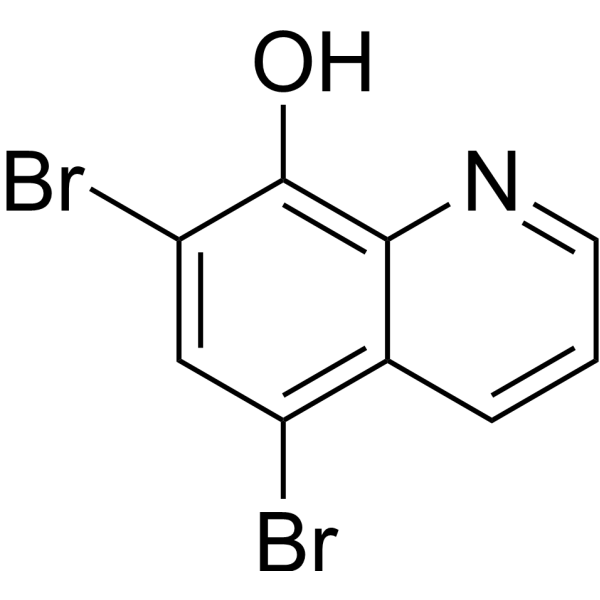
Broxyquinoline (Dibromohydroxyquinoline) is an effective inhibitor of severe fever with thrombocytopenia syndrome virus (SFTSV) with an IC50 of 5.8 µM. Additionally, Broxyquinoline is an inhibitor of CpACBP1 with an IC50 of 64.9 μM. CpACBP1 is a fatty acyl-CoA binding protein of Cryptosporidium parvum, thus Broxyquinoline has the potential to inhibit parasite growth. Broxyquinoline shows promise for research in the field of infectious diseases.
Nur für Forschungszwecke. Wir verkaufen nicht an Patienten.
- Reinheit : 99.74%
- CAS. Nr.: 521-74-4
- Formel: C9H5Br2NO
- Molecular Weight:302.95
-
Speicherung:
4°C, protect from light
* In solvent : -80°C, 6 months; -20°C, 1 month (protect from light)

To place orders, for customer services and technical support, please contact: MedChemExpress USA
Tel: 609-228-6898 E-mail: [email protected] [email protected]


-
 Biologische Aktivität
-
Chemical Information
-
Lösungsmittel & Löslichkeit
- Protokoll
- Reinheit & Dokumentation
- Verweise
-
 Help & FAQs


-
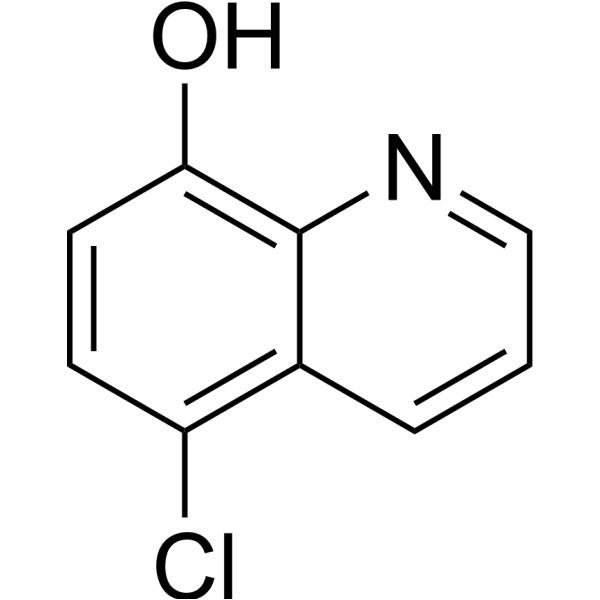
HY-B0963
CloxiquineBacterial/Fungal Inhibitor -
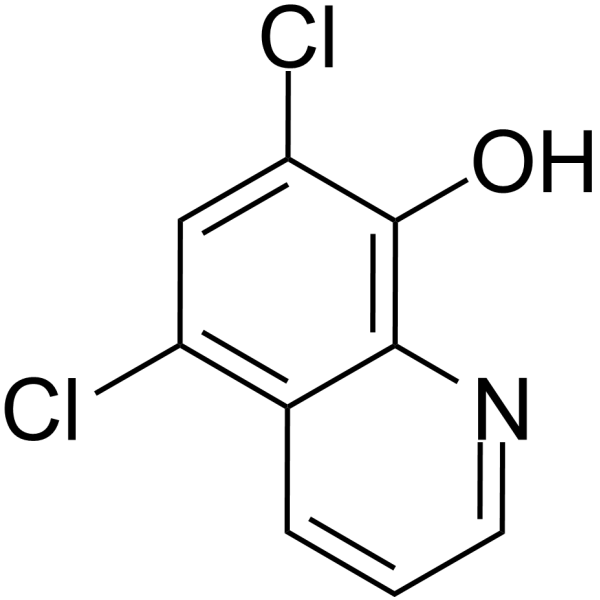
HY-B0295
ChloroxineBacterial Inhibitor -

HY-59299
3-BromothiopheneHalogenated thiophene -
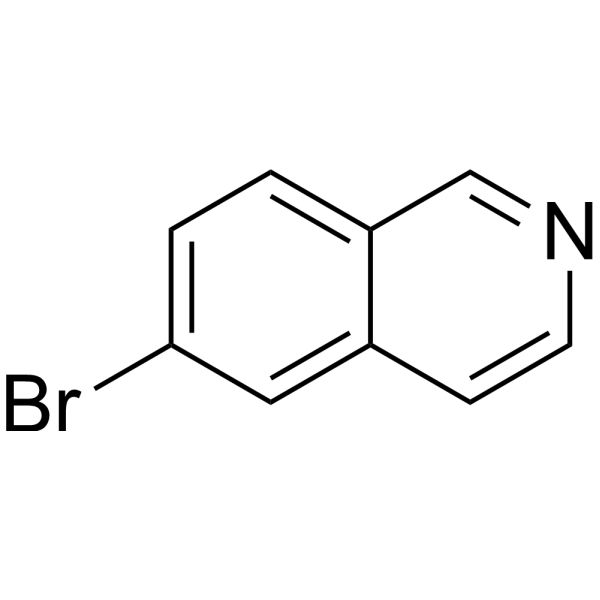
HY-69092
6-BromoisoquinolineBiochemical Reagent -
HY-W014666
Xanthurenic acid -

HY-B0963R
Cloxiquine (Standard)Bacterial/Fungal Inhibitor -
HY-W014666R
Xanthurenic acid (Standard) -
HY-W004432
7-BromoquinolineBiochemical Reagent -
HY-W007403
6-BromoquinolineBiochemical Reagent -
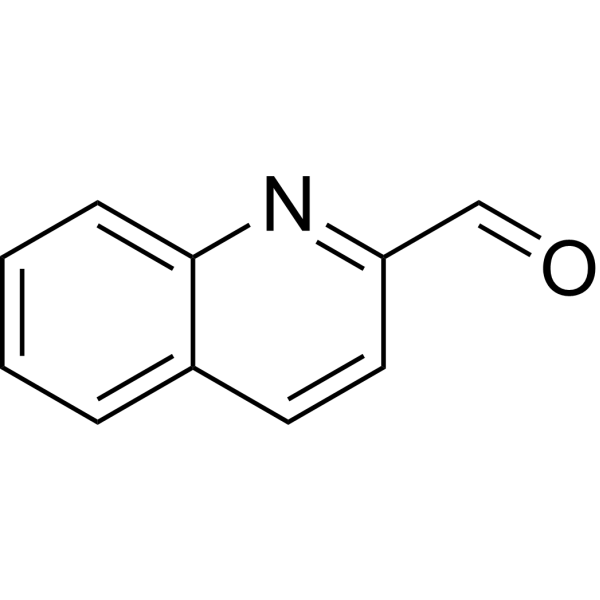
HY-W008168
Quinoline-2-carboxaldehydeDrug Intermediate -
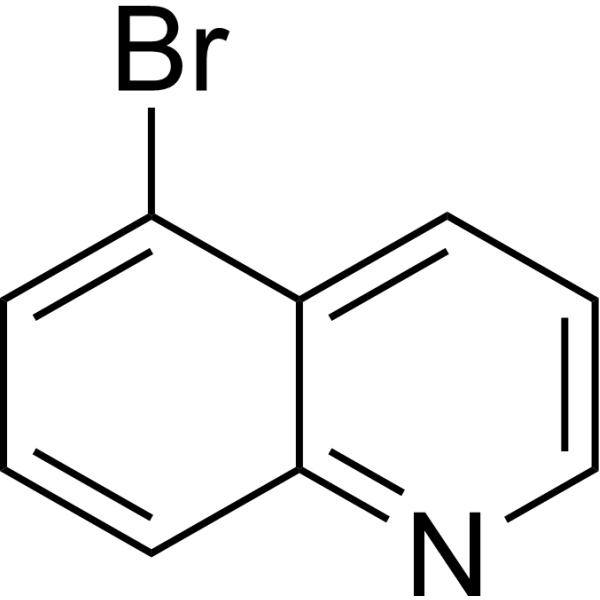
HY-W002559
5-BromoquinolineBiochemical Reagent -
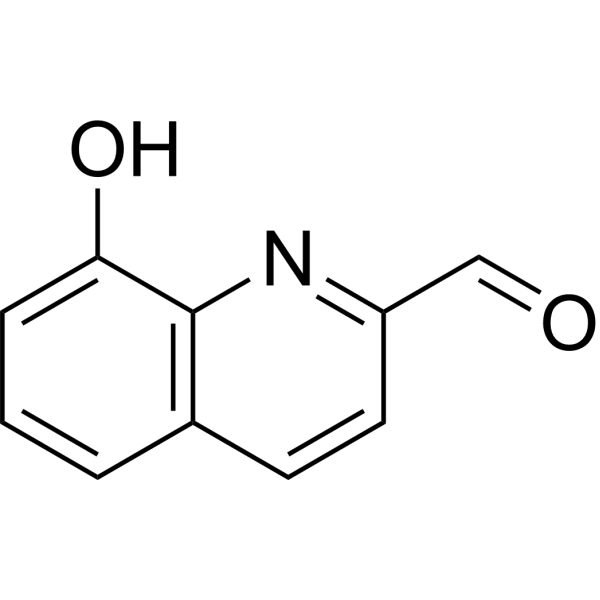
HY-W016840
8-Hydroxyquinoline-2-carbaldehydeBiochemical Assay Reagents
Publications Citing Use of MedChemExpress (MCE) Broxyquinoline
MoreAlle Parasite Isoform-spezifische Produkte anzeigen
More

Biologische Aktivität
Beschreibung
In Vitro
Broxyquinoline (1 mM, 10 μM, 44 h) has almost no active effect on Human ileocaecal colorectal adenocarcinoma (HCT-8) cells[1]. Broxyquinoline (0-1.0 mM, 44 h) exhibits antiparasitic activity in vitro[1]. Broxyquinoline (10 μM, 72 h) does not show significant toxicity to Vero cells and exhibits activity against severe fever with thrombocytopenia syndrome virus (SFTSV) [2].
MedChemExpress (MCE) has not independently confirmed the accuracy of these methods. They are for reference only. Further protocols information, click here.
-
Cell Line:Human ileocaecal colorectal adenocarcinoma (HCT-8) cells
-
Concentration:1 mM, 10 μM
-
Incubation Time:44 h
-
Result:Did not exhibit inhibitory effects on Human ileocaecal colorectal adenocarcinoma (HCT-8) cells at both high concentration (1 mM) and low concentration (10 μM).
-
Cell Line:Vero cells
-
Concentration:10 μM
-
Incubation Time:72 h
-
Result:Did not exhibit significant inhibitory effects on Vero cells.
In Vivo
MedChemExpress (MCE) has not independently confirmed the accuracy of these methods. They are for reference only.


Chemical Information
-
CAS. Nr. 521-74-4
-
Appearance Solid
-
Molecular Weight 302.95
-
Formel C9H5Br2NO
-
Color Yellow to brown
-
SMILES
OC1=C2N=CC=CC2=C(Br)C=C1Br
-
Synonyms
Dibromohydroxyquinoline; 5,7-Dibromo-8-hydroxyquinoline
-
Versand
Room temperature in continental US; may vary elsewhere.
-
Speicherung
4°C, protect from light
* In solvent : -80°C, 6 months; -20°C, 1 month (protect from light)


Publications (2)
-
Journal Impact Factor
-
Most Recent
-
Viruses
Screening of an FDA-Approved Drug Library with a Two-Tier System Identifies an Entry Inhibitor of Severe Fever with Thrombocytopenia Syndrome Virus. [Abstract]2019 Apr 25;11(4):385. PMID: 31027241 -
J Mycol Med
Novel antifungal activity of broxyquinoline against ITC-Resistant mutants via inhibition of methionine aminopeptidase in Aspergillus fumigatus. [Abstract]2025 Sep 2;35(4):101577. PMID: 40957269


Lösungsmittel & Löslichkeit
In Vitro:
DMSO : 31.25 mg/mL (103.15 mM; Need ultrasonic; Hygroscopic DMSO has a significant impact on the solubility of product, please use newly opened DMSO)
H2O : < 0.1 mg/mL (insoluble)
Please refer to the solubility information to select the appropriate solvent. Once prepared, please aliquot and store the solution to prevent product inactivation from repeated freeze-thaw cycles.
Storage method and period of stock solution: -80°C, 6 months; -20°C, 1 month (protect from light). When stored at -80°C, please use it within 6 months. When stored at -20°C, please use it within 1 month.
Please refer to the solubility information to select the appropriate solvent. Once prepared, please aliquot and store the solution to prevent product inactivation from repeated freeze-thaw cycles.
Storage method and period of stock solution: -80°C, 6 months; -20°C, 1 month (protect from light). When stored at -80°C, please use it within 6 months. When stored at -20°C, please use it within 1 month.
Konzentration (Stammlösung) × Volumen (Stammlösung) = Konzentration (Ziellösung) × Volumen (Ziellösung)
In Vivo:
Select the appropriate dissolution method based on your experimental animal and administration route.
- For the following dissolution methods, please ensure to first prepare a clear stock solution using an In Vitro approach and then sequentially add co-solvents:
- To ensure reliable experimental results, the clarified stock solution can be appropriately stored based on storage conditions. As for the working solution for In Vivo experiments, it is recommended to prepare freshly and use it on the same day.
- The percentages shown for the solvents indicate their volumetric ratio in the final prepared solution. If precipitation or phase separation occurs during preparation, heat and/or sonication can be used to aid dissolution.
Add each solvent one by one: 10% DMSO 40% PEG300 5% Tween-80 45% Saline
Solubility: 2.08 mg/mL (6.87 mM); Suspended solution; Need ultrasonic
This protocol yields a suspended solution of 2.08 mg/mL. Suspended solution can be used for oral and intraperitoneal injection.
Taking 1 mL working solution as an example, add 100 μL DMSO stock solution (20.8 mg/mL) to 400 μL PEG300, and mix evenly; then add 50 μL Tween-80 and mix evenly; then add 450 μL Saline to adjust the volume to 1 mL.
Preparation of Saline: Dissolve 0.9 g sodium chloride in ddH₂O and dilute to 100 mL to obtain a clear Saline solution.
In Vivo Dissolution Calculator
Please enter the basic information of animal experiments:
-
-
-
-
Recommended: Prepare an additional quantity of animals to account for potential losses during experiments.
Please enter your animal formula composition:
-
%DMSO +
Recommended: Keep the proportion of DMSO in working solution below 2% if your animal is weak.
-
%+
-
+%Tween-80 + +
-
%Saline +
The co-solvents required include: DMSO, . All of co-solvents are available by MedChemExpress (MCE). , Tween 80. All of co-solvents are available by MedChemExpress (MCE).
Working solution concentration: 0.22 mg/mL
Method for preparing stock solution: mg drug dissolved in μL DMSO. Stock solution concentration: mg/mL. * In solvent : -80°C, 6 months; -20°C, 1 month (protect from light)
1. Take μL DMSO stock solution;
2. Add μL .
μL , mix evenly;
3. Then add μL Tween 80, mix evenly;
4. Then add μL
Please ensure that the stock solution in the first step is dissolved to a clear state, and add co-solvents in sequence. You can use ultrasonic heating (ultrasonic cleaner, recommended frequency 20-40 kHz), vortexing, etc. to assist dissolution.

Protokoll
-
Cell Cytotoxicity Assay
Cytotoxicity assays are usually based on the assessment of cell membrane damage, which can also be indirectly detected by measuring cell viability. Detection methods include MTT assay, CKK-8 assay, LDH assay and ATP assay, etc.


Reinheit & Dokumentation
-
Data Sheet (279 KB)
-
SDS (393 KB)
- English - EN (393 KB)
- Français - FR (393 KB)
- Deutsch - DE (393 KB)
- Norwegian - NO (393 KB)
- Español - ES (393 KB)
- Swedish - SV (393 KB)
- Italian - IT (393 KB)
- Korean - KR (393 KB)
- Portuguese - PT (393 KB)
-
Handling Instructions (2659 KB)
Verweise
[1]. Shuofeng Yuan, et al. Screening of an FDA-Approved Drug Library with a Two-Tier System Identifies an Entry Inhibitor of Severe Fever with Thrombocytopenia Syndrome Virus. Viruses. 2019 Apr 25;11(4):385. [Content Brief]
[2]. Fritzler JM, et al. Novel anti-Cryptosporidium activity of known drugs identified by high-throughput screening against parasite fatty acyl-CoA binding protein (ACBP). J Antimicrob Chemother. 2012 Mar;67(3):609-17. [Content Brief]


Complete Stock Solution Preparation Table
Please refer to the solubility information to select the appropriate solvent. Once prepared, please aliquot and store the solution to prevent product inactivation from repeated freeze-thaw cycles.
Storage method and period of stock solution: -80°C, 6 months; -20°C, 1 month (protect from light). When stored at -80°C, please use it within 6 months. When stored at -20°C, please use it within 1 month.
| Optional Solvent | Concentration Solvent Mass | 1 mg | 5 mg | 10 mg | 25 mg |
|---|---|---|---|---|---|
| DMSO | 1 mM | 3.3009 mL | 16.5044 mL | 33.0087 mL | 82.5219 mL |
| 5 mM | 0.6602 mL | 3.3009 mL | 6.6017 mL | 16.5044 mL | |
| 10 mM | 0.3301 mL | 1.6504 mL | 3.3009 mL | 8.2522 mL | |
| 15 mM | 0.2201 mL | 1.1003 mL | 2.2006 mL | 5.5015 mL | |
| 20 mM | 0.1650 mL | 0.8252 mL | 1.6504 mL | 4.1261 mL | |
| 25 mM | 0.1320 mL | 0.6602 mL | 1.3203 mL | 3.3009 mL | |
| 30 mM | 0.1100 mL | 0.5501 mL | 1.1003 mL | 2.7507 mL | |
| 40 mM | 0.0825 mL | 0.4126 mL | 0.8252 mL | 2.0630 mL | |
| 50 mM | 0.0660 mL | 0.3301 mL | 0.6602 mL | 1.6504 mL | |
| 60 mM | 0.0550 mL | 0.2751 mL | 0.5501 mL | 1.3754 mL | |
| 80 mM | 0.0413 mL | 0.2063 mL | 0.4126 mL | 1.0315 mL | |
| 100 mM | 0.0330 mL | 0.1650 mL | 0.3301 mL | 0.8252 mL |


Broxyquinoline Related Classifications
HY-B1212 Related Classifications
 Powered by Bioz