



L-Alaninol

Based on 1 Customer Validation
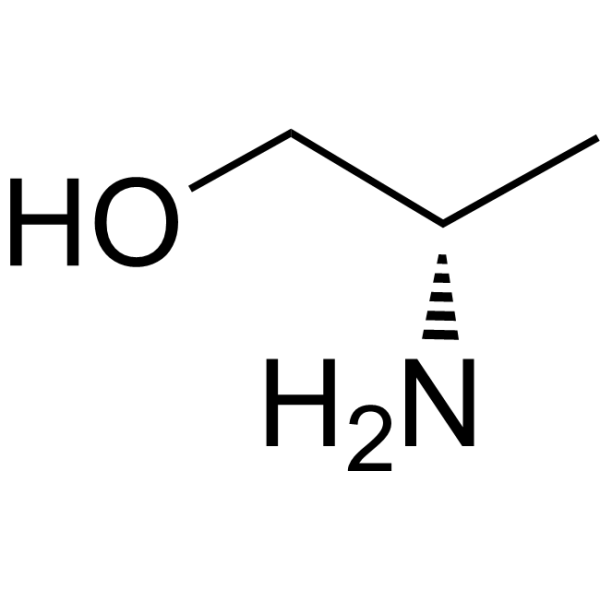
L-Alaninol ((S)-2-Amino-1-propanol; (S)-2-Aminopropanol; (S)-Alaninol) is a chiral amino alcohol that serves as a precursor for Levofloxacin (HY-B0330) and Metolachlor (HY-B1871). L-Alaninol acts as the sole carbon source for Pseudomonas sp. strain KIE171, and it is a metabolite produced by the hydrolysis of γ-glutamyl-L-alaninol. L-Alaninol functions as a substrate for oxidative/deaminative degradation and undergoes enzymatic glutamylation via IpuC. It is used as a synthetic building block in the fields of agriculture, pharmaceuticals, and peptide chemistry, and also serves as a chiral auxiliary.
Nur für Forschungszwecke. Wir verkaufen nicht an Patienten.
- Reinheit: 99.91%
- CAS. Nr.: 2749-11-3
- Formel: C3H9NO
- Molecular Weight:75.11
-
Speicherung:Pure form -20°C, 3 years , 4°C, 2 years ; In solvent -80°C, 6 months , -20°C, 1 month

To place orders, for customer services and technical support, please contact: MedChemExpress USA
Tel: 609-228-6898 E-mail: [email protected] [email protected]


-
 Biologische Aktivität
-
Chemical Information
-
Lösungsmittel & Löslichkeit
- Reinheit & Dokumentation
- Verweise
-
 Help & FAQs


-
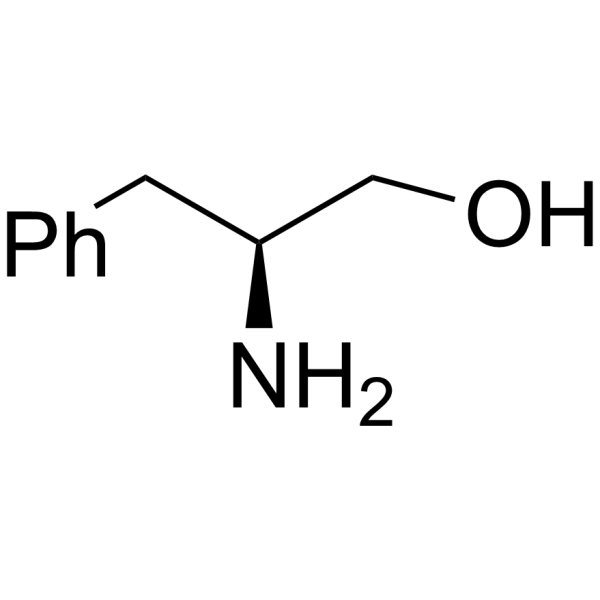
HY-Y0168
L-(-)-Phenylalaninol
-
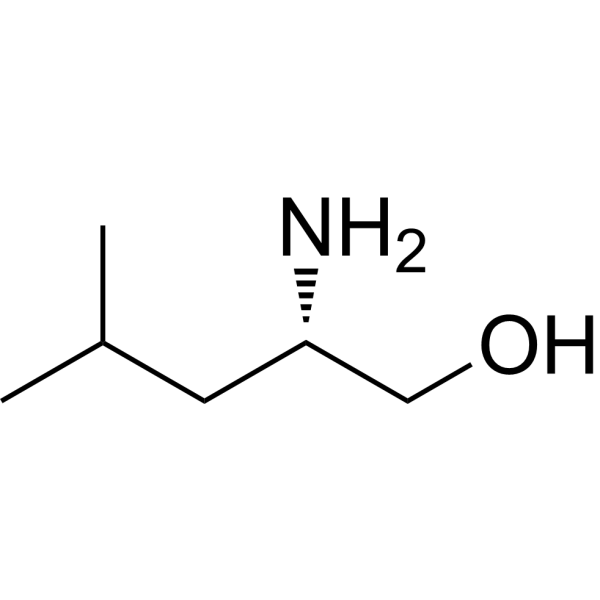
HY-W015876
L-Leucinol
-
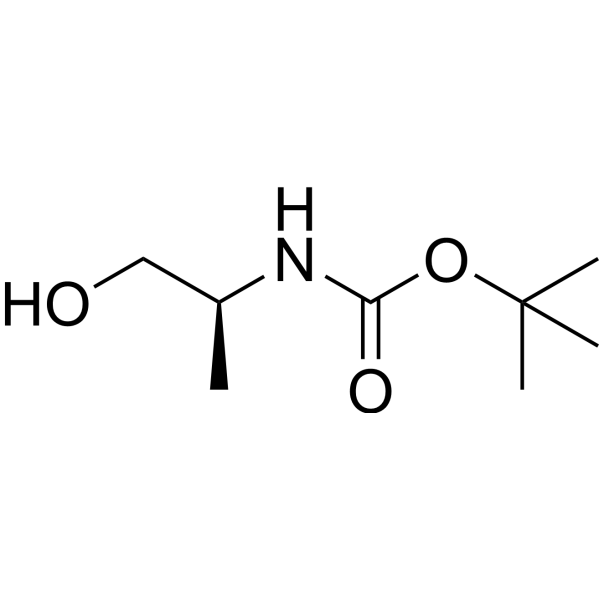
HY-W007729
Boc-L-Alaninol
-
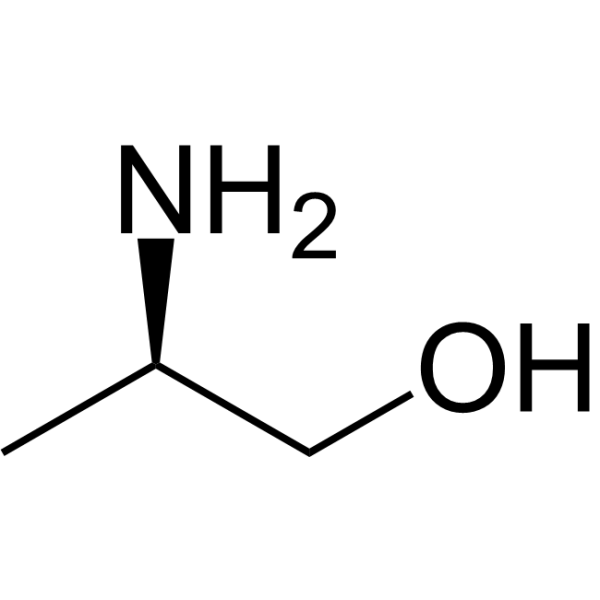
HY-W010646
D-Alaninol
-
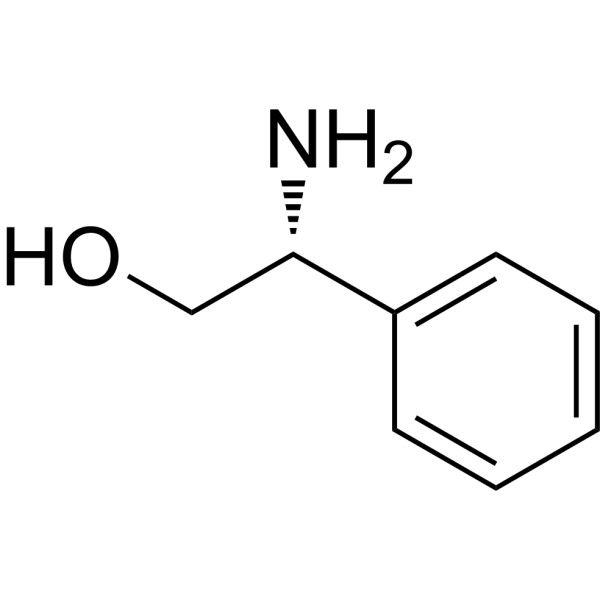
HY-W002038
(-)-Phenylglycinol
-
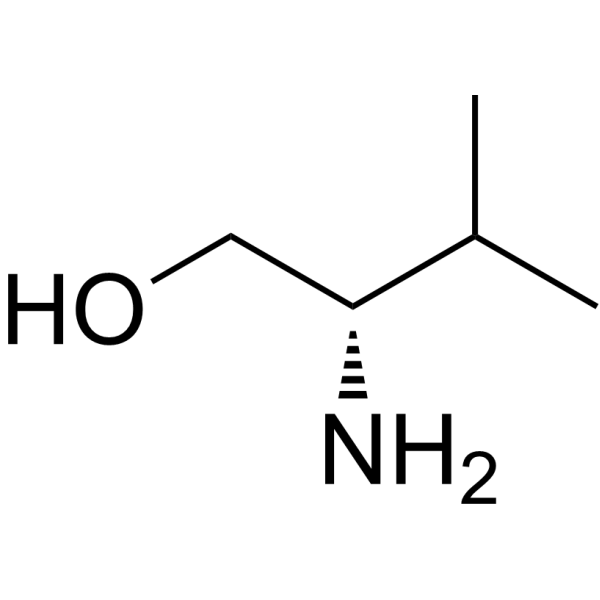
HY-30167A
L-Valinol
-
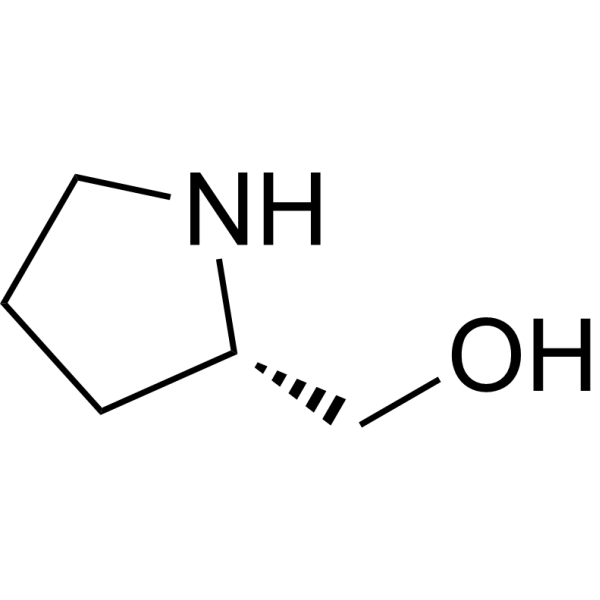
HY-Y1126
(2S)-2-Pyrrolidinemethanol
-
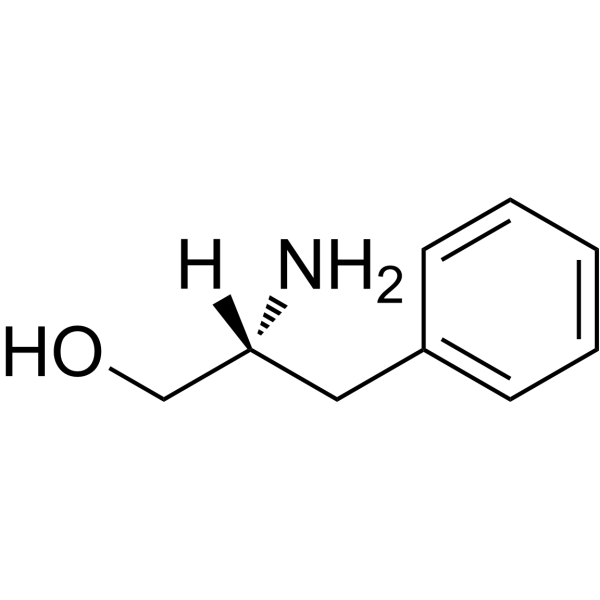
HY-W017398
D-Penylalaninol
-
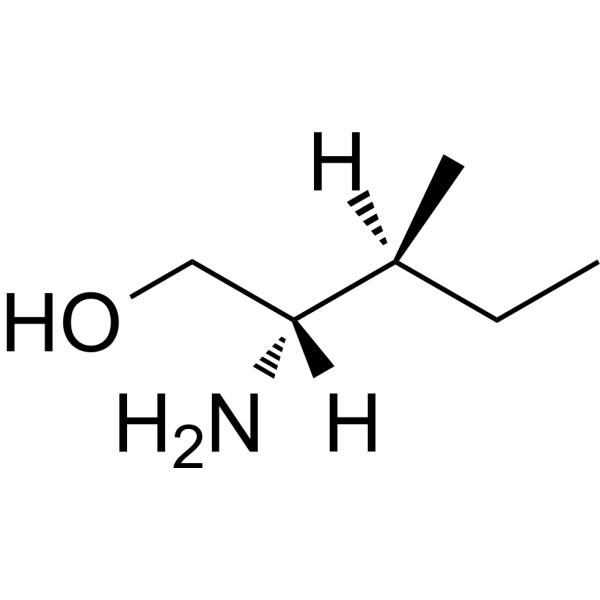
HY-W015875
(2S,3S)-2-amino-3-methylpentan-1-ol
-
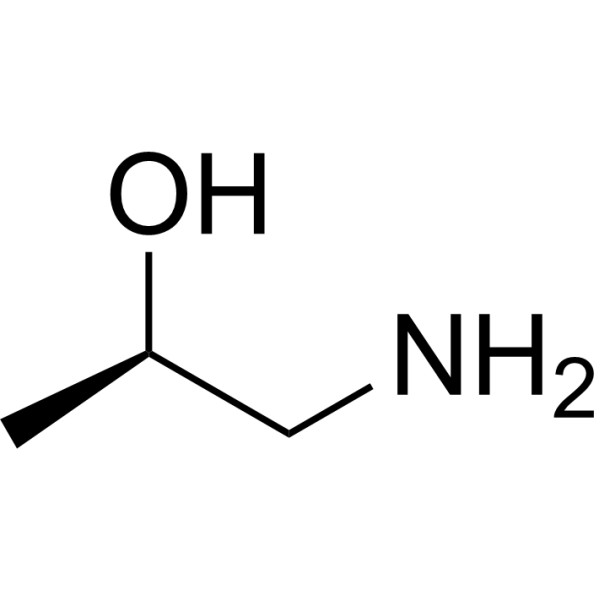
HY-W002295
(R)-1-Amino-2-propanol
-
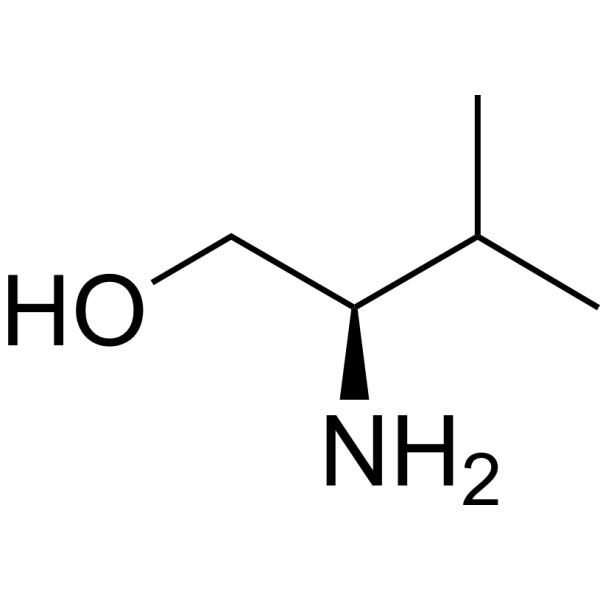
HY-30167
D-Valinol
-
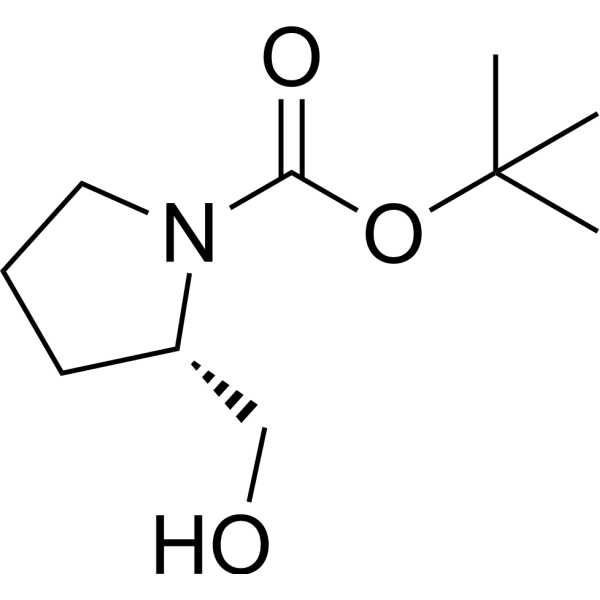
HY-78926
1-Boc-2-(S)-pyrrolidinemethanol


Biologische Aktivität
L-Alaninol is a precursor of Levofloxacin (HY-B0330) and Metolachlor (HY-B1871)[1].
L-alaninol is produced by Pseudomonas sp. KIE171 using IPA as a substrate via sequential glutamylation, hydroxylation and hydrolysis reactions, and the generated L-alaninol can undergo further oxidation or deamination reactions[1].
L-Alaninol serves as the sole carbon source for Pseudomonas sp. strain KIE171, while the mutant strain KIE171-B converts isopropylamine to L-alaninol within 40 h without producing D-alaninol[2].
L-Alaninol (10 mM) undergoes ATP-dependent glutamylation catalyzed by purified γ-glutamine synthetase derived from recombinant E. coli; it can also be released via the hydrolysis of γ-glutamyl-L-alaninol by purified γ-glutamine amidohydrolase, with a Vmax of 1.5 U/mg of protein[2].
L-Alaninol (0.22 M; 1-6 h) undergoes stereoretentive deuteration at the C1 and C2 positions with minimal loss of enantiomeric excess under the condition of 100 °C (with or without acid addition). L-Alaninol (0.22 M; 6 h) triggers racemization, reduces enantiomeric excess to 60.5%, and elevates the deuteration degree at the C3 position when incubated at 150 °C without acid addition[3].
MedChemExpress (MCE) has not independently confirmed the accuracy of these methods. They are for reference only.


Chemical Information
-
CAS. Nr. 2749-11-3
-
Appearance Liquid (Density: 0.965 g/cm3)
-
Molecular Weight 75.11
-
Formel C3H9NO
-
Color Colorless to light yellow
-
SMILES
C[C@H](N)CO
-
Synonyms
(S)-2-Amino-1-propanol; (S)-2-Aminopropanol; (S)-Alaninol
-
Versand
Room temperature in continental US; may vary elsewhere.
-
Speicherung
Pure form -20°C 3 years 4°C 2 years In solvent -80°C 6 months -20°C 1 month


Lösungsmittel & Löslichkeit
DMSO : 200 mg/mL (2662.76 mM; Need ultrasonic; Hygroscopic DMSO has a significant impact on the solubility of product, please use newly opened DMSO)
Please refer to the solubility information to select the appropriate solvent. Once prepared, please aliquot and store the solution to prevent product inactivation from repeated freeze-thaw cycles.
Storage method and period of stock solution: -80°C, 6 months; -20°C, 1 month. When stored at -80°C, please use it within 6 months. When stored at -20°C, please use it within 1 month.
Please refer to the solubility information to select the appropriate solvent. Once prepared, please aliquot and store the solution to prevent product inactivation from repeated freeze-thaw cycles.
Storage method and period of stock solution: -80°C, 6 months; -20°C, 1 month. When stored at -80°C, please use it within 6 months. When stored at -20°C, please use it within 1 month.
Konzentration (Stammlösung) × Volumen (Stammlösung) = Konzentration (Ziellösung) × Volumen (Ziellösung)
Select the appropriate dissolution method based on your experimental animal and administration route.
- For the following dissolution methods, please ensure to first prepare a clear stock solution using an In Vitro approach and then sequentially add co-solvents:
- To ensure reliable experimental results, the clarified stock solution can be appropriately stored based on storage conditions. As for the working solution for In Vivo experiments, it is recommended to prepare freshly and use it on the same day.
- The percentages shown for the solvents indicate their volumetric ratio in the final prepared solution. If precipitation or phase separation occurs during preparation, heat and/or sonication can be used to aid dissolution.
Add each solvent one by one: 10% DMSO 40% PEG300 5% Tween-80 45% Saline
Solubility: ≥ 5 mg/mL (66.57 mM); Clear solution
This protocol yields a clear solution of ≥ 5 mg/mL (saturation unknown).
Taking 1 mL working solution as an example, add 100 μL DMSO stock solution (50.0 mg/mL) to 400 μL PEG300, and mix evenly; then add 50 μL Tween-80 and mix evenly; then add 450 μL Saline to adjust the volume to 1 mL.
Preparation of Saline: Dissolve 0.9 g sodium chloride in ddH₂O and dilute to 100 mL to obtain a clear Saline solution.
Please enter the basic information of animal experiments:
-
-
-
-
Recommended: Prepare an additional quantity of animals to account for potential losses during experiments.
Please enter your animal formula composition:
-
%DMSO +
Recommended: Keep the proportion of DMSO in working solution below 2% if your animal is weak.
-
%+
-
+%Tween-80 + +
-
%Saline +
The co-solvents required include: DMSO, . All of co-solvents are available by MedChemExpress (MCE). , Tween 80. All of co-solvents are available by MedChemExpress (MCE).
Working solution concentration: 0.22 mg/mL
Method for preparing stock solution: mg drug dissolved in μL DMSO. Stock solution concentration: mg/mL.
1. Take μL DMSO stock solution;
2. Add μL .
μL , mix evenly;
3. Then add μL Tween 80, mix evenly;
4. Then add μL
Please ensure that the stock solution in the first step is dissolved to a clear state, and add co-solvents in sequence. You can use ultrasonic heating (ultrasonic cleaner, recommended frequency 20-40 kHz), vortexing, etc. to assist dissolution.


Reinheit & Dokumentation
-
Data Sheet (273 KB)
-
SDS (476 KB)
- English - EN (476 KB)
- Français - FR (476 KB)
- Deutsch - DE (476 KB)
- Norwegian - NO (476 KB)
- Español - ES (476 KB)
- Swedish - SV (476 KB)
- Italian - IT (476 KB)
- Korean - KR (476 KB)
- Portuguese - PT (476 KB)
-
Handling Instructions (2659 KB)
Verweise
[1]. Benninghaus L, et al. γ-Glutamylation of Isopropylamine by Fermentation. Chembiochem : a European journal of chemical biology. 2024 Jan 15;25(2):e202300608. [Content Brief]
[2]. de Azevedo Wäsch SI, et al. Transformation of isopropylamine to L-alaninol by Pseudomonas sp. strain KIE171 involves N-glutamylated intermediates. Applied and environmental microbiology. 2002 May;68(5):2368-75. [Content Brief]


Complete Stock Solution Preparation Table
Please refer to the solubility information to select the appropriate solvent. Once prepared, please aliquot and store the solution to prevent product inactivation from repeated freeze-thaw cycles.
Storage method and period of stock solution: -80°C, 6 months; -20°C, 1 month. When stored at -80°C, please use it within 6 months. When stored at -20°C, please use it within 1 month.
| Optional Solvent | Concentration Solvent Mass | 1 mg | 5 mg | 10 mg | 25 mg |
|---|---|---|---|---|---|
| DMSO | 1 mM | 13.3138 mL | 66.5690 mL | 133.1381 mL | 332.8452 mL |
| 5 mM | 2.6628 mL | 13.3138 mL | 26.6276 mL | 66.5690 mL | |
| 10 mM | 1.3314 mL | 6.6569 mL | 13.3138 mL | 33.2845 mL | |
| 15 mM | 0.8876 mL | 4.4379 mL | 8.8759 mL | 22.1897 mL | |
| 20 mM | 0.6657 mL | 3.3285 mL | 6.6569 mL | 16.6423 mL | |
| 25 mM | 0.5326 mL | 2.6628 mL | 5.3255 mL | 13.3138 mL | |
| 30 mM | 0.4438 mL | 2.2190 mL | 4.4379 mL | 11.0948 mL | |
| 40 mM | 0.3328 mL | 1.6642 mL | 3.3285 mL | 8.3211 mL | |
| 50 mM | 0.2663 mL | 1.3314 mL | 2.6628 mL | 6.6569 mL | |
| 60 mM | 0.2219 mL | 1.1095 mL | 2.2190 mL | 5.5474 mL | |
| 80 mM | 0.1664 mL | 0.8321 mL | 1.6642 mL | 4.1606 mL | |
| 100 mM | 0.1331 mL | 0.6657 mL | 1.3314 mL | 3.3285 mL |


L-Alaninol Related Classifications
HY-Y0837 Related Classifications
 Powered by Bioz
- L-Alaninol
- 2749-11-3
- (S)-2-Amino-1-propanol
- (S)-2-Aminopropanol
- (S)-Alaninol
- Biochemical Assay Reagents
- Drug Intermediate
- L-alanine
- isopropylamine
- γ-glutamylamide synthetase
- L-2-aminopropionaldehyde
- Pseudomonas sp. strain KIE171
- γ-glutamyl-L-alaninol
- propionaldehyde
- γ-glutamylamide hydrolase
- IpuC
- propionic acid
- Inhibitor
- inhibitor
- inhibit