



Azaphen
Based on 1 publication(s) in Google Scholar
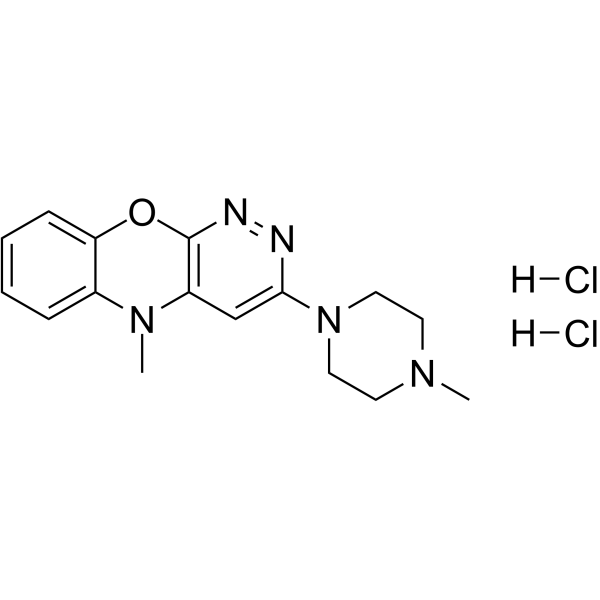
Azaphen (Azafen) is an orally active tricyclic antidepressant that inhibits the reuptake of serotonin and monoamines, regulates the 5-HT2c receptor, and exerts sedative, antidepressant and anxiolytic effects. Azaphen increases the bioavailability of serotonin in the synaptic cleft, does not block muscarinic receptors or affect monoamine oxidase activity, and binds to the human serotonin transporter via salt bridges, π-stacking, π-cation and hydrophobic interactions. Azaphen can be used in studies related to depression.
For research use only. We do not sell to patients.
- CAS No.: 24853-80-3
- Formula: C16H21Cl2N5O
- Molecular Weight:370.28
-
Storage:
Please store the product under the recommended conditions in the Certificate of Analysis.

To place orders, for customer services and technical support, please contact: MedChemExpress USA
Tel: 609-228-6898 E-mail: [email protected] [email protected]


-
 Biological Activity
-
Chemical Information
- Protocols
- Purity & Documentation
- References
-
 Help & FAQs


-
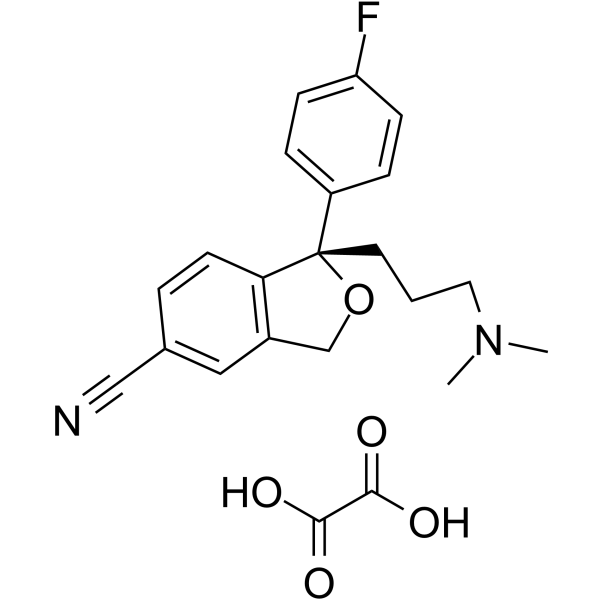
HY-14258A
Escitalopram oxalateSerotonin Reuptake Inhibitor -
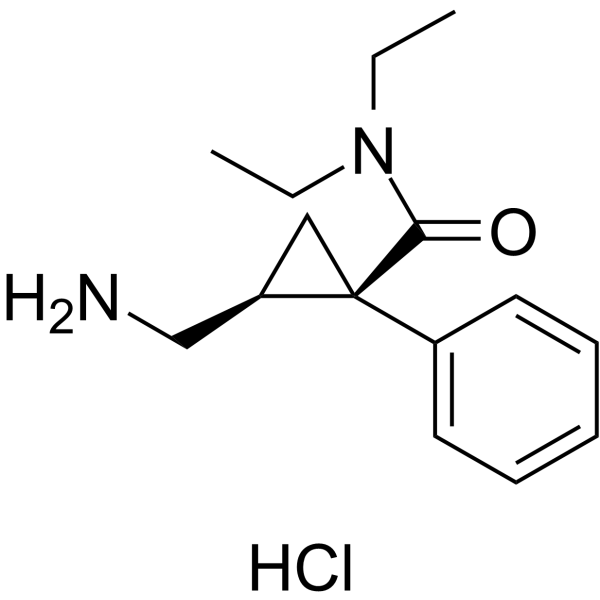
HY-B0168A
Milnacipran hydrochlorideSerotonin and Norepinephrine Reuptake Inhibitor -
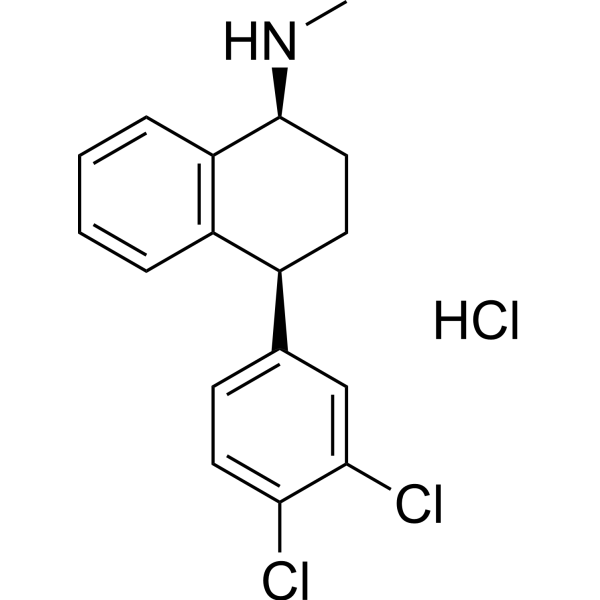
HY-B0176A
Sertraline hydrochlorideSSRI -
HY-B0602A
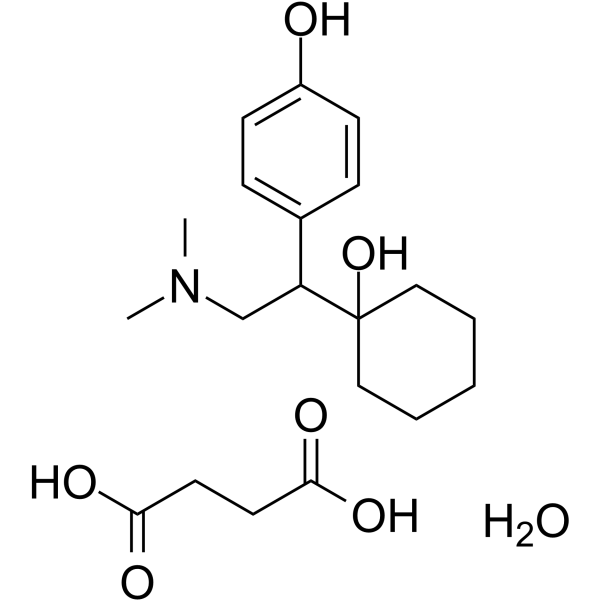
Desvenlafaxine succinate hydrateVenlafaxine Active Metabolite -
HY-14258AR
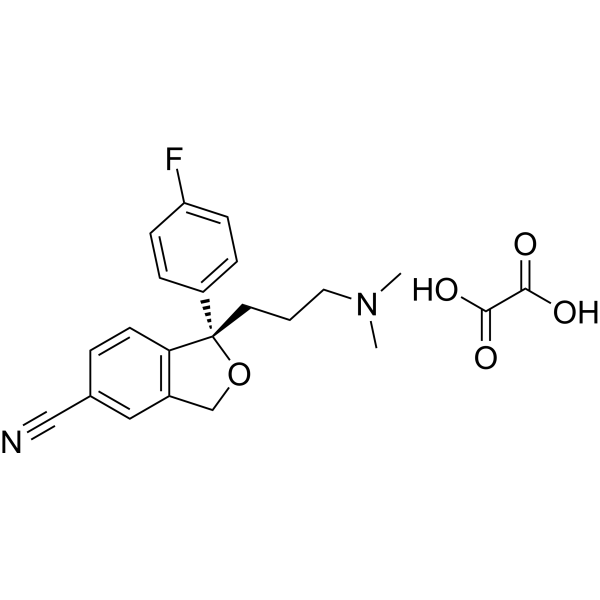
Escitalopram oxalate (Standard)Serotonin Reuptake Inhibitor -
HY-B0196A
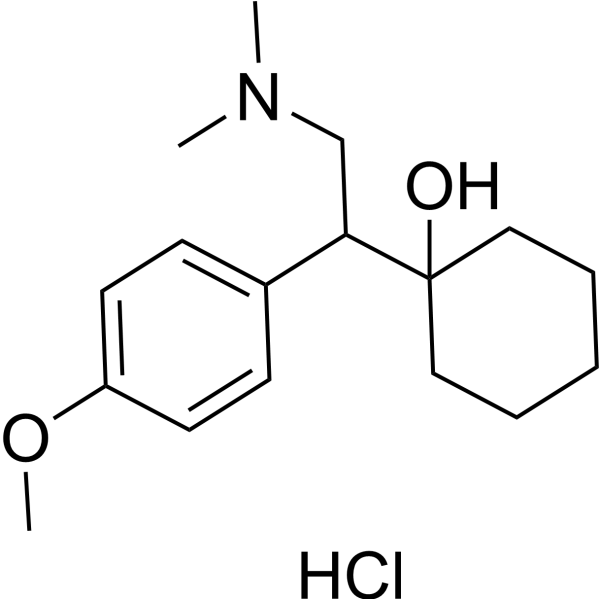
Venlafaxine hydrochlorideSerotonin/Norepinephrine Reuptake Inhibitor -
HY-B0602
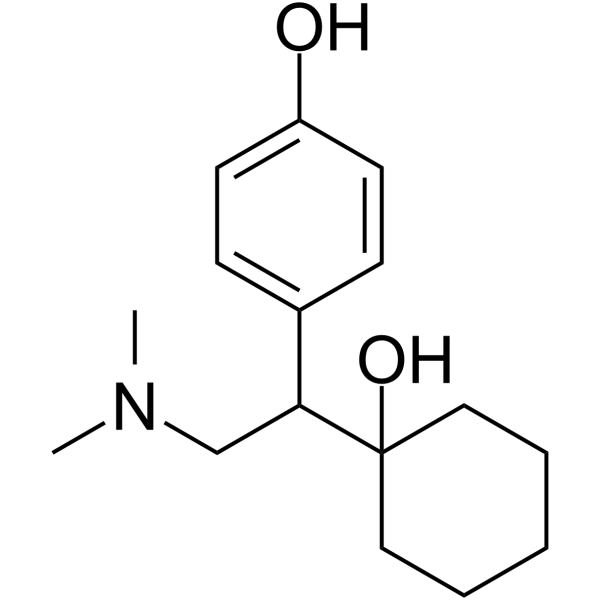
Desvenlafaxine5-HT/Norepinephrine Reuptake Inhibitor -
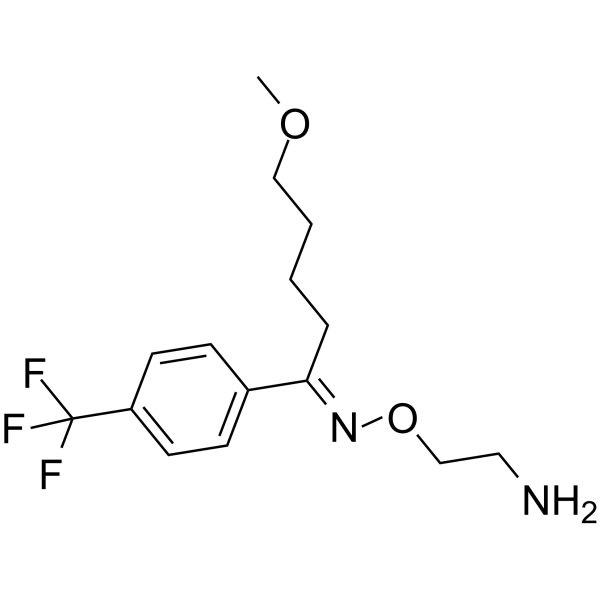
HY-B0103
FluvoxamineSerotonin Transporter Inhibitor -
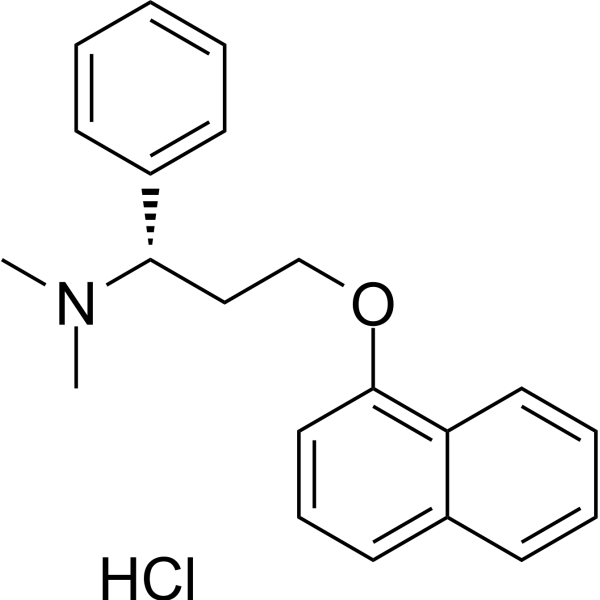
HY-B0304A
Dapoxetine hydrochlorideSerotonin Reuptake Inhibitor -

HY-B0176AR
Sertraline hydrochloride (Standard)SSRI -
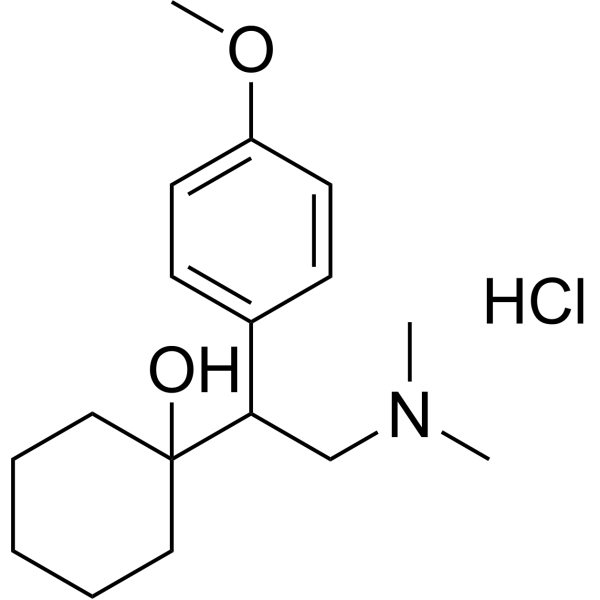
HY-B0196AR
Venlafaxine hydrochloride (Standard) -
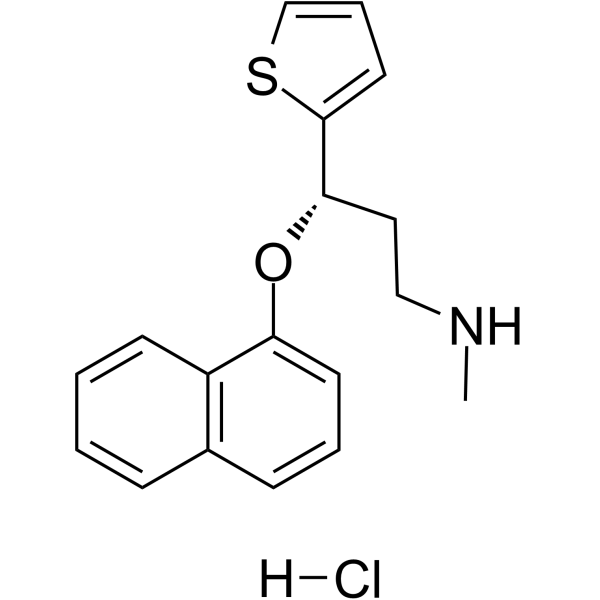
HY-B0161A
Duloxetine hydrochlorideSerotonin-norepinephrine Reuptake Inhibitor
Publications Citing Use of MedChemExpress (MCE) Azaphen
MoreAll 5-HT Receptor Isoforms
More

Biological Activity
Description
In Vitro
Azaphen (Azafen) (Less than 1 mg; 0.5 s exposure per frame, 2° s-1 rotation rate, 120° total rotation angle) has its first atomic solid-state structure solved by MicroED at 0.82 Å resolution, revealing two inversion-related conformers with minimal conformational flexibility that supports binding to its target protein[3].
Azaphen binds preferentially to the allosteric (S2) site of hSERT with minimal conformational change from its solid-state structure, stabilized by multiple key interactions including a salt bridge, pi-stacking, and pi-cation interactions[3].
MedChemExpress (MCE) has not independently confirmed the accuracy of these methods. They are for reference only. Further protocols information, click here.
In Vivo
Azaphen exhibits pronounced antidepressant activity in the Normura forced swimming test with significant reductions in depressive state duration[2].
MedChemExpress (MCE) has not independently confirmed the accuracy of these methods. They are for reference only.
-
Animal Model:Mongrel albino rats (70-90 days old, 200-250 g, behavioral despair induced via Porsolt forced swimming test)[2]
-
Dosage:5 mg/kg; 10 mg/kg; 20 mg/kg
-
Administration:p.o.; single dose
-
Result:Significantly shortened the duration of immobility (depressive state) compared to control.


Chemical Information
-
CAS No. 24853-80-3
-
Molecular Weight 370.28
-
Formula C16H21Cl2N5O
-
SMILES
[H]Cl.[H]Cl.CN1C2=CC=CC=C2OC3=C1C=C(N4CCN(C)CC4)N=N3
-
Synonyms
Azafen; Pipofezin hydrochloride; Pipofezine hydrochloride
-
Structure Classification
-
Initial Source
from the cadaveric material
-
Shipping
Room temperature in continental US; may vary elsewhere.
-
Storage
Please store the product under the recommended conditions in the Certificate of Analysis.


Publications (1)
-
Journal Impact Factor
-
Most Recent
-
Biochim Biophys Acta Gen Subj
5-Hydroxytryptamine activates a 5-HT/c-Myc/SLC6A4 signaling loop in non-small cell lung cancer. [Abstract]2022 Apr;1866(4):130093. PMID: 35066124

Protocols
-
Protocol for Pharmacokinetic Study
Pharmacokinetic studies quantify how an organism handles a drug over time through absorption, distribution, metabolism, and excretion, and the core experimental readout is the concentration-time profile of parent drug and, when relevant, metabolites in biological matrices such as plasma, whole blood, urine, bile, or tissue. Pharmacokinetic analysis links dose, route, exposure, clearance, half-life, distribution, bioavailability, and systemic exposure to drug efficacy and toxicity hypotheses rather than measuring a signaling pathway directly. The literature links pharmacokinetics to drug-development phenotypes by showing that drug metabolism and pharmacokinetics influence compound progression, exposure-response interpretation, safety margins, dosing strategy, and failure risk during discovery and development. DMPK science contributes to compound optimization by integrating physicochemical properties, in vitro metabolism, transporter behavior, in vivo exposure, and pharmacodynamic contex


Purity & Documentation
References

Calculators
Concentration (start) × Volume (start) = Concentration (final) × Volume (final)


Azaphen Related Classifications
HY-A0022 Related Classifications
 Powered by Bioz