



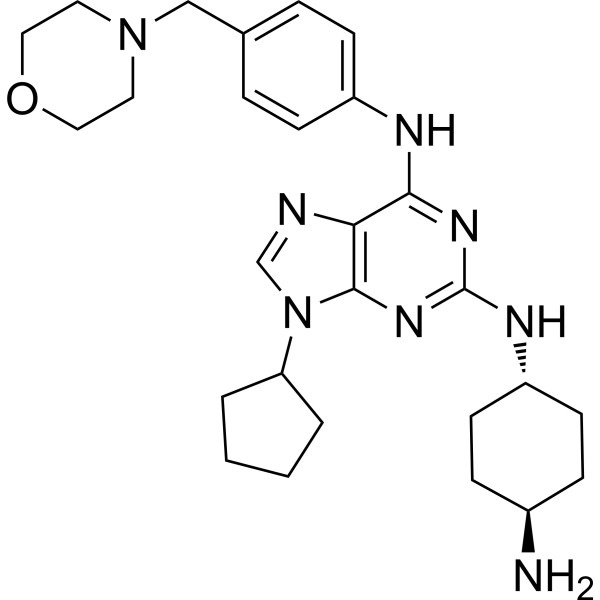
FLT3-IN-3
Based on 3 publication(s) in Google Scholar
FLT3-IN-3 is a potent FLT3 inhibitor with IC50s of 13 and 8 nM for FLT3 WT and FLT3 D835Y, respectively.
Nos produits utilisent uniquement pour la recherche. Nous ne vendons pas aux patients.
- Pureté: 99.95%
- CAS No.: 2229050-90-0
- Formule: C27H38N8O
- Masse moléculaire:490.64
-
Stockage:Powder -20°C, 3 years , 4°C, 2 years ; In solvent -80°C, 6 months , -20°C, 1 month

To place orders, for customer services and technical support, please contact: MedChemExpress USA
Tel: 609-228-6898 E-mail: [email protected] [email protected]


-
 Activité biologique
-
Chemical Information
-
Solvant et solubilité
- Pureté et documentation
- Références
-
 Help & FAQs
-


Anti-Blood Cancer Compound Library
HY-L079
-
Membrane Protein-targeted Compound Library
HY-L149
-
Cytokine Inhibitors Library
HY-L161
-
Anti-Hematopathy Compound Library
HY-L171
-
Bioactive Compound Library Max
HY-L181
-
MCE Bioactive Compound Library
HY-L001V
-
Bioactive Compound Library
HY-L001
-
Anti-Brain Cancer Compound Library
HY-L188
-
Protein Kinase Compound Library
HY-L196
-
High-Throughput Bioactive Compound Library
HY-L205
-
Posttranslational Modification Library
HY-L226
-
Kinase Inhibitor Library
HY-L009
-
Protein Tyrosine Kinase Compound Library
HY-L016
-
Anti-Cancer Compound Library
HY-L025


Publications Citing Use of MedChemExpress (MCE) FLT3-IN-3
More

Activité biologique
IC50: 13 nM (FLT3 WT), 8 nM (FLT3 D835Y)[1]
|
Cell Line

|
Type | Value | Description | References |
|---|---|---|---|---|
| BaF3 | GI50 |
1.136 μM
Compound: 7d
|
Growth inhibition of mouse BA/F3 cells after 72 hrs by calcein AM dye-based fluorescence assay
Growth inhibition of mouse BA/F3 cells after 72 hrs by calcein AM dye-based fluorescence assay
|
[PMID: 29672049] |
| BJ | GI50 |
12.343 μM
Compound: 14q
|
Cytotoxicity against human BJ cells assessed as growth inhibition after 72 hrs by resazurin dye-based fluorescence analysis
Cytotoxicity against human BJ cells assessed as growth inhibition after 72 hrs by resazurin dye-based fluorescence analysis
|
[PMID: 31514019] |
| BJ | GI50 |
12.663 μM
Compound: 7d
|
Growth inhibition of human BJ cells after 72 hrs by calcein AM dye-based fluorescence assay
Growth inhibition of human BJ cells after 72 hrs by calcein AM dye-based fluorescence assay
|
[PMID: 29672049] |
| CCRF-CEM | GI50 |
0.82 μM
Compound: 14q
|
Cytotoxicity against human CEM cells assessed as growth inhibition after 72 hrs by resazurin dye-based fluorescence analysis
Cytotoxicity against human CEM cells assessed as growth inhibition after 72 hrs by resazurin dye-based fluorescence analysis
|
[PMID: 31514019] |
| EOL1 | GI50 |
0.007 μM
Compound: 14q
|
Cytotoxicity against FIP1L1-PDGFRA positive human EOL-1 cells assessed as growth inhibition after 72 hrs by resazurin dye-based fluorescence analysis
Cytotoxicity against FIP1L1-PDGFRA positive human EOL-1 cells assessed as growth inhibition after 72 hrs by resazurin dye-based fluorescence analysis
|
[PMID: 31514019] |
| HCC827 | GI50 |
0.327 μM
Compound: 7d
|
Growth inhibition of human HCC827 cells after 72 hrs by calcein AM dye-based fluorescence assay
Growth inhibition of human HCC827 cells after 72 hrs by calcein AM dye-based fluorescence assay
|
[PMID: 29672049] |
| HCC827 | GI50 |
1.011 μM
Compound: 14q
|
Cytotoxicity against human HCC827 cells assessed as growth inhibition after 72 hrs by resazurin dye-based fluorescence analysis
Cytotoxicity against human HCC827 cells assessed as growth inhibition after 72 hrs by resazurin dye-based fluorescence analysis
|
[PMID: 31514019] |
| HUVEC | GI50 |
5.866 μM
Compound: 7d
|
Growth inhibition of HUVEC after 72 hrs by calcein AM dye-based fluorescence assay
Growth inhibition of HUVEC after 72 hrs by calcein AM dye-based fluorescence assay
|
[PMID: 29672049] |
| K562 | GI50 |
0.38 μM
Compound: 7d
|
Growth inhibition of human K562 cells after 72 hrs by calcein AM dye-based fluorescence assay
Growth inhibition of human K562 cells after 72 hrs by calcein AM dye-based fluorescence assay
|
[PMID: 29672049] |
| K562 | GI50 |
1.121 μM
Compound: 14q
|
Cytotoxicity against human K562 cells assessed as growth inhibition after 72 hrs by resazurin dye-based fluorescence analysis
Cytotoxicity against human K562 cells assessed as growth inhibition after 72 hrs by resazurin dye-based fluorescence analysis
|
[PMID: 31514019] |
| Kasumi 1 | GI50 |
0.513 μM
Compound: 7d
|
Growth inhibition of human Kasumi-1 cells after 72 hrs by calcein AM dye-based fluorescence assay
Growth inhibition of human Kasumi-1 cells after 72 hrs by calcein AM dye-based fluorescence assay
|
[PMID: 29672049] |
| MCF7 | GI50 |
0.197 μM
Compound: 7d
|
Growth inhibition of human MCF7 cells after 72 hrs by calcein AM dye-based fluorescence assay
Growth inhibition of human MCF7 cells after 72 hrs by calcein AM dye-based fluorescence assay
|
[PMID: 29672049] |
| MOLM-13 | GI50 |
0.001 μM
Compound: 7d
|
Growth inhibition of human MOLM13 cells after 72 hrs by calcein AM dye-based fluorescence assay
Growth inhibition of human MOLM13 cells after 72 hrs by calcein AM dye-based fluorescence assay
|
[PMID: 29672049] |
| MRC5 | GI50 |
20.565 μM
Compound: 7d
|
Growth inhibition of human MRC5 cells after 72 hrs by calcein AM dye-based fluorescence assay
Growth inhibition of human MRC5 cells after 72 hrs by calcein AM dye-based fluorescence assay
|
[PMID: 29672049] |
| MV4-11 | GI50 |
0.002 μM
Compound: 7d
|
Growth inhibition of human MV4-11 cells after 72 hrs by calcein AM dye-based fluorescence assay
Growth inhibition of human MV4-11 cells after 72 hrs by calcein AM dye-based fluorescence assay
|
[PMID: 29672049] |
| Sf9 | IC50 |
0.027 μM
Compound: 14q
|
Inhibition of recombinant human 3C cleavage site/N-terminal GST-His6 fused PDGFR alpha C-terminal fragment (Q551 to L1089 residues) harboring V561D mutant expressed in baculovirus infected Sf9 insect cells using AGLT peptide as substrate in presence of [g
Inhibition of recombinant human 3C cleavage site/N-terminal GST-His6 fused PDGFR alpha C-terminal fragment (Q551 to L1089 residues) harboring V561D mutant expressed in baculovirus infected Sf9 insect cells using AGLT peptide as substrate in presence of [g
|
[PMID: 31514019] |
| THP-1 | GI50 |
0.713 μM
Compound: 7d
|
Growth inhibition of human THP1 cells after 72 hrs by calcein AM dye-based fluorescence assay
Growth inhibition of human THP1 cells after 72 hrs by calcein AM dye-based fluorescence assay
|
[PMID: 29672049] |
| U-937 | GI50 |
0.664 μM
Compound: 7d
|
Growth inhibition of human U937 cells after 72 hrs by calcein AM dye-based fluorescence assay
Growth inhibition of human U937 cells after 72 hrs by calcein AM dye-based fluorescence assay
|
[PMID: 29672049] |
FLT3-IN-3 (Compound 7d) inhibits the proliferation of FLT3-ITD positive MV4-11 and MOLM-13 cell lines very effectively at low nanomolar concentrations (GI50 values 2 and 1 nM, respectively)[1].
FLT3-IN-3 (1 nM, 10nM, 100 nM, 1 μM and 10 μM; 72 hours) inhibits the Ba/F3 FLT3-ITD cells with the GI50 of 0.034±0.015 μM, and inhibits the parental Ba/F3 cells with the GI50 value of 1.136±0.389 μM[1].
Concentrations as low as 1 nM are sufficient to block the autophosphorylation of the FLT3 receptor tyrosine kinase at three different tyrosine residues (589, 591, and 842). Moreover, this inhibition suppresses phosphorylation of several downstream targets of FLT3. Notably, FLT3-IN-3 (0.01, 0.1, 1, 10 and 100 nM; 1 hours) abolishes phosphorylation of STAT5 at Y694, which is a direct substrate of the oncogenic FLT3-ITD variant. The second pathway affected is the MAPK cascade: Two key components of this signaling pathway, ERK1/2 (T202/Y204) and MEK1/2 (S217/221), exhibit reduced phosphorylation upon treatment with FLT3-IN-3. FLT3-IN-3 also interfers with PI3K/AKT pathway which is confirmed by reduced phosphorylation of AKT at S473[1].
MedChemExpress (MCE) has not independently confirmed the accuracy of these methods. They are for reference only.
-
Cell Line:Murine Ba/F3 FLT3-ITD and parental Ba/F3 cells
-
Concentration:1 nM, 10nM, 100 nM, 1 μM and 10 μM
-
Incubation Time:72 hours
-
Result:The GI50s for Ba/F3 FLT3-ITD cells and parental Ba/F3 cells are 0.034±0.015 μM and 1.136±0.389 μM, respectively.
-
Cell Line:MV4-11 cells
-
Concentration:0.01, 0.1, 1, 10 and 100 nM
-
Incubation Time:1 hours
-
Result:Concentrations as low as 1 nM were sufficient to block the autophosphorylation of the FLT3 receptor tyrosine kinase at three different tyrosine residues (589, 591, and 842).
MedChemExpress (MCE) has not independently confirmed the accuracy of these methods. They are for reference only.
-
Animal Model:Female athymic nu/nu mice with subcutaneously implanted MV4-11 xenografts[1]
-
Dosage:10 mg/kg
-
Administration:Intraperitoneal (i.p.) injection; 48 hours
-
Result:Effectively inhibited FLT3-ITD autophosphorylation in MV4-11 xenografts.


Chemical Information
-
CAS No. 2229050-90-0
-
Appearance Solid
-
Masse moléculaire 490.64
-
Formule C27H38N8O
-
Color White to off-white
-
SMILES
N[C@H](CC1)CC[C@@H]1NC2=NC3=C(N=CN3C4CCCC4)C(NC5=CC=C(CN6CCOCC6)C=C5)=N2
-
Livraison
Room temperature in continental US; may vary elsewhere.
-
Stockage
Powder -20°C 3 years 4°C 2 years In solvent -80°C 6 months -20°C 1 month


Publications (3)
-
Journal Impact Factor
-
Most Recent
-
EMBO J
SUCLG1 restricts POLRMT succinylation to enhance mitochondrial biogenesis and leukemia progression. [Abstract]2024 Jun;43(12):2337-2367. PMID: 38649537 -
Cell Mol Gastroenterol Hepatol
Sorafenib Promotes Treg Cell Differentiation To Compromise Its Efficacy via VEGFR/AKT/Foxo1 Signaling in Hepatocellular Carcinoma. [Abstract]2025;19(5):101454. PMID: 39743020 -
Bioorg Chem
Identification of FTY720 and COH29 as novel topoisomerase I catalytic inhibitors by experimental and computational studies. [Abstract]2024 Jun:147:107412. PMID: 38696845


Solvant et solubilité
DMSO : 250 mg/mL (509.54 mM; Need ultrasonic; Hygroscopic DMSO has a significant impact on the solubility of product, please use newly opened DMSO)
Please refer to the solubility information to select the appropriate solvent. Once prepared, please aliquot and store the solution to prevent product inactivation from repeated freeze-thaw cycles.
Storage method and period of stock solution: -80°C, 6 months; -20°C, 1 month. When stored at -80°C, please use it within 6 months. When stored at -20°C, please use it within 1 month.
Please refer to the solubility information to select the appropriate solvent. Once prepared, please aliquot and store the solution to prevent product inactivation from repeated freeze-thaw cycles.
Storage method and period of stock solution: -80°C, 6 months; -20°C, 1 month. When stored at -80°C, please use it within 6 months. When stored at -20°C, please use it within 1 month.
Concentration (start) × Volume (start) = Concentration (final) × Volume (final)
Select the appropriate dissolution method based on your experimental animal and administration route.
- For the following dissolution methods, please ensure to first prepare a clear stock solution using an In Vitro approach and then sequentially add co-solvents:
- To ensure reliable experimental results, the clarified stock solution can be appropriately stored based on storage conditions. As for the working solution for In Vivo experiments, it is recommended to prepare freshly and use it on the same day.
- The percentages shown for the solvents indicate their volumetric ratio in the final prepared solution. If precipitation or phase separation occurs during preparation, heat and/or sonication can be used to aid dissolution.
Add each solvent one by one: 10% DMSO 40% PEG300 5% Tween-80 45% Saline
Solubility: ≥ 2.08 mg/mL (4.24 mM); Clear solution
This protocol yields a clear solution of ≥ 2.08 mg/mL (saturation unknown).
Taking 1 mL working solution as an example, add 100 μL DMSO stock solution (20.8 mg/mL) to 400 μL PEG300, and mix evenly; then add 50 μL Tween-80 and mix evenly; then add 450 μL Saline to adjust the volume to 1 mL.
Preparation of Saline: Dissolve 0.9 g sodium chloride in ddH₂O and dilute to 100 mL to obtain a clear Saline solution.
Add each solvent one by one: 10% DMSO 90% (20% SBE-β-CD in Saline)
Solubility: ≥ 2.08 mg/mL (4.24 mM); Clear solution
This protocol yields a clear solution of ≥ 2.08 mg/mL (saturation unknown).
Taking 1 mL working solution as an example, add 100 μL DMSO stock solution (20.8 mg/mL) to 900 μL 20% SBE-β-CD in Saline, and mix evenly.
Preparation of 20% SBE-β-CD in Saline (4°C, storage for one week): 2 g SBE-β-CD powder is dissolved in 10 mL Saline, completely dissolve until clear.
Please enter the basic information of animal experiments:
-
-
-
-
Recommended: Prepare an additional quantity of animals to account for potential losses during experiments.
Please enter your animal formula composition:
-
%DMSO +
Recommended: Keep the proportion of DMSO in working solution below 2% if your animal is weak.
-
%+
-
+%Tween-80 + +
-
%Saline +
The co-solvents required include: DMSO, . All of co-solvents are available by MedChemExpress (MCE). , Tween 80. All of co-solvents are available by MedChemExpress (MCE).
Working solution concentration: 0.22 mg/mL
Method for preparing stock solution: mg drug dissolved in μL DMSO. Stock solution concentration: mg/mL.
1. Take μL DMSO stock solution;
2. Add μL .
μL , mix evenly;
3. Then add μL Tween 80, mix evenly;
4. Then add μL
Please ensure that the stock solution in the first step is dissolved to a clear state, and add co-solvents in sequence. You can use ultrasonic heating (ultrasonic cleaner, recommended frequency 20-40 kHz), vortexing, etc. to assist dissolution.


Pureté et documentation
-
Fiche technique (283 KB)
-
SDS (251 KB)
- English - EN (251 KB)
- Français - FR (251 KB)
- Deutsch - DE (251 KB)
- Norwegian - NO (251 KB)
- Español - ES (251 KB)
- Swedish - SV (251 KB)
- Italian - IT (251 KB)
- Korean - KR (251 KB)
- Portuguese - PT (251 KB)
-
Instruction de manipulation (2659 KB)
Références


Complete Stock Solution Preparation Table
Please refer to the solubility information to select the appropriate solvent. Once prepared, please aliquot and store the solution to prevent product inactivation from repeated freeze-thaw cycles.
Storage method and period of stock solution: -80°C, 6 months; -20°C, 1 month. When stored at -80°C, please use it within 6 months. When stored at -20°C, please use it within 1 month.
| Optional Solvent | Concentration Solvent Mass | 1 mg | 5 mg | 10 mg | 25 mg |
|---|---|---|---|---|---|
| DMSO | 1 mM | 2.0382 mL | 10.1908 mL | 20.3815 mL | 50.9539 mL |
| 5 mM | 0.4076 mL | 2.0382 mL | 4.0763 mL | 10.1908 mL | |
| 10 mM | 0.2038 mL | 1.0191 mL | 2.0382 mL | 5.0954 mL | |
| 15 mM | 0.1359 mL | 0.6794 mL | 1.3588 mL | 3.3969 mL | |
| 20 mM | 0.1019 mL | 0.5095 mL | 1.0191 mL | 2.5477 mL | |
| 25 mM | 0.0815 mL | 0.4076 mL | 0.8153 mL | 2.0382 mL | |
| 30 mM | 0.0679 mL | 0.3397 mL | 0.6794 mL | 1.6985 mL | |
| 40 mM | 0.0510 mL | 0.2548 mL | 0.5095 mL | 1.2738 mL | |
| 50 mM | 0.0408 mL | 0.2038 mL | 0.4076 mL | 1.0191 mL | |
| 60 mM | 0.0340 mL | 0.1698 mL | 0.3397 mL | 0.8492 mL | |
| 80 mM | 0.0255 mL | 0.1274 mL | 0.2548 mL | 0.6369 mL | |
| 100 mM | 0.0204 mL | 0.1019 mL | 0.2038 mL | 0.5095 mL |


FLT3-IN-3 Related Classifications
HY-112145 Related Classifications
 Powered by Bioz