



PRMT8
Protein arginine methyltransferase 8 (PRMT8) is a vertebrate-restricted type I PRMT predominantly expressed in the brain, with a unique N-terminal domain containing a myristoylation site that anchors it to the plasma membrane[1][2]. Mechanistically, PRMT8 catalyzes asymmetric dimethylation of arginine residues on substrates such as EWS and histone H4, influencing RNA processing, chromatin regulation, and signal transduction[3][4]. PRMT8 also exhibits phospholipase activity, hydrolyzing phosphatidylcholine into choline and phosphatidic acid, which is critical for dendritic arborization and motor coordination in Purkinje cells[5]. Compared with its paralogue PRMT1, PRMT8 demonstrates brain-specific expression, a distinct N-terminal regulatory domain, and additional enzymatic functions including phospholipid hydrolysis[6][7][2]. In developmental models such as zebrafish, PRMT8 knockdown leads to convergence/extension defects, abnormal neural morphology, and impaired neuronal differentiation, effects that cannot be rescued by PRMT1 alone[7][8]. Variant-specific expression of PRMT8 in cancer cells further underscores its functional diversity and potential as a biomarker, with distinct isoforms influencing cellular proliferation and survival[9]. The N-terminal domain also regulates enzymatic activity via automethylation and interactions with SH3 domain proteins, suggesting opportunities for experimental modulation[10][2]. Collectively, these features position PRMT8 as a multifunctional, tissue-specific methyltransferase with implications for neural development, epigenetic regulation, and disease modeling[11][5].
Références:
- [1]. Dillon MB, et al. Automethylation of protein arginine methyltransferase 8 (PRMT8) regulates activity by impeding S-adenosylmethionine sensitivity. J Biol Chem. 2013 Sep 27;288(39):27872-80. [Content Brief]
- [2]. Lee J, et al. PRMT8, a new membrane-bound tissue-specific member of the protein arginine methyltransferase family. J Biol Chem. 2005 Sep 23;280(38):32890-6. [Content Brief]
- [3]. Fulton MD, et al. The macromolecular complexes of histones affect protein arginine methyltransferase activities. J Biol Chem. 2021 Oct;297(4):101123. [Content Brief]
- [4]. Kim JD, et al. EWS is a substrate of type I protein arginine methyltransferase, PRMT8. Int J Mol Med. 2008;22(3):309-315.
- [5]. Lin YL, et al. The critical role of protein arginine methyltransferase prmt8 in zebrafish embryonic and neural development is non-redundant with its paralogue prmt1. PLoS One. 2013;8(3):e55221. [Content Brief]
- [6]. Hernandez SJ, et al. PRMT8 demonstrates variant-specific expression in cancer cells and correlates with patient survival in breast, ovarian and gastric cancer. Oncol Lett. 2017 Mar;13(3):1983-1989. [Content Brief]
- [7]. Simandi Z, et al. PRMT1 and PRMT8 regulate retinoic acid-dependent neuronal differentiation with implications to neuropathology. Stem Cells. 2015 Mar;33(3):726-41. [Content Brief]
- [8]. Sayegh J, et al. Regulation of protein arginine methyltransferase 8 (PRMT8) activity by its N-terminal domain. J Biol Chem. 2007 Dec 14;282(50):36444-53. [Content Brief]
- [9]. Dong R, et al. Activity and Function of the PRMT8 Protein Arginine Methyltransferase in Neurons. Life (Basel). 2021 Oct 24;11(11):1132. [Content Brief]
- [10]. Kim JD, et al. PRMT8 as a phospholipase regulates Purkinje cell dendritic arborization and motor coordination. Sci Adv. 2015 Dec 4;1(11):e1500615. [Content Brief]
All Product Categories
-
PRMT8 Produits associés (14)

- 1
-
GSK3368715 dihydrochloride
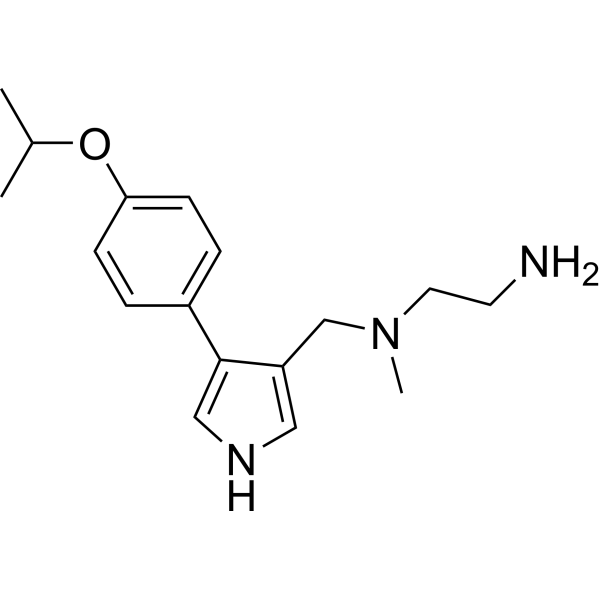
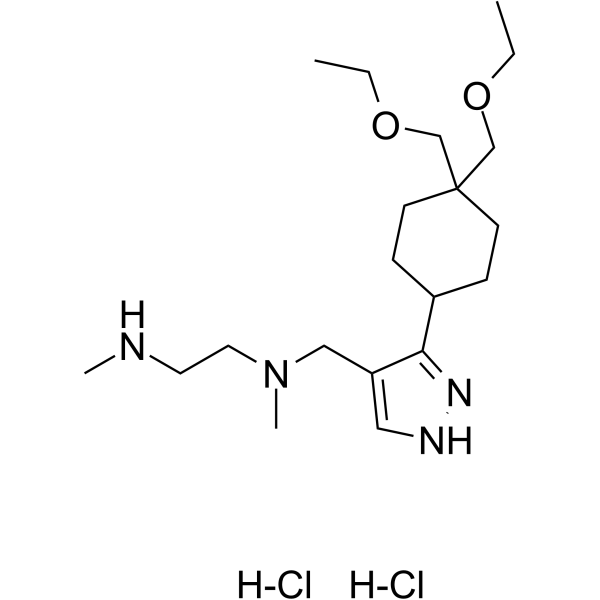 0 ImagesSynonyms: EPZ019997 dihydrochlorideGSK3368715 dihydrochloride (EPZ019997 dihydrochloride) is an orally active, reversible, and S-adenosyl-L-methionine (SAM) uncompetitive type I protein arginine methyltransferases (PRMTs) inhibitor (IC50=3.1 nM (PRMT1), 48 nM (PRMT3), 1148 nM (PRMT4), 5.7 nM (PRMT6), 1.7 nM (PRMT8)). GSK3368715 dihydrochloride (EPZ019997 dihydrochloride) produces a shift in arginine methylation states, alters exon usage, and has strong anti-cancer activity.
 -
loading...loading...
-
- EPZ020411
-
loading...loading...
-
- EPZ020411 hydrochloride
-
loading...loading...
-
-
GSK3368715
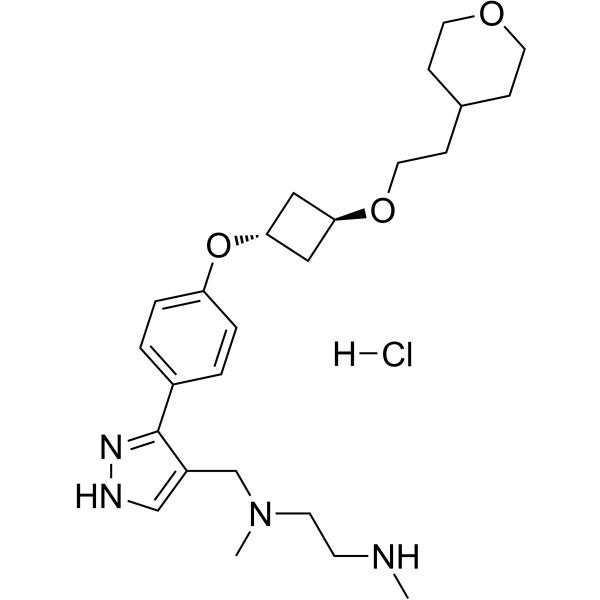
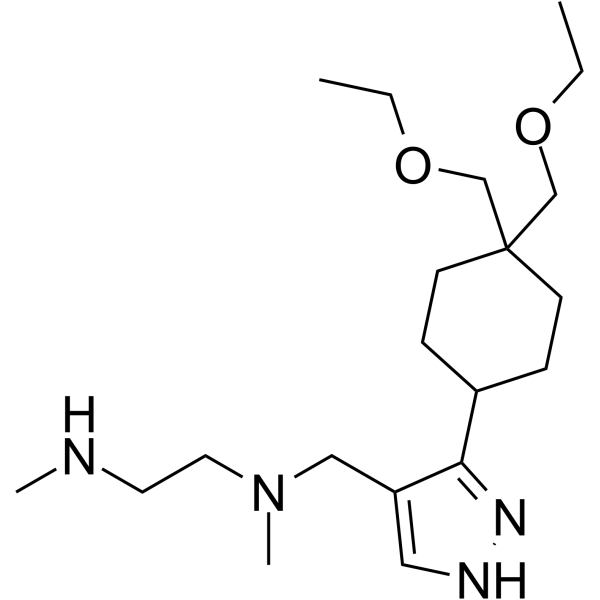 0 ImagesSynonyms: EPZ019997GSK3368715 (EPZ019997) is an orally active, reversible, and S-adenosyl-L-methionine (SAM) uncompetitive type I protein arginine methyltransferases (PRMTs) inhibitor (IC50=3.1 nM (PRMT1), 48 nM (PRMT3), 1148 nM (PRMT4), 5.7 nM (PRMT6), 1.7 nM (PRMT8)). GSK3368715 (EPZ019997) produces a shift in arginine methylation states, alters exon usage, and has strong anti-cancer activity.
 -
loading...loading...
-
-
SKLB06489
 0 ImagesCat. No.: HY-186045SKLB06489 is a selective and orally active inhibitor of type I PRMT enzymes, with IC50 values of 64.55 nM (PRMT1), 4.21 nM (PRMT6), and 51.27 nM (PRMT8). SKLB06489 inhibits cell proliferation, colony formation, DNA replication, and DNA damage repair in cancer cells. SKLB06489 induces G0/G1-phase cell cycle arrest and apoptosis in cancer cells. SKLB06489 enhances intracellular cholesterol efflux via ABCA1 and ABCG1 upregulation, disrupts cholesterol metabolic homeostasis, and suppresses tumor growth in subcutaneous xenograft models. SKLB06489 can be used for the research of triple-negative breast cancer (TNBC).
 -
loading...loading...
-
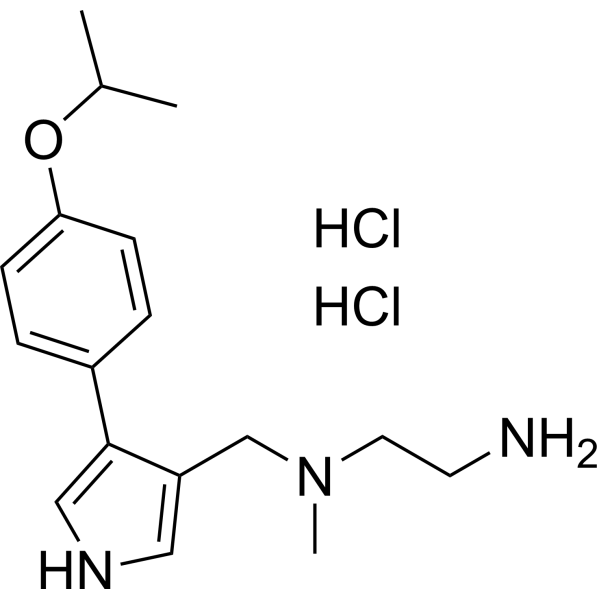
- MS023 dihydrochloride
-
loading...loading...
-
-
MS4322
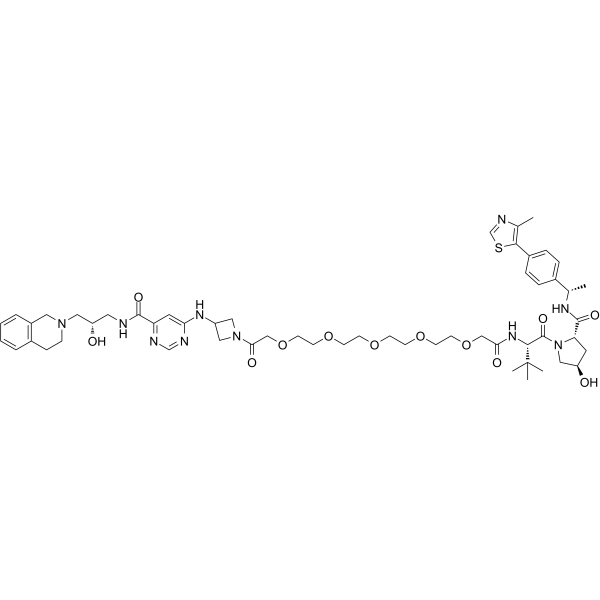 0 ImagesSynonyms: YS43-22MS4322 (YS43-22) is a specific PRMT5 PROTAC degrader. MS4322 reduces the PRMT5 protein level with a DC50 of 1.1 μM in MCF-7 cells. MS4322 inhibits the methyltransferase activity of PRMT5 with an IC50 of 18 nM. MS4322 promotes ubiquitination and degradation of PRMT5. MS4322 can be used for the research of breast cancer, lung cancer, and hepatocellular cancer. (Pink: PRMT5 ligand (HY-173092); Blue: E3 ligase ligand HY-112078); Black: linker (HY-124780); E3+linker (HY-173093 )).
 -
loading...loading...
-
-
MS4322 (isomer)
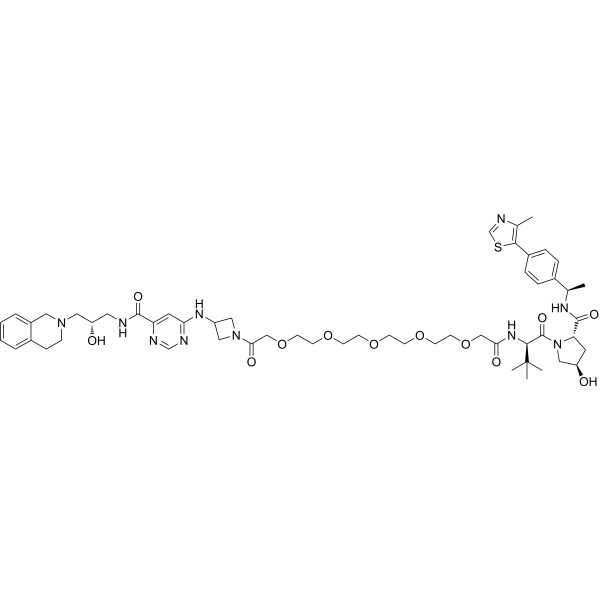 0 ImagesSynonyms: YS43-22 (isomer)MS4322 (YS43-22) isomer is an isomer of MS4322. MS4322 is a specific PRMT5 PROTAC degrader. MS4322 reduces the PRMT5 protein level with a DC50 of 1.1 μM in MCF-7 cells. MS4322 inhibits the methyltransferase activity of PRMT5 with an IC50 of 18 nM. MS4322 promotes ubiquitination and degradation of PRMT5. MS4322 can be used for the research of breast cancer, lung cancer, and hepatocellular cancer.
 -
loading...loading...
-
-
GSK3368715 trihydrochloride
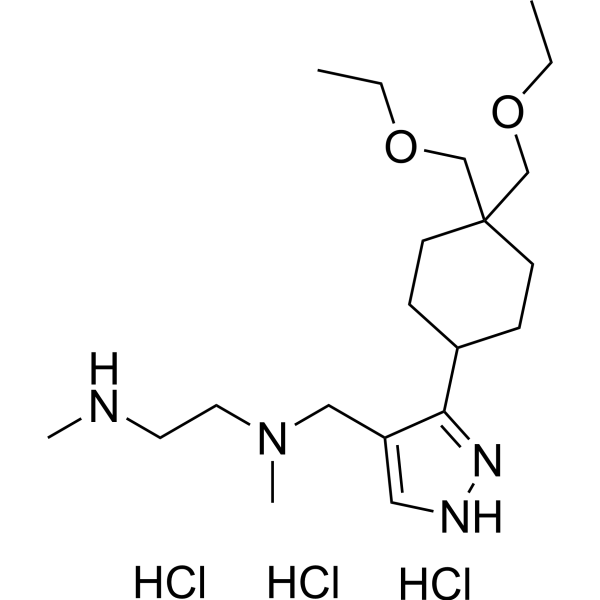 0 ImagesCat. No.: HY-128717BCAS No.: 2227587-26-8Synonyms: EPZ019997 trihydrochlorideGSK3368715 trihydrochloride (EPZ019997) is an orally active, reversible, and S-adenosyl-L-methionine (SAM) uncompetitive type I protein arginine methyltransferases (PRMTs) inhibitor (IC50=3.1 nM (PRMT1), 48 nM (PRMT3), 1148 nM (PRMT4), 5.7 nM (PRMT6), 1.7 nM (PRMT8)). GSK3368715 trihydrochloride (EPZ019997) produces a shift in arginine methylation states, alters exon usage, and has strong anti-cancer activity.
 -
loading...loading...
-
-
PRMT4-IN-1
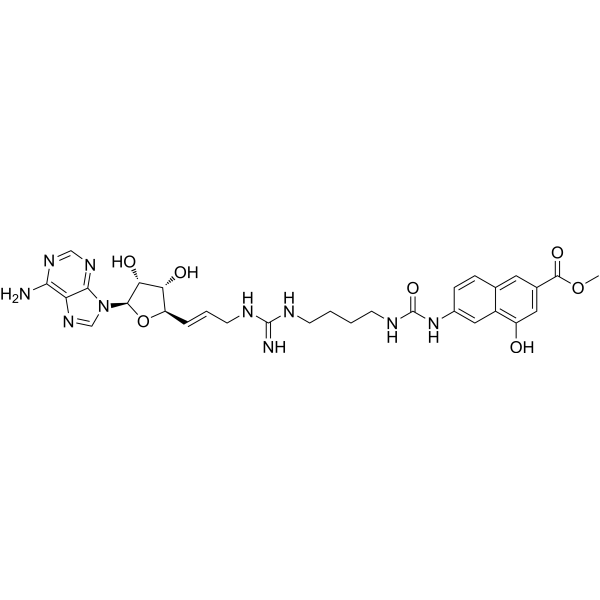 0 ImagesCat. No.: HY-146810CAS No.: 3035425-70-5PRMT4-IN-1 is a selective inhibitor of PRMT4 (IC50=3.2 nM). PRMT4-IN-1 inhibits MCF7 relative viability.
 -
loading...loading...
-
-
PRMT1-IN-3
 0 ImagesCat. No.: HY-175821CAS No.: 892570-48-8PRMT1-IN-3 is a potent protein arginine methyltransferase 1 (PRMT1) inhibitor with an IC50 of 4.11 μM. PRMT1-IN-3 inhibits PRMT6 and PRMT8 with IC50s of 23.3 and 30.1 μM. PRMT1-IN-3 suppresses asymmetric dimethylarginine (ADMA) levels and histone H4R3me2a modification in triple-negative breast cancer (TNBC) cells. PRMT1-IN-3 induces cell cycle arrest, apoptosis, and inhibits migration and colony formation in MDA-MB-231 cells. PRMT1-IN-3 acts as chemotherapeutic sensitizers for Paclitaxel (HY-B0015). PRMT1-IN-3 can be used for the study of TNBC.
 -
loading...loading...
-
-
CARM1-IN-4
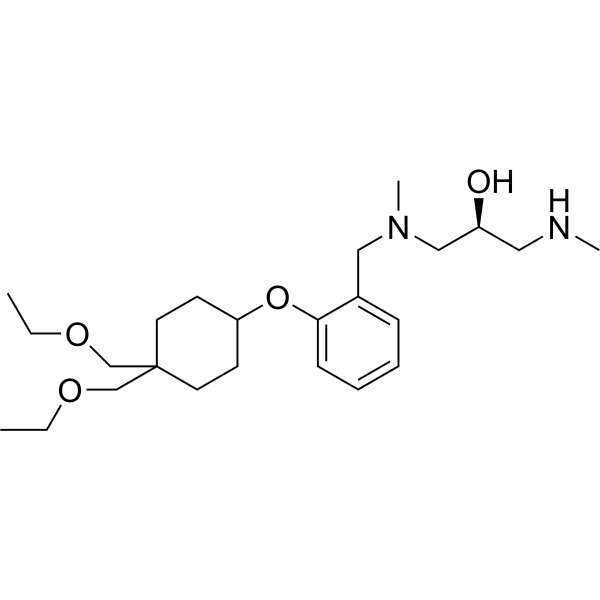 0 ImagesCat. No.: HY-161334CAS No.: 2878481-07-1CARM1-IN-4 (compound 11f) is a potent CARM1 inhibitor with IC50s of 9 nM and 56 nM for CARM1 and PRMT1, respectively. CARM1-IN-4 displays significant anti-proliferative effects on colorectal cancer cell lines. CARM1-IN-4 effectively inhibits the methyltransferase activity of CARM1 and prevents methylation of downstream proteins. CARM1-IN-4 induces apoptosis and shows antitumor activity.
 -
loading...loading...
-
- 1



