



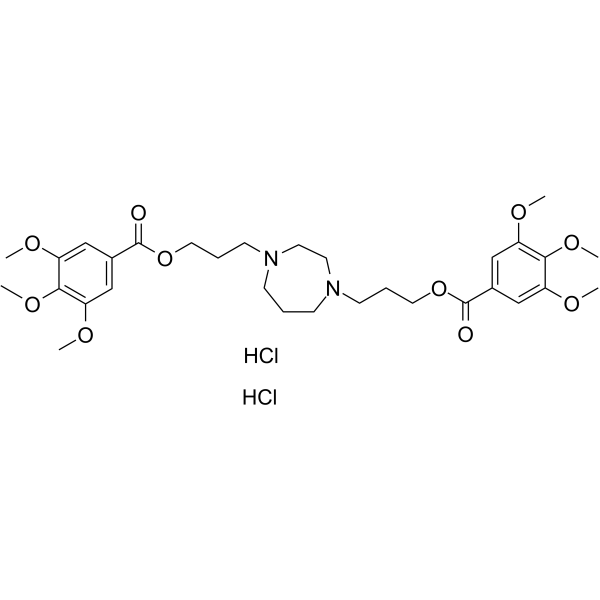
Dilazep dihydrochloride
Based on 2 publication(s) in Google Scholar
Dilazep dihydrochloride is an inhibitor of adenosine uptake. Dilazep dihydrochloride has cerebral and coronary vasodilating action through enhancement of effect of adenosine. Dilazep dihydrochloride also inhibits the ischemic damage, platelet aggregation, and membrane transport of nucleosides.
For research use only. We do not sell to patients.
- Purity : 99.93%
- CAS No.: 20153-98-4
- Formula: C31H46Cl2N2O10
- Molecular Weight:677.61
-
Storage:
4°C, sealed storage, away from moisture
* In solvent : -80°C, 6 months; -20°C, 1 month (sealed storage, away from moisture)

To place orders, for customer services and technical support, please contact: MedChemExpress USA
Tel: 609-228-6898 E-mail: [email protected] [email protected]


-
 Biological Activity
-
Chemical Information
-
Solvent & Solubility
- Purity & Documentation
- References
-
 Help & FAQs


-
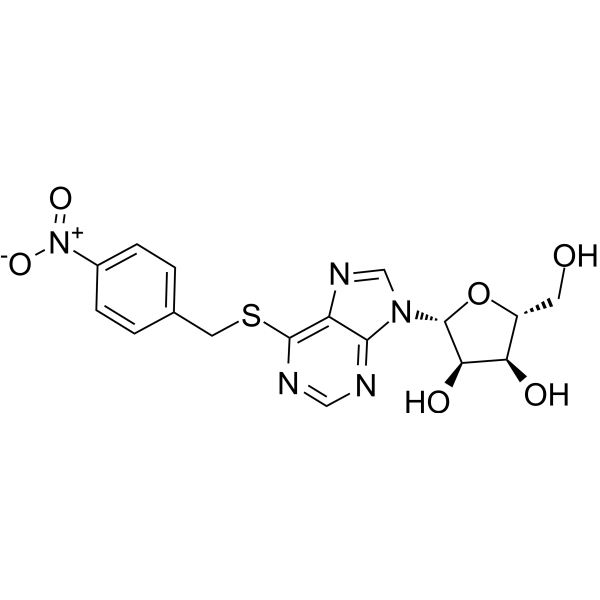
HY-W010936
NitrobenzylthioinosineENT1 Transporter Inhibitor -
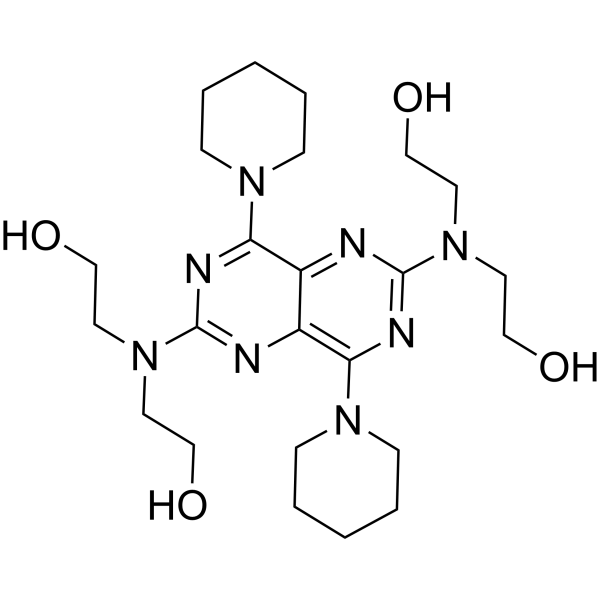
HY-B0312
DipyridamolePDE Inhibitor -
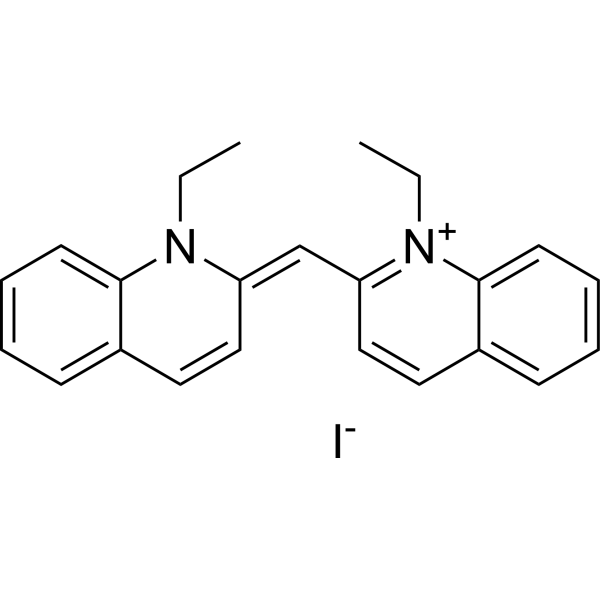
HY-107740
Pseudoisocyanine iodideTransporter Inhibitor -

HY-100957R
Dilazep dihydrochloride (Standard)Adenosine Uptake Inhibitor -
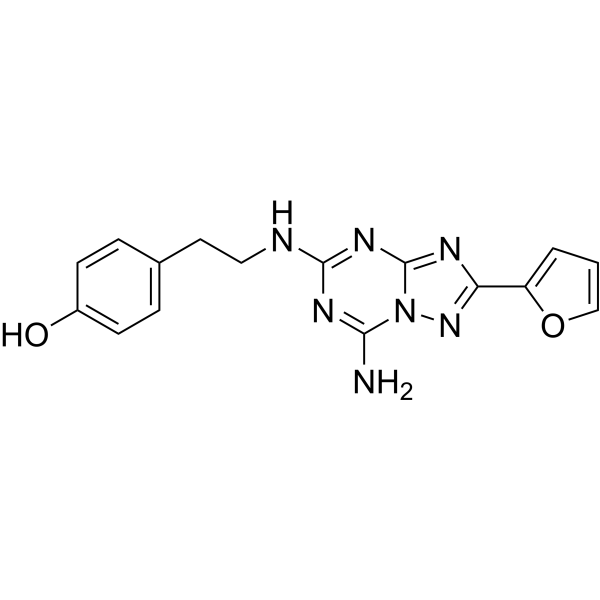
HY-19532
ZM241385A2A Receptor Antagonist -
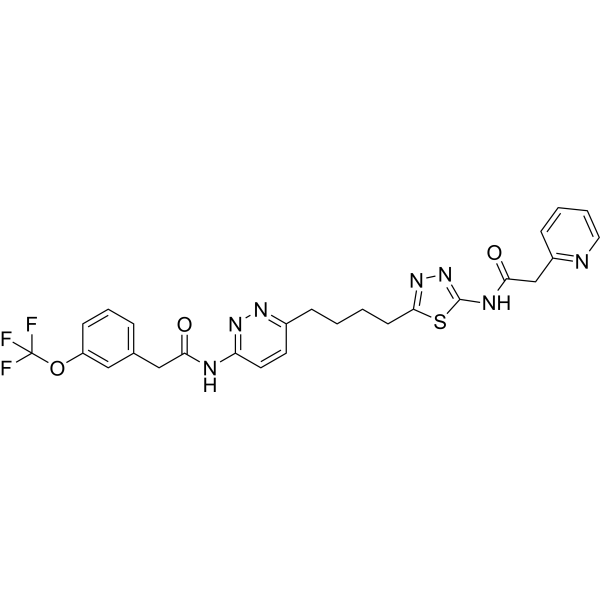
HY-12248
TelaglenastatGLS1 Inhibitor -
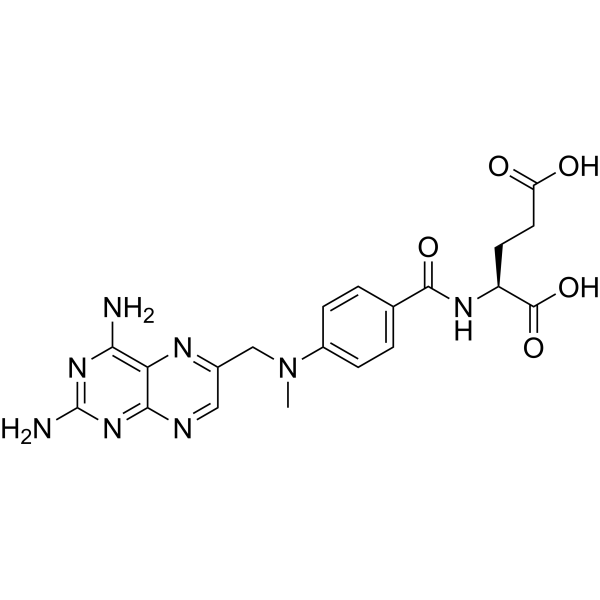
HY-14519
MethotrexateDihydrofolate Reductase Inhibitor -
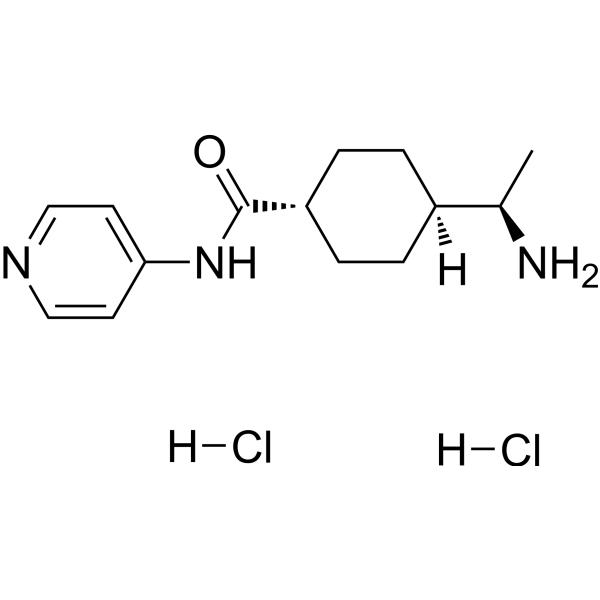
HY-10583
Y-27632 dihydrochlorideROCK Inhibitor -
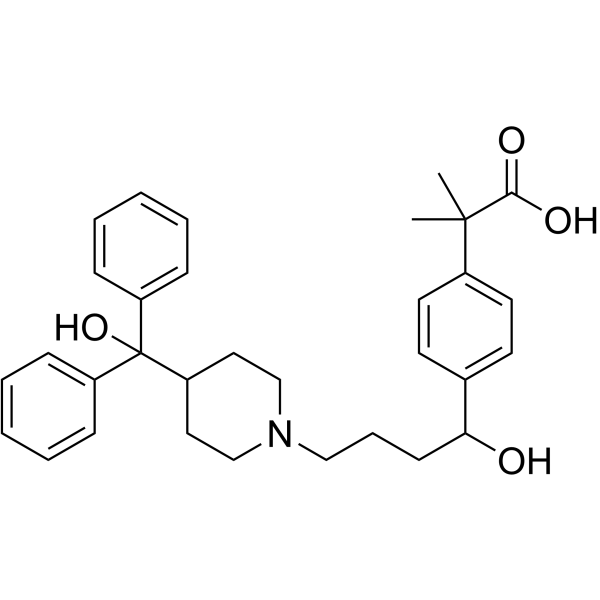
HY-B0801
FexofenadineH1R Antagonist -
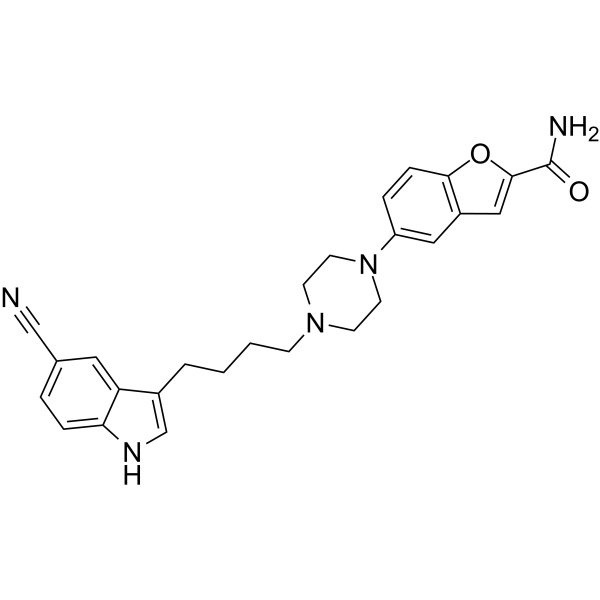
HY-14262
VilazodoneSerotonin Reuptake Inhibitor -
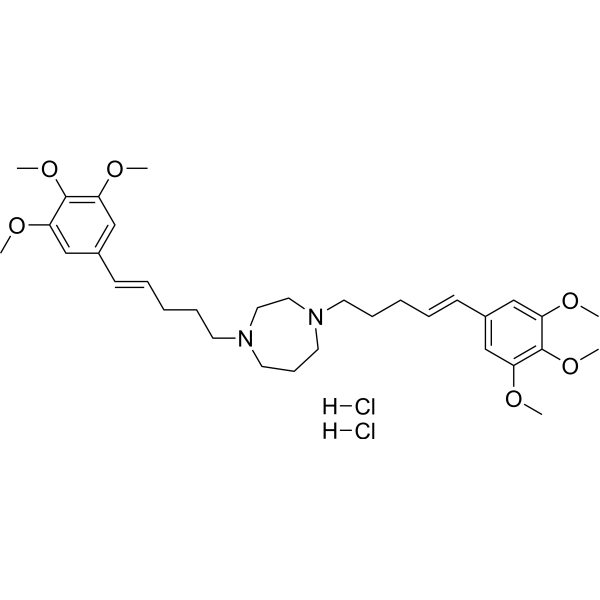
HY-12743A
K-7174 dihydrochlorideProteasome/GATA Inhibitor -
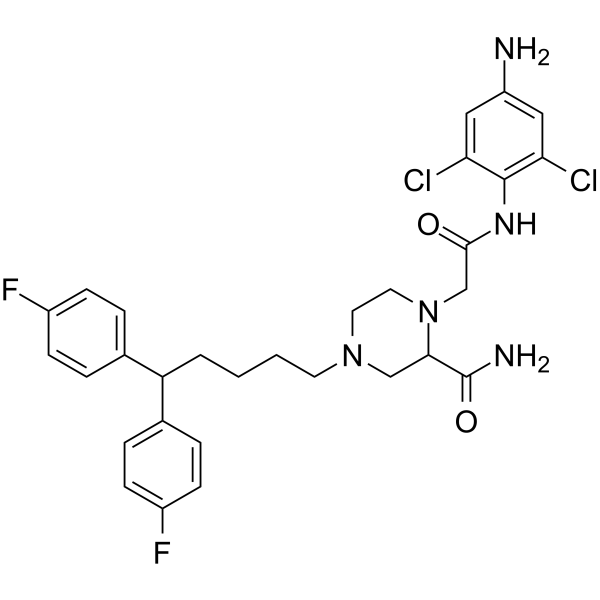
HY-106841
DraflazineENT1 Inhibitor
Publications Citing Use of MedChemExpress (MCE) Dilazep dihydrochloride
More Customer Validation & Images

-
Cell Imaging/Staining

-
Cell Proliferation/Viability Assay

-
Cell Proliferation/Viability Assay

-
Cell Proliferation/Viability Assay

-
Cell Proliferation/Viability Assay


Biological Activity
Description
IC50 & Target
Adenosine uptake
Cellular Effect
|
Cell Line

|
Type | Value | Description | References |
|---|---|---|---|---|
| H9c2 | IC50 |
8800 nM
Compound: DZ
|
Inhibition of rat ENT2 expressed in rat H9c2 cells by cell-based 3H[5-]uridine uptake assay
Inhibition of rat ENT2 expressed in rat H9c2 cells by cell-based 3H[5-]uridine uptake assay
|
[PMID: 25454272] |
| U2OS | IC50 |
0.1 nM
Compound: 3074
|
Inhibition of the equilibrative nucleoside transporter (ENT1, SLC29A1) as assessed by GPCR-mediated changes in cell morphology using the impedance-based transporter activity through receptor activation (TRACT) assay
Inhibition of the equilibrative nucleoside transporter (ENT1, SLC29A1) as assessed by GPCR-mediated changes in cell morphology using the impedance-based transporter activity through receptor activation (TRACT) assay
|
[PMID: 31551431] |
In Vitro
The uptake mechanism has been studied extensively in vitro and Dilazep, NBI and Dipyridamole have been reported to inhibit the uptake of adenosine into different cells. Of these compounds, Dilazep and NBI are almost 10 times more potent than Dipyridamole. In addition, only Dilazep is water soluble and no solubility aiding organic solvent is needed for preparing an aqueous solution[1].
MedChemExpress (MCE) has not independently confirmed the accuracy of these methods. They are for reference only. .
In Vivo
Dilazep inhibits the phospholipase activation in reperfused heart mitochondria and also inhibits the lipid peroxidation caused by cerebral ischemia and reperfusion. Dilazep may prevent ischemic cerebral injury due to an increase in cerebral blood flow and/or its protective effects on vascular endothelial cell membrane[1].
MedChemExpress (MCE) has not independently confirmed the accuracy of these methods. They are for reference only.


Chemical Information
-
CAS No. 20153-98-4
-
Appearance Solid
-
Molecular Weight 677.61
-
Formula C31H46Cl2N2O10
-
Color White to off-white
-
SMILES
O=C(C1=CC(OC)=C(OC)C(OC)=C1)OCCCN2CCN(CCCOC(C3=CC(OC)=C(OC)C(OC)=C3)=O)CCC2.Cl.Cl
-
Shipping
Room temperature in continental US; may vary elsewhere.
-
Storage
4°C, sealed storage, away from moisture
* In solvent : -80°C, 6 months; -20°C, 1 month (sealed storage, away from moisture)


Publications (2)
-
Journal Impact Factor
-
Most Recent
-
Dilazep dihydrochloride purchased from MedChemExpress. Usage Cited in: bioRxiv. 2025 Oct 23.
Cell numbers were measured using the CyQUANT assay after 12 days culture in glutamine-deprived medium supplemented with 1 mM α-KG and 2.5 µM exDNA, with or without co-treatment using nucleoside transporter inhibitors (NBTI, DPL, or Dilazep dihydrochloride) at 0.01 µM (+), 0.1 µM (++), or 1 µM (+++).
Dilazep dihydrochloride purchased from MedChemExpress. Usage Cited in: bioRxiv. 2025 Oct 23.
Cell numbers were measured using the CyQUANT assay after 12 days culture in glutamine-deprived medium supplemented with 1 mM α-KG and 2.5 µM exDNA, with or without co-treatment using nucleoside transporter inhibitors (NBTI, DPL, or Dilazep dihydrochloride) at 0.01 µM (+), 0.1 µM (++), or 1 µM (+++).
Dilazep dihydrochloride purchased from MedChemExpress. Usage Cited in: bioRxiv. 2025 Oct 23.
Cell numbers were measured using the CyQUANT assay after 12 days culture in glutamine-deprived medium supplemented with 1 mM α-KG and 2.5 µM exDNA, with or without co-treatment using nucleoside transporter inhibitors (NBTI, DPL, or Dilazep dihydrochloride) at 0.01 µM (+), 0.1 µM (++), or 1 µM (+++).
Dilazep dihydrochloride purchased from MedChemExpress. Usage Cited in: bioRxiv. 2025 Oct 23.
Cell numbers were measured using the CyQUANT assay after 12 days culture in glutamine-deprived medium supplemented with 1 mM α-KG and 2.5 µM exDNA, with or without co-treatment using nucleoside transporter inhibitors (NBTI, DPL, or Dilazep dihydrochloride) at 0.01 µM (+), 0.1 µM (++), or 1 µM (+++).
-
Dilazep dihydrochloride purchased from MedChemExpress. Usage Cited in: bioRxiv. 2025 Sep 4.
Representative images of WT Hela cells or VPS13B KO cells treated with: azelastine (AZL); Dilazep dihydrochloride (DLZ). 10 µM, 24 h. cells were fixed and stained with an anti-LBPA antibody (upper panel) of with Filipin (lower panel).


Solvent & Solubility
In Vitro:
H2O : ≥ 100 mg/mL (147.58 mM)
DMSO : 100 mg/mL (147.58 mM; Need ultrasonic; Hygroscopic DMSO has a significant impact on the solubility of product, please use newly opened DMSO)
* "≥" means soluble, but saturation unknown.
Please refer to the solubility information to select the appropriate solvent. Once prepared, please aliquot and store the solution to prevent product inactivation from repeated freeze-thaw cycles.
Storage method and period of stock solution: -80°C, 6 months; -20°C, 1 month (sealed storage, away from moisture). When stored at -80°C, please use it within 6 months. When stored at -20°C, please use it within 1 month.
* Note: If you choose water as the stock solution, please dilute it to the working solution, then filter and sterilize it with a 0.22 μm filter before use.
Please refer to the solubility information to select the appropriate solvent. Once prepared, please aliquot and store the solution to prevent product inactivation from repeated freeze-thaw cycles.
Storage method and period of stock solution: -80°C, 6 months; -20°C, 1 month (sealed storage, away from moisture). When stored at -80°C, please use it within 6 months. When stored at -20°C, please use it within 1 month.
* Note: If you choose water as the stock solution, please dilute it to the working solution, then filter and sterilize it with a 0.22 μm filter before use.
Concentration (start) × Volume (start) = Concentration (final) × Volume (final)
In Vivo:
Select the appropriate dissolution method based on your experimental animal and administration route.
- For the following dissolution methods, please ensure to first prepare a clear stock solution using an In Vitro approach and then sequentially add co-solvents:
- To ensure reliable experimental results, the clarified stock solution can be appropriately stored based on storage conditions. As for the working solution for In Vivo experiments, it is recommended to prepare freshly and use it on the same day.
- The percentages shown for the solvents indicate their volumetric ratio in the final prepared solution. If precipitation or phase separation occurs during preparation, heat and/or sonication can be used to aid dissolution.
Add each solvent one by one: 10% DMSO 40% PEG300 5% Tween-80 45% Saline
Solubility: ≥ 5 mg/mL (7.38 mM); Clear solution
This protocol yields a clear solution of ≥ 5 mg/mL (saturation unknown).
Taking 1 mL working solution as an example, add 100 μL DMSO stock solution (50.0 mg/mL) to 400 μL PEG300, and mix evenly; then add 50 μL Tween-80 and mix evenly; then add 450 μL Saline to adjust the volume to 1 mL.
Preparation of Saline: Dissolve 0.9 g sodium chloride in ddH₂O and dilute to 100 mL to obtain a clear Saline solution.
Add each solvent one by one: 10% DMSO 90% (20% SBE-β-CD in Saline)
Solubility: ≥ 5 mg/mL (7.38 mM); Clear solution
This protocol yields a clear solution of ≥ 5 mg/mL (saturation unknown).
Taking 1 mL working solution as an example, add 100 μL DMSO stock solution (50.0 mg/mL) to 900 μL 20% SBE-β-CD in Saline, and mix evenly.
Preparation of 20% SBE-β-CD in Saline (4°C, storage for one week): 2 g SBE-β-CD powder is dissolved in 10 mL Saline, completely dissolve until clear.
In Vivo Dissolution Calculator
Please enter the basic information of animal experiments:
-
-
-
-
Recommended: Prepare an additional quantity of animals to account for potential losses during experiments.
Working solution concentration: 0.22 mg/mL
This product has good water solubility, please refer to the measured solubility data in water/PBS/Saline for details.


Purity & Documentation
-
Data Sheet (272 KB)
-
SDS (394 KB)
- English - EN (394 KB)
- Français - FR (394 KB)
- Deutsch - DE (394 KB)
- Norwegian - NO (394 KB)
- Español - ES (394 KB)
- Swedish - SV (394 KB)
- Italian - IT (394 KB)
- Korean - KR (394 KB)
- Portuguese - PT (394 KB)
-
Handling Instructions (2659 KB)
References
[1]. Zhang Y, et al. Dilazep potentiation of adenosine-mediated superior mesenteric arterial vasodilation. J Pharmacol Exp Ther. 1991 Sep;258(3):767-71. [Content Brief]
[2]. Kawagoe J, et al. Effect of dilazep dihydrochloride against ischemia and reperfusion-induced disruption of blood-brain barrier in rats: a quantitative study. Naunyn Schmiedebergs Arch Pharmacol. 1992 Apr;345(4):485-8. [Content Brief]


Complete Stock Solution Preparation Table
Please refer to the solubility information to select the appropriate solvent. Once prepared, please aliquot and store the solution to prevent product inactivation from repeated freeze-thaw cycles.
Storage method and period of stock solution: -80°C, 6 months; -20°C, 1 month (sealed storage, away from moisture). When stored at -80°C, please use it within 6 months. When stored at -20°C, please use it within 1 month.
| Optional Solvent | Concentration Solvent Mass | 1 mg | 5 mg | 10 mg | 25 mg |
|---|---|---|---|---|---|
| H2O / DMSO | 1 mM | 1.4758 mL | 7.3789 mL | 14.7578 mL | 36.8944 mL |
| 5 mM | 0.2952 mL | 1.4758 mL | 2.9516 mL | 7.3789 mL | |
| 10 mM | 0.1476 mL | 0.7379 mL | 1.4758 mL | 3.6894 mL | |
| 15 mM | 0.0984 mL | 0.4919 mL | 0.9839 mL | 2.4596 mL | |
| 20 mM | 0.0738 mL | 0.3689 mL | 0.7379 mL | 1.8447 mL | |
| 25 mM | 0.0590 mL | 0.2952 mL | 0.5903 mL | 1.4758 mL | |
| 30 mM | 0.0492 mL | 0.2460 mL | 0.4919 mL | 1.2298 mL | |
| 40 mM | 0.0369 mL | 0.1845 mL | 0.3689 mL | 0.9224 mL | |
| 50 mM | 0.0295 mL | 0.1476 mL | 0.2952 mL | 0.7379 mL | |
| 60 mM | 0.0246 mL | 0.1230 mL | 0.2460 mL | 0.6149 mL | |
| 80 mM | 0.0184 mL | 0.0922 mL | 0.1845 mL | 0.4612 mL | |
| 100 mM | 0.0148 mL | 0.0738 mL | 0.1476 mL | 0.3689 mL |
* Note: If you choose water as the stock solution, please dilute it to the working solution, then filter and sterilize it with a 0.22 μm filter before use.


Dilazep dihydrochloride Related Classifications
HY-100957 Related Classifications
 Powered by Bioz