



EMPA
Based on 14 publication(s) in Google Scholar
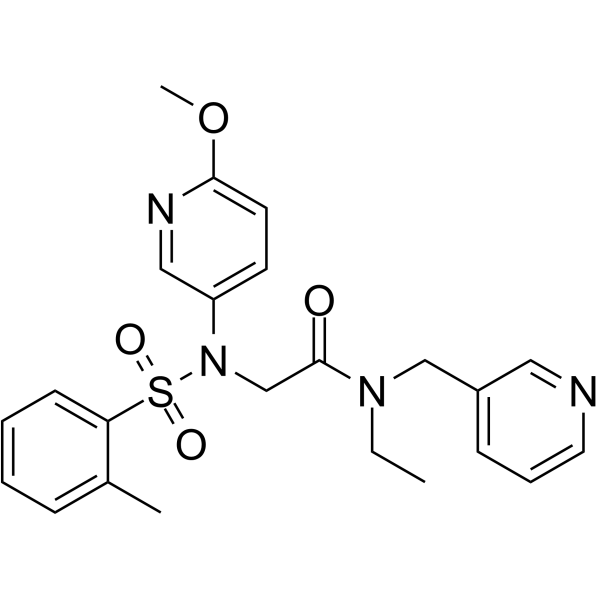
EMPA is a high-affinity, reversible and selective orexin OX2 receptor antagonist. [3H]EMPA binds to human and rat OX2-HEK293 membranes with KD values of 1.1 and 1.4 nM respectively.
For research use only. We do not sell to patients.
- Purity : 99.92%
- CAS No.: 680590-49-2
- Formula: C23H26N4O4S
- Molecular Weight:454.54
-
Storage:Powder -20°C, 3 years ; In solvent -80°C, 6 months , -20°C, 1 month

To place orders, for customer services and technical support, please contact: MedChemExpress USA
Tel: 609-228-6898 E-mail: [email protected] [email protected]


-
 Biological Activity
-
Chemical Information
-
Solvent & Solubility
- Purity & Documentation
- References
-
 Help & FAQs


-
HY-100452
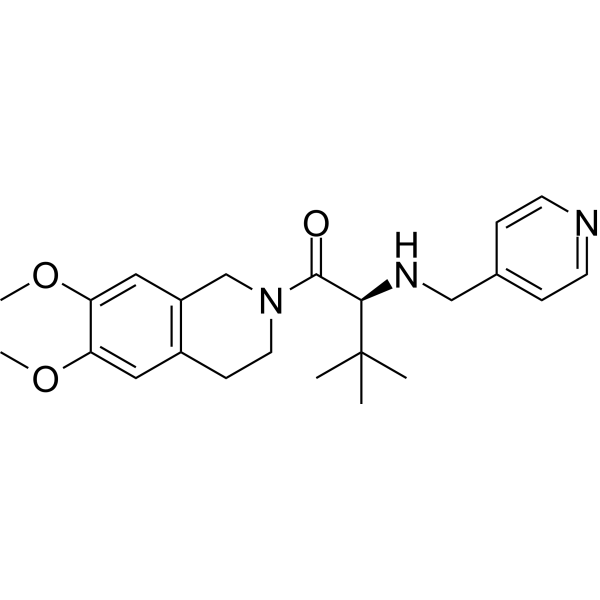
TCS-OX2-29OX2R Antagonist -
HY-10805
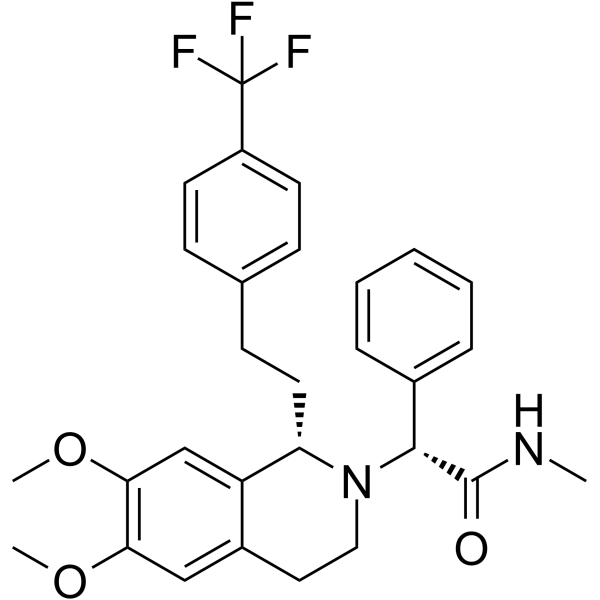
AlmorexantOrexin Receptor Antagonist -
HY-10895
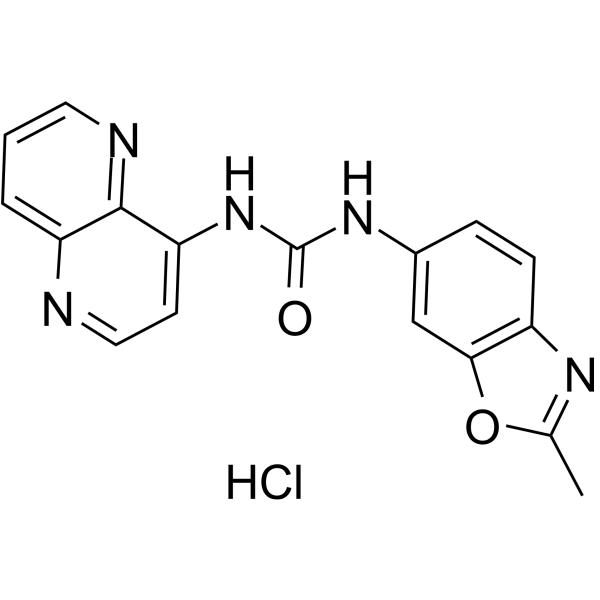
SB-334867OX1 Receptor Antagonist -
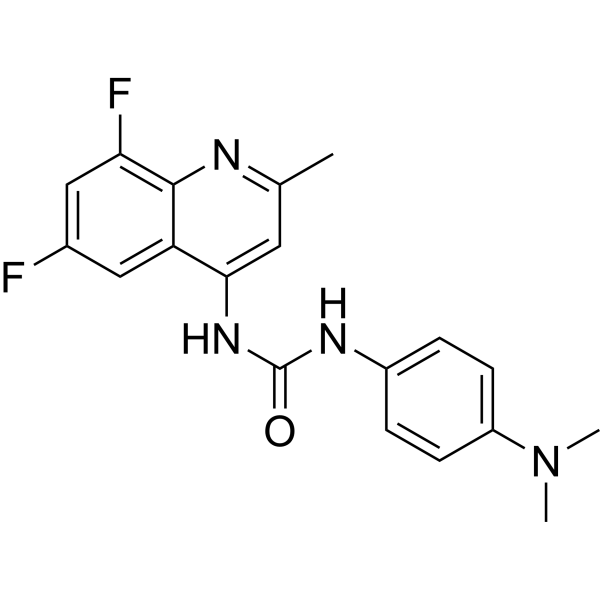
HY-70068
SB-408124OX1 Receptor Antagonist -
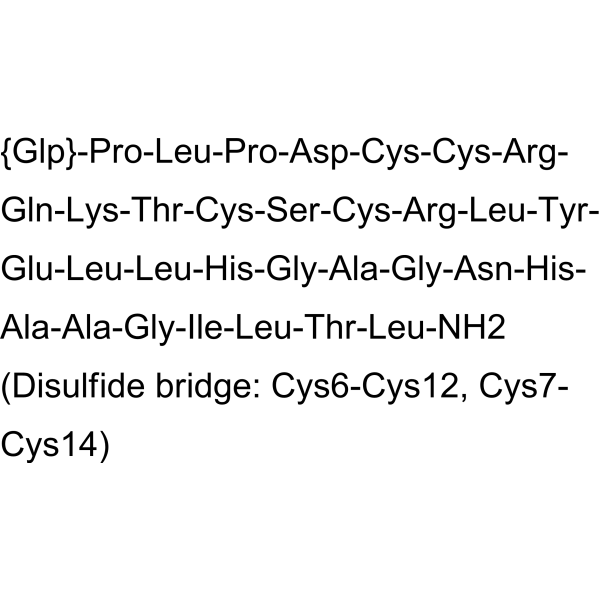
HY-106224
Orexin A (human, rat, mouse)Orexin Receptor Agonist -
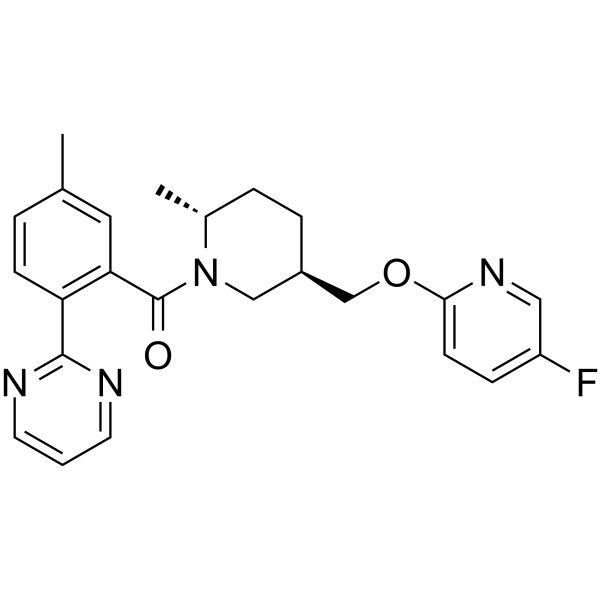
HY-15653
FilorexantOX Receptor Antagonist -
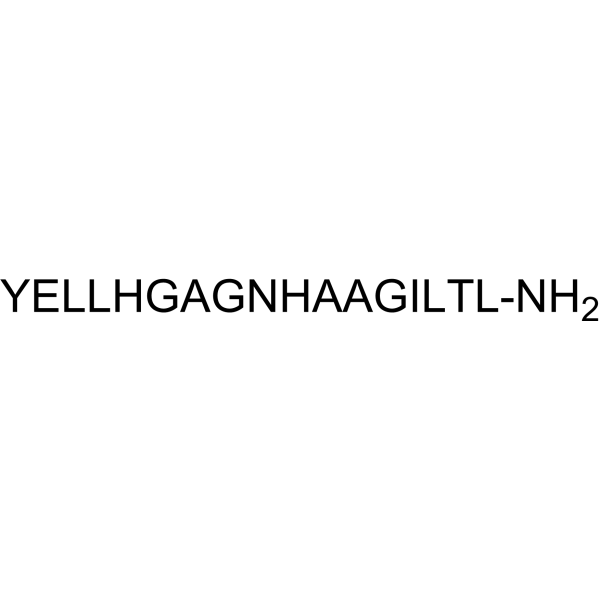
HY-P1341
OXA(17-33)OX1R Agonist -
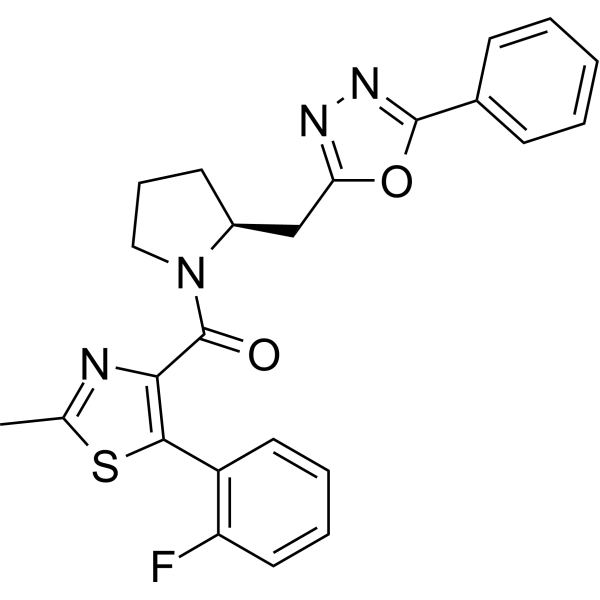
HY-10898
SB-674042OX1 Receptor Antagonist -
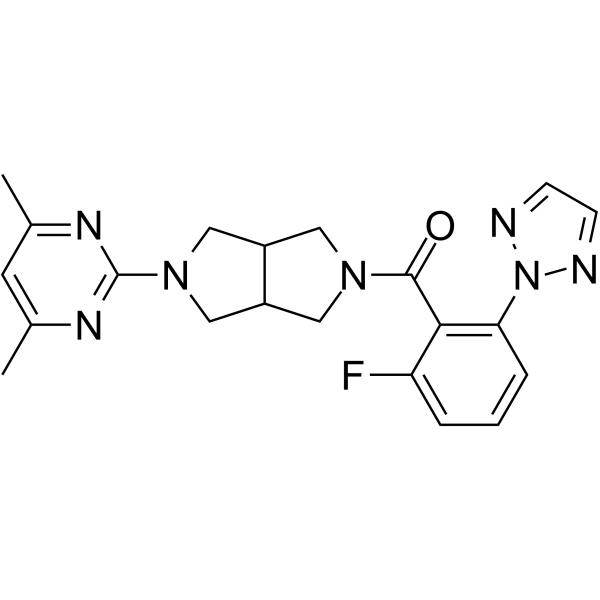
HY-109012
SeltorexantOrexin-2 Receptor Antagonist -
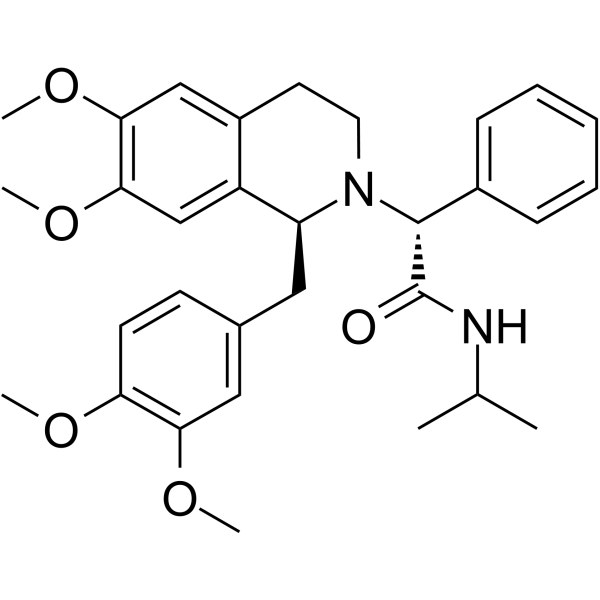
HY-108683
ACT-335827Orexin-1 Receptor Antagonist -
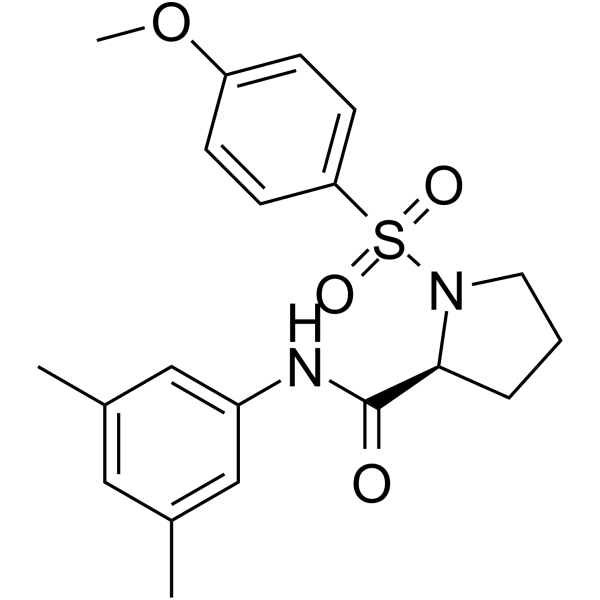
HY-101834
ACT-462206Orexin Receptor Antagonist -
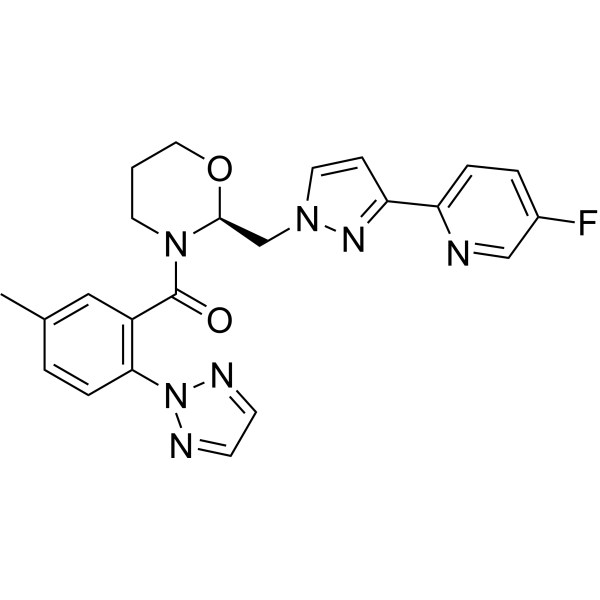
HY-139559
VornorexantOX1R/OX2R Antagonist
Publications Citing Use of MedChemExpress (MCE) EMPA
More- Metabolism. 2026 Feb 16:178:156568. [Abstract]
- Cardiovasc Diabetol. 2024 Dec 4;23(1):430. [Abstract]
- Cardiovasc Res. 2021 Dec 17;117(14):2794-2806. [Abstract]
- Antioxidants (Basel). 2026 Apr 24;15(5):543. [Abstract]
- J Clin Transl Hepatol. 2026 Mar 28;14(3):291-300. [Abstract]
- Biogerontology. 2023 Oct;24(5):771-782. [Abstract]
- Biochim Biophys Acta Mol Basis Dis. 2025 Jun;1871(5):167805. [Abstract]
- Sci Rep. 2026 May 29. [Abstract]
- Diabetol Metab Syndr. 2022 Aug 23;14(1):121. [Abstract]
- Am J Physiol Heart Circ Physiol. 2024 Feb 1;326(2):H418-H425. [Abstract]
- J Toxicol. 2026 Feb 13:2026:5808911. [Abstract]
- Biomed Pharmacother. 2025 Nov:192:118670. [Abstract]
- Research Square Preprint. 2021 Sep.
- Research Square Preprint. 2021 Sep.
All Orexin Receptor (OX Receptor) Isoforms
More

Biological Activity
Description
IC50 & Target
[1]|
OX2 Receptor |
In Vitro
EMPA competitively antagonizes orexin-A-and orexin-B-evoked accumulation of [3H]inositol phosphates (IP) at hOX2 receptors with pA2 values of 8.6 and 8.8 respectively[1].
EMPA displaces the [3H]EMPA binding from cell membranes containing human and rat OX2 receptors, with Ki values of 1.10±0.24 nM and 1.45±0.13 nM, respectively[1].
EMPA shows an IC50=5.75 µM, Ki=2.63 µM, and IC50=12.8 µM, Ki=5.8 µM in the binding assay at human and mouse V1a receptors, respectively[1].
In CHO(dHFr-) cells stably expressing hOX2 receptors, EMPA inhibits orexin-A-or orexin-B-evoked [Ca2+]i response with IC50s of 8.8±1.7 nM and 7.9±1.7 nM, respectively[1].
MedChemExpress (MCE) has not independently confirmed the accuracy of these methods. They are for reference only.
In Vivo
EMPA (3-30 mg/kg; i.p.) induces a significant and dose-dependent reduction in the baseline LMA in france and male Wistar rats. EMPA (3-30 mg/kg; i.p.) demonstrates a clear dose-dependent inhibition of spontaneous activity as compared with vehicle-treated animals[1].
MedChemExpress (MCE) has not independently confirmed the accuracy of these methods. They are for reference only.
-
Animal Model:Male NMRI mice (20-30 g)[1]
-
Dosage:1, 3, 10, 30, 100, 300 mg/kg
-
Administration:Injected i.p. at a volume of 10 mL/kg
-
Result:Dose-dependently reversed this [Ala11,D-Leu15]orexin-B-induced hyperlocomotion without itself significantly affecting LMA.
-
Animal Model:France and Male Wistar rats (196-237 g)[1]
-
Dosage:3, 10, 30 mg/kg
-
Administration:Injected i.p. at a volume of 5 mL/kg
-
Result:Induced a significant and dose-dependent reduction in the baseline LMA.
Demonstrated a clear dose-dependent inhibition of spontaneous activity as compared with vehicle-treated animals.


Chemical Information
-
CAS No. 680590-49-2
-
Appearance Solid
-
Molecular Weight 454.54
-
Formula C23H26N4O4S
-
Color White to light yellow
-
SMILES
O=C(N(CC)CC1=CC=CN=C1)CN(C2=CC=C(OC)N=C2)S(=O)(C3=CC=CC=C3C)=O
-
Shipping
Room temperature in continental US; may vary elsewhere.
-
Storage
Powder -20°C 3 years In solvent -80°C 6 months -20°C 1 month


Publications (14)
-
Journal Impact Factor
-
Most Recent
-
Metabolism
The early metabolic cardiac targets of empagliflozin during the development of heart failure, independent of SGLT2 inhibition. [Abstract]2026 Feb 16:178:156568. PMID: 41707753 -
Cardiovasc Diabetol
SGLT2 inhibitor downregulates ANGPTL4 to mitigate pathological aging of cardiomyocytes induced by type 2 diabetes. [Abstract]2024 Dec 4;23(1):430. PMID: 39633372 -
Cardiovasc Res
Off-target effects of sodium-glucose co-transporter 2 blockers: empagliflozin does not inhibit Na+/H+ exchanger-1 or lower [Na+]i in the heart. [Abstract]2021 Dec 17;117(14):2794-2806. PMID: 33135077 -
Antioxidants (Basel)
Empagliflozin Ameliorates Diabetic Cardiomyopathy by Inhibiting Ferroptosis via SIRT3: Mechanisms and Therapeutic Implications. [Abstract]2026 Apr 24;15(5):543. PMID: 42193166 -
J Clin Transl Hepatol
2026 Mar 28;14(3):291-300. PMID: 41970189 -
Biogerontology
Empagliflozin improves kidney senescence induced by D-galactose by reducing sirt1-mediated oxidative stress. [Abstract]2023 Oct;24(5):771-782. PMID: 37227544 -
Biochim Biophys Acta Mol Basis Dis
2025 Jun;1871(5):167805. PMID: 40113049 -
Sci Rep
SGLT2 inhibition with empagliflozin attenuates retinal oxidative stress and damage in diabetic mice. [Abstract]2026 May 29. PMID: 42215540 -
Diabetol Metab Syndr
New insights into the role of empagliflozin on diabetic renal tubular lipid accumulation. [Abstract]2022 Aug 23;14(1):121. PMID: 35999610 -
Am J Physiol Heart Circ Physiol
Empagliflozin treatment rescues abnormally reduced Na currents in ventricular cardiomyocytes from dystrophin-deficient mdx mice. [Abstract]2024 Feb 1;326(2):H418-H425. PMID: 38099845 -
J Toxicol
Empagliflozin Alleviates Arsenic Trioxide-Induced Nephrotoxicity by Activating the SIRT1/Akt/Nrf2 Pathway. [Abstract]2026 Feb 13:2026:5808911. PMID: 41695613 -
Biomed Pharmacother
Sodium glucose co-transporter 2 inhibitor empagliflozin prevents endothelial dysfunction induced by oscillatory shear stress. [Abstract]2025 Nov:192:118670. PMID: 41130096 -
-


Solvent & Solubility
In Vitro:
DMSO : 50 mg/mL (110.00 mM; Need ultrasonic; Hygroscopic DMSO has a significant impact on the solubility of product, please use newly opened DMSO)
Please refer to the solubility information to select the appropriate solvent. Once prepared, please aliquot and store the solution to prevent product inactivation from repeated freeze-thaw cycles.
Storage method and period of stock solution: -80°C, 6 months; -20°C, 1 month. When stored at -80°C, please use it within 6 months. When stored at -20°C, please use it within 1 month.
Please refer to the solubility information to select the appropriate solvent. Once prepared, please aliquot and store the solution to prevent product inactivation from repeated freeze-thaw cycles.
Storage method and period of stock solution: -80°C, 6 months; -20°C, 1 month. When stored at -80°C, please use it within 6 months. When stored at -20°C, please use it within 1 month.
Concentration (start) × Volume (start) = Concentration (final) × Volume (final)
In Vivo:
Select the appropriate dissolution method based on your experimental animal and administration route.
- For the following dissolution methods, please ensure to first prepare a clear stock solution using an In Vitro approach and then sequentially add co-solvents:
- To ensure reliable experimental results, the clarified stock solution can be appropriately stored based on storage conditions. As for the working solution for In Vivo experiments, it is recommended to prepare freshly and use it on the same day.
- The percentages shown for the solvents indicate their volumetric ratio in the final prepared solution. If precipitation or phase separation occurs during preparation, heat and/or sonication can be used to aid dissolution.
Add each solvent one by one: 10% DMSO 40% PEG300 5% Tween-80 45% Saline
Solubility: ≥ 2.5 mg/mL (5.50 mM); Clear solution
This protocol yields a clear solution of ≥ 2.5 mg/mL (saturation unknown).
Taking 1 mL working solution as an example, add 100 μL DMSO stock solution (25.0 mg/mL) to 400 μL PEG300, and mix evenly; then add 50 μL Tween-80 and mix evenly; then add 450 μL Saline to adjust the volume to 1 mL.
Preparation of Saline: Dissolve 0.9 g sodium chloride in ddH₂O and dilute to 100 mL to obtain a clear Saline solution.
Add each solvent one by one: 10% DMSO 90% (20% SBE-β-CD in Saline)
Solubility: ≥ 2.5 mg/mL (5.50 mM); Clear solution
This protocol yields a clear solution of ≥ 2.5 mg/mL (saturation unknown).
Taking 1 mL working solution as an example, add 100 μL DMSO stock solution (25.0 mg/mL) to 900 μL 20% SBE-β-CD in Saline, and mix evenly.
Preparation of 20% SBE-β-CD in Saline (4°C, storage for one week): 2 g SBE-β-CD powder is dissolved in 10 mL Saline, completely dissolve until clear.
In Vivo Dissolution Calculator
Please enter the basic information of animal experiments:
-
-
-
-
Recommended: Prepare an additional quantity of animals to account for potential losses during experiments.
Please enter your animal formula composition:
-
%DMSO +
Recommended: Keep the proportion of DMSO in working solution below 2% if your animal is weak.
-
%+
-
+%Tween-80 + +
-
%Saline +
The co-solvents required include: DMSO, . All of co-solvents are available by MedChemExpress (MCE). , Tween 80. All of co-solvents are available by MedChemExpress (MCE).
Working solution concentration: 0.22 mg/mL
Method for preparing stock solution: mg drug dissolved in μL DMSO. Stock solution concentration: mg/mL.
1. Take μL DMSO stock solution;
2. Add μL .
μL , mix evenly;
3. Then add μL Tween 80, mix evenly;
4. Then add μL
Please ensure that the stock solution in the first step is dissolved to a clear state, and add co-solvents in sequence. You can use ultrasonic heating (ultrasonic cleaner, recommended frequency 20-40 kHz), vortexing, etc. to assist dissolution.


Purity & Documentation
-
Data Sheet (280 KB)
-
SDS (392 KB)
- English - EN (392 KB)
- Français - FR (392 KB)
- Deutsch - DE (392 KB)
- Norwegian - NO (392 KB)
- Español - ES (392 KB)
- Swedish - SV (392 KB)
- Italian - IT (392 KB)
- Korean - KR (392 KB)
- Portuguese - PT (392 KB)
-
Handling Instructions (2659 KB)
References


Complete Stock Solution Preparation Table
Please refer to the solubility information to select the appropriate solvent. Once prepared, please aliquot and store the solution to prevent product inactivation from repeated freeze-thaw cycles.
Storage method and period of stock solution: -80°C, 6 months; -20°C, 1 month. When stored at -80°C, please use it within 6 months. When stored at -20°C, please use it within 1 month.
| Optional Solvent | Concentration Solvent Mass | 1 mg | 5 mg | 10 mg | 25 mg |
|---|---|---|---|---|---|
| DMSO | 1 mM | 2.2000 mL | 11.0001 mL | 22.0003 mL | 55.0007 mL |
| 5 mM | 0.4400 mL | 2.2000 mL | 4.4001 mL | 11.0001 mL | |
| 10 mM | 0.2200 mL | 1.1000 mL | 2.2000 mL | 5.5001 mL | |
| 15 mM | 0.1467 mL | 0.7333 mL | 1.4667 mL | 3.6667 mL | |
| 20 mM | 0.1100 mL | 0.5500 mL | 1.1000 mL | 2.7500 mL | |
| 25 mM | 0.0880 mL | 0.4400 mL | 0.8800 mL | 2.2000 mL | |
| 30 mM | 0.0733 mL | 0.3667 mL | 0.7333 mL | 1.8334 mL | |
| 40 mM | 0.0550 mL | 0.2750 mL | 0.5500 mL | 1.3750 mL | |
| 50 mM | 0.0440 mL | 0.2200 mL | 0.4400 mL | 1.1000 mL | |
| 60 mM | 0.0367 mL | 0.1833 mL | 0.3667 mL | 0.9167 mL | |
| 80 mM | 0.0275 mL | 0.1375 mL | 0.2750 mL | 0.6875 mL | |
| 100 mM | 0.0220 mL | 0.1100 mL | 0.2200 mL | 0.5500 mL |


EMPA Related Classifications
HY-108682 Related Classifications
 Powered by Bioz