



Triacetin

Based on 1 Customer Validation
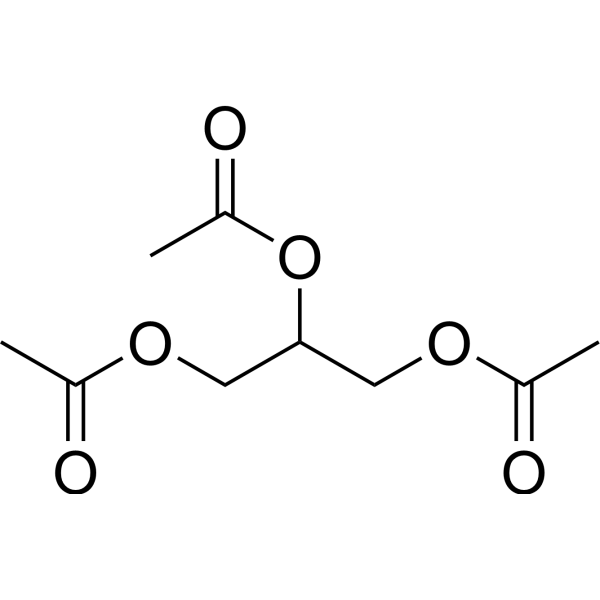
Triacetin (Glyceryl triacetate) is a synthetic compound that is a triester of glycerol and acetic acid, orally active. Triacetin increases acetate bioavailability in glioma cells. Triacetin induces glioma cell growth arrest and Apoptosis. Triacetin freely crosses the blood brain barrier/plasma membrane. Triacetin increases histone acetylation and enhances Temozolomide (HY-17364) (TMZ) chemotherapeutic efficacy .
Para uso exclusivo en investigación. No vendemos a pacientes.
- Pureza : 99.87%
- No. CAS: 102-76-1
- Fòrmula: C9H14O6
- Peso molecular:218.20
-
Almacenamiento:Pure form -20°C, 3 years , 4°C, 2 years ; In solvent -80°C, 6 months , -20°C, 1 month

To place orders, for customer services and technical support, please contact: MedChemExpress USA
Tel: 609-228-6898 E-mail: [email protected] [email protected]


-
 Actividad biológica
-
Chemical Information
-
Solvente y solubilidad
- Protocolo
- Pureza y Documentación
- Referencias
-
 Help & FAQs


-

HY-B0896R
Triacetin (Standard)Endogenous Metabolite -
HY-N1981
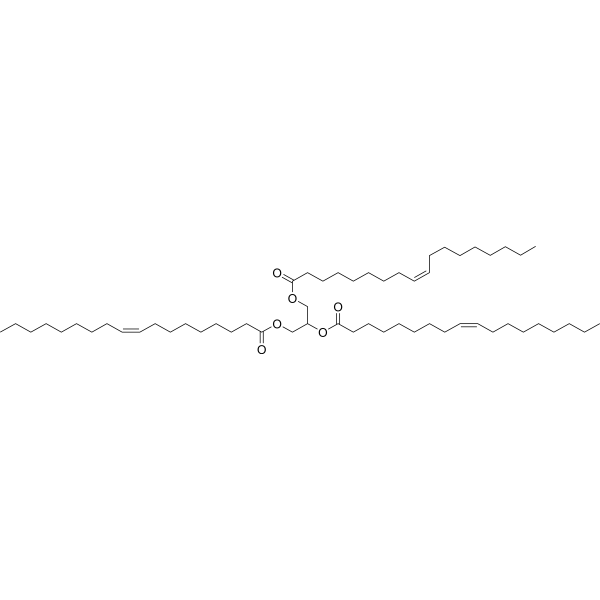
TrioleinMonoacid Triglyceride -
HY-W011404
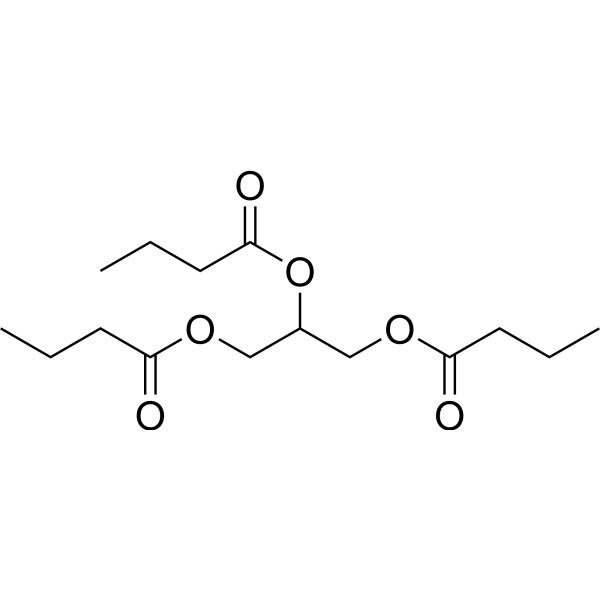
TributyrinApoptosis Inducer -

HY-N1981R
Triolein (Standard)Monoacid Triglyceride -
HY-127035
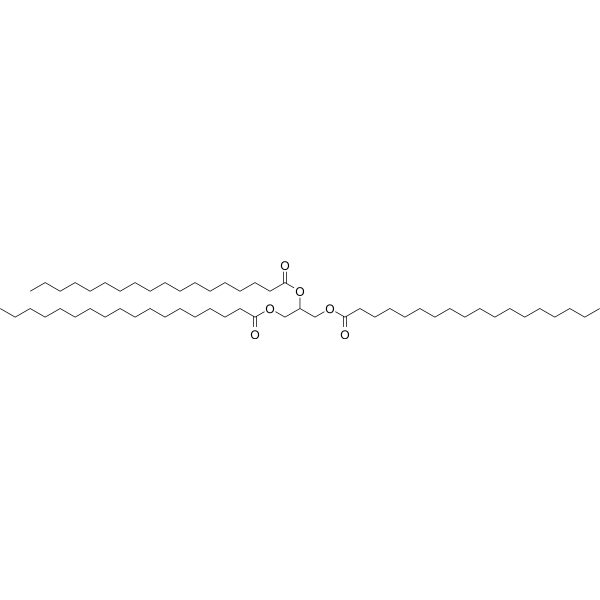
TristearinStearic Acid -
HY-W127506
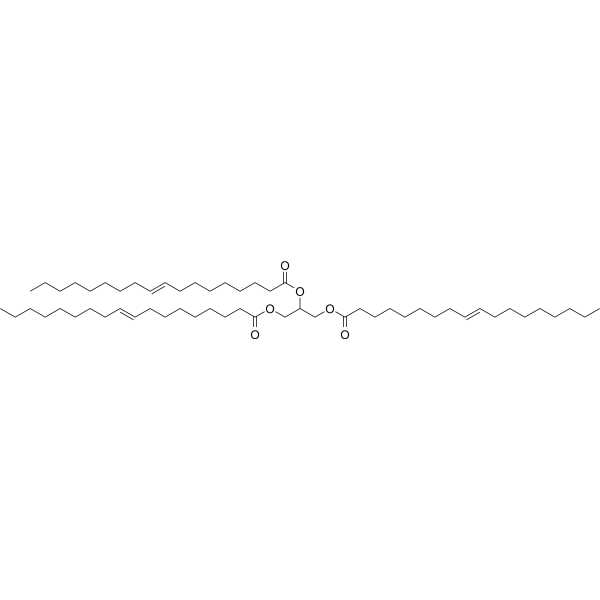
TrielaidinBiochemical Assay Reagent -

HY-W706672
Propane-1,2,3-triyl tritricosanoate -

HY-W011404R
Tributyrin (Standard)Apoptosis Inducer -

HY-127035R
Tristearin (Standard)Stearic Acid -
HY-131423
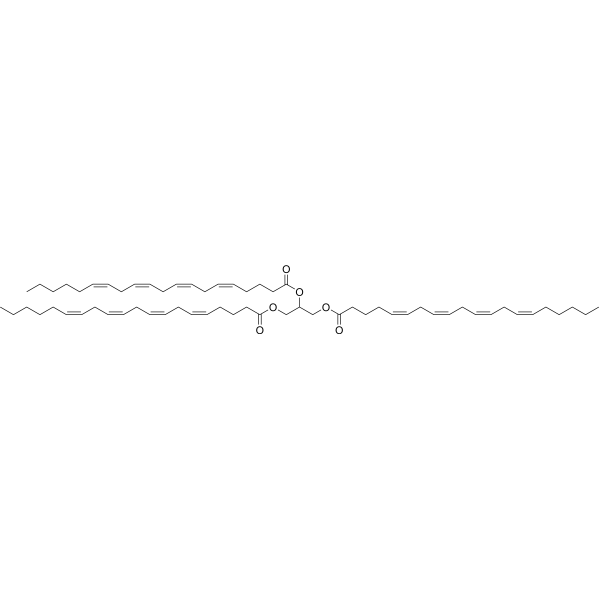
TriarachidoninBiochemical Assay Reagent -

HY-W706672R
Propane-1,2,3-triyl tritricosanoate (Standard)
Ver todos los productos específicos de isoformas Endogenous Metabolite
More

Actividad biológica
Descripciòn
IC50 & Target
|
Human Endogenous Metabolite |
In Vitro
Triacetin (0.25%, 24 h) induces growth arrest of HOG, Hs683, U87, U251, OG33, OG35 GBM9, GBM12, GBM34, GBM2, GBM8 and GBM44 cells in vitro[1].
Triacetin (25 mM, 24 h) causes effective inhibition on the U87MG (human malignant glioma) cell viability[2].
Triacetin (12.5-25 mM, 24 h) induces clear G2/M cell-cycle arrest in U87MG cells.[2].
Triacetin (12.5 mM) induces apoptosis in GBM cancer cells[2].
Triacetin (25 mM, 24 h) decreases the class I and class II HDAC (histone deacetylase) mRNA expression in U87MG cells[2].
Triacetin (12.5 mM, 24 h) inhibits HDAC-8 activity in U87MG cells[2].
Triacetin (12.5 mM, 24 h) activates the mTOR complexes downstream genes which play an important role in cancer cell metabolism such as S6K1, mSIN1, Protor 2, and PKCα[2].
Triacetin (12.5 mM, 24 h) shows an increased tumor suppressor miRs that can inhibit growth, proliferation, invasion, migration, and angiogenesis in U87MG cells[2].
MedChemExpress (MCE) has not independently confirmed the accuracy of these methods. They are for reference only.
-
Cell Line:Established glioma cell lines and primary tumor-derived GSCs.
-
Concentration:0.25%
-
Incubation Time:24 h
-
Result:Induced G0 growth arrest of all glioma cells, except U87, U251 and GBM (glioblastoma) 8 GSCs, without affecting Oli-Neu OPCs (oligodendrocyte progenitor cell line) or astrocytes and promoted NSC (neural stem cells) expansion.
The growth reduction of established glioma cell lines and primary tumor-derived GSCs in vitro is not due to the promotion of differentiation.
-
Cell Line:U87 MG cells
-
Concentration:12.5, 25 mM
-
Incubation Time:24 h
-
Result:Induced 12% and 25% of sub-G1 cells and 60% and 79% of G2/M cells.
-
Cell Line:GBM cancer cells
-
Concentration:12.5 mM
-
Incubation Time:24 h
-
Result:Increased caspase-3 activity in treated GBM cancer cells.
-
Cell Line:U87MG cells
-
Concentration:25 mM
-
Incubation Time:24 h
-
Result:Decreased the classI and class II HDAC (histone deacetylase) mRNA expression.
Increased expression of S6K1, mSIN1, Protor 2, and PKCα.
Increased expression of miR-15b, miR-92, miR-101, miR-155, miR-199, miR-200, miR-223, and slight increase in expression in miR-16 and miR-17.
In Vivo
Triacetin (5.0 g/kg with 10% v/v Ora-Sweet SF, p.o., daily, 40days) alone increases survival of mice orthotopically engrafted with GBM-derived GSCs[1].
MedChemExpress (MCE) has not independently confirmed the accuracy of these methods. They are for reference only.
-
Animal Model:Adult (8 week, 24 - 28g) male athymic mice orthotopically engrafted with oligodendroglioma-derived GSC cells [1].
-
Dosage:5.0 g/kg with 10% v/v oral-sweet SF
-
Administration:p.o., daily, 14 days
-
Result:Significantly reduced tumor bioluminescence and increased survival but did not reduce end-point tumor volume with treatment of TMZ (Temozolomide) (HY-17364).
-
Animal Model:Adult (8 week, 24 - 28g) male athymic mice orthotopically engrafted with GBM-derived GSC cells[1].
-
Dosage:5.0 g/kg with 10% v/v oral-sweet SF
-
Administration:p.o., daily, 40 days
-
Result:Alone did not alter blood glucose, bioluminescence, or end-point tumor volume; however, increased survival.
Significantly increased survival with treatment of TMZ, with two of eight mice never redeveloping measurable flux or displaying histological signs of tumor at study termination.
- Detection of Apoptosis
- TUNEL staining for apoptotic DNA fragmentation
- Annexin V plus membrane-impermeant dye apoptosis staining
- Protocol for Cell Counting and Cell Density Analysis
- Somatic Cell Culture
- Protocol for Pharmacokinetic Study
- Apoptosis Solutions
- CCK-8/WST-8 Cell Proliferation Assay
- Cell Counting-Based Growth Curve Assay
- MTT Cell Proliferation Assay
- Cell Viability Determination by MTT Colorimetric Assay


Chemical Information
-
No. CAS 102-76-1
-
Appearance Liquid (Density: 1.16 g/cm3)
-
Peso molecular 218.20
-
Fòrmula C9H14O6
-
Color Colorless to light yellow
-
SMILES
CC(OCC(OC(C)=O)COC(C)=O)=O
-
Synonyms
Glyceryl triacetate; 1,2,3-Triacetoxypropane
-
Structure Classification
-
Initial Source
-
Envío
Room temperature in continental US; may vary elsewhere.
-
Almacenamiento
Pure form -20°C 3 years 4°C 2 years In solvent -80°C 6 months -20°C 1 month


Solvente y solubilidad
In Vitro:
DMSO : ≥ 200 mg/mL (916.59 mM; Hygroscopic DMSO has a significant impact on the solubility of product, please use newly opened DMSO)
* "≥" means soluble, but saturation unknown.
Please refer to the solubility information to select the appropriate solvent. Once prepared, please aliquot and store the solution to prevent product inactivation from repeated freeze-thaw cycles.
Storage method and period of stock solution: -80°C, 6 months; -20°C, 1 month. When stored at -80°C, please use it within 6 months. When stored at -20°C, please use it within 1 month.
Please refer to the solubility information to select the appropriate solvent. Once prepared, please aliquot and store the solution to prevent product inactivation from repeated freeze-thaw cycles.
Storage method and period of stock solution: -80°C, 6 months; -20°C, 1 month. When stored at -80°C, please use it within 6 months. When stored at -20°C, please use it within 1 month.
Concentration (start) × Volume (start) = Concentration (final) × Volume (final)
In Vivo:
Select the appropriate dissolution method based on your experimental animal and administration route.
- For the following dissolution methods, please ensure to first prepare a clear stock solution using an In Vitro approach and then sequentially add co-solvents:
- To ensure reliable experimental results, the clarified stock solution can be appropriately stored based on storage conditions. As for the working solution for In Vivo experiments, it is recommended to prepare freshly and use it on the same day.
- The percentages shown for the solvents indicate their volumetric ratio in the final prepared solution. If precipitation or phase separation occurs during preparation, heat and/or sonication can be used to aid dissolution.
Add each solvent one by one: 10% DMSO 40% PEG300 5% Tween-80 45% Saline
Solubility: ≥ 5 mg/mL (22.91 mM); Clear solution
This protocol yields a clear solution of ≥ 5 mg/mL (saturation unknown).
Taking 1 mL working solution as an example, add 100 μL DMSO stock solution (50.0 mg/mL) to 400 μL PEG300, and mix evenly; then add 50 μL Tween-80 and mix evenly; then add 450 μL Saline to adjust the volume to 1 mL.
Preparation of Saline: Dissolve 0.9 g sodium chloride in ddH₂O and dilute to 100 mL to obtain a clear Saline solution.
Add each solvent one by one: 10% DMSO 90% (20% SBE-β-CD in Saline)
Solubility: ≥ 5 mg/mL (22.91 mM); Clear solution
This protocol yields a clear solution of ≥ 5 mg/mL (saturation unknown).
Taking 1 mL working solution as an example, add 100 μL DMSO stock solution (50.0 mg/mL) to 900 μL 20% SBE-β-CD in Saline, and mix evenly.
Preparation of 20% SBE-β-CD in Saline (4°C, storage for one week): 2 g SBE-β-CD powder is dissolved in 10 mL Saline, completely dissolve until clear.
In Vivo Dissolution Calculator
Please enter the basic information of animal experiments:
-
-
-
-
Recommended: Prepare an additional quantity of animals to account for potential losses during experiments.
Please enter your animal formula composition:
-
%DMSO +
Recommended: Keep the proportion of DMSO in working solution below 2% if your animal is weak.
-
%+
-
+%Tween-80 + +
-
%Saline +
The co-solvents required include: DMSO, . All of co-solvents are available by MedChemExpress (MCE). , Tween 80. All of co-solvents are available by MedChemExpress (MCE).
Working solution concentration: 0.22 mg/mL
Method for preparing stock solution: mg drug dissolved in μL DMSO. Stock solution concentration: mg/mL.
1. Take μL DMSO stock solution;
2. Add μL .
μL , mix evenly;
3. Then add μL Tween 80, mix evenly;
4. Then add μL
Please ensure that the stock solution in the first step is dissolved to a clear state, and add co-solvents in sequence. You can use ultrasonic heating (ultrasonic cleaner, recommended frequency 20-40 kHz), vortexing, etc. to assist dissolution.


Pureza y Documentación
-
Ficha de datos (278 KB)
-
SDS (394 KB)
- English - EN (394 KB)
- Français - FR (394 KB)
- Deutsch - DE (394 KB)
- Norwegian - NO (394 KB)
- Español - ES (394 KB)
- Swedish - SV (394 KB)
- Italian - IT (394 KB)
- Korean - KR (394 KB)
- Portuguese - PT (394 KB)
-
Instrucciones de manejo (2659 KB)
Referencias
[1]. Tsen AR, et al. Triacetin-based acetate supplementation as a chemotherapeutic adjuvant therapy in glioma. Int J Cancer. 2014 Mar 15;134(6):1300-10. [Content Brief]
[2]. Mekala JR, et al. N-acetyl l-aspartate and Triacetin modulate tumor suppressor MicroRNA and class I and II HDAC gene expression induce apoptosis in Glioblastoma cancer cells in vitro. Life Sci. 2021 Dec 1;286:120024. [Content Brief]


Complete Stock Solution Preparation Table
Please refer to the solubility information to select the appropriate solvent. Once prepared, please aliquot and store the solution to prevent product inactivation from repeated freeze-thaw cycles.
Storage method and period of stock solution: -80°C, 6 months; -20°C, 1 month. When stored at -80°C, please use it within 6 months. When stored at -20°C, please use it within 1 month.
| Optional Solvent | Concentration Solvent Mass | 1 mg | 5 mg | 10 mg | 25 mg |
|---|---|---|---|---|---|
| DMSO | 1 mM | 4.5830 mL | 22.9148 mL | 45.8295 mL | 114.5738 mL |
| 5 mM | 0.9166 mL | 4.5830 mL | 9.1659 mL | 22.9148 mL | |
| 10 mM | 0.4583 mL | 2.2915 mL | 4.5830 mL | 11.4574 mL | |
| 15 mM | 0.3055 mL | 1.5277 mL | 3.0553 mL | 7.6383 mL | |
| 20 mM | 0.2291 mL | 1.1457 mL | 2.2915 mL | 5.7287 mL | |
| 25 mM | 0.1833 mL | 0.9166 mL | 1.8332 mL | 4.5830 mL | |
| 30 mM | 0.1528 mL | 0.7638 mL | 1.5277 mL | 3.8191 mL | |
| 40 mM | 0.1146 mL | 0.5729 mL | 1.1457 mL | 2.8643 mL | |
| 50 mM | 0.0917 mL | 0.4583 mL | 0.9166 mL | 2.2915 mL | |
| 60 mM | 0.0764 mL | 0.3819 mL | 0.7638 mL | 1.9096 mL | |
| 80 mM | 0.0573 mL | 0.2864 mL | 0.5729 mL | 1.4322 mL | |
| 100 mM | 0.0458 mL | 0.2291 mL | 0.4583 mL | 1.1457 mL |


Triacetin Related Classifications
HY-B0896 Related Classifications
 Powered by Bioz