



GW7647 (Standard)
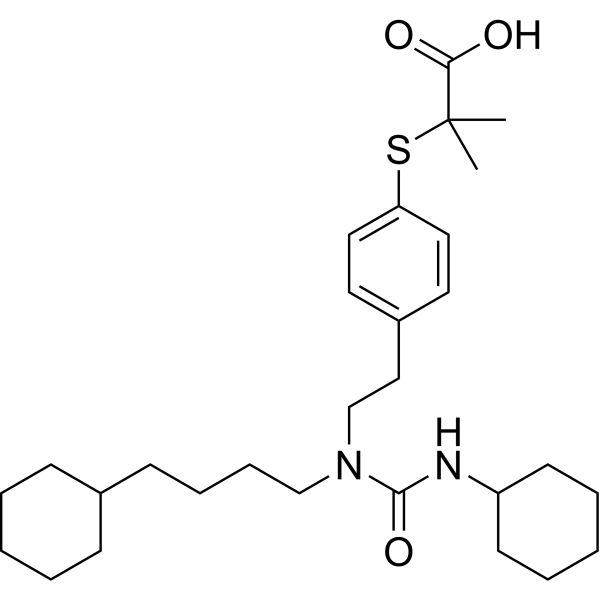
GW7647 (Standard) is the analytical standard of GW7647. This product is intended for research and analytical applications. GW7647 is a potent PPARα agonist, with EC50s of 6 nM, 1.1 μM, and 6.2 μM for human PPARα, PPARγ and PPARδ, respectively.
For research use only. We do not sell to patients.
- CAS No.: 265129-71-3
- Formula: C29H46N2O3S
- Molecular Weight:502.75
-
Storage:
Please store the product under the recommended conditions in the Certificate of Analysis.


To place orders, for customer services and technical support, please contact: MedChemExpress USA
Tel: 609-228-6898 E-mail: [email protected] [email protected]


-
 Product Information
-
Chemical Information
- Purity & Documentation
-
 Help & FAQs


-
HY-13861
GW7647PPAR Agonist -
HY-13956
PioglitazonePPARγ Agonist -
HY-50935
TroglitazonePPARγ Agonist -
HY-17356
Fenofibrate -
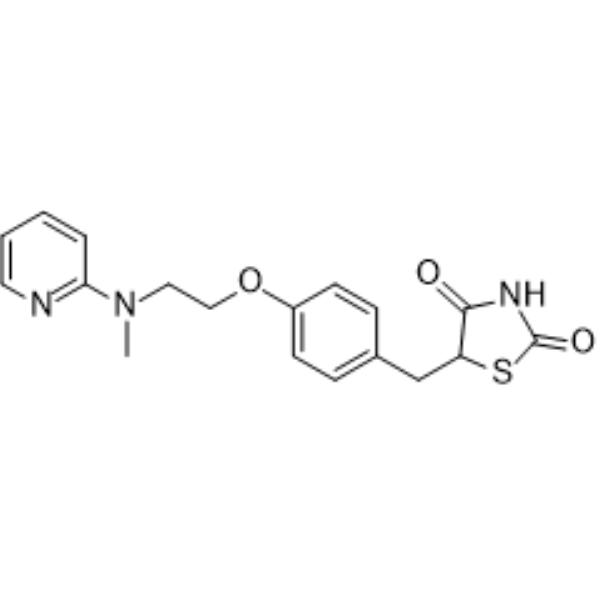
HY-17386
RosiglitazonePPARγ Agonist -
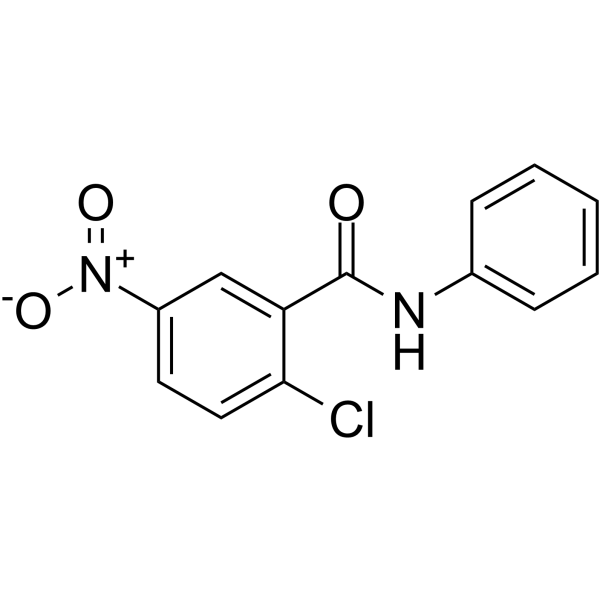
HY-16578
GW9662PPARγ Antagonist -
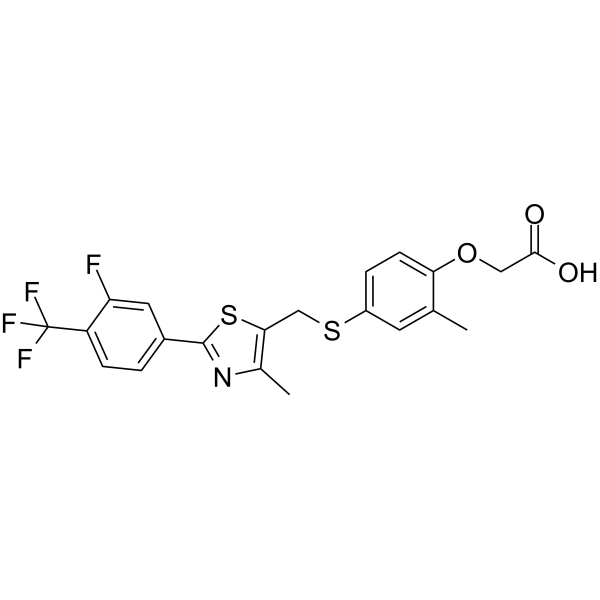
HY-13928
GW0742PPAR Agonist -
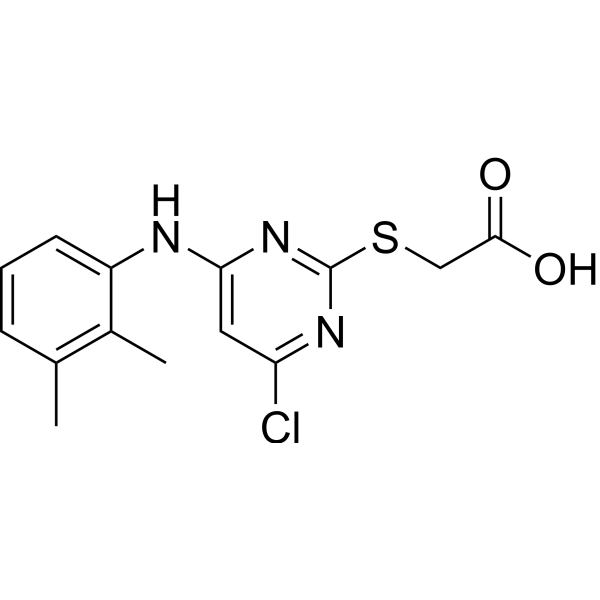
HY-16995
Pirinixic acidPPAR Agonist -
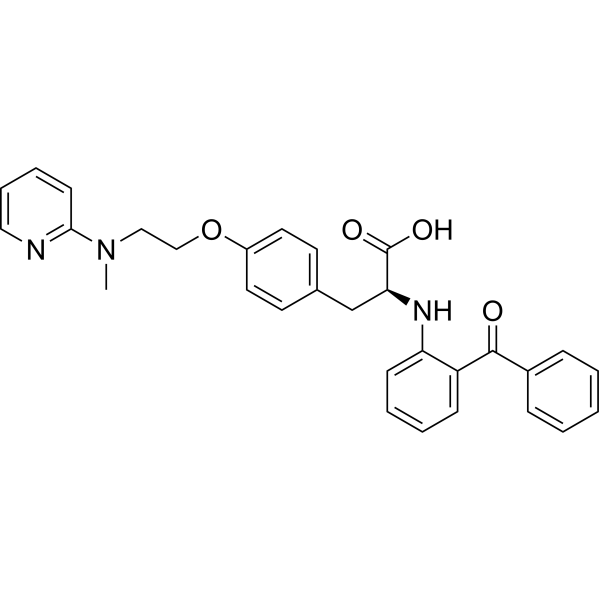
HY-15655
GW1929PPARγ Agonist -
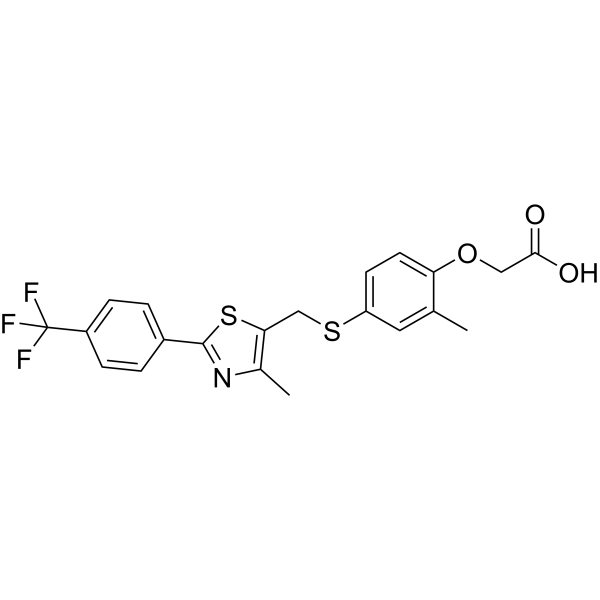
HY-10838
GW 501516PPARδ Agonist -
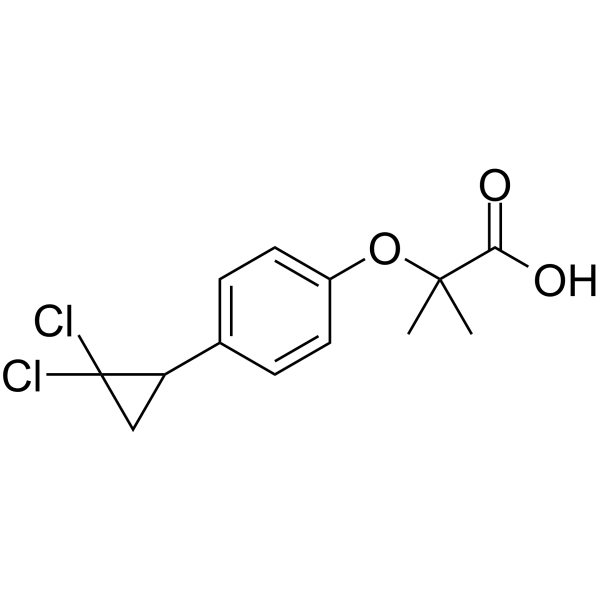
HY-B0664
CiprofibratePeroxisome Proliferator -
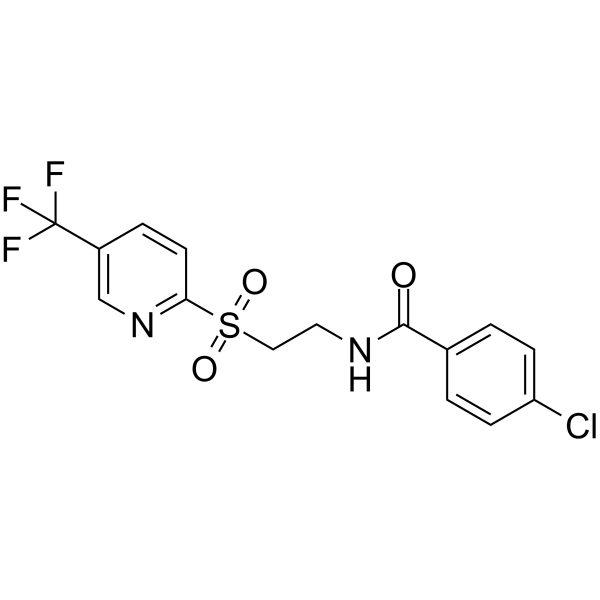
HY-15577
GSK3787PPARδ Antagonist


Product Information
Information
Application
The compound is the grade of analytical standard, which is the reference standard supplied assay. It is commonly used in qualitative, quantitative and methodological research experiments in HPLC, GC and MS.


Chemical Information
-
CAS No. 265129-71-3
-
Molecular Weight 502.75
-
Formula C29H46N2O3S
-
SMILES
CC(C)(SC1=CC=C(CCN(C(NC2CCCCC2)=O)CCCCC3CCCCC3)C=C1)C(O)=O
-
Shipping
Room temperature in continental US; may vary elsewhere.
-
Storage
Please store the product under the recommended conditions in the Certificate of Analysis.


Purity & Documentation
References
[1]. Luo M, et al. IL-1β-Induced Downregulation of the Multifunctional PDZ Adaptor PDZK1 Is Attenuated by ERK Inhibition, RXRα, or PPARα Stimulation in Enterocytes. Front Physiol. 2017 Feb 7;8:61. [Content Brief]
[2]. Tanaka S, et al. PPARα induced NOS1 phosphorylation via PI3K/Akt in guinea pig antral mucous cells: NO-enhancement in Ca(2+)-regulated exocytosis. Biomed Res. 2016;37(3):167-78. [Content Brief]
[3]. Lebeck J, et al. Hepatic AQP9 expression in male rats is reduced in response to PPARα agonist treatment. Am J Physiol Gastrointest Liver Physiol. 2015 Feb 1;308(3):G198-205. [Content Brief]
[4]. Lam VH, et al. Activating PPARα prevents post-ischemic contractile dysfunction in hypertrophied neonatal hearts. Circ Res. 2015 Jun 19;117(1):41-51. [Content Brief]
[5]. Brown PJ, et al. Identification of a subtype selective human PPARalpha agonist through parallel-array synthesis. Bioorg Med Chem Lett. 2001 May 7;11(9):1225-7. [Content Brief]

Calculators
Concentration (start) × Volume (start) = Concentration (final) × Volume (final)


GW7647 (Standard) Related Classifications
HY-13861R Related Classifications
 Powered by Bioz