



BRK
Breast tumor kinase; Protein tyrosine kinase 6 (PTK6)
BRK (BReast tumor Kinase), also known as PTK6 (Protein Tyrosine Kinase 6), is a non-receptor tyrosine kinase that consists of three functional domains: SH3, SH2, and SH1 (tyrosine kinase). Unlike Src family tyrosine kinases, BRK lacks an N-terminal myristoylation site, making it more soluble and facilitating its interaction with intracellular substrates. In normal tissues, BRK expression is low, but it is highly upregulated in various tumors, including breast, ovarian, and cervical cancers, where its expression is associated with tumor malignancy and poor prognosis.
BRK exerts its oncogenic effects primarily by promoting proliferation, inhibiting apoptosis, enhancing invasion, and contributing to drug resistance. It activates multiple signaling pathways, including EGFR, HER2, IGF-1R, STAT3, and Akt, while suppressing tumor suppressors such as p27 and Rb, thereby facilitating cell cycle progression. Additionally, BRK regulates Paxillin, FAK, and RhoA, promoting cell migration and invasion, and is induced under hypoxic conditions by HIF-1α, further accelerating tumor metastasis. BRK also influences chemotherapy resistance, as its high expression reduces sensitivity to anti-HER2 and anti-EGFR compounds. Therefore, BRK is considered a valuable potential target for cancer research[1].
All Product Categories
-
BRK Related Products (7)
Related Products (7)

-
Antibodies (1)
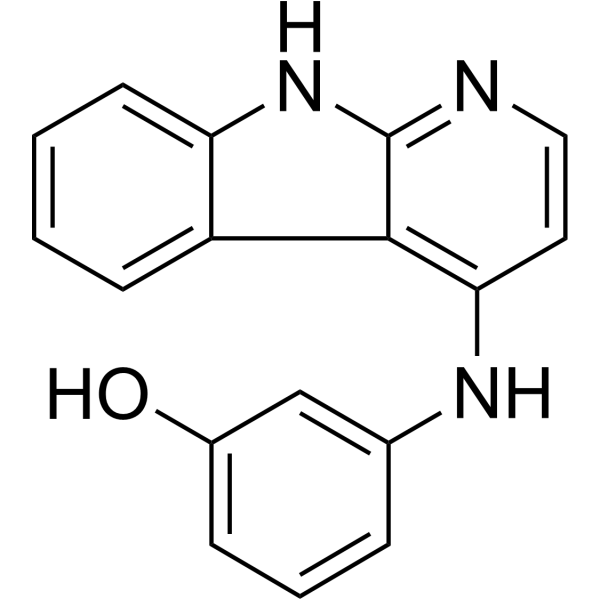
-
SIAIS164018 hydrochloride
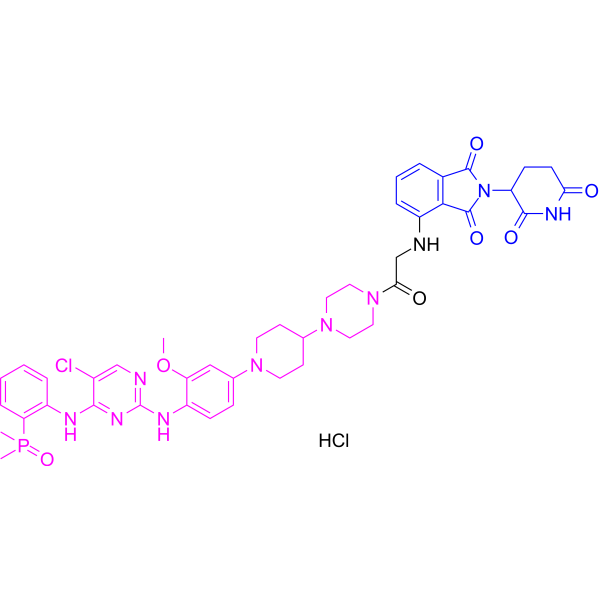 0 ImagesCat. No.: HY-147219APurity: 98.06%SIAIS164018 hydrochloride is a multi-kinase (ALK, EGFR, FAK, PYK2, PTK6) PROTAC degrader, with IC50 values of 2.5 nM and 6.6 nM against ALK and ALK (G1202R), respectively. SIAIS164018 hydrochloride promotes the ubiquitination and degradation of ALK, EGFR, FAK, PYK2 and PTK6. SIAIS164018 hydrochloride induces cell cycle arrest at the G1 phase and triggers cell Apoptosis. SIAIS164018 hydrochloride exhibits preferential inhibitory activity against FER kinase. SIAIS164018 hydrochloride can be used in research related to non-small cell lung cancer, ovarian cancer and triple-negative breast cancer.
-
BRK inhibitor P21d hydrochloride
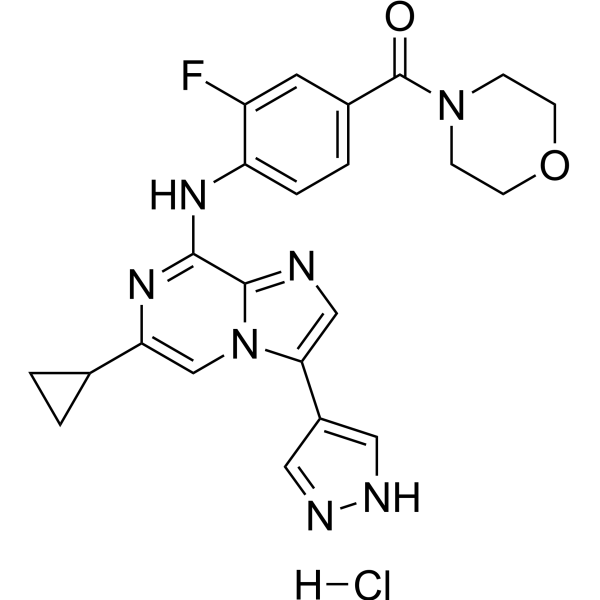 0 ImagesBRK inhibitor P21d hydrochloride is a potent breast tumor kinase (BRK/PTK6) inhibitor with an IC50 of 30 nM. BRK inhibitor P21d hydrochloride inhibits p-SAM68 with an IC50 of 52 nM. BRK inhibitor P21d hydrochloride can be used to evaluate the in vivo activity of BRK inhibitors in xenograft breast tumor models.

-
SIAIS164018
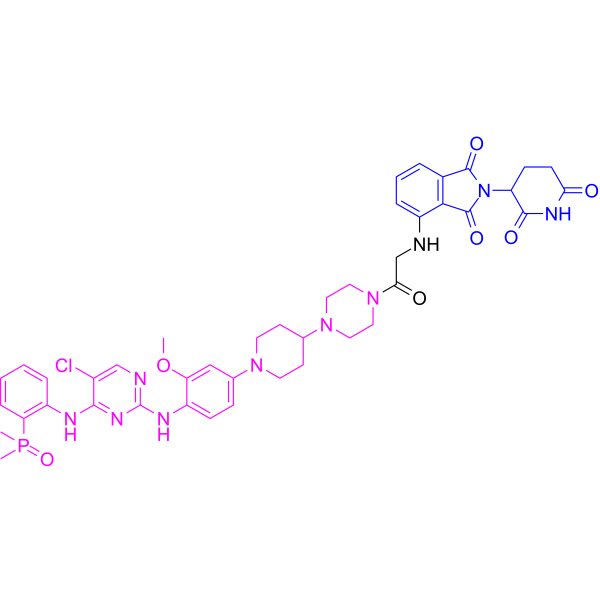 0 ImagesCat. No.: HY-147219CAS No.: 2353492-68-7SIAIS164018 is a multi-kinase (ALK, EGFR, FAK, PYK2, PTK6) PROTAC degrader, with IC50 values of 2.5 nM and 6.6 nM against ALK and ALK (G1202R), respectively. SIAIS164018 promotes the ubiquitination and degradation of ALK, EGFR, FAK, PYK2 and PTK6. SIAIS164018 induces cell cycle arrest at the G1 phase and triggers cell Apoptosis. SIAIS164018 exhibits preferential inhibitory activity against FER kinase. SIAIS164018 can be used in research related to non-small cell lung cancer, ovarian cancer and triple-negative breast cancer.
-
BRK/PTK6-IN-1
 0 ImagesCat. No.: HY-178460BRK/PTK6-IN-1 (Compound 51) is a highly efficient and selective BRK inhibitor (IC50 = 3.37 nM, Kd = 44 nM). BRK/PTK6-IN-1 can reduce MMP-9 protein expression and inhibit IGF-1 induced AKT phosphorylation in MDA-MB-231 cells. BRK/PTK6-IN-1 significantly inhibits migration, invasion, and colony formation but does not affect cell proliferation. BRK/PTK6-IN-1 is often used in the research of breast cancer and other cancers.
-
ALK/EGFR-IN-1-d5
 0 ImagesCat. No.: HY-155227SCAS No.: 2730429-93-1ALK/EGFR-IN-1-d5 (Compound (-)-9a) is a deuterated dual-target inhibitor of EGFR and ALK, with an IC50 of 1.08 nM for EGFR and an IC50 of 2.395 nM for ALK. ALK/EGFR-IN-1-d5 inhibits the phosphorylated proteins in the EGFR, ALK, and BRK signaling pathways, blocking the cell cycle, leading to a reduction in mitochondrial membrane potential and cell apoptosis (Apoptosis). ALK/EGFR-IN-1-d5 also significantly inhibits tumor growth in animal models and demonstrates good safety. ALK/EGFR-IN-1-d5 holds promise for research in the field of cancer treatment




