



Nicergoline

Based on 1 Customer Validation
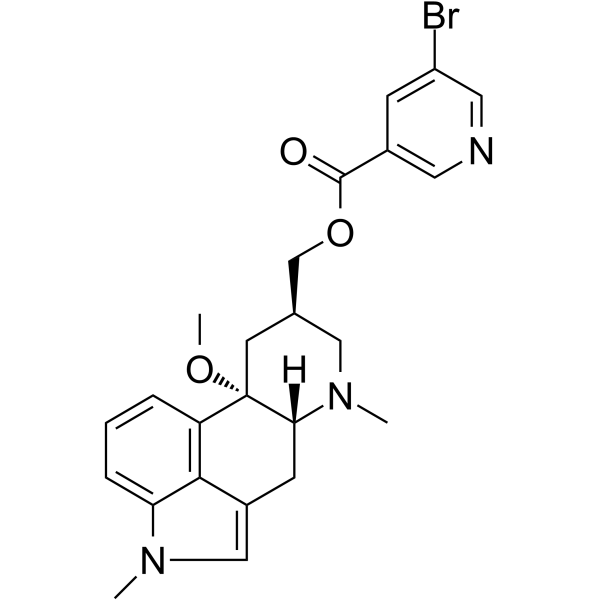
Nicergoline, an ergoline derivative ester of bromonicotinic acid, is a potent, selective and orally active antagonist of α1A-adrenoceptor. Nicergoline has vasodilator effects. Nicergoline also has ameliorative effects on cognitive function in mouse models of Alzheimer's disease.
For research use only. We do not sell to patients.
- Purity : 99.31%
- CAS No.: 27848-84-6
- Formula: C24H26BrN3O3
- Molecular Weight:484.39
-
Storage:Powder -20°C, 3 years , 4°C, 2 years ; In solvent -80°C, 2 years , -20°C, 1 year

To place orders, for customer services and technical support, please contact: MedChemExpress USA
Tel: 609-228-6898 E-mail: [email protected] [email protected]


-
 Biological Activity
-
Chemical Information
-
Solvent & Solubility
- Protocols
- Purity & Documentation
- References
-
 Help & FAQs


-
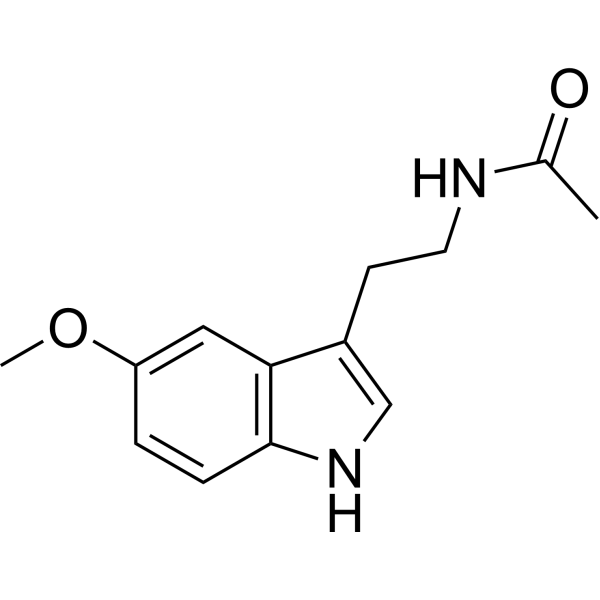
HY-B0075
MelatoninMelatonin Receptor Activator -
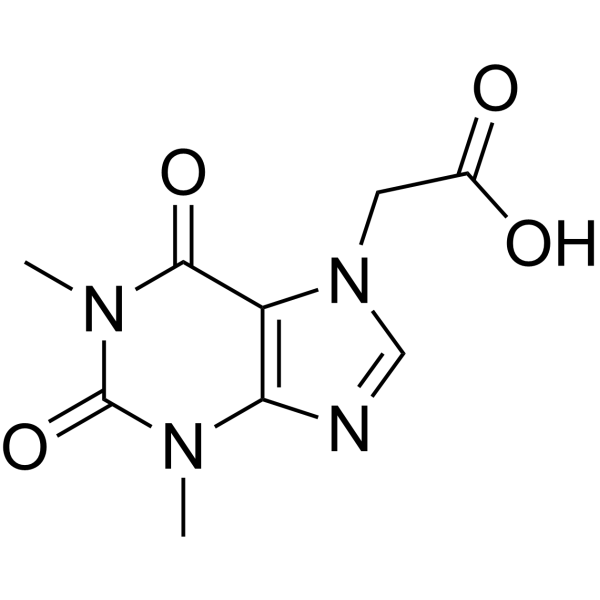
HY-B1505
AcefyllineAdenosine Receptor Antagonist -
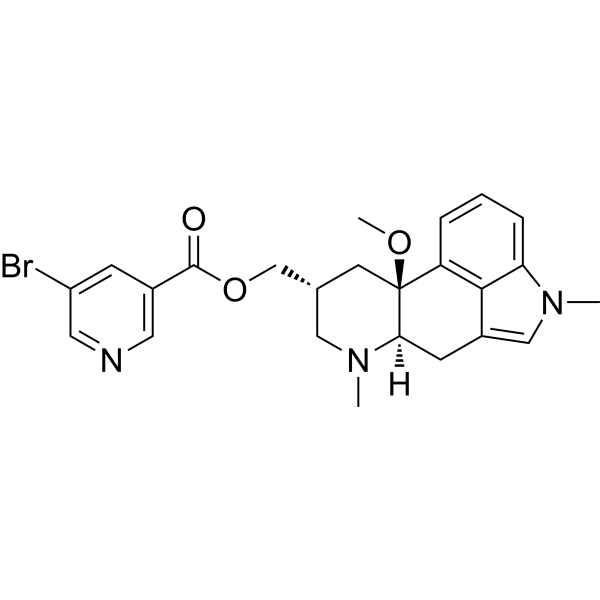
HY-B0702R
Nicergoline (Standard)α1A-adrenoceptor Antagonist -
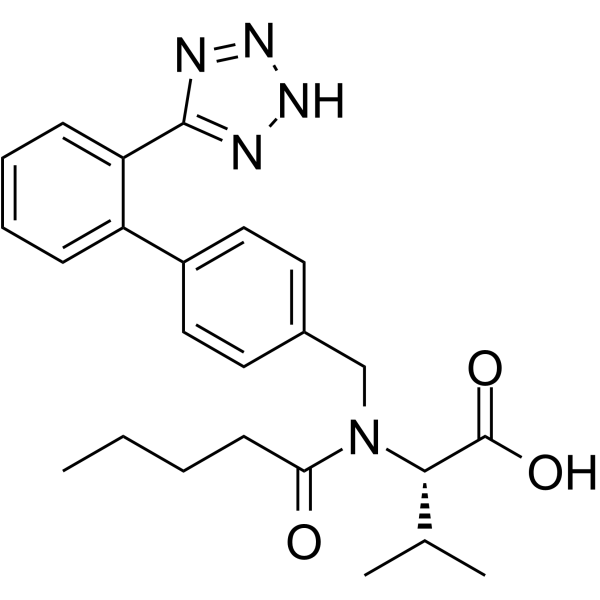
HY-18204
ValsartanAngiotensin II Receptor Antagonist -
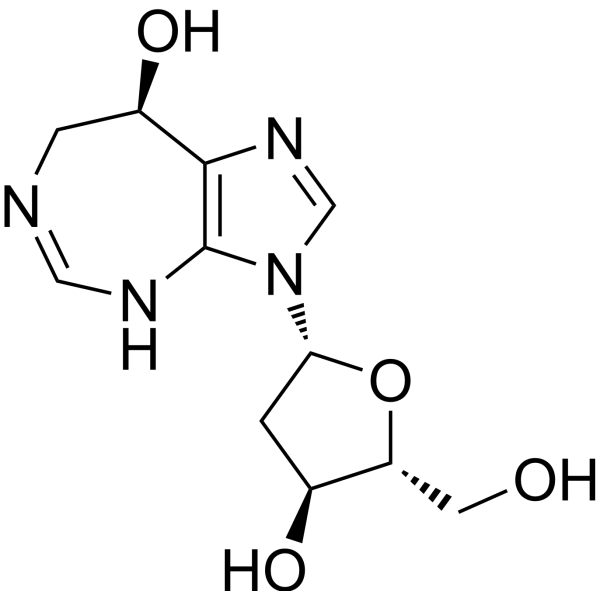
HY-A0006
PentostatinAntibiotic -
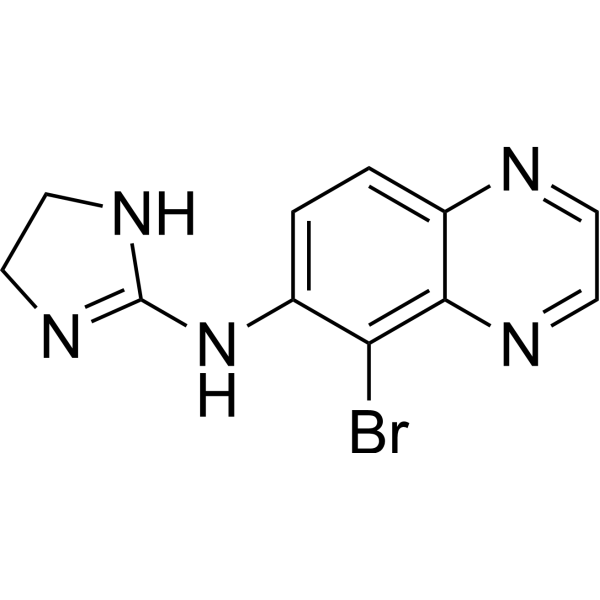
HY-B0659
BrimonidineAdrenergic Receptor Agonist -
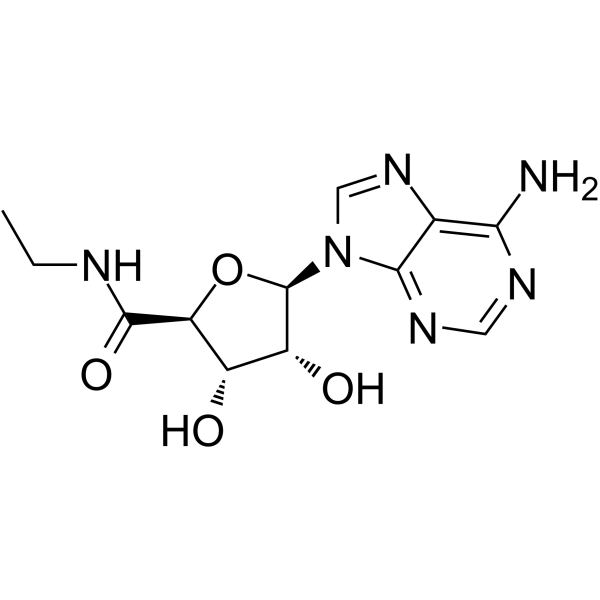
HY-103173
5'-N-EthylcarboxamidoadenosineAdenosine Receptor Agonist -
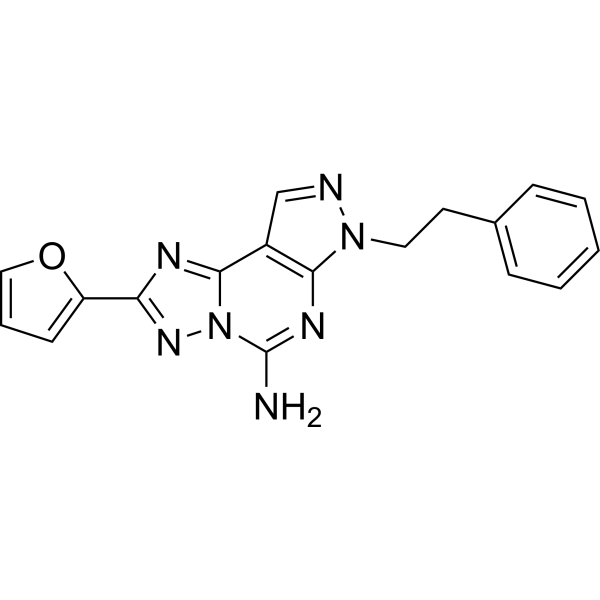
HY-19533
SCH 58261A2A Receptor Antagonist -
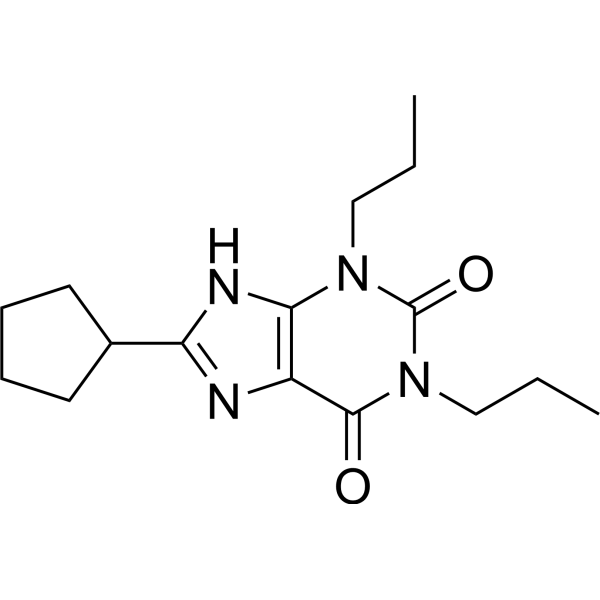
HY-100937
DPCPXA1 Receptor Antagonist -
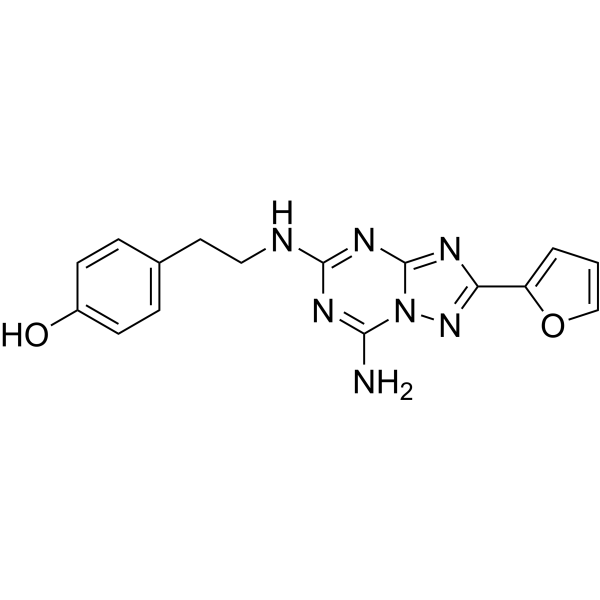
HY-19532
ZM241385A2A Receptor Antagonist -
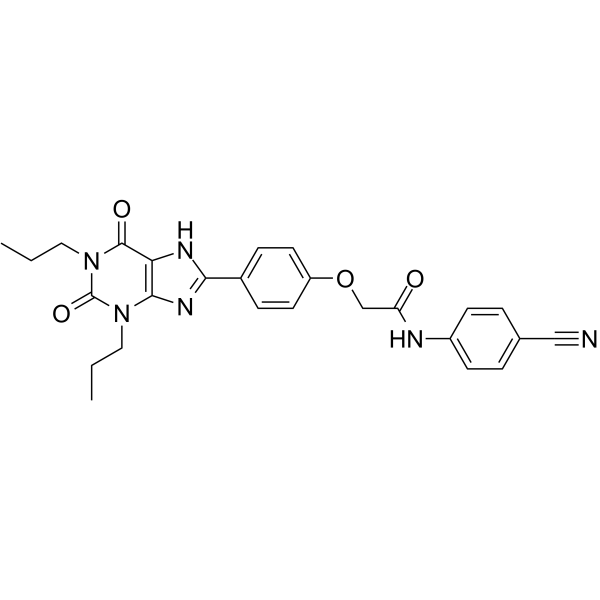
HY-14121
MRS 1754A2B Antagonist -
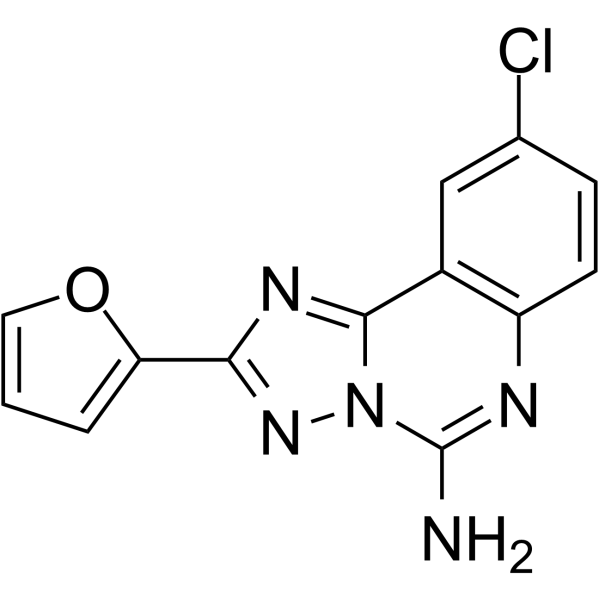
HY-100678
CGS 15943Adenosine Receptor Antagonist
All Adrenergic Receptor Isoforms
More

Biological Activity
Description
IC50 & Target
|
α adrenergic receptor |
In Vitro
Nicergoline (0.3-30 μM; 24 h) attenuates activated microglia- and astrocytes-induced neuronal cell death[3].
Nicergoline (0.3-30 μM; 48 h) suppresses the production of proinflammatory cytokines and superoxide anion by activated microglia[3].
MedChemExpress (MCE) has not independently confirmed the accuracy of these methods. They are for reference only.
In Vivo
Nicergoline (10 mg/kg; i.v. once daily for 60 d) inhibits apoptosis, inflammation and oxidative stress in hippocampal cells, and regulates the activity of hippocampal cells through the PI3K/AKT signaling pathway in mice[2].
MedChemExpress (MCE) has not independently confirmed the accuracy of these methods. They are for reference only.
-
Animal Model:3×Tg-AD mice (male, 28-35 g, 6 weeks) with the Alzheimer's disease[2]
-
Dosage:10 mg/kg
-
Administration:I.v. once daily for 60 days
-
Result:Improved neurogenesis and cognitive competence.
Decreased the degree of dementia.
Downregulated pathogenic Aβ-42 and -40 peptides and APP in the hippocampi.
Increased Levels of the neuroprotective forkhead box protein P2 (Foxp2), Src homology 2-containing inositol phosphatase (SxIP) and end-binding proteins (EB) in the hippocampi.
Exhibited marked differences in the dispersion of the pyramidal cell layer between the nicergoline-treated and control groups.
Clinical Trial
| NCT Number | Sponsor | Condition | Start Date |
Phase

|
|---|---|---|---|---|
| NCT01329991 | 2011-05 | PHASE1 |


Chemical Information
-
CAS No. 27848-84-6
-
Appearance Solid
-
Molecular Weight 484.39
-
Formula C24H26BrN3O3
-
Color White to off-white
-
SMILES
CO[C@@]([C@@]1([H])C2)(C[C@@H](COC(C3=CN=CC(Br)=C3)=O)CN1C)C4=C5C2=CN(C)C5=CC=C4
-
Shipping
Room temperature in continental US; may vary elsewhere.
-
Storage
Powder -20°C 3 years 4°C 2 years In solvent -80°C 2 years -20°C 1 year


Solvent & Solubility
In Vitro:
DMSO : 100 mg/mL (206.45 mM; Need ultrasonic; Hygroscopic DMSO has a significant impact on the solubility of product, please use newly opened DMSO)
Please refer to the solubility information to select the appropriate solvent. Once prepared, please aliquot and store the solution to prevent product inactivation from repeated freeze-thaw cycles.
Storage method and period of stock solution: -80°C, 2 years; -20°C, 1 year. When stored at -80°C, please use it within 2 years. When stored at -20°C, please use it within 1 year.
Please refer to the solubility information to select the appropriate solvent. Once prepared, please aliquot and store the solution to prevent product inactivation from repeated freeze-thaw cycles.
Storage method and period of stock solution: -80°C, 2 years; -20°C, 1 year. When stored at -80°C, please use it within 2 years. When stored at -20°C, please use it within 1 year.
Concentration (start) × Volume (start) = Concentration (final) × Volume (final)
In Vivo:
Select the appropriate dissolution method based on your experimental animal and administration route.
- For the following dissolution methods, please ensure to first prepare a clear stock solution using an In Vitro approach and then sequentially add co-solvents:
- To ensure reliable experimental results, the clarified stock solution can be appropriately stored based on storage conditions. As for the working solution for In Vivo experiments, it is recommended to prepare freshly and use it on the same day.
- The percentages shown for the solvents indicate their volumetric ratio in the final prepared solution. If precipitation or phase separation occurs during preparation, heat and/or sonication can be used to aid dissolution.
Add each solvent one by one: 10% DMSO 40% PEG300 5% Tween-80 45% Saline
Solubility: ≥ 2.5 mg/mL (5.16 mM); Clear solution
This protocol yields a clear solution of ≥ 2.5 mg/mL (saturation unknown).
Taking 1 mL working solution as an example, add 100 μL DMSO stock solution (25.0 mg/mL) to 400 μL PEG300, and mix evenly; then add 50 μL Tween-80 and mix evenly; then add 450 μL Saline to adjust the volume to 1 mL.
Preparation of Saline: Dissolve 0.9 g sodium chloride in ddH₂O and dilute to 100 mL to obtain a clear Saline solution.
In Vivo Dissolution Calculator
Please enter the basic information of animal experiments:
-
-
-
-
Recommended: Prepare an additional quantity of animals to account for potential losses during experiments.
Please enter your animal formula composition:
-
%DMSO +
Recommended: Keep the proportion of DMSO in working solution below 2% if your animal is weak.
-
%+
-
+%Tween-80 + +
-
%Saline +
The co-solvents required include: DMSO, . All of co-solvents are available by MedChemExpress (MCE). , Tween 80. All of co-solvents are available by MedChemExpress (MCE).
Working solution concentration: 0.22 mg/mL
Method for preparing stock solution: mg drug dissolved in μL DMSO. Stock solution concentration: mg/mL.
1. Take μL DMSO stock solution;
2. Add μL .
μL , mix evenly;
3. Then add μL Tween 80, mix evenly;
4. Then add μL
Please ensure that the stock solution in the first step is dissolved to a clear state, and add co-solvents in sequence. You can use ultrasonic heating (ultrasonic cleaner, recommended frequency 20-40 kHz), vortexing, etc. to assist dissolution.


Purity & Documentation
-
Data Sheet (275 KB)
-
SDS (392 KB)
- English - EN (392 KB)
- Français - FR (392 KB)
- Deutsch - DE (392 KB)
- Norwegian - NO (392 KB)
- Español - ES (392 KB)
- Swedish - SV (392 KB)
- Italian - IT (392 KB)
- Korean - KR (392 KB)
- Portuguese - PT (392 KB)
-
Handling Instructions (2659 KB)
References
[1]. Alvarez-Guerra, M., N. Bertholom, and R.P. Garay, Selective blockade by nicergoline of vascular responses elicited by stimulation of alpha 1A-adrenoceptor subtype in the rat. Fundam Clin Pharmacol, 1999. 13(1): p. 50-8. [Content Brief]
[2]. Zang G, et, al. Ameliorative effect of nicergoline on cognitive function through the PI3K/AKT signaling pathway in mouse models of Alzheimer's disease. Mol Med Rep. 2018 May;17(5):7293-7300. [Content Brief]
[3]. Mizuno T, et, al. Protective effects of nicergoline against neuronal cell death induced by activated microglia and astrocytes. Brain Res. 2005 Dec 20;1066(1-2):78-85. [Content Brief]


Complete Stock Solution Preparation Table
Please refer to the solubility information to select the appropriate solvent. Once prepared, please aliquot and store the solution to prevent product inactivation from repeated freeze-thaw cycles.
Storage method and period of stock solution: -80°C, 2 years; -20°C, 1 year. When stored at -80°C, please use it within 2 years. When stored at -20°C, please use it within 1 year.
| Optional Solvent | Concentration Solvent Mass | 1 mg | 5 mg | 10 mg | 25 mg |
|---|---|---|---|---|---|
| DMSO | 1 mM | 2.0645 mL | 10.3223 mL | 20.6445 mL | 51.6113 mL |
| 5 mM | 0.4129 mL | 2.0645 mL | 4.1289 mL | 10.3223 mL | |
| 10 mM | 0.2064 mL | 1.0322 mL | 2.0645 mL | 5.1611 mL | |
| 15 mM | 0.1376 mL | 0.6882 mL | 1.3763 mL | 3.4408 mL | |
| 20 mM | 0.1032 mL | 0.5161 mL | 1.0322 mL | 2.5806 mL | |
| 25 mM | 0.0826 mL | 0.4129 mL | 0.8258 mL | 2.0645 mL | |
| 30 mM | 0.0688 mL | 0.3441 mL | 0.6882 mL | 1.7204 mL | |
| 40 mM | 0.0516 mL | 0.2581 mL | 0.5161 mL | 1.2903 mL | |
| 50 mM | 0.0413 mL | 0.2064 mL | 0.4129 mL | 1.0322 mL | |
| 60 mM | 0.0344 mL | 0.1720 mL | 0.3441 mL | 0.8602 mL | |
| 80 mM | 0.0258 mL | 0.1290 mL | 0.2581 mL | 0.6451 mL | |
| 100 mM | 0.0206 mL | 0.1032 mL | 0.2064 mL | 0.5161 mL |


Nicergoline Related Classifications
HY-B0702 Related Classifications
 Powered by Bioz