



Lanraplenib
Based on 2 publication(s) in Google Scholar
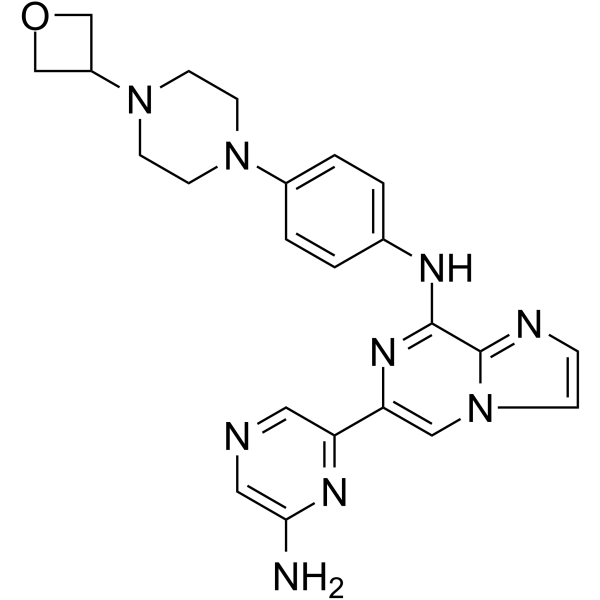
Lanraplenib (GS-9876) is a highly selective and orally active SYK inhibitor (IC50=9.5 nM) in development for the treatment of inflammatory diseases. Lanraplenib (GS-9876) inhibits SYK activity in platelets via the glycoprotein VI (GPVI) receptor without prolonging bleeding time (BT) in monkeys or humans.
Nur für Forschungszwecke. Wir verkaufen nicht an Patienten.
- Reinheit : 99.15%
- CAS. Nr.: 1800046-95-0
- Formel: C23H25N9O
- Molecular Weight:443.50
-
Speicherung:Powder -20°C, 3 years , 4°C, 2 years ; In solvent -80°C, 6 months , -20°C, 1 month

To place orders, for customer services and technical support, please contact: MedChemExpress USA
Tel: 609-228-6898 E-mail: [email protected] [email protected]


-
 Biologische Aktivität
-
Chemical Information
-
Lösungsmittel & Löslichkeit
- Reinheit & Dokumentation
- Verweise
-
 Help & FAQs


-
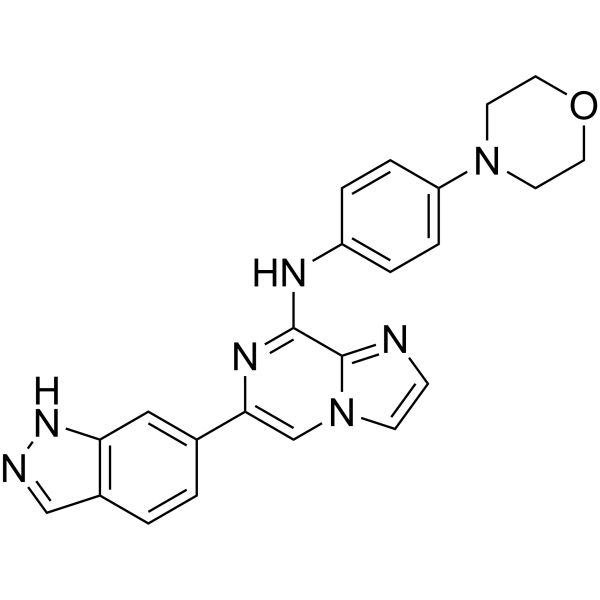
HY-15968
EntospletinibSyk Inhibitor -
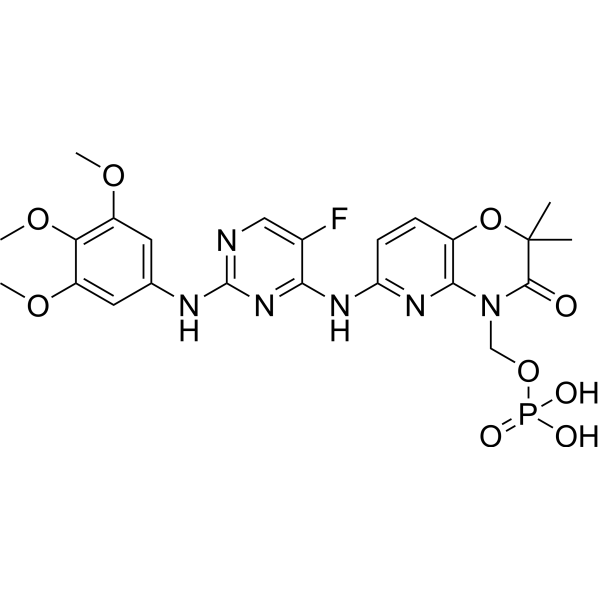
HY-13038A
FostamatinibSyk/FLT3 Inhibitor -
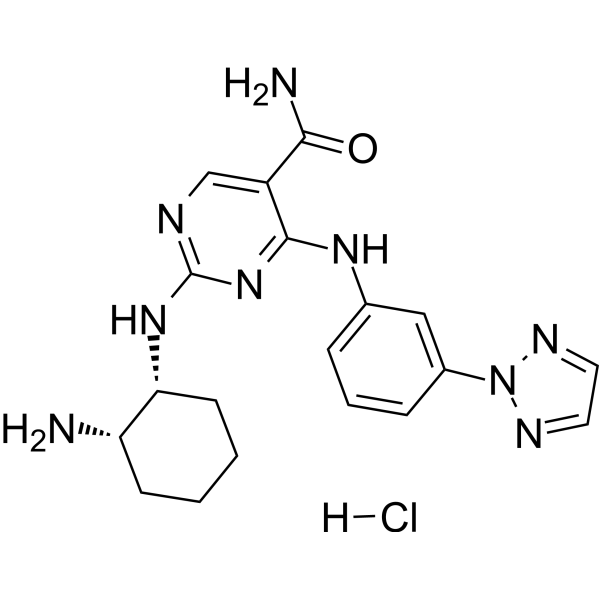
HY-15323
PRT062607 HydrochlorideSyk Inhibitor -
HY-12974
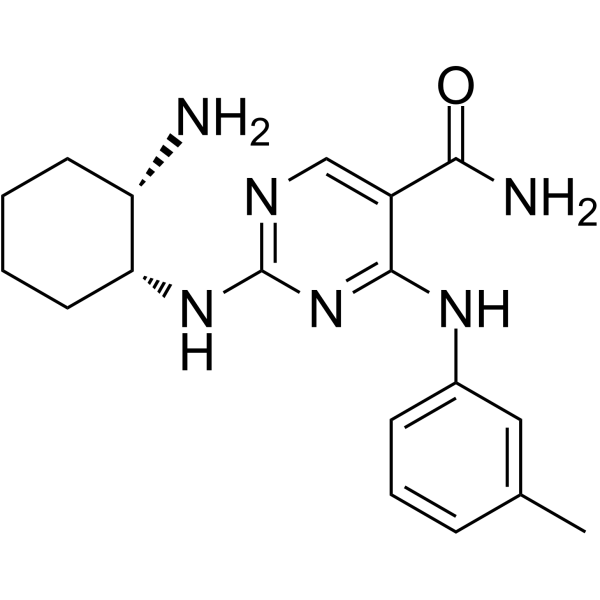
PRT-060318Syk Inhibitor -
HY-103018
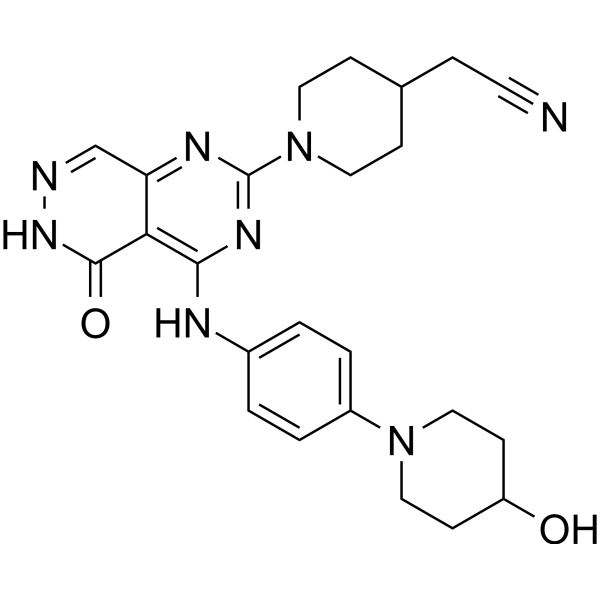
GusacitinibSYK/JAK Inhibitor -
HY-100867A
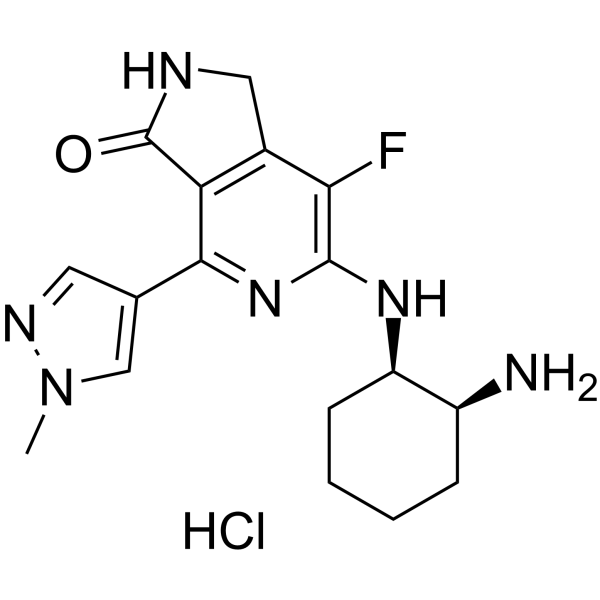
Mivavotinib monohydrochlorideSYK/FLT3 Inhibitor -
HY-11108
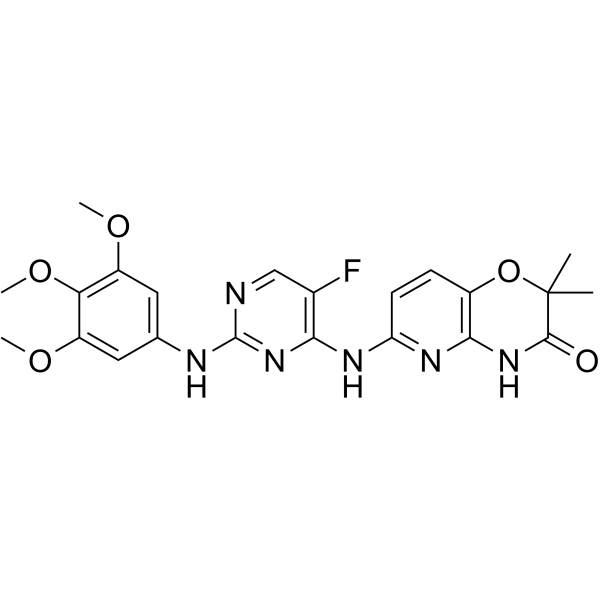
R406 free baseSyk/FLT3 Inhibitor -
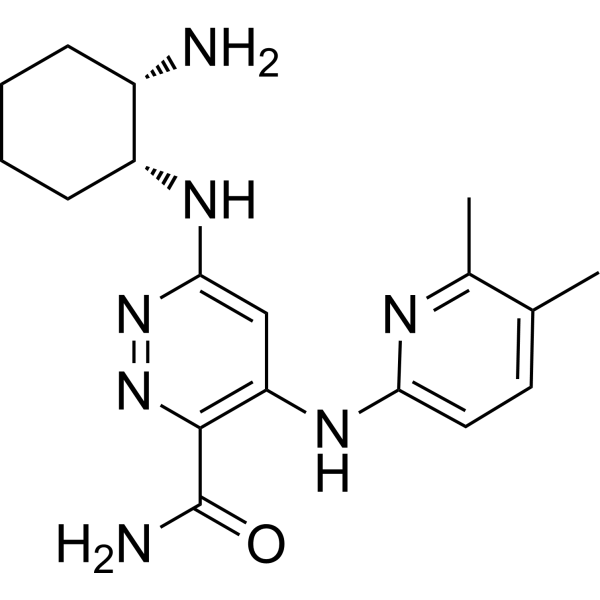
HY-16902
RO9021SYK Inhibitor -
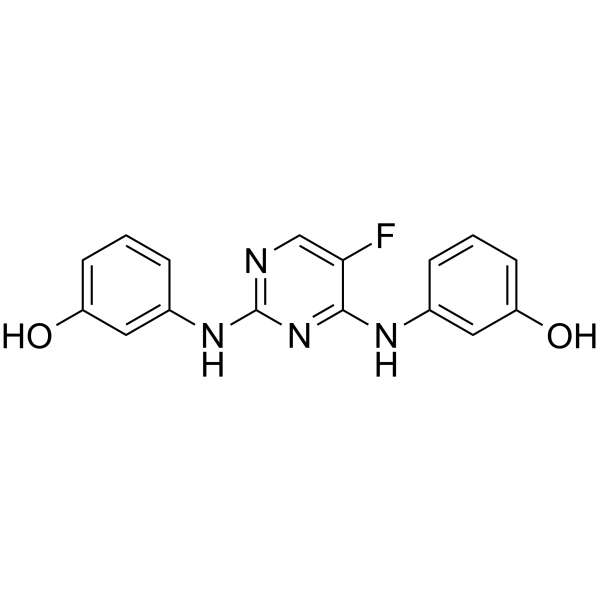
HY-16420
R112Syk Inhibitor -
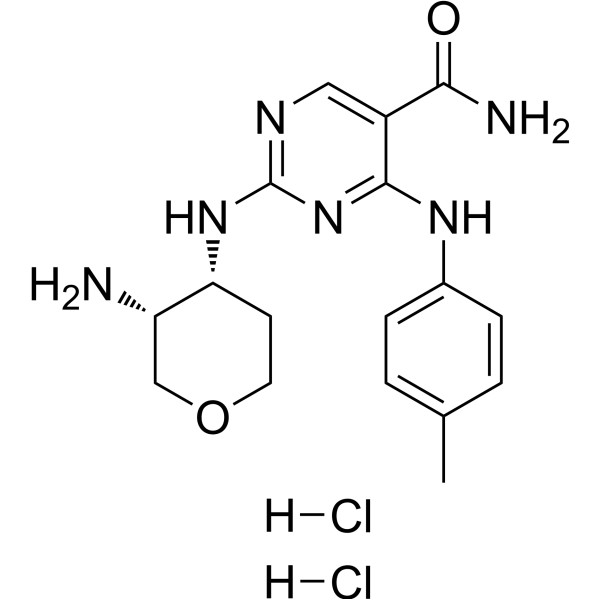
HY-12736A
GSK143 dihydrochlorideSyk Inhibitor -
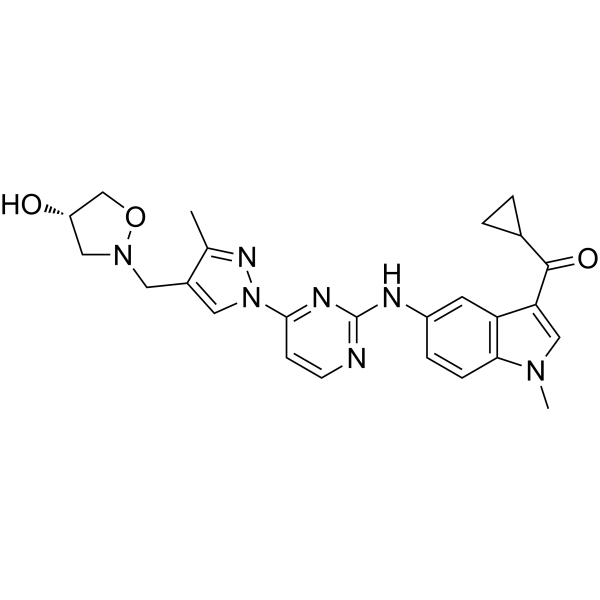
HY-109082
CevidoplenibSyk Inhibitor
Publications Citing Use of MedChemExpress (MCE) Lanraplenib
More

Biologische Aktivität
Beschreibung
IC50 & Target
IC50: 9.5 nM (SYK)[1]
Cellular Effect
|
Cell Line

|
Type | Value | Description | References |
|---|---|---|---|---|
| Ramos | EC50 |
24 nM
Compound: 39; GS-9876
|
Inhibition of SYK in human Ramos cells assessed as reduction in antihuman IgM F(ab)2-induced phosphorylation of BLNK at Y96 residue preincubated for 1 hr followed by antihuman IgM F(ab)2 stimulation for 5 mins by MSD high bind plate assay
Inhibition of SYK in human Ramos cells assessed as reduction in antihuman IgM F(ab)2-induced phosphorylation of BLNK at Y96 residue preincubated for 1 hr followed by antihuman IgM F(ab)2 stimulation for 5 mins by MSD high bind plate assay
|
[PMID: 32292557] |
In Vitro
Lanraplenib (GS-9876) inhibits anti-IgM stimulated phosphorylation of AKT, BLNK, BTK, ERK, MEK, and PKCδ in human B cells with EC50 values of 24-51 nM. Lanraplenib (GS-9876) inhibits anti-IgM mediated CD69 and CD86 expression on B-cells (EC50=112±10 nM and 164±15 nM, respectively) and anti-IgM /anti-CD40 co-stimulated B cell proliferation (EC50=108±55 nM). In human macrophages, Lanraplenib (GS-9876) inhibits IC-stimulated TNFα and IL-1β release (EC50=121±77 nM and 9±17 nM, respectively)[1].
Lanraplenib (GS-9876) inhibits glycoprotein VI (GPVI)-induced phosphorylation of linker for activation of T cells and phospholipase Cγ2, platelet activation and aggregation in human whole blood, and platelet binding to collagen under arterial flow[2].
MedChemExpress (MCE) has not independently confirmed the accuracy of these methods. They are for reference only.
Clinical Trial
| NCT Number | Sponsor | Condition | Start Date |
Phase
|
|---|---|---|---|---|
| NCT01329991 | 2011-05 | PHASE1 |


Chemical Information
-
CAS. Nr. 1800046-95-0
-
Appearance Solid
-
Molecular Weight 443.50
-
Formel C23H25N9O
-
Color Off-white to yellow
-
SMILES
NC1=CN=CC(C2=CN3C(C(NC4=CC=C(N5CCN(C6COC6)CC5)C=C4)=N2)=NC=C3)=N1
-
Synonyms
GS-9876
-
Versand
Room temperature in continental US; may vary elsewhere.
-
Speicherung
Powder -20°C 3 years 4°C 2 years In solvent -80°C 6 months -20°C 1 month


Publications (2)
-
Journal Impact Factor
-
Most Recent
-
Toxicol Appl Pharmacol
The ABCB1 and ABCG2 efflux transporters limit brain disposition of the SYK inhibitors entospletinib and lanraplenib. [Abstract]2024 Apr:485:116911. PMID: 38527694 -
bioRxiv
Identification and characterization of early human photoreceptor states and cell-state-specific retinoblastoma-related features. [Abstract]2025 Apr 24:2023.02.28.530247. PMID: 38915659


Lösungsmittel & Löslichkeit
In Vitro:
DMSO : 20 mg/mL (45.10 mM; Need ultrasonic; Hygroscopic DMSO has a significant impact on the solubility of product, please use newly opened DMSO)
Please refer to the solubility information to select the appropriate solvent. Once prepared, please aliquot and store the solution to prevent product inactivation from repeated freeze-thaw cycles.
Storage method and period of stock solution: -80°C, 6 months; -20°C, 1 month. When stored at -80°C, please use it within 6 months. When stored at -20°C, please use it within 1 month.
Please refer to the solubility information to select the appropriate solvent. Once prepared, please aliquot and store the solution to prevent product inactivation from repeated freeze-thaw cycles.
Storage method and period of stock solution: -80°C, 6 months; -20°C, 1 month. When stored at -80°C, please use it within 6 months. When stored at -20°C, please use it within 1 month.
Konzentration (Stammlösung) × Volumen (Stammlösung) = Konzentration (Ziellösung) × Volumen (Ziellösung)
In Vivo:
Select the appropriate dissolution method based on your experimental animal and administration route.
- For the following dissolution methods, please ensure to first prepare a clear stock solution using an In Vitro approach and then sequentially add co-solvents:
- To ensure reliable experimental results, the clarified stock solution can be appropriately stored based on storage conditions. As for the working solution for In Vivo experiments, it is recommended to prepare freshly and use it on the same day.
- The percentages shown for the solvents indicate their volumetric ratio in the final prepared solution. If precipitation or phase separation occurs during preparation, heat and/or sonication can be used to aid dissolution.
Add each solvent one by one: 10% DMSO 40% PEG300 5% Tween-80 45% Saline
Solubility: ≥ 2 mg/mL (4.51 mM); Clear solution
This protocol yields a clear solution of ≥ 2 mg/mL (saturation unknown).
Taking 1 mL working solution as an example, add 100 μL DMSO stock solution (20.0 mg/mL) to 400 μL PEG300, and mix evenly; then add 50 μL Tween-80 and mix evenly; then add 450 μL Saline to adjust the volume to 1 mL.
Preparation of Saline: Dissolve 0.9 g sodium chloride in ddH₂O and dilute to 100 mL to obtain a clear Saline solution.
Add each solvent one by one: 10% DMSO 90% (20% SBE-β-CD in Saline)
Solubility: ≥ 2 mg/mL (4.51 mM); Clear solution
This protocol yields a clear solution of ≥ 2 mg/mL (saturation unknown).
Taking 1 mL working solution as an example, add 100 μL DMSO stock solution (20.0 mg/mL) to 900 μL 20% SBE-β-CD in Saline, and mix evenly.
Preparation of 20% SBE-β-CD in Saline (4°C, storage for one week): 2 g SBE-β-CD powder is dissolved in 10 mL Saline, completely dissolve until clear.
In Vivo Dissolution Calculator
Please enter the basic information of animal experiments:
-
-
-
-
Recommended: Prepare an additional quantity of animals to account for potential losses during experiments.
Please enter your animal formula composition:
-
%DMSO +
Recommended: Keep the proportion of DMSO in working solution below 2% if your animal is weak.
-
%+
-
+%Tween-80 + +
-
%Saline +
The co-solvents required include: DMSO, . All of co-solvents are available by MedChemExpress (MCE). , Tween 80. All of co-solvents are available by MedChemExpress (MCE).
Working solution concentration: 0.22 mg/mL
Method for preparing stock solution: mg drug dissolved in μL DMSO. Stock solution concentration: mg/mL.
1. Take μL DMSO stock solution;
2. Add μL .
μL , mix evenly;
3. Then add μL Tween 80, mix evenly;
4. Then add μL
Please ensure that the stock solution in the first step is dissolved to a clear state, and add co-solvents in sequence. You can use ultrasonic heating (ultrasonic cleaner, recommended frequency 20-40 kHz), vortexing, etc. to assist dissolution.


Reinheit & Dokumentation
-
Data Sheet (276 KB)
-
SDS (251 KB)
- English - EN (251 KB)
- Français - FR (251 KB)
- Deutsch - DE (251 KB)
- Norwegian - NO (251 KB)
- Español - ES (251 KB)
- Swedish - SV (251 KB)
- Italian - IT (251 KB)
- Korean - KR (251 KB)
- Portuguese - PT (251 KB)
-
Handling Instructions (2659 KB)
Verweise


Complete Stock Solution Preparation Table
Please refer to the solubility information to select the appropriate solvent. Once prepared, please aliquot and store the solution to prevent product inactivation from repeated freeze-thaw cycles.
Storage method and period of stock solution: -80°C, 6 months; -20°C, 1 month. When stored at -80°C, please use it within 6 months. When stored at -20°C, please use it within 1 month.
| Optional Solvent | Concentration Solvent Mass | 1 mg | 5 mg | 10 mg | 25 mg |
|---|---|---|---|---|---|
| DMSO | 1 mM | 2.2548 mL | 11.2740 mL | 22.5479 mL | 56.3698 mL |
| 5 mM | 0.4510 mL | 2.2548 mL | 4.5096 mL | 11.2740 mL | |
| 10 mM | 0.2255 mL | 1.1274 mL | 2.2548 mL | 5.6370 mL | |
| 15 mM | 0.1503 mL | 0.7516 mL | 1.5032 mL | 3.7580 mL | |
| 20 mM | 0.1127 mL | 0.5637 mL | 1.1274 mL | 2.8185 mL | |
| 25 mM | 0.0902 mL | 0.4510 mL | 0.9019 mL | 2.2548 mL | |
| 30 mM | 0.0752 mL | 0.3758 mL | 0.7516 mL | 1.8790 mL | |
| 40 mM | 0.0564 mL | 0.2818 mL | 0.5637 mL | 1.4092 mL |


Lanraplenib Related Classifications
HY-109091 Related Classifications
 Powered by Bioz