



Opicapone
Based on 3 publication(s) in Google Scholar
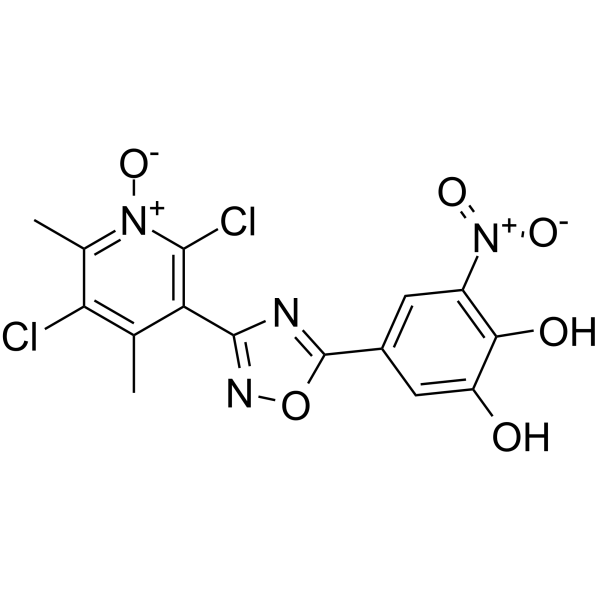
Opicapone (BIA 9-1067) is a potent third-generation catechol-O-methyltransferase (COMT) inhibitor for the research of Parkinson's disease and motor fluctuations. Opicapone decreases the ATP content of the cells with an IC50 of 98 μM.
商品は「研究用試薬」です。人や動物の医療用・臨床診断用・食品用の製品ではありません。
研究用途以外に使用した場合、当社は一切の責任を負いかねます。
- 純度 : 98.81%
- CAS 番号: 923287-50-7
- 分子式: C15H10Cl2N4O6
- 分子量:413.17
-
保管条件:Powder -20°C, 3 years , 4°C, 2 years ; In solvent -80°C, 6 months , -20°C, 1 month

To place orders, for customer services and technical support, please contact: MedChemExpress USA
Tel: 609-228-6898 E-mail: [email protected] [email protected]


-
 生物活性
生物活性
-
化学情報
-
溶剤 & 溶解度
- プロトコル
- 純度とドキュメンテーション
- 参考文献
-
 Help & FAQs


-
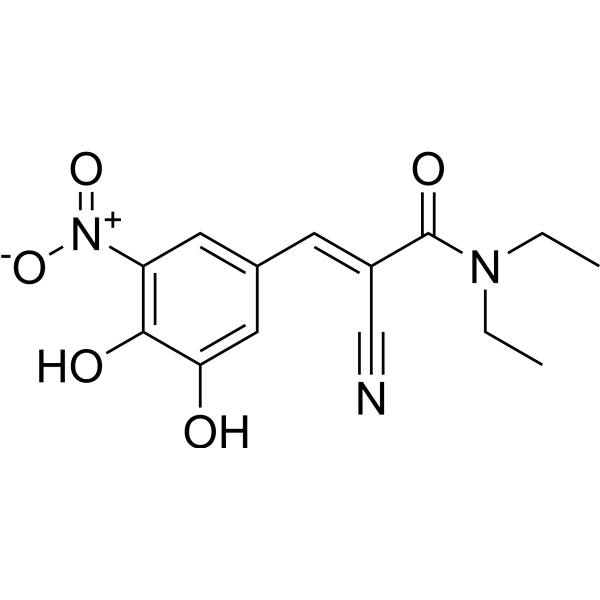
HY-14280
EntacaponeCOMT Inhibitor -
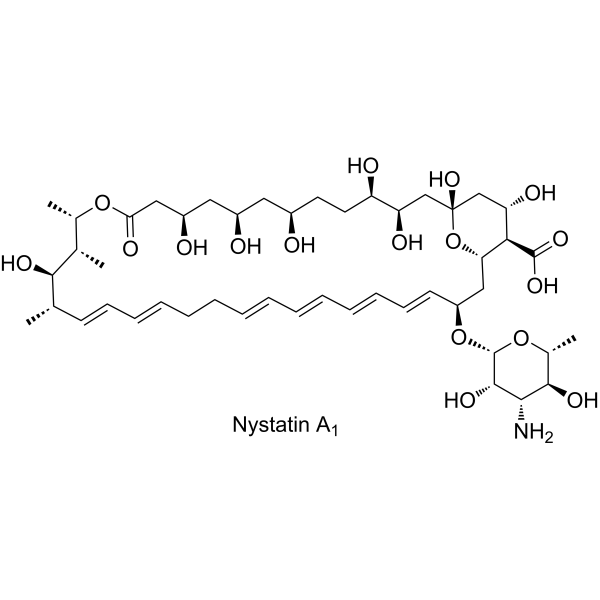
HY-17409
NystatinAntifungal Antibiotic -
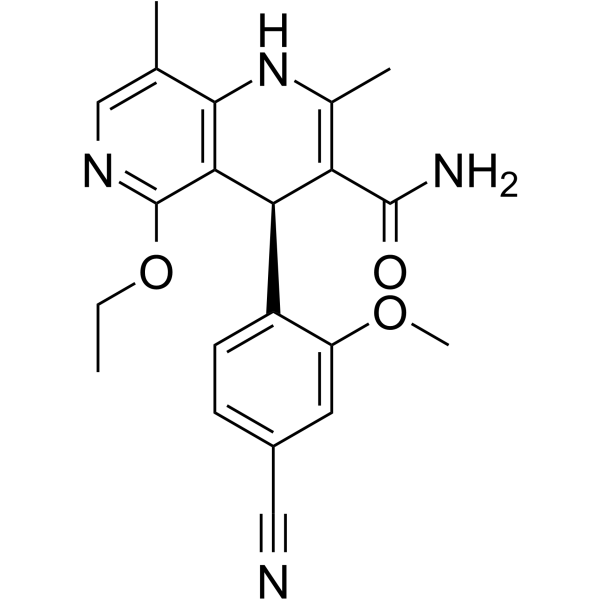
HY-111372
FinerenoneMineralocorticoid Receptor Antagonist -
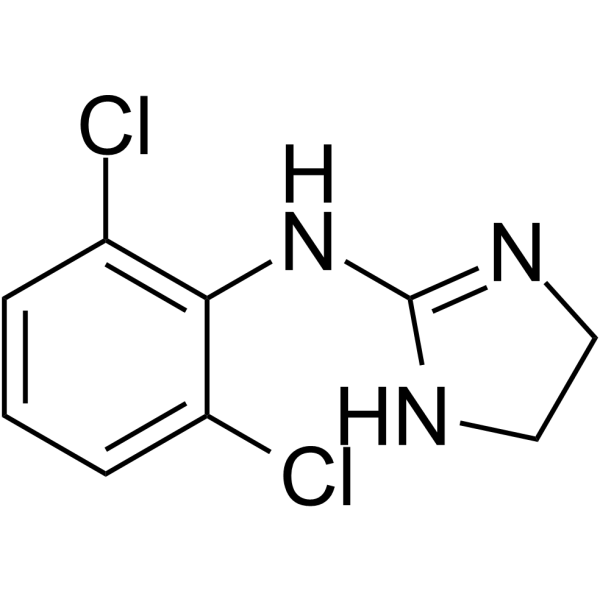
HY-12721
ClonidineAlpha 2-Adrenergic Agonist -
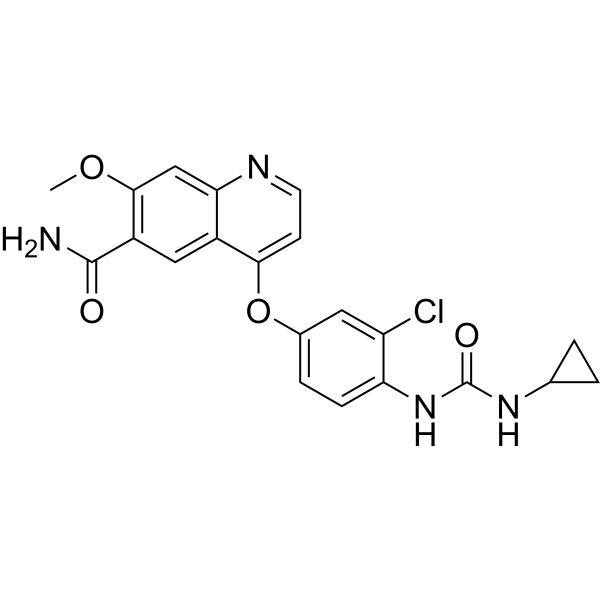
HY-10981
LenvatinibVEGFR/FGFR Inhibitor -
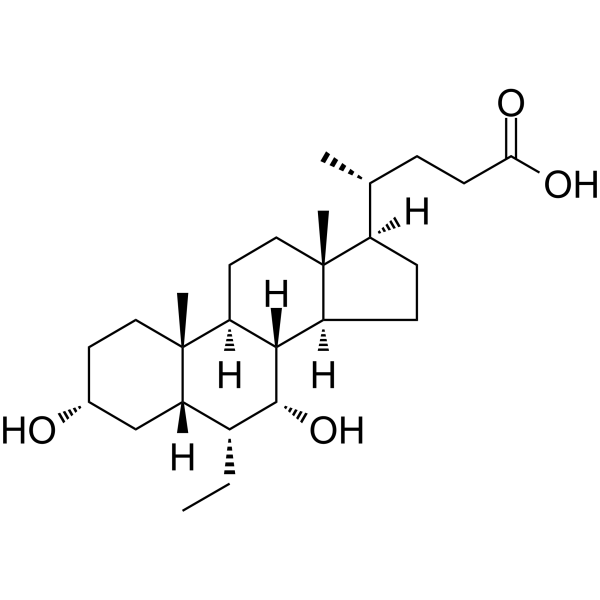
HY-12222
Obeticholic acidFXR Agonist -
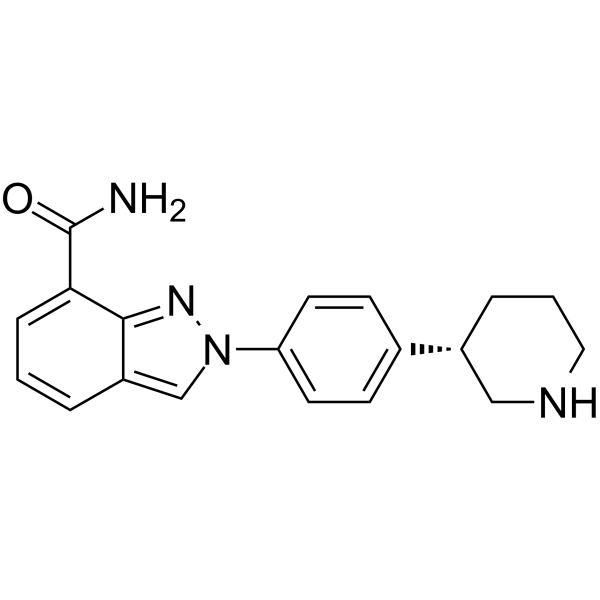
HY-10619
NiraparibPARP Inhibitor -
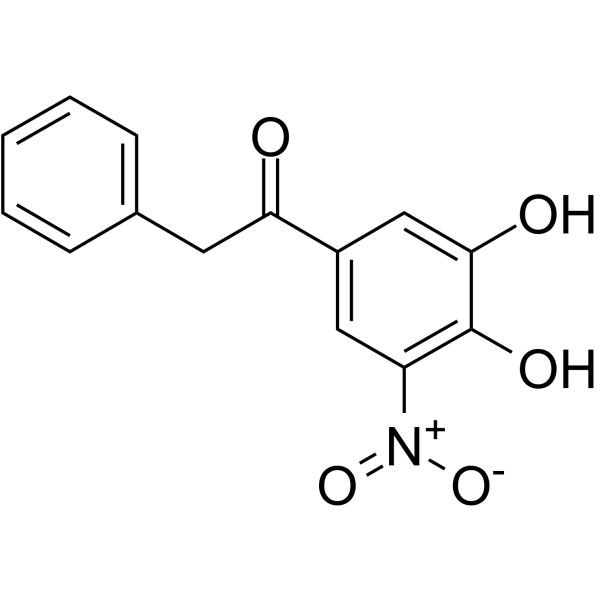
HY-106405
NebicaponeCOMT Inhibitor -
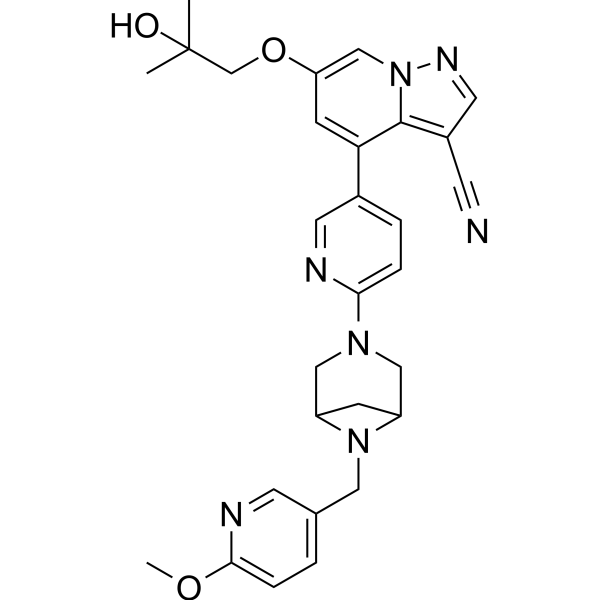
HY-114370
SelpercatinibRET Kinase Inhibitor -
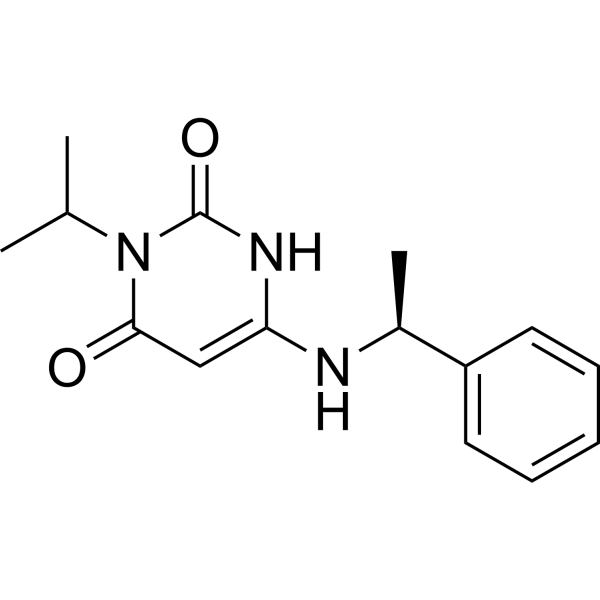
HY-109037
MavacamtenCardiac Myosin Modulator -
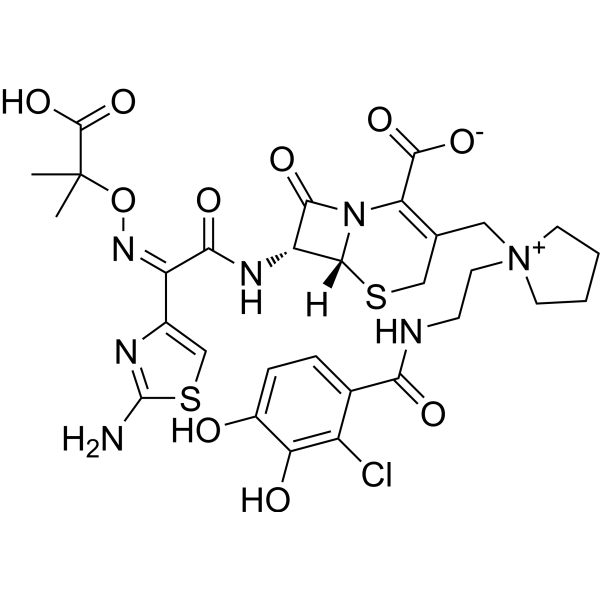
HY-17628
CefiderocolAntibiotic -
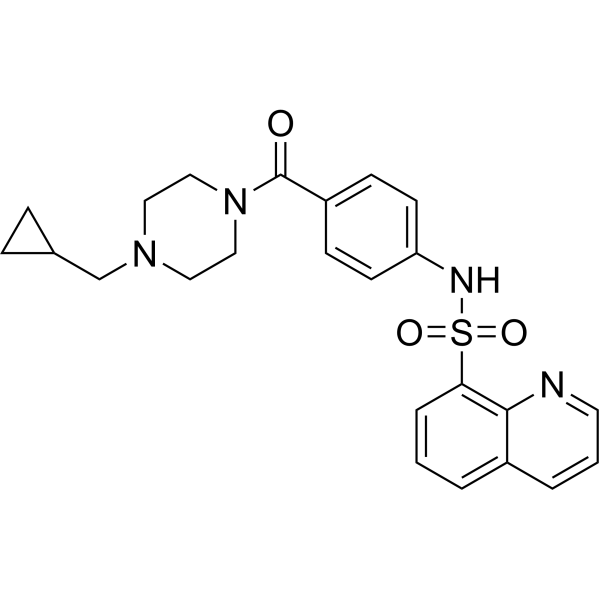
HY-12689
MitapivatPK Activator
MedChemExpress(MCE)の使用を引用している文献 Opicapone
More

生物活性
製品説明
IC50 & Target
COMT[1]
体外実験
Opicapone has a prolonged inhibitory effect on peripheral COMT, which extends the bioavailability of L-DOPA, without inducing toxicity. Opicapone decreases the ATP content of the cells with IC50 values of 98 μM. Incubation of human primary hepatocytes for 24 h with increasing concentrations of Ro 40-7592, OR-611 or Opicapone resulted in a concentration-dependent decrease in the mitochondrial membrane potential of the cells, evaluated by the ratio JC-1 aggregates over JC-1 monomer (ratio λex 544 λem 590 over λex 485 λem 538). Opicapone decreases the mitochondrial membrane potential of the cells with IC50 of 181 μM[1].
MedChemExpress (MCE) has not independently confirmed the accuracy of these methods. They are for reference only. Further protocols information, click here.
体内実験
MedChemExpress (MCE) has not independently confirmed the accuracy of these methods. They are for reference only.
臨床実験
| NCT Number | Sponsor | Condition | Start Date |
Phase

|
|---|---|---|---|---|
| NCT01329991 | Plexxikon| | 2011-05 | PHASE1 |


化学情報
-
CAS 番号 923287-50-7
-
性状 Solid
-
分子量 413.17
-
分子式 C15H10Cl2N4O6
-
Color Light yellow to yellow
-
SMILES
CC1=[N+]([O-])C(Cl)=C(C2=NOC(C3=CC([N+]([O-])=O)=C(O)C(O)=C3)=N2)C(C)=C1Cl
-
別名
BIA 9-1067
-
輸送条件
Room temperature in continental US; may vary elsewhere.
-
保管条件
Powder -20°C 3 years 4°C 2 years In solvent -80°C 6 months -20°C 1 month


Publications (3)
-
Journal Impact Factor
-
Most Recent
-
Ecotoxicol Environ Saf
2023 Jan 1:249:114340. PMID: 36508804 -
J Chem Inf Model
Structural and Computational Analyses of the Unique Interactions of Opicapone in the Binding Pocket of Catechol O-Methyltransferase: A Crystallographic Study and Fragment Molecular Orbital Analyses. [Abstract]2023 Jul 24;63(14):4468-4476. PMID: 37436881 -
Toxicol Lett
In vitro effects of opicapone on activity of human UDP-glucuronosyltransferases isoforms. [Abstract]2022 Aug 15:367:3-8. PMID: 35810997


溶剤 & 溶解度
体外:
DMSO : 100 mg/mL (242.03 mM; Need ultrasonic; Hygroscopic DMSO has a significant impact on the solubility of product, please use newly opened DMSO)
H2O : < 0.1 mg/mL (insoluble)
Please refer to the solubility information to select the appropriate solvent. Once prepared, please aliquot and store the solution to prevent product inactivation from repeated freeze-thaw cycles.
Storage method and period of stock solution: -80°C, 6 months; -20°C, 1 month. When stored at -80°C, please use it within 6 months. When stored at -20°C, please use it within 1 month.
Please refer to the solubility information to select the appropriate solvent. Once prepared, please aliquot and store the solution to prevent product inactivation from repeated freeze-thaw cycles.
Storage method and period of stock solution: -80°C, 6 months; -20°C, 1 month. When stored at -80°C, please use it within 6 months. When stored at -20°C, please use it within 1 month.
濃度 (開始) × 体積 (開始) = 濃度 (終了) × 体積 (終了)
体内:
Select the appropriate dissolution method based on your experimental animal and administration route.
- For the following dissolution methods, please ensure to first prepare a clear stock solution using an In Vitro approach and then sequentially add co-solvents:
- To ensure reliable experimental results, the clarified stock solution can be appropriately stored based on storage conditions. As for the working solution for In Vivo experiments, it is recommended to prepare freshly and use it on the same day.
- The percentages shown for the solvents indicate their volumetric ratio in the final prepared solution. If precipitation or phase separation occurs during preparation, heat and/or sonication can be used to aid dissolution.
Add each solvent one by one: 10% DMSO 40% PEG300 5% Tween-80 45% Saline
Solubility: ≥ 2.5 mg/mL (6.05 mM); Clear solution
This protocol yields a clear solution of ≥ 2.5 mg/mL (saturation unknown).
Taking 1 mL working solution as an example, add 100 μL DMSO stock solution (25.0 mg/mL) to 400 μL PEG300, and mix evenly; then add 50 μL Tween-80 and mix evenly; then add 450 μL Saline to adjust the volume to 1 mL.
Preparation of Saline: Dissolve 0.9 g sodium chloride in ddH₂O and dilute to 100 mL to obtain a clear Saline solution.
Add each solvent one by one: 10% DMSO 90% (20% SBE-β-CD in Saline)
Solubility: 2.5 mg/mL (6.05 mM); Suspended solution; Need ultrasonic
This protocol yields a suspended solution of 2.5 mg/mL. Suspended solution can be used for oral and intraperitoneal injection.
Taking 1 mL working solution as an example, add 100 μL DMSO stock solution (25.0 mg/mL) to 900 μL 20% SBE-β-CD in Saline, and mix evenly.
Preparation of 20% SBE-β-CD in Saline (4°C, storage for one week): 2 g SBE-β-CD powder is dissolved in 10 mL Saline, completely dissolve until clear.
In Vivo Dissolution Calculator
Please enter the basic information of animal experiments:
-
-
-
-
Recommended: Prepare an additional quantity of animals to account for potential losses during experiments.
Please enter your animal formula composition:
-
%DMSO +
Recommended: Keep the proportion of DMSO in working solution below 2% if your animal is weak.
-
%+
-
+%Tween-80 + +
-
%Saline +
The co-solvents required include: DMSO, . All of co-solvents are available by MedChemExpress (MCE). , Tween 80. All of co-solvents are available by MedChemExpress (MCE).
Working solution concentration: 0.22 mg/mL
Method for preparing stock solution: mg drug dissolved in μL DMSO. Stock solution concentration: mg/mL.
1. Take μL DMSO stock solution;
2. Add μL .
μL , mix evenly;
3. Then add μL Tween 80, mix evenly;
4. Then add μL
Please ensure that the stock solution in the first step is dissolved to a clear state, and add co-solvents in sequence. You can use ultrasonic heating (ultrasonic cleaner, recommended frequency 20-40 kHz), vortexing, etc. to assist dissolution.

プロトコル
-
Human pluripotent stem cell midbrain dopaminergic neuron differentiation
Human pluripotent stem cells are directed toward midbrain dopaminergic neurons by first inducing a neural floor-plate-like progenitor state, then patterning cells with ventralizing SHH signaling and midbrain/WNT-FGF cues, and finally maturing progenitors into neurons expressing dopaminergic markers such as TH, NURR1/NR4A2, PITX3, DAT/SLC6A3, VMAT2/SLC18A2, GIRK2/KCNJ6, FOXA2, LMX1A, and EN1. The main readouts are loss of pluripotency, acquisition of FOXA2+/LMX1A+ midbrain floor-plate progenitors, emergence of βIII-tubulin+/MAP2+ neurons, and production of TH+ dopaminergic neurons with molecular, dopamine-release, and electrophysiological features of midbrain dopaminergic identity.


純度とドキュメンテーション
-
データシート (290 KB)
-
SDS (393 KB)
- English - EN (393 KB)
- Français - FR (393 KB)
- Deutsch - DE (393 KB)
- Norwegian - NO (393 KB)
- Español - ES (393 KB)
- Swedish - SV (393 KB)
- Italian - IT (393 KB)
- Korean - KR (393 KB)
- Portuguese - PT (393 KB)
-
取扱説明書 (2659 KB)
参考文献
[1]. Bonifácio MJ, et al. Pharmacological profile of Opicapone, a third-generation nitrocatechol catechol-O-methyl transferase inhibitor, in the rat. Br J Pharmacol. 2015 Apr;172(7):1739-52. [Content Brief]
[2]. Ferreira JJ, et al. Opicapone as an adjunct to L-DOPA in patients with Parkinson's disease and end-of-dose motor fluctuations: a randomised, double-blind, controlled trial. Lancet Neurol. 2016 Feb;15(2):154-165. [Content Brief]


Complete Stock Solution Preparation Table
Please refer to the solubility information to select the appropriate solvent. Once prepared, please aliquot and store the solution to prevent product inactivation from repeated freeze-thaw cycles.
Storage method and period of stock solution: -80°C, 6 months; -20°C, 1 month. When stored at -80°C, please use it within 6 months. When stored at -20°C, please use it within 1 month.
| Optional Solvent | Concentration Solvent Mass | 1 mg | 5 mg | 10 mg | 25 mg |
|---|---|---|---|---|---|
| DMSO | 1 mM | 2.4203 mL | 12.1016 mL | 24.2031 mL | 60.5078 mL |
| 5 mM | 0.4841 mL | 2.4203 mL | 4.8406 mL | 12.1016 mL | |
| 10 mM | 0.2420 mL | 1.2102 mL | 2.4203 mL | 6.0508 mL | |
| 15 mM | 0.1614 mL | 0.8068 mL | 1.6135 mL | 4.0339 mL | |
| 20 mM | 0.1210 mL | 0.6051 mL | 1.2102 mL | 3.0254 mL | |
| 25 mM | 0.0968 mL | 0.4841 mL | 0.9681 mL | 2.4203 mL | |
| 30 mM | 0.0807 mL | 0.4034 mL | 0.8068 mL | 2.0169 mL | |
| 40 mM | 0.0605 mL | 0.3025 mL | 0.6051 mL | 1.5127 mL | |
| 50 mM | 0.0484 mL | 0.2420 mL | 0.4841 mL | 1.2102 mL | |
| 60 mM | 0.0403 mL | 0.2017 mL | 0.4034 mL | 1.0085 mL | |
| 80 mM | 0.0303 mL | 0.1513 mL | 0.3025 mL | 0.7563 mL | |
| 100 mM | 0.0242 mL | 0.1210 mL | 0.2420 mL | 0.6051 mL |


Opicapone 関連分類
HY-14896 関連分類
 Powered by Bioz