



PND-1186 hydrochloride
Based on 19 publication(s) in Google Scholar
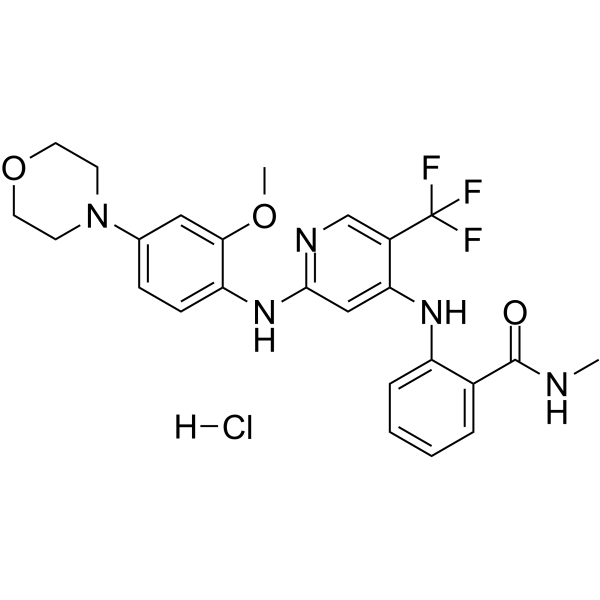
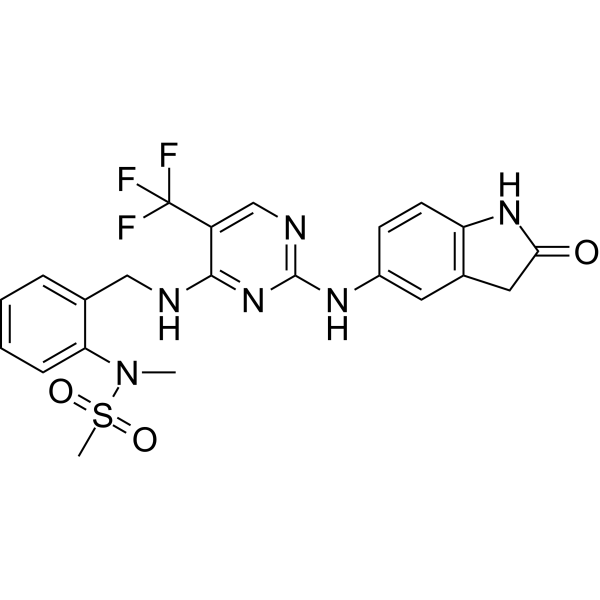
PND-1186 hydrochloride (VS-4718 hydrochloride) is a potent, highly-specific and reversible inhibitor of FAK with an IC50 of 1.5 nM. PND-1186 hydrochloride selectively promotes tumor cell apoptosis.
For research use only. We do not sell to patients.
- Purity : 99.92%
- CAS No.: 1356154-94-3
- Formula: C25H27ClF3N5O3
- Molecular Weight:537.96
-
Storage:
4°C, sealed storage, away from moisture
* In solvent : -80°C, 6 months; -20°C, 1 month (sealed storage, away from moisture)

To place orders, for customer services and technical support, please contact: MedChemExpress USA
Tel: 609-228-6898 E-mail: [email protected] [email protected]


-
 Biological Activity
-
Chemical Information
-
Solvent & Solubility
- Protocols
- Purity & Documentation
- References
-
 Help & FAQs


-
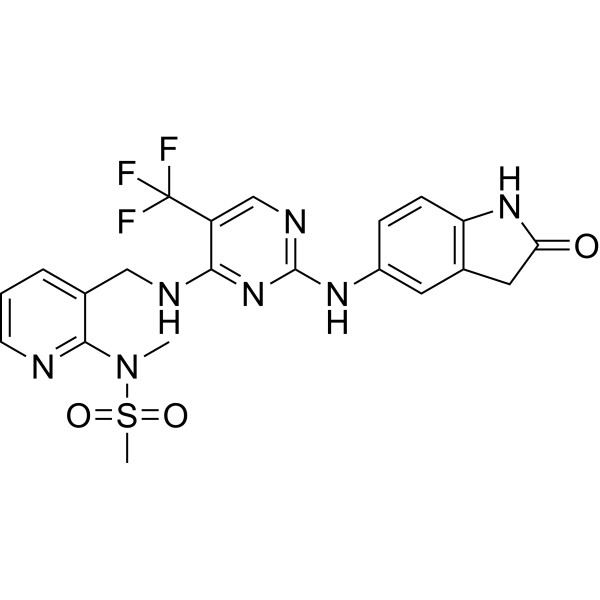
HY-10459
PF-562271FAK/Pyk2 Inhibitor -
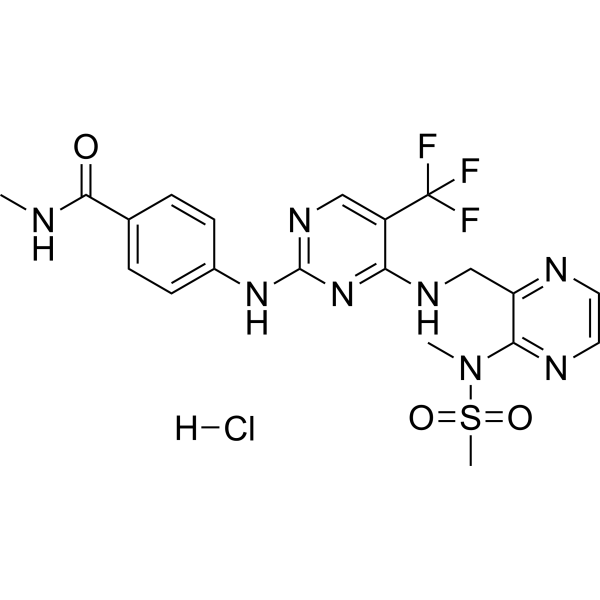
HY-12289A
Defactinib hydrochlorideFAK Inhibitor -
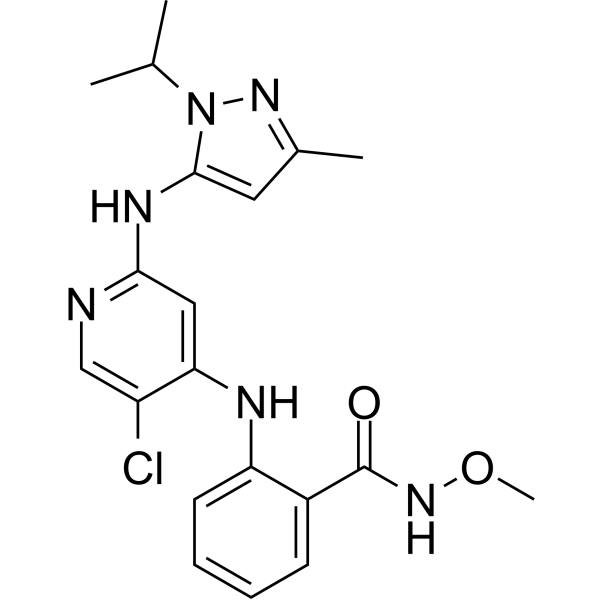
HY-100498
GSK2256098FAK Inhibitor -
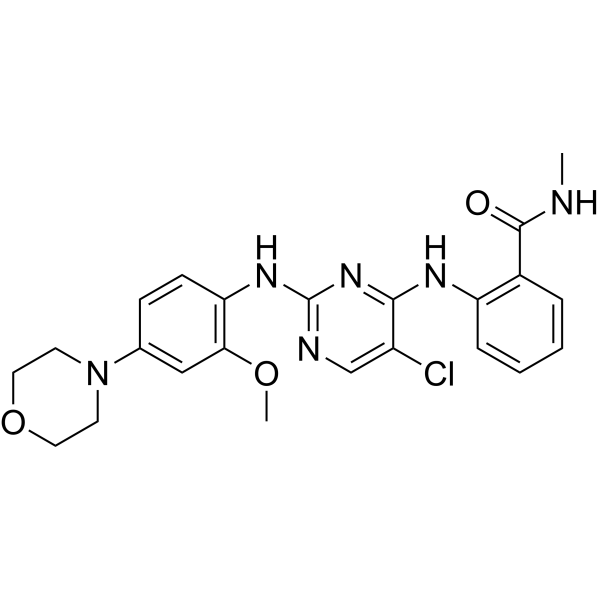
HY-13203
NVP-TAE 226Apoptosis Inducer -
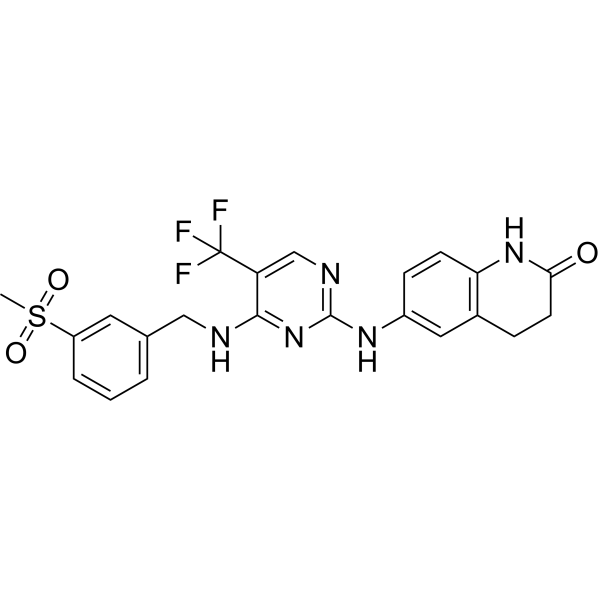
HY-10461
PF-573228FAK Inhibitor -
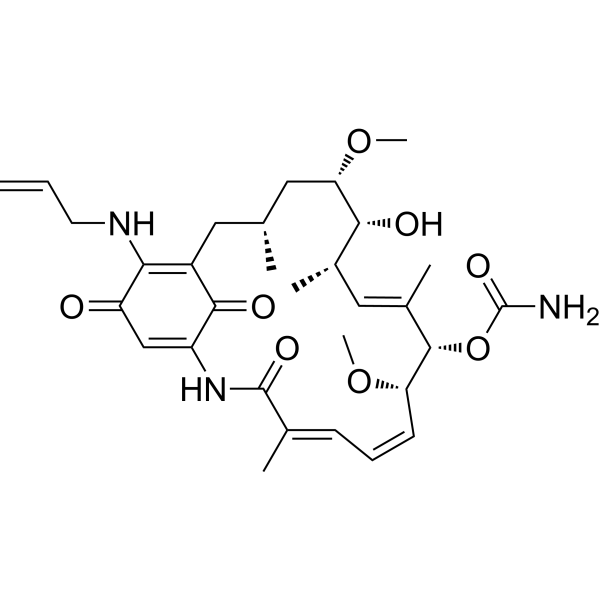
HY-10211
TanespimycinHSP90 Inhibitor -
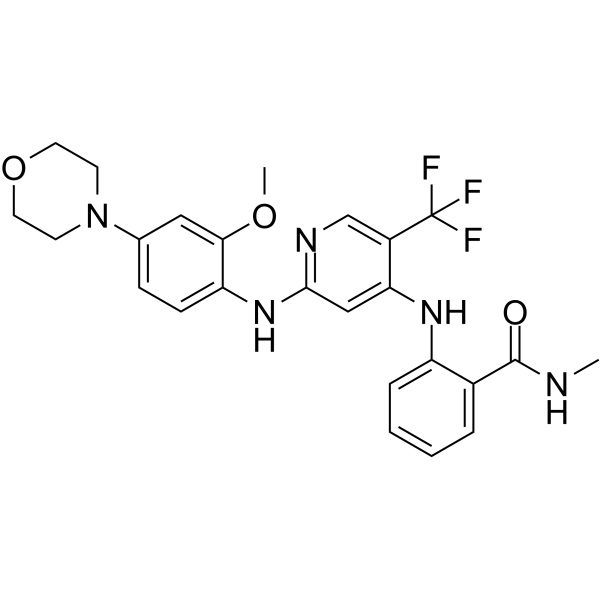
HY-13917
PND-1186FAK Inhibitor -
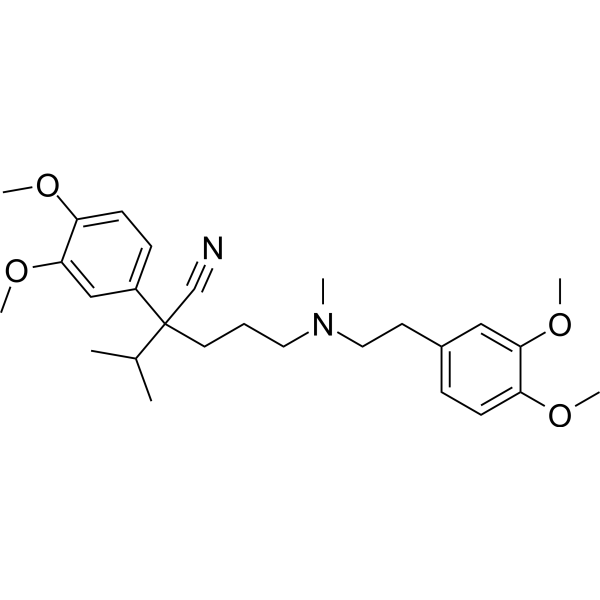
HY-14275
VerapamilCalcium Channel Blocker -
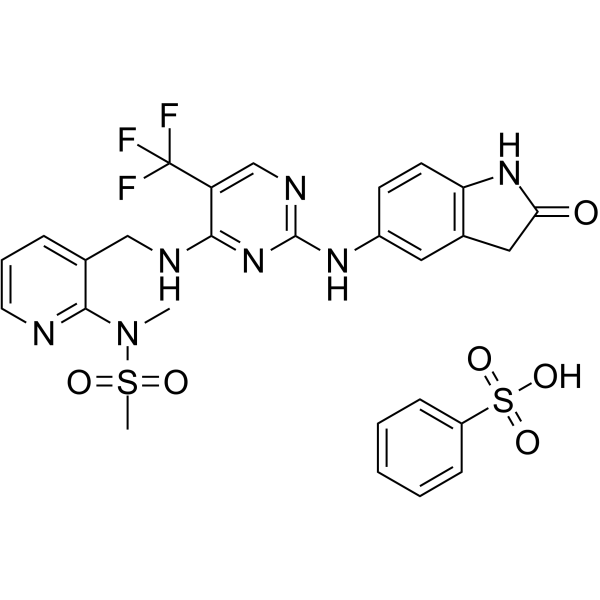
HY-10458
PF-562271 (besylate)FAK/Pyk2 Inhibitor -
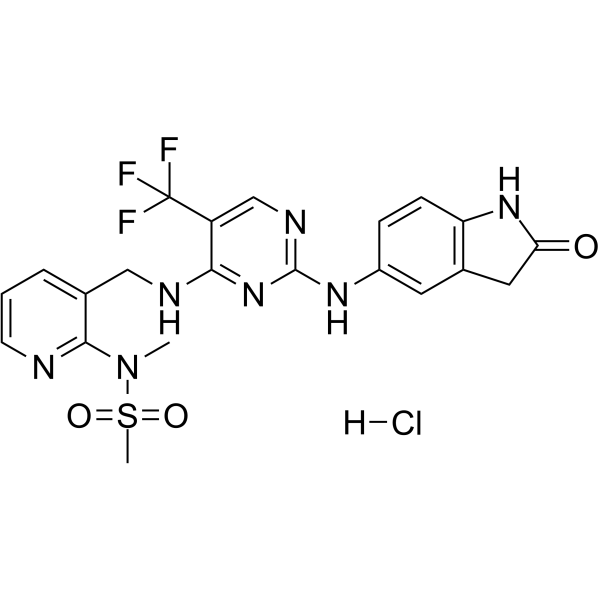
HY-20403
PF-562271 hydrochlorideFAK/Pyk2 Inhibitor -
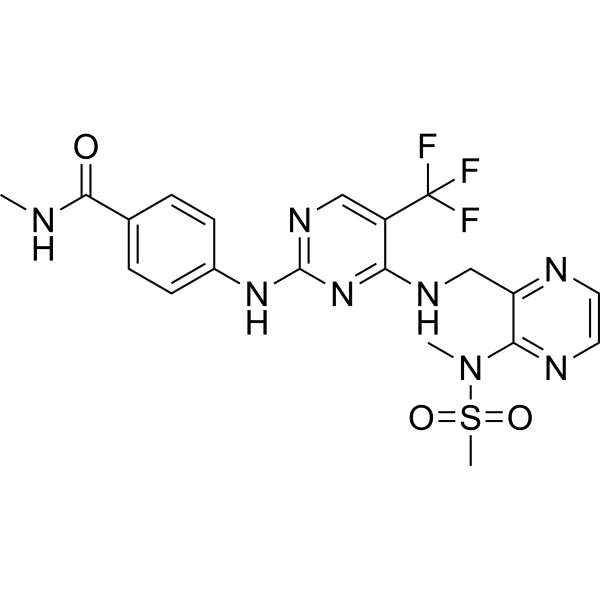
HY-12289
DefactinibFAK Inhibitor -
HY-10460
PF-431396Pyk2/FAK Inhibitor
Publications Citing Use of MedChemExpress (MCE) PND-1186 hydrochloride
More- Cancer Cell. 2019 Mar 18;35(3):457-472.e5. [Abstract]
- Cancer Commun (Lond). 2023 Jun;43(6):685-705. [Abstract]
- Autophagy. 2026 May 29:1-15. [Abstract]
- Nat Commun. 2024 Nov 30;15(1):10422. [Abstract]
- J Exp Clin Cancer Res. 2022 Jun 3;41(1):193. [Abstract]
- Sci Adv. 2026 Jan 30;12(5):eady8382. [Abstract]
- Cell Death Differ. 2026 Mar 6. [Abstract]
- Cell Death Dis. 2026 Jul 16.
- Clin Cancer Res. 2019 Jul 15;25(14):4552-4566. [Abstract]
- Apoptosis. 2024 Aug;29(7-8):1109-1125. [Abstract]
- EMBO Mol Med. 2024 Oct;16(10):2402-2426. [Abstract]
- Biochem Pharmacol. 2026 Aug;250(Pt 2):118087. [Abstract]
- Commun Biol. 2024 Dec 30;7(1):1713. [Abstract]
- Cancers (Basel). 2023 Apr 13;15(8):2280. [Abstract]
- Am J Physiol Renal Physiol. 2025 Oct 1;329(4):F465-F481. [Abstract]
- Mol Biol Cell. 2025 Jun 1;36(6):ar64. [Abstract]
- Chembiochem. 2023 Oct 4;24(19):e202300141. [Abstract]
- bioRxiv. 2024 November 06.
- bioRxiv. 2020 Apr.
 Customer Validation & Images

-
WB
-
WB
-
Cell Proliferation/Viability Assay
-
WB
-
RT-PCR


Biological Activity
Description
Cellular Effect
|
Cell Line

|
Type | Value | Description | References |
|---|---|---|---|---|
| 4T1 | IC50 |
100 nM
Compound: PND-1186
|
Induction of apoptosis in mouse 4T1 cells after 72 hrs using propidium iodide staining byflow cytometry analysis
Induction of apoptosis in mouse 4T1 cells after 72 hrs using propidium iodide staining byflow cytometry analysis
|
10.1007/s00044-013-0768-0 |
| Sf9 | IC50 |
1.5 nM
Compound: PND-1186
|
Inhibition of recombinant GST-tagged FAK catalytic domain region (amino acids 411-686) (unknown origin) expressed in Sf9 cells after 5 mins
Inhibition of recombinant GST-tagged FAK catalytic domain region (amino acids 411-686) (unknown origin) expressed in Sf9 cells after 5 mins
|
10.1007/s00044-013-0768-0 |
In Vitro
PND-1186 has an IC50 of ~100 nM in breast carcinoma cells as determined by anti-phospho-specific immunoblotting to FAK Tyr-397[1].
In murine 4T1 breast carcinoma cells, FAK is important in promoting an invasive and metastatic cell phenotype. Increasing concentrations of PND-1186 (0.1 to 1.0 µM) added to 4T1 cells inhibits FAK Tyr-397 phosphorylation (pY397) and results in elevated levels of total FAK protein within 1 h[1].
MedChemExpress (MCE) has not independently confirmed the accuracy of these methods. They are for reference only. Further protocols information, click here.
-
Cell Line:4T1 breast carcinoma cells
-
Concentration:0.1, 0.2, 0.4, 0.6 and 1.0 µM
-
Incubation Time:1 hour
-
Result:Inhibited FAK Tyr-397 phosphorylation (pY397) and resulted in elevated levels of total FAK protein.
In Vivo
MedChemExpress (MCE) has not independently confirmed the accuracy of these methods. They are for reference only.
-
Animal Model:BALB/c mice[1]
-
Dosage:30 mg/kg or 100 mg/kg
-
Administration:Injected (100 µL) subcutaneously in the neck region; every 12 h (twice-daily, b.i.d.) for 5 days.
-
Result:100 mg/kg treatment significantly reduced final 4T1 tumor weight 2-fold whereas 30 mg/kg treatment slightly reduced final tumor weight but was not significantly different compared to control.


Chemical Information
-
CAS No. 1356154-94-3
-
Appearance Solid
-
Molecular Weight 537.96
-
Formula C25H27ClF3N5O3
-
Color White to off-white
-
SMILES
[H]Cl.O=C(NC)C1=CC=CC=C1NC2=CC(NC3=CC=C(N4CCOCC4)C=C3OC)=NC=C2C(F)(F)F
-
Synonyms
VS-4718 hydrochloride; SR-2516 hydrochloride
-
Shipping
Room temperature in continental US; may vary elsewhere.
-
Storage
4°C, sealed storage, away from moisture
* In solvent : -80°C, 6 months; -20°C, 1 month (sealed storage, away from moisture)


Publications (19)
-
Journal Impact Factor
-
Most Recent
-
Cancer Cell
A Platform of Synthetic Lethal Gene Interaction Networks Reveals that the GNAQ Uveal Melanoma Oncogene Controls the Hippo Pathway through FAK. [Abstract]2019 Mar 18;35(3):457-472.e5. PMID: 30773340
PND-1186 hydrochloride purchased from MedChemExpress. Usage Cited in: Cancer Cell. 2019 Mar 18;35(3):457-472.e5. [Abstract]
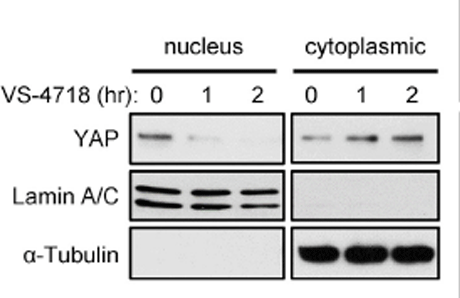
Immunoblot showing YAP nuclear and cytoplasmic localization after 2 h VS-4718 (PND-1186) (1 μM) treatment in OMM1.3 cells, using lamin A/C and a-tubulin as nuclear and cytoplasmic markers, respectively.
PND-1186 hydrochloride purchased from MedChemExpress. Usage Cited in: Cancer Cell. 2019 Mar 18;35(3):457-472.e5. [Abstract]
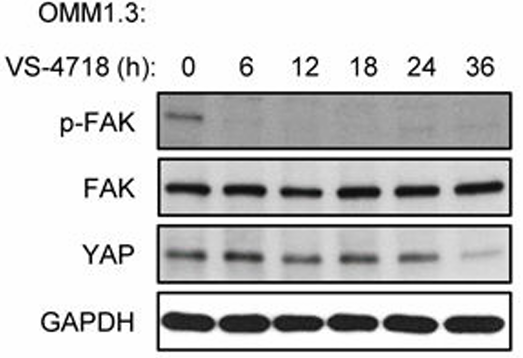
Immunoblot showing levels of total YAP over a time course of VS-4718 (PND-1186) treatment (1 μM; 6-36 h) in OMM1.3 cells.
PND-1186 hydrochloride purchased from MedChemExpress. Usage Cited in: Cancer Cell. 2019 Mar 18;35(3):457-472.e5. [Abstract]
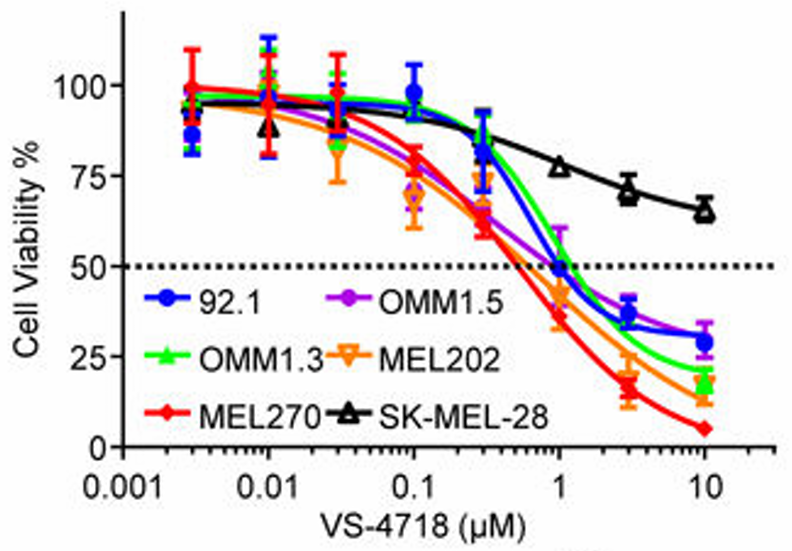
UM cell lines (MEL270, 92.1, OMM1.3, OMM1.5 and MEL202 with GNAQ active mutation) are sensitive to FAK inhibition in a dose-dependent manner after treatment with VS-4718 (PND-1186) (0.001-10 μM; 72 h), SKCM cells (SK-MEL-28 with BRAF mutation) served as control.
PND-1186 hydrochloride purchased from MedChemExpress. Usage Cited in: Cancer Cell. 2019 Mar 18;35(3):457-472.e5. [Abstract]
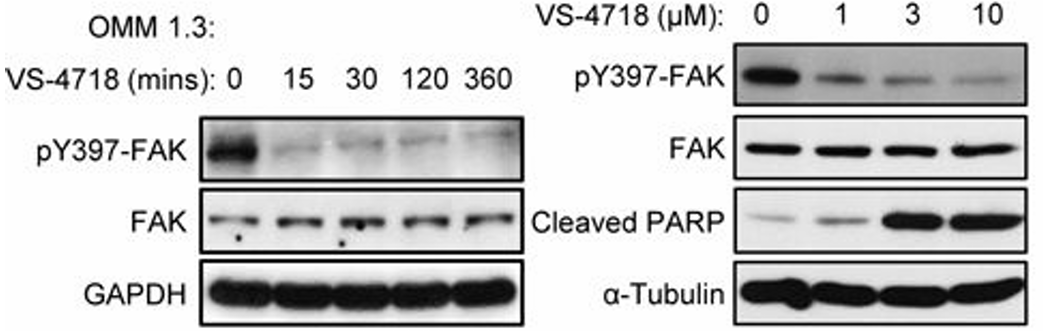
VS-4718 (PND-1186) (1-10 μM; 15-360 min) inhibits FAK activation in OMM1.3 (decrease in pY397- FAK, left panel) and induces apoptosis (increased cleaved PARP, right panel).
PND-1186 hydrochloride purchased from MedChemExpress. Usage Cited in: Cancer Cell. 2019 Mar 18;35(3):457-472.e5. [Abstract]
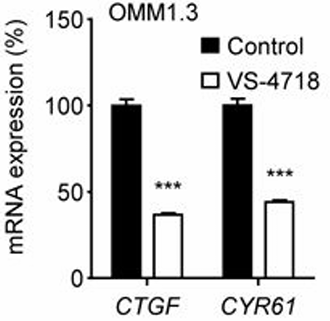
mRNA expression of CTGF and CYR61 measured by qPCR in UM cells OMM1.3 with VS-4718 (PND-1186) treatment (1μM, vehicle treatment as control, mean ± SEM, n=3).
PND-1186 hydrochloride purchased from MedChemExpress. Usage Cited in: Cancer Cell. 2019 Mar 18;35(3):457-472.e5. [Abstract]
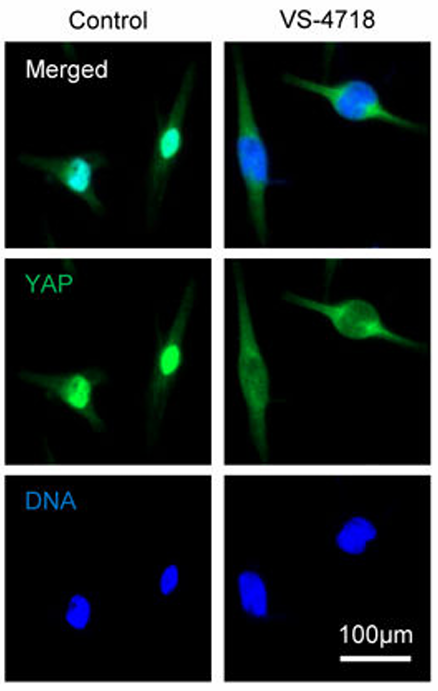
Immunofluorescent staining of endogenous YAP (green) and Hoeschst staining for nuclear DNA (blue) in OMM1.3 cells after VS-4718 (PND-1186) treatment (1μM, vehicle treatment as control).
PND-1186 hydrochloride purchased from MedChemExpress. Usage Cited in: Cancer Cell. 2019 Mar 18;35(3):457-472.e5. [Abstract]
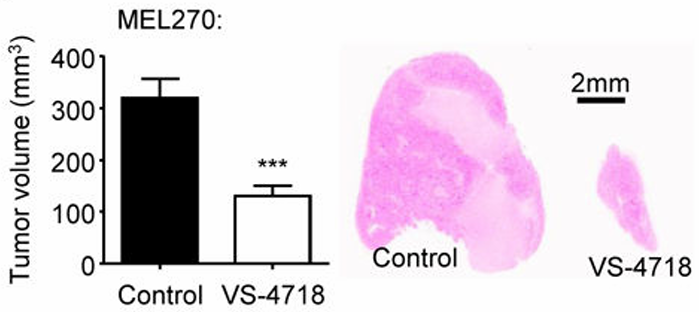
Tumor volume of MEL270 cells in vivo with or without VS-4718 (PND-1186) (100mg/kg; oral gavage; twice daily) treatment, tumor size at the end of the study were measured (mean ± SEM, n=8) (left panel), and hematoxylin and eosin (H&E)-stained sections of representative tumors from each group are shown (right panel).
-
Cancer Commun (Lond)
N6-methyladenosine modification of CENPF mRNA facilitates gastric cancer metastasis via regulating FAK nuclear export. [Abstract]2023 Jun;43(6):685-705. PMID: 37256823 -
Autophagy
PTK2/FAK inhibition triggers TMED9-mediated protective autophagy in pancreatic cancer cell via enhancing ERGIC-ERES contact. [Abstract]2026 May 29:1-15. PMID: 42144738 -
Nat Commun
The dysadherin/MMP9 axis modifies the extracellular matrix to accelerate colorectal cancer progression. [Abstract]2024 Nov 30;15(1):10422. PMID: 39613801 -
J Exp Clin Cancer Res
Focal Adhesion Kinase (FAK)-Hippo/YAP transduction signaling mediates the stimulatory effects exerted by S100A8/A9-RAGE system in triple-negative breast cancer (TNBC). [Abstract]2022 Jun 3;41(1):193. PMID: 35655319 -
Sci Adv
Inhibition of focal adhesion kinase impairs tumor formation and preserves hearing in a murine model of NF2-related schwannomatosis. [Abstract]2026 Jan 30;12(5):eady8382. PMID: 41616055 -
Cell Death Differ
Functional genomic screens uncover FERMT2 as a critical regulator of YAP/TAZ-driven tumorigenicity. [Abstract]2026 Mar 6. PMID: 41792242 -
-
Clin Cancer Res
High-throughput Chemical Screening Identifies Focal Adhesion Kinase and Aurora Kinase B Inhibition as a Synergistic Treatment Combination in Ewing Sarcoma. [Abstract]2019 Jul 15;25(14):4552-4566. PMID: 30979745 -
Apoptosis
IGFBP2 induces podocyte apoptosis promoted by mitochondrial damage via integrin α5/FAK in diabetic kidney disease. [Abstract]2024 Aug;29(7-8):1109-1125. PMID: 38796567 -
EMBO Mol Med
ERK5 suppression overcomes FAK inhibitor resistance in mutant KRAS-driven non-small cell lung cancer. [Abstract]2024 Oct;16(10):2402-2426. PMID: 39271958 -
Biochem Pharmacol
DDX6-mediated CACHD1 mRNA stabilization enhances non-small cell lung cancer progression via activation of FAK signaling. [Abstract]2026 Aug;250(Pt 2):118087. PMID: 42162769 -
Commun Biol
Abnormal cytoskeletal remodeling but normal neuronal excitability in a mouse model of the recurrent developmental and epileptic encephalopathy-susceptibility KCNB1-p.R312H variant. [Abstract]2024 Dec 30;7(1):1713. PMID: 39738805 -
Cancers (Basel)
FAK Inhibitor-Based Combinations with MEK or PKC Inhibitors Trigger Synergistic Antitumor Effects in Uveal Melanoma. [Abstract]2023 Apr 13;15(8):2280. PMID: 37190207 -
Am J Physiol Renal Physiol
Focal adhesion kinase inhibition induces membrane accumulation of aquaporin-2 in renal epithelial cells by actin depolymerization and endocytosis inhibition. [Abstract]2025 Oct 1;329(4):F465-F481. PMID: 40857140 -
Mol Biol Cell
Inducible FAK loss but not FAK inhibition in endothelial cells of PYK2-null mice activates p53 tumor suppressor to prevent tumor growth. [Abstract]2025 Jun 1;36(6):ar64. PMID: 40202821 -
Chembiochem
Development and characterization of selective FAK inhibitors and PROTACs with in vivo activity. [Abstract]2023 Oct 4;24(19):e202300141. PMID: 37088717 -
-


Solvent & Solubility
In Vitro:
DMSO : 100 mg/mL (185.89 mM; Need ultrasonic; Hygroscopic DMSO has a significant impact on the solubility of product, please use newly opened DMSO)
H2O : 20 mg/mL (37.18 mM; Need ultrasonic)
Please refer to the solubility information to select the appropriate solvent. Once prepared, please aliquot and store the solution to prevent product inactivation from repeated freeze-thaw cycles.
Storage method and period of stock solution: -80°C, 6 months; -20°C, 1 month (sealed storage, away from moisture). When stored at -80°C, please use it within 6 months. When stored at -20°C, please use it within 1 month.
* Note: If you choose water as the stock solution, please dilute it to the working solution, then filter and sterilize it with a 0.22 μm filter before use.
Please refer to the solubility information to select the appropriate solvent. Once prepared, please aliquot and store the solution to prevent product inactivation from repeated freeze-thaw cycles.
Storage method and period of stock solution: -80°C, 6 months; -20°C, 1 month (sealed storage, away from moisture). When stored at -80°C, please use it within 6 months. When stored at -20°C, please use it within 1 month.
* Note: If you choose water as the stock solution, please dilute it to the working solution, then filter and sterilize it with a 0.22 μm filter before use.
Concentration (start) × Volume (start) = Concentration (final) × Volume (final)
In Vivo:
Select the appropriate dissolution method based on your experimental animal and administration route.
- For the following dissolution methods, please ensure to first prepare a clear stock solution using an In Vitro approach and then sequentially add co-solvents:
- To ensure reliable experimental results, the clarified stock solution can be appropriately stored based on storage conditions. As for the working solution for In Vivo experiments, it is recommended to prepare freshly and use it on the same day.
- The percentages shown for the solvents indicate their volumetric ratio in the final prepared solution. If precipitation or phase separation occurs during preparation, heat and/or sonication can be used to aid dissolution.
Add each solvent one by one: 10% DMSO 40% PEG300 5% Tween-80 45% Saline
Solubility: ≥ 5 mg/mL (9.29 mM); Clear solution
This protocol yields a clear solution of ≥ 5 mg/mL (saturation unknown).
Taking 1 mL working solution as an example, add 100 μL DMSO stock solution (50.0 mg/mL) to 400 μL PEG300, and mix evenly; then add 50 μL Tween-80 and mix evenly; then add 450 μL Saline to adjust the volume to 1 mL.
Preparation of Saline: Dissolve 0.9 g sodium chloride in ddH₂O and dilute to 100 mL to obtain a clear Saline solution.
Add each solvent one by one: 10% DMSO 90% (20% SBE-β-CD in Saline)
Solubility: ≥ 5 mg/mL (9.29 mM); Clear solution
This protocol yields a clear solution of ≥ 5 mg/mL (saturation unknown).
Taking 1 mL working solution as an example, add 100 μL DMSO stock solution (50.0 mg/mL) to 900 μL 20% SBE-β-CD in Saline, and mix evenly.
Preparation of 20% SBE-β-CD in Saline (4°C, storage for one week): 2 g SBE-β-CD powder is dissolved in 10 mL Saline, completely dissolve until clear.
In Vivo Dissolution Calculator
Please enter the basic information of animal experiments:
-
-
-
-
Recommended: Prepare an additional quantity of animals to account for potential losses during experiments.
Working solution concentration: 0.22 mg/mL
This product has good water solubility, please refer to the measured solubility data in water/PBS/Saline for details.

Protocols
-
Apoptosis
Apoptosis, also called programmed cell death, is generally characterized by distinct morphological characteristics.
-
TUNEL staining for apoptotic DNA fragmentation
TUNEL staining detects DNA strand breaks by using terminal deoxynucleotidyl transferase to add labeled nucleotides to exposed 3′-OH DNA termini, generating either microscopic staining in fixed cells or tissue sections, or fluorescence/cytometric signal in cell suspensions. TUNEL positivity reflects DNA fragmentation but should not be interpreted alone as definitive apoptosis, because TUNEL can also label necrotic, autolytic, mechanically damaged, or DNA-repair-associated DNA breaks.
-
Cell Cytotoxicity Assay
Cytotoxicity assays are usually based on the assessment of cell membrane damage, which can also be indirectly detected by measuring cell viability. Detection methods include MTT assay, CKK-8 assay, LDH assay and ATP assay, etc.
-
Annexin V plus membrane-impermeant dye apoptosis staining
Annexin V-based apoptosis assays rely on the detection of phosphatidylserine (PS) externalization from the inner leaflet of the plasma membrane to the outer leaflet, an early biochemical hallmark of apoptosis. Fluorescently labeled Annexin V binds PS in a calcium-dependent manner, enabling identification of early apoptotic cells by flow cytometry or fluorescence microscopy. When combined with a membrane-impermeant DNA-binding dye (e. g. , propidium iodide), this approach allows discrimination between viable (Annexin V−/dye−), early apoptotic (Annexin V+/dye−), and late apoptotic or necrotic (Annexin V+/dye+) cell populations by assessing membrane integrity and PS exposure.
-
Apoptosis Solutions
Apoptosis is a regulated, generally non-lytic cell-death pathway that removes unwanted, damaged, infected, or abnormal cells through coordinated morphological changes, caspase activation, DNA fragmentation, and membrane remodeling. The intrinsic apoptosis pathway is controlled mainly by mitochondrial outer membrane permeabilization, BCL-2 family proteins, cytochrome c release, apoptosome formation, caspase-9 activation, and downstream executioner caspase-3/7 activation. The extrinsic apoptosis pathway is initiated by death receptors such as Fas, TNFR, and TRAIL receptors, which recruit adaptor proteins and activate caspase-8 before engaging executioner caspases or mitochondrial amplification through BID cleavage. Apoptosis is linked to many phenotypes, including cancer cell killing, tissue homeostasis, immune regulation, neurodegeneration, infection response, and treatment-induced cytotoxicity; unresolved questions include how apoptosis interacts with necroptosis, pyroptosis, ferroptos


Purity & Documentation
-
Data Sheet (275 KB)
-
SDS (252 KB)
- English - EN (252 KB)
- Français - FR (252 KB)
- Deutsch - DE (252 KB)
- Norwegian - NO (252 KB)
- Español - ES (252 KB)
- Swedish - SV (252 KB)
- Italian - IT (252 KB)
- Korean - KR (252 KB)
- Portuguese - PT (252 KB)
-
Handling Instructions (2659 KB)
References


Complete Stock Solution Preparation Table
Please refer to the solubility information to select the appropriate solvent. Once prepared, please aliquot and store the solution to prevent product inactivation from repeated freeze-thaw cycles.
Storage method and period of stock solution: -80°C, 6 months; -20°C, 1 month (sealed storage, away from moisture). When stored at -80°C, please use it within 6 months. When stored at -20°C, please use it within 1 month.
| Optional Solvent | Concentration Solvent Mass | 1 mg | 5 mg | 10 mg | 25 mg |
|---|---|---|---|---|---|
| H2O / DMSO | 1 mM | 1.8589 mL | 9.2944 mL | 18.5887 mL | 46.4719 mL |
| 5 mM | 0.3718 mL | 1.8589 mL | 3.7177 mL | 9.2944 mL | |
| 10 mM | 0.1859 mL | 0.9294 mL | 1.8589 mL | 4.6472 mL | |
| 15 mM | 0.1239 mL | 0.6196 mL | 1.2392 mL | 3.0981 mL | |
| 20 mM | 0.0929 mL | 0.4647 mL | 0.9294 mL | 2.3236 mL | |
| 25 mM | 0.0744 mL | 0.3718 mL | 0.7435 mL | 1.8589 mL | |
| 30 mM | 0.0620 mL | 0.3098 mL | 0.6196 mL | 1.5491 mL | |
| DMSO | 40 mM | 0.0465 mL | 0.2324 mL | 0.4647 mL | 1.1618 mL |
| 50 mM | 0.0372 mL | 0.1859 mL | 0.3718 mL | 0.9294 mL | |
| 60 mM | 0.0310 mL | 0.1549 mL | 0.3098 mL | 0.7745 mL | |
| 80 mM | 0.0232 mL | 0.1162 mL | 0.2324 mL | 0.5809 mL | |
| 100 mM | 0.0186 mL | 0.0929 mL | 0.1859 mL | 0.4647 mL |
* Note: If you choose water as the stock solution, please dilute it to the working solution, then filter and sterilize it with a 0.22 μm filter before use.


PND-1186 hydrochloride Related Classifications
HY-13917A Related Classifications
 Powered by Bioz