



Redafamdastat
Based on 6 publication(s) in Google Scholar
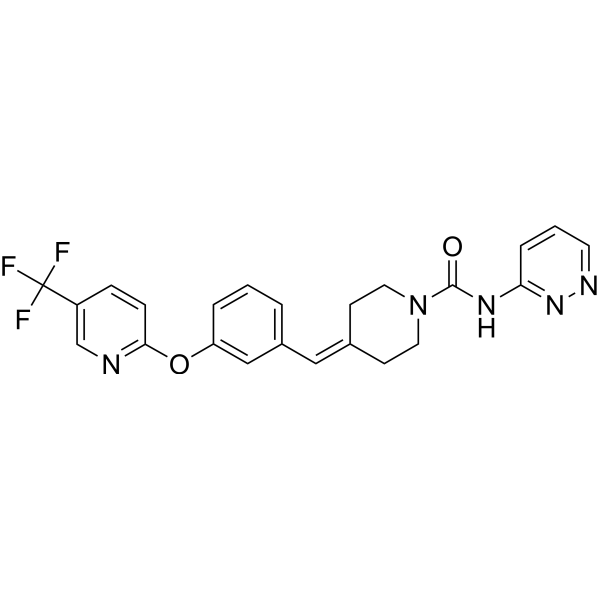
Redafamdastat (PF-04457845), a chemical probe, is a highly efficacious and selective FAAH inhibitor with IC50 values is 7.2±0.63 nM and 7.4±0.62 nM for hFAAH and rFAAH, respectively.
For research use only. We do not sell to patients.
- Purity : 98.86%
- CAS No.: 1020315-31-4
- Formula: C23H20F3N5O2
- Molecular Weight:455.43
-
Storage:Powder -20°C, 3 years , 4°C, 2 years ; In solvent -80°C, 2 years , -20°C, 1 year

To place orders, for customer services and technical support, please contact: MedChemExpress USA
Tel: 609-228-6898 E-mail: [email protected] [email protected]


-
 Biological Activity
-
Chemical Information
-
Solvent & Solubility
- Purity & Documentation
- References
-
 Help & FAQs


-
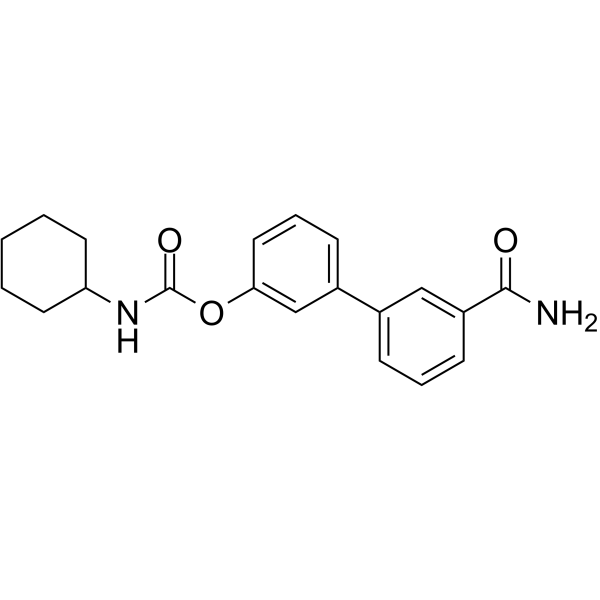
HY-10864
URB-597FAAH Inhibitor -
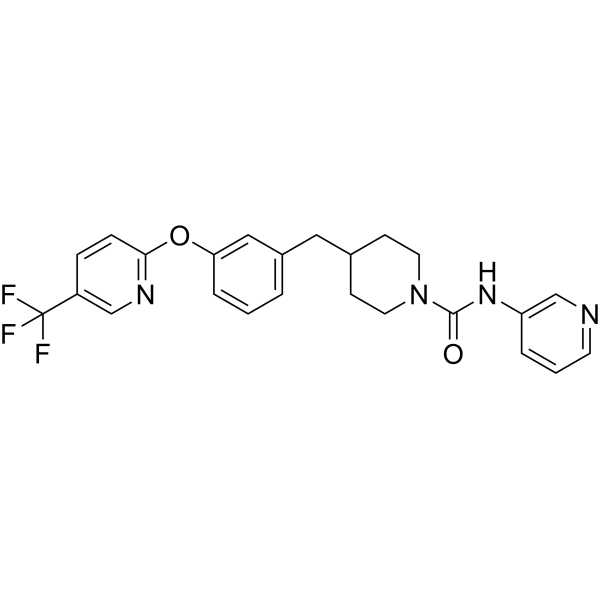
HY-14380
PF-3845FAAH Inhibitor -
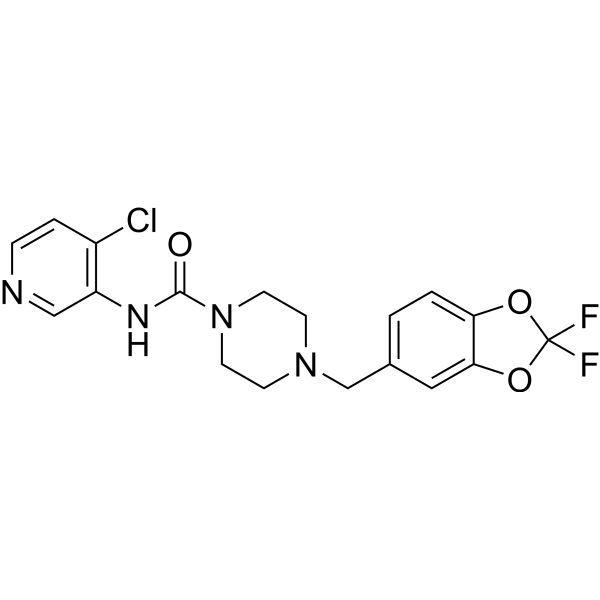
HY-19636
JNJ-42165279FAAH Inhibitor -
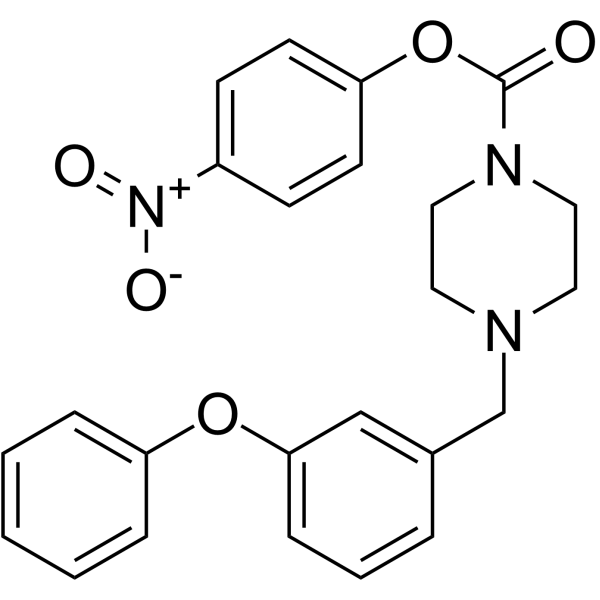
HY-15250
JZL195Dual FAAH/MAGL Inhibitor -
HY-Y0873
PEG300Neutral Polymer -
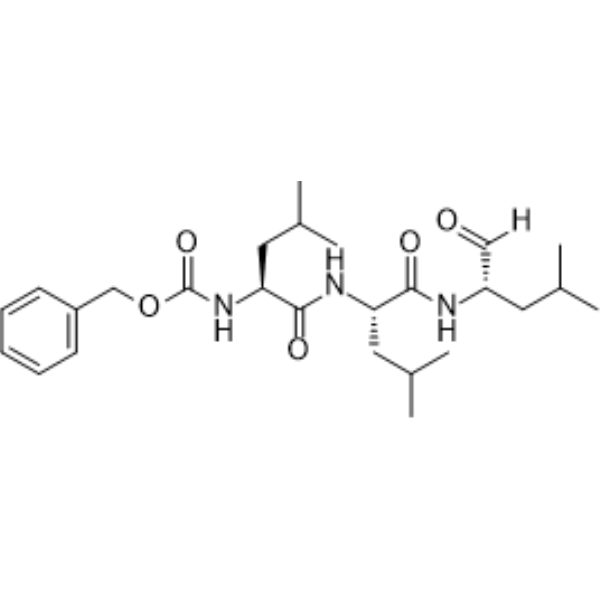
HY-13259
MG-132Proteasome Inhibitor -
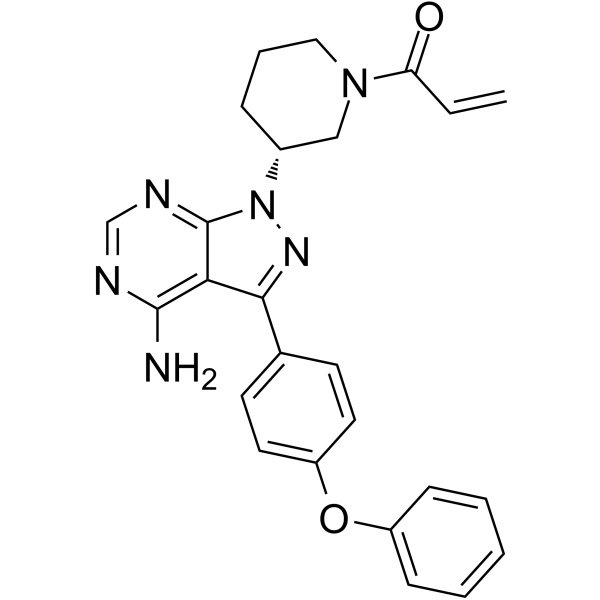
HY-10997
IbrutinibBtk Inhibitor -
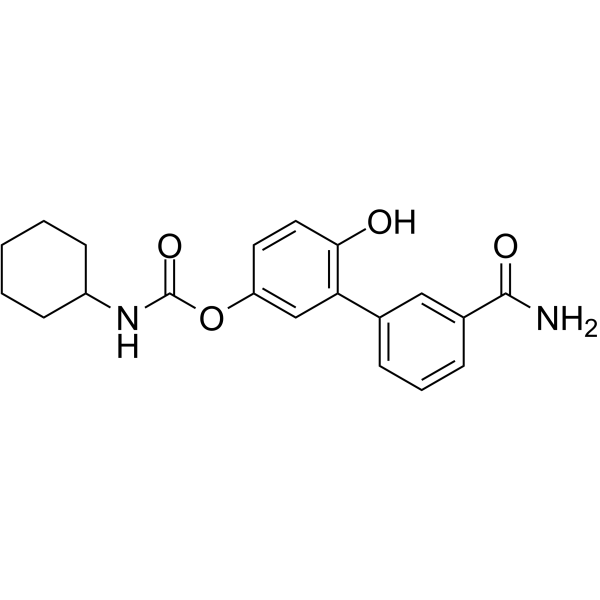
HY-116477
URB937FAAH Inhibitor -
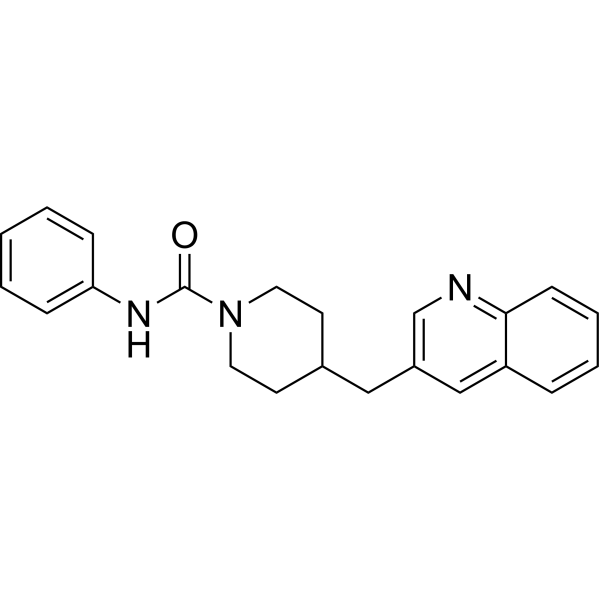
HY-18081
PF 750FAAH Inhibitor -
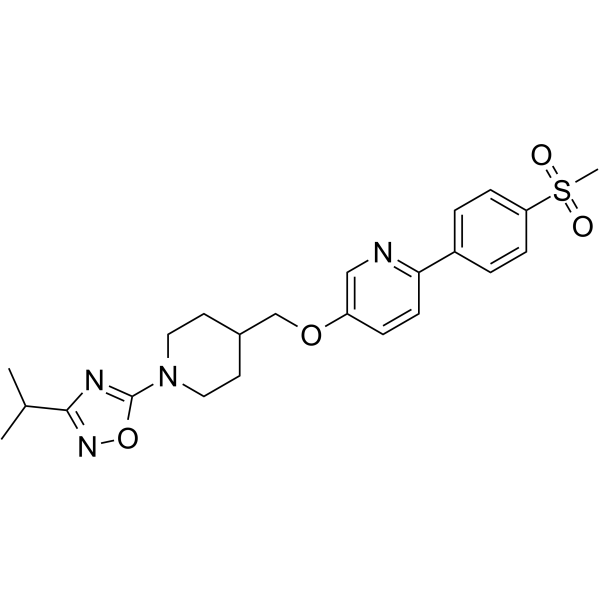
HY-12066
GSK1292263 -
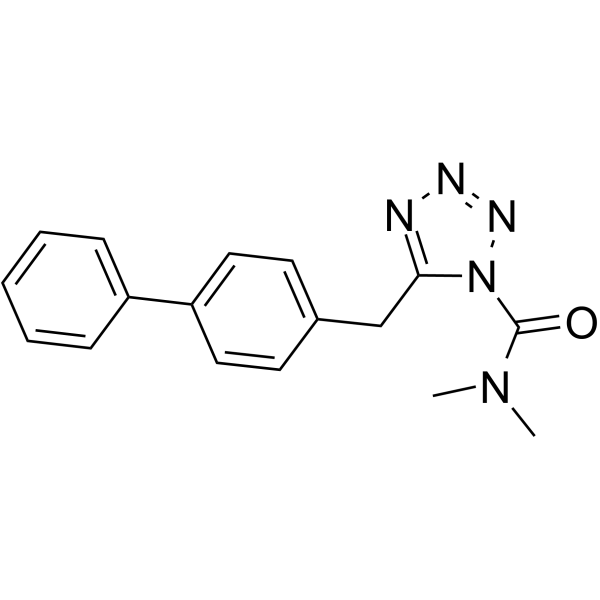
HY-10865
LY2183240Anandamide Uptake/FAAH Inhibitor -
HY-14595
Biochanin AEndogenous Metabolite
Publications Citing Use of MedChemExpress (MCE) Redafamdastat
More

Biological Activity
Description
IC50 & Target
IC50: 7.2±0.63 nM (hFAAH), 7.4±0.62 nM (rFAAH)[1]
In Vitro
Redafamdastat inhibits FAAH by a covalent, irreversible mechanism involving carbamylation of the active-site serine nucleophile of FAAH with high in vitro potency (kinact/Ki and IC50 values of 40300 M-1s-1 and 7.2 nM, respectively, for human FAAH). Redafamdastat has exquisite selectivity for FAAH relative to other members of the serine hydrolase superfamily as demonstrated by competitive activity-based protein profiling. Redafamdastat completely inhibits FAAH in human and mouse membrane proteomes at both 10 and 100 μM with no off targets[1]. Redafamdastat is completely selective for FAAH, and none of the other FP-reactive serine hydrolases in the tested tissues are inhibited by Redafamdastat even at 100 μM[2].
MedChemExpress (MCE) has not independently confirmed the accuracy of these methods. They are for reference only. .
In Vivo
MedChemExpress (MCE) has not independently confirmed the accuracy of these methods. They are for reference only.
Clinical Trial
| NCT Number | Sponsor | Condition | Start Date |
Phase

|
|---|---|---|---|---|
| NCT01329991 | Plexxikon| | 2011-05 | PHASE1 |


Chemical Information
-
CAS No. 1020315-31-4
-
Appearance Solid
-
Molecular Weight 455.43
-
Formula C23H20F3N5O2
-
Color White to off-white
-
SMILES
O=C(NC1=NN=CC=C1)N(CC/2)CCC2=C\C3=CC=CC(OC4=NC=C(C(F)(F)F)C=C4)=C3
-
Synonyms
PF-04457845
-
Shipping
Room temperature in continental US; may vary elsewhere.
-
Storage
Powder -20°C 3 years 4°C 2 years In solvent -80°C 2 years -20°C 1 year


Publications (6)
-
Journal Impact Factor
-
Most Recent
-
Nat Commun
Human iPSC-based Modeling of Pulmonary Fibrosis Reveals p300/CBP Inhibition Suppresses Alveolar Transitional Cell State. [Abstract]2026 Feb 12;17(1):1214. PMID: 41680175 -
Cell Death Differ
FAAH served a key membrane-anchoring and stabilizing role for NLRP3 protein independently of the endocannabinoid system. [Abstract]2023 Jan;30(1):168-183. PMID: 36104448 -
Neurotoxicology
Persistent proteomic changes in glutamatergic and GABAergic signaling in the amygdala of adolescent rats exposed to chlorpyrifos as juveniles. [Abstract]2021 Jul:85:234-244. PMID: 34058248 -
Neurotoxicology
Inhibition of fatty acid amide hydrolase by chlorpyrifos in juvenile rats results in altered exploratory and social behavior as adolescents. [Abstract]2020 Mar:77:127-136. PMID: 31931040 -
Int J Toxicol
Inhibition of Endocannabinoid-Metabolizing Enzymes in Peripheral Tissues Following Developmental Chlorpyrifos Exposure in Rats. [Abstract]2017 Sep/Oct;36(5):395-402. PMID: 28820005 -


Solvent & Solubility
In Vitro:
DMSO : ≥ 100 mg/mL (219.57 mM; Hygroscopic DMSO has a significant impact on the solubility of product, please use newly opened DMSO)
* "≥" means soluble, but saturation unknown.
Please refer to the solubility information to select the appropriate solvent. Once prepared, please aliquot and store the solution to prevent product inactivation from repeated freeze-thaw cycles.
Storage method and period of stock solution: -80°C, 2 years; -20°C, 1 year. When stored at -80°C, please use it within 2 years. When stored at -20°C, please use it within 1 year.
Please refer to the solubility information to select the appropriate solvent. Once prepared, please aliquot and store the solution to prevent product inactivation from repeated freeze-thaw cycles.
Storage method and period of stock solution: -80°C, 2 years; -20°C, 1 year. When stored at -80°C, please use it within 2 years. When stored at -20°C, please use it within 1 year.
Concentration (start) × Volume (start) = Concentration (final) × Volume (final)
In Vivo:
Select the appropriate dissolution method based on your experimental animal and administration route.
- For the following dissolution methods, please ensure to first prepare a clear stock solution using an In Vitro approach and then sequentially add co-solvents:
- To ensure reliable experimental results, the clarified stock solution can be appropriately stored based on storage conditions. As for the working solution for In Vivo experiments, it is recommended to prepare freshly and use it on the same day.
- The percentages shown for the solvents indicate their volumetric ratio in the final prepared solution. If precipitation or phase separation occurs during preparation, heat and/or sonication can be used to aid dissolution.
Add each solvent one by one: 10% DMSO 40% PEG300 5% Tween-80 45% Saline
Solubility: ≥ 2.75 mg/mL (6.04 mM); Clear solution
This protocol yields a clear solution of ≥ 2.75 mg/mL (saturation unknown).
Taking 1 mL working solution as an example, add 100 μL DMSO stock solution (27.5 mg/mL) to 400 μL PEG300, and mix evenly; then add 50 μL Tween-80 and mix evenly; then add 450 μL Saline to adjust the volume to 1 mL.
Preparation of Saline: Dissolve 0.9 g sodium chloride in ddH₂O and dilute to 100 mL to obtain a clear Saline solution.
Add each solvent one by one: 10% DMSO 90% (20% SBE-β-CD in Saline)
Solubility: ≥ 2.75 mg/mL (6.04 mM); Clear solution
This protocol yields a clear solution of ≥ 2.75 mg/mL (saturation unknown).
Taking 1 mL working solution as an example, add 100 μL DMSO stock solution (27.5 mg/mL) to 900 μL 20% SBE-β-CD in Saline, and mix evenly.
Preparation of 20% SBE-β-CD in Saline (4°C, storage for one week): 2 g SBE-β-CD powder is dissolved in 10 mL Saline, completely dissolve until clear.
In Vivo Dissolution Calculator
Please enter the basic information of animal experiments:
-
-
-
-
Recommended: Prepare an additional quantity of animals to account for potential losses during experiments.
Please enter your animal formula composition:
-
%DMSO +
Recommended: Keep the proportion of DMSO in working solution below 2% if your animal is weak.
-
%+
-
+%Tween-80 + +
-
%Saline +
The co-solvents required include: DMSO, . All of co-solvents are available by MedChemExpress (MCE). , Tween 80. All of co-solvents are available by MedChemExpress (MCE).
Working solution concentration: 0.22 mg/mL
Method for preparing stock solution: mg drug dissolved in μL DMSO. Stock solution concentration: mg/mL.
1. Take μL DMSO stock solution;
2. Add μL .
μL , mix evenly;
3. Then add μL Tween 80, mix evenly;
4. Then add μL
Please ensure that the stock solution in the first step is dissolved to a clear state, and add co-solvents in sequence. You can use ultrasonic heating (ultrasonic cleaner, recommended frequency 20-40 kHz), vortexing, etc. to assist dissolution.


Purity & Documentation
-
Data Sheet (277 KB)
-
SDS (393 KB)
- English - EN (393 KB)
- Français - FR (393 KB)
- Deutsch - DE (393 KB)
- Norwegian - NO (393 KB)
- Español - ES (393 KB)
- Swedish - SV (393 KB)
- Italian - IT (393 KB)
- Korean - KR (393 KB)
- Portuguese - PT (393 KB)
-
Handling Instructions (2659 KB)
References
[1]. Johnson DS, et al. Discovery of PF-04457845: A Highly Potent, Orally Bioavailable, and Selective Urea FAAH Inhibitor. ACS Med Chem Lett. 2011 Feb 10;2(2):91-96. [Content Brief]
[2]. Ahn K, et al. Mechanistic and pharmacological characterization of PF-04457845: a highly potent and selective fatty acid amide hydrolase inhibitor that reduces inflammatory and noninflammatory pain. J Pharmacol Exp Ther. 2011 Jul;338(1):114-24. [Content Brief]
[3]. Buntyn RW, et al. Inhibition of Endocannabinoid-Metabolizing Enzymes in Peripheral Tissues Following Developmental Chlorpyrifos Exposure in Rats. Int J Toxicol. 2017 Jan 1:1091581817725272. [Content Brief]


Complete Stock Solution Preparation Table
Please refer to the solubility information to select the appropriate solvent. Once prepared, please aliquot and store the solution to prevent product inactivation from repeated freeze-thaw cycles.
Storage method and period of stock solution: -80°C, 2 years; -20°C, 1 year. When stored at -80°C, please use it within 2 years. When stored at -20°C, please use it within 1 year.
| Optional Solvent | Concentration Solvent Mass | 1 mg | 5 mg | 10 mg | 25 mg |
|---|---|---|---|---|---|
| DMSO | 1 mM | 2.1957 mL | 10.9786 mL | 21.9573 mL | 54.8932 mL |
| 5 mM | 0.4391 mL | 2.1957 mL | 4.3915 mL | 10.9786 mL | |
| 10 mM | 0.2196 mL | 1.0979 mL | 2.1957 mL | 5.4893 mL | |
| 15 mM | 0.1464 mL | 0.7319 mL | 1.4638 mL | 3.6595 mL | |
| 20 mM | 0.1098 mL | 0.5489 mL | 1.0979 mL | 2.7447 mL | |
| 25 mM | 0.0878 mL | 0.4391 mL | 0.8783 mL | 2.1957 mL | |
| 30 mM | 0.0732 mL | 0.3660 mL | 0.7319 mL | 1.8298 mL | |
| 40 mM | 0.0549 mL | 0.2745 mL | 0.5489 mL | 1.3723 mL | |
| 50 mM | 0.0439 mL | 0.2196 mL | 0.4391 mL | 1.0979 mL | |
| 60 mM | 0.0366 mL | 0.1830 mL | 0.3660 mL | 0.9149 mL | |
| 80 mM | 0.0274 mL | 0.1372 mL | 0.2745 mL | 0.6862 mL | |
| 100 mM | 0.0220 mL | 0.1098 mL | 0.2196 mL | 0.5489 mL |


Redafamdastat Related Classifications
HY-14376 Related Classifications
 Powered by Bioz