1. Search Result
Search Result
Results for "

56-89-3

" in MedChemExpress (MCE) Product Catalog:

8

Inhibitors & Agonists

1

Biochemical Assay Reagents

1

Peptides

3

Natural
Products

4

Isotope-Labeled Compounds

Cat. No. Nombre del producto Target Áreas de investigación Chemical Structure
  • HY-N0394
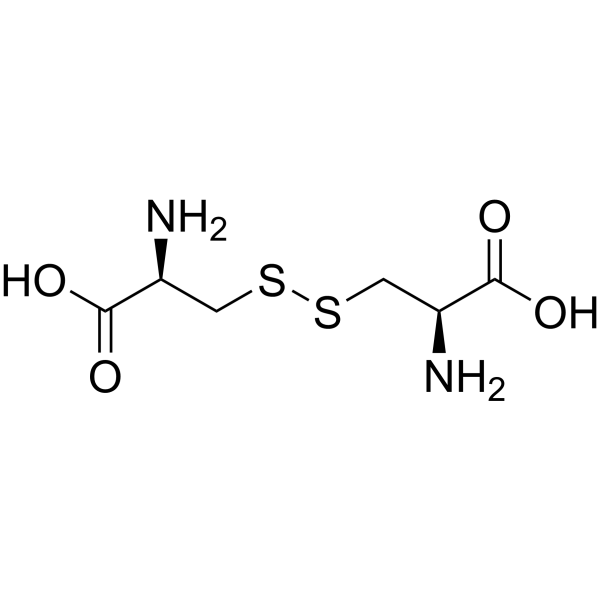
    L-Cystine
    4 Publications Verification

    Endogenous Metabolite Ferroptosis ROS Kinase Keap1-Nrf2 Reactive Oxygen Species (ROS) Metabolic Disease Inflammation/Immunology Cancer
    L-Cystine is an orally active extracellular form of L-Cysteine (HY-Y0337), occurring in proteins of plants and animals. L-Cystine elevates Nrf2 protein expression and activates Nrf2 transcription factor. L-cystine reduces ROS generation and protects against oxidant- or Doxorubicin (HY-15142A)-induced apoptosis. L-Cystine combined with L-theanine (HY-15121) enhances the production of antigen-specific IgG by increasing glutathione (GSH) levels and T helper 2 (Th2) mediated responses in mice. L-Cystine is promising for research of cystinuria and kidney stones
    L-Cystine
  • HY-N0394R

    Reference Standards Endogenous Metabolite Ferroptosis ROS Kinase Keap1-Nrf2 Metabolic Disease Inflammation/Immunology Cancer
    L-Cystine (Standard) is the analytical standard of L-Cystine. This product is intended for research and analytical applications. L-Cystine, the extracellular form of L-Cysteine (HY-Y0337), is a nutritionally dispensable semiessential sulfur-containing amino acid, occurring in proteins of plants and animals. L-Cystine induces Nrf2 protein elevation in a Keap1 (HY-P75897)-dependent manner and activates Nrf2 transcription factor. L-cystine can elicit cytoprotection by reducing ROS generation and protecting against oxidant- or doxorubicin-induced apoptosis. The reduced reabsorption of L-Cystine in renal tubules and its poor solubility in urine are the important causes of cystine precipitation and cystine crystal formation eventually leading to kidney stones. L-Cystine combined with L-theanine (HY-15121) enhances the production of antigen-specific IgG by increasing glutathione (GSH) levels and T helper 2 (Th2) mediated responses in mice. L-Cystine is promising for research of cystinuria and cystinosis
    L-Cystine (Standard)
  • HY-W009203
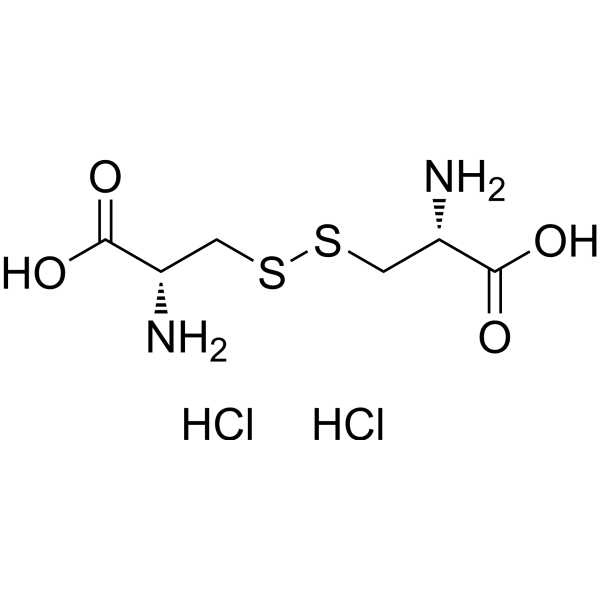
    L-Cystine dihydrochloride
    4 Publications Verification

    Endogenous Metabolite Apoptosis Keap1-Nrf2 Reactive Oxygen Species (ROS) Ferroptosis Metabolic Disease Inflammation/Immunology Cancer
    L-Cystine dihydrochloride is the dihydrochloride salt form of L-Cystine (HY-N0394). L-Cystine dihydrochloride elevates Nrf2 protein expression and activates Nrf2 transcription factor. L-cystine dihydrochloride reduces ROS generation and protects against oxidant- or Doxorubicin (HY-15142A)-induced apoptosis. L-Cystine dihydrochloride combined with L-theanine (HY-15121) enhances the production of antigen-specific IgG by increasing glutathione (GSH) levels and T helper 2 (Th2) mediated responses in mice. L-Cystine dihydrochloride is promising for research of cystinuria and kidney stones
    L-Cystine dihydrochloride
  • HY-N0394S1
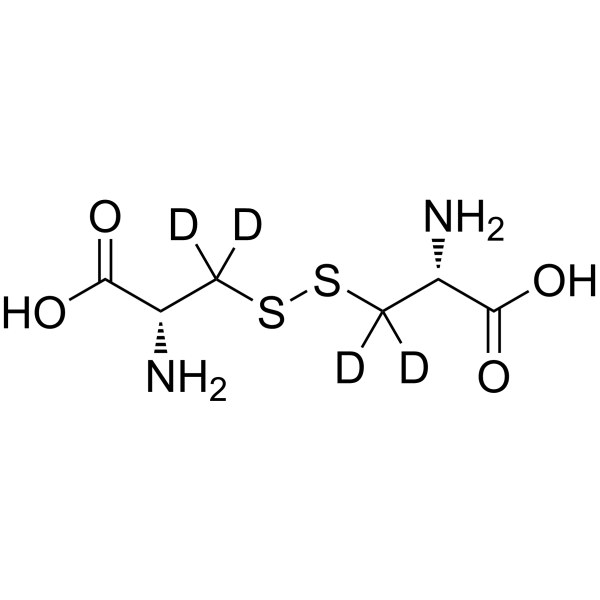
    L-Cystine-d4
    1 Publications Verification

    Isotope-Labeled Compounds Endogenous Metabolite Ferroptosis Others
    L-Cystine-d4 is the deuterium labeled L-Cystine. L-Cystine is an amino acid and intracellular thiol, which plays a critical role in the regulation of cellular processes.
    L-Cystine-d4
  • HY-N0394S4
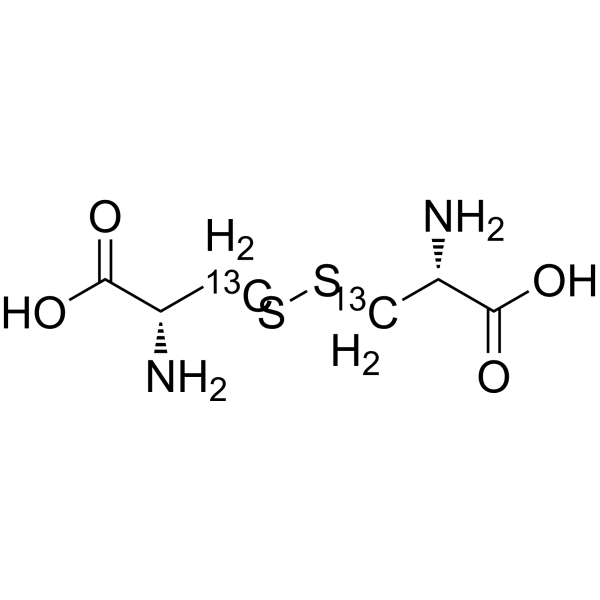
    L-Cystine-3,3'-13C2
    1 Publications Verification

    Ferroptosis Endogenous Metabolite Others
    L-Cystine-3,3'- 13C2 is the 13C labeled L-Cystine . L-Cystine is an amino acid and intracellular thiol, which plays a critical role in the regulation of cellular processes .
    L-Cystine-3,3'-13C2
  • HY-N0394S2

    Endogenous Metabolite Ferroptosis Others
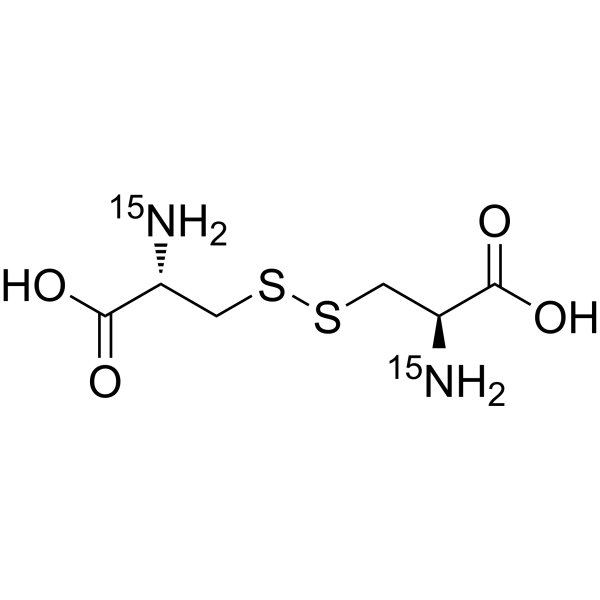
    L-Cystine- 15N2 is the 15N-labeled L-Cystine. L-Cystine is an amino acid and intracellular thiol, which plays a critical role in the regulation of cellular processes.
    L-Cystine-15N2
  • HY-N0394S5

    Isotope-Labeled Compounds Others
    L-Cystine- 13C6, 15N2 is the 13C- and 15N-labeled L-Cystine (HY-N0394). L-Cystine is an orally active extracellular form of L-Cysteine (HY-Y0337), occurring in proteins of plants and animals. L-Cystine elevates Nrf2 protein expression and activates Nrf2 transcription factor. L-cystine reduces ROS generation and protects against oxidant- or Doxorubicin (HY-15142A)-induced apoptosis. L-Cystine combined with L-theanine (HY-15121) enhances the production of antigen-specific IgG by increasing glutathione (GSH) levels and T helper 2 (Th2) mediated responses in mice. L-Cystine is promising for research of cystinuria and kidney stones.
    L-Cystine-13C6,15N2
  • HY-W009356A

    Biochemical Assay Reagents Others
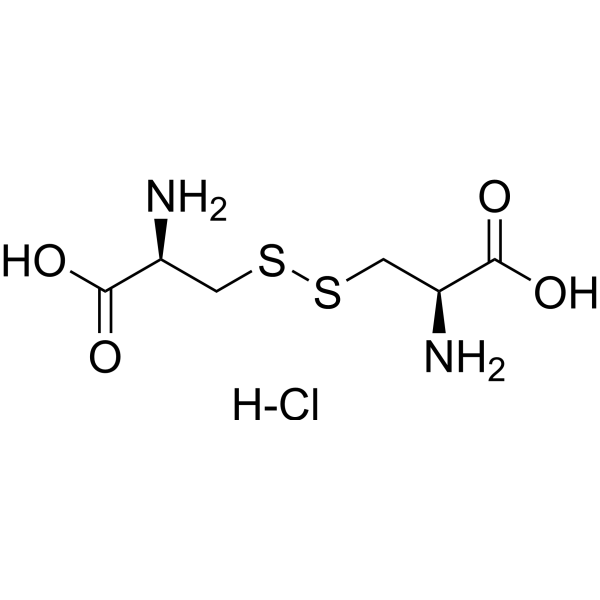
    L-Cystine monohydrochloride is an amino acid. L-Cystine is converted to L-Cysteine in the body. Moreover, L-Cystine/L-Cysteine conversion system is a channel on the cell membrane, which can maintain the internal REDOX homeostasis of E. coli .
    L-Cystine monohydrochloride

Consulta en línea

Your information is safe with us. * Required Fields.

Saludo


Country or Region *

Nombre del solicitante *


Nombre de la Organizaciòn *

Department *


Direcciòn del E-mail *


Nombre del producto *

Cat. No.


Requested quantity *

Número de teléfono *


Observaciones

Consulta en línea

Inquiry Information

Nombre del producto:
Cat. No.:
Cantidad:
MCE Japan Authorized Agent:

