4 Results for "

A549/ATCC

" in MedChemExpress (MCE) Product Catalog:
Products (4)

4 Results for "A549/ATCC" in MCE Product Catalog:

Cat. No.: HY-162161
CAS No.: 301844-13-3
Research Areas:  

Cancer

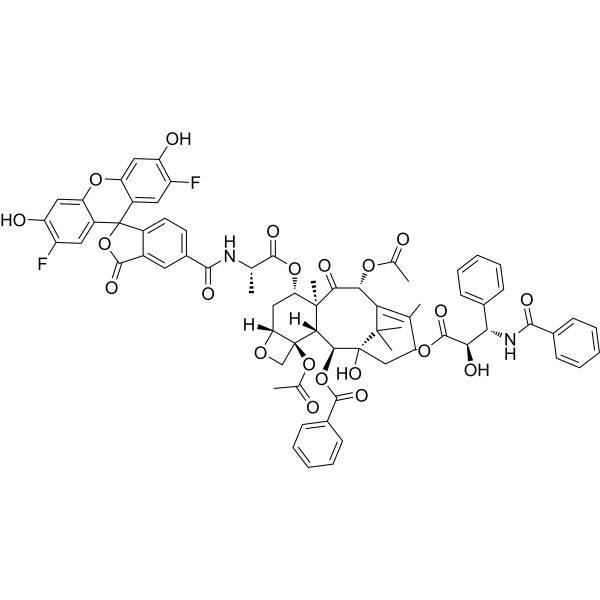
Flutax-2 is an active fluorescent derivative of Paclitaxel (HY-B0015) that binds to polymerized αβ-tubulin dimers. Flutax-2 is applicable for imaging microtubules in live cells, isolated cytoskeletons and parasites (Ex/Em=496/526 nm) .
loading...
    loading...
Cat. No.: HY-149388
CAS No.: 2954795-29-8
Target:  

Microtubule/Tubulin

Research Areas:  

Cancer

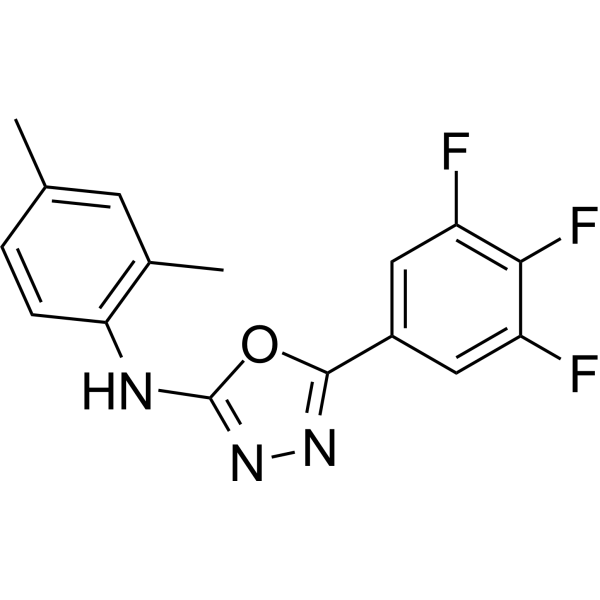
Anticancer agent 139 (Compound 6h) has potent anticancer activity. Anticancer agent 139 displayed a π–cationic interaction with the residue Lys352 of Tublin. Anticancer agent 139 has good anticancer activity against SNB-19, OVCAR-8, and NCI-H40 with PGIs of 86.61, 85.26, and 75.99, respectively. Anticancer agent 139 also has moderate anticancer activity against HOP-62, SNB-75, ACHN, NCI/ADR-RES, 786-O, A549/ATCC, HCT-116, and MDA-MB-231 with PGIs of 67.55, 65.46, 59.09, 59.02, 57.88, 56.88, 56.53, 56.4, and 51.88 respectively .
loading...
    loading...
Cat. No.: HY-115407
CAS No.: 1072931-48-6
Target:  

Bacterial

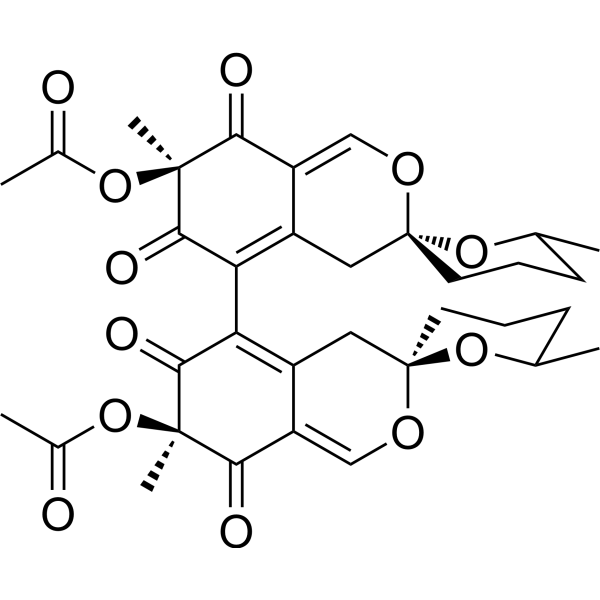
Cochliodone A is an active compound extracted from cultures of the deep-sea derived fungus Chaetomium sp. and has antibacterial and anticancer activity. Cochliodone A is toxic to a variety of bacteria, with MICs of 15.3 μg/mL (V. vulnificus), 32.7 μg/mL (V. rotiferianus), 15.9 μg/mL (S. aureus ATCC 43300), and 16.3 μg/mL (S . aureus CGMCC 1.12409). Cochliodone A also inhibits a variety of cancer cell lines, with IC50s of 28.1 μM (A549), 20.7 μM (HeLa), and 23.2 μM (Hep G2) .
loading...
    loading...
Cat. No.: HY-128526
CAS No.: 160472-93-5
Target:  

Endogenous Metabolite

Research Areas:  

Infection

Acinetobactin is a bifunctional siderophore secreted by Acinetobacter baumannii that competitively binds ferric iron ions. Acinetobactin supplies A. baumannii by sequestering host-sequestered Fe 3+, while competitively depriving skin and respiratory commensal bacteria of iron resources, thereby exerting growth-inhibitory effects on Staphylococcus epidermidis, Staphylococcus hominis, Staphylococcus haemolyticus, and Corynebacterium striatum. The synthesis and transport of Acinetobactin enhance the intracellular epithelial colonization ability of A. baumannii, induce apoptosis of host epithelial cells, and simultaneously improve the survival and invasion capabilities of the bacterium in Galleria mellonella and mouse sepsis models. Acinetobactin can be used in A. baumannii-related research .
loading...
    loading...

