

Search Result
Results for "
ADME
" in MedChemExpress (MCE) Product Catalog:
7
Biochemical Assay Reagents
2
Isotope-Labeled Compounds
| Cat. No. |
Product Name |
Target |
Research Areas |
Chemical Structure |
-
- HY-Y0873I
-
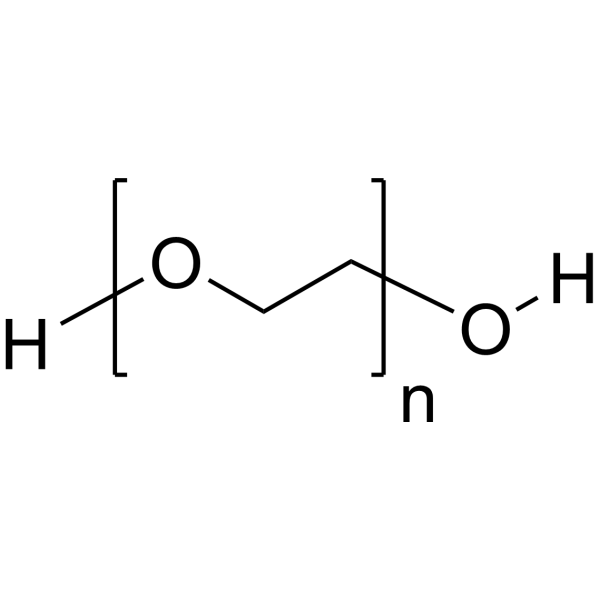
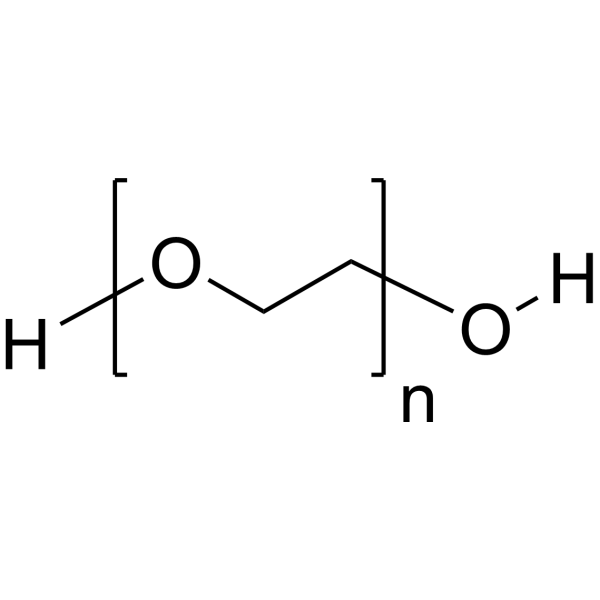
PEG6000
3 Publications Verification
Polyethylene glycol 6000
|
Environmental Pollutants
Biochemical Assay Reagents
|
Others
|
|
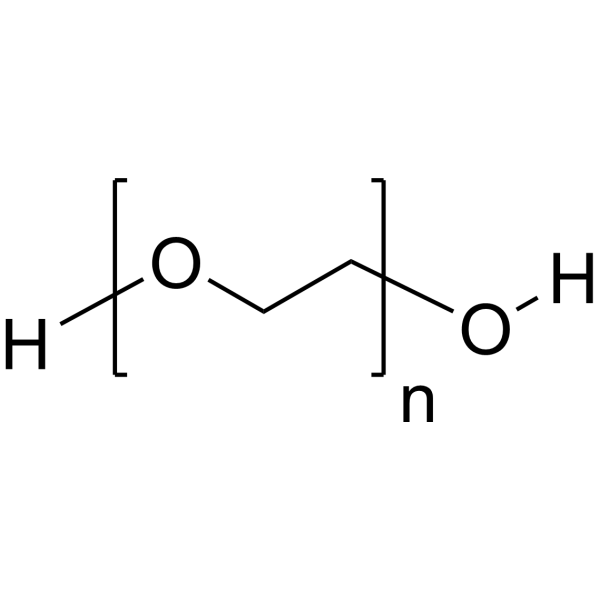
PEG6000 can be used as an excipient, such as Ointment base, lubricant, etc. Pharmaceutical excipients, or pharmaceutical auxiliaries, refer to other chemical substances used in the pharmaceutical process other than pharmaceutical ingredients. Pharmaceutical excipients generally refer to inactive ingredients in pharmaceutical preparations, which can improve the stability, solubility and processability of pharmaceutical preparations. Pharmaceutical excipients also affect the absorption, distribution, metabolism, and elimination (ADME) processes of co-administered drugs .
|
-
-
- HY-12341
-
ML355
Maximum Cited Publications
7 Publications Verification
|
Lipoxygenase
|
Inflammation/Immunology
|
|
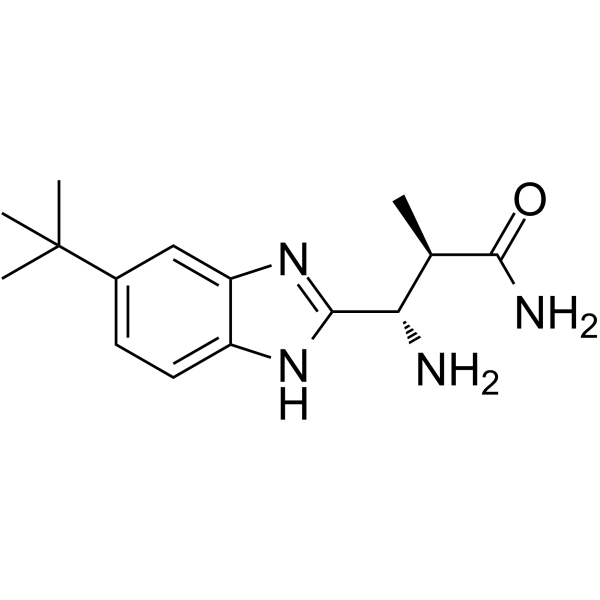
ML355 is a potent and selective inhibitor of 12-Lipoxygenase (12-LOX) with an IC50 of 0.34 μM, shows excellent selectivity over related lipoxygenases and cyclooxygenases, and possesses favorable ADME properties.
|
-
-
- HY-Y0873H
-
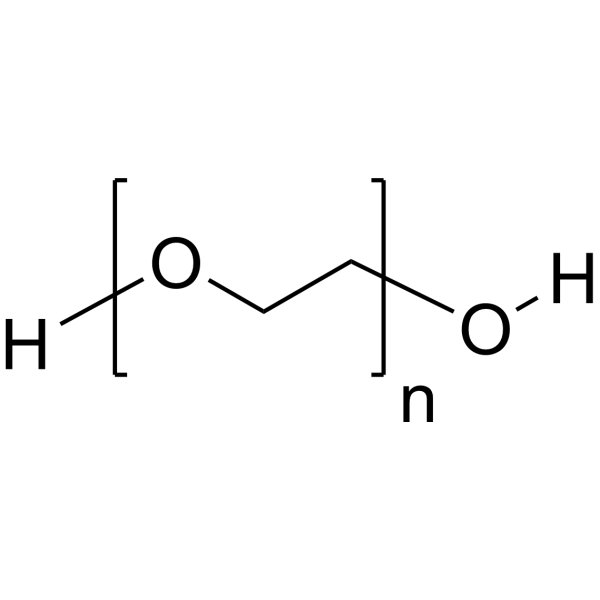
PEG4000
3 Publications Verification
Polyethylene glycol 4000
|
Environmental Pollutants
Biochemical Assay Reagents
|
Others
|
|
PEG4000 can be used as an excipient, such as Ointment base, lubricant, etc. Pharmaceutical excipients, or pharmaceutical auxiliaries, refer to other chemical substances used in the pharmaceutical process other than pharmaceutical ingredients. Pharmaceutical excipients generally refer to inactive ingredients in pharmaceutical preparations, which can improve the stability, solubility and processability of pharmaceutical preparations. Pharmaceutical excipients also affect the absorption, distribution, metabolism, and elimination (ADME) processes of co-administered drugs .
|
-
-
- HY-Y0873G
-
|
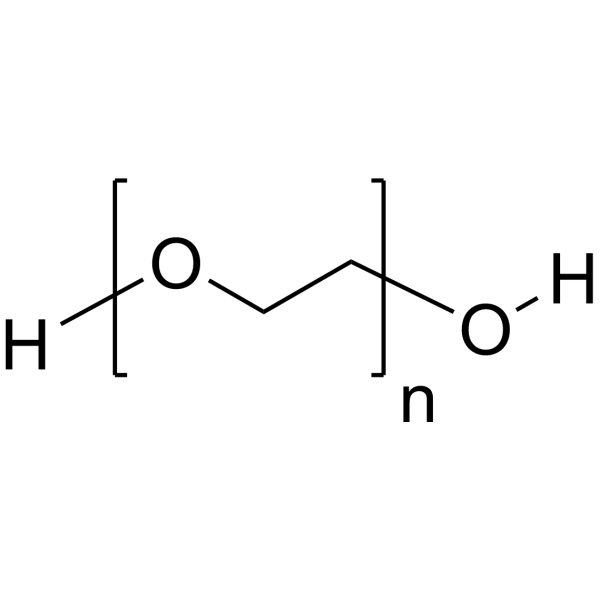
Polyethylene glycol 1000
|
Environmental Pollutants
Biochemical Assay Reagents
|
Others
|
|
PEG1000 can be used as an excipient, such as Ointment base, lubricant, etc. Pharmaceutical excipients, or pharmaceutical auxiliaries, refer to other chemical substances used in the pharmaceutical process other than pharmaceutical ingredients. Pharmaceutical excipients generally refer to inactive ingredients in pharmaceutical preparations, which can improve the stability, solubility and processability of pharmaceutical preparations. Pharmaceutical excipients also affect the absorption, distribution, metabolism, and elimination (ADME) processes of co-administered drugs .
|
-
-
- HY-Y1316
-
|
|
Environmental Pollutants
Biochemical Assay Reagents
Apoptosis
NF-κB
|
Inflammation/Immunology
Cancer
|
|
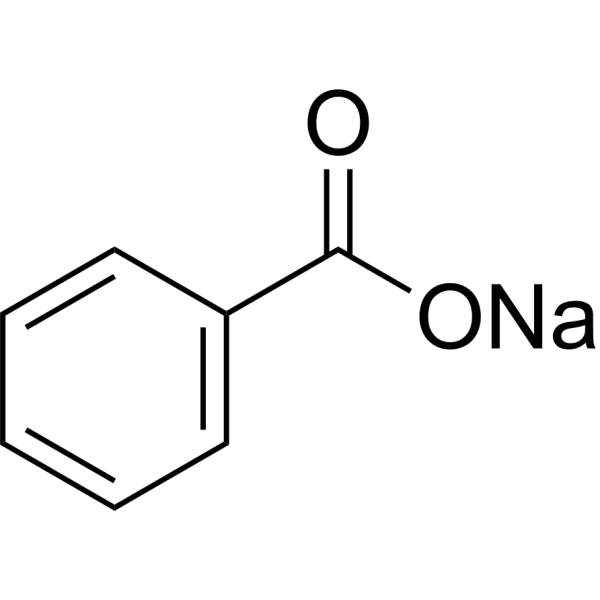
Sodium benzoate is an orally active pharmaceutical excipient, such as an antibacterial agent, preservative, lubricant, etc. Pharmaceutical excipients, or pharmaceutical auxiliaries, refer to other chemical substances used in the pharmaceutical process other than pharmaceutical ingredients. Pharmaceutical excipients generally refer to inactive ingredients in pharmaceutical preparations, which can improve the stability, solubility and processability of pharmaceutical preparations. Pharmaceutical excipients also affect the absorption, distribution, metabolism, and elimination (ADME) processes of co-administered drugs.Sodium benzoate activates NF-κB and induces Apoptosis. Sodium benzoate induces immune suppression and produces reproductively toxic. Sodium benzoate can be used for colon cancer and immune disease research .
|
-
-
- HY-12522
-
|
Aur0101; Auristatin-0101
|
Microtubule/Tubulin
ADC Payload
|
Cancer
|
|
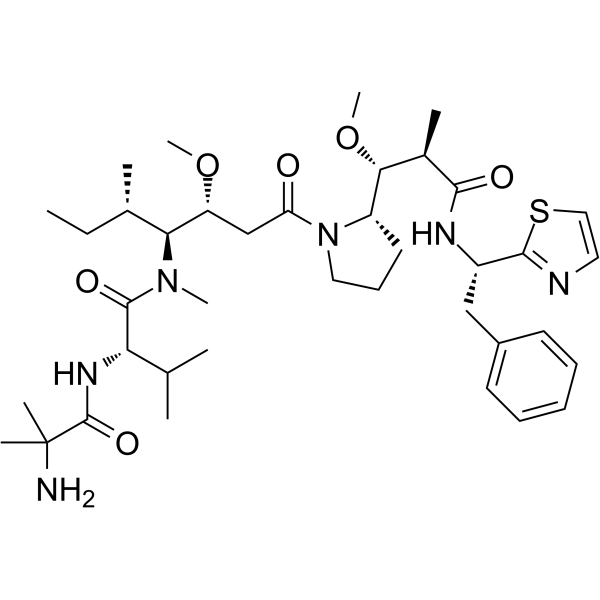
PF-06380101 (Aur0101), an auristatin microtubule inhibitor, is a cytotoxic Dolastatin 10 analogue. PF-06380101 (Aur0101) shows excellent potencies in tumor cell proliferation assays and differential ADME properties when compared to other synthetic auristatin analogues that are used in the preparation of ADCs.
|
-
-
- HY-Y0873F
-
|
Polyethylene glycol 600
|
Environmental Pollutants
Biochemical Assay Reagents
|
Others
|
|
PEG600 can be used as an excipient, such as ointment base, lubricant. Pharmaceutical excipients, or pharmaceutical auxiliaries, refer to other chemical substances used in the pharmaceutical process other than pharmaceutical ingredients. Pharmaceutical excipients generally refer to inactive ingredients in pharmaceutical preparations, which can improve the stability, solubility and processability of pharmaceutical preparations. Pharmaceutical excipients also affect the absorption, distribution, metabolism, and elimination (ADME) processes of co-administered drugs .
|
-
-
- HY-W250795
-
|
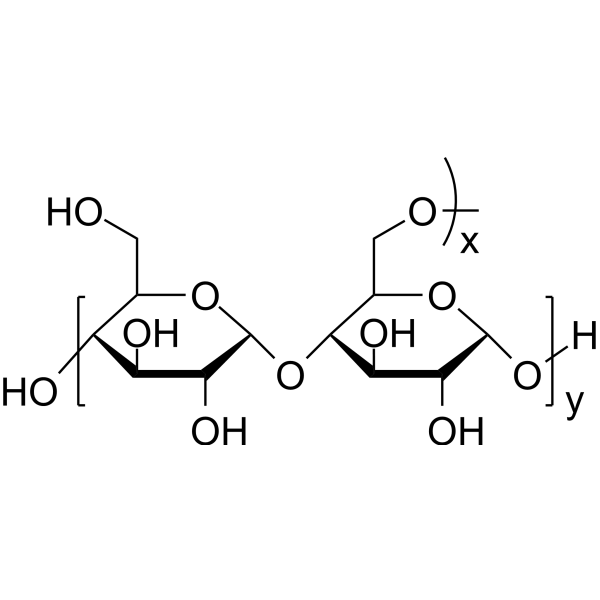
Maltodextrin; Dextrin maize starch
|
Environmental Pollutants
Biochemical Assay Reagents
|
Others
|
|
Maltodextrin, dextrose equivalent 16.5-19.5 can be used as an excipient. Pharmaceutical excipients, or pharmaceutical auxiliaries, refer to other chemical substances used in the pharmaceutical process other than pharmaceutical ingredients. Pharmaceutical excipients generally refer to inactive ingredients in pharmaceutical preparations, which can improve the stability, solubility and processability of pharmaceutical preparations. Pharmaceutical excipients also affect the absorption, distribution, metabolism, and elimination (ADME) processes of co-administered drugs .
|
-
-
- HY-W051271
-
|
Titanium dioxide
|
Environmental Pollutants
Reactive Oxygen Species (ROS)
Photosensitizer
|
Others
|
|
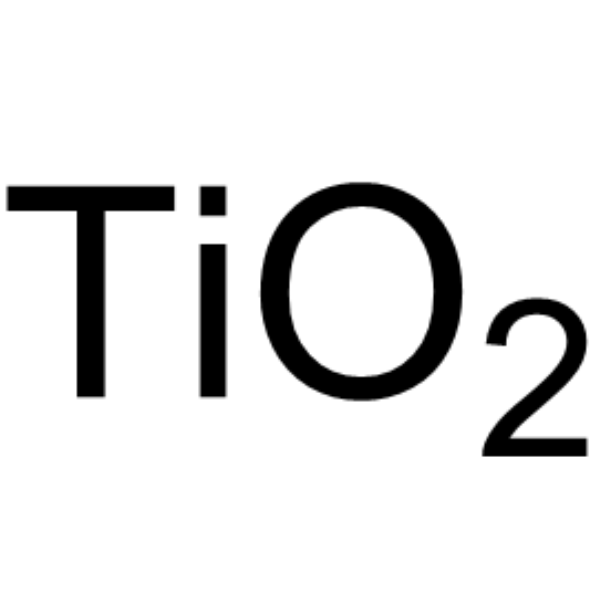
Titanium(IV) oxide is a photosensitizer and photocatalyst. Titanium(IV) oxide can be used as a pharmaceutical excipient such as a flow aid, coating agent, sunscreen, colorant, etc. Pharmaceutical excipients or pharmaceutical excipients refer to other chemical substances used in the pharmaceutical process other than the drug ingredients. Pharmaceutical excipients generally refer to inactive ingredients in pharmaceutical preparations that can improve the stability, solubility and processability of pharmaceutical preparations. Pharmaceutical excipients also affect the absorption, distribution, metabolism and elimination (ADME) process of co-administered drugs. Titanium(IV) oxide can use light energy to generate electron-hole pairs to degrade pollutants. Photons excite electrons in TiO2 to generate active oxygen species (such as ·OH and ·O2 -), thereby oxidizing and mineralizing pollutants such as organic compounds and heavy metals. TiO2 can be used in the research of environmental remediation fields such as water treatment, air purification and self-cleaning materials .
|
-
-
- HY-Y0873E
-
|
Polyethylene glycol 1500
|
Environmental Pollutants
Biochemical Assay Reagents
|
Others
|
|
PEG1500 can be used as an excipient, such as ointment base, lubricant. Pharmaceutical excipients, or pharmaceutical auxiliaries, refer to other chemical substances used in the pharmaceutical process other than pharmaceutical ingredients. Pharmaceutical excipients generally refer to inactive ingredients in pharmaceutical preparations, which can improve the stability, solubility and processability of pharmaceutical preparations. Pharmaceutical excipients also affect the absorption, distribution, metabolism, and elimination (ADME) processes of co-administered drugs .
|
-
-
- HY-Y1054
-
|
Stearic Acid Magnesium(II) Salt
|
Environmental Pollutants
Biochemical Assay Reagents
|
Others
|
|
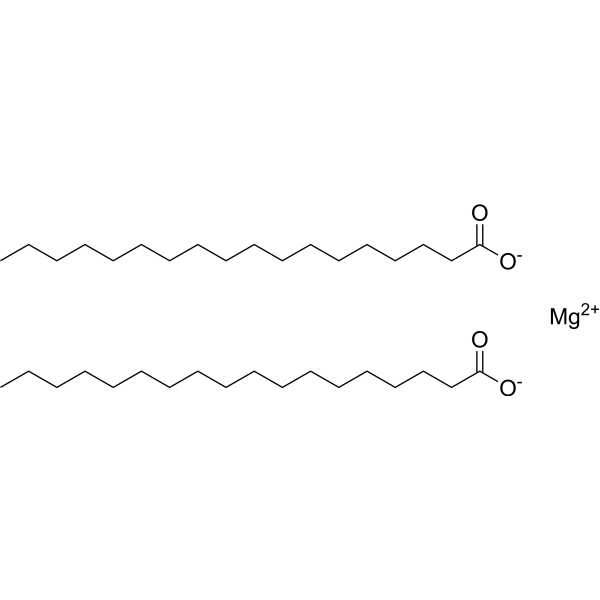
Magnesium stearate is a commonly used pharmaceutical lubricant. But Magnesium stearate leads to an adverse effect on bonding between particles. Magnesium stearate can be used as an excipient, such as lubricant. Pharmaceutical excipients, or pharmaceutical auxiliaries, refer to other chemical substances used in the pharmaceutical process other than pharmaceutical ingredients. Pharmaceutical excipients generally refer to inactive ingredients in pharmaceutical preparations, which can improve the stability, solubility and processability of pharmaceutical preparations. Pharmaceutical excipients also affect the absorption, distribution, metabolism, and elimination (ADME) processes of co-administered drugs .
|
-
-
- HY-N11684
-
|
|
Biochemical Assay Reagents
|
Others
|
|
Cocoa butter can be used as an excipient, such as lubricants, suppository bases. Pharmaceutical excipients, or pharmaceutical auxiliaries, refer to other chemical substances used in the pharmaceutical process other than pharmaceutical ingredients. Pharmaceutical excipients generally refer to inactive ingredients in pharmaceutical preparations, which can improve the stability, solubility and processability of pharmaceutical preparations. Pharmaceutical excipients also affect the absorption, distribution, metabolism, and elimination (ADME) processes of co-administered drugs .
|
-
-
- HY-W011426
-
|
Propan-2-yl hexadecanoate
|
Environmental Pollutants
Biochemical Assay Reagents
Liposome
|
Others
|
|
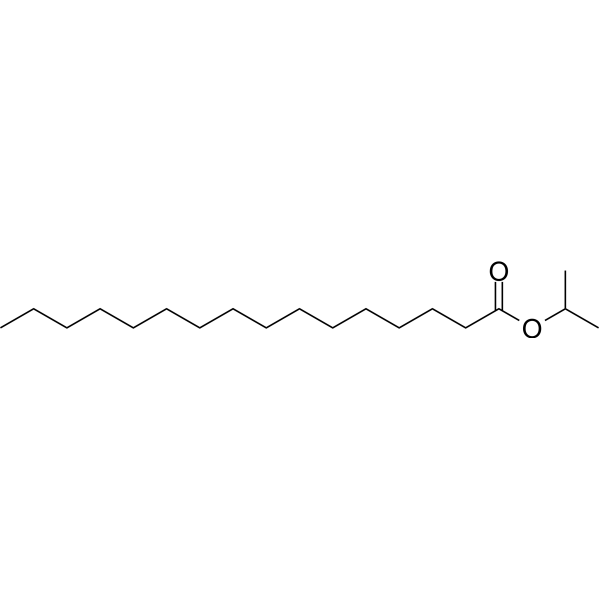
Isopropyl palmitate is an fatty acid ester. Isopropyl palmitate can be used for design and characterization of bioactive bilayer films. The bilayer membrane not only has the ability to scavenge free radicals and inhibit lipid peroxidation, but also can inhibit the growth of known foodborne pathogens. Isopropyl palmitate can be used as an excipient, such as lubricant, oily carrier, solvent, controlled-release transdermal film. Pharmaceutical excipients, or pharmaceutical auxiliaries, refer to other chemical substances used in the pharmaceutical process other than pharmaceutical ingredients. Pharmaceutical excipients generally refer to inactive ingredients in pharmaceutical preparations, which can improve the stability, solubility and processability of pharmaceutical preparations. Pharmaceutical excipients also affect the absorption, distribution, metabolism, and elimination (ADME) processes of co-administered drugs .
|
-
-
- HY-114301
-
|
|
Sodium Channel
|
Neurological Disease
|
|
PF-06305591 is a potent and highly selective voltage gated sodium channel NaV1.8 blocker, with an IC50 of 15 nM. An excellent preclinical in vitro ADME and safety profile .
|
-
-
- HY-154631
-
|
|
Biochemical Assay Reagents
|
Others
|
|
Peanut Oil can be used as an excipient. Pharmaceutical excipients, or pharmaceutical auxiliaries, refer to other chemical substances used in the pharmaceutical process other than pharmaceutical ingredients. Pharmaceutical excipients generally refer to inactive ingredients in pharmaceutical preparations, which can improve the stability, solubility and processability of pharmaceutical preparations. Pharmaceutical excipients also affect the absorption, distribution, metabolism, and elimination (ADME) processes of co-administered drugs .
|
-
-
- HY-W422419
-
|
Cetostearyl alcohol
|
Biochemical Assay Reagents
|
Others
|
|
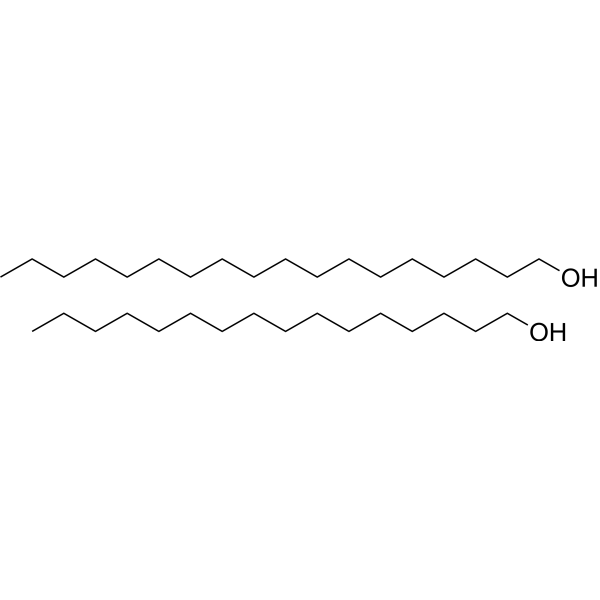
Cetearyl alcohol can be used as an excipient. Pharmaceutical excipients, or pharmaceutical auxiliaries, refer to other chemical substances used in the pharmaceutical process other than pharmaceutical ingredients. Pharmaceutical excipients generally refer to inactive ingredients in pharmaceutical preparations, which can improve the stability, solubility and processability of pharmaceutical preparations. Pharmaceutical excipients also affect the absorption, distribution, metabolism, and elimination (ADME) processes of co-administered drugs .
|
-
-
- HY-W392209A
-
|
|
Environmental Pollutants
Biochemical Assay Reagents
|
Others
|
|
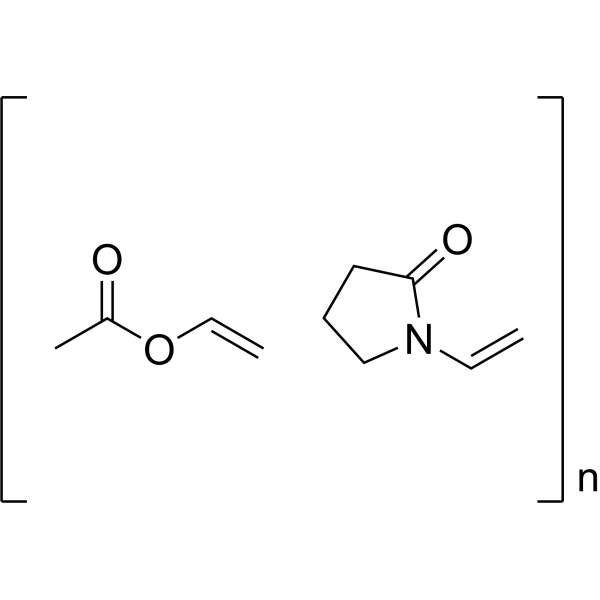
Copovidone can be used as an excipient, such as Film formers, adhesives, etc. Pharmaceutical excipients, or pharmaceutical auxiliaries, refer to other chemical substances used in the pharmaceutical process other than pharmaceutical ingredients. Pharmaceutical excipients generally refer to inactive ingredients in pharmaceutical preparations, which can improve the stability, solubility and processability of pharmaceutical preparations. Pharmaceutical excipients also affect the absorption, distribution, metabolism, and elimination (ADME) processes of co-administered drugs .
|
-
-
- HY-12410
-
|
|
Itk
|
Inflammation/Immunology
|
|
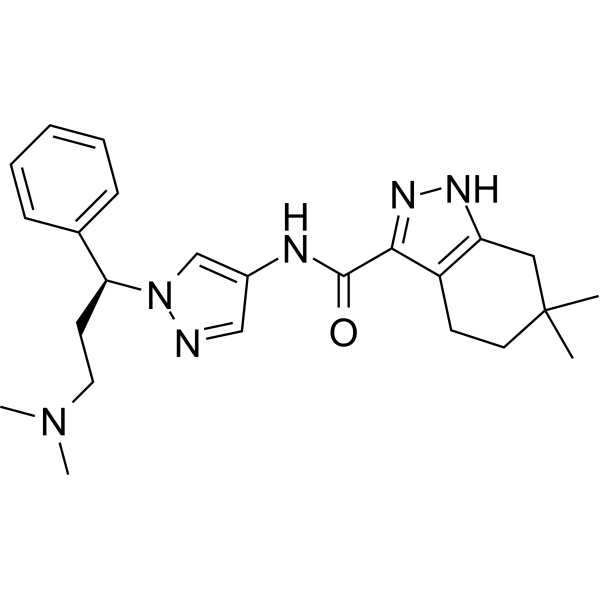
GNE-9822 is a potent, orally active and selective ITK inhibitor with a Ki value of 0.7 nM, and an EC50 value of 354.5 nM. GNE-9822 has good ADME properties. GNE-9822 can be used in research of asthma .
|
-
-
- HY-154696
-
|
|
Biochemical Assay Reagents
|
Others
|
|
Ferric oxide, yellow can be used as an excipient, such as colorant. Pharmaceutical excipients, or pharmaceutical auxiliaries, refer to other chemical substances used in the pharmaceutical process other than pharmaceutical ingredients. Pharmaceutical excipients generally refer to inactive ingredients in pharmaceutical preparations, which can improve the stability, solubility and processability of pharmaceutical preparations. Pharmaceutical excipients also affect the absorption, distribution, metabolism, and elimination (ADME) processes of co-administered drugs .
|
-
-
- HY-W250795B
-
|
|
Biochemical Assay Reagents
|
Others
|
|
Maltodextrin, dextrose equivalent 5.0-8.0 can be used as an excipient. Pharmaceutical excipients, or pharmaceutical auxiliaries, refer to other chemical substances used in the pharmaceutical process other than pharmaceutical ingredients. Pharmaceutical excipients generally refer to inactive ingredients in pharmaceutical preparations, which can improve the stability, solubility and processability of pharmaceutical preparations. Pharmaceutical excipients also affect the absorption, distribution, metabolism, and elimination (ADME) processes of co-administered drugs .
|
-
-
- HY-D1005F
-
|
PEG-PPG-PEG, 2500(Average Mn)
|
Environmental Pollutants
Biochemical Assay Reagents
|
Others
|
|
Poloxamer 182 (L62) can be used as an excipient, such as Emulsifier, solubilizer, lubricant, etc. Pharmaceutical excipients, or pharmaceutical auxiliaries, refer to other chemical substances used in the pharmaceutical process other than pharmaceutical ingredients. Pharmaceutical excipients generally refer to inactive ingredients in pharmaceutical preparations, which can improve the stability, solubility and processability of pharmaceutical preparations. Pharmaceutical excipients also affect the absorption, distribution, metabolism, and elimination (ADME) processes of co-administered drugs .
|
-
-
- HY-Y0708
-
|
Calcium phosphate dihydrate
|
Biochemical Assay Reagents
|
Others
|
|
Calcium hydrogen phosphate dihydrate (Calcium phosphate dihydrate) can be found quite frequently in urinary calculi stones. Calcium hydrogen phosphate dihydrate can be used as an excipient, such as diluent, adsorbent. Pharmaceutical excipients, or pharmaceutical auxiliaries, refer to other chemical substances used in the pharmaceutical process other than pharmaceutical ingredients. Pharmaceutical excipients generally refer to inactive ingredients in pharmaceutical preparations, which can improve the stability, solubility and processability of pharmaceutical preparations. Pharmaceutical excipients also affect the absorption, distribution, metabolism, and elimination (ADME) processes of co-administered drugs .
|
-
-
- HY-154696A
-
|
|
Biochemical Assay Reagents
|
Others
|
|
Ferric oxide, red can be used as an excipient, such as colorant. Pharmaceutical excipients, or pharmaceutical auxiliaries, refer to other chemical substances used in the pharmaceutical process other than pharmaceutical ingredients. Pharmaceutical excipients generally refer to inactive ingredients in pharmaceutical preparations, which can improve the stability, solubility and processability of pharmaceutical preparations. Pharmaceutical excipients also affect the absorption, distribution, metabolism, and elimination (ADME) processes of co-administered drugs .
|
-
-
- HY-154630
-
|
|
Biochemical Assay Reagents
|
Others
|
|
Polyoxypropylene stearyl ether can be used as an excipient, such as surfactant, softener, lubricating, wetting, plasticizing, solubilizing and dispersing properties. Pharmaceutical excipients, or pharmaceutical auxiliaries, refer to other chemical substances used in the pharmaceutical process other than pharmaceutical ingredients. Pharmaceutical excipients generally refer to inactive ingredients in pharmaceutical preparations, which can improve the stability, solubility and processability of pharmaceutical preparations. Pharmaceutical excipients also affect the absorption, distribution, metabolism, and elimination (ADME) processes of co-administered drugs .
|
-
-
- HY-154639
-
|
|
Environmental Pollutants
Biochemical Assay Reagents
|
Others
|
|
Polyoxyl 20 Cetostearyl Ether can be used as an excipient, such as Emulsifier and solubilizer for emulsions and creams, etc. Pharmaceutical excipients, or pharmaceutical auxiliaries, refer to other chemical substances used in the pharmaceutical process other than pharmaceutical ingredients. Pharmaceutical excipients generally refer to inactive ingredients in pharmaceutical preparations, which can improve the stability, solubility and processability of pharmaceutical preparations. Pharmaceutical excipients also affect the absorption, distribution, metabolism, and elimination (ADME) processes of co-administered drugs .
|
-
-
- HY-178317
-
|
|
PARP
Apoptosis
|
Infection
Inflammation/Immunology
Cancer
|
|
OUL312 is a potent PARP10 inhibitor (IC50 = 20 nM), showing more than 75-fold greater selectivity for PARP15 (IC50 = 1500 nM). OUL312 is also at least 18-fold higher than all other human enzymes in the family. OUL312 has a good ADME profile, is able to enter cells, is not toxic, and effectively rescues human cells from PARP10-induced apoptosis at sub-micromolar concentrations. OUL312 can be used for the study of cervical cancer .
|
-
-
- HY-W115716
-
|
Span 85
|
Environmental Pollutants
Biochemical Assay Reagents
|
Others
|
|
Sorbitan trioleate is an orally active nonionic surfactant with low toxicity (LD≥200 mg/kg). Sorbitan trioleate can be used as an excipient, such as surfactant, emulsifier, lubricant, wetting agent, dispersant, thickener, defoamer. Pharmaceutical excipients, or pharmaceutical auxiliaries, refer to other chemical substances used in the pharmaceutical process other than pharmaceutical ingredients. Pharmaceutical excipients generally refer to inactive ingredients in pharmaceutical preparations, which can improve the stability, solubility and processability of pharmaceutical preparations. Pharmaceutical excipients also affect the absorption, distribution, metabolism, and elimination (ADME) processes of co-administered drugs .
|
-
-
- HY-134098
-
|
Adipic acid diisopropyl ester
|
Environmental Pollutants
TRP Channel
|
Others
|
|
Diisopropyl adipate is an alternative plasticizer and a TRPA1 activator. Diisopropyl adipate activates TRPA1 and enhances FITC-induced contact hypersensitivity (CHS).Diisopropyl adipate also serves as an ingredient in cosmetics and drug formulations topically applied to the skin. Diisopropyl adipate can be used as an excipient, such as emollients, plasticizers. Pharmaceutical excipients, or pharmaceutical auxiliaries, refer to other chemical substances used in the pharmaceutical process other than pharmaceutical ingredients. Pharmaceutical excipients generally refer to inactive ingredients in pharmaceutical preparations, which can improve the stability, solubility and processability of pharmaceutical preparations. Pharmaceutical excipients also affect the absorption, distribution, metabolism, and elimination (ADME) processes of co-administered drugs .
|
-
-
- HY-18172
-
-
-
- HY-147027
-
|
|
PARP
Caspase
Apoptosis
|
Neurological Disease
Inflammation/Immunology
Cancer
|
|
PARP-1-IN-2 (compound 11g) is a potent PARP1 inhibitor, with an IC50 of 149 nM, and ADME prediction indicates it has high blood-brain barrier permeability. PARP1-IN-2 shows significantly potent anti-proliferative activity against Human lung adenocarcinoma epithelial cell line A549. PARP1-IN-2 can induce A549 cells apoptosis .
|
-
-
- HY-W013482
-
|
Benzyl Paraben
|
Biochemical Assay Reagents
|
Others
|
|
Benzyl 4-hydroxybenzoate is a prominent material. Benzyl 4-hydroxybenzoate can be used as an excipient, such as bacteriostatic agent, preservative. Pharmaceutical excipients, or pharmaceutical auxiliaries, refer to other chemical substances used in the pharmaceutical process other than pharmaceutical ingredients. Pharmaceutical excipients generally refer to inactive ingredients in pharmaceutical preparations, which can improve the stability, solubility and processability of pharmaceutical preparations. Pharmaceutical excipients also affect the absorption, distribution, metabolism, and elimination (ADME) processes of co-administered drugs .
|
-
-
- HY-154739A
-
|
|
Biochemical Assay Reagents
|
Others
|
|
Amorphous silica can be used as an excipient, such as viscosifier, suspending agent, tablet disintegrating agent, adsorbent dispersing agent as liquid in powders. Pharmaceutical excipients, or pharmaceutical auxiliaries, refer to other chemical substances used in the pharmaceutical process other than pharmaceutical ingredients. Pharmaceutical excipients generally refer to inactive ingredients in pharmaceutical preparations, which can improve the stability, solubility and processability of pharmaceutical preparations. Pharmaceutical excipients also affect the absorption, distribution, metabolism, and elimination (ADME) processes of co-administered drugs .
|
-
-
- HY-W094497B
-
|
Sodium phosphate monobasic monohydrate, for molecular biology
|
Biochemical Assay Reagents
|
Others
|
|
Sodium dihydrogen phosphate monohydrate, for molecular biology is an inorganic salt compound commonly used in industry and laboratories. It can be used as a buffer, and plays a role in certain metal processing, pharmaceutical and chemical industries.
|
-
-
- HY-149767
-
|
|
SARS-CoV
|
Infection
|
|
CMX990 is a SARS-CoV-2 3CL protease inhibitor. The EC90s for inhibiting SARS-CoV-2 were 9.6 nM and 101 nM in human bronchial epithelial cells (HBECs) and HeLa-ACE2 cells, respectively. CMX990 has good ADME and pharmacokinetic properties .
|
-
-
- HY-W020027
-
|
2-Methylacrylamide
|
Environmental Pollutants
Biochemical Assay Reagents
|
Others
|
|
Methacrylamide can be used as an excipient. Pharmaceutical excipients, or pharmaceutical auxiliaries, refer to other chemical substances used in the pharmaceutical process other than pharmaceutical ingredients. Pharmaceutical excipients generally refer to inactive ingredients in pharmaceutical preparations, which can improve the stability, solubility and processability of pharmaceutical preparations. Pharmaceutical excipients also affect the absorption, distribution, metabolism, and elimination (ADME) processes of co-administered drugs .
|
-
-
- HY-W395779
-
|
|
Filovirus
|
Infection
|
|
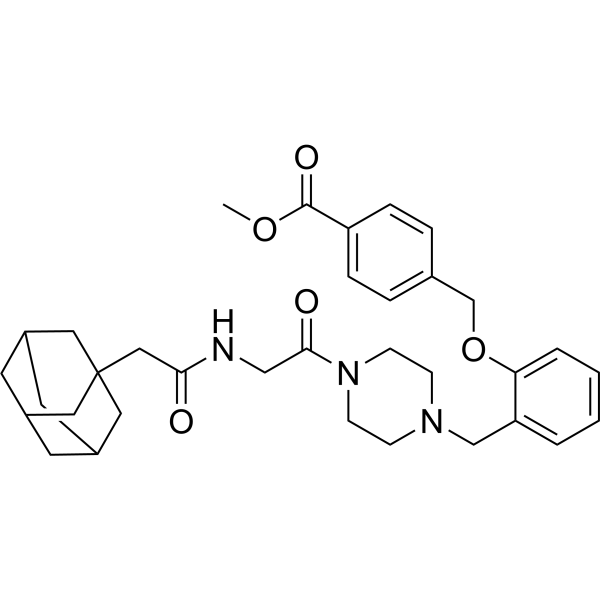
EBOV-IN-1 (com 3.47) is an adamantane dipeptide piperazine and an inhibitor of Ebola virus (EBOV). EBOV-IN-1 targets Niemann-Pick C1 (NPC1) and inhibits its binding to the EBOV glycoprotein (GP) that activates and mediates viral penetration into host cells, thereby inhibiting EBOV infection. EBOV-IN-1 inhibits pseudotyped EBOV infection with an IC50 of 13 nM .
|
-
-
- HY-154636A
-
|
|
Biochemical Assay Reagents
|
Others
|
|
Light Liquid Paraffin can be used as an excipient, such as excipient, lubricant. Pharmaceutical excipients, or pharmaceutical auxiliaries, refer to other chemical substances used in the pharmaceutical process other than pharmaceutical ingredients. Pharmaceutical excipients generally refer to inactive ingredients in pharmaceutical preparations, which can improve the stability, solubility and processability of pharmaceutical preparations. Pharmaceutical excipients also affect the absorption, distribution, metabolism, and elimination (ADME) processes of co-administered drugs .
|
-
-
- HY-100557A
-
|
|
Biochemical Assay Reagents
|
Others
|
|
Low-Substituted Hydroxypropyl Cellulose can be used as an excipient, such as Coating agents, emulsifiers, suspensions, tablets, thickeners, thickeners, etc. Pharmaceutical excipients, or pharmaceutical auxiliaries, refer to other chemical substances used in the pharmaceutical process other than pharmaceutical ingredients. Pharmaceutical excipients generally refer to inactive ingredients in pharmaceutical preparations, which can improve the stability, solubility and processability of pharmaceutical preparations. Pharmaceutical excipients also affect the absorption, distribution, metabolism, and elimination (ADME) processes of co-administered drugs .
|
-
-
- HY-114301A
-
|
|
Sodium Channel
|
Neurological Disease
|
|
PF-06305591 dihydrate is a potent and highly selective voltage gated sodium channel NaV1.8 blocker, with an IC50 of 15 nM. An excellent preclinical in vitro ADME and safety profile .
|
-
-
- HY-47822
-
|
|
Sirtuin
|
Neurological Disease
|
|
WAY-354574 is an active molecule targeting deacetylase (Sirtuin) for the study of Huntington's disease (HD) .
|
-
-
- HY-148353
-
|
|
LRRK2
|
Neurological Disease
|
|
PF-06455943 is a leucine rich repeat kinase 2 (LRRK2) inhibitor with IC50 value of 3 nM. PF-06455943 also is a PET radioligand. PF-06455943 can be used for the research of ADME/neuro PK characterization and Parkinson disease (PD) .
|
-
-
- HY-101530A
-
|
PEG 8 stearate
|
Biochemical Assay Reagents
|
Others
|
|
Polyoxyl 8 stearate can be used as an excipient. Pharmaceutical excipients, or pharmaceutical auxiliaries, refer to other chemical substances used in the pharmaceutical process other than pharmaceutical ingredients. Pharmaceutical excipients generally refer to inactive ingredients in pharmaceutical preparations, which can improve the stability, solubility and processability of pharmaceutical preparations. Pharmaceutical excipients also affect the absorption, distribution, metabolism, and elimination (ADME) processes of co-administered drugs .
|
-
-
- HY-W127624A
-
|
|
Biochemical Assay Reagents
|
Others
|
|
PEG 18 cetostearyl ether can be used as an excipient. Pharmaceutical excipients, or pharmaceutical auxiliaries, refer to other chemical substances used in the pharmaceutical process other than pharmaceutical ingredients. Pharmaceutical excipients generally refer to inactive ingredients in pharmaceutical preparations, which can improve the stability, solubility and processability of pharmaceutical preparations. Pharmaceutical excipients also affect the absorption, distribution, metabolism, and elimination (ADME) processes of co-administered drugs .
|
-
-
- HY-154634
-
|
|
Biochemical Assay Reagents
|
Others
|
|
Cyclomethicone can be used as an excipient, such as emollients, humectants, thickeners. Pharmaceutical excipients, or pharmaceutical auxiliaries, refer to other chemical substances used in the pharmaceutical process other than pharmaceutical ingredients. Pharmaceutical excipients generally refer to inactive ingredients in pharmaceutical preparations, which can improve the stability, solubility and processability of pharmaceutical preparations. Pharmaceutical excipients also affect the absorption, distribution, metabolism, and elimination (ADME) processes of co-administered drugs .
|
-
-
- HY-154637
-
|
|
Biochemical Assay Reagents
|
Others
|
|
Sucrose Stearate can be used as an excipient, such as Surfactants, emulsifiers, solubilizers, etc. Pharmaceutical excipients, or pharmaceutical auxiliaries, refer to other chemical substances used in the pharmaceutical process other than pharmaceutical ingredients. Pharmaceutical excipients generally refer to inactive ingredients in pharmaceutical preparations, which can improve the stability, solubility and processability of pharmaceutical preparations. Pharmaceutical excipients also affect the absorption, distribution, metabolism, and elimination (ADME) processes of co-administered drugs .
|
-
-
- HY-154635
-
|
|
Biochemical Assay Reagents
|
Others
|
|
Oxidized paraffin (calcium) can be used as an excipient, such as ointment base, hardening agent. Pharmaceutical excipients, or pharmaceutical auxiliaries, refer to other chemical substances used in the pharmaceutical process other than pharmaceutical ingredients. Pharmaceutical excipients generally refer to inactive ingredients in pharmaceutical preparations, which can improve the stability, solubility and processability of pharmaceutical preparations. Pharmaceutical excipients also affect the absorption, distribution, metabolism, and elimination (ADME) processes of co-administered drugs .
|
-
-
- HY-W250795A
-
|
|
Biochemical Assay Reagents
|
Others
|
|
Maltodextrin, dextrose equivalent 13.0-17.0 can be used as an excipient. Pharmaceutical excipients, or pharmaceutical auxiliaries, refer to other chemical substances used in the pharmaceutical process other than pharmaceutical ingredients. Pharmaceutical excipients generally refer to inactive ingredients in pharmaceutical preparations, which can improve the stability, solubility and processability of pharmaceutical preparations. Pharmaceutical excipients also affect the absorption, distribution, metabolism, and elimination (ADME) processes of co-administered drugs .
|
-
-
- HY-154739
-
|
|
Biochemical Assay Reagents
|
Others
|
|
Cristobalite can be used as an excipient, such as disintegrants, anti-adhesives, glidants, suspending agents, thickeners, defoamers. Pharmaceutical excipients, or pharmaceutical auxiliaries, refer to other chemical substances used in the pharmaceutical process other than pharmaceutical ingredients. Pharmaceutical excipients generally refer to inactive ingredients in pharmaceutical preparations, which can improve the stability, solubility and processability of pharmaceutical preparations. Pharmaceutical excipients also affect the absorption, distribution, metabolism, and elimination (ADME) processes of co-administered drugs .
|
-
-
- HY-Y1316R
-
|
|
Biochemical Assay Reagents
Reference Standards
|
Others
|
|
Sodium benzoate (Standard) is the analytical standard of Sodium benzoate. This product is intended for research and analytical applications. Sodium benzoate can be used as an excipient, such as antimicrobial agent, preservative, lubricant. Pharmaceutical excipients, or pharmaceutical auxiliaries, refer to other chemical substances used in the pharmaceutical process other than pharmaceutical ingredients. Pharmaceutical excipients generally refer to inactive ingredients in pharmaceutical preparations, which can improve the stability, solubility and processability of pharmaceutical preparations. Pharmaceutical excipients also affect the absorption, distribution, metabolism, and elimination (ADME) processes of co-administered drugs .
|
-
-
- HY-W250721E
-
|
Carboxy polymethylene (copolymer)
|
Biochemical Assay Reagents
|
Others
|
|
Carbomer copolymer can be used as an excipient, such as Bioadhesives, emulsifiers, release modifiers, suspending agents, tablet binders, viscosity enhancers, etc. Pharmaceutical excipients, or pharmaceutical auxiliaries, refer to other chemical substances used in the pharmaceutical process other than pharmaceutical ingredients. Pharmaceutical excipients generally refer to inactive ingredients in pharmaceutical preparations, which can improve the stability, solubility and processability of pharmaceutical preparations. Pharmaceutical excipients also affect the absorption, distribution, metabolism, and elimination (ADME) processes of co-administered drugs .
|
-
- HY-W115818
-
|
|
Environmental Pollutants
Biochemical Assay Reagents
|
Others
|
|
Polyoxyethylene Sorbitan Monostearate is an ester of the saturated fatty acid stearic acid (C18:0). Polyoxyethylene Sorbitan Monostearate can be used as an excipient, such as surfactant, emulsifier, solubilizer, wetting agent. Pharmaceutical excipients, or pharmaceutical auxiliaries, refer to other chemical substances used in the pharmaceutical process other than pharmaceutical ingredients. Pharmaceutical excipients generally refer to inactive ingredients in pharmaceutical preparations, which can improve the stability, solubility and processability of pharmaceutical preparations. Pharmaceutical excipients also affect the absorption, distribution, metabolism, and elimination (ADME) processes of co-administered drugs .
|
-
- HY-Y1054R
-
|
Stearic Acid Magnesium(II) Salt (Standard)
|
Biochemical Assay Reagents
Reference Standards
|
Others
|
|
Magnesium stearate (Standard) is the analytical standard of Magnesium stearate. This product is intended for research and analytical applications. Magnesium stearate is a commonly used pharmaceutical lubricant. But Magnesium stearate leads to an adverse effect on bonding between particles. Magnesium stearate can be used as an excipient, such as lubricant. Pharmaceutical excipients, or pharmaceutical auxiliaries, refer to other chemical substances used in the pharmaceutical process other than pharmaceutical ingredients. Pharmaceutical excipients generally refer to inactive ingredients in pharmaceutical preparations, which can improve the stability, solubility and processability of pharmaceutical preparations. Pharmaceutical excipients also affect the absorption, distribution, metabolism, and elimination (ADME) processes of co-administered drugs .
|
-
- HY-176287
-
|
|
Dopamine Receptor
GSK-3
PKA
P-glycoprotein
|
Neurological Disease
|
|
ARN25657 is a dual-acting D3R/GSK-3β modulator. ARN25657 has both partial D3R agonist activity (EC50 = 15.2 nM, Ki =1.5 nM) and potent GSK-3β inhibitor activity (IC50 = 19.3 nM). ARN25657 exhibits excellent GSK-3β selectivity over FYN, PKA, and CDK5/p35. ARN25657 inhibits P-glycoprotein (P-gP)-mediated acetoxymethyl calcein efflux and improves in vitro ADME properties while maintaining a balanced dual-target profile. ARN25657 is useful for studying bipolar disorder and related neuropsychiatric disorders .
|
-
- HY-179221
-
|
|
HIV
|
Infection
|
|
HIV-1-IN-89 (Compound 20a-D) is a prodrug of 20a (an HIV-1 protease inhibitor). HIV-1-IN-89 has better pharmacokinetic properties. HIV-1-IN-89 can be used for studying the resistance to HIV-1 .
|
-
- HY-18172A
-
|
|
Potassium Channel
|
Neurological Disease
|
|
(+)-KCC2 blocker 1 is a selective K +-Cl - cotransporter KCC2 blocker with an IC50 of 0.4 μM. (+)-KCC2 blocker 1 is a benzyl prolinate and a enantiomer of KCC2 blocker 1 .
|
-
- HY-401721
-
|
|
Biochemical Assay Reagents
|
Others
|
|
5-CNAC is an orally active enhancer of absorption, with no pharmacological activity on its own. 5-CNAC can significantly enhance the absorption efficiency of the drug (such as Salmon calcitonin (HY-P0090)) when administered together with it in the gastrointestinal tract. 5-CNAC binds reversibly and non-covalently to peptide drugs, protecting them from degradation by gastrointestinal enzymes, increasing their lipid solubility, promoting passive transcellular absorption, and not damaging the integrity of the intestinal epithelium. 5-CNAC can be used in the research of adjuvants for orally administered peptide agents .
|
-
- HY-143295
-
|
|
Pim
Apoptosis
|
Cancer
|
|
Pim-1 kinase inhibitor 1 is a Pim-1 kinase inhibitor with an IC50 of 0.11 μM for Pim-1 kinase. Pim-1 kinase inhibitor 1 shows anticancer activity to several cancer cell lines by promotes cell apoptosis. Pim-1 kinase inhibitor 1 can be used for the research of cancer .
|
-
- HY-154704
-
|
|
Biochemical Assay Reagents
|
Others
|
|
Calcium carboxymethyl cellulose can be used as an excipient. Pharmaceutical excipients, or pharmaceutical auxiliaries, refer to other chemical substances used in the pharmaceutical process other than pharmaceutical ingredients. Pharmaceutical excipients generally refer to inactive ingredients in pharmaceutical preparations, which can improve the stability, solubility and processability of pharmaceutical preparations. Pharmaceutical excipients also affect the absorption, distribution, metabolism, and elimination (ADME) processes of co-administered drugs .
|
-
- HY-163665
-
|
|
Aryl Hydrocarbon Receptor
Dystrophin
|
Others
|
|
AHR antagonist 8 (compound SG-02) is a regulator of utrophin, a homolog of dystrophin, and an AhR antagonist (Kd: 41.68 nM). Studies have shown that 800 nM of AHR antagonist 8 can upregulate utrophin by 2.7 times. AHR antagonist 8 also stimulates increased MyHC expression, suggesting that it has the potential to enhance myogenesis. After ADME evaluation, AHR antagonist 8 also has a certain oral bioavailability .
|
-
- HY-W127624C
-
|
|
Biochemical Assay Reagents
|
Others
|
|
PEG 20 cetostearyl ether can be used as an excipient. Pharmaceutical excipients, or pharmaceutical auxiliaries, refer to other chemical substances used in the pharmaceutical process other than pharmaceutical ingredients. Pharmaceutical excipients generally refer to inactive ingredients in pharmaceutical preparations, which can improve the stability, solubility and processability of pharmaceutical preparations. Pharmaceutical excipients also affect the absorption, distribution, metabolism, and elimination (ADME) processes of co-administered drugs .
|
-
- HY-154632
-
|
|
Biochemical Assay Reagents
|
Others
|
|
Omega 3 fatty acid triglycerides can be used as an excipient. Pharmaceutical excipients, or pharmaceutical auxiliaries, refer to other chemical substances used in the pharmaceutical process other than pharmaceutical ingredients. Pharmaceutical excipients generally refer to inactive ingredients in pharmaceutical preparations, which can improve the stability, solubility and processability of pharmaceutical preparations. Pharmaceutical excipients also affect the absorption, distribution, metabolism, and elimination (ADME) processes of co-administered drugs .
|
-
- HY-W127624B
-
|
|
Biochemical Assay Reagents
|
Others
|
|
PEG 25 cetostearyl ether can be used as an excipient. Pharmaceutical excipients, or pharmaceutical auxiliaries, refer to other chemical substances used in the pharmaceutical process other than pharmaceutical ingredients. Pharmaceutical excipients generally refer to inactive ingredients in pharmaceutical preparations, which can improve the stability, solubility and processability of pharmaceutical preparations. Pharmaceutical excipients also affect the absorption, distribution, metabolism, and elimination (ADME) processes of co-administered drugs .
|
-
- HY-W142428
-
|
Diethylene glycol monododecyl ether
|
Biochemical Assay Reagents
|
Others
|
|
PEG 2 lauryl ether can be used as an excipient. Pharmaceutical excipients, or pharmaceutical auxiliaries, refer to other chemical substances used in the pharmaceutical process other than pharmaceutical ingredients. Pharmaceutical excipients generally refer to inactive ingredients in pharmaceutical preparations, which can improve the stability, solubility and processability of pharmaceutical preparations. Pharmaceutical excipients also affect the absorption, distribution, metabolism, and elimination (ADME) processes of co-administered drugs .
|
-
- HY-178171
-
|
|
AMPK
CDK
|
Neurological Disease
|
|
ARUK2010489 (Compound 23) is a potent, selective and brain-penetrant NUAK1 inhibitor with a pIC50 of 8.7. ARUK2010489 also inhibits CDK2, CDK4 and CDK6 activity, with inhibitory rate of 7%, 39% and 26% at 1 μM. ARUK2010489 can be used for the research of neurological disease, such as Alzheimer’s disease (AD) .
|
-
- HY-178994
-
|
|
Flavivirus
Dengue Virus
|
Infection
|
|
DENV-IN-14 (Compound 3c) is a thiazole hydrazone derivative with anti-dengue virus (DENV) activity with an EC50 of 0.01 μM and the selectivity index (SI) of 200. DENV-IN-14 exhibits rapid plasma clearance and its metabolic stability is limited. DENV-IN-14 can be used for research on dengue fever .
|
-
- HY-W131101
-
|
|
Environmental Pollutants
Liposome
|
Others
|
|
Sorbitan tristearate is a non-ionic surfactant, with a synergistic effect on skin permeability. Sorbitan tristearate can be used as an excipient, such as emulsifier. Pharmaceutical excipients, or pharmaceutical auxiliaries, refer to other chemical substances used in the pharmaceutical process other than pharmaceutical ingredients. Pharmaceutical excipients generally refer to inactive ingredients in pharmaceutical preparations, which can improve the stability, solubility and processability of pharmaceutical preparations. Pharmaceutical excipients also affect the absorption, distribution, metabolism, and elimination (ADME) processes of co-administered drugs .
|
-
- HY-27979
-
|
|
Biochemical Assay Reagents
|
Others
|
|
Ethyl acrylate-methyl methacrylate copolymer can be used as an excipient, such as sustained-release coating materials, matrix sustained-release tablet binders and retarders. Pharmaceutical excipients, or pharmaceutical auxiliaries, refer to other chemical substances used in the pharmaceutical process other than pharmaceutical ingredients. Pharmaceutical excipients generally refer to inactive ingredients in pharmaceutical preparations, which can improve the stability, solubility and processability of pharmaceutical preparations. Pharmaceutical excipients also affect the absorption, distribution, metabolism, and elimination (ADME) processes of co-administered drugs .
|
-
- HY-154703
-
|
|
Biochemical Assay Reagents
|
Others
|
|
Aluminum magnesium silicate can be used as an excipient, such as adsorbent, stabilizer, suspending agent, disintegrant for tablet and capsule, binder for tablet, thickener. Pharmaceutical excipients, or pharmaceutical auxiliaries, refer to other chemical substances used in the pharmaceutical process other than pharmaceutical ingredients. Pharmaceutical excipients generally refer to inactive ingredients in pharmaceutical preparations, which can improve the stability, solubility and processability of pharmaceutical preparations. Pharmaceutical excipients also affect the absorption, distribution, metabolism, and elimination (ADME) processes of co-administered drugs .
|
-
- HY-16622A
-
|
|
LPL Receptor
|
Others
|
|
GSK1842799, an alkyl-substituted biaryl amino alcohol, is a selective S1P1 modulator developed for multiple sclerosis (MS). Upon phosphorylation, GSK1842799-P exhibited subnanomolar S1P1 agonist activity with over 1000-fold selectivity over S1P3. The compound showed good oral bioavailability, rapid in vivo conversion to GSK1842799-P, and significant lymphocyte count reduction at 0.1 mg/kg. It matched FTY720 efficacy at 3 mg/kg in the mouse EAE model and achieved comparable plasma levels to FTY-720 phosphate in cynomolgus monkeys. With favorable ADME, PK/PD properties, and toxicology, GSK1842799 advanced to further clinical development .
|
-
- HY-157041
-
|
|
MAGL
|
Cancer
|
|
MAGL-IN-10 is areversible monoacylglycerol lipase (MAGL) inhibitor with very good ADME properties and low in vivo toxicity.MAGL-IN-10 can be used for the research ofcancer, neurological disorders and inflammatory pathologies .
|
-
- HY-124364
-
|
|
HBV
Cytochrome P450
|
Infection
Metabolic Disease
|
|
RO6889678 is a highly potent HBV capsid formation inhibitor with a complex absorption, distribution, metabolism, and excretion (ADME) profile. RO6889678 is a potent inducer of CYP3A4 and coregulated proteins in human hepatocytes. RO6889678 is metabolized by a combination of CYP3A4-mediated oxidation and UDP-glucuronosyltransferase UGT1A3- and UGT1A1-mediated direct glucuronidation .
|
-
- HY-106016
-
|
|
Cholinesterase (ChE)
|
Others
|
|
HP 184 is an acetylcholine release (ChE) stimulator whose ADME properties can be altered by replacing hydrogen with deuterium .
|
-
- HY-155103
-
|
|
Proteasome
Parasite
|
Infection
|
|
Antitrypanosomal agent 15 (compound 26) is an orally active, brain-penetrant, selective inhibitor against Trypanosoma cruzi proteasome, with an pIC50 of 7.4 and <4 for T. cruzi and human proteasome, respectively. Antitrypanosomal agent 15 has favorable ADME properties and can be used for Chagas disease study .
|
-
- HY-163415
-
|
|
Monoamine Oxidase
|
Neurological Disease
|
|
MAO-IN-5 (Compound ZINC000016952895) is a monoamine oxidase (MAO) inhibitor. According to the prediction of Swiss ADME, MAO-IN-5 can inhibit the CYP enzyme family, has blood-brain barrier (BBB) permeability, and has a high gastrointestinal absorption rate. MAO-IN-5 can be used in the study of neurological diseases .
|
-
- HY-131342
-
|
|
Btk
|
Inflammation/Immunology
|
|
BIIB068 is a potent, selective, reversible and orally active BTK inhibitor with an IC50 of 1 nM and a Kd of 0.3 nM. BIIB068 shows more >400-fold selective for BTK than other kinases. BIIB068 has the potential for autoimmune diseases research .
|
-
- HY-147919
-
|
|
Fungal
|
Infection
|
|
Antifungal agent 33 (compound 4e) is a potent antifungal agent. Antifungal agent 33 exhibits remarkable antifungal activity against C. albicans, with a MIC of 16 μg/mL. Antifungal agent 33 shows potent inhibitory activity against Lanosterol 14α-demethylase (CYP51), with an IC50 of 0.19 μg/mL .
|
-
- HY-139562
-
|
|
FXR
|
Metabolic Disease
|
|
BMS-986318 is a potent nonbile acid FXR agonist with EC50s of 53 and 350 nM in the FXR Gal4 and SRC-1 recruitment assays, respectively. BMS-986318 has a suitable ADME profile, and demonstrates efficacy in the mouse bile duct ligation model of liver cholestasis and fibrosis.BMS-986318 can be used for the research of nonalcoholic steatohepatitis .
|
-
- HY-147549
-
|
|
Parasite
|
Infection
|
|
Antitrypanosomal agent 6 (compound 18a) is a potent and antitrypanosomal agent with favorable ADME properties. Antitrypanosomal agent 6 is > 2-fold more potent against Trypanosoma brucei (T. brucei) than Nifurtimox, with an IC50 value of 0.47 μM. Antitrypanosomal agent 6 has strong interaction to DNA and can bind with high selectivity to AT-rich DNA .
|
-
- HY-147550
-
|
|
Parasite
|
Infection
|
|
Antitrypanosomal agent 7 (compound 18c) is a potent and antitrypanosomal agent with favorable ADME properties. Antitrypanosomal agent 7 is > 2-fold more potent against Trypanosoma brucei (T. brucei) than Nifurtimox, with an IC50 value of 0.71 μM. Antitrypanosomal agent 7 has strong interaction to DNA and can bind with high selectivity to AT-rich DNA .
|
-
- HY-B2106C
-
|
|
Biochemical Assay Reagents
|
Others
|
|
PEG 23 lauryl ether can be used as an excipient. Pharmaceutical excipients, or pharmaceutical auxiliaries, refer to other chemical substances used in the pharmaceutical process other than pharmaceutical ingredients. Pharmaceutical excipients generally refer to inactive ingredients in pharmaceutical preparations, which can improve the stability, solubility and processability of pharmaceutical preparations. Pharmaceutical excipients also affect the absorption, distribution, metabolism, and elimination (ADME) processes of co-administered drugs .
|
-
- HY-155518
-
|
|
IRAK
|
Inflammation/Immunology
|
|
IRAK4-IN-25 (compound 38) is an orally acitve and potent IRAK4 inhibitor (IC50=7.3 nM), with low clearance (Cl=12 mL/min/kg). IRAK4-IN-25 inhibits production of pro-inflammatory cytokines, and shows in vitro safety and ADME profiles. IRAK4-IN-25 can be used for research in inflammatory and autoimmune disorders .
|
-
- HY-W127624D
-
|
|
Biochemical Assay Reagents
|
Others
|
|
PEG 12 cetostearyl ether can be used as an excipient. Pharmaceutical excipients, or pharmaceutical auxiliaries, refer to other chemical substances used in the pharmaceutical process other than pharmaceutical ingredients. Pharmaceutical excipients generally refer to inactive ingredients in pharmaceutical preparations, which can improve the stability, solubility and processability of pharmaceutical preparations. Pharmaceutical excipients also affect the absorption, distribution, metabolism, and elimination (ADME) processes of co-administered drugs .
|
-
- HY-178168
-
|
|
AMPK
CDK
|
Neurological Disease
|
|
ARUK2010694 (Compound 20) is a potent and selective NUAK1 inhibitor with a pIC50 of 8.7. ARUK2010694 also inhibits CDK2, CDK4 and CDK6 activity, with inhibitory rate of 13%, 63% and 32% at 1 μM. ARUK2010694 can be used for the research of neurological disease, such as Alzheimer’s disease (AD) .
|
-
- HY-175245
-
|
|
Carbonic Anhydrase
|
Cancer
|
|
hCA-IN-1 (Compound 5u) is an hCA inhibitor with Ki values of 159.2, 4.8, 15.5, and 2 nM against hCA I, hCA II, hCA IX, and hCA XII, respectively. hCA-IN-1 exhibits broad-spectrum anticancer activity against melanoma, breast, and colon cancer cells. ADME predictions indicate that hCA-IN-1 has good solubility and oral bioavailability. hCA-IN-1 can be used in tumor research .
|
-
- HY-W099536R
-
|
Tetraoxyethylene glycol monododecyl ether (Standard)
|
Biochemical Assay Reagents
Reference Standards
|
Others
|
|
PEG 4 lauryl ether (Standard) is the analytical standard of PEG 4 lauryl ether. This product is intended for research and analytical applications. PEG 4 lauryl ether can be used as an excipient. Pharmaceutical excipients, or pharmaceutical auxiliaries, refer to other chemical substances used in the pharmaceutical process other than pharmaceutical ingredients. Pharmaceutical excipients generally refer to inactive ingredients in pharmaceutical preparations, which can improve the stability, solubility and processability of pharmaceutical preparations. Pharmaceutical excipients also affect the absorption, distribution, metabolism, and elimination (ADME) processes of co-administered drugs .
|
-
- HY-W013482S1
-
|
|
Isotope-Labeled Compounds
Biochemical Assay Reagents
|
Others
|
|
Benzyl Paraben-d7 is deuterium labeled Benzyl 4-hydroxybenzoate. Benzyl 4-hydroxybenzoate is a prominent material. Benzyl 4-hydroxybenzoate can be used as an excipient, such as bacteriostatic agent, preservative. Pharmaceutical excipients, or pharmaceutical auxiliaries, refer to other chemical substances used in the pharmaceutical process other than pharmaceutical ingredients. Pharmaceutical excipients generally refer to inactive ingredients in pharmaceutical preparations, which can improve the stability, solubility and processability of pharmaceutical preparations. Pharmaceutical excipients also affect the absorption, distribution, metabolism, and elimination (ADME) processes of co-administered drugs .
|
-
- HY-W013482R
-
|
Benzyl Paraben (Standard)
|
Biochemical Assay Reagents
Reference Standards
|
Others
|
|
Benzyl 4-hydroxybenzoate (Standard) is the analytical standard of Benzyl 4-hydroxybenzoate. This product is intended for research and analytical applications. Benzyl 4-hydroxybenzoate is a prominent material. Benzyl 4-hydroxybenzoate can be used as an excipient, such as bacteriostatic agent, preservative. Pharmaceutical excipients, or pharmaceutical auxiliaries, refer to other chemical substances used in the pharmaceutical process other than pharmaceutical ingredients. Pharmaceutical excipients generally refer to inactive ingredients in pharmaceutical preparations, which can improve the stability, solubility and processability of pharmaceutical preparations. Pharmaceutical excipients also affect the absorption, distribution, metabolism, and elimination (ADME) processes of co-administered drugs .
|
-
- HY-W747060
-
|
Benzyl Paraben-13C6
|
Isotope-Labeled Compounds
Biochemical Assay Reagents
|
Others
|
|
Benzyl 4-hydroxybenzoate- 13C6 (Benzyl Paraben- 13C6) is the 13C-labeled Benzyl 4-hydroxybenzoate (HY-W013482). Benzyl 4-hydroxybenzoate is a prominent material. Benzyl 4-hydroxybenzoate can be used as an excipient, such as bacteriostatic agent, preservative. Pharmaceutical excipients, or pharmaceutical auxiliaries, refer to other chemical substances used in the pharmaceutical process other than pharmaceutical ingredients. Pharmaceutical excipients generally refer to inactive ingredients in pharmaceutical preparations, which can improve the stability, solubility and processability of pharmaceutical preparations. Pharmaceutical excipients also affect the absorption, distribution, metabolism, and elimination (ADME) processes of co-administered drugs .
|
-
- HY-133031A
-
|
|
Histone Methyltransferase
|
Others
|
|
CSV0C018875 hydrochloride is a G9a (EHMT2) inhibitor that inhibits G9a activity. CSV0C018875 can effectively inhibit G9a activity in both enzyme and cell-based assays, and its toxicity is much lower than that of the known G9a inhibitor BIX-01294. CSV0C018875 binds tightly to the active site cavity of G9a, thereby improving the binding firmness and prolonging the residence time of the compound, further enhancing the inhibitory effect of G9a. CSV0C018875 has the potential to improve its ADME (absorption, distribution, metabolism and excretion) and pharmacodynamic properties through further optimization .
|
-
- HY-W012618R
-
|
|
Drug Intermediate
Reference Standards
|
Others
|
|
Isopropyl palmitate (Standard) is the analytical standard of Isopropyl palmitate. This product is intended for research and analytical applications. Isopropyl palmitate is an fatty acid ester. Isopropyl palmitate can be used for design and characterization of bioactive bilayer films. The bilayer membrane not only has the ability to scavenge free radicals and inhibit lipid peroxidation, but also can inhibit the growth of known foodborne pathogens. Isopropyl palmitate can be used as an excipient, such as lubricant, oily carrier, solvent, controlled-release transdermal film. Pharmaceutical excipients, or pharmaceutical auxiliaries, refer to other chemical substances used in the pharmaceutical process other than pharmaceutical ingredients. Pharmaceutical excipients generally refer to inactive ingredients in pharmaceutical preparations, which can improve the stability, solubility and processability of pharmaceutical preparations. Pharmaceutical excipients also affect the absorption, distribution, metabolism, and elimination (ADME) processes of co-administered drugs .
|
-
- HY-W011426R
-
|
Propan-2-yl hexadecanoate (Standard)
|
Biochemical Assay Reagents
Liposome
Reference Standards
|
Others
|
|
Isopropyl palmitate (Standard) is the analytical standard of Isopropyl palmitate. This product is intended for research and analytical applications. Isopropyl palmitate is an fatty acid ester. Isopropyl palmitate can be used for design and characterization of bioactive bilayer films. The bilayer membrane not only has the ability to scavenge free radicals and inhibit lipid peroxidation, but also can inhibit the growth of known foodborne pathogens. Isopropyl palmitate can be used as an excipient, such as lubricant, oily carrier, solvent, controlled-release transdermal film. Pharmaceutical excipients, or pharmaceutical auxiliaries, refer to other chemical substances used in the pharmaceutical process other than pharmaceutical ingredients. Pharmaceutical excipients generally refer to inactive ingredients in pharmaceutical preparations, which can improve the stability, solubility and processability of pharmaceutical preparations. Pharmaceutical excipients also affect the absorption, distribution, metabolism, and elimination (ADME) processes of co-administered drugs .
|
-
- HY-181110
-
-
- HY-181145
-
|
|
Parasite
|
Infection
|
|
Antitrypanosomal agent 29 is an antileishmanial agent against Leishmania donovani. Antitrypanosomal agent 29 shows no inhibitory activity against Trypanosoma cruzi and exhibits no significant cytotoxicity toward human fibroblast MRC-5 cells. Antitrypanosomal agent 29 can be used in research on leishmaniasis .
|
-
- HY-W020027R
-
|
2-Methylacrylamide (Standard)
|
Biochemical Assay Reagents
Reference Standards
|
Others
|
|
Methacrylamide (Standard) is the analytical standard of Methacrylamide. This product is intended for research and analytical applications. Methacrylamide can be used as an excipient. Pharmaceutical excipients, or pharmaceutical auxiliaries, refer to other chemical substances used in the pharmaceutical process other than pharmaceutical ingredients. Pharmaceutical excipients generally refer to inactive ingredients in pharmaceutical preparations, which can improve the stability, solubility and processability of pharmaceutical preparations. Pharmaceutical excipients also affect the absorption, distribution, metabolism, and elimination (ADME) processes of co-administered drugs .
|
-
- HY-101530BR
-
|
PEG 40 stearate (Standard)
|
Biochemical Assay Reagents
Reference Standards
|
Others
|
|
Polyoxyl 40 stearate (Standard) is the analytical standard of Polyoxyl 40 stearate (HY-101530B). This product is intended for research and analytical applications. Polyoxyl 40 stearate can be used as an excipient. Pharmaceutical excipients, or pharmaceutical auxiliaries, refer to other chemical substances used in the pharmaceutical process other than pharmaceutical ingredients. Pharmaceutical excipients generally refer to inactive ingredients in pharmaceutical preparations, which can improve the stability, solubility and processability of pharmaceutical preparations. Pharmaceutical excipients also affect the absorption, distribution, metabolism, and elimination (ADME) processes of co-administered drugs .
|
-
- HY-180369
-
|
|
SARS-CoV
Virus Protease
|
Infection
|
|
SIMR-2418 is an effective inhibitor of the main protease (M pro) of SARS-CoV-2, with an IC50 value of 20.7 μM. SIMR-2418 can be used for research on SARS-CoV-2 virus infection .
|
-
- HY-W237439
-
|
|
MDM-2/p53
|
Cancer
|
|
SEN205A is a fragment compound that binds to the hydrophobic pocket of human S100B (Kd=0.5-1.0 mM), which is the key region for the interaction of S100B with TRTK-12 and p53, and SEN205A can be displaced from this site by TRTK-12. SEN205A exhibits excellent in vitro ADME properties, including high metabolic stability, chemical stability, and good solubility under physiological pH conditions. SEN205A can serve as a starting fragment for structure-based optimization to develop inhibitors targeting the S100B-p53 protein-protein interaction and investigate the pathogenesis of malignant melanoma .
|
-
- HY-182757
-
|
|
RANKL/RANK
Nuclear Factor of activated T Cells (NFAT)
Cathepsin
|
Metabolic Disease
Inflammation/Immunology
|
|
Y1693 is an orally active RANKL inhibitor with a Kd of 5.03 μM for hRANKL. Y1693 inhibits the activation of the downstream c-fos/NFATc1 signaling pathway by blocking its interaction with RANK. Y1693 significantly inhibits RANKL-induced osteoclast differentiation, F-actin ring formation and bone resorptive activity, while downregulating the mRNA and protein expressions of TRAP, cathepsin K, c-fos and NFATc1. Y1693 shows no obvious cytotoxicity to bone marrow-derived macrophages and osteoclast precursor cells, and exhibits favorable ADME properties. Y1693 improves ovariectomy-induced osteoporosis in mice and reverses ligation-induced periodontal alveolar bone loss. Y1693 is applicable to research related to osteoporosis and periodontal diseases .
|
-
- HY-180452
-
|
|
Paraptosis
|
Infection
|
|
HAT-IN-10 (Compound 12a) is an anti-human African trypanosomiasis (HAT) agent, with an EC50 value of 0.23 μM for T. brucei. HAT-IN-10 can be used for research on HAT .
|
-
- HY-179617
-
|
|
E1/E2/E3 Enzyme
Interleukin Related
|
Cancer
|
|
Cbl-b-IN-30 is an orally active Casitas B-lineage lymphoma-b (CBLB) inhibitor. Cbl-b-IN-30 specifically binds to CBLB and inhibits its E3 ubiquitin ligase activity with an IC50 of 9.1 nM. Cbl-b-IN-30 can promote IL-2 secretion (EC50 = 187.5 nM) and enhance T cell activation. Cbl-b-IN-30 exerts antitumor activity and can induce immune memory. Cbl-b-IN-30 can be used for the research of colon cancer .
|
-
-
-
HY-L0086V
-
|
|
200,382 compounds
|
|
A unique collection contains 200,382 diverse chemical compounds to pharmaceutical and biotechnology scientists for drug discovery.
|
-
-
HY-L041
-
|
|
447 compounds
|
|
Macrocycles, molecules containing 12-membered or larger rings, are receiving increased attention in small-molecule drug discovery. The reasons are several, including providing access to novel chemical space, challenging new protein targets, showing favorable ADME- and PK-properties. Macrocycles have demonstrated repeated success when addressing targets that have proved to be highly challenging for standard small-molecule drug discovery, especially in modulating macromolecular processes such as protein–protein interactions (PPI). Otherwise, the size and complexity of macrocyclic compounds make possible to ensure numerous and spatially distributed binding interactions, thereby increasing both binding affinity and selectivity.
MCE offers a unique collection of 447 macrocyclic compounds which can be used for drug discovery for high throughput screening (HTS) and high content screening (HCS). MCE Macrocyclic Compound Library is a useful tool for discovering new drugs, especially for “undruggable” targets and protein–protein interactions.
|
| Cat. No. |
Product Name |
Type |
-
- HY-W011426
-
|
Propan-2-yl hexadecanoate
|
Biochemical Assay Reagents
|
|
Isopropyl palmitate is an fatty acid ester. Isopropyl palmitate can be used for design and characterization of bioactive bilayer films. The bilayer membrane not only has the ability to scavenge free radicals and inhibit lipid peroxidation, but also can inhibit the growth of known foodborne pathogens. Isopropyl palmitate can be used as an excipient, such as lubricant, oily carrier, solvent, controlled-release transdermal film. Pharmaceutical excipients, or pharmaceutical auxiliaries, refer to other chemical substances used in the pharmaceutical process other than pharmaceutical ingredients. Pharmaceutical excipients generally refer to inactive ingredients in pharmaceutical preparations, which can improve the stability, solubility and processability of pharmaceutical preparations. Pharmaceutical excipients also affect the absorption, distribution, metabolism, and elimination (ADME) processes of co-administered drugs .
|
-
- HY-W250795B
-
|
|
Biochemical Assay Reagents
|
|
Maltodextrin, dextrose equivalent 5.0-8.0 can be used as an excipient. Pharmaceutical excipients, or pharmaceutical auxiliaries, refer to other chemical substances used in the pharmaceutical process other than pharmaceutical ingredients. Pharmaceutical excipients generally refer to inactive ingredients in pharmaceutical preparations, which can improve the stability, solubility and processability of pharmaceutical preparations. Pharmaceutical excipients also affect the absorption, distribution, metabolism, and elimination (ADME) processes of co-administered drugs .
|
-
- HY-D1005F
-
|
PEG-PPG-PEG, 2500(Average Mn)
|
Biochemical Assay Reagents
|
|
Poloxamer 182 (L62) can be used as an excipient, such as Emulsifier, solubilizer, lubricant, etc. Pharmaceutical excipients, or pharmaceutical auxiliaries, refer to other chemical substances used in the pharmaceutical process other than pharmaceutical ingredients. Pharmaceutical excipients generally refer to inactive ingredients in pharmaceutical preparations, which can improve the stability, solubility and processability of pharmaceutical preparations. Pharmaceutical excipients also affect the absorption, distribution, metabolism, and elimination (ADME) processes of co-administered drugs .
|
-
- HY-W094497B
-
|
Sodium phosphate monobasic monohydrate, for molecular biology
|
Biochemical Assay Reagents
|
|
Sodium dihydrogen phosphate monohydrate, for molecular biology is an inorganic salt compound commonly used in industry and laboratories. It can be used as a buffer, and plays a role in certain metal processing, pharmaceutical and chemical industries.
|
-
- HY-W250795A
-
|
|
Biochemical Assay Reagents
|
|
Maltodextrin, dextrose equivalent 13.0-17.0 can be used as an excipient. Pharmaceutical excipients, or pharmaceutical auxiliaries, refer to other chemical substances used in the pharmaceutical process other than pharmaceutical ingredients. Pharmaceutical excipients generally refer to inactive ingredients in pharmaceutical preparations, which can improve the stability, solubility and processability of pharmaceutical preparations. Pharmaceutical excipients also affect the absorption, distribution, metabolism, and elimination (ADME) processes of co-administered drugs .
|
-
- HY-W131101
-
|
|
Biochemical Assay Reagents
|
|
Sorbitan tristearate is a non-ionic surfactant, with a synergistic effect on skin permeability. Sorbitan tristearate can be used as an excipient, such as emulsifier. Pharmaceutical excipients, or pharmaceutical auxiliaries, refer to other chemical substances used in the pharmaceutical process other than pharmaceutical ingredients. Pharmaceutical excipients generally refer to inactive ingredients in pharmaceutical preparations, which can improve the stability, solubility and processability of pharmaceutical preparations. Pharmaceutical excipients also affect the absorption, distribution, metabolism, and elimination (ADME) processes of co-administered drugs .
|
-
- HY-W011426R
-
|
Propan-2-yl hexadecanoate (Standard)
|
Biochemical Assay Reagents
|
|
Isopropyl palmitate (Standard) is the analytical standard of Isopropyl palmitate. This product is intended for research and analytical applications. Isopropyl palmitate is an fatty acid ester. Isopropyl palmitate can be used for design and characterization of bioactive bilayer films. The bilayer membrane not only has the ability to scavenge free radicals and inhibit lipid peroxidation, but also can inhibit the growth of known foodborne pathogens. Isopropyl palmitate can be used as an excipient, such as lubricant, oily carrier, solvent, controlled-release transdermal film. Pharmaceutical excipients, or pharmaceutical auxiliaries, refer to other chemical substances used in the pharmaceutical process other than pharmaceutical ingredients. Pharmaceutical excipients generally refer to inactive ingredients in pharmaceutical preparations, which can improve the stability, solubility and processability of pharmaceutical preparations. Pharmaceutical excipients also affect the absorption, distribution, metabolism, and elimination (ADME) processes of co-administered drugs .
|
| Cat. No. |
Product Name |
Category |
Target |
Chemical Structure |
-
- HY-W250795
-
|
Maltodextrin; Dextrin maize starch
|
Structural Classification
Natural Products
Endogenous metabolite
Source Classification
|
Environmental Pollutants
Biochemical Assay Reagents
|
|
Maltodextrin, dextrose equivalent 16.5-19.5 can be used as an excipient. Pharmaceutical excipients, or pharmaceutical auxiliaries, refer to other chemical substances used in the pharmaceutical process other than pharmaceutical ingredients. Pharmaceutical excipients generally refer to inactive ingredients in pharmaceutical preparations, which can improve the stability, solubility and processability of pharmaceutical preparations. Pharmaceutical excipients also affect the absorption, distribution, metabolism, and elimination (ADME) processes of co-administered drugs .
|
-
| Cat. No. |
Product Name |
Chemical Structure |
-
- HY-W013482S1
-
|
|
|
Benzyl Paraben-d7 is deuterium labeled Benzyl 4-hydroxybenzoate. Benzyl 4-hydroxybenzoate is a prominent material. Benzyl 4-hydroxybenzoate can be used as an excipient, such as bacteriostatic agent, preservative. Pharmaceutical excipients, or pharmaceutical auxiliaries, refer to other chemical substances used in the pharmaceutical process other than pharmaceutical ingredients. Pharmaceutical excipients generally refer to inactive ingredients in pharmaceutical preparations, which can improve the stability, solubility and processability of pharmaceutical preparations. Pharmaceutical excipients also affect the absorption, distribution, metabolism, and elimination (ADME) processes of co-administered drugs .
|
-
-
- HY-W747060
-
|
|
|
Benzyl 4-hydroxybenzoate- 13C6 (Benzyl Paraben- 13C6) is the 13C-labeled Benzyl 4-hydroxybenzoate (HY-W013482). Benzyl 4-hydroxybenzoate is a prominent material. Benzyl 4-hydroxybenzoate can be used as an excipient, such as bacteriostatic agent, preservative. Pharmaceutical excipients, or pharmaceutical auxiliaries, refer to other chemical substances used in the pharmaceutical process other than pharmaceutical ingredients. Pharmaceutical excipients generally refer to inactive ingredients in pharmaceutical preparations, which can improve the stability, solubility and processability of pharmaceutical preparations. Pharmaceutical excipients also affect the absorption, distribution, metabolism, and elimination (ADME) processes of co-administered drugs .
|
-
| Cat. No. |
Product Name |
|
Classification |
-
- HY-Y0873I
-
PEG6000
3 Publications Verification
Polyethylene glycol 6000
|
|
Bases
|
|
PEG6000 can be used as an excipient, such as Ointment base, lubricant, etc. Pharmaceutical excipients, or pharmaceutical auxiliaries, refer to other chemical substances used in the pharmaceutical process other than pharmaceutical ingredients. Pharmaceutical excipients generally refer to inactive ingredients in pharmaceutical preparations, which can improve the stability, solubility and processability of pharmaceutical preparations. Pharmaceutical excipients also affect the absorption, distribution, metabolism, and elimination (ADME) processes of co-administered drugs .
|
-
- HY-Y0873H
-
PEG4000
3 Publications Verification
Polyethylene glycol 4000
|
|
Bases
|
|
PEG4000 can be used as an excipient, such as Ointment base, lubricant, etc. Pharmaceutical excipients, or pharmaceutical auxiliaries, refer to other chemical substances used in the pharmaceutical process other than pharmaceutical ingredients. Pharmaceutical excipients generally refer to inactive ingredients in pharmaceutical preparations, which can improve the stability, solubility and processability of pharmaceutical preparations. Pharmaceutical excipients also affect the absorption, distribution, metabolism, and elimination (ADME) processes of co-administered drugs .
|
-
- HY-Y0873G
-
|
Polyethylene glycol 1000
|
|
Bases
|
|
PEG1000 can be used as an excipient, such as Ointment base, lubricant, etc. Pharmaceutical excipients, or pharmaceutical auxiliaries, refer to other chemical substances used in the pharmaceutical process other than pharmaceutical ingredients. Pharmaceutical excipients generally refer to inactive ingredients in pharmaceutical preparations, which can improve the stability, solubility and processability of pharmaceutical preparations. Pharmaceutical excipients also affect the absorption, distribution, metabolism, and elimination (ADME) processes of co-administered drugs .
|
-
- HY-Y1316
-
|
|
|
Preservatives
|
|
Sodium benzoate is an orally active pharmaceutical excipient, such as an antibacterial agent, preservative, lubricant, etc. Pharmaceutical excipients, or pharmaceutical auxiliaries, refer to other chemical substances used in the pharmaceutical process other than pharmaceutical ingredients. Pharmaceutical excipients generally refer to inactive ingredients in pharmaceutical preparations, which can improve the stability, solubility and processability of pharmaceutical preparations. Pharmaceutical excipients also affect the absorption, distribution, metabolism, and elimination (ADME) processes of co-administered drugs.Sodium benzoate activates NF-κB and induces Apoptosis. Sodium benzoate induces immune suppression and produces reproductively toxic. Sodium benzoate can be used for colon cancer and immune disease research .
|
-
- HY-Y0873F
-
|
Polyethylene glycol 600
|
|
Solvents
|
|
PEG600 can be used as an excipient, such as ointment base, lubricant. Pharmaceutical excipients, or pharmaceutical auxiliaries, refer to other chemical substances used in the pharmaceutical process other than pharmaceutical ingredients. Pharmaceutical excipients generally refer to inactive ingredients in pharmaceutical preparations, which can improve the stability, solubility and processability of pharmaceutical preparations. Pharmaceutical excipients also affect the absorption, distribution, metabolism, and elimination (ADME) processes of co-administered drugs .
|
-
- HY-W250795
-
|
Maltodextrin; Dextrin maize starch
|
|
Binders
|
|
Maltodextrin, dextrose equivalent 16.5-19.5 can be used as an excipient. Pharmaceutical excipients, or pharmaceutical auxiliaries, refer to other chemical substances used in the pharmaceutical process other than pharmaceutical ingredients. Pharmaceutical excipients generally refer to inactive ingredients in pharmaceutical preparations, which can improve the stability, solubility and processability of pharmaceutical preparations. Pharmaceutical excipients also affect the absorption, distribution, metabolism, and elimination (ADME) processes of co-administered drugs .
|
-
- HY-Y0873E
-
|
Polyethylene glycol 1500
|
|
Bases
|
|
PEG1500 can be used as an excipient, such as ointment base, lubricant. Pharmaceutical excipients, or pharmaceutical auxiliaries, refer to other chemical substances used in the pharmaceutical process other than pharmaceutical ingredients. Pharmaceutical excipients generally refer to inactive ingredients in pharmaceutical preparations, which can improve the stability, solubility and processability of pharmaceutical preparations. Pharmaceutical excipients also affect the absorption, distribution, metabolism, and elimination (ADME) processes of co-administered drugs .
|
-
- HY-Y1054
-
|
Stearic Acid Magnesium(II) Salt
|
|
Others
|
|
Magnesium stearate is a commonly used pharmaceutical lubricant. But Magnesium stearate leads to an adverse effect on bonding between particles. Magnesium stearate can be used as an excipient, such as lubricant. Pharmaceutical excipients, or pharmaceutical auxiliaries, refer to other chemical substances used in the pharmaceutical process other than pharmaceutical ingredients. Pharmaceutical excipients generally refer to inactive ingredients in pharmaceutical preparations, which can improve the stability, solubility and processability of pharmaceutical preparations. Pharmaceutical excipients also affect the absorption, distribution, metabolism, and elimination (ADME) processes of co-administered drugs .
|
-
- HY-N11684
-
|
|
|
Bases
|
|
Cocoa butter can be used as an excipient, such as lubricants, suppository bases. Pharmaceutical excipients, or pharmaceutical auxiliaries, refer to other chemical substances used in the pharmaceutical process other than pharmaceutical ingredients. Pharmaceutical excipients generally refer to inactive ingredients in pharmaceutical preparations, which can improve the stability, solubility and processability of pharmaceutical preparations. Pharmaceutical excipients also affect the absorption, distribution, metabolism, and elimination (ADME) processes of co-administered drugs .
|
-
- HY-W011426
-
|
Propan-2-yl hexadecanoate
|
|
Solvents
|
|
Isopropyl palmitate is an fatty acid ester. Isopropyl palmitate can be used for design and characterization of bioactive bilayer films. The bilayer membrane not only has the ability to scavenge free radicals and inhibit lipid peroxidation, but also can inhibit the growth of known foodborne pathogens. Isopropyl palmitate can be used as an excipient, such as lubricant, oily carrier, solvent, controlled-release transdermal film. Pharmaceutical excipients, or pharmaceutical auxiliaries, refer to other chemical substances used in the pharmaceutical process other than pharmaceutical ingredients. Pharmaceutical excipients generally refer to inactive ingredients in pharmaceutical preparations, which can improve the stability, solubility and processability of pharmaceutical preparations. Pharmaceutical excipients also affect the absorption, distribution, metabolism, and elimination (ADME) processes of co-administered drugs .
|
-
- HY-154631
-
|
|
|
Solvents
|
|
Peanut Oil can be used as an excipient. Pharmaceutical excipients, or pharmaceutical auxiliaries, refer to other chemical substances used in the pharmaceutical process other than pharmaceutical ingredients. Pharmaceutical excipients generally refer to inactive ingredients in pharmaceutical preparations, which can improve the stability, solubility and processability of pharmaceutical preparations. Pharmaceutical excipients also affect the absorption, distribution, metabolism, and elimination (ADME) processes of co-administered drugs .
|
-
- HY-W422419
-
|
Cetostearyl alcohol
|
|
Emulsifiers
|
|
Cetearyl alcohol can be used as an excipient. Pharmaceutical excipients, or pharmaceutical auxiliaries, refer to other chemical substances used in the pharmaceutical process other than pharmaceutical ingredients. Pharmaceutical excipients generally refer to inactive ingredients in pharmaceutical preparations, which can improve the stability, solubility and processability of pharmaceutical preparations. Pharmaceutical excipients also affect the absorption, distribution, metabolism, and elimination (ADME) processes of co-administered drugs .
|
-
- HY-W392209A
-
|
|
|
Binders
|
|
Copovidone can be used as an excipient, such as Film formers, adhesives, etc. Pharmaceutical excipients, or pharmaceutical auxiliaries, refer to other chemical substances used in the pharmaceutical process other than pharmaceutical ingredients. Pharmaceutical excipients generally refer to inactive ingredients in pharmaceutical preparations, which can improve the stability, solubility and processability of pharmaceutical preparations. Pharmaceutical excipients also affect the absorption, distribution, metabolism, and elimination (ADME) processes of co-administered drugs .
|
-
- HY-154696
-
|
|
|
Others
|
|
Ferric oxide, yellow can be used as an excipient, such as colorant. Pharmaceutical excipients, or pharmaceutical auxiliaries, refer to other chemical substances used in the pharmaceutical process other than pharmaceutical ingredients. Pharmaceutical excipients generally refer to inactive ingredients in pharmaceutical preparations, which can improve the stability, solubility and processability of pharmaceutical preparations. Pharmaceutical excipients also affect the absorption, distribution, metabolism, and elimination (ADME) processes of co-administered drugs .
|
-
- HY-D1005F
-
|
PEG-PPG-PEG, 2500(Average Mn)
|
|
Emulsifiers
Surfactants
|
|
Poloxamer 182 (L62) can be used as an excipient, such as Emulsifier, solubilizer, lubricant, etc. Pharmaceutical excipients, or pharmaceutical auxiliaries, refer to other chemical substances used in the pharmaceutical process other than pharmaceutical ingredients. Pharmaceutical excipients generally refer to inactive ingredients in pharmaceutical preparations, which can improve the stability, solubility and processability of pharmaceutical preparations. Pharmaceutical excipients also affect the absorption, distribution, metabolism, and elimination (ADME) processes of co-administered drugs .
|
-
- HY-Y0708
-
|
Calcium phosphate dihydrate
|
|
Others
|
|
Calcium hydrogen phosphate dihydrate (Calcium phosphate dihydrate) can be found quite frequently in urinary calculi stones. Calcium hydrogen phosphate dihydrate can be used as an excipient, such as diluent, adsorbent. Pharmaceutical excipients, or pharmaceutical auxiliaries, refer to other chemical substances used in the pharmaceutical process other than pharmaceutical ingredients. Pharmaceutical excipients generally refer to inactive ingredients in pharmaceutical preparations, which can improve the stability, solubility and processability of pharmaceutical preparations. Pharmaceutical excipients also affect the absorption, distribution, metabolism, and elimination (ADME) processes of co-administered drugs .
|
-
- HY-154696A
-
|
|
|
Others
|
|
Ferric oxide, red can be used as an excipient, such as colorant. Pharmaceutical excipients, or pharmaceutical auxiliaries, refer to other chemical substances used in the pharmaceutical process other than pharmaceutical ingredients. Pharmaceutical excipients generally refer to inactive ingredients in pharmaceutical preparations, which can improve the stability, solubility and processability of pharmaceutical preparations. Pharmaceutical excipients also affect the absorption, distribution, metabolism, and elimination (ADME) processes of co-administered drugs .
|
-
- HY-154630
-
|
|
|
Solubilizing Agents
Surfactants
|
|
Polyoxypropylene stearyl ether can be used as an excipient, such as surfactant, softener, lubricating, wetting, plasticizing, solubilizing and dispersing properties. Pharmaceutical excipients, or pharmaceutical auxiliaries, refer to other chemical substances used in the pharmaceutical process other than pharmaceutical ingredients. Pharmaceutical excipients generally refer to inactive ingredients in pharmaceutical preparations, which can improve the stability, solubility and processability of pharmaceutical preparations. Pharmaceutical excipients also affect the absorption, distribution, metabolism, and elimination (ADME) processes of co-administered drugs .
|
-
- HY-154639
-
|
|
|
Emulsifiers
Solubilizing Agents
|
|
Polyoxyl 20 Cetostearyl Ether can be used as an excipient, such as Emulsifier and solubilizer for emulsions and creams, etc. Pharmaceutical excipients, or pharmaceutical auxiliaries, refer to other chemical substances used in the pharmaceutical process other than pharmaceutical ingredients. Pharmaceutical excipients generally refer to inactive ingredients in pharmaceutical preparations, which can improve the stability, solubility and processability of pharmaceutical preparations. Pharmaceutical excipients also affect the absorption, distribution, metabolism, and elimination (ADME) processes of co-administered drugs .
|
-
- HY-W115716
-
|
Span 85
|
|
Emulsifiers
Thickeners
Surfactants
|
|
Sorbitan trioleate is an orally active nonionic surfactant with low toxicity (LD≥200 mg/kg). Sorbitan trioleate can be used as an excipient, such as surfactant, emulsifier, lubricant, wetting agent, dispersant, thickener, defoamer. Pharmaceutical excipients, or pharmaceutical auxiliaries, refer to other chemical substances used in the pharmaceutical process other than pharmaceutical ingredients. Pharmaceutical excipients generally refer to inactive ingredients in pharmaceutical preparations, which can improve the stability, solubility and processability of pharmaceutical preparations. Pharmaceutical excipients also affect the absorption, distribution, metabolism, and elimination (ADME) processes of co-administered drugs .
|
-
- HY-W013482
-
|
Benzyl Paraben
|
|
Preservatives
|
|
Benzyl 4-hydroxybenzoate is a prominent material. Benzyl 4-hydroxybenzoate can be used as an excipient, such as bacteriostatic agent, preservative. Pharmaceutical excipients, or pharmaceutical auxiliaries, refer to other chemical substances used in the pharmaceutical process other than pharmaceutical ingredients. Pharmaceutical excipients generally refer to inactive ingredients in pharmaceutical preparations, which can improve the stability, solubility and processability of pharmaceutical preparations. Pharmaceutical excipients also affect the absorption, distribution, metabolism, and elimination (ADME) processes of co-administered drugs .
|
-
- HY-154739A
-
|
|
|
Disintegrants
Suspending Agents
|
|
Amorphous silica can be used as an excipient, such as viscosifier, suspending agent, tablet disintegrating agent, adsorbent dispersing agent as liquid in powders. Pharmaceutical excipients, or pharmaceutical auxiliaries, refer to other chemical substances used in the pharmaceutical process other than pharmaceutical ingredients. Pharmaceutical excipients generally refer to inactive ingredients in pharmaceutical preparations, which can improve the stability, solubility and processability of pharmaceutical preparations. Pharmaceutical excipients also affect the absorption, distribution, metabolism, and elimination (ADME) processes of co-administered drugs .
|
-
- HY-W020027
-
|
2-Methylacrylamide
|
|
Others
|
|
Methacrylamide can be used as an excipient. Pharmaceutical excipients, or pharmaceutical auxiliaries, refer to other chemical substances used in the pharmaceutical process other than pharmaceutical ingredients. Pharmaceutical excipients generally refer to inactive ingredients in pharmaceutical preparations, which can improve the stability, solubility and processability of pharmaceutical preparations. Pharmaceutical excipients also affect the absorption, distribution, metabolism, and elimination (ADME) processes of co-administered drugs .
|
-
- HY-154636A
-
|
|
|
Others
|
|
Light Liquid Paraffin can be used as an excipient, such as excipient, lubricant. Pharmaceutical excipients, or pharmaceutical auxiliaries, refer to other chemical substances used in the pharmaceutical process other than pharmaceutical ingredients. Pharmaceutical excipients generally refer to inactive ingredients in pharmaceutical preparations, which can improve the stability, solubility and processability of pharmaceutical preparations. Pharmaceutical excipients also affect the absorption, distribution, metabolism, and elimination (ADME) processes of co-administered drugs .
|
-
- HY-100557A
-
|
|
|
Disintegrants
|
|
Low-Substituted Hydroxypropyl Cellulose can be used as an excipient, such as Coating agents, emulsifiers, suspensions, tablets, thickeners, thickeners, etc. Pharmaceutical excipients, or pharmaceutical auxiliaries, refer to other chemical substances used in the pharmaceutical process other than pharmaceutical ingredients. Pharmaceutical excipients generally refer to inactive ingredients in pharmaceutical preparations, which can improve the stability, solubility and processability of pharmaceutical preparations. Pharmaceutical excipients also affect the absorption, distribution, metabolism, and elimination (ADME) processes of co-administered drugs .
|
-
- HY-101530A
-
|
PEG 8 stearate
|
|
Emulsifiers
Bases
Solubilizing Agents
|
|
Polyoxyl 8 stearate can be used as an excipient. Pharmaceutical excipients, or pharmaceutical auxiliaries, refer to other chemical substances used in the pharmaceutical process other than pharmaceutical ingredients. Pharmaceutical excipients generally refer to inactive ingredients in pharmaceutical preparations, which can improve the stability, solubility and processability of pharmaceutical preparations. Pharmaceutical excipients also affect the absorption, distribution, metabolism, and elimination (ADME) processes of co-administered drugs .
|
-
- HY-W127624A
-
|
|
|
Emulsifiers
Solubilizing Agents
|
|
PEG 18 cetostearyl ether can be used as an excipient. Pharmaceutical excipients, or pharmaceutical auxiliaries, refer to other chemical substances used in the pharmaceutical process other than pharmaceutical ingredients. Pharmaceutical excipients generally refer to inactive ingredients in pharmaceutical preparations, which can improve the stability, solubility and processability of pharmaceutical preparations. Pharmaceutical excipients also affect the absorption, distribution, metabolism, and elimination (ADME) processes of co-administered drugs .
|
-
- HY-154634
-
|
|
|
Others
|
|
Cyclomethicone can be used as an excipient, such as emollients, humectants, thickeners. Pharmaceutical excipients, or pharmaceutical auxiliaries, refer to other chemical substances used in the pharmaceutical process other than pharmaceutical ingredients. Pharmaceutical excipients generally refer to inactive ingredients in pharmaceutical preparations, which can improve the stability, solubility and processability of pharmaceutical preparations. Pharmaceutical excipients also affect the absorption, distribution, metabolism, and elimination (ADME) processes of co-administered drugs .
|
-
- HY-154637
-
|
|
|
Emulsifiers
Solubilizing Agents
Surfactants
|
|
Sucrose Stearate can be used as an excipient, such as Surfactants, emulsifiers, solubilizers, etc. Pharmaceutical excipients, or pharmaceutical auxiliaries, refer to other chemical substances used in the pharmaceutical process other than pharmaceutical ingredients. Pharmaceutical excipients generally refer to inactive ingredients in pharmaceutical preparations, which can improve the stability, solubility and processability of pharmaceutical preparations. Pharmaceutical excipients also affect the absorption, distribution, metabolism, and elimination (ADME) processes of co-administered drugs .
|
-
- HY-154635
-
|
|
|
Bases
|
|
Oxidized paraffin (calcium) can be used as an excipient, such as ointment base, hardening agent. Pharmaceutical excipients, or pharmaceutical auxiliaries, refer to other chemical substances used in the pharmaceutical process other than pharmaceutical ingredients. Pharmaceutical excipients generally refer to inactive ingredients in pharmaceutical preparations, which can improve the stability, solubility and processability of pharmaceutical preparations. Pharmaceutical excipients also affect the absorption, distribution, metabolism, and elimination (ADME) processes of co-administered drugs .
|
-
- HY-154739
-
|
|
|
Thickeners
Disintegrants
Suspending Agents
|
|
Cristobalite can be used as an excipient, such as disintegrants, anti-adhesives, glidants, suspending agents, thickeners, defoamers. Pharmaceutical excipients, or pharmaceutical auxiliaries, refer to other chemical substances used in the pharmaceutical process other than pharmaceutical ingredients. Pharmaceutical excipients generally refer to inactive ingredients in pharmaceutical preparations, which can improve the stability, solubility and processability of pharmaceutical preparations. Pharmaceutical excipients also affect the absorption, distribution, metabolism, and elimination (ADME) processes of co-administered drugs .
|
-
- HY-W250721E
-
|
Carboxy polymethylene (copolymer)
|
|
Release-retarding Agents
|
|
Carbomer copolymer can be used as an excipient, such as Bioadhesives, emulsifiers, release modifiers, suspending agents, tablet binders, viscosity enhancers, etc. Pharmaceutical excipients, or pharmaceutical auxiliaries, refer to other chemical substances used in the pharmaceutical process other than pharmaceutical ingredients. Pharmaceutical excipients generally refer to inactive ingredients in pharmaceutical preparations, which can improve the stability, solubility and processability of pharmaceutical preparations. Pharmaceutical excipients also affect the absorption, distribution, metabolism, and elimination (ADME) processes of co-administered drugs .
|
-
- HY-W115818
-
|
|
|
Emulsifiers
Solubilizing Agents
Surfactants
|
|
Polyoxyethylene Sorbitan Monostearate is an ester of the saturated fatty acid stearic acid (C18:0). Polyoxyethylene Sorbitan Monostearate can be used as an excipient, such as surfactant, emulsifier, solubilizer, wetting agent. Pharmaceutical excipients, or pharmaceutical auxiliaries, refer to other chemical substances used in the pharmaceutical process other than pharmaceutical ingredients. Pharmaceutical excipients generally refer to inactive ingredients in pharmaceutical preparations, which can improve the stability, solubility and processability of pharmaceutical preparations. Pharmaceutical excipients also affect the absorption, distribution, metabolism, and elimination (ADME) processes of co-administered drugs .
|
-
- HY-154704
-
|
|
|
Disintegrants
|
|
Calcium carboxymethyl cellulose can be used as an excipient. Pharmaceutical excipients, or pharmaceutical auxiliaries, refer to other chemical substances used in the pharmaceutical process other than pharmaceutical ingredients. Pharmaceutical excipients generally refer to inactive ingredients in pharmaceutical preparations, which can improve the stability, solubility and processability of pharmaceutical preparations. Pharmaceutical excipients also affect the absorption, distribution, metabolism, and elimination (ADME) processes of co-administered drugs .
|
-
- HY-W127624C
-
|
|
|
Emulsifiers
|
|
PEG 20 cetostearyl ether can be used as an excipient. Pharmaceutical excipients, or pharmaceutical auxiliaries, refer to other chemical substances used in the pharmaceutical process other than pharmaceutical ingredients. Pharmaceutical excipients generally refer to inactive ingredients in pharmaceutical preparations, which can improve the stability, solubility and processability of pharmaceutical preparations. Pharmaceutical excipients also affect the absorption, distribution, metabolism, and elimination (ADME) processes of co-administered drugs .
|
-
- HY-154632
-
|
|
|
Others
|
|
Omega 3 fatty acid triglycerides can be used as an excipient. Pharmaceutical excipients, or pharmaceutical auxiliaries, refer to other chemical substances used in the pharmaceutical process other than pharmaceutical ingredients. Pharmaceutical excipients generally refer to inactive ingredients in pharmaceutical preparations, which can improve the stability, solubility and processability of pharmaceutical preparations. Pharmaceutical excipients also affect the absorption, distribution, metabolism, and elimination (ADME) processes of co-administered drugs .
|
-
- HY-W127624B
-
|
|
|
Emulsifiers
|
|
PEG 25 cetostearyl ether can be used as an excipient. Pharmaceutical excipients, or pharmaceutical auxiliaries, refer to other chemical substances used in the pharmaceutical process other than pharmaceutical ingredients. Pharmaceutical excipients generally refer to inactive ingredients in pharmaceutical preparations, which can improve the stability, solubility and processability of pharmaceutical preparations. Pharmaceutical excipients also affect the absorption, distribution, metabolism, and elimination (ADME) processes of co-administered drugs .
|
-
- HY-W142428
-
|
Diethylene glycol monododecyl ether
|
|
Emulsifiers
|
|
PEG 2 lauryl ether can be used as an excipient. Pharmaceutical excipients, or pharmaceutical auxiliaries, refer to other chemical substances used in the pharmaceutical process other than pharmaceutical ingredients. Pharmaceutical excipients generally refer to inactive ingredients in pharmaceutical preparations, which can improve the stability, solubility and processability of pharmaceutical preparations. Pharmaceutical excipients also affect the absorption, distribution, metabolism, and elimination (ADME) processes of co-administered drugs .
|
-
- HY-W131101
-
|
|
|
Emulsifiers
|
|
Sorbitan tristearate is a non-ionic surfactant, with a synergistic effect on skin permeability. Sorbitan tristearate can be used as an excipient, such as emulsifier. Pharmaceutical excipients, or pharmaceutical auxiliaries, refer to other chemical substances used in the pharmaceutical process other than pharmaceutical ingredients. Pharmaceutical excipients generally refer to inactive ingredients in pharmaceutical preparations, which can improve the stability, solubility and processability of pharmaceutical preparations. Pharmaceutical excipients also affect the absorption, distribution, metabolism, and elimination (ADME) processes of co-administered drugs .
|
-
- HY-154703
-
|
|
|
Thickeners
Binders
Disintegrants
|
|
Aluminum magnesium silicate can be used as an excipient, such as adsorbent, stabilizer, suspending agent, disintegrant for tablet and capsule, binder for tablet, thickener. Pharmaceutical excipients, or pharmaceutical auxiliaries, refer to other chemical substances used in the pharmaceutical process other than pharmaceutical ingredients. Pharmaceutical excipients generally refer to inactive ingredients in pharmaceutical preparations, which can improve the stability, solubility and processability of pharmaceutical preparations. Pharmaceutical excipients also affect the absorption, distribution, metabolism, and elimination (ADME) processes of co-administered drugs .
|
-
- HY-B2106C
-
|
|
|
Surfactants
|
|
PEG 23 lauryl ether can be used as an excipient. Pharmaceutical excipients, or pharmaceutical auxiliaries, refer to other chemical substances used in the pharmaceutical process other than pharmaceutical ingredients. Pharmaceutical excipients generally refer to inactive ingredients in pharmaceutical preparations, which can improve the stability, solubility and processability of pharmaceutical preparations. Pharmaceutical excipients also affect the absorption, distribution, metabolism, and elimination (ADME) processes of co-administered drugs .
|
-
- HY-W127624D
-
|
|
|
Emulsifiers
|
|
PEG 12 cetostearyl ether can be used as an excipient. Pharmaceutical excipients, or pharmaceutical auxiliaries, refer to other chemical substances used in the pharmaceutical process other than pharmaceutical ingredients. Pharmaceutical excipients generally refer to inactive ingredients in pharmaceutical preparations, which can improve the stability, solubility and processability of pharmaceutical preparations. Pharmaceutical excipients also affect the absorption, distribution, metabolism, and elimination (ADME) processes of co-administered drugs .
|
Your information is safe with us. * Required Fields.
Inquiry Information
- Product Name:
- Cat. No.:
- Quantity:
- MCE Japan Authorized Agent:

