13 Results for "

Biased ligand

" in MedChemExpress (MCE) Product Catalog:
Products (13)

13 Results for "Biased ligand" in MCE Product Catalog:

4
4 Cited Publications
Cat. No.: HY-P0172
CAS No.: 1337878-62-2
Target:  

CXCR

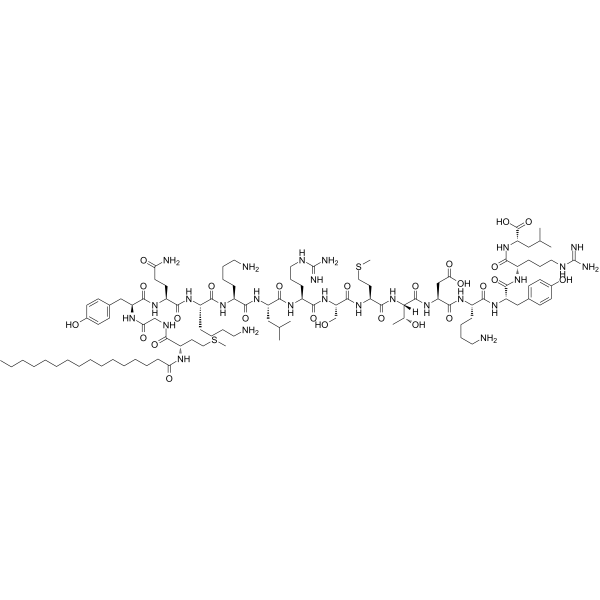
ATI-2341 is a potent and functionally selective allosteric agonist of C-X-C chemokine receptor type 4 (CXCR4), which functions as a biased ligand, favoring Gαi activation over Gα13. ATI-2341 activates the inhibitory heterotrimeric G protein (Gi) to promote inhibition of cAMP production and induce calcium mobilization. ATI-2341 is a potent and efficacious mobilizer of bone marrow polymorphonuclear neutrophils (PMNs) and hematopoietic stem and progenitor cells (HSPCs) .
loading...
    loading...
4
4 Cited Publications
Cat. No.: HY-P0172A
Target:  

CXCR

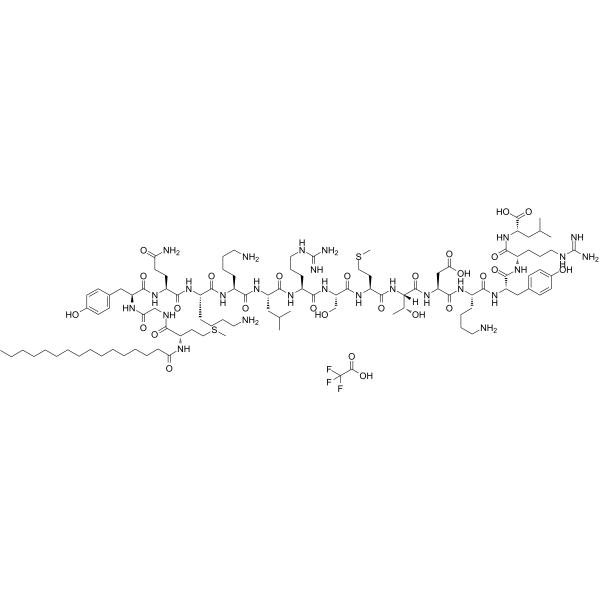
ATI-2341 is a potent and functionally selective allosteric agonist of C-X-C chemokine receptor type 4 (CXCR4), which functions as a biased ligand, favoring Gαi activation over Gα13. ATI-2341 activates the inhibitory heterotrimeric G protein (Gi) to promote inhibition of cAMP production and induce calcium mobilization. ATI-2341 is a potent and efficacious mobilizer of bone marrow polymorphonuclear neutrophils (PMNs) and hematopoietic stem and progenitor cells (HSPCs) .
loading...
    loading...
1
1 Cited Publications
Cat. No.: HY-120511
CAS No.: 1256921-89-7
Purity:  99.60%
Target:  

Opioid Receptor

Research Areas:  

Neurological Disease

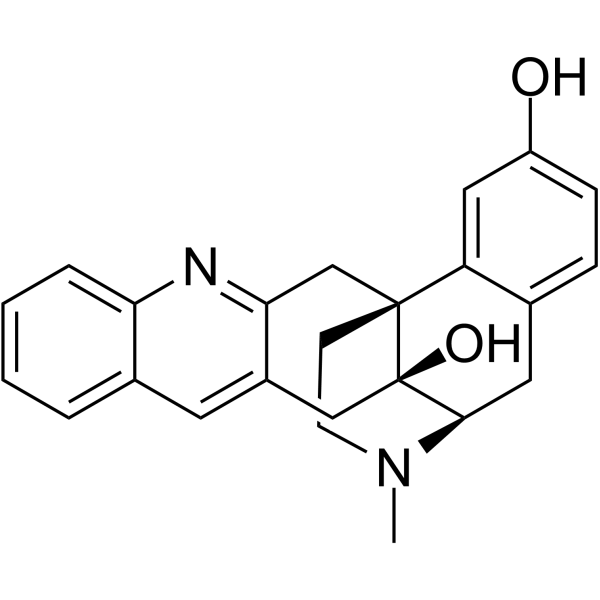
KNT-127 is a selective and BBB-penetrant δ-opioid receptor (DOR) agonist (Ki = 0.16 nM). KNT-127 is highly selective to the δ receptor, with Ki values of 0.16, 21.3 and 153 nM for δ, μ and κ receptors, respectively. KNT-127 acts as a biased ligand that mainly activates cyclic adenosine monophosphate (cAMP) signaling with lower beta-arrestin signaling activation. KNT-127 increases the release of dopamine and L-glutamate in the striatum, nucleus accumbens, and prefrontal cortex. KNT-127 exhibits antidepressant- and anxiolytic-like effects. KNT-127 can be studied in research on neurological diseases .
loading...
    loading...
1
1 Cited Publications
Cat. No.: HY-104006
CAS No.: 1069498-96-9
Purity:  99.12%
Target:  

Opioid Receptor

Research Areas:  

Neurological Disease

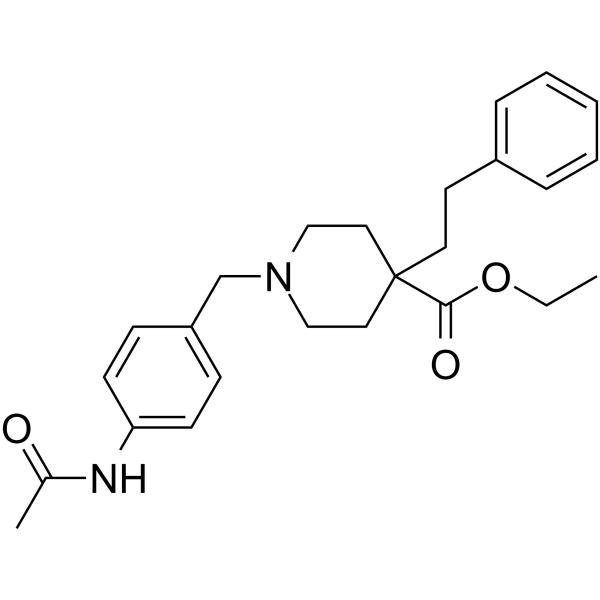
CYM51010 is a biased ligand of μ-opioid receptor – δ-opioid receptor heterodimers with an EC50 of 403 nM. CYM51010 exhibits anti-nociceptive activity similar to morphine but with a decreased levels of tolerance development and withdrawal symptoms .
loading...
    loading...
1
1 Cited Publications
Cat. No.: HY-141495
CAS No.: 1643462-93-4
Purity:  97.09%
Synonyms: PW0464
Target:  

Dopamine Receptor

Research Areas:  

Neurological Disease

PW0464, a nanomolar potent complete G protein biased ligand, is a noncatechol D1R agonist, with an EC50 of 5.8 nM (Gs-cAMP) .
loading...
    loading...
Cat. No.: HY-P3137
CAS No.: 812644-79-4
Target:  

Angiotensin Receptor

Research Areas:  

Cardiovascular Disease

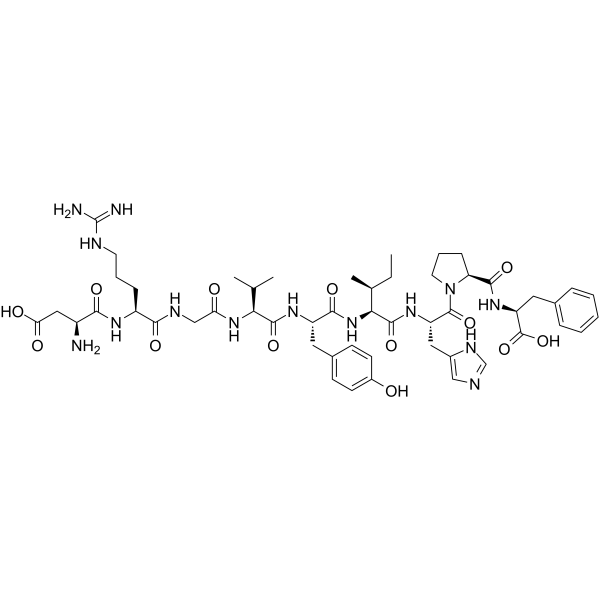
TRV056 is a Gq-biased ligand of the angiotensin II receptor type 1 (AT1R). TRV056 is efficacious in stimulating cellular Gq-mediated signaling. TRV056 can be used to develop the Gq-biased AT1R agonists .
loading...
    loading...
Cat. No.: HY-171978A
Target:  

Adrenergic Receptor

Research Areas:  

Cardiovascular Disease

LM-189 free base, a G protein alpha subunit I (Gαi)-biased agonist, is a Gαi-biased ligand of β2-adrenergic receptor (β2AR). LM-189 free base stabilizes a distinct conformation in TM6 and increases the dynamics of ICL2. LM-189 free base can be used to develop the Gαi-biased β2AR agonists .
loading...
    loading...
Cat. No.: HY-171978
Target:  

Adrenergic Receptor

Research Areas:  

Cardiovascular Disease

LM-189 is a β2-adrenergic receptor (β2AR) ligand and G protein-biased modulator with a human β2AR Ki of 0.063 nM.LM-189 promotes β2AR coupling to Gαs and Gαi heterotrimers, stabilizes distinct β2AR conformations including a TM6 outward state, and increases β2AR ICL2 dynamics.LM-189 restricts β2AR ligand-binding pocket conformational heterogeneity, stabilizes polar ligand-receptor interaction networks, and exhibits bias toward Gαi signaling over Gαs signaling.LM-189 enabled cryo-EM structural characterization of the β2AR-Gi complex.LM-189 can be used for the research of congestive heart failure .
loading...
    loading...
Cat. No.: HY-P3136
CAS No.: 25849-90-5
Synonyms: TRV120055
Research Areas:  

Cardiovascular Disease

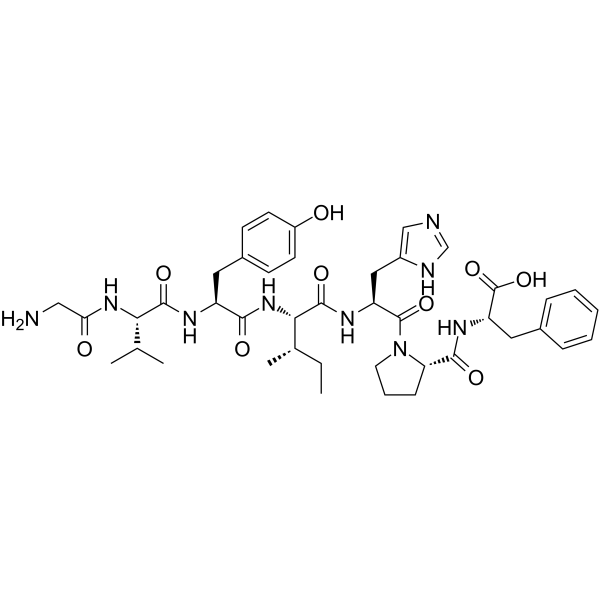
TRV055 (TRV120055) is a G protein-biased agonist of angiotensin II type 1 receptors (AT1Rs). TRV120055 induces fibroblast proliferation, overexpression of collagen I and α-SMA, and stress fibre formation in human cardiac fibroblasts. TRV055 activates AT1 receptor/Gαq-mediated signaling pathways, upregulates TGF-β1 and p-ERK1/2. TRV055 induces collagen secretion in adult rat myofibroblasts at a level comparable to Ang II. TRV055 can be used to study the role of G protein-biased signaling of AT1Rs in regulating fibrotic responses [1]
loading...
    loading...
Cat. No.: HY-117533
CAS No.: 1354030-14-0
Target:  

Dopamine Receptor

Research Areas:  

Neurological Disease

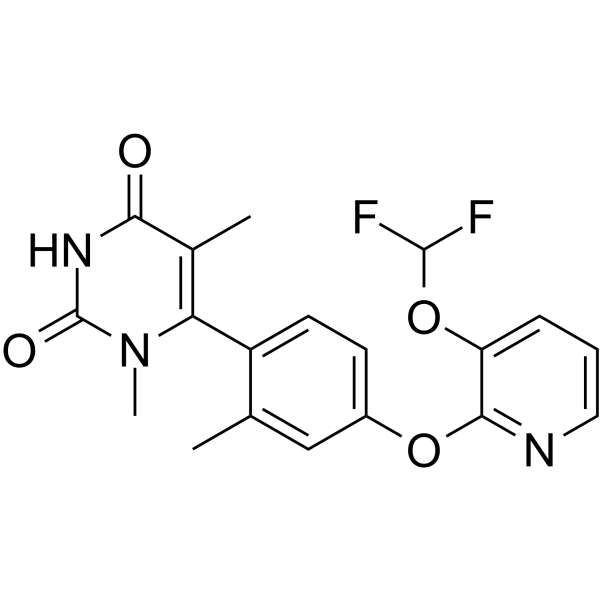
UNC0006 is a β-arrestin-biased dopamine D2 ligand. UNC0006 can be used in the study of antipsychotic .
loading...
    loading...
Cat. No.: HY-151515
CAS No.: 1610591-93-9
Target:  

Dopamine Receptor

Research Areas:  

Neurological Disease

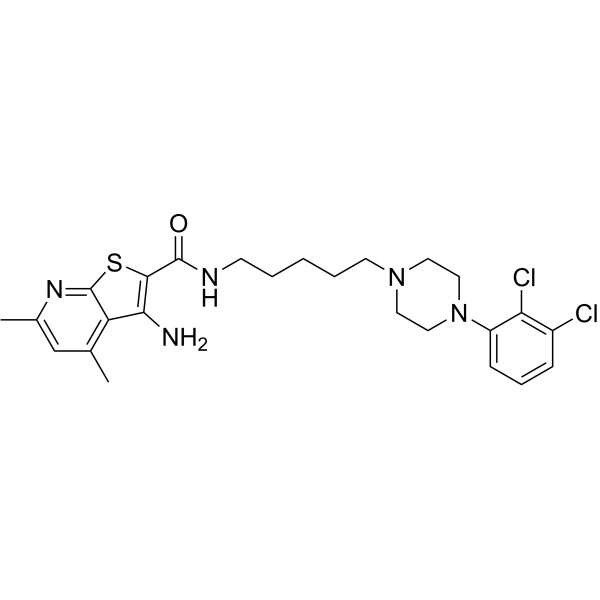
Dopamine D2 receptor agonist-2 (compound 36) is a potent dopamine D2 receptor biased agonism ligand with an Ki value of 11.2 nM. Dopamine D2 receptor agonist-2 can be used to research antipsychosis .
loading...
    loading...
Cat. No.: HY-104006R
CAS No.: 1069498-96-9
Research Areas:  

Neurological Disease

CYM51010 (Standard) is the analytical standard of CYM51010 (HY-104006). This product is intended for research and analytical applications. CYM51010 is a biased ligand of μ-opioid receptor – δ-opioid receptor heterodimers with an EC50 of 403 nM. CYM51010 exhibits anti-nociceptive activity similar to morphine but with a decreased levels of tolerance development and withdrawal symptoms .
loading...
    loading...
Cat. No.: HY-L170
255 compounds

An emerging drug design method is based on the secondary binding site effect, where small molecule drugs are designed to bind to secondary binding sites on target biomolecules rather than primary orthomorphic sites. Successful potential drugs (known as allosteric modulators) will be able to bind to allosteric sites and remotely alter (or modify) the conformation of the main orthosteric binding sites of biological targets. Allosteric modulators (AMs) are ligands of proteins that act through binding sites different from natural (orthosteric) ligand sites. AMs are relatively small, more lipophilic, and more rigid compounds. The binding efficacy of AMs with their targets is often slightly lower. AMs are divided into positive AMs (PAMs) and negative AMs (NAMs). AMs are ideal drug targets because they can fine-tune receptor activity while preserving the spatial and temporal signal transduction characteristics of endogenous ligands, resulting in fewer targeted side effects, improved subtype selectivity, and better promotion of biased signal transduction than normal ligands.

MCE designs a unique collection of 255 small allosteric modulators. It is a good tool to be used for research on metabolize, cancer and other diseases.

  • 1

