9 Results for "

CAMKIIα

" in MedChemExpress (MCE) Product Catalog:
Products (9)

9 Results for "CAMKIIα" in MCE Product Catalog:

Cat. No.: HY-173117
Target:  

CaMK

Research Areas:  

Cardiovascular Disease Cancer

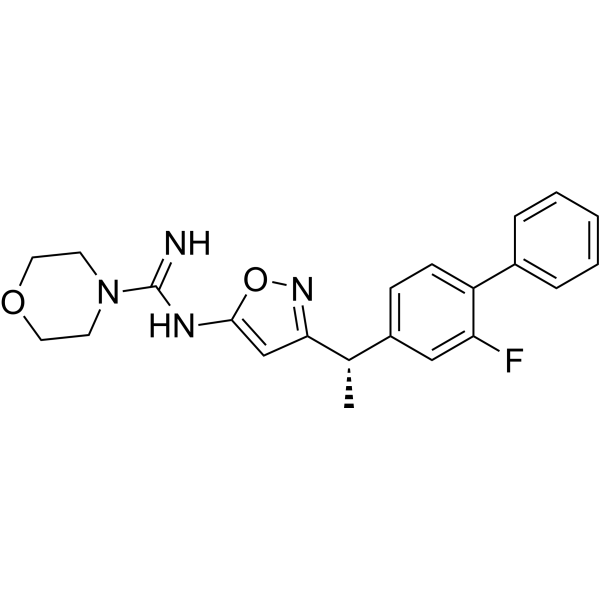
RA306 is an orally active CaMKIIδ/γ inhibitor with IC50 values of 15, 25, 61, and 420 nM against CaMKIIδ, γ, α, and β isoforms, respectively. RA306 reduces the serine/threonine phosphorylation level of PEAK1, inhibits PEAK1-mediated cancer cell migration and invasion, and attenuates the growth and metastasis of cancer xenografts. RA306 can be used in research related to triple-negative breast cancer and dilated cardiomyopathy .
loading...
    loading...
Cat. No.: HY-100779
CAS No.: 215174-50-8
Purity:  99.14%
Synonyms: SMP 114
Target:  

CaMK Autophagy

Research Areas:  

Metabolic Disease

Rimacalib (SMP 114) is a Ca 2+/calmodulin-dependent protein kinase II (CaMKII) inhibitor, with IC50s of ~1 μM for CaMKIIα to ~30 μM for CaMKIIγ .
loading...
    loading...
Cat. No.: HY-146268
CAS No.: 3031484-08-6
Purity:  98.41%
Target:  

CaMK

Research Areas:  

Neurological Disease

CaMKIIα-IN-1 (Compound 4d) is an orally active Ca 2+/calmodulin-dependent protein kinase II α (CaMKIIα) inhibitor with a KD of 219 nM for CaMKIIα WT hub. CaMKIIα-IN-1 has good metabolic stability .
loading...
    loading...
Cat. No.: HY-W170020
CAS No.: 871326-47-5
Target:  

CaMK

Research Areas:  

Metabolic Disease

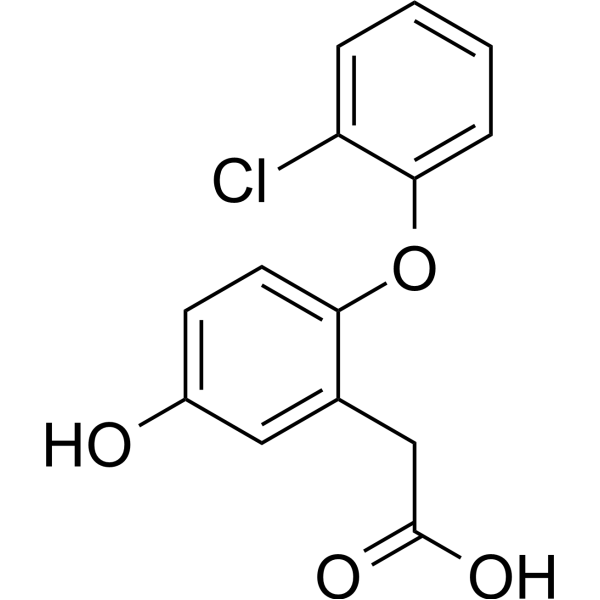
PTCA is a potent Ca2+/calmodulin-dependent protein kinase II α (CaMKIIα) ligand with a pKi value of 7.2 .
loading...
    loading...
Cat. No.: HY-151797
CAS No.: 2368927-41-5
Target:  

CaMK

Research Areas:  

Neurological Disease

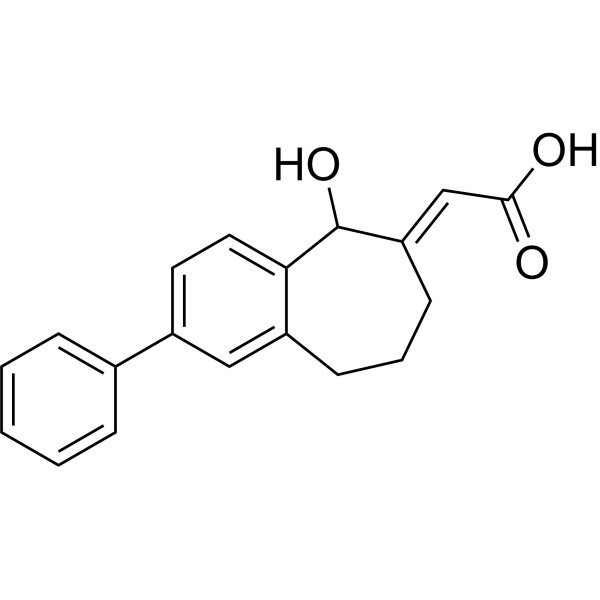
Ph-HTBA is a high-affinity, brain-penetrating modulator for CaMKIIα. Ph-HTBA has binding affinity for CaMKIIα with a Kd value of 757 nM. Ph-HTBA can be used for the research of ischemia and neurodegenerative disorders .
loading...
    loading...
Cat. No.: HY-156104
CAS No.: 2481744-33-4
Target:  

PROTACs CaMK

Research Areas:  

Neurological Disease

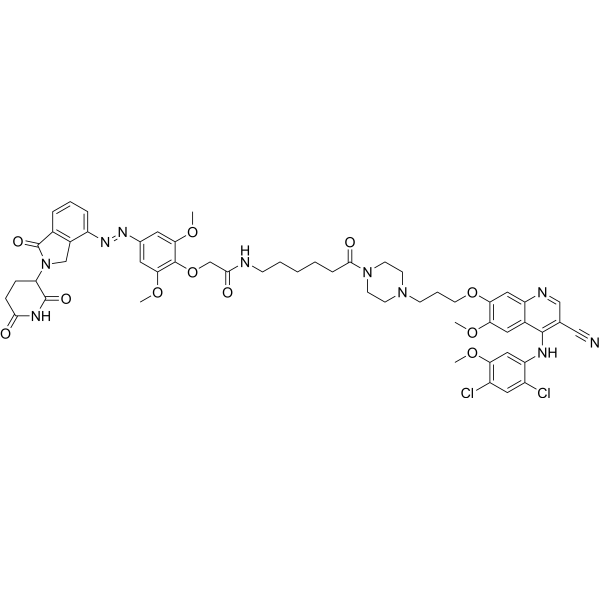
CaMKIIα-PHOTAC is a photochemically targeted chimera (PHOTAC) targeting Ca2+/calmodulin-dependent protein kinase II α (CaMKIIα). Molecules such as PHOTAC can catalyze the ubiquitination and degradation of target proteins through the endogenous proteasome under specific wavelengths of light. CaMKIIα-PHOTAC reduces synaptic function under light conditions, and it attenuates the intensity of evoked field excitatory postsynaptic potentials in the mouse hippocampus in response to physiological stimuli. CaMKIIα-PHOTAC plays a critical role in maintaining long-term potentiation and memory capacity in subcellular dendritic domains .
loading...
    loading...
Cat. No.: HY-175681
CAS No.: 1613270-82-8
CaMKIIα ligand-1 is a photoactivatable CaMKIIα ligand that can be used for PROTAC synthesis. CaMKIIα ligand-1 serves as the target protein ligand for CaMKIIα-PHOTAC (HY-156104). CaMKIIα ligand-1 is applicable to research related to neurological diseases .
loading...
    loading...
Cat. No.: HY-162860
CAS No.: 1030759-58-0
Target:  

mGluR CaMK Tau Protein

Research Areas:  

Neurological Disease

FO-4-15 is an mGluR1/CaMKIIα activator. FO-4-15 has a protective effect against H2O2 in human neuroblastoma (SH-SY5Y) cells. FO-4-15 can improve cognitive impairment in Alzheimer’s disease mice by activating the mGluR1/CaMKIIα pathway, and can reduce accumulation, hyperphosphorylated Tau, and synaptic damage .
loading...
    loading...
Cat. No.: HY-135167
CAS No.: 867178-11-8
Target:  

CaMK

Research Areas:  

Neurological Disease

HOCPCA is a compound with neuroprotective activity that improves sensorimotor function in mice after experimental stroke. HOCPCA selectively binds to the CaMKIIα hub domain, modulates signaling of different CaMKII pools, and alleviates abnormal CaMKII signaling after cerebral ischemia. HOCPCA promotes hippocampal neuronal activity and enhances working memory. HOCPCA also normalizes Thr286 autophosphorylation in the cytoplasm after ischemia and downregulates ischemia-specific expression of active CaMKII enzymatic cleavage fragments. HOCPCA binds to the GHB binding site with 27-fold higher affinity than GHB and has good blood-brain barrier penetration ability .
loading...
    loading...

