1. Search Result
Search Result
Results for "

CDK7-IN-7

" in MedChemExpress (MCE) Product Catalog:
Cat. No. Product Name Target Research Areas Chemical Structure
  • HY-18340
    (R)​-​CR8
    1 Publications Verification

    CR8, (R)-Isomer

    Molecular Glues CDK Apoptosis Neurological Disease Cancer
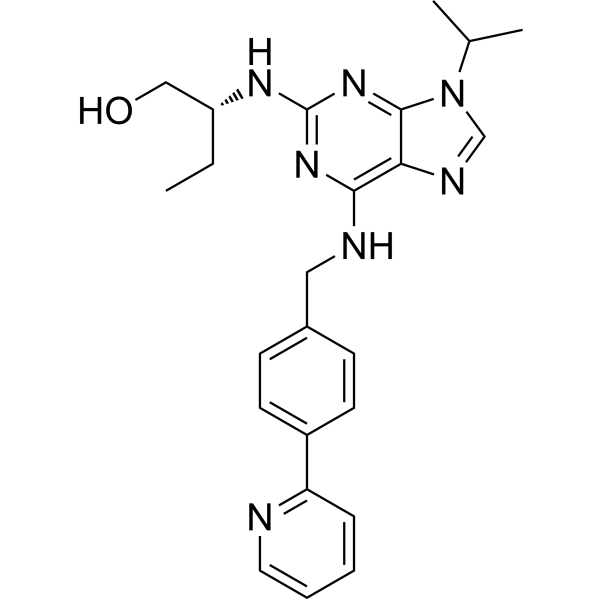
    (R)-CR8, a second-generation analog of Roscovitine, is a potent CDK1/2/5/7/9 inhibitor. (R)-CR8 inhibits CDK1/cyclin B (IC50=0.09 μM), CDK2/cyclin A (0.072 μM), CDK2/cyclin E (0.041 μM), CDK5/p25 (0.11 μM), CDK7/cyclin H (1.1 μM), CDK9/cyclin T (0.18 μM) and CK1δ/ε (0.4 μM). (R)-CR8 induces apoptosis and has neuroprotective effect . (R)-CR8 acts as a molecular glue degrader that depletes cyclin K .
    (R)​-​CR8
  • HY-11009
    CGP60474
    Maximum Cited Publications
    7 Publications Verification

    CDK PKC Cancer
    CGP60474, a highly potent anti-endotoxemic agent, is a potent cyclin-dependent kinase (CDK) inhibitor (IC50 values are 26, 3, 4, 216, 10, 200 and 13 nM for CDK1/B, CDK2/E, CDK2/A, CDK4/D, CDK5/p25, CDK7/H and CDK9/T, respectively). CGP60474 is a selective and ATP-competitive PKC inhibitor .
    CGP60474
  • HY-117203A
    CDK12-IN-E9
    1 Publications Verification

    CDK Cancer
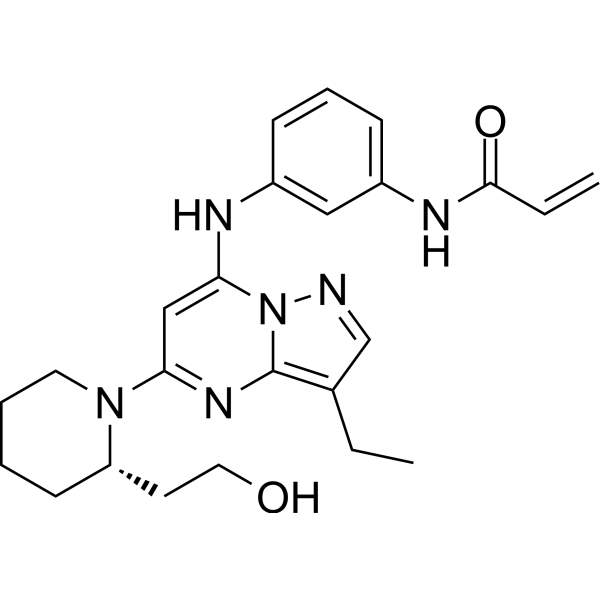
    CDK12-IN-E9 is a potent and selective covalent CDK12 inhibitor and a non-covalent CDK9 inhibitor, while avoiding ABC transporter-mediated efflux. CDK12-IN-E9 has weak binding ability to CDK7/CyclinH complex with an IC50> 1 μM .
    CDK12-IN-E9
  • HY-18340A
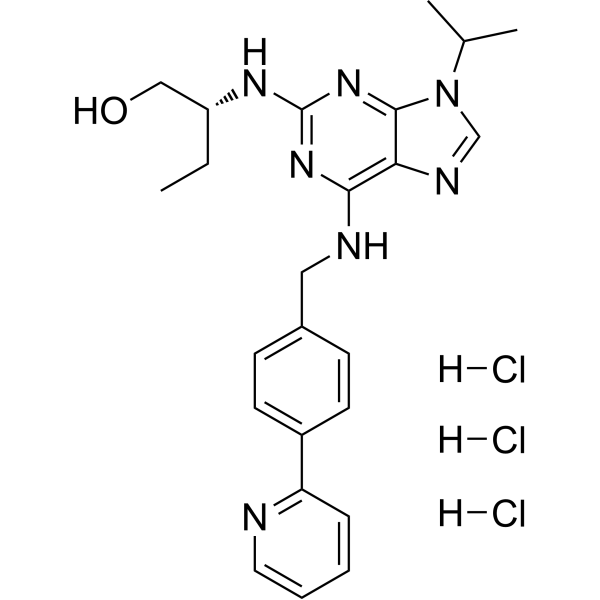
    (R)-CR8 trihydrochloride
    1 Publications Verification

    CR8, (R)-Isomer trihydrochloride

    Molecular Glues CDK Apoptosis Neurological Disease Cancer
    (R)-CR8 (CR8) trihydrochloride, a second-generation analog of Roscovitine, is a potent CDK1/2/5/7/9 inhibitor. (R)-CR8 trihydrochloride inhibits CDK1/cyclin B (IC50=0.09 μM), CDK2/cyclin A (0.072 μM), CDK2/cyclin E (0.041 μM), CDK5/p25 (0.11 μM), CDK7/cyclin H (1.1 μM), CDK9/cyclin T (0.18 μM) and CK1δ/ε (0.4 μM). (R)-CR8 trihydrochloride induces apoptosis and has neuroprotective effect . (R)-CR8 trihydrochloride acts as a molecular glue degrader that depletes cyclin K .
    (R)-CR8 trihydrochloride
  • HY-145402

    CDK Cancer
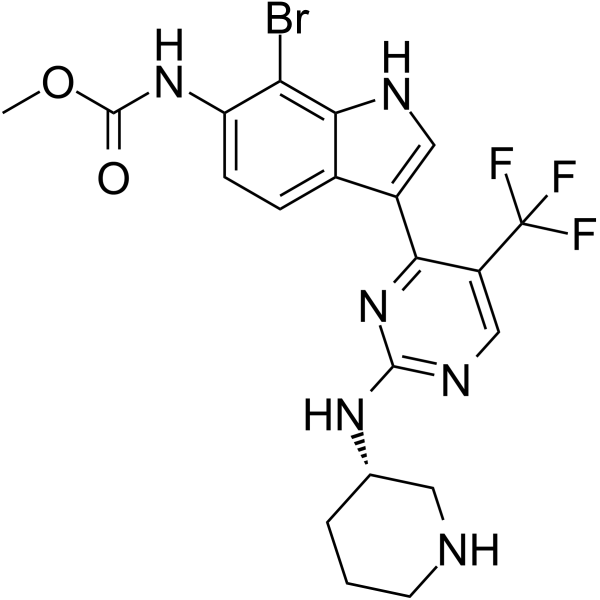
    CDK7-IN-7 is a potent and selective CDK7 kinase inhibitor with an IC50 of <50 nM (Patent CN112661745A, compound T-01) .
    CDK7-IN-7
  • HY-147597

    CDK Cancer
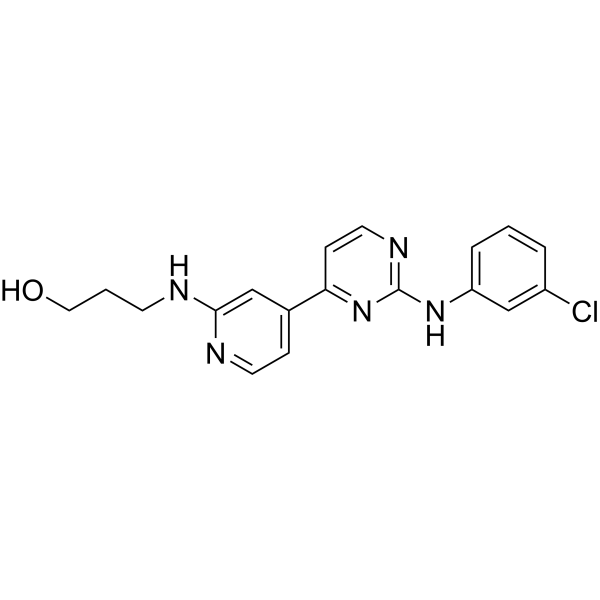
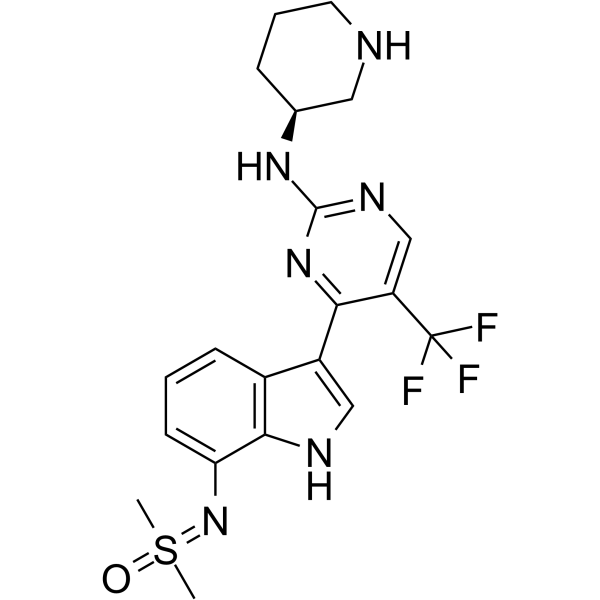
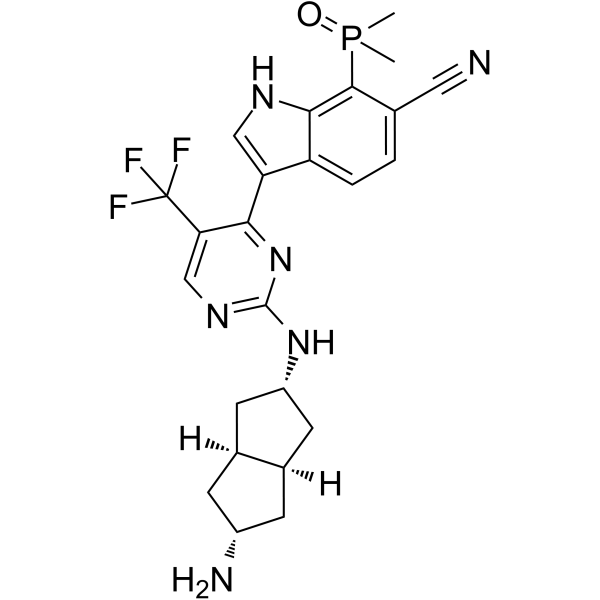
    CDK7-IN-13 is a potent inhibitor of CDK7. CDK7-IN-13 is a pyrimidinyl derivative compound. CDK7-IN-13 has the potential for the research of various cancers, especially the cancer with transcriptional dysregulation (extracted from patent CN114249712A, compound 1) .
    CDK7-IN-13
  • HY-147598

    CDK Cancer
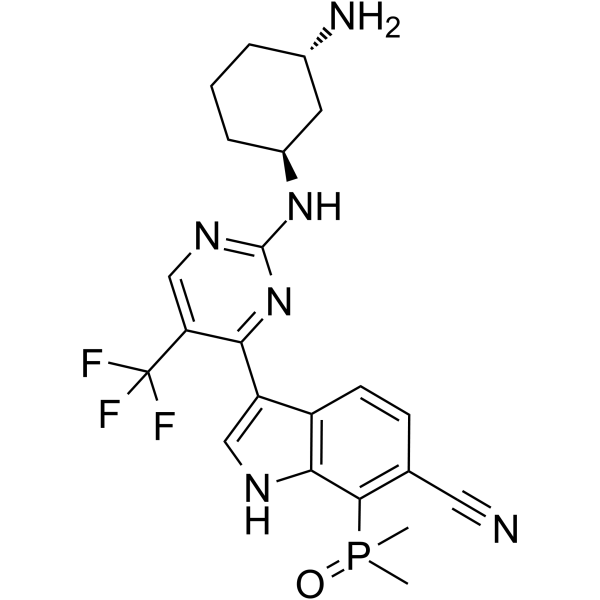
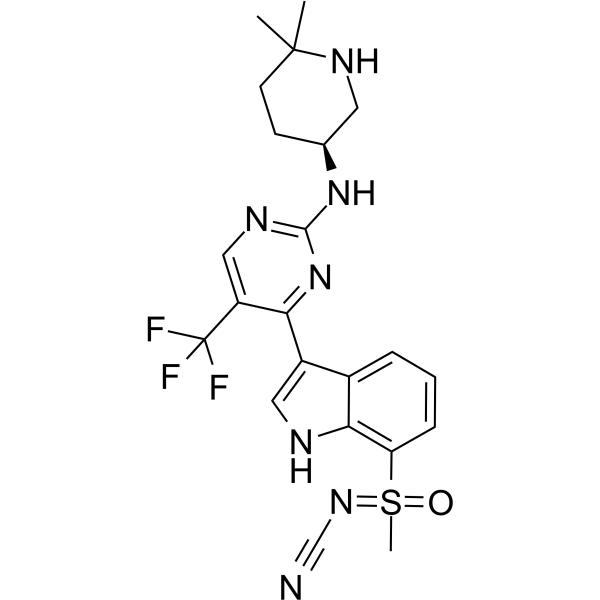
    CDK7-IN-14 is a potent inhibitor of CDK7. CDK7-IN-14 is a pyrimidinyl derivative compound. CDK7-IN-14 has the potential for the research of various cancers, especially the cancer with transcriptional dysregulation (extracted from patent CN114249712A, compound 3) .
    CDK7-IN-14
  • HY-112450

    CDK Cancer
    Olomoucine II is a potent CDK inhibitor with IC50 values of 0.06, 0.1, 0.45, 7.6, 19.8 µM for CDK9/cyclin T, CDK2/cyclin E, CDK7/cyclin H, CDK1/cyclin B, CDK4/cyclin D1, respectively. Olomoucine II shows antiproliferative activity .
    Olomoucine II
  • HY-147409

    CDK Cancer
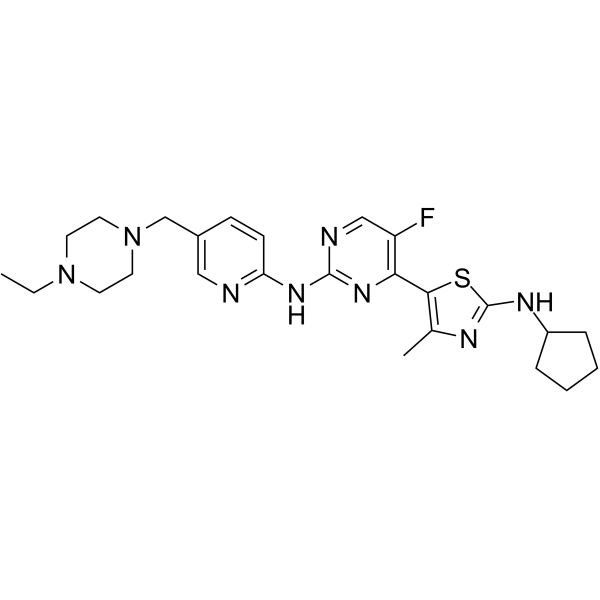
    Ulecaciclib is an orally activitive inhibitor of cyclin-dependent kinase (CDK), with Ki values of 0.62 μM (CDK2/Cyclin A), 0.2 nM (CDK4/Cyclin D1), 3 nM (CDK6/Cyclin D3), and 0.63 μM (CDK7/Cyclin H), respectively. Ulecaciclib can cross blood brain barrier and has good pharmacokinetic characteristics .
    Ulecaciclib
  • HY-147602

    CDK Cancer
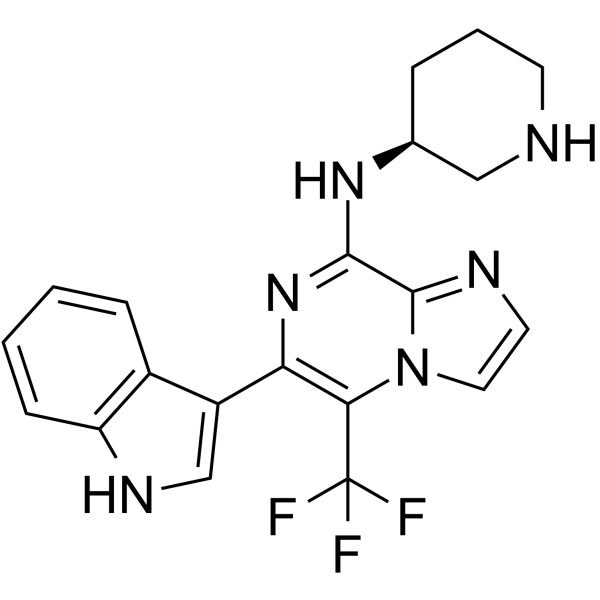
    CDK7-IN-17 is a potent inhibitor of CDK7. CDK7-IN-17 is a pyrimidinyl derivative compound. CDK7-IN-17 has the potential for the research of various cancers, especially the cancer with transcriptional dysregulation (extracted from patent CN114249712A, compound 1) .
    CDK7-IN-17
  • HY-147603

    CDK Cancer
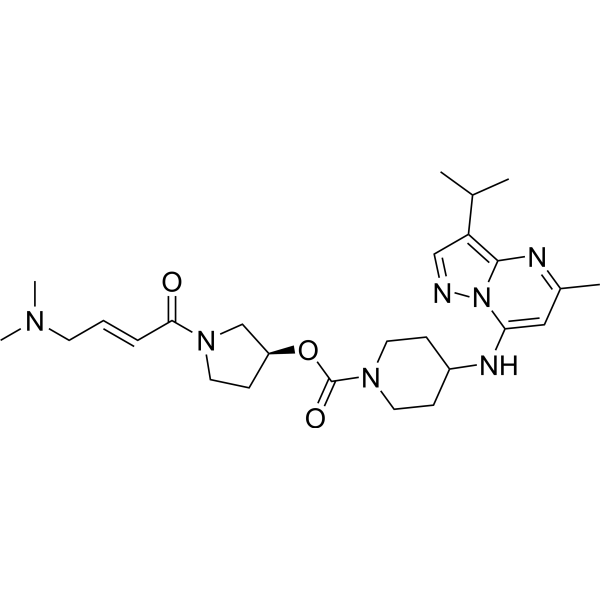
    CDK7-IN-18 is a potent inhibitor of CDK7. CDK7-IN-18 is a pyrimidinyl derivative compound. CDK7-IN-18 has the potential for the research of various cancers, especially the cancer with transcriptional dysregulation (extracted from patent CN114249712A, compound 15) .
    CDK7-IN-18
  • HY-144175

    CDK Cancer
    CDK7-IN-12 is a potent inhibitor of CDK7. CDK7-IN-12 plays a key role in transcriptional regulation and cell cycle regulation. CDK7-IN-12 effectively inhibit malignant tumor proliferation in vitro and in vivo. CDK7-IN-12 has the potential for the research of cancer disease (extracted from patent WO2021249417A1, compound 43) .
    CDK7-IN-12
  • HY-143587

    CDK Cancer
    CDK7-IN-2 is a potent inhibitor of CDK7. CDK7 is implicated in both temporal control of the cell cycle and transcriptional activity. CDK7 is implicated in the transcriptional initiation process by phosphorylation of Rbpl subunit of RNA Polymerase II (RNAPII). CDK7 has the potential for the research of cancer disease, in particular aggressive and hard- to-treat cancers (extracted from patent WO2019099298A1, compound 1) .
    CDK7-IN-2
  • HY-183070

    PROTACs CDK Apoptosis Cancer
    CXJ2080 is a selective PROTAC-based CDK7 degrader with a DC50 of 0.88 nM. CXJ2080 recruits VHL E3 ligase to induce ubiquitin-proteasome-dependent CDK7 degradation, disrupts the CDK7-cyclin H-MAT1 complex, suppresses CDK7-dependent phosphorylation of RNA polymerase II CTD Ser5, CDK1 Thr161, and CDK2 Thr160. CXJ2080 activates the p53-p21 axis, suppresses MYC-driven signaling, induces leukemia cell cycle arrest, apoptosis, and differentiation, reduces CD117 expression, spares platelets and normal PBMCs, maintains sustained CDK7 degradation post-washout. CXJ2080 can be used for the research of acute leukemia .
    CXJ2080
  • HY-183073

    Cancer
    TZ1104 is a PROTAC-based CDK7 degrader, with a DC50 of 0.88 nM. TZ1104 forms a ternary complex with VHL E3 ligase and CDK7 to trigger proteasome-dependent CDK7 degradation, destabilizing the CDK7-cyclin H-MAT1 complex. TZ1104 suppresses phosphorylation of RNA polymerase II CTD Ser5, CDK1 Thr161, and CDK2 Thr160. TZ1104 activates the p53-p21 axis and suppresses oncogenic Myc signaling. TZ1104 induces cell cycle arrest, apoptosis, and differentiation of acute leukemia cells. TZ1104 can be used for the research of acute leukemia .

    TZ1104
  • HY-180355

    CDK Ser/Thr Kinase c-Myc Apoptosis Cancer
    SY-5102 is a potent, selective and orally active cyclin-dependent kinase (CDK7) inhibitor with a Kd of 0.03 nM. SY-5102 shows anti-proliferative activity against HCC70 cells with an EC50 of 9 nM. SY-5102 can inhibit CDK7-mediated CAK function (downregulate CDK2 Thr160 phosphorylation) and TFIIH transcription function (downregulate RNA polymerase II Ser5 phosphorylation). SY-5102 can induce G2/M cell cycle arrest, downregulate the expression of the oncogene c-Myc, and ultimately trigger cancer cell apoptosis. SY-5102 can be used for the research of triple-negative breast cancer (TNBC) .
    SY-5102

Inquiry Online

Your information is safe with us. * Required Fields.

Salutation


Country or Region *

Applicant Name *


Organization Name *

Department *


Email Address *


Product Name *

Cat. No.


Requested quantity *

Phone Number *


Remarks

Inquiry Online

Inquiry Information

Product Name:
Cat. No.:
Quantity:
MCE Japan Authorized Agent:

