29 Results for "

Coconut

" in MedChemExpress (MCE) Product Catalog:
Products (29)

29 Results for "Coconut" in MCE Product Catalog:

7
7 Publications Verification
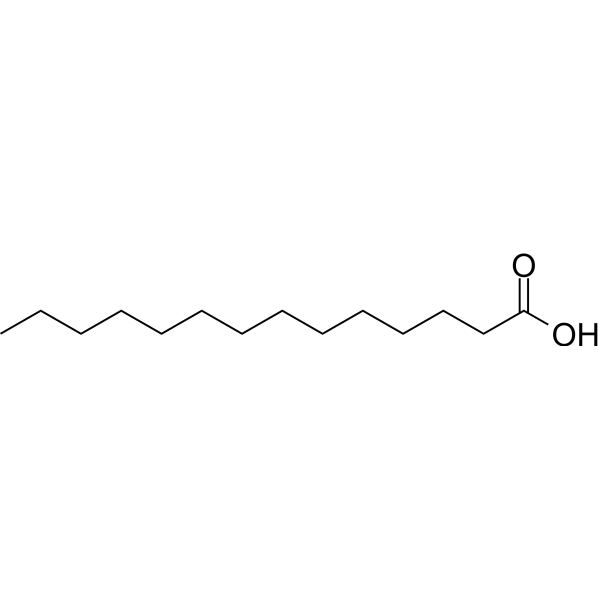
Cat. No.: HY-N2041
CAS No.: 544-63-8
Myristic acid is an orally active saturated 14-carbon fatty acid found in most animal and plant fats, especially milk fat coconut oil, palm oil and nutmeg oil. Myristic acid exerts anti-inflammatory activity through the NF-κB pathway. Myristic acid has antibacterial, anti-inflammatory and analgesic properties .
4
4 Cited Publications
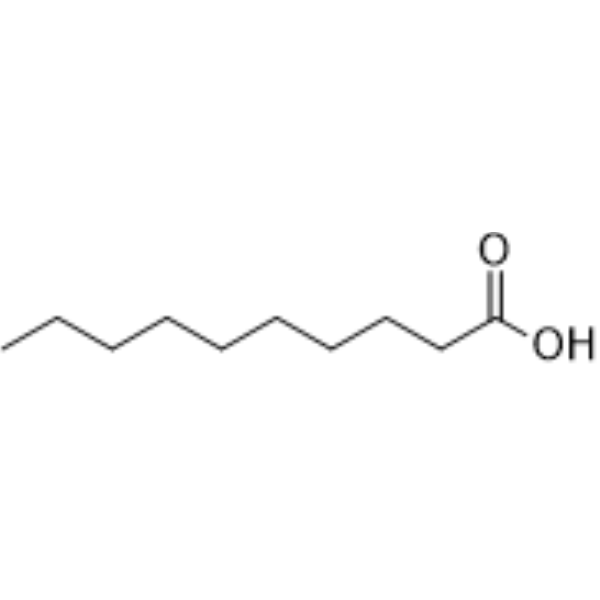
Cat. No.: HY-W015309
CAS No.: 334-48-5
Decanoic acid is a key component of the medium-chain triglyceride (MCT) found in coconut oil. Decanoic acid is a brain-penetrant and non-competitive inhibitor of AMPA receptor showing antiseizure activity in rats. Decanoic acid reduces tyrosinase activity and inhibits melanosome maturation. Decanoic acid suppresses the phosphorylation of c-Met and induced apoptosis in hepatocellular carcinoma (HCC) cells by inhibiting the expression of various oncogenic proteins, which is promising for research in the field of mTORC1 signaling, HCC and epilepsy .
2
2 Cited Publications
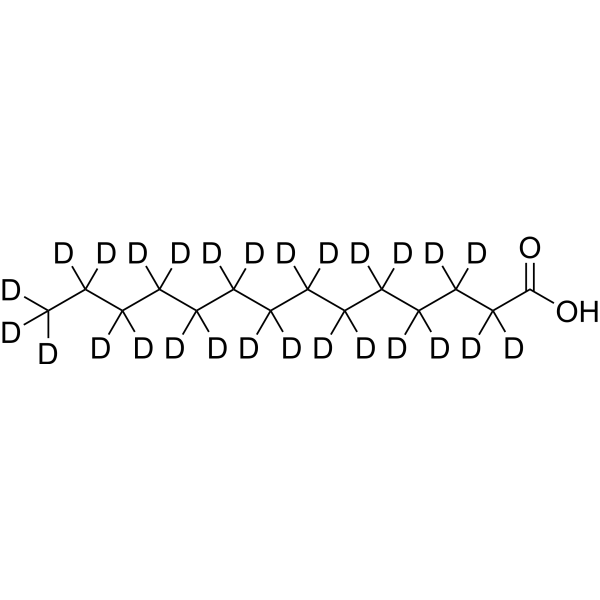
Cat. No.: HY-N2041S
CAS No.: 60658-41-5
Myristic acid-d27 is the deuterium labeled Myristic acid. Myristic acid is a saturated 14-carbon fatty acid occurring in most animal and vegetable fats, particularly butterfat and coconut, palm, and nutmeg oils.
1
1 Cited Publications
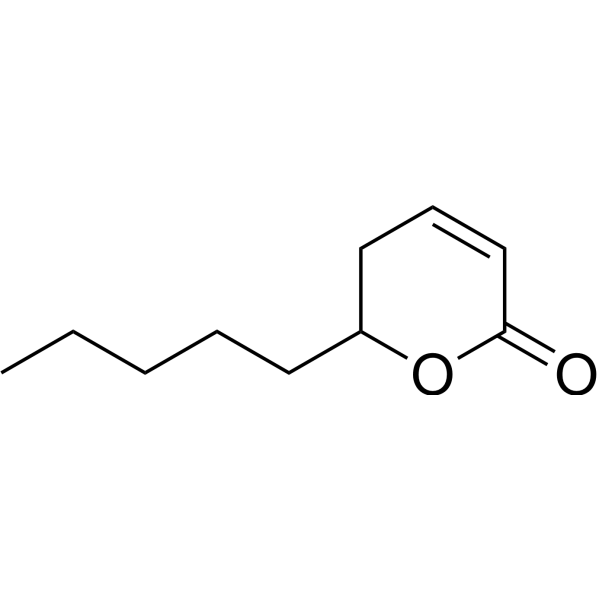
Cat. No.: HY-N7435
CAS No.: 54814-64-1
Synonyms: (±)-Massoia lactone
Massoia lactone ((±)-Massoia lactone) is a coconut and creamy fragrant compound mianly isolated from Cryptocarya massoy. Massoia lactone is also a fragrant biosurfactant produced by a fungus Aureobasidium pullulans .
Cat. No.: HY-A0103
CAS No.: 11138-66-2
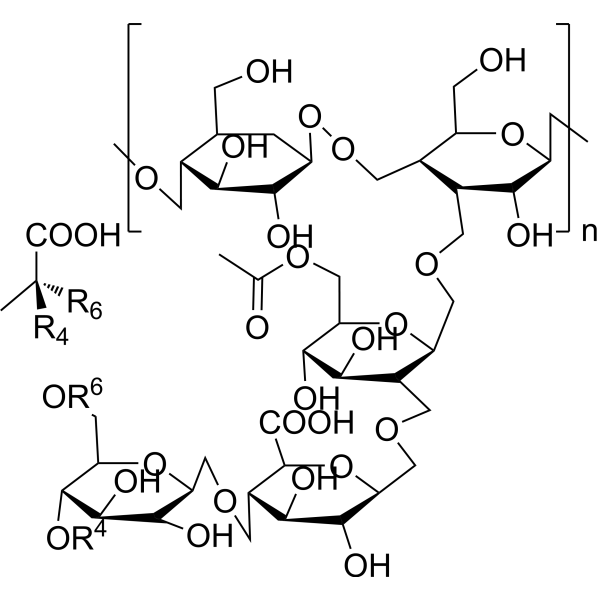
Xanthan gum interacts with gelatin (HY-Y1365) via hydrogen bonds, thereby increasing the viscosity and stability of the hydrogel while promoting cell growth and creating a microenvironment conducive to cell differentiation [1][2]. Xanthan gum induces pro-inflammatory responses by increasing the levels of TNF-α, IL-6, and IL-10. Xanthan gum can be used for inflammation and immunology research .
Cat. No.: HY-N8451
CAS No.: 506-50-3
Synonyms: Triacontanoic acid
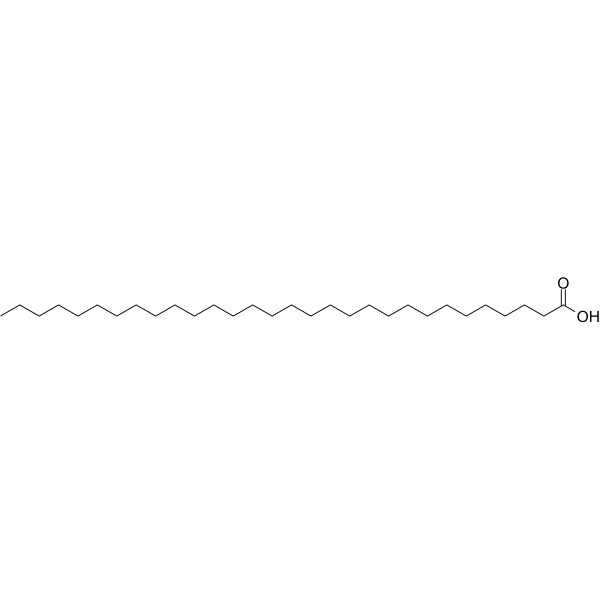
Melissic acid, which belongs to the category of long-chain saturated fatty acids. It is a 30-carbon straight-chain fatty acid found in a variety of natural sources, including beeswax and coconut oil. Due to its unique physical properties, such as high melting point and viscosity, Melissic acid has a variety of uses in industry. It can be used as a lubricant in the production of some plastics and rubber, and is also used in the manufacture of surfactants and detergents.
Cat. No.: HY-W250170
CAS No.: 68515-73-1
Synonyms: Octyldecyl glucoside
Decyl glucoside is a mild nonionic surfactant. Decyl glucoside can be derived from renewable raw materials such as glucose and fatty alcohols from coconut oil or palm kernel oil. Decyl glucoside is known for its excellent foaming and cleaning properties.
Cat. No.: HY-N2041R
CAS No.: 544-63-8
Myristic acid (Standard) is the analytical standard of Myristic acid. This product is intended for research and analytical applications. Myristic acid is an orally active saturated 14-carbon fatty acid found in most animal and plant fats, especially milk fat coconut oil, palm oil and nutmeg oil. Myristic acid exerts anti-inflammatory activity through the NF-κB pathway. Myristic acid has antibacterial, anti-inflammatory and analgesic properties .
Cat. No.: HY-W266188
CAS No.: 84600-66-8
Decanoic acid- 13C is the 13C-labeled Decanoic acid (HY-W015309). Decanoic acid is a key component of the medium-chain triglyceride (MCT) found in coconut oil. Decanoic acid is a brain-penetrant and non-competitive inhibitor of AMPA receptor showing antiseizure activity in rats. Decanoic acid reduces tyrosinase activity and inhibits melanosome maturation. Decanoic acid suppresses the phosphorylation of c-Met and induced apoptosis in hepatocellular carcinoma (HCC) cells by inhibiting the expression of various oncogenic proteins, which is promising for research in the field of mTORC1 signaling, HCC and epilepsy .
Cat. No.: HY-W243460
CAS No.: 39208-15-6
Research Areas:  

Others

EDTA copper (II) disodium salt, 97% is a negatively charged copper (II)-ethylenediaminetetraacetic acid chelate and also an adsorption substrate. EDTA copper (II) disodium salt, 97% forms amide bonds with chitosan amino groups in weakly acidic (pH 3-5) solutions, while it forms the CuEDTA (OH) 3− hydroxyl complex in strongly alkaline (pH > 12) solutions. EDTA copper (II) disodium salt, 97% can be adsorbed onto granular activated carbon, with electrostatic interactions dominating its pH-dependent adsorption behavior. EDTA copper (II) disodium salt, 97% can be used to eliminate the inhibition of enzyme-catalyzed reactions caused by trace heavy metals .
Cat. No.: HY-N2041S3
CAS No.: 62217-71-4
Myristic acid-d33 is the deuterium labeled Myristic acid. Myristic acid is a saturated 14-carbon fatty acid occurring in most animal and vegetable fats, particularly butterfat and coconut, palm, and nutmeg oils.
Cat. No.: HY-W099600
CAS No.: 645-66-9
Synonyms: Bisdodecanoic anhydride
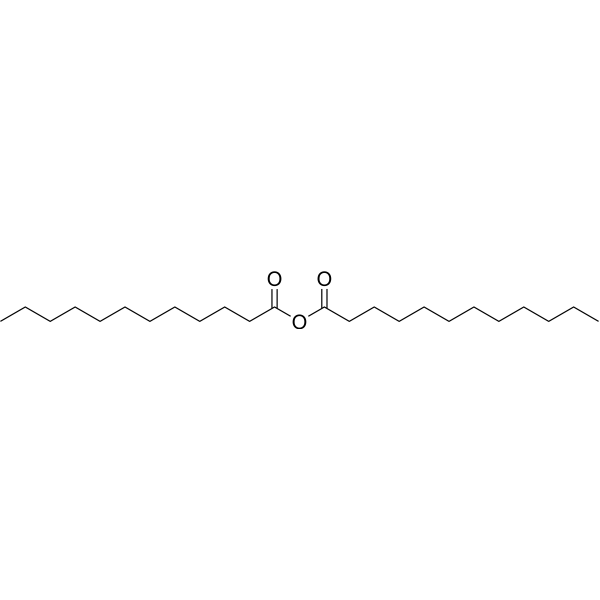
Lauric anhydride is a white waxy solid used as an intermediate in the production of various chemicals. It is primarily used in the synthesis of surfactants, emulsifiers, and lubricants, and as a raw material for other important industrial chemicals such as plasticizers and flavoring agents. It can be obtained from natural sources such as palm kernel oil and coconut oil, and its unique chemical structure allows it to be used to create compounds with specific surface and interfacial properties.
Cat. No.: HY-W133978
CAS No.: 8001-31-8
Synonyms: Coconut oil from cocos nucifera
Category:  

Arecaceae Extract Plants

Coconut oil is a natural oil extracted from coconuts and is widely used in food, cosmetics, and traditional medicine.
Cat. No.: HY-N2041S2
CAS No.: 57677-52-8
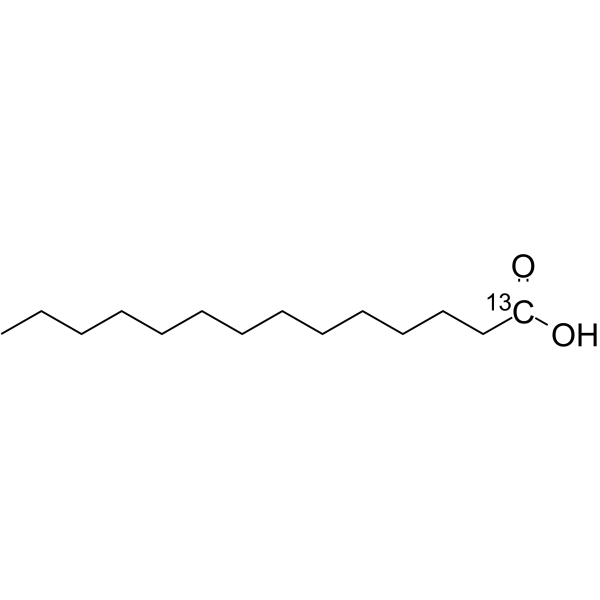
Myristic acid- 13C the 13C is labeled Myristic acid. Myristic acid is a saturated 14-carbon fatty acid occurring in most animal and vegetable fats, particularly butterfat and coconut, palm, and nutmeg oils.
Cat. No.: HY-N2041S4
CAS No.: 202114-49-6
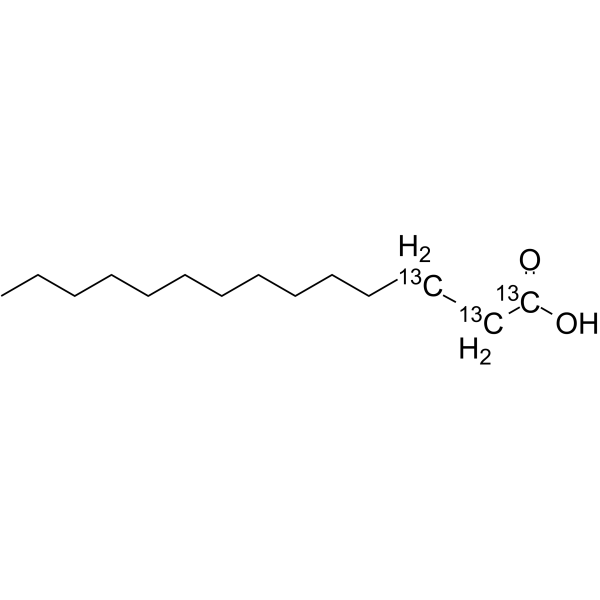
Myristic acid- 13C3 is the 13C labeled Myristic acid. Myristic acid is a saturated 14-carbon fatty acid occurring in most animal and vegetable fats, particularly butterfat and coconut, palm, and nutmeg oils.
Cat. No.: HY-N2041S6
CAS No.: 327077-03-2
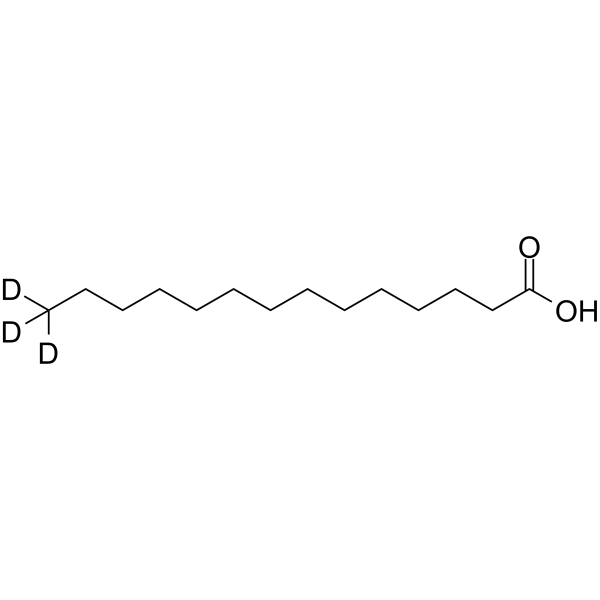
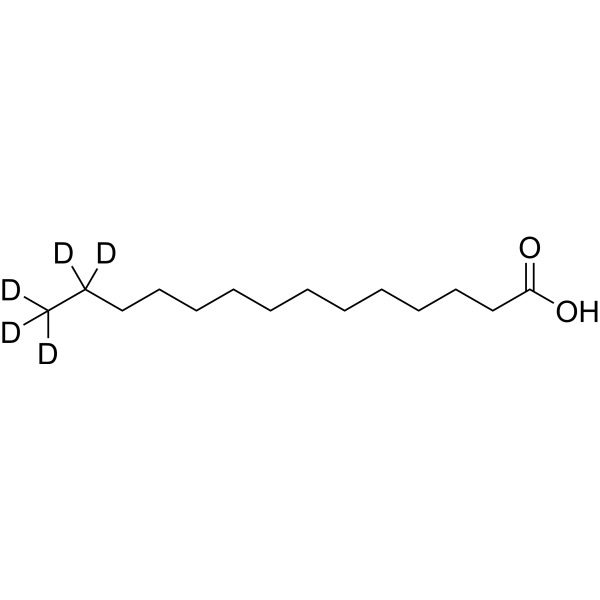
Myristic acid-d5 is the deuterium labeled Myristic acid. Myristic acid is a saturated 14-carbon fatty acid occurring in most animal and vegetable fats, particularly butterfat and coconut, palm, and nutmeg oils.
Cat. No.: HY-N2041S7
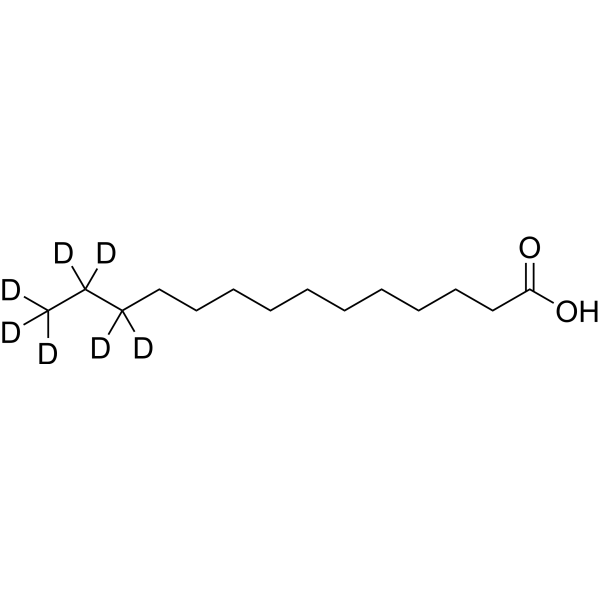
Myristic acid-d7 is the deuterium labeled Myristic acid. Myristic acid is a saturated 14-carbon fatty acid occurring in most animal and vegetable fats, particularly butterfat and coconut, palm, and nutmeg oils.
Cat. No.: HY-W017562
CAS No.: 104-50-7
γ-Octalactone is an aromatic lactone compound. γ-Octalactone has a strong fruity (similar to coconut) aroma and a sweet taste, and is commonly used in food, cosmetics and fragrances. γ-Octalactone is highly safe .
Cat. No.: HY-N2041S8
CAS No.: 287111-20-0
Myristic acid- 13C2 is the 13C-labeled Myristic acid (HY-N2041). Myristic acid is an orally active saturated 14-carbon fatty acid found in most animal and plant fats, especially milk fat coconut oil, palm oil and nutmeg oil. Myristic acid exerts anti-inflammatory activity through the NF-κB pathway. Myristic acid has antibacterial, anti-inflammatory and analgesic properties .
Cat. No.: HY-D0476
CAS No.: 10343-58-5
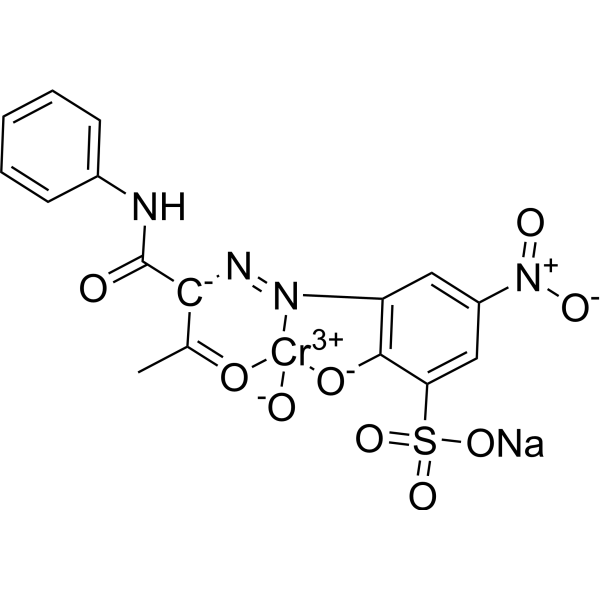
C.I. Acid yellow 99 is an acidic yellow dye that combines with coconut shell pith through electrostatic and complexing reactions.

