25 Results for "

CysLT1

" in MedChemExpress (MCE) Product Catalog:
Products (25)

25 Results for "CysLT1" in MCE Product Catalog:

14
14 Publications Verification
Cat. No.: HY-13315
CAS No.: 151767-02-1
Purity:  99.84%
Synonyms: MK0476
Target:  

Leukotriene Receptor

Research Areas:  

Inflammation/Immunology Cancer

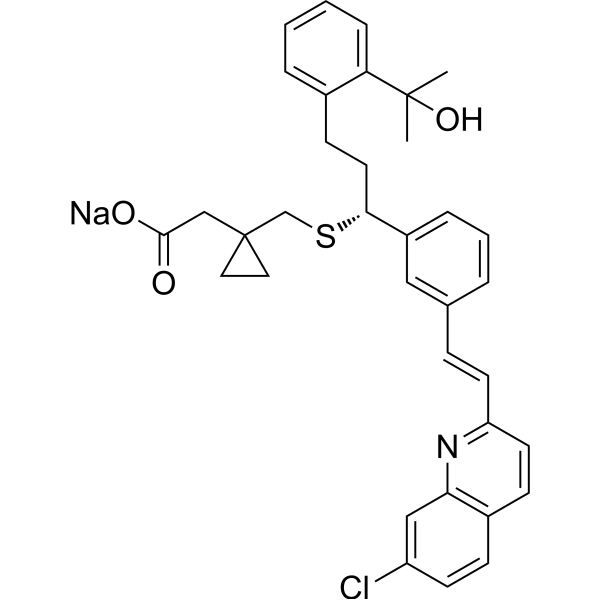
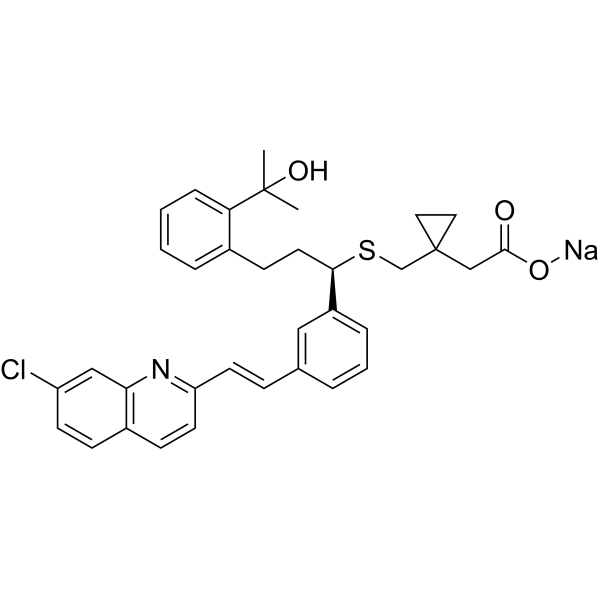
Montelukast sodium (MK0476) is a potent, selective and orally active antagonist of cysteinyl leukotriene receptor 1 (CysLT1). Montelukast sodium can be used for the reseach of asthma and liver injury. Montelukast sodium also has an antioxidant effect in intestinal ischemia-reperfusion injury, and could reduce cardiac damage. Montelukast sodium decreases eosinophil infiltration into the asthmatic airways. Montelukast sodium can also be used for COVID-19 research [1] .
14
14 Publications Verification
Cat. No.: HY-13315A
CAS No.: 158966-92-8
Purity:  99.94%
Synonyms: MK0476 free base
Target:  

Leukotriene Receptor

Research Areas:  

Inflammation/Immunology Cancer

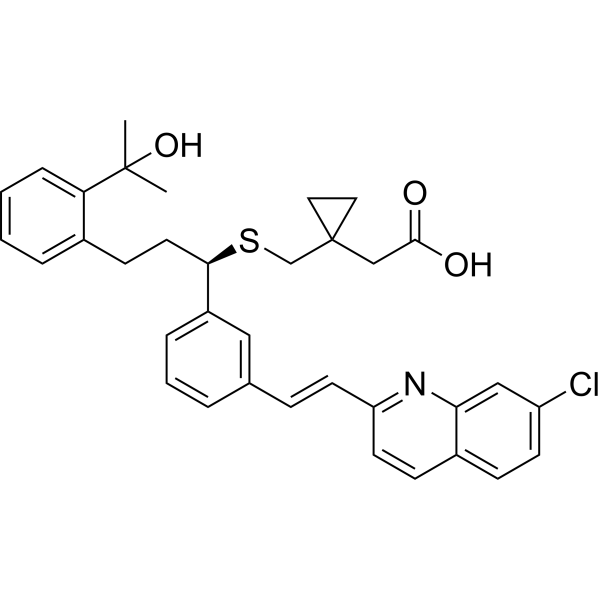
Montelukast (MK0476 free base) is a potent, selective and orally active antagonist of cysteinyl leukotriene receptor 1 (CysLT1). Montelukast can be used for the reseach of asthma and liver injury. Montelukast also has an antioxidant effect in intestinal ischemia-reperfusion injury, and could reduce cardiac damage. Montelukast decreases eosinophil infiltration into the asthmatic airways. Montelukast can also be used for COVID-19 research [1] .
1
1 Cited Publications
Cat. No.: HY-119442
CAS No.: 143816-42-6
Target:  

Leukotriene Receptor

Research Areas:  

Cardiovascular Disease

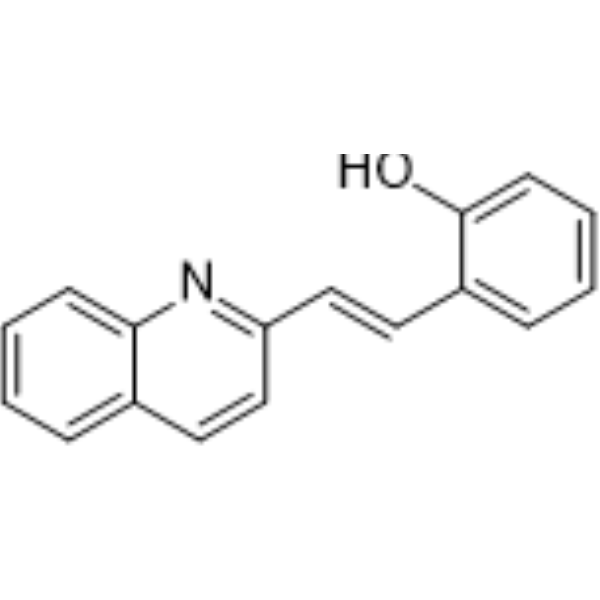
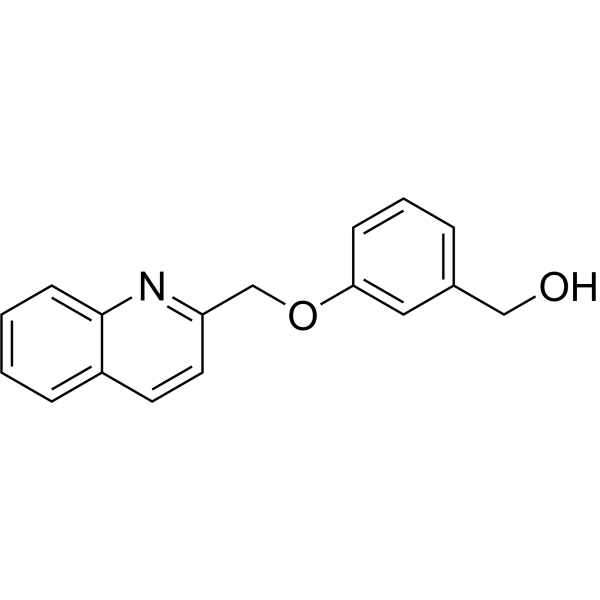
Quininib is a cysteinyl leukotriene 1 and 2 receptor antagonist with IC50s of 1.2 and 52 μM for CysLT1R and CysLT2R, respectively. Quininib is a potent inhibitor of developmental angiogenesis in the zebrafish eye. Quininib can be used for the research of ocular neovascular pathologies and may complement current anti-VEGF biological agents [1].
Cat. No.: HY-16780
CAS No.: 1232861-58-3
Synonyms: ONO-6950
Target:  

Leukotriene Receptor

Research Areas:  

Inflammation/Immunology

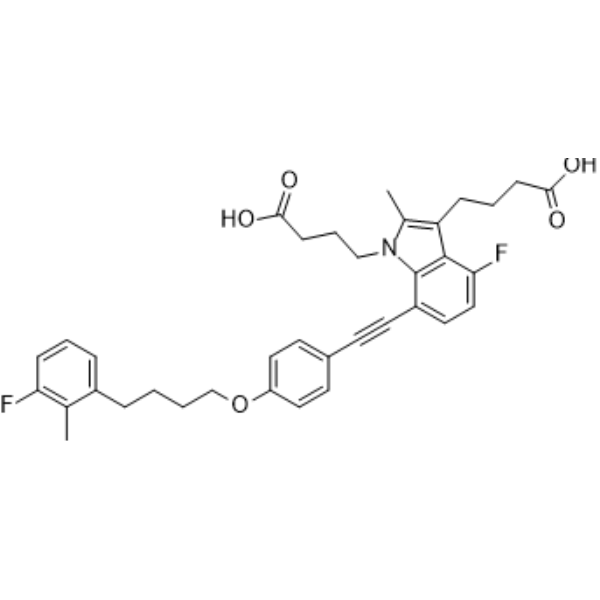
Gemilukast is an orally active and potent dual cysteinyl leukotriene 1 and 2 receptors (CysLT1 and CysLT2) antagonist, with IC50s of 1.7, 25 nM for human CysLT1 and CysLT2, respectively. Gemilukast is a click chemistry reagent, it contains an Alkyne group and can undergo copper-catalyzed azide-alkyne cycloaddition (CuAAc) with molecules containing Azide groups.
Cat. No.: HY-165155
CAS No.: 119515-00-3
Target:  

Leukotriene Receptor

Research Areas:  

Inflammation/Immunology

CysLT1 receptor antagonist-1 (Compound 4) is an antagonist for cysteinyl leukotriene receptor 1 (CysLT1R) with an IC50 of 3.9 μM. CysLT1 receptor antagonist-1 exhibits weak agonist activity against G-protein-coupled bile acid receptor 1 (GPBAR1) with an efficact of 23% at 10 μM. CysLT1 receptor antagonist-1 can be used for asthma and allergic diseases researchs [1].
Cat. No.: HY-13315B
CAS No.: 577953-88-9
Synonyms: MK0476 dicyclohexylamine
Target:  

Leukotriene Receptor

Research Areas:  

Inflammation/Immunology Cancer

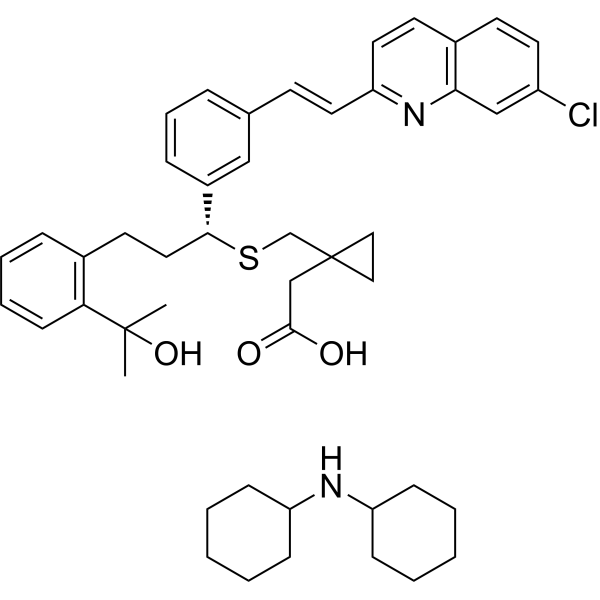
Montelukast (MK0476) dicyclohexylamine is a potent, selective and orally active antagonist of cysteinyl leukotriene receptor 1 (CysLT1). Montelukast dicyclohexylamine can be used for the reseach of asthma and liver injury. Montelukast dicyclohexylamine also has an antioxidant effect in intestinal ischemia-reperfusion injury, and could reduce cardiac damage. Montelukast dicyclohexylamine decreases eosinophil infiltration into the asthmatic airways. Montelukast dicyclohexylamine can also be used for COVID-19 research [1] .
Cat. No.: HY-134092
CAS No.: 131391-65-6
Synonyms: N-Methyl-LTC4
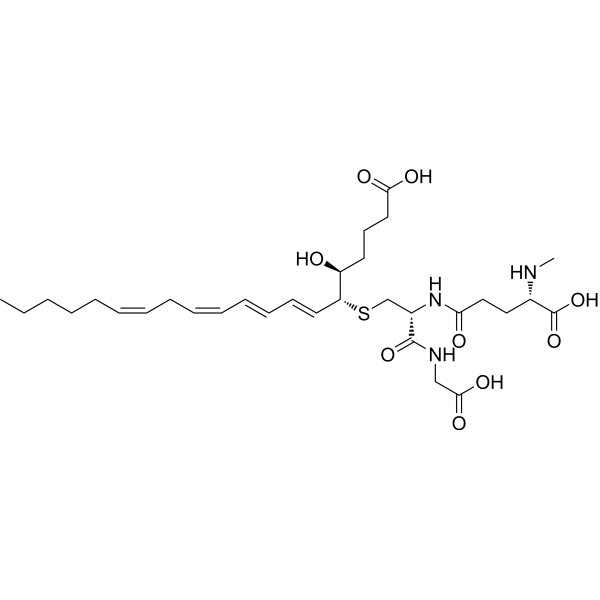
N-Methyl Leukotriene C4 (N-Methyl-LTC4) is a non-metabolizable LTC4 analog and a selective cysteinyl leukotriene receptor 2 (CysLT2) agonist, with an EC50 of 46.1 nM for mouse CysLT2 and an EC50 value of 122.3 nM for human CysLT2. N-Methyl Leukotriene C4 shows low potency against CysLT1. N-Methyl Leukotriene C4 activates human and mouse CysLT2 receptors, triggering calcium signaling, β-arrestin-2 binding to phosphorylated receptors, vascular leakage, hypotension, tachycardia, contraction of guinea pig ileum and trachea, mild bronchoconstriction, as well as hypertension associated with peripheral vasoconstriction. N-Methyl Leukotriene C4 can be used in research on asthma, rhinitis, sinusitis, cerebral inflammation and edema, pulmonary arterial hypertension, and cardiovascular diseases [1] .
Cat. No.: HY-13315AR
CAS No.: 158966-92-8
Synonyms: MK0476 free base (Standard)
Montelukast (Standard) is the analytical standard of Montelukast. This product is intended for research and analytical applications. Montelukast (MK0476 free base) is a potent, selective and orally active antagonist of cysteinyl leukotriene receptor 1 (CysLT1). Montelukast can be used for the reseach of asthma and liver injury. Montelukast also has an antioxidant effect in intestinal ischemia-reperfusion injury, and could reduce cardiac damage. Montelukast decreases eosinophil infiltration into the asthmatic airways. Montelukast can also be used for COVID-19 research [1] .
Cat. No.: HY-105358
CAS No.: 221332-74-7
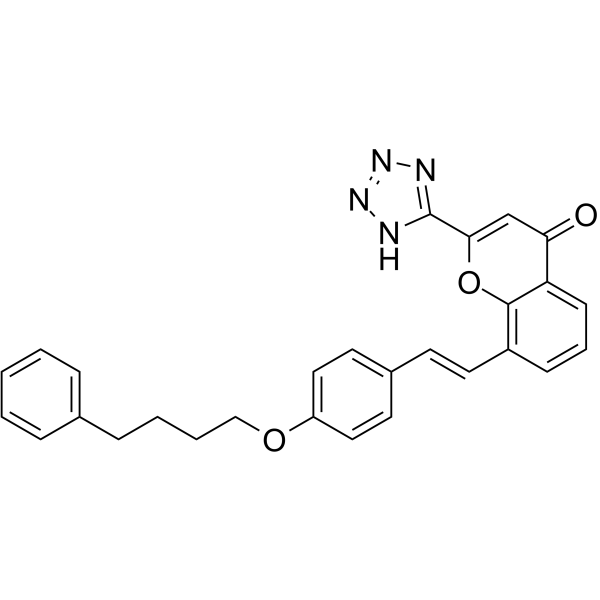
CP-288886 is a cysLT1 receptor antagonist with a Ki value of 0.004 μM. CP-288886 exhibits comparable activity to Zafirlukast (HY-17492) and Pranlukast (HY-B0290). CP-288886 inhibits calcium mobilization with an IC50 of 0.0005 μM in human U937 cells. CP-288886 has high oral bioavailability. CP-288886 possesses anti-asthmatic activity in a guinea pig asthma model and can be used for the research of diseases such as asthma [1].
Cat. No.: HY-176921
Target:  

Leukotriene Receptor

Research Areas:  

Inflammation/Immunology

ONO-2570366 (Compound 11a) is an antagonist of the cysteinyl leukotriene receptors CysLT1R and CysLT2R (IC50 = 14 nM). ONO-2570366 inhibits the binding of LTD4CysLTs) to CysLT1R/CysLT2R by stabilizing the inactive receptor conformation, thereby preventing the Gq signaling pathway mediated by receptor activation. ONO-2570366 can be used for the researches of inflammation and immunology, such as asthma [1].
Cat. No.: HY-147086
CAS No.: 123226-28-8
Purity:  99.84%
CAY10789 is a potent CysLT1R (cysteinyl leukotriene receptor 1) antagonist (IC50=2.80 μM) and GPBAR1 (G-protein-coupled bile acid receptor 1) agonist (EC50=3 μM). CAY10789 significantly reduces the adhesion of U937 cells to HAEC, reduces the expression of TNF-α. CAY10789 shows very promising metabolic stability and excellent pharmacokinetics. CAY10789 can be used for the research of colitis, metabolic syndromes, and other GPBAR1/CysLT1R-related diseases [1].
Cat. No.: HY-176920
CAS No.: 920707-33-1
Target:  

Leukotriene Receptor

Research Areas:  

Inflammation/Immunology

BRI-12349 (Compound 50) is a dual antagonist of CysLT1R/CysLT2R with Ki values of 1.03 and 6.46 μM. BRI-12349 can inhibit the generation of IP1 induced by LTD4 (the main ligand of CysLTs). BRI-12349 can be used for the research of immunology and inflammation, such as asthma [1].
Cat. No.: HY-106785
CAS No.: 107023-41-6
Synonyms: SKF-104353; SK&F-104353
Target:  

Leukotriene Receptor

Research Areas:  

Inflammation/Immunology

Pobilukast is a classical CysLT1 receptor antagonist. Pobilukast can be used for the research of asthma [1].
Cat. No.: HY-101686
CAS No.: 197506-02-8
Target:  

Leukotriene Receptor

Research Areas:  

Inflammation/Immunology

LM-1484 is an antagonist of CysLT1 receptor and displays a higher affinity for 3H-LTC4 sites.
Cat. No.: HY-135288
CAS No.: 114370-57-9
Target:  

Leukotriene Receptor

Research Areas:  

Inflammation/Immunology

L-649923 is an orally active CysLT1 antagonist. L-649923 reduced the incidence of gastritis in an animal model of acute gastric mucosal injury. L-649923 can be used in research on diseases such as asthma and gastritis [1] .
Cat. No.: HY-127113
CAS No.: 1541762-55-3
Target:  

Leukotriene Receptor

Research Areas:  

Cardiovascular Disease

Q8, an effective antiangiogenic drug, is a CysLt1 antagonist (IC50 of 4.9 μM). Q8 is sufficient to reduce cellular levels of NF-κB and calpain-2 and secreted levels of the proangiogenic proteins intercellular adhesion molecule-1, vascular cell adhesion protein-1, and VEGF [1].
Cat. No.: HY-13315R
CAS No.: 151767-02-1
Synonyms: MK0476 (Standard)
Montelukast (sodium) (Standard) is the analytical standard of Montelukast (sodium). This product is intended for research and analytical applications. Montelukast sodium (MK0476) is a potent, selective and orally active antagonist of cysteinyl leukotriene receptor 1 (CysLT1). Montelukast sodium can be used for the reseach of asthma and liver injury. Montelukast sodium also has an antioxidant effect in intestinal ischemia-reperfusion injury, and could reduce cardiac damage. Montelukast sodium decreases eosinophil infiltration into the asthmatic airways. Montelukast sodium can also be used for COVID-19 research [1] .
Cat. No.: HY-13315BR
CAS No.: 577953-88-9
Synonyms: MK0476 dicyclohexylamine (Standard)
Montelukast (dicyclohexylamine) (Standard) is the analytical standard of Montelukast (dicyclohexylamine). This product is intended for research and analytical applications. Montelukast (MK0476) dicyclohexylamine is a potent, selective and orally active antagonist of cysteinyl leukotriene receptor 1 (CysLT1). Montelukast dicyclohexylamine can be used for the reseach of asthma and liver injury. Montelukast dicyclohexylamine also has an antioxidant effect in intestinal ischemia-reperfusion injury, and could reduce cardiac damage. Montelukast dicyclohexylamine decreases eosinophil infiltration into the asthmatic airways. Montelukast dicyclohexylamine can also be used for COVID-19 research [1] .
Cat. No.: HY-123816
CAS No.: 847655-65-6
Target:  

Leukotriene Receptor

Research Areas:  

Inflammation/Immunology

ONO 2050297 (Compound 19) is a selective Cysteinyl leukotriene (CysLT) antagonist with IC50s of 17  and 0.87 nM for CysLT1 and CysLT2, respectively. ONO 2050297 can be used for bronchial asthma research [1].
Cat. No.: HY-RS03496
Research Areas:  

Others

Cysltr1 Rat Pre-designed siRNA Set A contains three designed siRNAs for Cysltr1 gene (Rat), as well as a negative control, a positive control, and a FAM-labeled negative control.

