5 Results for "

ERG responses

" in MedChemExpress (MCE) Product Catalog:
Products (5)

5 Results for "ERG responses" in MCE Product Catalog:

2
2 Cited Publications
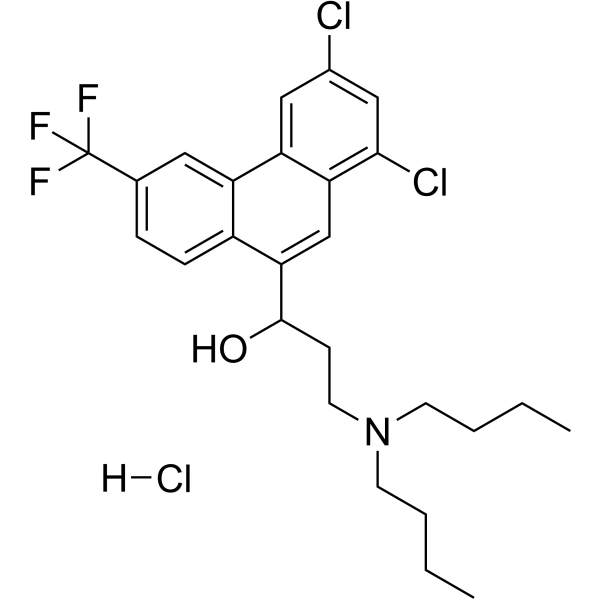
Cat. No.: HY-A0148A
CAS No.: 36167-63-2
Synonyms: SKF-102886; WR-171669 hydrochloride
Halofantrine hydrochloride (SKF-102886 hydrochloride; WR-171669 hydrochloride) is a blocker that delays the delayed rectifier potassium current by inhibiting human ERG channels, and it is a potent antimalarial agent with oral activity. Halofantrine hydrochloride inhibits the Cap1-dependent oxidative stress response of Candida albicans, suppresses ROS responses, and enhances the antifungal (Fungal) activity of oxidative damage agents. Halofantrine hydrochloride exhibits antifungal activity in the Galleria mellonella model, and shows antimalarial activity against Plasmodium strains both in vitro and in animal models. Halofantrine hydrochloride can be used in studies related to invasive candidiasis, falciparum malaria, and vivax malaria .
loading...
    loading...
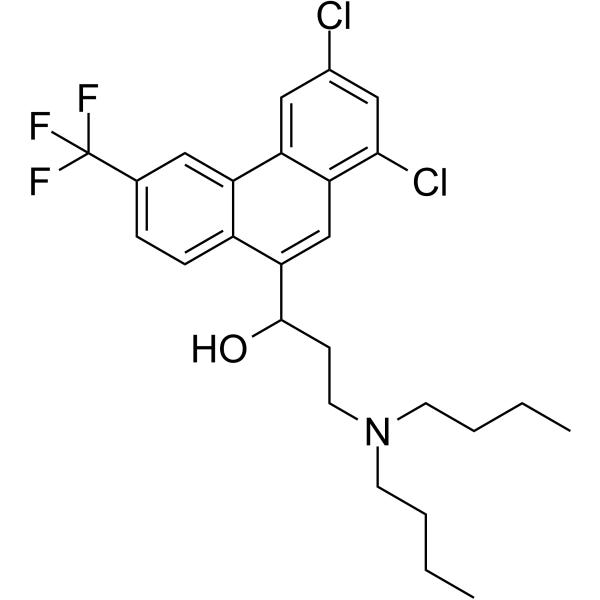
Cat. No.: HY-A0148
CAS No.: 69756-53-2
Synonyms: SKF-102886 free base; WR-171669
Halofantrine (SKF-102886 hydrochloride; WR-171669 hydrochloride) is a blocker that delays the delayed rectifier potassium current by inhibiting human ERG channels, and it is a potent antimalarial agent with oral activity. Halofantrine inhibits the Cap1-dependent oxidative stress response of Candida albicans, suppresses ROS responses, and enhances the antifungal (Fungal) activity of oxidative damage agents. Halofantrine exhibits antifungal activity in the Galleria mellonella model, and shows antimalarial activity against Plasmodium strains both in vitro and in animal models. Halofantrine can be used in studies related to invasive candidiasis, falciparum malaria, and vivax malaria .
loading...
    loading...
Cat. No.: HY-P991886

Target:  

Complement System

Research Areas:  

Neurological Disease

ANX-M1 is a blood-brain barrier-permeable anti-C1q antibody. ANX-M1 can slow down the progression of retinal degeneration following photo-oxidative damage. ANX-M1 has been incorporated into nanocarriers to evaluate its brain delivery efficacy in a mouse model of Alzheimer's disease. ANX-M1 is applicable for research on age-related macular degeneration and Alzheimer's disease [1] .
loading...
    loading...
Cat. No.: HY-A0148AR
CAS No.: 36167-63-2
Synonyms: SKF-102886 (Standard); WR-171669 hydrochloride (Standard)
Halofantrine hydrochloride (Standard) is the analytical standard of Halofantrine hydrochloride. This product is intended for research and analytical applications. Halofantrine hydrochloride (SKF-102886 hydrochloride; WR-171669 hydrochloride) is a blocker that delays the delayed rectifier potassium current by inhibiting human ERG channels, and it is a potent antimalarial agent. Halofantrine hydrochloride inhibits the Cap1-dependent oxidative stress response of Candida albicans, suppresses ROS responses, and enhances the antifungal (Fungal) activity of oxidative damage agents. Halofantrine hydrochloride exhibits antifungal activity in the Galleria mellonella model, and shows antimalarial activity against Plasmodium strains both in vitro and in animal models. Halofantrine hydrochloride can be used in studies related to invasive candidiasis, falciparum malaria, and vivax malaria.
loading...
    loading...
Cat. No.: HY-124057
CAS No.: 1137233-79-4
Target:  

nAChR

Research Areas:  

Neurological Disease

RO5126946 is a selective, orally active α7 nAChR allosteric potentiator with EC50 values of 0.06 μM (hα7 nAChR) and 770 nM (α7 nAChR), and it crosses the blood-brain barrier. RO5126946 enhances synaptic transmission and positively modulates GABA-ergic responses by increasing peak current, slowing current decay, and elevating the frequency of spontaneous inhibitory postsynaptic currents, without affecting the recovery of receptors from the desensitized state. RO5126946 not only enhances subthreshold nicotine effects and improves associative learning, but also does not interfere with the original pro-cognitive effects of nicotine. RO5126946 can be used to study cognitive impairments associated with diseases such as Alzheimer's disease and schizophrenia .
loading...
    loading...

