17 Results for "

FAK-IN-2

" in MedChemExpress (MCE) Product Catalog:
Products (17)

17 Results for "FAK-IN-2" in MCE Product Catalog:

1
1 Cited Publications
Cat. No.: HY-144448
CAS No.: 2872588-02-6
Purity:  98.27%
Target:  

FAK Apoptosis

Research Areas:  

Cancer

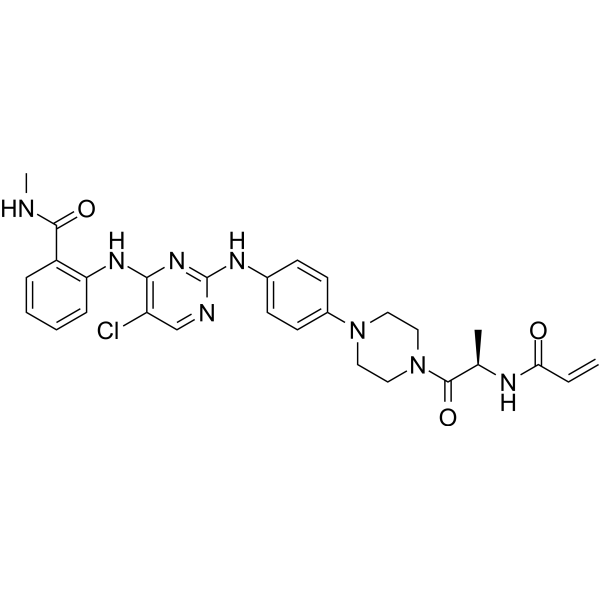
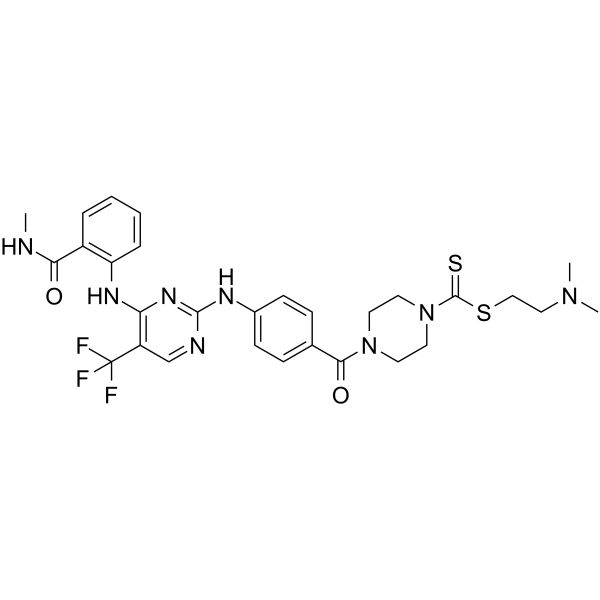
FAK-IN-2 is a potent and orally active focal adhesion kinase (FAK) inhibitor, with anticancer activity (FAK IC50= 35 nM). FAK-IN-2 covalently inhibits the autophosphorylation of FAK in a dose-dependent manner, and inhibits the clone formation and migration of tumor cells, inducing apoptosis .
loading...
    loading...
32
32 Publications Verification
Cat. No.: HY-10459
CAS No.: 717907-75-0
Purity:  99.68%
Synonyms: VS-6062
Target:  

FAK Pyk2

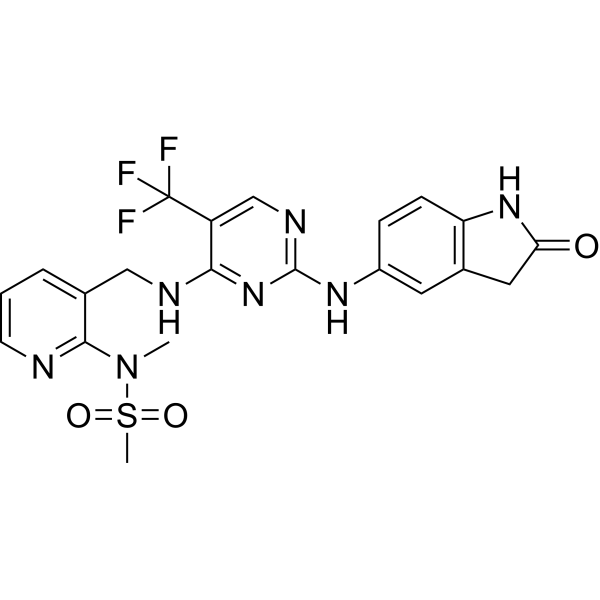
PF-562271 (VS-6062) is an orally active, ATP-competitive, reversible FAK/Pyk2 inhibitor, with an IC50 of 1.5 nM for FAK and 13 nM for Pyk2. PF-562271 induces tumor regression, and inhibits tumor growth, invasion and metastasis. PF-562271 exerts no effect on tumor necrosis, angiogenesis or apoptosis in an orthotopic mouse model of pancreatic ductal adenocarcinoma. When combined with Sunitinib (HY-10255A), PF-562271 reduces tumor vascularization, decreases serum alpha-fetoprotein levels and improves cachexia. PF-562271 can be used in research related to prostate cancer, breast cancer, pancreatic cancer, colon cancer, glioblastoma, lung cancer, pancreatic ductal adenocarcinoma and hepatocellular carcinoma [2] .
loading...
    loading...
32
32 Publications Verification
Cat. No.: HY-10458
CAS No.: 939791-38-5
Purity:  99.17%
Synonyms: VS-6062 (besylate)
Target:  

FAK Pyk2

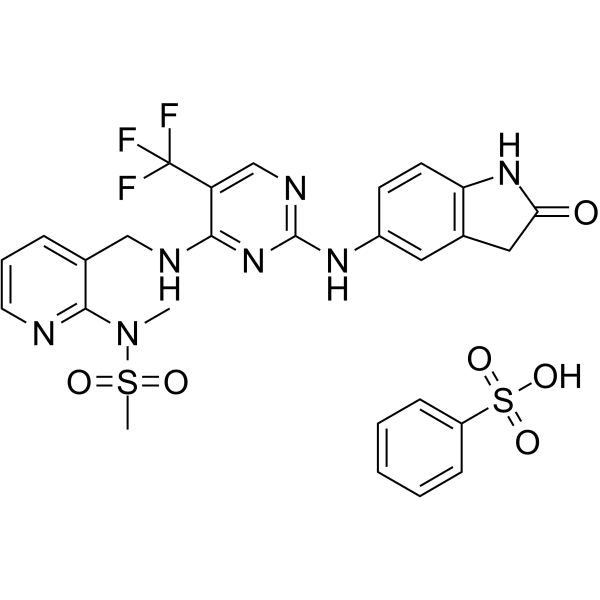
PF-562271 besylate (VS-6062 besylate) is an orally active, ATP-competitive, reversible FAK/Pyk2 inhibitor, with an IC50 of 1.5 nM for FAK and 13 nM for Pyk2. PF-562271 besylate induces tumor regression, and inhibits tumor growth, invasion and metastasis. PF-562271 besylate exerts no effect on tumor necrosis, angiogenesis or apoptosis in an orthotopic mouse model of pancreatic ductal adenocarcinoma. When combined with Sunitinib (HY-10255A), PF-562271 besylate reduces tumor vascularization, decreases serum alpha-fetoprotein levels and improves cachexia. PF-562271 besylate can be used in research related to prostate cancer, breast cancer, pancreatic cancer, colon cancer, glioblastoma, lung cancer, pancreatic ductal adenocarcinoma and hepatocellular carcinoma [2] .
loading...
    loading...
30
30 Cited Publications
Cat. No.: HY-20403
CAS No.: 939791-41-0
Synonyms: VS-6062hydrochloride
Target:  

FAK Pyk2

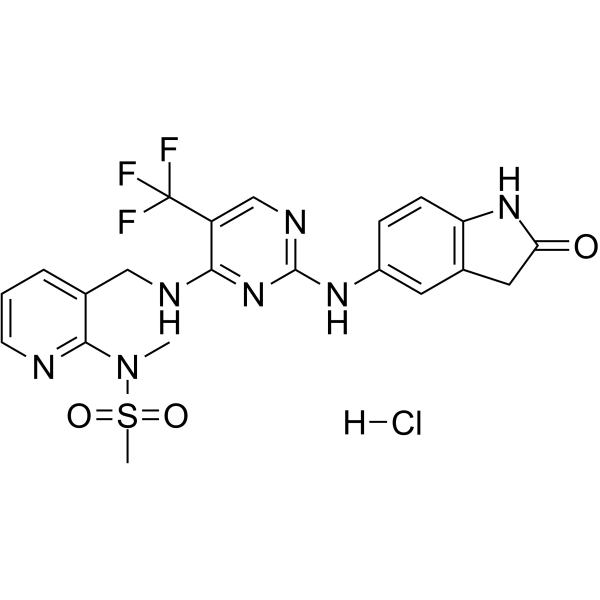
PF-562271 hydrochloride (VS-6062 hydrochloride) is an orally active, ATP-competitive, reversible FAK/Pyk2 inhibitor, with an IC50 of 1.5 nM for FAK and 13 nM for Pyk2. PF-562271 hydrochloride induces tumor regression, and inhibits tumor growth, invasion and metastasis. PF-562271 hydrochloride exerts no effect on tumor necrosis, angiogenesis or apoptosis in an orthotopic mouse model of pancreatic ductal adenocarcinoma. When combined with Sunitinib (HY-10255A), PF-562271 hydrochloride reduces tumor vascularization, decreases serum alpha-fetoprotein levels and improves cachexia. PF-562271 hydrochloride can be used in research related to prostate cancer, breast cancer, pancreatic cancer, colon cancer, glioblastoma, lung cancer, pancreatic ductal adenocarcinoma and hepatocellular carcinoma [2] .
loading...
    loading...
2
2 Cited Publications
Cat. No.: HY-128580
CAS No.: 2354405-14-2
Purity:  98.26%
Target:  

FAK

Research Areas:  

Cancer

FAK inhibitor 2 is a potent focal adhesion kinase (FAK) inhibitor with an IC50  of 0.07 nM, with antitumor and anti-angiogenesis activities .
loading...
    loading...
Cat. No.: HY-147219A
Purity:  99.84%
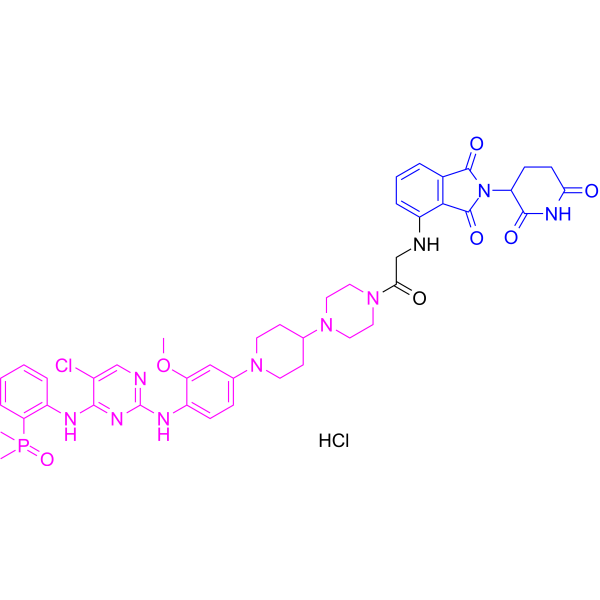
SIAIS164018 hydrochloride is a multi-kinase (ALK, EGFR, FAK, PYK2, PTK6) PROTAC degrader, with IC50 values of 2.5 nM and 6.6 nM against ALK and ALK (G1202R), respectively. SIAIS164018 hydrochloride promotes the ubiquitination and degradation of ALK, EGFR, FAK, PYK2 and PTK6. SIAIS164018 hydrochloride induces cell cycle arrest at the G1 phase and triggers cell Apoptosis. SIAIS164018 hydrochloride exhibits preferential inhibitory activity against FER kinase. SIAIS164018 hydrochloride can be used in research related to non-small cell lung cancer, ovarian cancer and triple-negative breast cancer [2] .
loading...
    loading...
Cat. No.: HY-163709
Target:  

PROTACs FAK Akt ERK

Research Areas:  

Cancer

PROTAC FAK degrader 2 is an orally active PROTAC FAK degrader with a DC50 of 60.10 nM. PROTAC FAK degrader 2 forms a ternary complex with FAK and CRBN E3 ubiquitin ligase, driving proteasome-mediated degradation of total and phosphorylated FAK. PROTAC FAK degrader 2 inhibits phosphorylation of AKT and ERK, suppressing their downstream signaling pathways. PROTAC FAK degrader 2 reduces cancer cell viability, adhesion, migration, and invasion. PROTAC FAK degrader 2 exerts anti-tumor activity in HCT8/T tumor xenografts in mice. PROTAC FAK degrader 2 can be used for the research of breast cancer, colorectal cancer, lung cancer .
loading...
    loading...
Cat. No.: HY-147219
CAS No.: 2353492-68-7
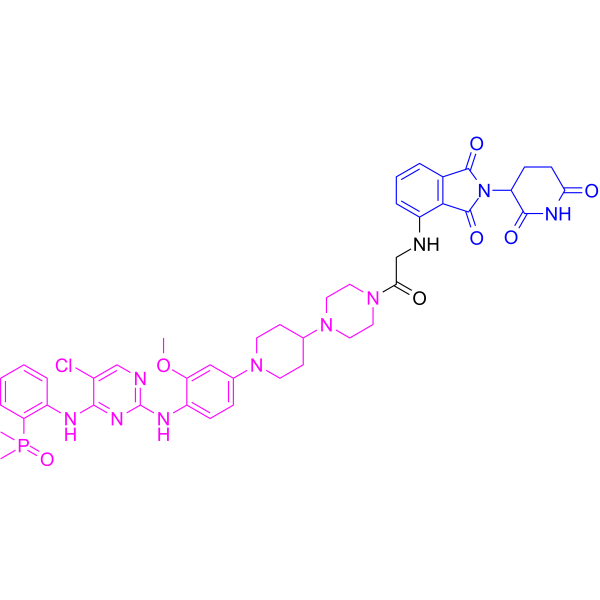
SIAIS164018 is a multi-kinase (ALK, EGFR, FAK, PYK2, PTK6) PROTAC degrader, with IC50 values of 2.5 nM and 6.6 nM against ALK and ALK (G1202R), respectively. SIAIS164018 promotes the ubiquitination and degradation of ALK, EGFR, FAK, PYK2 and PTK6. SIAIS164018 induces cell cycle arrest at the G1 phase and triggers cell Apoptosis. SIAIS164018 exhibits preferential inhibitory activity against FER kinase. SIAIS164018 can be used in research related to non-small cell lung cancer, ovarian cancer and triple-negative breast cancer [2] .
loading...
    loading...
Cat. No.: HY-W008907
CAS No.: 7791-71-1
Synonyms: 5-OTT
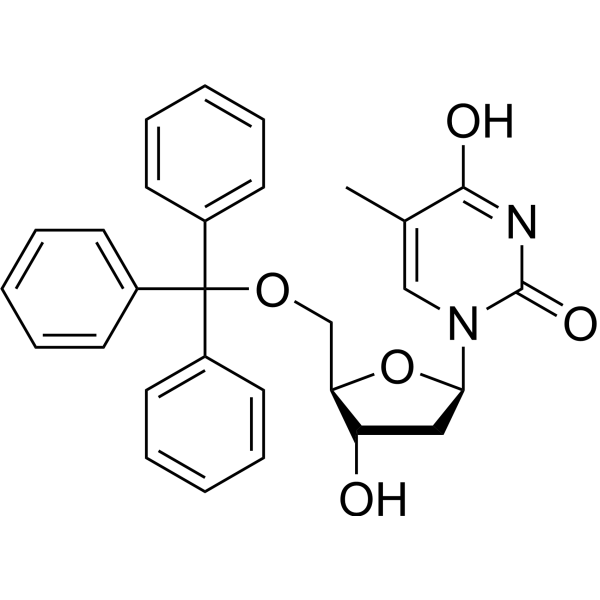
5'-O-Tritylthymidine is an inhibitor of TK-2 and inhibits angiogenesis . 5'-O-Tritylthymidine targets FAK-Mdm-2 interactions, decreasing cell viability and increasing apoptosis.
loading...
    loading...
Cat. No.: HY-183120
CAS No.: 2143104-11-2
Target:  

FAK EGFR Apoptosis

Research Areas:  

Cancer

EGFR T790M/FAK-IN-2 is an orally active dual FAK and EGFR T790M kinase inhibitor, with an IC50 of 1.03 nM against FAK and an IC50 of 3.89 nM against EGFR T790M. EGFR T790M/FAK-IN-2 exerts antiproliferative effects in drug-resistant cancer cells overexpressing FAK, inducing apoptosis and cell cycle arrest. EGFR T790M/FAK-IN-2 exhibits antitumor activity in a pancreatic cancer xenograft mouse model. EGFR T790M/FAK-IN-2 can be used for the research of pancreatic cancer, breast cancer and non-small cell lung cancer .
loading...
    loading...
Cat. No.: HY-151010
CAS No.: 2414478-49-0
Research Areas:  

Cancer

FAK ligand-2 is a FAK ligand and a ligand for the target protein of PROTAC (FAK). FAK ligand-2 can be used to synthesize BSJ-04-146 (HY-179512) .
loading...
    loading...
Cat. No.: HY-179515
CAS No.: 2414478-60-5
Research Areas:  

Cancer

FAK ligand-2-C6-amine is a target protein ligand linker conjugate that contains a FAK ligand (HY-151010) and a PROTAC linker (HY-W011561), which can recruit E3 ligases. FAK ligand-2-C6-amine can be used for synthesis of BSJ-04-146 (HY-179512) .
loading...
    loading...
Cat. No.: HY-184307
Target:  

FAK CDK DNA/RNA Synthesis

Research Areas:  

Cancer

FAK1/2 Ligand-1 is a FAK1/FAK2 ligand with KD values of 2.9 μM and 2.5 μM for binding to FAK1 and FAK2, respectively. FAK1/2 Ligand-1 induces G2/M phase arrest, activates DNA damage-related signaling pathways, and reduces the phosphorylation level of CDK1. Antitumor agent-220 is applicable to the research of triple-negative breast cancer .
loading...
    loading...
Cat. No.: HY-15322A
CAS No.: 1194954-52-3
Synonyms: (rel)-P505-15; (rel)-PRT-2607; (rel)-BIIB-057
Target:  

Syk Drug Isomer

Research Areas:  

Inflammation/Immunology

(rel)-PRT062607 ((rel)-P505-15) is the relative configuration of PRT062607 (HY-15322). PRT062607 is a highly selective inhibitor of Syk kinase, with an IC50 value of 1-2 nM, and is more than 80 times less potent against Fgr, Lyn, FAK, Pyk2, and Zap70.
loading...
    loading...
Cat. No.: HY-10459A
CAS No.: 939791-39-6
Synonyms: VS-6062 mesylate
Target:  

FAK Pyk2

Research Areas:  

Neurological Disease Cancer

PF-562271 mesylate (VS-6062 mesylate) is an orally active, ATP-competitive, reversible FAK/Pyk2 inhibitor, with an IC50 of 1.5 nM for FAK and 13 nM for Pyk2. PF-562271 mesylate induces tumor regression, and inhibits tumor growth, invasion and metastasis. PF-562271 mesylate exerts no effect on tumor necrosis, angiogenesis or apoptosis in an orthotopic mouse model of pancreatic ductal adenocarcinoma. When combined with Sunitinib (HY-10255A), PF-562271 mesylate reduces tumor vascularization, decreases serum alpha-fetoprotein levels and improves cachexia. PF-562271 mesylate can be used in research related to prostate cancer, breast cancer, pancreatic cancer, colon cancer, glioblastoma, lung cancer, pancreatic ductal adenocarcinoma and hepatocellular carcinoma [2] .
loading...
    loading...
Cat. No.: HY-10459R
CAS No.: 717907-75-0
Synonyms: VS-6062 (Standard)
PF-562271 (Standard) (VS-6062 (Standard)) is the analytical standard of PF-562271 (HY-10459). This product is intended for research and analytical applications. PF-562271 (VS-6062) is an orally active, ATP-competitive, reversible FAK/Pyk2 inhibitor, with an IC50 of 1.5 nM for FAK and 13 nM for Pyk2. PF-562271 induces tumor regression, and inhibits tumor growth, invasion and metastasis. PF-562271 exerts no effect on tumor necrosis, angiogenesis or apoptosis in an orthotopic mouse model of pancreatic ductal adenocarcinoma. When combined with Sunitinib (HY-10255A), PF-562271 reduces tumor vascularization, decreases serum alpha-fetoprotein levels and improves cachexia. PF-562271 can be used in research related to prostate cancer, breast cancer, pancreatic cancer, colon cancer, glioblastoma, lung cancer, pancreatic ductal adenocarcinoma and hepatocellular carcinoma [2] .
loading...
    loading...
Cat. No.: HY-N19029
CAS No.: 21871-10-3
Vernodalin is an orally active, cytotoxic sesquiterpene lactone with a Kd value of 9.55 μM for p38 MAPK. Vernodalin downregulates the expression of phosphorylated ERK, JNK, AKT, PI3K, mTOR, p38MAPK, FAK, MMP-2, MMP-9, and uPA, while upregulates the expression of TIMP-1 and TIMP-2. Vernodalin increases ROS production, upregulates the expression of Bax and caspase 3, downregulates the expression of Bcl-2, and induces apoptosis (apoptosis), oxidative stress response and cell cycle arrest. Vernodalin inhibits the proliferation, adhesion and metastasis of cancer cells. Vernodalin enhances the activity of VEGF-B, AMPK and eNOS signaling pathways. Vernodalin alleviates myocardial injury and restores hemodynamic parameters. Vernodalin inhibits the growth of Trypanosoma brucei rhodesiense. Vernodalin can be used in research related to various cancers including gastric cancer, colorectal cancer and lung cancer, as well as African human trypanosomiasis and myocardial infarction [2] .
loading...
    loading...
  • 1

