1. Search Result
Search Result
Results for "

FPPS

" in MedChemExpress (MCE) Product Catalog:

30

Inhibitors & Agonists

4

Peptides

3

Natural
Products

2

Antibodies

1

Oligonucleotides

Cat. No. Product Name Target Research Areas Chemical Structure
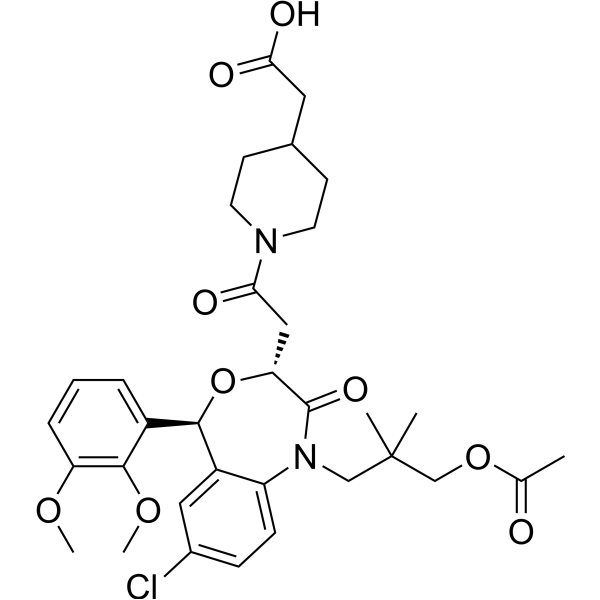
  • HY-16274
    Lapaquistat acetate
    1 Publications Verification

    TAK-475

    Farnesyl Transferase Metabolic Disease
    Lapaquistat acetate (TAK-475) is a squalene synthase inhibitor, blocking the conversion of farnesyl diphosphate (FPP) to squalene in the cholesterol biosynthesis pathway . Lapaquistat acetate is effective at lowering low-density lipoprotein cholesterol, but it might cause liver damage. Lapaquistat acetate is used for hypercholesterolemia and mevalonate kinase deficiency (MKD) research .
    Lapaquistat acetate
  • HY-150168

    Bacterial Infection
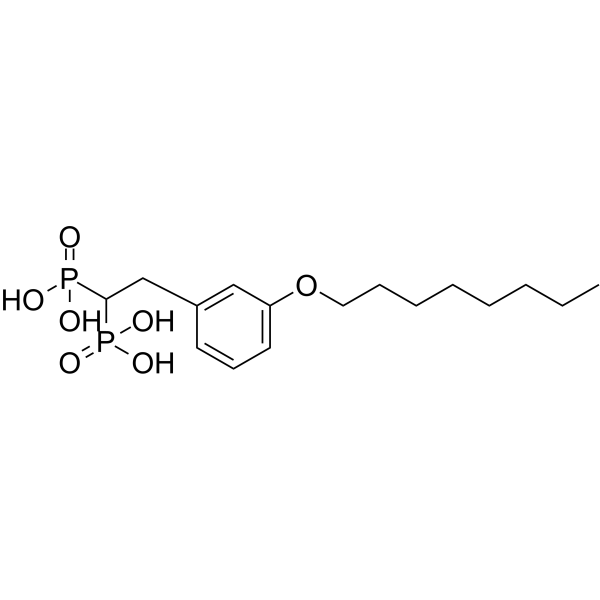
    TH-Z145, a lipophilic bisphosphonate, is a FPPS inhibitor (IC50: 210 nM) .
    TH-Z145
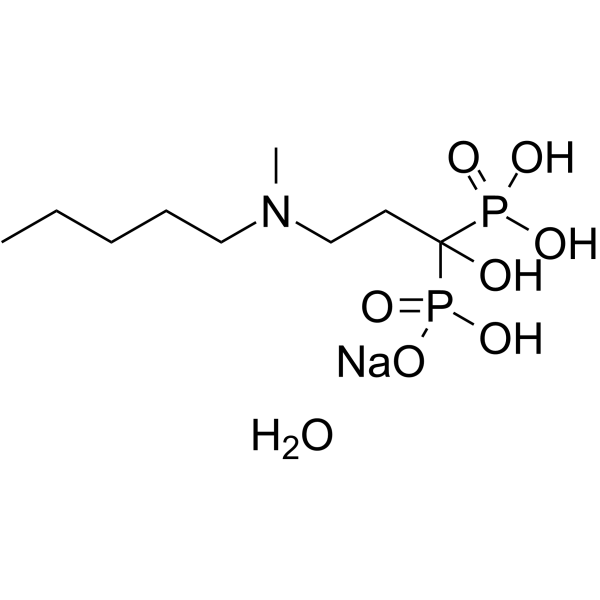
  • HY-B0515
    Ibandronate Sodium Monohydrate
    1 Publications Verification

    BM-210955; RPR-102289A

    Apoptosis Metabolic Disease Cancer
    Ibandronate Sodium Monohydrate (BM-210955; RPR-102289A) is an orally active, selective inhibitor of farnesyl pyrophosphate synthase (FPP synthase). Ibandronate Sodium Monohydrate can block the mevalonate pathway to inhibit the isoprenylation modification of small GTPases (such as RAS, RHO family proteins), induce tumor cell apoptosis and inhibit bone resorption. Ibandronate Sodium Monohydrate inhibits tumor cell proliferation (such as ER + breast cancer cells), promotes the expression of the pro-apoptotic gene FAS, and can produce synergistic anti-tumor effects with anti-estrogen compounds. Ibandronate Sodium Monohydrate is used in the study of osteoporosis and bone metastatic tumors (such as breast cancer bone metastasis) .
    Ibandronate Sodium Monohydrate
  • HY-N7844

    Benzyladenosine

    Apoptosis Adenosine Receptor Inflammation/Immunology Cancer
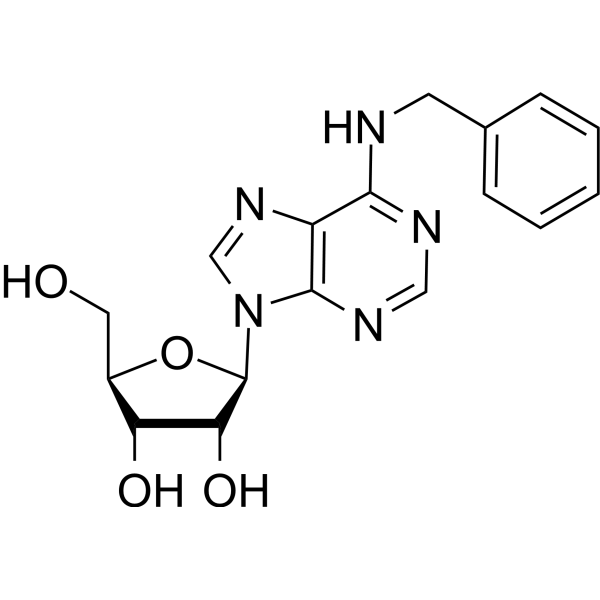
    N6-Benzyladenosine is an adenosine receptor agonist, has a cytoactive activity. N6-Benzyladenosine arrests cell cycle at G0/G1 phase and induces cell apoptosis. N6-Benzyladenosine also exerts inhibitory effect on T. gondii adenosine kinase and glioma - .
    N6-Benzyladenosine
  • HY-P11228

    PROTACs Apoptosis DNA/RNA Synthesis Cancer
    FPP29 is a potent peptide-based FOXM1 PROTAC degrader. FPP29 induces ubiquitination and degradation of FOXM1. FPP29 inhibits FOXM1 via the ubiquitin-proteasome degradation pathway. FPP29 induces Apoptosis. FPP29 suppresses tumor growth in hepatocellular carcinoma xenograft models. FPP29 can be used in the research of hepatocellular carcinoma (cell-penetrating peptide: (HY-P0133); VHL ligase ligand: (HY-P11493); linker: (HY-W013664); FOXM1 ligand: (HY-P11494)) .
    FPP29
  • HY-118946

    NSC50460

    Bacterial Infection Cancer
    BPH-1358 (NSC50460) is a potent human farnesyl diphosphate synthase (FPPS) and undecaprenyl diphosphate synthase (UPPS) inhibitor with IC50s of 1.8 μM and 110 nM, respectively, and is active against S. aureus in vitro (MIC ~250 ng/mL) .
    BPH-1358
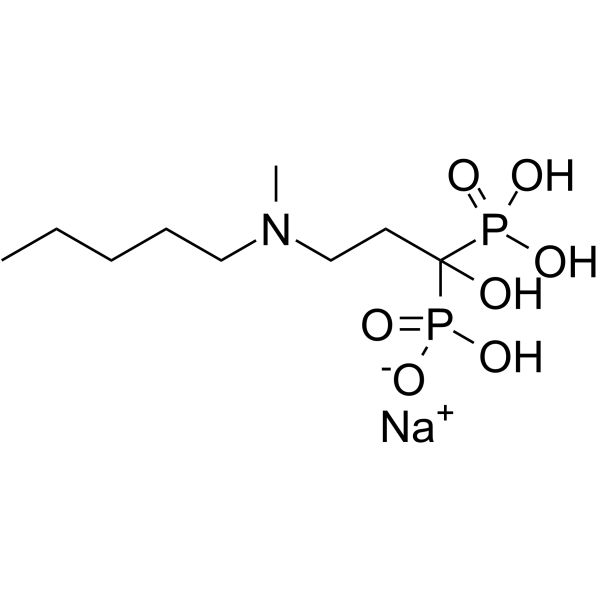
  • HY-B0515B
    Ibandronate Sodium
    1 Publications Verification

    Apoptosis Metabolic Disease Cancer
    Ibandronate Sodium is an orally active, selective inhibitor of farnesyl pyrophosphate synthase (FPP synthase). Ibandronate Sodium can block the mevalonate pathway to inhibit the isoprenylation modification of small GTPases (such as RAS, RHO family proteins), induce tumor cell apoptosis and inhibit bone resorption. Ibandronate Sodium inhibits tumor cell proliferation (such as ER+ breast cancer cells), promotes the expression of the pro-apoptotic gene FAS, and can produce synergistic anti-tumor effects with anti-estrogen compounds. Ibandronate Sodium is used in the study of osteoporosis and bone metastatic tumors (such as breast cancer bone metastasis) .
    Ibandronate Sodium
  • HY-150167

    Bacterial Infection
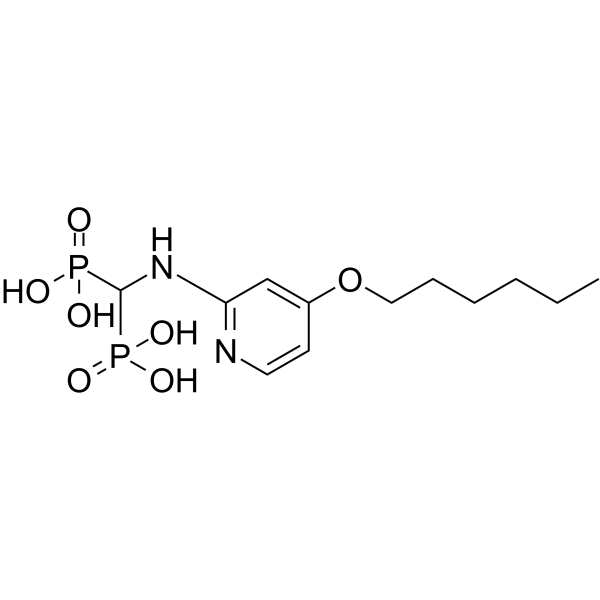
    TH-Z93, a lipophilic bisphosphonate, is a FPPS inhibitor (IC50: 90 nM) .
    TH-Z93
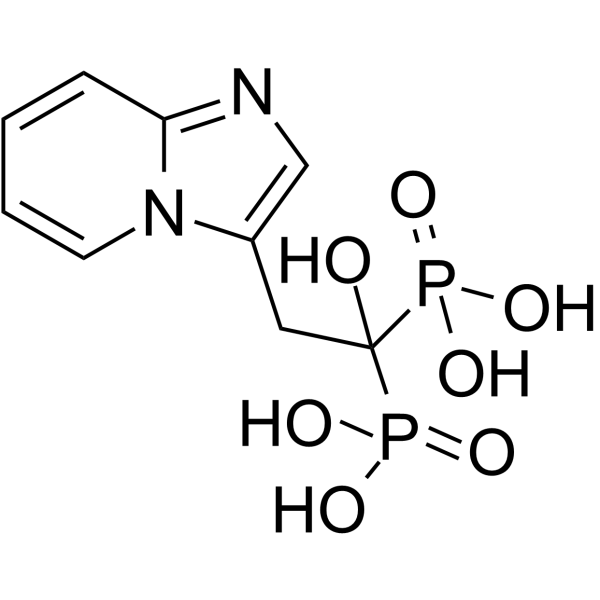
  • HY-16322
    Minodronic acid
    1 Publications Verification

    YM-529

    P2X Receptor Apoptosis Farnesyl Transferase Metabolic Disease Cancer
    Minodronic acid is an FPP synthase inhibitor with an IC50 of 3 nM, and also an antagonist of P2X2/3 receptors with an IC50 of 62.7 μM. Minodronic acid induces tumor cell apoptosis and inhibits cell growth. Minodronic acid also suppresses bone resorption. Minodronic acid can be used in research related to osteoporosis and cancer .
    Minodronic acid
  • HY-113752

    Parasite Infection
    MMV019313 is a potent, non-bisphosphonate inhibitor of farnesyl/geranylgeranyl diphosphate synthase (FPPS/GGPPS) with an IC50 of 0.82 µM. MMV019313 has activity against P. falciparum (Parasite) .
    MMV019313
  • HY-149149

    Bacterial Infection Metabolic Disease Cancer
    Incadronic acid inhibits growth of Dictyostelium discoideum with an IC50 of 1.6 μM. Incadronic acid binds the farnesyl diphosphate synthase (FPPS) in Leishmania major with the Ki of 23 nM. Incadronic acid inhibits the bone resorption and reduces bone loss, that can be used in osteoporosis research. Incadronic acid inhibits the proliferation of cells RAW264.7, PC-3 and MCF-7 with IC50 of 48 to 228.6 µM .
    Incadronic acid
  • HY-W013664

    PROTAC Linkers Cancer
    Glycyl-l-serine is a PROTAC linker composed of glycine and serine. Glycyl-l-serine can be used in the synthesis of PROTACs, such as FPP29 (HY-P11228) .
    Glycyl-l-serine
  • HY-W585869

    Parasite Infection
    Amorphadiene is the precursor to the antimalarial agent artemisinin, which is produced through the amorphadiene synthase (ADS)-catalyzed cyclization of farnesyl pyrophosphate (FPP) yeast .
    Amorphadiene
  • HY-P11493

    Ligands for E3 Ligase Cancer
    ALAPYIP is a ligand for E3 ligase. ALAPYIP recruits the VHL-E3 ubiquitin ligase. ALAPYIP can be used for the synthesis of FPP29 (HY-P11228) .
    ALAPYIP
  • HY-P11494

    CP29 peptide

    DNA/RNA Synthesis Ligands for Target Protein for PROTAC Cancer
    AWWNTEW (CP29) is a FOXM1-DBD peptide ligand with cytotoxicity to cancer cells. AWWNTEW has a strong affinity and binds to the FOXM1 protein. AWWNTEW is a component of FPP29 (HY-P11228) . X
    AWWNTEW
  • HY-163832

    Farnesyl Transferase Metabolic Disease
    FPPS-IN-2 (compound 4a) is a potent and orally active HFPPS inhibitor with an IC50 value of 1.108 µM. FPPS-IN-2 has the potential for the research of osteoporosis .
    FPPS-IN-2
  • HY-117807

    Ras Farnesyl Transferase VEGFR Cancer
    A-176120 is a selective inhibitor of farnesyl transferase (IC50=1.2 nM) based on a farnesyl pyrophosphate (FPP) analog, with superior selectivity against GGTaseI (IC50=423 nM), GGTaseII (IC50=3000 nM), and SSase (IC50>10 μM). A-176120 inhibits ras processing in H-ras transformed NIH3T3 cells and HCT116 K-ras mutant cells (ED50=1.6 and 0.5 μM, respectively). A-176120 has antiangiogenic and antitumor activities in vivo and reduces capillary structure formation and VEGF secretion .
    A-176120
  • HY-W100829

    Drug Intermediate Others
    FPPS ligand 3 (compound 2) is a farnesyl pyrophosphate synthase (FPPS) ligand. FPPS ligand 3 binds to the hydrophobic base region of the FPPS pocket. FPPS ligand 3 can be used to design and synthesize FPPS inhibitors .
    FPPS ligand 3
  • HY-118946B

    NSC50460 mesylate

    Bacterial Infection Cancer
    BPH-1358 mesylate (NSC50460 mesylate) is a potent human farnesyl diphosphate synthase (FPPS) and undecaprenyl diphosphate synthase (UPPS) inhibitor with IC50s of 1.8 μM and 110 nM, respectively. BPH-1358 mesylate is active against S. aureus in vitro (MIC ~250 ng/mL) .
    BPH-1358 mesylate
  • HY-161336

    Bacterial Cancer
    Alendronate prodrug-1(compound 2) is an inhibitor of farnesyl diphosphate synthase (FPPS). Alendronate prodrug-1 has an antiproliferative effect with an IC50 value of 34.0 μM .
    Alendronate prodrug-1
  • HY-176855

    Bacterial Metabolic Disease Cancer
    RAM1147 is a farnesyl pyrophosphate synthase (FPPS) inhibitor. RAM1147 disrupts protein isoprenylation, inhibiting tumor cell proliferation. RAM1147 is promising for research of cancers (e.g., myeloma, breast cancer) and bone metabolism disorders (e.g., osteoporosis) .
    RAM1147
  • HY-126825

    Phosphatase Metabolic Disease
    NE21650 potently inhibits farnesyl diphosphate (FPP) synthase. NE21650 is a weak inhibitor of isopentenyl diphosphate (IPP) isomerase. NE21650 is a potent inhibitor of protein prenylation in osteoclasts and macrophages and bone resorption in vitro .
    NE21650
  • HY-148969

    Others Cancer
    FPPS-IN-1 is a potent non-bisphosphonate Farnesyl pyrophosphate synthase (FPPS) inhibitor with an IC50 0.2 μM. FPPS-IN-1 can be used for the research of cancers .
    FPPS-IN-1
  • HY-19301

    J-104135

    Farnesyl Transferase Cancer
    J 104871 (J-104135) is a farnesyl pyrophosphate (FPP)-competitive farnesyltransferase (FTase) inhibitor. J 104871 inhibits rat brain FTase with an IC50 of 3.9 nM in the presence of farnesyl pyrophosphate (FPP) .
    J 104871
  • HY-RS04853

    Small Interfering RNA (siRNA) Others

    FDPS Human Pre-designed siRNA Set A contains three designed siRNAs for FDPS gene (Human), as well as a negative control, a positive control, and a FAM-labeled negative control.

    FDPS Human Pre-designed siRNA Set A
    FDPS Human Pre-designed siRNA Set A
  • HY-118946A

    NSC50460 free base

    Bacterial Infection Cancer
    BPH-1358 free base (NSC50460 free base) is a potent human farnesyl diphosphate synthase (FPPS) and undecaprenyl diphosphate synthase (UPPS) inhibitor with IC50s of 1.8 μM and 110 nM, respectively, and is active against S. aureus in vitro (MIC ~250 ng/mL) .
    BPH-1358 free base
  • HY-117012

    Endogenous Metabolite Others
    NE58018 is a compound with bone resorption inhibitory activity. NE58018 exerts its effect by affecting the action of Farnesyl pyrophosphate synthase (FPPS). The structural features of NE58018 combined with aminophosphonates significantly enhance its inhibitory activity. NE58018 affects the roles of Thr201 and Tyr204 residues in substrate binding and catalysis. The interaction of NE58018 enhances the inhibitory effect on the target enzyme .
    NE58018
  • HY-B0515R

    BM-210955 (Standard); RPR-102289A (Standard)

    Reference Standards Apoptosis Cancer
    Ibandronate Sodium Monohydrate (BM-210955; RPR-102289A) (Standard) is the analytical standard of Ibandronate Sodium Monohydrate (HY-B0515). This product is intended for research and analytical applications. Ibandronate Sodium Monohydrate (BM-210955; RPR-102289A) is an orally active, selective inhibitor of farnesyl pyrophosphate synthase (FPP synthase). Ibandronate Sodium Monohydrate can block the mevalonate pathway to inhibit the isoprenylation modification of small GTPases (such as RAS, RHO family proteins), induce tumor cell apoptosis and inhibit bone resorption. Ibandronate Sodium Monohydrate inhibits tumor cell proliferation (such as ER + breast cancer cells), promotes the expression of the pro-apoptotic gene FAS, and can produce synergistic anti-tumor effects with anti-estrogen compounds. Ibandronate Sodium Monohydrate is used in the study of osteoporosis and bone metastatic tumors (such as breast cancer bone metastasis) .
    Ibandronate Sodium Monohydrate (Standard)
  • HY-182516

    Farnesyl Transferase Infection Others
    Aminobutane bisphosphonate is a Trypanosoma cruzi farnesyl pyrophosphate synthase (FPPS) inhibitor with an IC50 of 30.77 μM against Trypanosoma cruzi. Aminobutane bisphosphonate inhibits proliferation of intracellular amastigote Trypanosoma cruzi and lacks activity against non-infective epimastigote forms. Aminobutane bisphosphonate reduces osteoclastic bone resorption, osteoid surface extent, and osteoclast number per mm of bone surface. Aminobutane bisphosphonate can be used for the research of american trypanosomiasis (chagas' disease) and immobilization-related bone loss .
    Aminobutane bisphosphonate
  • HY-N7844R

    Benzyladenosine (Standard)

    Apoptosis Adenosine Receptor Phytohormone Reference Standards Inflammation/Immunology Cancer
    N6-Benzyladenosine (Standard) (Benzyladenosine (Standard)) is the analytical standard of N6-Benzyladenosine (HY-N7844). This product is intended for research and analytical applications. N6-Benzyladenosine is an adenosine receptor agonist, has a cytoactive activity. N6-Benzyladenosine arrests cell cycle at G0/G1 phase and induces cell apoptosis. N6-Benzyladenosine also exerts inhibitory effect on T. gondii adenosine kinase and glioma - .
    N6-Benzyladenosine (Standard)

Inquiry Online

Your information is safe with us. * Required Fields.

Salutation


Country or Region *

Applicant Name *


Organization Name *

Department *


Email Address *


Product Name *

Cat. No.


Requested quantity *

Phone Number *


Remarks

Inquiry Online

Inquiry Information

Product Name:
Cat. No.:
Quantity:
MCE Japan Authorized Agent:

