



FOXM1
Forkhead box protein M1
Forkhead box protein M1 (FOXM1, also known as Trident, WIN, HFH-11, and MPP2; 27-30) is a member of the FOX family of transcription factors. The expression and activity of FoxM1 is important for the correct coupling of DNA synthesis to mitosis. FOXM1 is ubiquitously expressed in all proliferating mammalian cells, with its expression levels rising at the start of DNA synthesis and persisting until the end of mitosis. In M-phase, FOXM1 is phosphorylated and degraded before M-phase exit. FOXM1 has been suggested to play a role in normal coupling of S-phase to M-phase during cell cycle progression. FOXM1 enhances tumor metastasis in lung carcinoma, breast adenocarcinoma, pancreatic carcinoma, prostate carcinoma, colorectal cancer, ovarian carcinoma, cervical and nasopharyngeal carcinoma, ESCC and glioma[1][2].
参考文献:
- [1]. Bicknell KA. Forkhead (FOX) transcription factors and the cell cycle: measurement of DNA binding by FoxO and FoxM transcription factors. Methods Mol Biol. 2005;296:247-62. [Content Brief]
- [2]. Cheng L, et al. FOXM 1 induces Vasculogenic mimicry in esophageal cancer through β-catenin /Tcf4 signaling. Diagn Pathol. 2020 Feb 8;15(1):14. [Content Brief]
All Product Categories
-
FOXM1 関連製品 (20)
関連製品 (20)

- 1
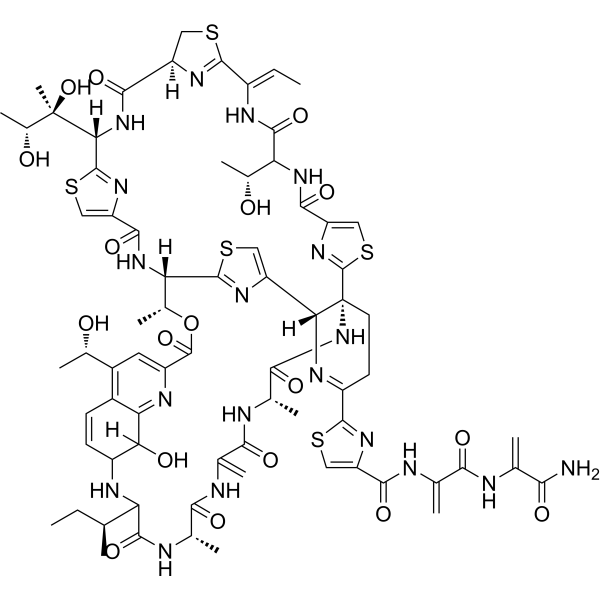
- Thiostrepton (チオストレプトン)
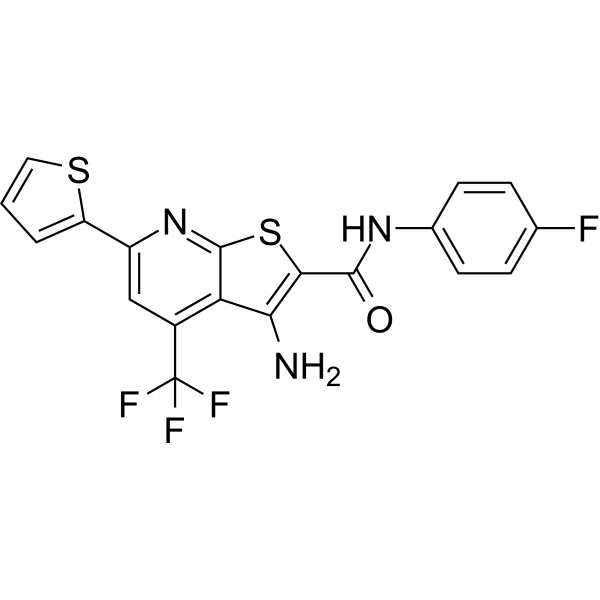
- FDI-6 (FDI-6)

-
YX-2-107
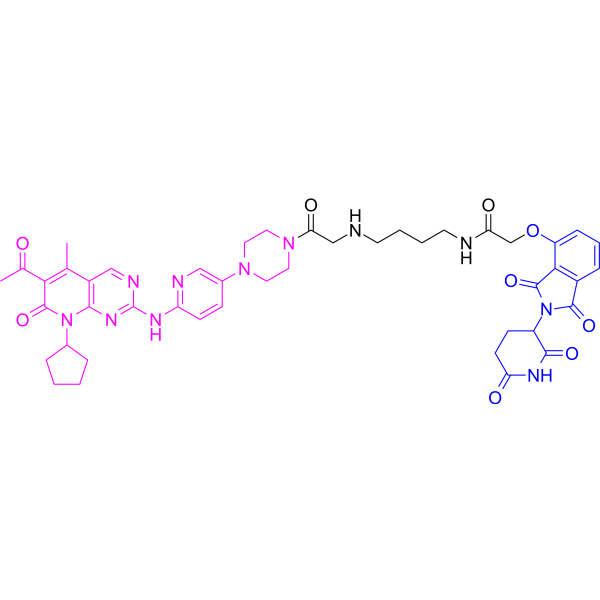 0 ImagesYX-2-107 is a PROTAC (IC50= 4.4 nM) that selectively degrades CDK6. YX-2-107 effectively inhibits RB phosphorylation and FOXM1 expression in vitro and inhibits the development of Ph+ ALL in rats. YX-2-107 can be used in the study of Ph chromosome-positive (Ph+) acute lymphoblastic leukemia (ALL).
-
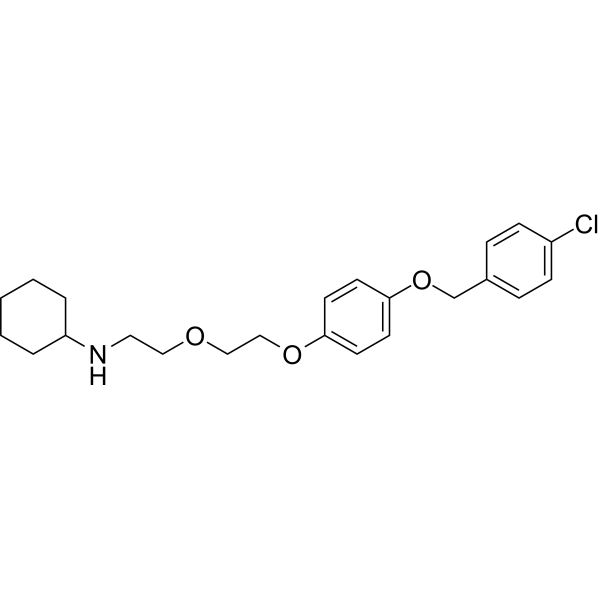
ARF(26-44), cell-permeable acetate
 0 Images製品番号: HY-P10553A純度: 99.12%ARF(26-44), cell-permeable acetate is a cell-penetrating peptide derived from a specific amino acid sequence of the p14ARF tumor suppressor protein. As a functional inhibitor of FoxM1, ARF(26-44) cell-permeable acetate shows significant anti-tumor activity in the treatment of mouse hepatocellular carcinoma (HCC), significantly increasing tumor cell apoptosis and reducing tumor cell proliferation and angiogenesis. ARF(26-44), cell-permeable acetate can be used in research on tumor therapy.
-
FPP29
 0 Images製品番号: HY-P11228純度: 99.20%FPP29 is a potent peptide-based FOXM1 PROTAC degrader. FPP29 induces ubiquitination and degradation of FOXM1. FPP29 inhibits FOXM1 via the ubiquitin-proteasome degradation pathway. FPP29 induces Apoptosis. FPP29 suppresses tumor growth in hepatocellular carcinoma xenograft models. FPP29 can be used in the research of hepatocellular carcinoma (cell-penetrating peptide: (HY-P0133); VHL ligase ligand: (HY-P11493); linker: (HY-W013664); FOXM1 ligand: (HY-P11494)).
-
Siomycin A
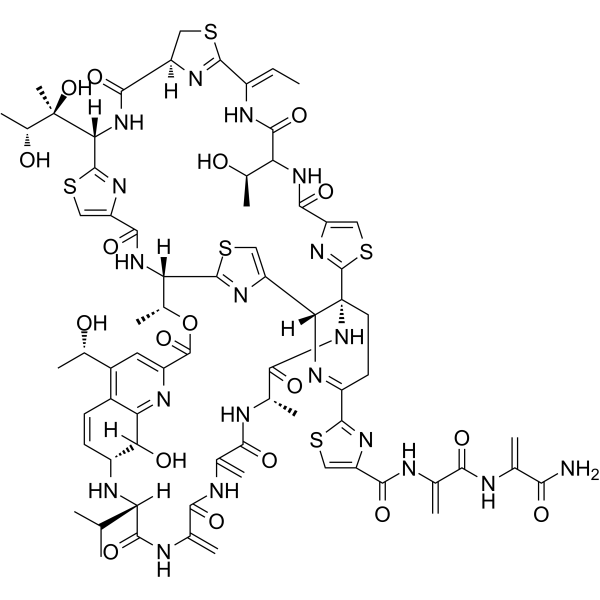 0 Images製品番号: HY-P1687CAS 番号: 12656-09-6Siomycin A is a thiopeptide antibiotic and is a Forkhead box M1(FOXM1) selective inhibitor without affecting other members of the Forkhead box family. Siomycin A has anti-tumor and promotes apoptosis.
-
ARF(26-44), cell-permeable
 0 Images製品番号: HY-P10553CAS 番号: 935732-44-8ARF(26-44), cell-permeable is a cell-penetrating peptide derived from a specific amino acid sequence of the p14ARF tumor suppressor protein. As a functional inhibitor of FoxM1, ARF(26-44) cell-permeable shows significant anti-tumor activity in the treatment of mouse hepatocellular carcinoma (HCC), significantly increasing tumor cell apoptosis and reducing tumor cell proliferation and angiogenesis. ARF(26-44), cell-permeable can be used in research on tumor therapy.

-
Hsp70/FoxM1-IN-1
 0 Images製品番号: HY-178462Hsp70/FoxM1-IN-1 (Compound 7d) is a potent heat shock protein 70 (Hsp70) and Forkhead box M1 (FoxM1) dual inhibitor. Hsp70/FoxM1-IN-1 demonstrates significant antiproliferative and pro-apoptotic effects in multiple solid tumor models (e.g., breast, colorectal cancer), particularly for tumors co-overexpressing Hsp70/FoxM1.

-
FOXM1-IN-3
 0 Images製品番号: HY-181076純度: 99.59%FOXM1-IN-3 is a potent FOXM1 inhibitor. FOXM1-IN-3 downregulates FOXM1 expression at protein and mRNA levels, suppressing downstream effectors CCNB1 and CDC25. FOXM1-IN-3 induces G2/M cell cycle arrest and apoptosis in colorectal cancer cells. FOXM1-IN-3 inhibits colony formation and cell migration in colorectal cancer cells. FOXM1-IN-3 targets the cancer stem cell phenotype in colorectal cancer cells, reducing cancer stem cell marker expression. FOXM1-IN-3 reduces tumor growth in a zebrafish xenograft model. FOXM1-IN-3 can be used for the research of colorectal cancer.
-
NOSH-aspirin
 0 Images製品番号: HY-150038CAS 番号: 1357362-67-4別名: NBS-1120NOSH-aspirin (NBS-1120) is an orally active hybrid molecule that releases nitric oxide and hydrogen sulfide. NOSH-aspirin inhibits pancreatic cancer cell proliferation and induces apoptosis. NOSH-aspirin inhibits cancer cell growth and suppresses NF-κB and FoxM1 in a mouse model of pancreatic cancer. NOSH-aspirin also alleviates motor deficits and dopaminergic neuron degeneration in a rat model of Parkinson's disease. NOSH-aspirin reduces neuroinflammation caused by microglial and astrocytic activation. NOSH-aspirin can be used in research on cancers such as pancreatic cancer and neurological diseases such as Parkinson's disease.
-
LASSBio-2052
 0 Images製品番号: HY-161617CAS 番号: 2549160-15-6LASSBio-2052 is a derivative of N-acylhydrazone with antitumor activity against hepatocellular carcinoma (HCC). LASSBio-2052 inhibits HCC cells HepG2 and Hep3B, with IC50 of 18 and 41 μM. LASSBio-2052 arrests the cell cycle at G2/M phase, through downregulation of FOXM1. LASSBio-2052 induces apoptosis in HCC cells.
-
FOXM1-IN-2
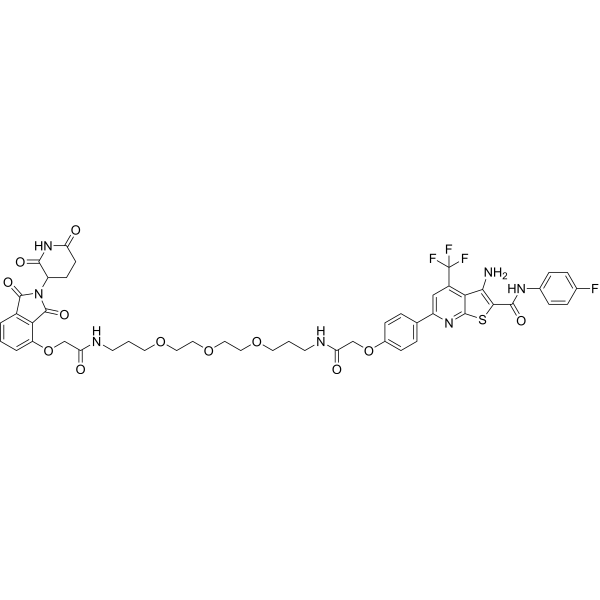 0 Images製品番号: HY-156609CAS 番号: 2694866-10-7FOXM1-IN-2 is a FOXM1 inhibitor, with antineoplastic activity.
-
STL427944
 0 Images製品番号: HY-112509CAS 番号: 292028-62-7STL427944 is a potent and selective FOXM1 inhibitor. STL427944 has the potential for the research of overcoming tumor chemoresistance.
-
5-HT7 modulator-1 hydrochloride
 0 Images製品番号: HY-182285A5-HT7 modulator-1 hydrochloride is a selective 5-HT7 receptor antagonist with a Ki of 92 nM. 5-HT7 modulator-1 hydrochloride blocks 5-HT7 receptor signaling to reduce FOXM1, phosphorylated FOXM1, cyclin B1, and cdc25B levels. 5-HT7 modulator-1 hydrochloride acts as an antiproliferative, clonogenic inhibitor, and cell cycle inhibitor that induces G2/M arrest, reduces G0/G1 population. 5-HT7 modulator-1 hydrochloride can be used for the research of triple-negative breast cancer.
-
Gangaleoidin
 0 Images製品番号: HY-N19821CAS 番号: 55365-63-4Gangaleoidin is a FOXM1 inhibitor with an IC50 of 2.8 μM. Gangaleoidin inhibits interaction between FOXM1’s DNA-binding domain and target DNA sequence, downregulates FOXM1 and downstream target gene CCNB1 at the transcriptional level. Gangaleoidin suppresses proliferation of FOXM1-overexpressing breast cancer cells. Gangaleoidin can be used for the research of breast cancer.
- 1



