6 Results for "

HClO

" in MedChemExpress (MCE) Product Catalog:
Products (6)

6 Results for "HClO" in MCE Product Catalog:

2
2 Cited Publications
Cat. No.: HY-D1265
CAS No.: 2929446-76-2
Synonyms: HClO-green
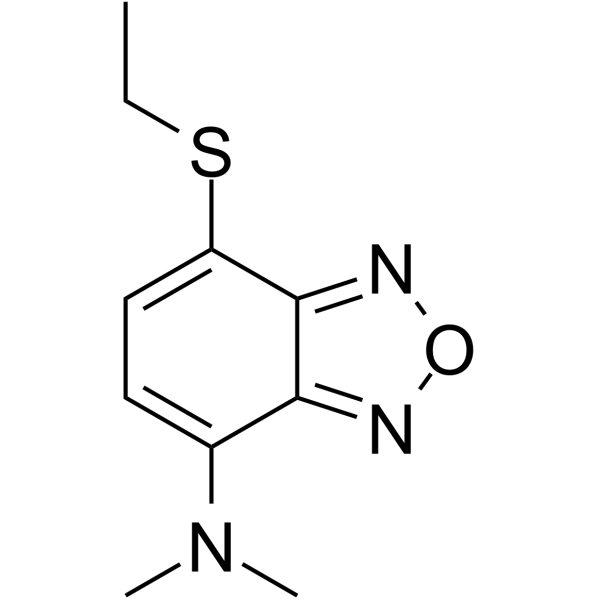
EtS-DMAB (HClO-green) is a fluorescent probe, which can selectively detect hypochlorous acid (HOCl) (λex=440 nm, λem=610 nm). EtS-DMAB is applied to image exogenous and endogenous HOCl in live cells .
loading...
    loading...
Cat. No.: HY-D2312
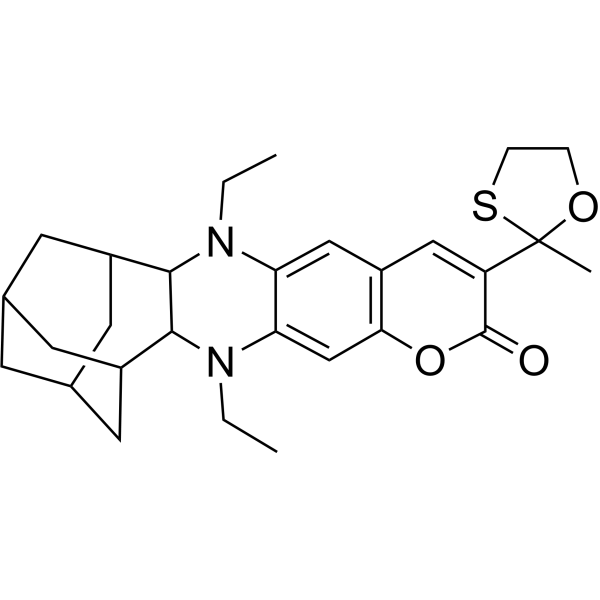
Mito-Rh-S is a ratiometric near-infrared (NIR) fluorescent probe that detects the fluctuation of mitochondrial HClO levels during ferroptosis in hepatocellular carcinoma (HCC) .
loading...
    loading...
Cat. No.: HY-163386
Research Areas:  

Others

HFTC-HClO 1 is a stable and sensitive ratiometric probe, which images the endogenous HClO. HFTC-HClO 1 exhibits a main emission peak at 579 nm. HFTC-HClO-1 visualizes HClO generated in the rheumatoid arthritis mouse model .
loading...
    loading...
Cat. No.: HY-D3171
AD-BChE/HClO is a dual-target two-photon fluorescent probe. AD-BChE/HClO produces strong fluorescence only in the simultaneous presence of BChE and HClO. AD-BChE/HClO enables two-photon imaging in nerve cells and mouse brain tissues via tail vein injection. AD-BChE/HClO can be used for the research of Alzheimer's disease (Ex/Em = 450 nm/500 nm) .
loading...
    loading...
Cat. No.: HY-D3227
CAS No.: 2677830-11-2
HOTN is a hypochlorous acid (HClO) Fluorescent indicator. HOTN is oxidized by HClO, causing cleavage of its Py +-N + moiety and a change in hydrophobicity, which in turn triggers aggregation-induced emission to generate a strong fluorescent signal. HOTN is used for in vivo imaging of inflammation and hepatocellular carcinoma, as these diseases typically result in high levels of HClO .
loading...
    loading...
Cat. No.: HY-D3224
CAS No.: 2413777-91-8
HCP is a two-photon fluorescent probe capable of crossing the blood-brain barrier, which is specifically designed for real-time detection of hypochlorous acid (HClO/ClO -) produced by myeloperoxidase (MPO). Chlorination of the quinoline skeleton of HCP generates HCP-Cl, which eliminates intramolecular charge transfer (ICT) quenching and thereby produces fluorescence. HCP is suitable for in vivo dynamic imaging of HClO in the brains of epileptic mice and high-throughput screening of antiepileptic drugs (HCP-Cl: Ex/Em = 800 nm/495 nm) .
loading...
    loading...

