9 Results for "

Intrinsic Factor

" in MedChemExpress (MCE) Product Catalog:
Products (9)

9 Results for "Intrinsic Factor" in MCE Product Catalog:

Cat. No.: HY-108908A
CAS No.: 122957-06-6
Synonyms: UK-80067
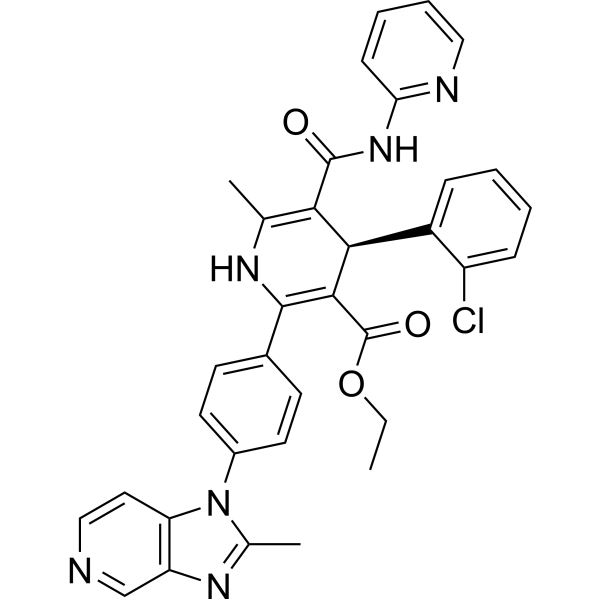
Modipafant (UK-80067), the (+)-enantiomer of UK-74505, is a potent, orally active, and selective platelet-activating factor (PAF) antagonist. Modipafant exhibits approximately double the intrinsic potency of UK-74505 .
loading...
    loading...
Cat. No.: HY-W023758
CAS No.: 166196-54-9
Synonyms: 4-(4-Bromo-1H-pyrazol-5-yl)pyridine
Target:  

DNA/RNA Synthesis

Research Areas:  

Cancer

HDGFRP2/PSIP1-IN-1 (compound BPP) is a dual inhibitor targeting the PWWP domain of hepatocarcinogenic growth factor-related protein 2 (HDGFRP2) and its homologous protein PSIP1, hinder the development and progression of diffuse intrinsic pontine glioma (DIPG). HDGFRP2/PSIP1-IN-1 binds to HDGFRP2 with a Kd value of 7 μM and a ligand efficiency of 0.47; it binds to the PSIP1 PWWP domain with a Kd value of 27 μM; meanwhile, it has a Kd value of 14 μM for HDGFRP3, indicating its effectiveness as an inhibitor of the HDGFRP2 PWWP subfamily .
loading...
    loading...
Cat. No.: HY-P991169
CAS No.: 2955620-21-8
Synonyms: NXT007; RG6512; RO7589655

Target:  

Factor Xa Thrombin

Research Areas:  

Cardiovascular Disease

Zemocimig (NXT007) is an activated factor VIII mimetic antibody. Zemocimig binds to FX, FIXa and their activated forms to form a ternary complex, bridges FIXa and FX on the phospholipid surface, and restores intrinsic prothrombinase activity. Zemocimig induces thrombin generation, acts as a procoagulant, antifibrinolytic agent and hemostatic agent, and can shorten aPTT, increase fibrin deposition, correct clotting time, and reduce bleeding parameters. Zemocimig is applicable to the research of hemophilia A .
loading...
    loading...
Cat. No.: HY-P10833
Target:  

VEGFR PI3K Akt mTOR ERK Apoptosis

Research Areas:  

Cardiovascular Disease Cancer

C-VGB3 is a selective vascular endothelial growth factor receptor 2 (VEGFR2) antagonist, which inhibits VEGFR2-mediated PI3K/AKT/mTOR and PLCγ/ERK1/2 signaling pathways. C-VGB3 binds to the extracellular domain of VEGFR2, blocking ligand-receptor interaction and inducing apoptosis in endothelial and tumor cells through both intrinsic (involving Bcl2 family and caspases) and extrinsic (death receptor-mediated) pathways. C-VGB3 is promising for research of angiogenesis-related cancers, such as breast cancer .
loading...
    loading...
Cat. No.: HY-E70393J
Target:  

Factor XI

Research Areas:  

Others

Bovine Factor XIa is an enzyme, which is involved in the intrinsic pathway of blood coagulation. Bovine Factor XIa is highly selective and exhibits a minimal extended substrate recognition site of at least five residues long. Bovine Factor XIa is reactive as Bovine Factor IXa (HY-E70393I) does, that it cleaves all the peptides bearing factor IX activation site sequences .
loading...
    loading...
Cat. No.: HY-162646
CAS No.: 3047411-80-0
Target:  

Thrombin

Research Areas:  

Cardiovascular Disease

FXIIa-IN-5 (Compound 4J) is an orally active, selective inhibitor for factor XIIa (FXIIa), with IC50 of 21 nM. FXIIa-IN-5 inhibits the intrinsic coagulation pathways, and exhibits anti-inflammatory and antithrombotic activity in Carrageenan (HY-125474)-induced mice thrombosis models. FXIIa-IN-5 exhibits moderate pharmacokinetic characteristics and slightly toxicity (at 100 mg/kg) .
loading...
    loading...
Cat. No.: HY-P73859
Purity:  ≥ 95%, as determined by reducing SDS-PAGE.
Synonyms: Gastric Intrinsic Factor; GIF; IF; Intrinsic Factor; IFMH; INF; TCN3
Species:  
Source:  
loading...
    loading...
Cat. No.: HY-P700085AF
Purity:  ≥ 95%, as determined by reducing SDS-PAGE.
Synonyms: Gastric Intrinsic Factor; GIF; IF; Intrinsic Factor; IFMH; INF; TCN3
Species:  
Source:  
loading...
    loading...
Cat. No.: HY-L074
3,329 compounds

Breast cancer is the most frequent cancer among women, impacting 2.1 million women each year, and also causes the greatest number of cancer-related deaths among women. Surgery is usually the first type of treatment for breast cancer, which is usually followed by chemotherapy or radiotherapy or, in some cases, hormone or targeted therapies, especially for metastatic breast cancer (MBC).

Breast cancer is a heterogeneous disease, which is categorized into 3 major subtypes based on the presence or absence of molecular markers for estrogen or progesterone receptors and human epidermal growth factor 2 (ERBB2; formerly HER2): hormone receptor positive/ERBB2 negative (70% of patients), ERBB2 positive (15%-20%), and triple-negative (tumors lacking all 3 standard molecular markers; 15%). Different intrinsic subtypes exhibit different tumor behavior with different prognoses, and may require specific targeted therapies to maximize treatment effectiveness. Otherwise, some signaling pathways also play important roles in the development of breast cancer, such as NF-κB Signaling Pathway, TGF-beta Signaling Pathway, PI3K/AKT/mTOR signaling pathway and Notch Signaling Pathway. These signaling pathways offer ideal targets for development of new targeted therapies for breast cancer.

MCE supplies a unique collection of 3,329 compounds with identified and potential anti-breast cancer activity. MCE Anti-Breast Cancer Compound Library is a useful tool for anti-breast cancer drugs screening.

