



Zemocimig

Based on 1 Customer Validation
Zemocimig (NXT007) is an activated factor VIII mimetic antibody. Zemocimig binds to FX, FIXa and their activated forms to form a ternary complex, bridges FIXa and FX on the phospholipid surface, and restores intrinsic prothrombinase activity. Zemocimig induces thrombin generation, acts as a procoagulant, antifibrinolytic agent and hemostatic agent, and can shorten aPTT, increase fibrin deposition, correct clotting time, and reduce bleeding parameters. Zemocimig is applicable to the research of hemophilia A.
商品は「研究用試薬」です。人や動物の医療用・臨床診断用・食品用の製品ではありません。
研究用途以外に使用した場合、当社は一切の責任を負いかねます。
- 純度 : 95.59%
- CAS 番号: 2955620-21-8
- 分子量:144.33 kDa
-
保管条件:
Please store the product under the recommended conditions in the Certificate of Analysis.


To place orders, for customer services and technical support, please contact: MedChemExpress USA
Tel: 609-228-6898 E-mail: [email protected] [email protected]


-
 生物活性
生物活性
-
化学情報
- 純度とドキュメンテーション
- 参考文献
-
 Help & FAQs




生物活性
製品説明
Isotype
Ig(G4 - kappa_G4 - lambda2)
Recommend Isotype Controls
Species Reactivity
Human
IC50 & Target
F9a & F10
体外実験
Zemocimig (31-150 nM) demonstrates activity equivalent to 40 IU/dL rhFVIII at 31 nM and 100 IU/dL rhFVIII at 150 nM[1].
Zemocimig strongly shortens APTT in FVIII-deficient hemophilia A plasma[1].
Zemocimig dose-dependently enhances thrombin generation activity in FXIa-triggered assays using FVIII-neutralized cynomolgus monkey plasma[1].
Zemocimig (0.1 nM) (as represented by its sequence-identical analogue zemocimig-SIA) exhibits high-affinity assembly of the FIXa/FX ternary complex with an apparent KD of 0.31 nM in a purified FX activation biochemical assay[2].
Zemocimig potently increases tissue factor-triggered peak height thrombin generation in platelet-rich and platelet-poor hemophilia A-like (FVIII-neutralized) plasma[3].
Zemocimig dose-dependently delays tissue plasminogen activator-mediated fibrinolysis in congenital hemophilia A plasma, and this effect correlates with thrombin generation[3].
Zemocimig (0.1, 1, 10, 100, 1000 μg/mL) potently increases tissue factor-triggered peak height thrombin generation in FVIII-neutralized human platelet-rich and platelet-poor plasma, reaching a maximum effect equivalent to 100 IU/dL porcine FVIII at 30-100 μg/mL, and is more potent than the comparator[4].
Zemocimig (0.1, 0.3, 1, 3, 10, 30, 100, 300 μg/mL) delays tPA-mediated fibrinolysis in severe human hemophilia A plasma with an EC50 of 1.7 μg/mL[4].
Zemocimig (0.005, 0.01, 0.05, 0.25, 1.25, 6.25, 37.5, 150 μg/mL (plasma equivalent); 30 min (anti-FVIII pre-incubation); 2 h (ROTEM measurement)) corrects clotting time and clotting kinetics in FVIII-neutralized human whole blood, with EC50 values of 24 ng/mL and 0.11 μg/mL, respectively[4].
MedChemExpress (MCE) has not independently confirmed the accuracy of these methods. They are for reference only.
Parmacokinetics
| Species | Dose | Route | T1/2 | Cmax | AUCinf | F |
|---|---|---|---|---|---|---|
| Cynomolgus Monkey[1] | 2 mg/kg | i.v. | 22.1 day | / | 834 μg/day/mL | / |
| Cynomolgus Monkey[1] | 0.02 mg/kg | s.c. | 21.9 day | 0.181 μg/mL | 6.84 μg/day/mL | 82.0 % |
| Cynomolgus Monkey[1] | 0.2 mg/kg | s.c. | 24.4 day | 1.95 μg/mL | 76.9 μg/day/mL | 92.2 % |
| Cynomolgus Monkey[1] | 2 mg/kg | s.c. | 19.6 day | 21.1 μg/mL | 704 μg/day/mL | 84.4 % |
体内実験
Zemocimig (1-5 mg/kg) exhibits potent hemorrhage control efficacy in hemophilia A mice supplemented with human FIX/FX, with significant reductions in bleeding parameters observed at doses of 1 mg/kg and 5 mg/kg[3].
Zemocimig (2-20 mg/kg) shows no prothrombotic effects at doses of 2 mg/kg and 20 mg/kg in hemophilia A mice receiving human FIX/FX supplementation and subjected to ferric chloride-induced carotid artery injury[3].
Zemocimig (0.25-20 mg/kg; intravenous injection; single administration; administered 24 hours prior to tail amputation) controls acute bleeding in a mouse model of hemophilia A, and achieves a statistically significant reduction in bleeding time even at a dose as low as 1 mg/kg[4].
Zemocimig (2-20 mg/kg; single administration; 24 hours prior to injury) shows no prothrombotic properties in a ferric chloride-induced mouse arterial thrombosis model, even at high doses[4].
MedChemExpress (MCE) has not independently confirmed the accuracy of these methods. They are for reference only.
-
Animal Model:Cynomolgus monkey (male, 3-4 years old, 2.6-4.0 kg, acquired hemophilia A induced by anti-FVIII neutralizing antibody cyVIII-2236 followed by bleeding induction via muscle needling and subcutaneous abdomen exfoliation)[1]
-
Dosage:0.0075 mg/kg; 0.025 mg/kg; 0.075 mg/kg; 0.6 mg/kg
-
Administration:i.v.; single dose
-
Result:Suppressed hemoglobin level decreases in a dose-dependent manner, with statistical significance vs vehicle achieved at doses ≥0.025 mg/kg.
Reduced bruised skin areas in a dose-dependent manner, with statistical significance vs vehicle achieved at doses ≥0.075 mg/kg.
Exerted hemostatic activity similar to twice-daily administration of 20 U/kg recombinant porcine FVIII at a single i.v. dose of 0.075 mg/kg.
Exhibited plasma concentrations ranging from 1.9 μg/mL (13 nM) on day 0 to 0.75 μg/mL (5.2 nM) on day 3 at 0.075 mg/kg, which is approximately 30-fold lower than plasma concentrations of emicizumab from a previous 3 mg/kg i.v. dose study.
-
Animal Model:F8-knockout (8-12-week-old male, hemophilia A, transiently humanized with human FIX/hFX)[4]
-
Dosage:0.25 mg/kg; 1 mg/kg; 5 mg/kg; 10 mg/kg; 20 mg/kg
-
Administration:i.v.; single dose; 24 hours pre-tail vein transection
-
Result:Reduced total bleeding time at doses of 1 mg/kg, 5 mg/kg, 10 mg/kg, and 20 mg/kg.
Shortened times to bleeding arrest compared to emicizumab.
Lowered rates of spontaneous rebleeding following wound rechallenge compared to emicizumab.
Achieved plasma concentrations ranging from ~10 μg/mL (1 mg/kg dose) to ~200 μg/mL (20 mg/kg dose).
-
Animal Model:F8-knockout (10-12-week-old, hemophilia A, transiently humanized with human FIX/hFX, ferric chloride-induced carotid artery injury)[4]
-
Dosage:2 mg/kg; 10 mg/kg; 20 mg/kg
-
Administration:single dose; 24 hours pre-injury
-
Result:Did not cause >50% maximum blood flow reduction in any animal at doses corresponding to therapeutic and supratherapeutic plasma concentrations (~20-200 μg/mL).
Resulted in average maximum blood flow reduction <15% across all treatment groups.
遺伝子ID
アクセッション番号
Conjugated
Unconjugated
Reconsititution
The product can be reconstituted/diluted with sterile PBS or saline.
Format
-
IgG4-kappa-lambda
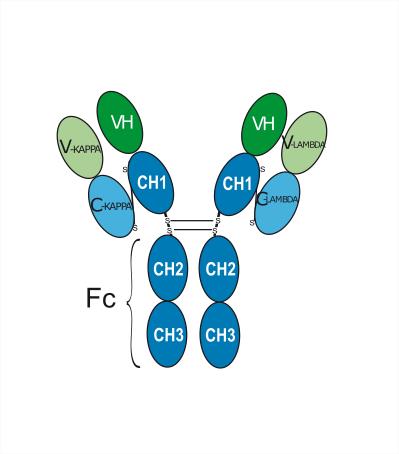
アプリケーション
ELISA, FACS, Functional assay
Verified Bioactivity
-
 Immobilized Coagulation factor IX/F9 Protein, Human (HEK293, HY-P70231) can bind Zemocimig, The ED50 for this effect is 111.6 ng/mL.
 -
 Immobilized Coagulation Factor X/F10 Protein, Human (HEK293, HY-P7860) can bind Zemocimig, The ED50 for this effect is 766.2 ng/mL.


化学情報
-
CAS 番号 2955620-21-8
-
性状 Liquid
-
分子量 144.33 kDa
-
Color Colorless to light yellow
-
SMILES
[Zemocimig]
-
別名
NXT007; RG6512; RO7589655
-
輸送条件
Shipping with dry ice.
-
Formulation
Please refer to the lot-specific COA for specific buffer information.
-
保管条件
Please store the product under the recommended conditions in the Certificate of Analysis.


純度とドキュメンテーション
-
データシート (284 KB)
-
SDS (252 KB)
- English - EN (252 KB)
- Français - FR (252 KB)
- Deutsch - DE (252 KB)
- Norwegian - NO (252 KB)
- Español - ES (252 KB)
- Swedish - SV (252 KB)
- Italian - IT (252 KB)
- Korean - KR (252 KB)
- Portuguese - PT (252 KB)
-
Inhibitory Antibodies User Guide (603 KB)
参考文献
[1]. Teranishi-Ikawa Y, et al. A bispecific antibody NXT007 exerts a hemostatic activity in hemophilia A monkeys enough to keep a nonhemophilic state. Journal of thrombosis and haemostasis : JTH. 2024 Feb;22(2):430-440. [Content Brief]
[4]. Locke M, et al. Next-generation FVIIIa-mimetic bispecific antibody NXT007: evaluation in preclinical models of hemostasis and thrombosis. Blood advances. 2026 Feb 24;10(4):1058-1067. [Content Brief]

Calculators
濃度 (開始) × 体積 (開始) = 濃度 (終了) × 体積 (終了)


Zemocimig 関連分類
HY-P991169 関連分類
 Powered by Bioz