From 11:00 pm to 12:00 pm EST ( 8:00 pm to 9:00 pm PST ) on January 6th, the website will be under maintenance. We are sorry for the inconvenience. Please arrange your schedule properly.
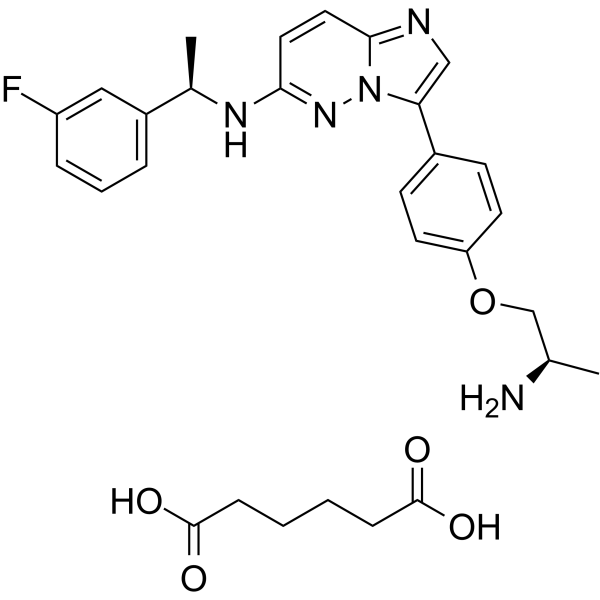
Taletrectinib (DS-6051b) is a potent, orally active, and next-generation selective ROS1/NTRK inhibitor. Taletrectinib potently inhibits recombinant ROS1, NTRK1, NTRK2, and NTRK3 with IC50s of 0.207, 0.622, 2.28, and 0.98 nM, respectively. Taletrectinib also inhibits ROS1 G2032R and other Crizotinib-resistant ROS1 mutants .
PDK1-IN-1 (Compound 2-11) is a PDK1 inhibitor. PDK1-IN-1 is also useful as inhibitor of other kinases such as FGFR3, NTRK3, RP-S6K and WEE1. PDK1-IN-1 selectively inhibits microtubule affinity regulating kinase (MARK). PDK1-IN-1 can be used for researches of myeloproliferative disorders, cancer and Alzheimer's disease .
NTRK2 Human Pre-designed siRNA Set A contains three designed siRNAs for NTRK2 gene (Human), as well as a negative control, a positive control, and a FAM-labeled negative control.
NTRK3 Human Pre-designed siRNA Set A contains three designed siRNAs for NTRK3 gene (Human), as well as a negative control, a positive control, and a FAM-labeled negative control.
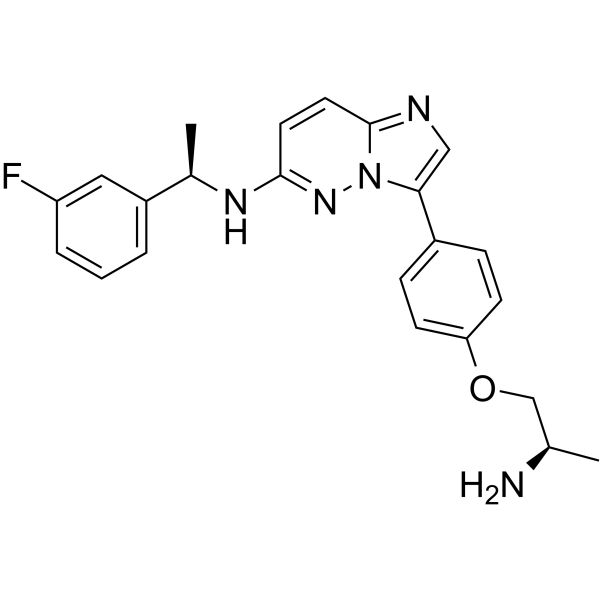
Taletrectinib (DS-6051b) free base is a potent, orally active, and next-generation selective ROS1/NTRK inhibitor. Taletrectinib free base potently inhibits recombinant ROS1, NTRK1, NTRK2, and NTRK3 with IC50s of 0.207, 0.622, 2.28, and 0.98 nM, respectively. Taletrectinib free base also inhibits ROS1 G2032R and other Crizotinib-resistant ROS1 mutants .
TRKB(NTRK2) is a member of tyrosine kinase gene family. TRKB is the primary receptor for brain-derived nerve growth factor (BDNF) and neurotrophin 4/5 (NT4/5). TRKB(NTRK2) Recombinant Human Active Protein Kinase is a recombinant TRKB(NTRK2) protein that can be used to study TRKB(NTRK2)-related functions .
TRKA (also named NTRK1) is a potential new member of the tyrosine kinase gene family. TRKA is a receptor tyrosine kinase that is phosphorylated in response to NGF. A single transmembrane domain divides TRKA into an extracellular domain, important for NGF binding, and an intracellular tyrosine kinase domain, important for signal transduction. TRKA(NTRK1) Recombinant Human Active Protein Kinase is a recombinant TRKA(NTRK1) protein that can be used to study TRKA(NTRK1)-related functions .
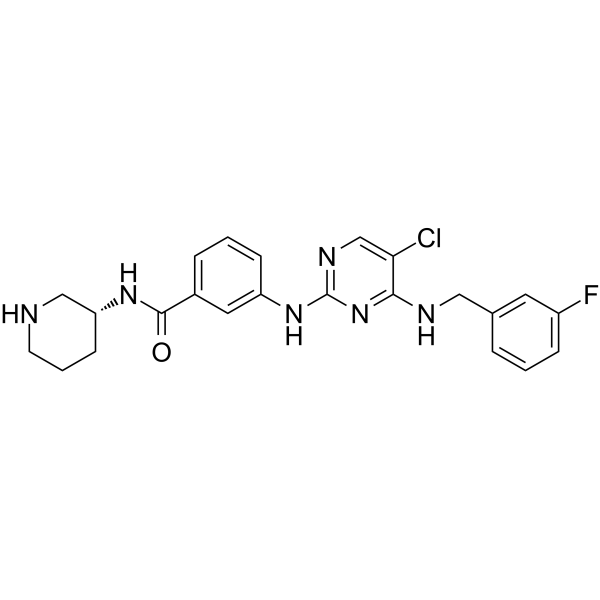
Trk-IN-9 (Compound 12) is a potent inhibitor of TRK. Trk-IN-9 inhibits the proliferation of Km-12 cell lines. Trk-IN-9 induces the apoptosis of Km-12 cells in a concentration-dependent manner. Trk-IN-9 inhibits the phosphorylation of TRK to block downstream pathways. Trk-IN-9 has the potential for the research of NTRK-fusion cancers .
Anti-TrkB/NTRK2 Antibody is a human antibody expressed in CHO cells, targeting TrkB. Anti-TrkB/NTRK2 Antibody can be referenced as Human IgG2 kappa, Isotype Control (HY-P99002).
Ntrk2 Mouse Pre-designed siRNA Set A contains three designed siRNAs for Ntrk2 gene (Mouse), as well as a negative control, a positive control, and a FAM-labeled negative control.
Ntrk3 Mouse Pre-designed siRNA Set A contains three designed siRNAs for Ntrk3 gene (Mouse), as well as a negative control, a positive control, and a FAM-labeled negative control.
Ntrk3 Rat Pre-designed siRNA Set A contains three designed siRNAs for Ntrk3 gene (Rat), as well as a negative control, a positive control, and a FAM-labeled negative control.
Ntrk1 Rat Pre-designed siRNA Set A contains three designed siRNAs for Ntrk1 gene (Rat), as well as a negative control, a positive control, and a FAM-labeled negative control.
Ntrk1 Mouse Pre-designed siRNA Set A contains three designed siRNAs for Ntrk1 gene (Mouse), as well as a negative control, a positive control, and a FAM-labeled negative control.
NTRK1 Human Pre-designed siRNA Set A contains three designed siRNAs for NTRK1 gene (Human), as well as a negative control, a positive control, and a FAM-labeled negative control.
Ntrk2 Rat Pre-designed siRNA Set A contains three designed siRNAs for Ntrk2 gene (Rat), as well as a negative control, a positive control, and a FAM-labeled negative control.
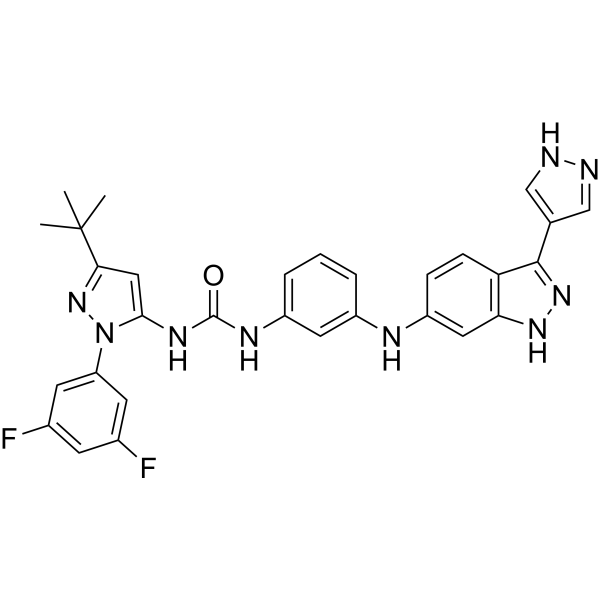
Type II TRK inhibitor 2 (compound 40l) is a selective type II TRK inhibitor with plasma stability and moderate hepatic microsomal stability. Type II TRK inhibitor 2 significantly inhibits Km-12, Ba/F3-TRKA G595R and Ba/F3-TRKA G667C cell proliferation (IC50: 4.1 nM, 41.5 nM, 1.4 nM). Type II TRK inhibitor 2 can be used to study NTRK fusion cancers .
TRK-IN-24 (compound 10g) is a Trk Receptor inhibitor that inhibits TRKA, TRKC, TRKA G595R, TRKA G667C and TRKA F589LIC50s are 5.21, 4.51, 6.77, 1.42 and 6.13 nM respectively. TRK-IN-24 has antitumor efficacy in BaF3-CD74-NTRK1G595R and BaF3-CD74-NTRK1G667C xenograft models. TRK-IN-24 inhibits the proliferation of Ba/F3 cells transfected with single mutants such as SF, GK, and xDFG, with an IC50 of 1.43-47.56 nM .
GZ-389988 is a potent pan-TRK inhibitor with IC50 values of 0.3, 0.1, and 0.5 nM for TRKA, TRKB, and TRKC, respectively. GZ-389988 can be used to study NTRK fusion-positive tumors .
TRK-IN-12 (Compound 9e) is a potent inhibitor of TRK (TRK G595RIC50 = 13.1 nM). TRK-IN-12 is a macrocyclic derivative compound. TRK-IN-12 shows significant antiproliferative activity in the Ba/F3-LMNA-NTRK1 cell line (IC50 = 0.080 μM). TRK-IN-12 has shown a better inhibitory effect (IC50 = 0.646 μM) than control agent LOXO-101 in Ba/F3-LMNA-NTRK1-G595R cell line .
GBR-900 is a humanized antibody expressed in CHO that targets TrkA/NTRK1. GBR-900 has a huIgG1 heavy chain and a huκ light chain, with a predicted molecular weight (MW) of 150 kDa. The isotype control for GBR-900 can refer to Human IgG1 kappa, Isotype Control (HY-P99001).
Trk-IN-20 is a kind of 3-vinylindazole derivatives. Trk-IN-20 suppresses Trk kinases functions by phosphorylation inhibition of TrkA/B/C with IC50 values of 1.6 nM, 2.9 nM and 2.0 nM, respectively .
NTRK1-ligand-1 (Compound 15) is a NTRK1 ligand. NTRK1-ligand-1 serves as a Ligand for Target Protein for PROTAC, which is applicable to the development and design of PROTAC NTRK1 degraders, such as PROTAC NTRK1 degrader-1 (HY-181052). NTRK1-ligand-1 can be used in the research of solid tumors .
PROTAC NTRK1 degrader-1 is a wild-type and mutant NTRK1 PROTAC degrader with IC50 values of 4 nM (wild-type), 2 nM (G595R), 5 nM (G667C), and <0.5 nM (F598L). PROTAC NTRK1 degrader-1 catalyzes ubiquitination and subsequent proteasome-mediated degradation of wild-type and mutant (G595R, G667C, F598L) NTRK1. PROTAC NTRK1 degrader-1 can be used for the research of solid tumors .
TRK-IN-33 is a TRK inhibitor. TRK-IN-33 exhibits excellent TRKA G667C degradation (DC50 = 24.69 nM; Dmax > 90%), while sparing the wild-type protein in virto. TRK-IN-33 shows antiproliferative activities against Ba/F3-LMNA-NTRK1 G667C cells with an IC50 value of 2.48 nM. TRK-IN-33 effectively inhibits tumor growth and enhances apoptosis in tumor tissues with no apparent toxicity in vivio. TRK-IN-33 can be used for NTRK fusion−positive cancers research .
(R,S)-Selitrectinib (compound 17) is a Trk inhibitor with activity against cancers harboring Trk inhibitor-resistant point mutations in NTRK1, NTRK2, or NTRK3 genes. (R,S)-Selitrectinib can be used for the research of trk inhibitor-resistant cancer .
CRBN ligand-900 is an E3 ligase ligand that can be used in the recruitment of CRBN protein. CRBN ligand-900 can be connected to the NTRK1 ligand (HY-185545) by a linker to synthesis of PROTAC NTRK1 degrader-1 (HY-181052) .
Anti-TrkC Antibody is a monoclonal antibody targeting TrkC/NTRK3. It can be used in ELISA, FACS, and functional assays. For isotype controls of Anti-TrkC Antibody, please refer to Human IgG2 kappa, Isotype Control (HY-P99002).
CRBN ligand-900 Gly is a synthesized E3 ligase ligand-linker conjugate (E3 Ligase Ligand-Linker Conjugate) that incorporates a CRBN ligand and a linker. CRBN ligand-900 Gly can be connected to the target protein ligand to form a PROTAC NTRK1 degrader-1 (HY-181052) .
BRD4-IN-41 is a BRD4 inhibitor with an IC50 of 34 nM. BRD4-IN-41 also inhibits JAK2, FLT3, RET, ROS1, NTRK3, PDGFRb, and FGFR1 kinases with IC50 values ranging from 0.9 nM to 43 nM. BRD4-IN-41 inhibits acetyl-lysine binding site of BRD4, downregulates c-MYC, reduces phosphorylated STAT3 levels, induces G1 cell cycle arrest and apoptosis, thereby inhibiting cancer cells growth. BRD4-IN-41 can be used for the research of cancer, such as multiple myeloma and acute myeloid leukemia .
TRI-611 is a brain-penetrant, orally active molecular glue degrader targeting ALK. TRI-611 engages ALK via a distal degron, forms a ternary complex with CRBN, triggers ALK polyubiquitination and degradation, including TKI-resistant ALK fusion proteins. TRI-611 inhibits ALK downstream signaling pathways, induces anti-proliferative effects in ALK-positive cancer cells. TRI-611 induces regression of ALK-positive non-small cell lung cancer tumors in preclinical xenograft models. TRI-611 can be used for the research of ALK-positive non-small cell lung cancer, including TKI-refractory tumors and central nervous system metastases .
PDK1-IN-1 (Compound 2-11) is a PDK1 inhibitor. PDK1-IN-1 is also useful as inhibitor of other kinases such as FGFR3, NTRK3, RP-S6K and WEE1. PDK1-IN-1 selectively inhibits microtubule affinity regulating kinase (MARK). PDK1-IN-1 can be used for researches of myeloproliferative disorders, cancer and Alzheimer's disease .
Anti-TrkB/NTRK2 Antibody is a human antibody expressed in CHO cells, targeting TrkB. Anti-TrkB/NTRK2 Antibody can be referenced as Human IgG2 kappa, Isotype Control (HY-P99002).
GBR-900 is a humanized antibody expressed in CHO that targets TrkA/NTRK1. GBR-900 has a huIgG1 heavy chain and a huκ light chain, with a predicted molecular weight (MW) of 150 kDa. The isotype control for GBR-900 can refer to Human IgG1 kappa, Isotype Control (HY-P99001).
Anti-TrkC Antibody is a monoclonal antibody targeting TrkC/NTRK3. It can be used in ELISA, FACS, and functional assays. For isotype controls of Anti-TrkC Antibody, please refer to Human IgG2 kappa, Isotype Control (HY-P99002).
TrkA Protein, Human (HEK293) is the high affinity catalytic receptor for the neurotrophin, nerve growth factor (NGF), and mediates the multiple effects of NGF, which include neuronal differentiation and avoidance of programmed cell death.
TrkA protein is an important receptor tyrosine kinase that regulates the development of the central and peripheral nervous systems and affects the proliferation, differentiation, and survival of neurons. As a high-affinity receptor for NGF, TrkA is activated upon NGF binding through homodimerization and autophosphorylation. TrkA Protein, Human (HEK293, mFc) is the recombinant human-derived TrkA protein, expressed by HEK293, with C-mFc labeled tag.
TrkC Protein, a receptor tyrosine kinase, crucially contributes to nervous system and potential heart development. Upon NTF3/neurotrophin-3 binding, TrkC undergoes autophosphorylation, activating pathways like phosphatidylinositol 3-kinase/AKT and MAPK. These pathways regulate cell survival and differentiation, emphasizing TrkC's pivotal role in essential cellular processes during development. TrkC Protein, Human (HEK293, His) is the recombinant human-derived TrkC protein, expressed by HEK293 , with C-His labeled tag.
TrkC Protein, a receptor tyrosine kinase, crucially contributes to nervous system and potential heart development. Upon NTF3/neurotrophin-3 binding, TrkC undergoes autophosphorylation, activating pathways like phosphatidylinositol 3-kinase/AKT and MAPK. These pathways regulate cell survival and differentiation, emphasizing TrkC's pivotal role in essential cellular processes during development. TrkC Protein, Human (HEK293, His-Fc) is the recombinant human-derived TrkC protein, expressed by HEK293 , with C-hFc, C-His labeled tag.
TrkB Protein is a neurotrophic factor receptor and a member of the tropomyosin receptor kinase family. TrkB Protein has high affinity for brain-derived neurotrophic factor (BDNF) and plays a role in various physiological functions of neurons, including cell survival and differentiation. TrkB Protein has carcinogenic activity. TrkB Protein, Canine (HEK293, His) is the recombinant canine-derived TrkB protein, expressed by HEK293 , with C-His labeled tag.
SLITRK4 Protein is pivotal in synaptogenesis, promoting synapse differentiation and synaptic maturation. Conversely, it suppresses neurite outgrowth, indicating a regulatory role in neuronal morphology. Interacting with PTPRD through its LRR 1 and 2 repeats, SLITRK4 suggests a potential role in modulating the activity or function of PTPRD, a receptor-type protein tyrosine phosphatase associated with neural development and synaptic plasticity. SLITRK4 Protein, Human (HEK293, His) is the recombinant human-derived SLITRK4 protein, expressed by HEK293 , with C-His labeled tag.
The SLITRK6 protein is a key regulator that coordinates neurite growth, which is critical for normal hearing and vision, affecting neuronal development and intercellular communication. Its importance in sensory function emphasizes its important role in the molecular mechanisms of sensory perception. SLITRK6 Protein, Human (HEK293, His) is the recombinant human-derived SLITRK6 protein, expressed by HEK293 , with C-His labeled tag.
TrkB is a key receptor tyrosine kinase that coordinates multiple neuronal processes in the central and peripheral nervous systems.As a receptor for BDNF and NTF4, it regulates survival through NTF3.TrkB Protein, Rat (HEK293, Fc) is the recombinant rat-derived TrkB protein, expressed by HEK293 , with C-hFc labeled tag.
TrkB Protein is a neurotrophic factor receptor and a member of the tropomyosin receptor kinase family. TrkB Protein has high affinity for brain-derived neurotrophic factor (BDNF) and plays a role in various physiological functions of neurons, including cell survival and differentiation. TrkB Protein has carcinogenic activity. TrkB Protein, Canine (HEK293, Fc) is the recombinant canine-derived TrkB protein, expressed by HEK293 , with C-hFc labeled tag.
TrkA Protein (isoform 3) belongs to the nerve growth factor receptor family and can promote angiogenesis and has carcinogenic activity when overexpressed. TrkA Protein (isoform 3) antagonizes the anti-proliferative NGF-NTRK1 signaling that promotes the differentiation of neuronal precursors. TrkA Protein, Canine (HEK293, His) is the recombinant canine-derived TrkA protein, expressed by HEK293 , with N-His labeled tag.
Pentraxin 3/TSG-14 protein is a multifunctional protein that plays a role in immune response and inflammation. It is involved in the recognition and clearance of pathogens, as well as regulation of inflammatory processes. Dysregulation of Pentraxin 3/TSG-14 protein has been associated with various diseases, including cardiovascular disorders and infections. Targeting Pentraxin 3/TSG-14 protein may hold therapeutic potential in these conditions. TrkA Protein, Human (HEK293, His) is the recombinant human-derived TrkA protein, expressed by HEK293 , with N-His labeled tag.
The TrkA protein is a receptor tyrosine kinase that is critical in central and peripheral nervous system development, regulating neuronal proliferation, differentiation, and survival. As a high-affinity NGF receptor, TrkA undergoes homodimerization and autophosphorylation upon ligand binding, activating downstream effectors (SHC1, FRS2, SH2B1, SH2B2, PLCG1) cascade. TrkA Protein, Rat (HEK293, His) is the recombinant rat-derived TrkA protein, expressed by HEK293 , with C-His labeled tag.
The TrkB protein is a key receptor tyrosine kinase that plays a key role in central and peripheral nervous system development. It regulates neuronal survival, proliferation, migration, differentiation, synapse formation, and plasticity. TrkB Protein, Human (HEK293, His-Fc) is the recombinant human-derived TrkB protein, expressed by HEK293 , with C-hFc,C-10*His labeled tag.
TrkB is a key receptor tyrosine kinase that coordinates multiple neuronal processes in the central and peripheral nervous systems.As a receptor for BDNF and NTF4, it regulates survival through NTF3. TrkB Protein, Rat (HEK293, His, solution) is the recombinant rat-derived TrkB protein, expressed by HEK293 , with C-His labeled tag.
TrkA Protein, Rabbit (HEK293, His) is a nerve growth factor (NGF) receptor that belongs to the tyrosine kinase receptor family. TRKA (NTRK1) gene encodes the high affinity receptor for a neurotrophin nerve growth factor (NGF). It is critical for the correct development of many types of neurons including pain-mediating sensory neurons and also controls proliferation, differentiation and survival of many neuronal and non-neuronal cells. TrkA Protein, Rabbit (HEK293, His) is the recombinant Rabbit-derived TrkA protein, expressed by HEK293 , with C-His labeled tag.
TrkA Protein (isoform 3) belongs to the nerve growth factor receptor family and can promote angiogenesis and has carcinogenic activity when overexpressed. TrkA Protein (isoform 3) antagonizes the anti-proliferative NGF-NTRK1 signaling that promotes the differentiation of neuronal precursors. TrkA Protein, Canine (HEK293, Fc) is the recombinant canine-derived TrkA protein, expressed by HEK293 , with N-hFc labeled tag.
TrkA protein is a key receptor tyrosine kinase that guides the development and maturation of the nervous system and affects neuronal proliferation, differentiation, and survival. TrkA serves as a high-affinity receptor for NGF (its primary ligand) and also responds to NTF3/neurotropin-3. TrkA Protein, Mouse (HEK293, Fc) is the recombinant mouse-derived TrkA protein, expressed by HEK293 , with C-hFc labeled tag.
TrkA protein is a key receptor tyrosine kinase that guides the development and maturation of the nervous system and affects neuronal proliferation, differentiation, and survival. TrkA serves as a high-affinity receptor for NGF (its primary ligand) and also responds to NTF3/neurotropin-3. TrkA Protein, Mouse (HEK293, His) is the recombinant mouse-derived TrkA protein, expressed by HEK293 , with C-His, C-8*His labeled tag.
TrkB is a key receptor tyrosine kinase that coordinates multiple neuronal processes in the central and peripheral nervous systems.As a receptor for BDNF and NTF4, it regulates survival through NTF3.TrkB Protein, Rat (HEK293, C-His) is the recombinant rat-derived TrkB protein, expressed by HEK293 , with C-6*His labeled tag.
The TrkA protein is a receptor tyrosine kinase that is critical in central and peripheral nervous system development, regulating neuronal proliferation, differentiation, and survival. As a high-affinity NGF receptor, TrkA undergoes homodimerization and autophosphorylation upon ligand binding, activating downstream effectors (SHC1, FRS2, SH2B1, SH2B2, PLCG1) cascade. TrkA Protein, Rat (HEK293, Fc) is the recombinant rat-derived TrkA protein, expressed by HEK293 , with C-hFc labeled tag.
The DDR1 protein is a tyrosine kinase and cell surface receptor for fibrillar collagen that tightly regulates cell attachment and affects extracellular matrix processes. Upon collagen binding, DDR1 initiates a signaling cascade involving SRC, activating MAP kinase. DDR1 Protein, Human (HEK293, Fc) is the recombinant human-derived DDR1 protein, expressed by HEK293, with C-hFc labeled tag.
TrkA protein is an important receptor tyrosine kinase that regulates the development of the central and peripheral nervous systems and affects the proliferation, differentiation, and survival of neurons. As a high-affinity receptor for NGF, TrkA is activated upon NGF binding through homodimerization and autophosphorylation. TrkA Protein, Human (HEK293, His-Fc) is the recombinant human-derived TrkA protein, expressed by HEK293 , with C-hFc, C-His labeled tag.
TrkA protein is an important receptor tyrosine kinase that regulates the development of the central and peripheral nervous systems and affects the proliferation, differentiation, and survival of neurons. As a high-affinity receptor for NGF, TrkA is activated upon NGF binding through homodimerization and autophosphorylation. TrkA Protein, Human (Biotinylated, sf9, Flag, Avi) is the recombinant human-derived NTRK1/TrkA-I, expressed by Sf9 insect cells, with Avi, Flag labeled tag.
The SLITRK1 protein is critical in synaptogenesis, promoting excitatory synaptic differentiation and synaptic maturation. Its effects extend to enhancing the growth of neuronal dendrites, emphasizing its importance in neuronal development. SLITRK1 Protein, Human (HEK293, His) is the recombinant human-derived SLITRK1 protein, expressed by HEK293 , with C-His labeled tag.
The SLITRK1 protein is critical in synaptogenesis, promoting excitatory synaptic differentiation and synaptic maturation. Its effects extend to enhancing the growth of neuronal dendrites, emphasizing its importance in neuronal development. SLITRK1 Protein, Human (HEK293, His-Fc) is the recombinant human-derived SLITRK1 protein, expressed by HEK293 , with C-hFc, C-His labeled tag.
TrkB protein, also known as tropomyosin receptor kinase B, consists of a non-catalytic isoform. Unlike its catalytic isoform, the noncatalytic isoform of TrkB lacks intrinsic kinase activity. TrkB Protein, Mouse (HEK293, His) is the recombinant mouse-derived TrkB protein, expressed by HEK293 , with C-His labeled tag.
The TrkB protein is a key receptor tyrosine kinase that plays a key role in central and peripheral nervous system development. It regulates neuronal survival, proliferation, migration, differentiation, synapse formation, and plasticity. TrkB Protein, Human (HEK293, His) is the recombinant human-derived TrkB protein, expressed by HEK293 , with C-6*His labeled tag.
The DDR1 protein is a fibrillar collagen receptor that coordinates key cellular processes including matrix remodeling, migration, differentiation, survival, and proliferation. Upon collagen binding, DDR1 activates signaling cascades involving SRC and MAP kinases, promoting matrix remodeling through MMP upregulation, promoting cell migration, wound healing, and tumor invasion. DDR1 Protein, Mouse (HEK293, His) is the recombinant mouse-derived DDR1, expressed by HEK293, with C-6*His labeled tag.
The TrkB protein is a key receptor tyrosine kinase that plays a key role in central and peripheral nervous system development. It regulates neuronal survival, proliferation, migration, differentiation, synapse formation, and plasticity. TrkB Protein, Human (Biotinylated, sf9, Flag, Avi) is the recombinant human-derived NTRK2/TrkB, expressed by Sf9 insect cells, with Avi, Flag labeled tag.
NTRK2; TRKB; BDNF/NT-3 growth factors receptor; GP145-TrkB; Trk-B; Neurotrophic tyrosine kinase receptor type 2; TrkB tyrosine kinase; Tropomyosin-related kinase B
WB
Human, Mouse, Rat
Phospho-TrkA/B (Tyr490/Tyr516) Antibody (YA139) is a Rabbit-derived and non-conjugated IgG monoclonal antibody, targeting to Phospho-TrkA/B (Tyr490/Tyr516).
NTRK2; TRKB; BDNF/NT-3 growth factors receptor; GP145-TrkB; Trk-B; Neurotrophic tyrosine kinase receptor type 2; TrkB tyrosine kinase; Tropomyosin-related kinase B
WB
Human, Mouse, Rat
Phospho-TrkA/B (Tyr490/Tyr516) Antibody (YA139) is a Rabbit-derived and non-conjugated IgG monoclonal antibody, targeting to Phospho-TrkA/B (Tyr490/Tyr516).
NTRK2 Human Pre-designed siRNA Set A contains three designed siRNAs for NTRK2 gene (Human), as well as a negative control, a positive control, and a FAM-labeled negative control.
NTRK3 Human Pre-designed siRNA Set A contains three designed siRNAs for NTRK3 gene (Human), as well as a negative control, a positive control, and a FAM-labeled negative control.
Ntrk2 Mouse Pre-designed siRNA Set A contains three designed siRNAs for Ntrk2 gene (Mouse), as well as a negative control, a positive control, and a FAM-labeled negative control.
Ntrk3 Mouse Pre-designed siRNA Set A contains three designed siRNAs for Ntrk3 gene (Mouse), as well as a negative control, a positive control, and a FAM-labeled negative control.
Ntrk3 Rat Pre-designed siRNA Set A contains three designed siRNAs for Ntrk3 gene (Rat), as well as a negative control, a positive control, and a FAM-labeled negative control.
Ntrk1 Rat Pre-designed siRNA Set A contains three designed siRNAs for Ntrk1 gene (Rat), as well as a negative control, a positive control, and a FAM-labeled negative control.
Ntrk1 Mouse Pre-designed siRNA Set A contains three designed siRNAs for Ntrk1 gene (Mouse), as well as a negative control, a positive control, and a FAM-labeled negative control.
NTRK1 Human Pre-designed siRNA Set A contains three designed siRNAs for NTRK1 gene (Human), as well as a negative control, a positive control, and a FAM-labeled negative control.
Ntrk2 Rat Pre-designed siRNA Set A contains three designed siRNAs for Ntrk2 gene (Rat), as well as a negative control, a positive control, and a FAM-labeled negative control.
Inquiry Online
Your information is safe with us. * Required Fields.
Western blot analysis of extracts from THP-1(lane 2(20μg), Jurkat (lane 3(20μg) and NIH3T3(lane 4(20μg) using FOXO1A (HY-P80132) Rabbit mAb. Proteins were transferred
to a PVDF membrane and blocked with 5% non-fat milk in TBST for 2 hour at room temperature. The primary antibody (1/1000) and Loading control antibody (Beta Actin, HY-P80438, 1/10000) was
used in 5% non-fat milk in TBST at 4°C overnight. Goat Anti-Mouse/Rabbit IgG-HRP Secondary Antibody (1/10000) was used for 1 hour at room temperature.
Western blot analysis of extracts from THP-1(lane 2(20μg), Jurkat (lane 3(20μg) and NIH3T3(lane 4(20μg) using FOXO1A (HY-P80132) Rabbit mAb. Proteins were transferred
to a PVDF membrane and blocked with 5% non-fat milk in TBST for 2 hour at room temperature. The primary antibody (1/1000) and Loading control antibody (Beta Actin, HY-P80438, 1/10000) was
used in 5% non-fat milk in TBST at 4°C overnight. Goat Anti-Mouse/Rabbit IgG-HRP Secondary Antibody (1/10000) was used for 1 hour at room temperature.
Western blot analysis of extracts from THP-1(lane 2(20μg), Jurkat (lane 3(20μg) and NIH3T3(lane 4(20μg) using FOXO1A (HY-P80132) Rabbit mAb. Proteins were transferred
to a PVDF membrane and blocked with 5% non-fat milk in TBST for 2 hour at room temperature. The primary antibody (1/1000) and Loading control antibody (Beta Actin, HY-P80438, 1/10000) was
used in 5% non-fat milk in TBST at 4°C overnight. Goat Anti-Mouse/Rabbit IgG-HRP Secondary Antibody (1/10000) was used for 1 hour at room temperature.
Western blot analysis of extracts from THP-1(lane 2(20μg), Jurkat (lane 3(20μg) and NIH3T3(lane 4(20μg) using FOXO1A (HY-P80132) Rabbit mAb. Proteins were transferred
to a PVDF membrane and blocked with 5% non-fat milk in TBST for 2 hour at room temperature. The primary antibody (1/1000) and Loading control antibody (Beta Actin, HY-P80438, 1/10000) was
MedchemExpress Validation 03
Western blot analysis of extracts from THP-1(lane 2(20μg), Jurkat (lane 3(20μg) and NIH3T3(lane 4(20μg) using FOXO1A (HY-P80132) Rabbit mAb. Proteins were transferred
MedchemExpress Validation 04
Western blot analysis of extracts from THP-1(lane 2(20μg), Jurkat (lane 3(20μg) and NIH3T3(lane 4(20μg) using FOXO1A (HY-P80132) Rabbit mAb. Proteins were transferred
to a PVDF membrane and blocked with 5% non-fat milk in TBST for 2 hour at room temperature. The primary antibody (1/1000) and Loading control antibody (Beta Actin, HY-P80438, 1/10000) was
used in 5% non-fat milk in TBST at 4°C overnight. Goat Anti-Mouse/Rabbit IgG-HRP Secondary Antibody (1/10000) was used for 1 hour at room temperature.
MedchemExpress Validation
Western blot analysis of extracts from THP-1(lane 2(20μg), Jurkat (lane 3(20μg) and NIH3T3(lane 4(20μg) using FOXO1A (HY-P80132) Rabbit mAb. Proteins were transferred
to a PVDF membrane and blocked with 5% non-fat milk in TBST for 2 hour at room temperature. The primary antibody (1/1000) and Loading control antibody (Beta Actin, HY-P80438, 1/10000) was
used in 5% non-fat milk in TBST at 4°C overnight. Goat Anti-Mouse/Rabbit IgG-HRP Secondary Antibody (1/10000) was used for 1 hour at room temperature.
Western blot analysis of extracts from THP-1(lane 2(20μg), Jurkat (lane 3(20μg) and NIH3T3(lane 4(20μg) using FOXO1A (HY-P80132) Rabbit mAb. Proteins were transferred
to a PVDF membrane and blocked with 5% non-fat milk in TBST for 2 hour at room temperature. The primary antibody (1/1000) and Loading control antibody (Beta Actin, HY-P80438, 1/10000) was
used in 5% non-fat milk in TBST at 4°C overnight. Goat Anti-Mouse/Rabbit IgG-HRP Secondary Antibody (1/10000) was used for 1 hour at room temperature.
MedchemExpress Validation
Western blot analysis of extracts from THP-1(lane 2(20μg), Jurkat (lane 3(20μg) and NIH3T3(lane 4(20μg) using FOXO1A (HY-P80132) Rabbit mAb. Proteins were transferred
to a PVDF membrane and blocked with 5% non-fat milk in TBST for 2 hour at room temperature. The primary antibody (1/1000) and Loading control antibody (Beta Actin, HY-P80438, 1/10000) was
used in 5% non-fat milk in TBST at 4°C overnight. Goat Anti-Mouse/Rabbit IgG-HRP Secondary Antibody (1/10000) was used for 1 hour at room temperature.
MedchemExpress Validation
Western blot analysis of extracts from THP-1(lane 2(20μg), Jurkat (lane 3(20μg) and NIH3T3(lane 4(20μg) using FOXO1A (HY-P80132) Rabbit mAb. Proteins were transferred
to a PVDF membrane and blocked with 5% non-fat milk in TBST for 2 hour at room temperature. The primary antibody (1/1000) and Loading control antibody (Beta Actin, HY-P80438, 1/10000) was
used in 5% non-fat milk in TBST at 4°C overnight. Goat Anti-Mouse/Rabbit IgG-HRP Secondary Antibody (1/10000) was used for 1 hour at room temperature.
MedchemExpress Validation
Western blot analysis of extracts from THP-1(lane 2(20μg), Jurkat (lane 3(20μg) and NIH3T3(lane 4(20μg) using FOXO1A (HY-P80132) Rabbit mAb. Proteins were transferred
to a PVDF membrane and blocked with 5% non-fat milk in TBST for 2 hour at room temperature. The primary antibody (1/1000) and Loading control antibody (Beta Actin, HY-P80438, 1/10000) was
used in 5% non-fat milk in TBST at 4°C overnight. Goat Anti-Mouse/Rabbit IgG-HRP Secondary Antibody (1/10000) was used for 1 hour at room temperature.
MedchemExpress Validation
Western blot analysis of extracts from THP-1(lane 2(20μg), Jurkat (lane 3(20μg) and NIH3T3(lane 4(20μg) using FOXO1A (HY-P80132) Rabbit mAb. Proteins were transferred
to a PVDF membrane and blocked with 5% non-fat milk in TBST for 2 hour at room temperature. The primary antibody (1/1000) and Loading control antibody (Beta Actin, HY-P80438, 1/10000) was
used in 5% non-fat milk in TBST at 4°C overnight. Goat Anti-Mouse/Rabbit IgG-HRP Secondary Antibody (1/10000) was used for 1 hour at room temperature.
MedchemExpress Validation
Western blot analysis of extracts from THP-1(lane 2(20μg), Jurkat (lane 3(20μg) and NIH3T3(lane 4(20μg) using FOXO1A (HY-P80132) Rabbit mAb. Proteins were transferred
to a PVDF membrane and blocked with 5% non-fat milk in TBST for 2 hour at room temperature. The primary antibody (1/1000) and Loading control antibody (Beta Actin, HY-P80438, 1/10000) was
used in 5% non-fat milk in TBST at 4°C overnight. Goat Anti-Mouse/Rabbit IgG-HRP Secondary Antibody (1/10000) was used for 1 hour at room temperature.
MedchemExpress Validation
Western blot analysis of extracts from THP-1(lane 2(20μg), Jurkat (lane 3(20μg) and NIH3T3(lane 4(20μg) using FOXO1A (HY-P80132) Rabbit mAb. Proteins were transferred
to a PVDF membrane and blocked with 5% non-fat milk in TBST for 2 hour at room temperature. The primary antibody (1/1000) and Loading control antibody (Beta Actin, HY-P80438, 1/10000) was
used in 5% non-fat milk in TBST at 4°C overnight. Goat Anti-Mouse/Rabbit IgG-HRP Secondary Antibody (1/10000) was used for 1 hour at room temperature.
MedChemExpress values your privacy and your trust is important to us. We use cookies to enhance your website experience. Some cookies are necessary to run the website.
Privacy and Cookie Policy

