34 Results for "

PUFAs

" in MedChemExpress (MCE) Product Catalog:
Products (34)

34 Results for "PUFAs" in MCE Product Catalog:

30
30 Publications Verification
Cat. No.: HY-B0660
CAS No.: 10417-94-4
Synonyms: EPA; Timnodonic acid
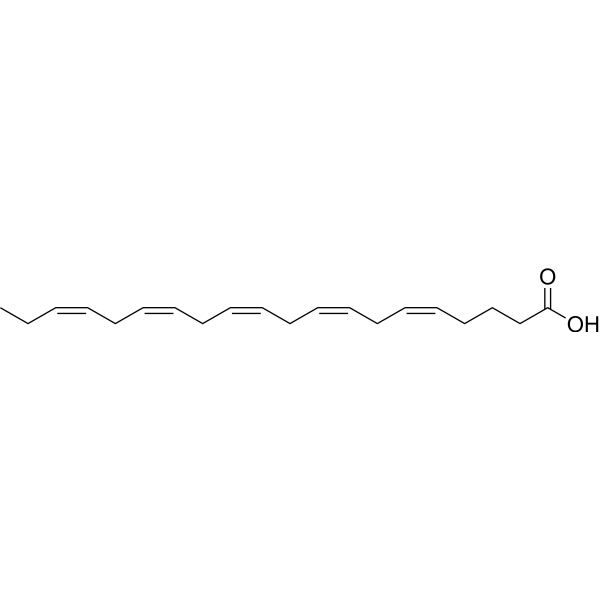
Eicosapentaenoic Acid (EPA) is an orally active Omega-3 long-chain polyunsaturated fatty acid (ω-3 LC-PUFA). Eicosapentaenoic Acid exhibits a DNA demethylating action that promotes the re-expression of the tumor suppressor gene CCAAT/enhancer-binding protein δ (C/EBPδ). Eicosapentaenoic Acid activates RAS/ERK/C/EBPβ pathway through H-Ras intron 1 CpG island demethylation in U937 leukemia cells. Eicosapentaenoic Acid can promote relaxation of vascular smooth muscle cells and vasodilation .
30
30 Publications Verification
Cat. No.: HY-W011269
CAS No.: 73167-03-0
Synonyms: EPA sodium; Timnodonic acid sodium
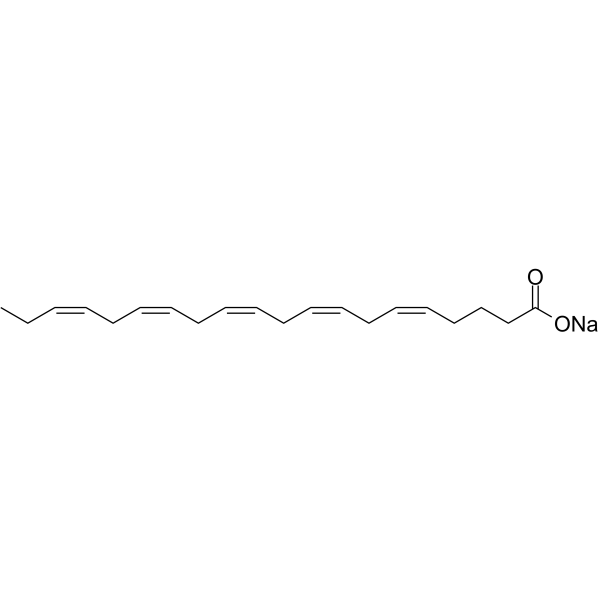
Eicosapentaenoic Acid (EPA)sodium is an orally active Omega-3 long-chain polyunsaturated fatty acid (ω-3 LC-PUFA). Eicosapentaenoic Acid sodium exhibits a DNA demethylating action that promotes the re-expression of the tumor suppressor gene CCAAT/enhancer-binding protein δ (C/EBPδ). Eicosapentaenoic Acid sodium activates RAS/ERK/C/EBPβ pathway through H-Ras intron 1 CpG island demethylation in U937 leukemia cells. Eicosapentaenoic Acid sodium can promote relaxation of vascular smooth muscle cells and vasodilation .
24
24 Cited Publications
Cat. No.: HY-N0729
CAS No.: 60-33-3
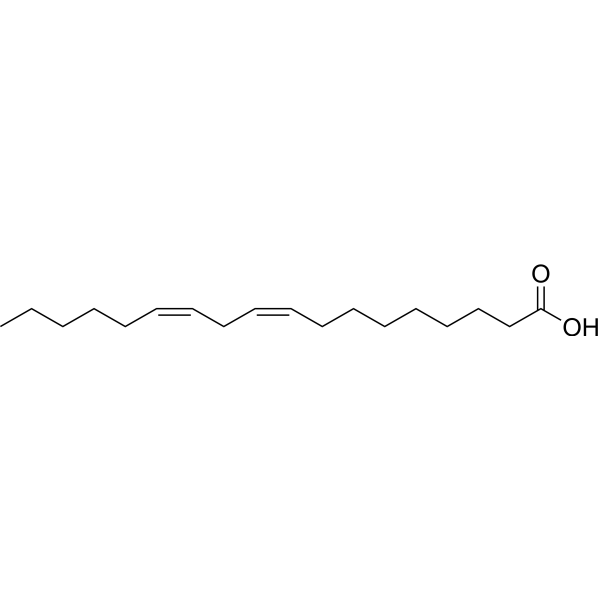
Linoleic acid is a common polyunsaturated (PUFA) found in plant-based oils, nuts and seeds. Linoleic acid is a part of membrane phospholipids, and functions as a structural component to maintain a certain level of membrane fluidity of the transdermal water barrier of the epidermis. Linoleic acid induces red blood cells and hemoglobin damage via oxidative mechanism .
24
24 Cited Publications
Cat. No.: HY-N0729R
CAS No.: 60-33-3
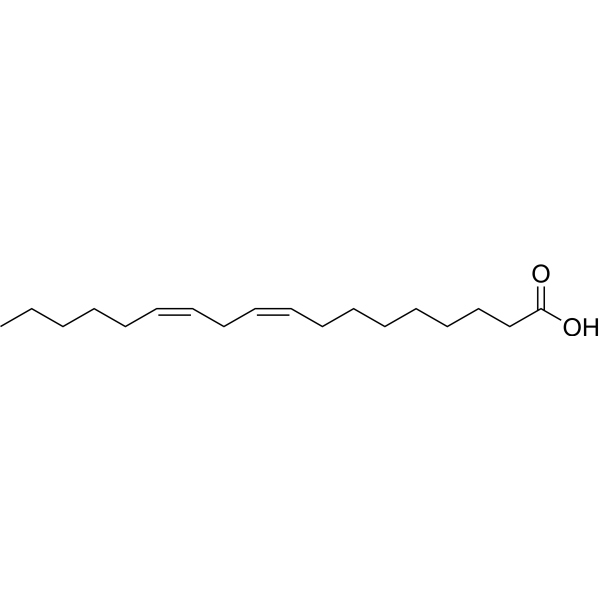
Linoleic acid (Standard) is the analytical standard of Linoleic acid (HY-N0729). This product is intended for research and analytical applications. Linoleic acid is a common polyunsaturated (PUFA) found in plant-based oils, nuts and seeds. Linoleic acid is a part of membrane phospholipids, and functions as a structural component to maintain a certain level of membrane fluidity of the transdermal water barrier of the epidermis. Linoleic acid induces red blood cells and hemoglobin damage via oxidative mechanism .
6
6 Cited Publications
Cat. No.: HY-N7140R
CAS No.: 506-26-3
Synonyms: γ-Linolenic acid (Standard)
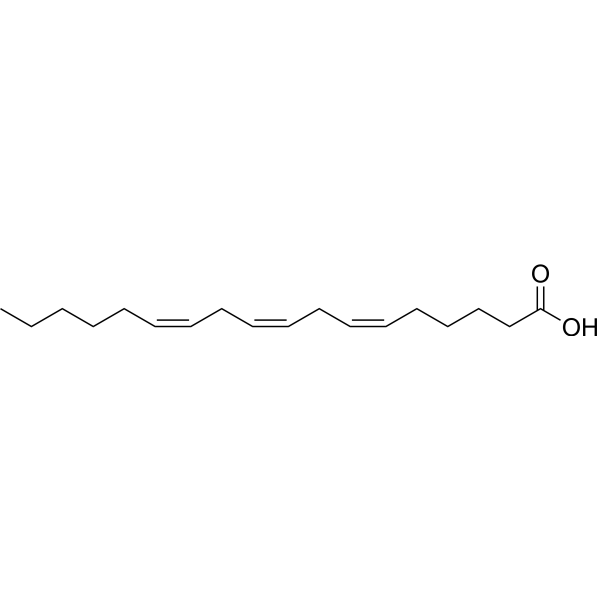
Gamma-Linolenic acid (Standard) is the analytical standard of Gamma-Linolenic acid. This product is intended for research and analytical applications. Gamma-linolenic acid (γ-Linolenic acid) is an omega-6 (n-6), 18 carbon (18C-) polyunsaturated fatty acid (PUFA) extracted from Perilla frutescens. Gamma-linolenic acid supplements could restore needed PUFAs and mitigate the disease .
1
1 Cited Publications
Cat. No.: HY-21268
CAS No.: 301-00-8
Synonyms: Linolenic acid methyl ester
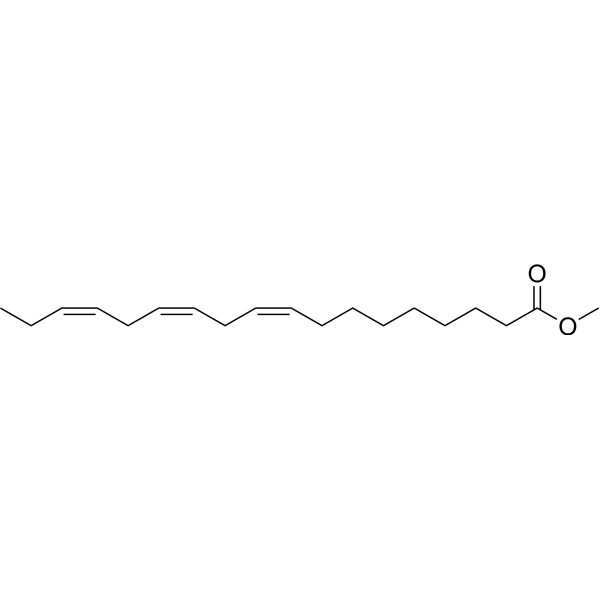
Methyl linolenate is a polyunsaturated fattly acid (PUFA). Methyl linolenate has an anti-melanogenesis activity with an IC50 of 60 μM. Methyl linolenate can also be used for studies of the mechanisms and prevention of oxidation/peroxidation of unsaturated fatty acids .
Cat. No.: HY-N0729S2
CAS No.: 287111-25-5
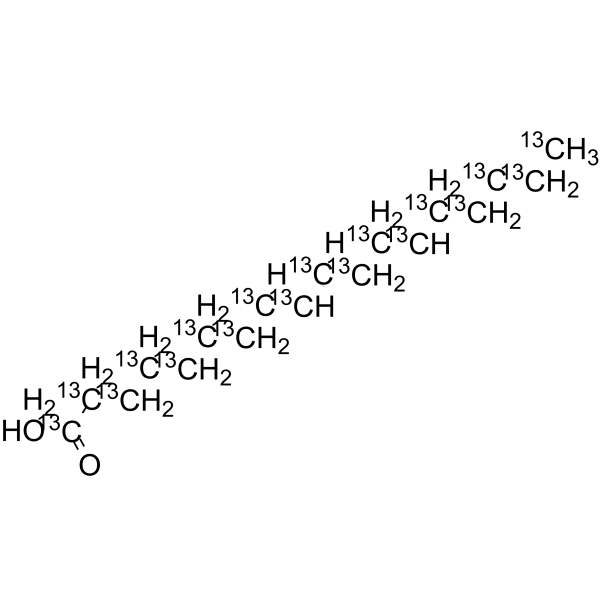
Linoleic acid- 13C18 is the 13C labeled Linoleic acid. Linoleic acid is a common polyunsaturated (PUFA) found in plant-based oils, nuts and seeds. Linoleic acid is a part of membrane phospholipids, and functions as a structural component to maintain a certain level of membrane fluidity of the transdermal water barrier of the epidermis. Linoleic acid induces red blood cells and hemoglobin damage via oxidative mechanism .
Cat. No.: HY-172199
CAS No.: 3076954-42-9
Target:  

ClpP

연구분야:  

Cancer

THX6 is an hClpP activator with an EC50 of 1.18 μM. THX6 improves off-target profile with no affinity for hD2R and only weak affinity for hD3R (Ki = 51.1 µM) in HEK293 cells. THX6 shows good cytotoxicity in ONC201-resistant cells with an IC50 of 0.13 μM. THX6 changes the levels of fatty acids (PUFAs, MUFAs, and SFAs) in DIPG cells. THX6 decreases the level of proteins involved in oxidative phosphorylation, biogenesis, and mitophagy proteins, thereby resulting in a global collapse of mitochondrial integrity and function. THX6 can be used for diffuse intrinsic pontine glioma research .
Cat. No.: HY-N0729S
CAS No.: 79050-23-0
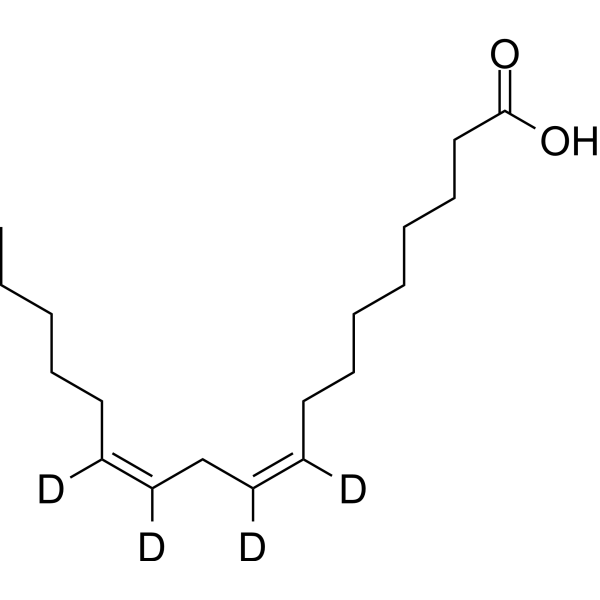
Linoleic Acid-d4 is the deuterium labeled Linoleic acid. Linoleic acid is a common polyunsaturated (PUFA) found in plant-based oils, nuts and seeds. Linoleic acid is a part of membrane phospholipids, and functions as a structural component to maintain a certain level of membrane fluidity of the transdermal water barrier of the epidermis. Linoleic acid induces red blood cells and hemoglobin damage via oxidative mechanism .
Cat. No.: HY-B0660R
CAS No.: 10417-94-4
Synonyms: EPA (Standard); Timnodonic acid (Standard)
Eicosapentaenoic Acid (Standard) is the analytical standard of Eicosapentaenoic Acid. This product is intended for research and analytical applications. Eicosapentaenoic Acid (EPA) is an orally active Omega-3 long-chain polyunsaturated fatty acid (ω-3 LC-PUFA). Eicosapentaenoic Acid exhibits a DNA demethylating action that promotes the re-expression of the tumor suppressor gene CCAAT/enhancer-binding protein δ (C/EBPδ). Eicosapentaenoic Acid activates RAS/ERK/C/EBPβ pathway through H-Ras intron 1 CpG island demethylation in U937 leukemia cells. Eicosapentaenoic Acid can promote relaxation of vascular smooth muscle cells and vasodilation .
Cat. No.: HY-158812
CAS No.: 2133456-02-5
Target:  

Drug Derivative

연구분야:  

Metabolic Disease

Eicosapentaenoyl-L-carnitine chloride is a long-chain acylcarnitine composed of Eicosapentaenoic Acid (HY-B0660) and L-Carnitine (HY-B0399). The levels of Eicosapentaenoyl-L-carnitine chloride are increased in the eyes of mice fed a diet high in n-3/n-6 polyunsaturated fatty acids (PUFAs) in a mouse model of myopia induced by out-of-focus lenses .
Cat. No.: HY-N0729S4
CAS No.: 1169764-58-2
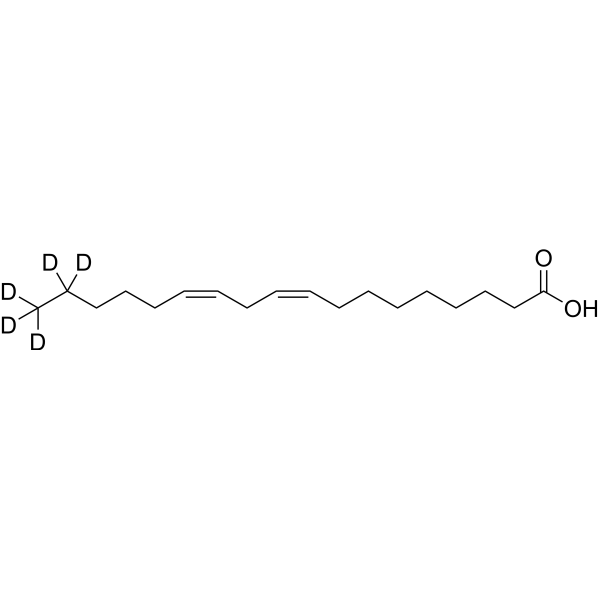
Linoleic Acid-d5 is the deuterium labeled Linoleic acid. Linoleic acid is a common polyunsaturated (PUFA) found in plant-based oils, nuts and seeds. Linoleic acid is a part of membrane phospholipids, and functions as a structural component to maintain a certain level of membrane fluidity of the transdermal water barrier of the epidermis. Linoleic acid induces red blood cells and hemoglobin damage via oxidative mechanism .
Cat. No.: HY-N0729S3
CAS No.: 98353-71-0
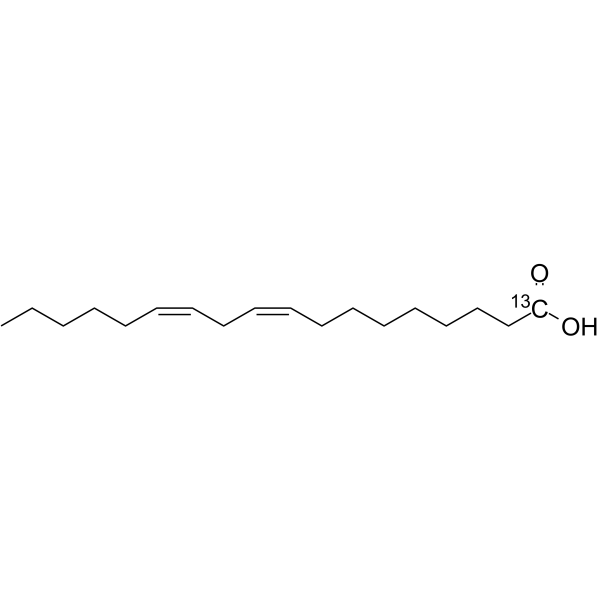
Linoleic acid- 13C1 is the 13C labeled Linoleic acid. Linoleic acid is a common polyunsaturated (PUFA) found in plant-based oils, nuts and seeds. Linoleic acid is a part of membrane phospholipids, and functions as a structural component to maintain a certain level of membrane fluidity of the transdermal water barrier of the epidermis. Linoleic acid induces red blood cells and hemoglobin damage via oxidative mechanism .
Cat. No.: HY-138148
CAS No.: 121107-97-9
Target:  

Lipoxygenase

연구분야:  

Inflammation/Immunology

13(S)-HpOTrE(γ) is a monohydroxy PUFA produced by the action of soybean lipoxygenase-1 (LO-1) on γ-linolenic acid. Further action of soybean LO-1 converts 13(S)-HpOTrE(γ) to all four isomers of 6,13-DiHOTrE.2 At concentrations greater than 100 μM, 13(S)-HpOTrE(γ) inhibits the activity of soybean LO-1.
Cat. No.: HY-134544
CAS No.: 5204-87-5
Calendic acid (8(E),10(E),12(Z)-Octadecatrienoic acid) is a conjugated polyunsaturated fatty acid (PUFA) that can be isolated from C. officinalis seed oil. Calendic acid has anticancer activity .
Cat. No.: HY-147335
CAS No.: 845779-89-7
Target:  

Endogenous Metabolite

연구분야:  

Cardiovascular Disease

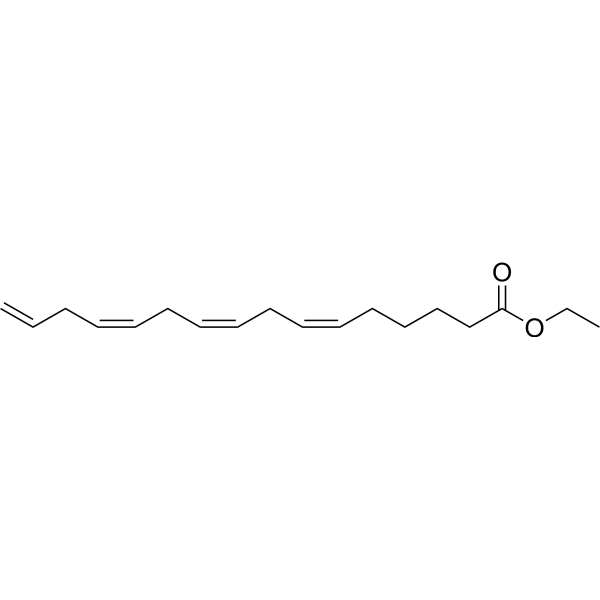
6,9,12,15-Hexadecatetraenoic acid-ethyl ester is an orally active n-1PUFA. 6,9,12,15-Hexadecatetraenoic acid-ethyl ester intake can reduce plasma triglyceride content in mice .
Cat. No.: HY-124303
CAS No.: 136156-13-3
연구분야:  

Metabolic Disease

4(Z),7(Z),10(Z),13(Z),16(Z)-Nonadecapentaenoic acid is a polyunsaturated fatty acid (PUFA).
Cat. No.: HY-N0729S5
CAS No.: 31447-29-7
Synonyms: Deulinoleic acid
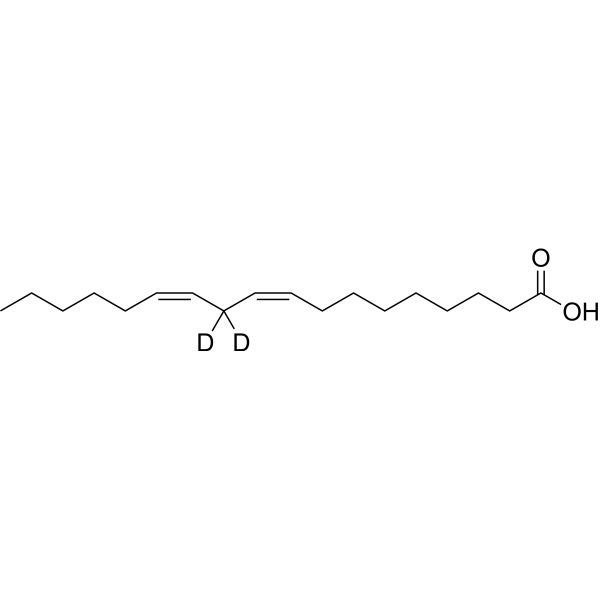
Linoleic Acid-d2 is the deuterium labeled Linoleic acid. Linoleic acid is a common polyunsaturated (PUFA) found in plant-based oils, nuts and seeds. Linoleic acid is a part of membrane phospholipids, and functions as a structural component to maintain a certain level of membrane fluidity of the transdermal water barrier of the epidermis. Linoleic acid induces red blood cells and hemoglobin damage via oxidative mechanism .
Cat. No.: HY-N0729S1
CAS No.: 2055171-21-4
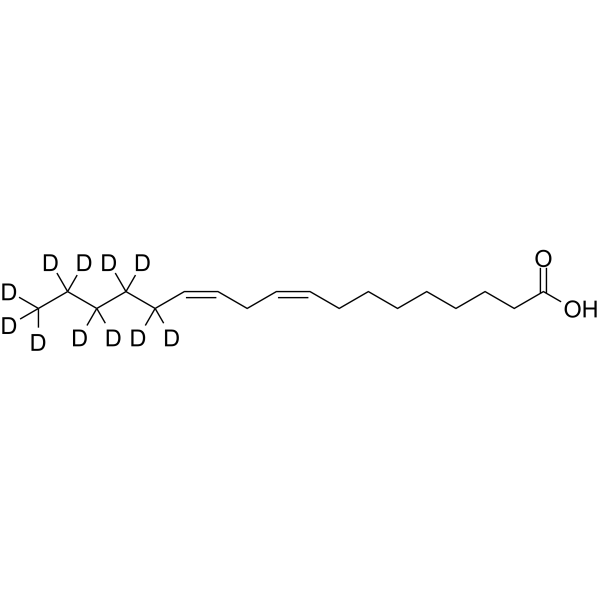
Linoleic acid-d11 is the deuterium labeled Linoleic acid. Linoleic acid is a common polyunsaturated (PUFA) found in plant-based oils, nuts and seeds. Linoleic acid is a part of membrane phospholipids, and functions as a structural component to maintain a certain level of membrane fluidity of the transdermal water barrier of the epidermis. Linoleic acid induces red blood cells and hemoglobin damage via oxidative mechanism .
Cat. No.: HY-141635
CAS No.: 61012-46-2
Target:  

Endogenous Metabolite

연구분야:  

Metabolic Disease

cis-11,14-Eicosadienoic acid methyl ester is a more lipid soluble form of the ω-6 C20-2 fatty acid 11(Z),14(Z)-eicosadienoic acid, a naturally occurring PUFA. 11(Z),14(Z)-Eicosadienoic acid competitively inhibits inosine 5’-monophosphate dehydrogenase (Ki=3.1 μM) and inhibits the binding of LTB4 to its receptor on neutrophils (Ki=3.0 μM). Also, serum levels of eicosadienoic acids negatively correlate with degree of sleep disturbance.3 Eicosadienoic acids are converted by desaturases, in vivo, to eicosatrienoic acids, which are potent vasodilators.

