14 Results for "

Phe-Pro

" in MedChemExpress (MCE) Product Catalog:
Products (14)

14 Results for "Phe-Pro" in MCE Product Catalog:

7
7 Cited Publications
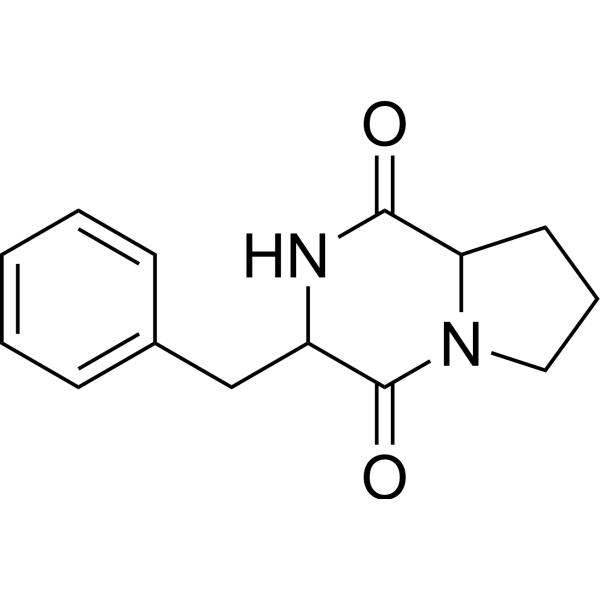
Cat. No.: HY-P1934
CAS No.: 14705-60-3
Synonyms: Cyclo(PhenylalanylProlyl); A-64863
Cyclo(Phe-Pro) (Cyclo(phenylalanylprolyl)) is a quorum-sensing molecule of Vibrio vulnificus that specifically interacts with RIG-I, inhibiting RIG-I polyubiquitination, suppressing IRF-3 activation, and reducing type I interferon production. Cyclo(Phe-Pro) enhances susceptibility to HCV and influenza virus and also alleviates plant aluminum toxicity stress. The mechanism of Cyclo(Phe-Pro) involves the regulation of host immune signaling pathways, bacterial virulence gene expression, and plant antioxidant systems, making it a promising candidate for research in viral infections, bacterial virulence regulation, and agricultural stress resistance .
loading...
    loading...
2
2 Cited Publications
Cat. No.: HY-122542A
CAS No.: 82188-90-7
Synonyms: Pebac; D-Phenylalanyl-Prolyl-arginyl Chloromethyl Ketone; D-Phe-Pro-Arg-CH2Cl
PPACK dihydrochloride is a potent, peptidic inhibitor targeting thrombin and granzyme GZMK. PPACK dihydrochloride specifically blocks the activities of thrombin and GZMK, thereby inhibiting thrombin-mediated PAR-1 cleavage, as well as downstream inflammatory and procoagulant signaling pathways. Through stabilizing IκB proteins, blocking NF-κB activation and reducing systemic levels of proinflammatory/procoagulant biomarkers, PPACK dihydrochloride exerts multiple effects including anti-inflammatory, antithrombotic, barrier repair, and inhibition of atherosclerotic plaque progression. PPACK dihydrochloride binds to platelets without interference from kininogen, effectively limiting acute thrombus growth and reducing eosinophil infiltration and goblet cell hyperplasia in asthma models. PPACK dihydrochloride is an important tool molecule for investigating the mechanisms of atherosclerosis, asthma and related thromboinflammatory diseases .
loading...
    loading...
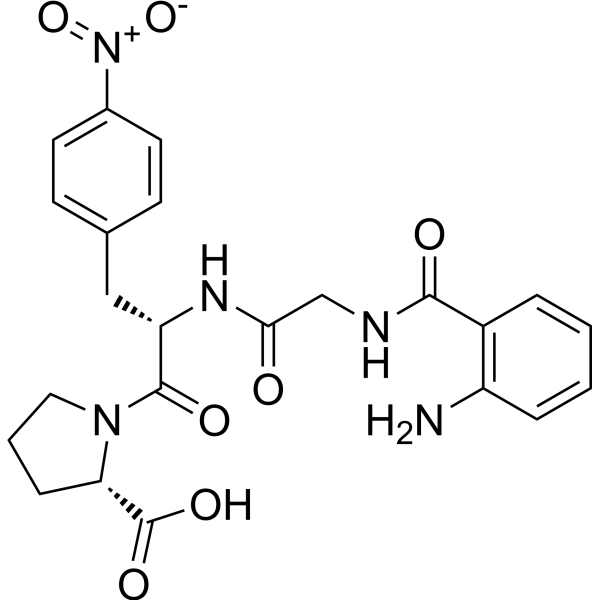
Cat. No.: HY-P4545
CAS No.: 67482-93-3
Target:  

Angiotensin Receptor

Research Areas:  

Others

Abz-Gly-p-nitro-Phe-Pro-OH is the fluorescent substrate angiotensin I converting enzyme (ACE-I) with 355 nm excitation and 405 nm emission wavelengths .
loading...
    loading...
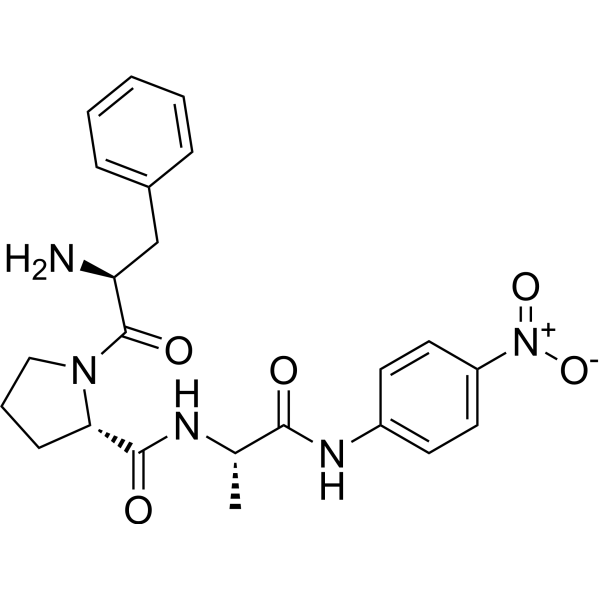
Cat. No.: HY-P4470
CAS No.: 201738-99-0
Target:  

Ser/Thr Protease

Research Areas:  

Cancer

Phe-Pro-Ala-pNA is a chromogenic substrate of tripeptidyl peptidase. Phe-Pro-Ala-pNA can be used to test tripeptidyl peptidase activity .
loading...
    loading...
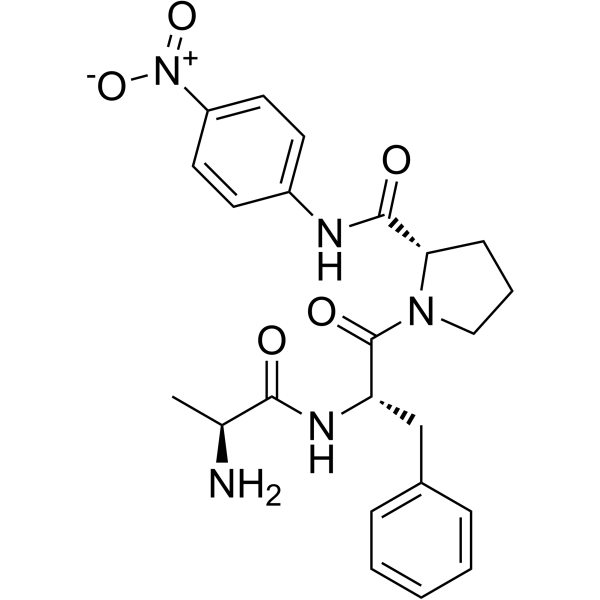
Cat. No.: HY-P4464
CAS No.: 201732-35-6
Target:  

Ser/Thr Protease

Research Areas:  

Cancer

Ala-Phe-Pro-pNA is a chromogenic substrate of tripeptidyl peptidase. Ala-Phe-Pro-pNA can be used to test tripeptidyl peptidase activity .
loading...
    loading...
Cat. No.: HY-P4464A
Target:  

Ser/Thr Protease

Research Areas:  

Cancer

Ala-Phe-Pro-pNA TFA is a chromogenic substrate of tripeptidyl peptidase. Ala-Phe-Pro-pNA TFA can be used to test tripeptidyl peptidase activity .
loading...
    loading...
Cat. No.: HY-P3588
CAS No.: 2920938-90-3
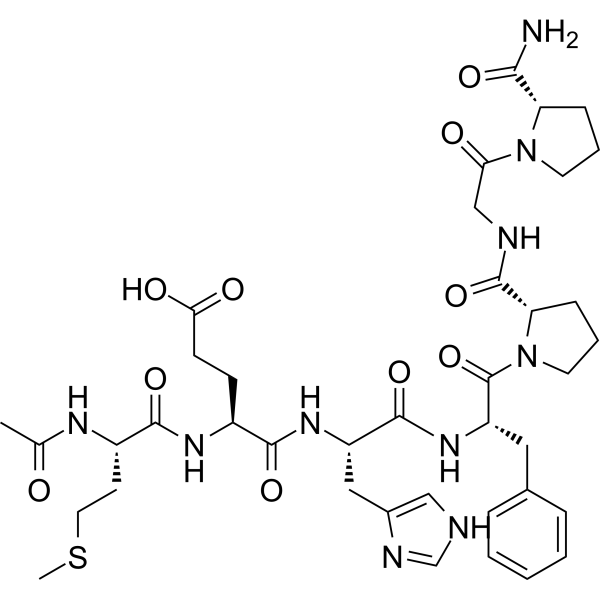
N-Acetyl semax amidate is a derivative of Semax (HY-P1146) (Met-Glu-His-Phe-Pro-Gly-Pro) obtained via N-terminal acetylation and C-terminal amidation, and it exhibits nootropic and neuroprotective activities. N-Acetyl semax amidate exerts neuroprotective effects by upregulating the expression of BDNF and NGF, inhibiting neuronal apoptosis, alleviating oxidative stress, and reducing glutamate excitotoxicity. N-Acetyl semax amidate can be used in research related to central nervous system diseases such as ischemic stroke, cognitive impairment, and neurodegenerative diseases .
loading...
    loading...
Cat. No.: HY-P4320
CAS No.: 166184-23-2
Target:  

Integrin

Research Areas:  

Cancer

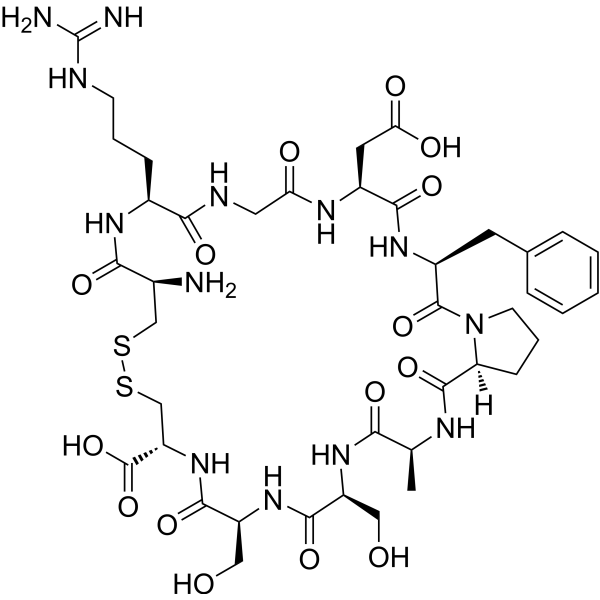
Cys-Arg-Gly-Asp-Phe-Pro-Ala-Ser-Ser-Cys (Disulfide bridge: Cys1-Cys10), a decapeptide containing a cyclic RGD active sequence, is an Integrin αIIbβ3 antagonist that inhibits platelet and Adhesion of proMMP-13 .
loading...
    loading...
Cat. No.: HY-P1937
CAS No.: 53049-06-2
Target:  

Influenza Virus

Research Areas:  

Infection

Cyclo(-Met-Pro) is a cyclic dipeptide consisting of the amino acids methionine and proline. Cyclo(-Met-Pro) exhibits weak inhibitory activity against the influenza A virus (H3N2) (5 mM, 2.1% inhibition), while cis-cyclo(Leu-Pro) and cis-cyclo(Phe-Pro) shows significant antiviral activity .
loading...
    loading...
Cat. No.: HY-P4528
CAS No.: 749831-27-4
Target:  

Ser/Thr Protease

Research Areas:  

Others

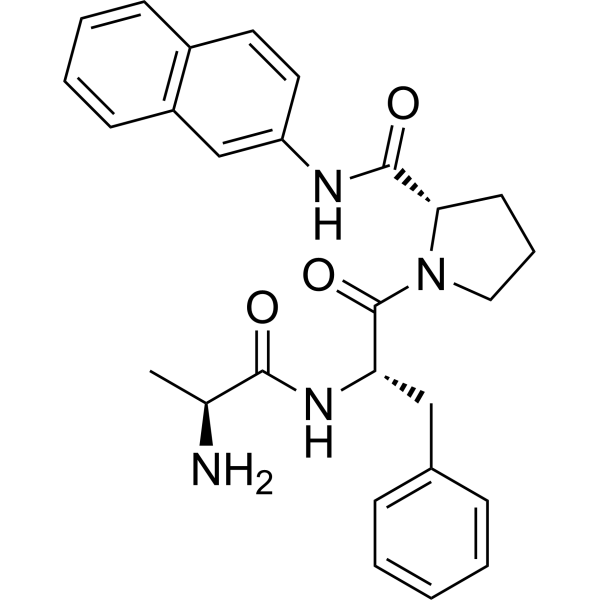
Ala-Phe-Pro-βNA is the subsrate of prolyl tripeptidyl aminopeptidase, which is from Porphyromonas gingivalis. Ala-Phe-Pro-βNA binds to H-Ala-Ile-pyrrolidin-2-yl boronic acid for PTP39 and the E636A mutant with Ki values of 88.1 nM and 48.8 nM, respectivley .
loading...
    loading...
Cat. No.: HY-P4361
CAS No.: 128802-73-3
Target:  

Peptides

Research Areas:  

Others

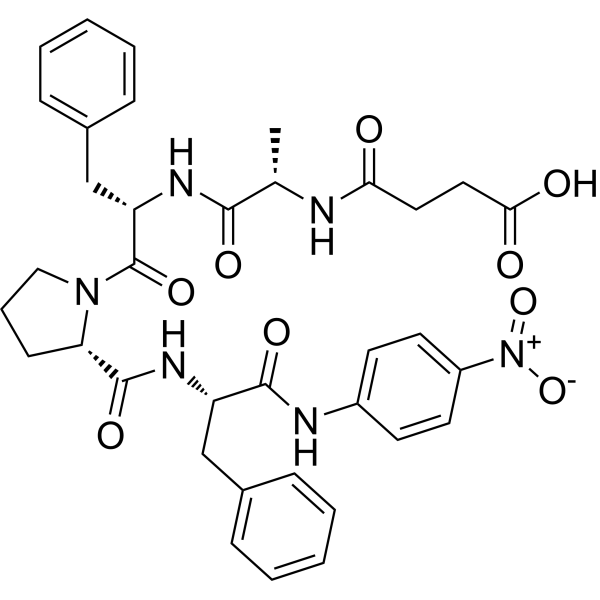
Suc-Ala-Phe-Pro-Phe-pNA is a peptide substrate .
loading...
    loading...
Cat. No.: HY-D1532
CAS No.: 263718-22-5
Target:  

Parasite

Research Areas:  

Others

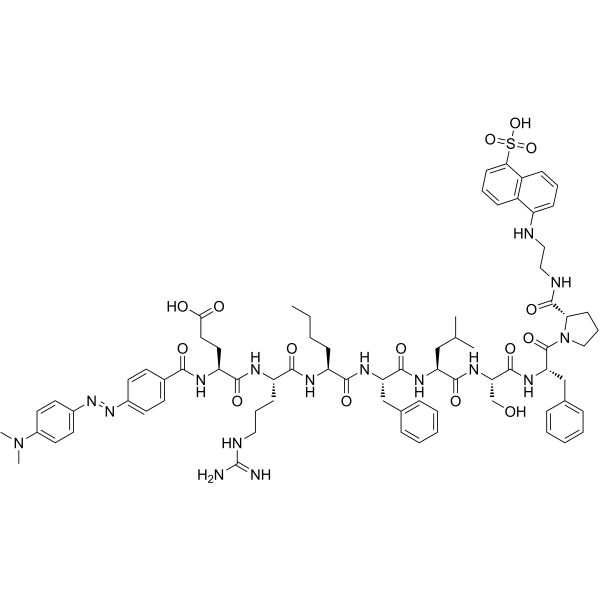
DABCYL-Glu-Arg-Nle-Phe-Leu-Ser-Phe-Pro-EDANS is a fluorescent dye, and can be applied in a fluorogenic substrate for an aspartyl proteinase from human malaria parasite .
loading...
    loading...
Cat. No.: HY-139814
CAS No.: 1979130-73-8
Research Areas:  

Others

d-Phe-Pro-Arg-PABA-Resorufin is a selective Thrombin substrate. d-Phe-Pro-Arg-PABA-Resorufin can be cleaved by thrombin to release fluorescent and chromogenic products. d-Phe-Pro-Arg-PABA-Resorufin enables sensitive detection of the thrombin inhibitor Dabigatran (HY-10163) via thrombin-mediated cleavage attenuation .
loading...
    loading...
Cat. No.: HY-136665
CAS No.: 38675-10-4
Purity:  99.51%
Synonyms: tert-Butoxycarbonyl-D-Phenylalanyl-L-Proline
Target:  

Drug Intermediate

Research Areas:  

Others

Boc-D-Phe-Pro-OH (tert-Butoxycarbonyl-D-phenylalanyl-L-proline) is a synthetic intermediate useful for pharmaceutical synthesis.
loading...
    loading...
  • 1

