Search Result
Results for "
Silicon
" in MedChemExpress (MCE) Product Catalog:
30
Biochemical Assay Reagents
2
Isotope-Labeled Compounds
| Cat. No. |
Product Name |
Target |
Research Areas |
Chemical Structure |
-
- HY-D0175
-
|
γ-Aminopropyltriethoxysilane; APTES
|
Biochemical Assay Reagents
|
Others
|
|
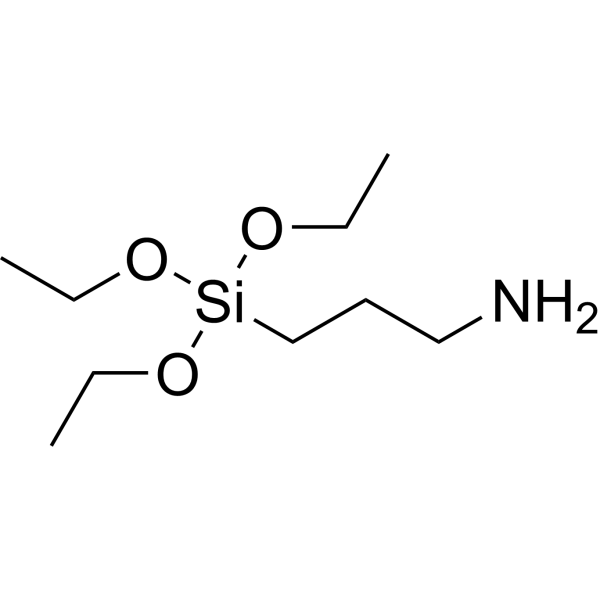
3-Aminopropyltriethoxysilane (APTES) acts as a strong glue to immobilize biomolecules such as antibodies and enzymes to silicon and silicon derivatives such as silicon nitride (Si3N4 )) on. 3-Aminopropyltriethoxysilane also acts as a spacer, providing biomolecules with more spatial freedom during immobilization for higher specific activity. 3-Aminopropyltriethoxysilane can form a more stable, sensitive, and highly biocompatible bioanalytical platform by immobilizing biomolecules onto some solid materials, electrode materials, nanomaterials, and nanocomposites .
|
-
-
- HY-W442186
-
|
Methyl-phenyl-chlorosilane
|
Biochemical Assay Reagents
|
Others
|
|
Chloro(methyl)(phenyl)silane (Methyl-phenyl-chlorosilane) is a silicon hydride. Chloro(methyl)(phenyl)silane undergoes an addition reaction with long-chain unsaturated fatty acid esters .
|
-
-
- HY-W019831
-
|
Silica; Colloidal anhydrous silica
|
Biochemical Assay Reagents
|
Others
|
|
Silicon dioxide (Silica) is the core of gold-coated silica nanoparticles. Silicon dioxide has the characteristic of a spherical structure, with a layer of gold nanoparticles covering its surface. Silicon dioxide can be used as a coating material for quantum dots, enhancing their stability, reducing toxicity and improving hydrophilicity .
|
-
-
- HY-B0314
-
-
-
- HY-D2222
-
|
|
Fluorescent Dye
|
Others
|
|
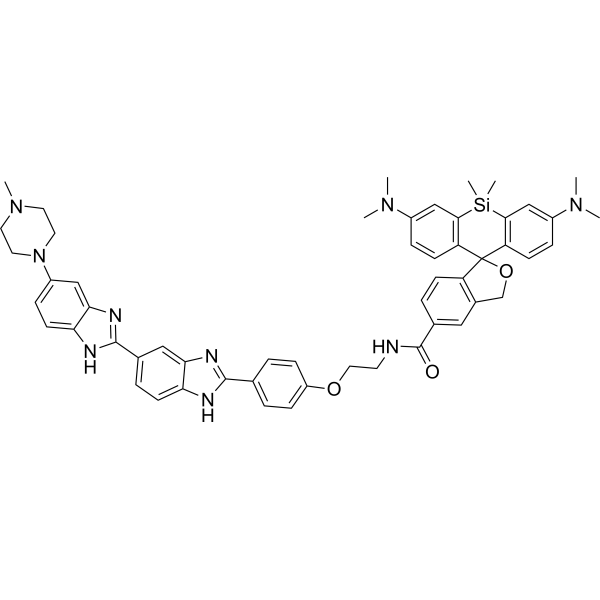
5-HMSiR-Hoechst is a DNA probe. 5-HMSiR-Hoechst comprises Hoechst 33258 and spontaneously blinking far-red hydroxymethyl silicon-rhodamine (HMSiR). 5-HMSiR-Hoechst can stain living cells. Ex/Em=640 nm/675 nm .
|
-
-
- HY-W089777
-
|
GPTMS
|
Biochemical Assay Reagents
|
Others
|
|
3-Glycidyloxypropyltrimethoxysilane (GPTMS) is a silicon source for the preparation of inorganic-organic hybrid polymers. 3-Glycidyloxypropyltrimethoxysilane can be used to prepare hard coatings of organic polymers, such as contact lens materials in the optical industry, as well as related materials in the fields of electronics, thin films, sensors, nanoimprinting, waveguides, and biology .
|
-
-
- HY-B2205
-
|
Activated magnesium silicate
|
Environmental Pollutants
Fungal
|
Infection
Inflammation/Immunology
|
|
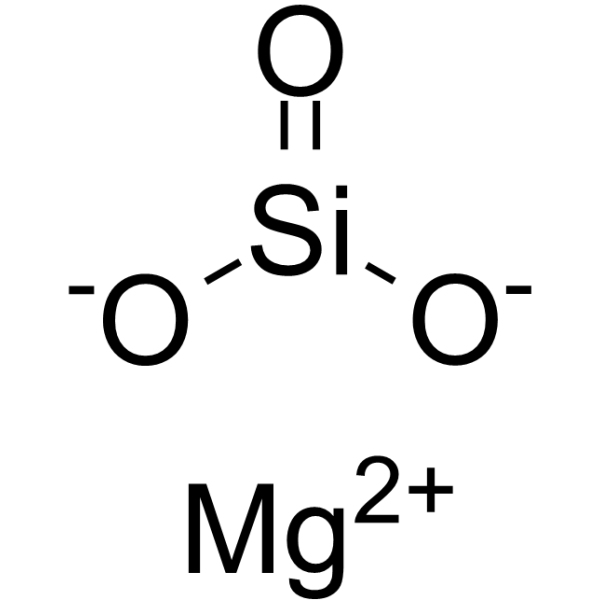
Magnesium silicate (Activated magnesium silicate) is an orally active compound composed of magnesium oxide (MgO) and silicon dioxide (SiO2). Magnesium silicate can be used in the preparation of food additives, antacids and anti-ulcer agents. Magnesium silicate is also a piezoelectric biomaterial, deodorant, decolorizing agent and antifungal agent .
|
-
-
- HY-W784030
-
|
|
Amino Acid Derivatives
Biochemical Assay Reagents
Fluorescent Dye
|
Others
|
|
N-TCO-L-lysine is a non-canonical amino acid. N-TCO-L-lysine contains a trans-cyclooctene (TCO) bioorthogonal reactive linker. N-TCO-L-lysine undergoes a bioorthogonal click reaction with SiR-Tz to enable fluorescent labeling of endogenously expressed proteins with site-specific incorporation. When used in combination with SiR-Tz, N-TCO-L-lysine allows super-resolution and live-cell imaging of endogenous proteins .
|
-
-
- HY-W1123939C
-
|
|
Biochemical Assay Reagents
|
Others
|
|
Silane-PEG5000-COOH can be used to modify proteins, peptides and other materials with active groups. The carboxyl group (-COOH) can easily form a stable amide bond with the amino group, and can also form an ester bond with the hydroxyl group. Silane-functionalized PEG (Silane-PEG-X) can be used to modify glass, silicon, etc .
|
-
-
- HY-D1950
-
|
|
Fluorescent Dye
|
Others
|
|
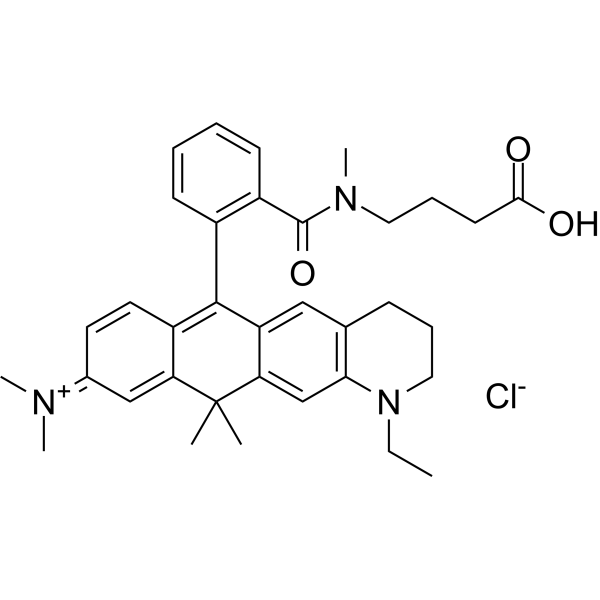
ATTO 633 is a fluorescent dye with an absorption peak at approximately 630 nm and a fluorescence emission peak at 651 nm. ATTO 633 can be used in nanomechanical photothermal microscopy studies .
|
-
-
- HY-D1721
-
|
|
Fluorescent Dye
Thrombin
|
Others
|
|
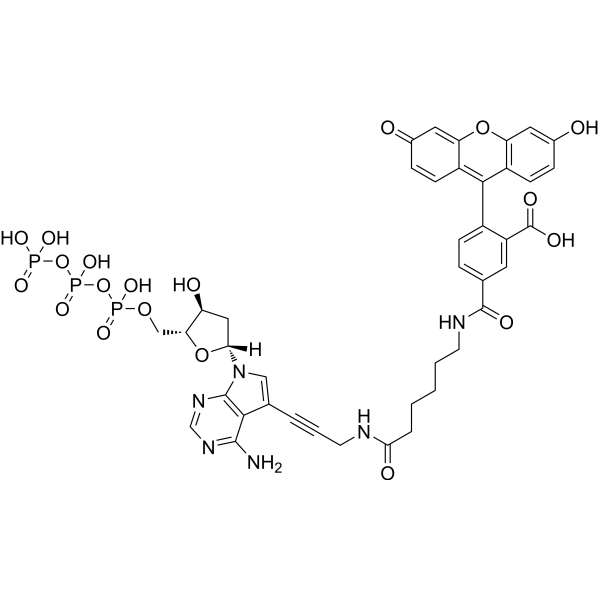
Fluorescein-12-dATP is a fluorescein-labeled deoxyadenosine triphosphate and signal amplifier. Fluorescein-12-dATP can be incorporated into the 3'-end of exposed thrombin-binding aptamers via terminal deoxynucleotidyl transferase to form multi-labeled nucleic acid chains, which are used for signal amplification in thrombin detection. Fluorescein-12-dATP acts as a fluorescent detection probe in chip-based aptamer sandwich biosensors for the detection of thrombin in serum. Fluorescein-12-dATP can be used in studies related to thrombin detection .
|
-
-
- HY-W110166
-
|
|
Biochemical Assay Reagents
|
Others
|
|
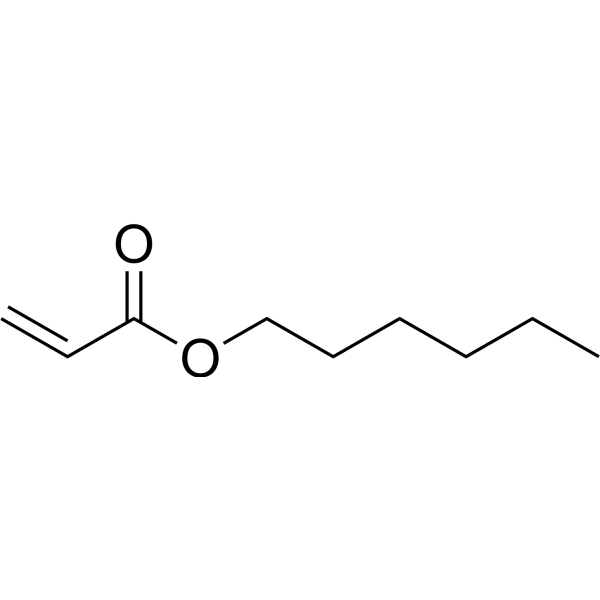
Hexyl acrylate is a photoinitiator. Hexyl acrylate undergoes self-polymerization via piCVD under 254 nm UV radiation. Hexyl acrylate can be polymerized by atom transfer radical polymerization technology .
|
-
-
- HY-131164
-
|
|
Antibiotic
|
Infection
|
|
Potassium clavulanate mixture with silicon dioxide (1:1) is a powdered mixture of 1 part Potassium clavulanate to 1 part Silicon dioxide .
|
-
-
- HY-W773294
-
|
Tetramethylammonium silicate, 16-20% in water
|
Biochemical Assay Reagents
|
Others
|
|
Tetramethylammonium silicate solution is a salt solution formed by tetramethylammonium cations and silicate anions. Tetramethylammonium silicate solution can be used to prepare high-quality silicon dioxide films on substrates .
|
-
-
- HY-141464
-
|
Fmoc-Asn(Ac3AcNH-beta-Glc)-OH
|
Amino Acid Derivatives
|
Cancer
|
|
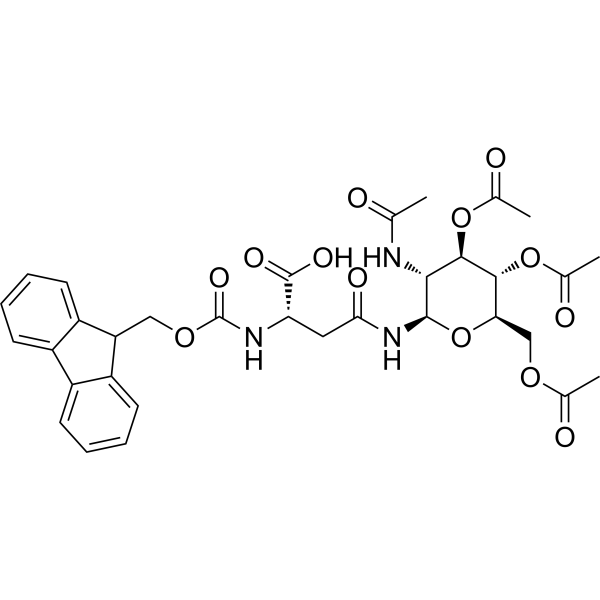
Fmoc-L-Asn(beta-D-GlcNAc(Ac)3)-OH (Fmoc-Asn(Ac3AcNH-beta-Glc)-OH) can be used in the synthesis of silicon-fluoride acceptor (SiFA) derivatized octreotate derivatives. SiFA-octreotate analogues, as tumor imaging agents, are useful tool for the research of positron emission tomography (PET) .
|
-
-
- HY-W738979
-
|
|
Photosensitizer
|
|
|
Silicon naphthalocyanine dichloride is a photosensitizer with potential anti-tumor activity. Silicon naphthalocyanine dichloride is used as a cancer-inhibiting compound in photodynamic therapy. Silicon naphthalocyanine dichloride can effectively absorb light energy of a specific wavelength, thereby generating oxygen free radicals that help destroy cancer cells. The biocompatibility of Silicon naphthalocyanine dichloride makes it show good prospects in medical applications.
|
-
-
- HY-157006A
-
|
|
Biochemical Assay Reagents
|
Others
|
|
TCO-PEG3-NH2 is a click chemistry reagent that contains a TCO group and undergoes the inverse electron-demand Diels-Alder (iEDDA) reaction with tetrazine-containing molecules .
|
-
-
- HY-D2243
-
|
|
Fluorescent Dye
|
Others
|
|
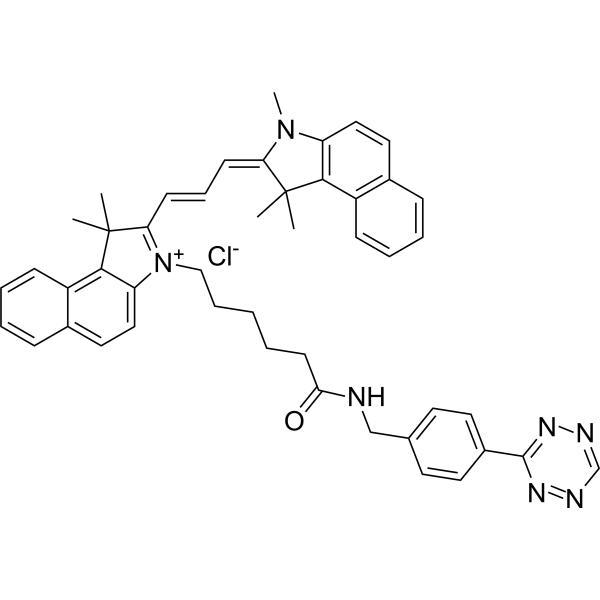
Cy3.5 tetrazineis a Tetrazine modified Cy3.5 fluorescent dye. SiR-tetrazine is a click chemistry reagent, it contains a Tetrazine group that can undergo an inverse electron demand Diels-Alder reaction (iEDDA) with molecules containing TCO groups .
|
-
-
- HY-174955B
-
|
|
Biochemical Assay Reagents
|
Others
|
|
mPEG5000-Silane is a PEG derivative containing silane that can be used to modify glass, silicon or other surfaces by reacting the hydroxyl groups with ethoxy (methoxy) silane .
|
-
-
- HY-174955A
-
|
|
Biochemical Assay Reagents
|
Others
|
|
mPEG2000-Silane is a PEG derivative containing silane that can be used to modify glass, silicon or other surfaces by reacting the hydroxyl groups with ethoxy (methoxy) silane .
|
-
-
- HY-B2143
-
|
|
Environmental Pollutants
Biochemical Assay Reagents
Bacterial
|
Infection
|
|
Montmorillonite is composed of two layers of co-top connected silicon oxygen tetrahedral sheet and one layer of co-edge connected aluminum (magnesium) oxygen (hydroxide) octahedral sheet, which consists of a 2:1 structure containing water of crystal. Montmorillonite can be used for large-scale industrial decontamination and can effectively remove harmful ions in sewage. Montmorillonite can also be used as a carrier of ionic antibacterial agents because of its exchangeable hydrated cations, which can adsorb bacteria .
|
-
-
- HY-174970D
-
|
Silane-PEG3400-azide
|
Biochemical Assay Reagents
|
Others
|
|
Silane-PEG3400-N3 (Silane-PEG3400-azide) is a PEG derivative composed of silane, PEG units, and azide groups, which can be used to modify glass, silicon, or other surfaces by reacting hydroxyl groups with ethoxy (methoxy) silanes. Silane-PEG3400-N3 contains an azide group and can undergo copper-catalyzed azide-alkyne cycloaddition (CuAAc) with molecules containing alkyne groups. It can also undergo ring strain-driven alkyne-azide cycloaddition (SPAAC) with molecules containing DBCO or BCN groups .
|
-
-
- HY-176285S
-
-
-
- HY-174955
-
|
|
Biochemical Assay Reagents
|
Others
|
|
mPEG1000-Silane is a PEG derivative containing silane that can be used to modify glass, silicon or other surfaces by reacting the hydroxyl groups with ethoxy (methoxy) silane .
|
-
-
- HY-174971C
-
|
|
Biochemical Assay Reagents
|
Others
|
|
4-Arm-PEG20000-Silane is a silane-modified PEG derivative that can be used to modify glass, silicon or other surfaces by reacting hydroxyl groups with ethoxy (methoxy) silane. PEG can inhibit nonspecific surface binding .
|
-
-
- HY-174958B
-
|
|
Biochemical Assay Reagents
|
Others
|
|
6-Arm-PEG1000-Silane is a silane-modified PEG derivative that can be used to modify glass, silicon or other surfaces by reacting hydroxyl groups with ethoxy (methoxy) silane. PEG can inhibit nonspecific surface binding .
|
-
-
- HY-174958A
-
|
|
Biochemical Assay Reagents
|
Others
|
|
6-Arm-PEG600-Silane is a silane-modified PEG derivative that can be used to modify glass, silicon or other surfaces by reacting hydroxyl groups with ethoxy (methoxy) silane. PEG can inhibit nonspecific surface binding .
|
-
-
- HY-W1123939
-
|
|
Biochemical Assay Reagents
|
Others
|
|
Silane-PEG-COOH (MW 1000) can be used to modify proteins, peptides and other materials with active groups. The carboxyl group (-COOH) can easily form a stable amide bond with the amino group, and can also form an ester bond with the hydroxyl group. Silane-functionalized PEG (Silane-PEG-X) can be used to modify glass, silicon, etc .
|
-
-
- HY-174969
-
|
|
Biochemical Assay Reagents
|
Others
|
|
Alkyne-PEG1000-Silane is a PEG derivative composed of silane, PEG, and alkynyl groups. Alkyne-PEG1000-Silane is a click chemistry reagent. It contains an Alkyne group, which can undergo copper-catalyzed azide-alkyne cycloaddition reaction (CuAAc) with molecules containing an Azide group. The Silane group enables Alkyne-PEG1000-Silane to modify surfaces such as glass and silicon .
|
-
-
- HY-174970C
-
|
Silane-PEG2000-azide
|
Biochemical Assay Reagents
|
Others
|
|
Silane-PEG2000-N3 (Silane-PEG2000-azide) is a PEG derivative composed of silane, PEG units, and azide groups, which can be used to modify glass, silicon, or other surfaces by reacting hydroxyl groups with ethoxy (methoxy) silanes. Silane-PEG2000-N3 contains an azide group and can undergo copper-catalyzed azide-alkyne cycloaddition (CuAAc) with molecules containing alkyne groups. It can also undergo ring strain-driven alkyne-azide cycloaddition (SPAAC) with molecules containing DBCO or BCN groups .
|
-
-
- HY-174970H
-
|
Silane-PEG10000-azide
|
Biochemical Assay Reagents
|
Others
|
|
Silane-PEG10000-N3 (Silane-PEG10000-azide) is a PEG derivative composed of silane, PEG units, and azide groups, which can be used to modify glass, silicon, or other surfaces by reacting hydroxyl groups with ethoxy (methoxy) silanes. Silane-PEG10000-N3 contains an azide group and can undergo copper-catalyzed azide-alkyne cycloaddition (CuAAc) with molecules containing alkyne groups. It can also undergo ring strain-driven alkyne-azide cycloaddition (SPAAC) with molecules containing DBCO or BCN groups .
|
-
-
- HY-174970B
-
|
Silane-PEG1000-azide
|
Biochemical Assay Reagents
|
Others
|
|
Silane-PEG1000-N3 (Silane-PEG1000-azide) is a PEG derivative composed of silane, PEG units, and azide groups, which can be used to modify glass, silicon, or other surfaces by reacting hydroxyl groups with ethoxy (methoxy) silanes. Silane-PEG1000-N3 contains an azide group and can undergo copper-catalyzed azide-alkyne cycloaddition (CuAAc) with molecules containing alkyne groups. It can also undergo ring strain-driven alkyne-azide cycloaddition (SPAAC) with molecules containing DBCO or BCN groups .
|
-
-
- HY-176285S1
-
-
-
- HY-D3281
-
|
|
Fluorescent Dye
|
Others
|
|
Ctrl-CSR1 is a non-responsive CSR1 control dye and a matched control dye with a photostable, hydrophilic silicon rhodol backbone. Ctrl-CSR1 lacks a copper-responsive receptor .
|
-
-
- HY-W094560
-
|
|
Environmental Pollutants
Bacterial
|
Infection
|
|
Potassium silicate acts as a silicon-containing foliar fertilizer and an inhibitor of rice blast. Foliar application of Potassium silicate to the susceptible rice cultivar 'Metica 1' reduces the incidence of rice blast caused by Pyricularia oryzae. Potassium silicate does not enhance silicon uptake or accumulation in rice plants. Potassium silicate can be used in studies related to rice blast .
|
-
-
- HY-D3284
-
|
|
Fluorescent Dye
|
Others
|
|
CSF1 is a silicon-rhodamine-based, fluorescence-activatable probe with selectivity for Cu +. CSF1 colocalizes with the endoplasmic reticulum in live cells .
|
-
-
- HY-174971A
-
|
|
Biochemical Assay Reagents
|
Others
|
|
4-Arm-PEG5000-Silane is a silane-modified PEG derivative that can be used to modify glass, silicon or other surfaces by reacting hydroxyl groups with ethoxy (methoxy) silane. PEG can inhibit nonspecific surface binding .
|
-
-
- HY-174971
-
|
|
Biochemical Assay Reagents
|
Others
|
|
4-Arm-PEG2000-Silane is a silane-modified PEG derivative that can be used to modify glass, silicon or other surfaces by reacting hydroxyl groups with ethoxy (methoxy) silane. PEG can inhibit nonspecific surface binding .
|
-
-
- HY-174958E
-
|
|
Biochemical Assay Reagents
|
Others
|
|
6-Arm-PEG5000-Silane is a silane-modified PEG derivative that can be used to modify glass, silicon or other surfaces by reacting hydroxyl groups with ethoxy (methoxy) silane. PEG can inhibit nonspecific surface binding .
|
-
-
- HY-174958
-
|
|
Biochemical Assay Reagents
|
Others
|
|
6-Arm-PEG400-Silane is a silane-modified PEG derivative that can be used to modify glass, silicon or other surfaces by reacting hydroxyl groups with ethoxy (methoxy) silane. PEG can inhibit nonspecific surface binding .
|
-
-
- HY-174971B
-
|
|
Biochemical Assay Reagents
|
Others
|
|
4-Arm-PEG10000-Silane is a silane-modified PEG derivative that can be used to modify glass, silicon or other surfaces by reacting hydroxyl groups with ethoxy (methoxy) silane. PEG can inhibit nonspecific surface binding .
|
-
-
- HY-174958C
-
|
|
Biochemical Assay Reagents
|
Others
|
|
6-Arm-PEG2000-Silane is a silane-modified PEG derivative that can be used to modify glass, silicon or other surfaces by reacting hydroxyl groups with ethoxy (methoxy) silane. PEG can inhibit nonspecific surface binding .
|
-
-
- HY-174958D
-
|
|
Biochemical Assay Reagents
|
Others
|
|
6-Arm-PEG3400-Silane is a silane-modified PEG derivative that can be used to modify glass, silicon or other surfaces by reacting hydroxyl groups with ethoxy (methoxy) silane. PEG can inhibit nonspecific surface binding .
|
-
-
- HY-174958H
-
|
|
Biochemical Assay Reagents
|
Others
|
|
6-Arm-PEG10000-Silane is a silane-modified PEG derivative that can be used to modify glass, silicon or other surfaces by reacting hydroxyl groups with ethoxy (methoxy) silane. PEG can inhibit nonspecific surface binding .
|
-
-
- HY-W1123939B
-
|
|
Biochemical Assay Reagents
|
Others
|
|
Silane-PEG3400-COOH can be used to modify proteins, peptides and other materials with active groups. The carboxyl group (-COOH) can easily form a stable amide bond with the amino group, and can also form an ester bond with the hydroxyl group. Silane-functionalized PEG (Silane-PEG-X) can be used to modify glass, silicon, etc .
|
-
-
- HY-D3264
-
|
|
Fluorescent Dye
|
Others
|
|
SiR-PEG4-DBCO is a novel fluorescent labeling molecule that combines the superior fluorescent properties of silicon-rhodamine dyes with the functionalities of polyethylene glycol (PEG) and Click Chemistry. SiR dyes exhibit excellent photostability under identical excitation conditions, making them suitable for long-term cellular imaging (Ex = 640 nm, Em = 670-680 nm).
|
-
-
- HY-174969C
-
|
|
Biochemical Assay Reagents
|
Others
|
|
Alkyne-PEG5000-Silane is a PEG derivative composed of silane, PEG, and alkynyl groups. Alkyne-PEG5000-Silane is a click chemistry reagent. It contains an Alkyne group, which can undergo copper-catalyzed azide-alkyne cycloaddition reaction (CuAAc) with molecules containing an Azide group. The Silane group enables Alkyne-PEG5000-Silane to modify surfaces such as glass and silicon .
|
-
-
- HY-174969A
-
|
|
Biochemical Assay Reagents
|
Others
|
|
Alkyne-PEG2000-Silane is a PEG derivative composed of silane, PEG, and alkynyl groups. Alkyne-PEG2000-Silane is a click chemistry reagent. It contains an Alkyne group, which can undergo copper-catalyzed azide-alkyne cycloaddition reaction (CuAAc) with molecules containing an Azide group. The Silane group enables Alkyne-PEG2000-Silane to modify surfaces such as glass and silicon .
|
-
-
- HY-174969B
-
|
|
Biochemical Assay Reagents
|
Others
|
|
Alkyne-PEG3400-Silane is a PEG derivative composed of silane, PEG, and alkynyl groups. Alkyne-PEG3400-Silane is a click chemistry reagent. It contains an Alkyne group, which can undergo copper-catalyzed azide-alkyne cycloaddition reaction (CuAAc) with molecules containing an Azide group. The Silane group enables Alkyne-PEG3400-Silane to modify surfaces such as glass and silicon .
|
-
-
- HY-174970E
-
|
Silane-PEG5000-azide
|
Biochemical Assay Reagents
|
Others
|
|
Silane-PEG5000-N3 (Silane-PEG5000-azide) is a PEG derivative composed of silane, PEG units, and azide groups, which can be used to modify glass, silicon, or other surfaces by reacting hydroxyl groups with ethoxy (methoxy) silanes. Silane-PEG5000-N3 contains an azide group and can undergo copper-catalyzed azide-alkyne cycloaddition (CuAAc) with molecules containing alkyne groups. It can also undergo ring strain-driven alkyne-azide cycloaddition (SPAAC) with molecules containing DBCO or BCN groups .
|
-
| Cat. No. |
Product Name |
Type |
-
- HY-D2222
-
|
|
Fluorescent Dyes
|
|
5-HMSiR-Hoechst is a DNA probe. 5-HMSiR-Hoechst comprises Hoechst 33258 and spontaneously blinking far-red hydroxymethyl silicon-rhodamine (HMSiR). 5-HMSiR-Hoechst can stain living cells. Ex/Em=640 nm/675 nm .
|
-
- HY-D1950
-
|
|
Fluorescent Dyes
|
|
ATTO 633 is a fluorescent dye with an absorption peak at approximately 630 nm and a fluorescence emission peak at 651 nm. ATTO 633 can be used in nanomechanical photothermal microscopy studies .
|
-
- HY-D2243
-
|
|
Fluorescent Dyes
|
|
Cy3.5 tetrazineis a Tetrazine modified Cy3.5 fluorescent dye. SiR-tetrazine is a click chemistry reagent, it contains a Tetrazine group that can undergo an inverse electron demand Diels-Alder reaction (iEDDA) with molecules containing TCO groups .
|
-
- HY-D3281
-
|
|
Fluorescent Dyes
|
|
Ctrl-CSR1 is a non-responsive CSR1 control dye and a matched control dye with a photostable, hydrophilic silicon rhodol backbone. Ctrl-CSR1 lacks a copper-responsive receptor .
|
-
- HY-D3284
-
|
|
Fluorescent Dyes
|
|
CSF1 is a silicon-rhodamine-based, fluorescence-activatable probe with selectivity for Cu +. CSF1 colocalizes with the endoplasmic reticulum in live cells .
|
-
- HY-D3264
-
|
|
Fluorescent Dyes
|
|
SiR-PEG4-DBCO is a novel fluorescent labeling molecule that combines the superior fluorescent properties of silicon-rhodamine dyes with the functionalities of polyethylene glycol (PEG) and Click Chemistry. SiR dyes exhibit excellent photostability under identical excitation conditions, making them suitable for long-term cellular imaging (Ex = 640 nm, Em = 670-680 nm).
|
| Cat. No. |
Product Name |
Type |
-
- HY-D0175
-
|
γ-Aminopropyltriethoxysilane; APTES
|
Biochemical Assay Reagents
|
|
3-Aminopropyltriethoxysilane (APTES) acts as a strong glue to immobilize biomolecules such as antibodies and enzymes to silicon and silicon derivatives such as silicon nitride (Si3N4 )) on. 3-Aminopropyltriethoxysilane also acts as a spacer, providing biomolecules with more spatial freedom during immobilization for higher specific activity. 3-Aminopropyltriethoxysilane can form a more stable, sensitive, and highly biocompatible bioanalytical platform by immobilizing biomolecules onto some solid materials, electrode materials, nanomaterials, and nanocomposites .
|
-
- HY-W442186
-
|
Methyl-phenyl-chlorosilane
|
Biochemical Assay Reagents
|
|
Chloro(methyl)(phenyl)silane (Methyl-phenyl-chlorosilane) is a silicon hydride. Chloro(methyl)(phenyl)silane undergoes an addition reaction with long-chain unsaturated fatty acid esters .
|
-
- HY-W089777
-
|
GPTMS
|
Biochemical Assay Reagents
|
|
3-Glycidyloxypropyltrimethoxysilane (GPTMS) is a silicon source for the preparation of inorganic-organic hybrid polymers. 3-Glycidyloxypropyltrimethoxysilane can be used to prepare hard coatings of organic polymers, such as contact lens materials in the optical industry, as well as related materials in the fields of electronics, thin films, sensors, nanoimprinting, waveguides, and biology .
|
-
- HY-W1123939C
-
|
|
Biochemical Assay Reagents
|
|
Silane-PEG5000-COOH can be used to modify proteins, peptides and other materials with active groups. The carboxyl group (-COOH) can easily form a stable amide bond with the amino group, and can also form an ester bond with the hydroxyl group. Silane-functionalized PEG (Silane-PEG-X) can be used to modify glass, silicon, etc .
|
-
- HY-W773294
-
|
Tetramethylammonium silicate, 16-20% in water
|
Biochemical Assay Reagents
|
|
Tetramethylammonium silicate solution is a salt solution formed by tetramethylammonium cations and silicate anions. Tetramethylammonium silicate solution can be used to prepare high-quality silicon dioxide films on substrates .
|
-
- HY-174955B
-
|
|
Biochemical Assay Reagents
|
|
mPEG5000-Silane is a PEG derivative containing silane that can be used to modify glass, silicon or other surfaces by reacting the hydroxyl groups with ethoxy (methoxy) silane .
|
-
- HY-174955A
-
|
|
Biochemical Assay Reagents
|
|
mPEG2000-Silane is a PEG derivative containing silane that can be used to modify glass, silicon or other surfaces by reacting the hydroxyl groups with ethoxy (methoxy) silane .
|
-
- HY-174970D
-
|
Silane-PEG3400-azide
|
Biochemical Assay Reagents
|
|
Silane-PEG3400-N3 (Silane-PEG3400-azide) is a PEG derivative composed of silane, PEG units, and azide groups, which can be used to modify glass, silicon, or other surfaces by reacting hydroxyl groups with ethoxy (methoxy) silanes. Silane-PEG3400-N3 contains an azide group and can undergo copper-catalyzed azide-alkyne cycloaddition (CuAAc) with molecules containing alkyne groups. It can also undergo ring strain-driven alkyne-azide cycloaddition (SPAAC) with molecules containing DBCO or BCN groups .
|
-
- HY-174955
-
|
|
Biochemical Assay Reagents
|
|
mPEG1000-Silane is a PEG derivative containing silane that can be used to modify glass, silicon or other surfaces by reacting the hydroxyl groups with ethoxy (methoxy) silane .
|
-
- HY-174971C
-
|
|
Biochemical Assay Reagents
|
|
4-Arm-PEG20000-Silane is a silane-modified PEG derivative that can be used to modify glass, silicon or other surfaces by reacting hydroxyl groups with ethoxy (methoxy) silane. PEG can inhibit nonspecific surface binding .
|
-
- HY-174958B
-
|
|
Biochemical Assay Reagents
|
|
6-Arm-PEG1000-Silane is a silane-modified PEG derivative that can be used to modify glass, silicon or other surfaces by reacting hydroxyl groups with ethoxy (methoxy) silane. PEG can inhibit nonspecific surface binding .
|
-
- HY-174958A
-
|
|
Biochemical Assay Reagents
|
|
6-Arm-PEG600-Silane is a silane-modified PEG derivative that can be used to modify glass, silicon or other surfaces by reacting hydroxyl groups with ethoxy (methoxy) silane. PEG can inhibit nonspecific surface binding .
|
-
- HY-W1123939
-
|
|
Biochemical Assay Reagents
|
|
Silane-PEG-COOH (MW 1000) can be used to modify proteins, peptides and other materials with active groups. The carboxyl group (-COOH) can easily form a stable amide bond with the amino group, and can also form an ester bond with the hydroxyl group. Silane-functionalized PEG (Silane-PEG-X) can be used to modify glass, silicon, etc .
|
-
- HY-174969
-
|
|
Biochemical Assay Reagents
|
|
Alkyne-PEG1000-Silane is a PEG derivative composed of silane, PEG, and alkynyl groups. Alkyne-PEG1000-Silane is a click chemistry reagent. It contains an Alkyne group, which can undergo copper-catalyzed azide-alkyne cycloaddition reaction (CuAAc) with molecules containing an Azide group. The Silane group enables Alkyne-PEG1000-Silane to modify surfaces such as glass and silicon .
|
-
- HY-174970C
-
|
Silane-PEG2000-azide
|
Biochemical Assay Reagents
|
|
Silane-PEG2000-N3 (Silane-PEG2000-azide) is a PEG derivative composed of silane, PEG units, and azide groups, which can be used to modify glass, silicon, or other surfaces by reacting hydroxyl groups with ethoxy (methoxy) silanes. Silane-PEG2000-N3 contains an azide group and can undergo copper-catalyzed azide-alkyne cycloaddition (CuAAc) with molecules containing alkyne groups. It can also undergo ring strain-driven alkyne-azide cycloaddition (SPAAC) with molecules containing DBCO or BCN groups .
|
-
- HY-174970H
-
|
Silane-PEG10000-azide
|
Biochemical Assay Reagents
|
|
Silane-PEG10000-N3 (Silane-PEG10000-azide) is a PEG derivative composed of silane, PEG units, and azide groups, which can be used to modify glass, silicon, or other surfaces by reacting hydroxyl groups with ethoxy (methoxy) silanes. Silane-PEG10000-N3 contains an azide group and can undergo copper-catalyzed azide-alkyne cycloaddition (CuAAc) with molecules containing alkyne groups. It can also undergo ring strain-driven alkyne-azide cycloaddition (SPAAC) with molecules containing DBCO or BCN groups .
|
-
- HY-174970B
-
|
Silane-PEG1000-azide
|
Biochemical Assay Reagents
|
|
Silane-PEG1000-N3 (Silane-PEG1000-azide) is a PEG derivative composed of silane, PEG units, and azide groups, which can be used to modify glass, silicon, or other surfaces by reacting hydroxyl groups with ethoxy (methoxy) silanes. Silane-PEG1000-N3 contains an azide group and can undergo copper-catalyzed azide-alkyne cycloaddition (CuAAc) with molecules containing alkyne groups. It can also undergo ring strain-driven alkyne-azide cycloaddition (SPAAC) with molecules containing DBCO or BCN groups .
|
-
- HY-174971A
-
|
|
Biochemical Assay Reagents
|
|
4-Arm-PEG5000-Silane is a silane-modified PEG derivative that can be used to modify glass, silicon or other surfaces by reacting hydroxyl groups with ethoxy (methoxy) silane. PEG can inhibit nonspecific surface binding .
|
-
- HY-174971
-
|
|
Biochemical Assay Reagents
|
|
4-Arm-PEG2000-Silane is a silane-modified PEG derivative that can be used to modify glass, silicon or other surfaces by reacting hydroxyl groups with ethoxy (methoxy) silane. PEG can inhibit nonspecific surface binding .
|
-
- HY-174958E
-
|
|
Biochemical Assay Reagents
|
|
6-Arm-PEG5000-Silane is a silane-modified PEG derivative that can be used to modify glass, silicon or other surfaces by reacting hydroxyl groups with ethoxy (methoxy) silane. PEG can inhibit nonspecific surface binding .
|
-
- HY-174958
-
|
|
Biochemical Assay Reagents
|
|
6-Arm-PEG400-Silane is a silane-modified PEG derivative that can be used to modify glass, silicon or other surfaces by reacting hydroxyl groups with ethoxy (methoxy) silane. PEG can inhibit nonspecific surface binding .
|
-
- HY-174971B
-
|
|
Biochemical Assay Reagents
|
|
4-Arm-PEG10000-Silane is a silane-modified PEG derivative that can be used to modify glass, silicon or other surfaces by reacting hydroxyl groups with ethoxy (methoxy) silane. PEG can inhibit nonspecific surface binding .
|
-
- HY-174958C
-
|
|
Biochemical Assay Reagents
|
|
6-Arm-PEG2000-Silane is a silane-modified PEG derivative that can be used to modify glass, silicon or other surfaces by reacting hydroxyl groups with ethoxy (methoxy) silane. PEG can inhibit nonspecific surface binding .
|
-
- HY-174958D
-
|
|
Biochemical Assay Reagents
|
|
6-Arm-PEG3400-Silane is a silane-modified PEG derivative that can be used to modify glass, silicon or other surfaces by reacting hydroxyl groups with ethoxy (methoxy) silane. PEG can inhibit nonspecific surface binding .
|
-
- HY-174958H
-
|
|
Biochemical Assay Reagents
|
|
6-Arm-PEG10000-Silane is a silane-modified PEG derivative that can be used to modify glass, silicon or other surfaces by reacting hydroxyl groups with ethoxy (methoxy) silane. PEG can inhibit nonspecific surface binding .
|
-
- HY-W1123939B
-
|
|
Biochemical Assay Reagents
|
|
Silane-PEG3400-COOH can be used to modify proteins, peptides and other materials with active groups. The carboxyl group (-COOH) can easily form a stable amide bond with the amino group, and can also form an ester bond with the hydroxyl group. Silane-functionalized PEG (Silane-PEG-X) can be used to modify glass, silicon, etc .
|
-
- HY-174969C
-
|
|
Biochemical Assay Reagents
|
|
Alkyne-PEG5000-Silane is a PEG derivative composed of silane, PEG, and alkynyl groups. Alkyne-PEG5000-Silane is a click chemistry reagent. It contains an Alkyne group, which can undergo copper-catalyzed azide-alkyne cycloaddition reaction (CuAAc) with molecules containing an Azide group. The Silane group enables Alkyne-PEG5000-Silane to modify surfaces such as glass and silicon .
|
-
- HY-174969A
-
|
|
Biochemical Assay Reagents
|
|
Alkyne-PEG2000-Silane is a PEG derivative composed of silane, PEG, and alkynyl groups. Alkyne-PEG2000-Silane is a click chemistry reagent. It contains an Alkyne group, which can undergo copper-catalyzed azide-alkyne cycloaddition reaction (CuAAc) with molecules containing an Azide group. The Silane group enables Alkyne-PEG2000-Silane to modify surfaces such as glass and silicon .
|
-
- HY-174969B
-
|
|
Biochemical Assay Reagents
|
|
Alkyne-PEG3400-Silane is a PEG derivative composed of silane, PEG, and alkynyl groups. Alkyne-PEG3400-Silane is a click chemistry reagent. It contains an Alkyne group, which can undergo copper-catalyzed azide-alkyne cycloaddition reaction (CuAAc) with molecules containing an Azide group. The Silane group enables Alkyne-PEG3400-Silane to modify surfaces such as glass and silicon .
|
-
- HY-174970E
-
|
Silane-PEG5000-azide
|
Biochemical Assay Reagents
|
|
Silane-PEG5000-N3 (Silane-PEG5000-azide) is a PEG derivative composed of silane, PEG units, and azide groups, which can be used to modify glass, silicon, or other surfaces by reacting hydroxyl groups with ethoxy (methoxy) silanes. Silane-PEG5000-N3 contains an azide group and can undergo copper-catalyzed azide-alkyne cycloaddition (CuAAc) with molecules containing alkyne groups. It can also undergo ring strain-driven alkyne-azide cycloaddition (SPAAC) with molecules containing DBCO or BCN groups .
|
| Cat. No. |
Product Name |
Category |
Target |
Chemical Structure |
| Cat. No. |
Product Name |
Chemical Structure |
-
- HY-176285S
-
|
|
|
Silicon-29, metal particles ( 29Si, metal particles) is a 29Si-labeled Silicon, metal particles.
|
-
-
- HY-176285S1
-
|
|
|
Silicon-30, metal particles ( 30Si, metal particles) is a 30Si-labeled Silicon, metal particles.
|
-
| Cat. No. |
Product Name |
|
Classification |
-
- HY-D1721
-
|
|
|
Labeling and Fluorescence Imaging
|
|
Fluorescein-12-dATP is a fluorescein-labeled deoxyadenosine triphosphate and signal amplifier. Fluorescein-12-dATP can be incorporated into the 3'-end of exposed thrombin-binding aptamers via terminal deoxynucleotidyl transferase to form multi-labeled nucleic acid chains, which are used for signal amplification in thrombin detection. Fluorescein-12-dATP acts as a fluorescent detection probe in chip-based aptamer sandwich biosensors for the detection of thrombin in serum. Fluorescein-12-dATP can be used in studies related to thrombin detection .
|
-
- HY-D2243
-
|
|
|
Tetrazine
|
|
Cy3.5 tetrazineis a Tetrazine modified Cy3.5 fluorescent dye. SiR-tetrazine is a click chemistry reagent, it contains a Tetrazine group that can undergo an inverse electron demand Diels-Alder reaction (iEDDA) with molecules containing TCO groups .
|
-
- HY-D3264
-
|
|
|
DBCO
|
|
SiR-PEG4-DBCO is a novel fluorescent labeling molecule that combines the superior fluorescent properties of silicon-rhodamine dyes with the functionalities of polyethylene glycol (PEG) and Click Chemistry. SiR dyes exhibit excellent photostability under identical excitation conditions, making them suitable for long-term cellular imaging (Ex = 640 nm, Em = 670-680 nm).
|
| Cat. No. |
Product Name |
|
Classification |
-
- HY-B0314
-
|
|
|
Emulsifiers
Disintegrants
|
|
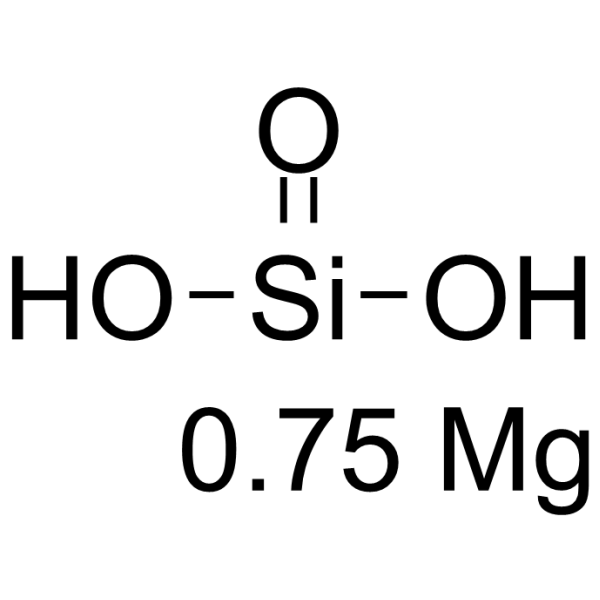
Talc, a naturally occurring mineral composed primarily of magnesium, silicon and oxygen, is used in many cosmetics, from baby powder to blush .
|
Your information is safe with us. * Required Fields.
Inquiry Information
- Product Name:
- Cat. No.:
- Quantity:
- MCE Japan Authorized Agent:

