

52 Results for "

Spider

" in MedChemExpress (MCE) Product Catalog:
Products (52)

52 Results for "Spider" in MCE Product Catalog:

118
118 Publications Verification
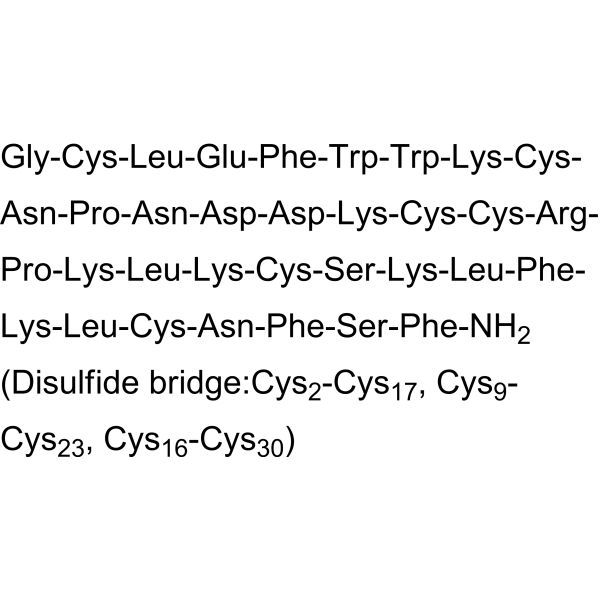
Cat. No.: HY-P1410
CAS No.: 1209500-46-8
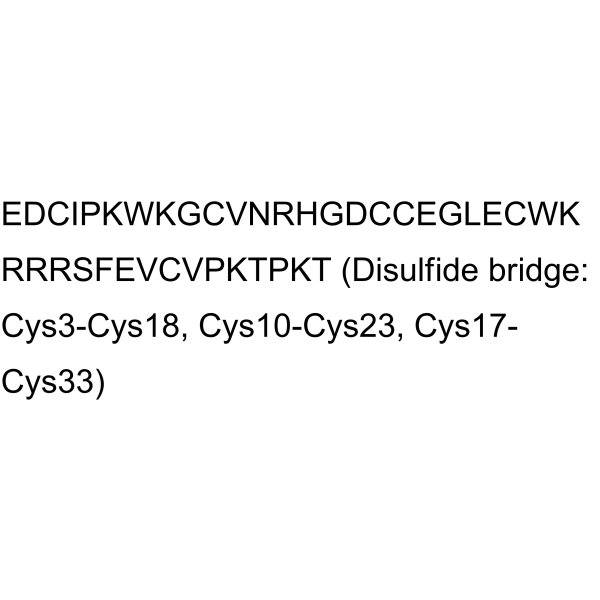
GsMTx4 is a spider venom peptide that selectively inhibits cationic-permeable mechanosensitive channels (MSCs) belonging to the Piezo and TRP channel families. GsMTx4 also blocks cation-selective stretch-activated channels (SACs) , attenuates lysophosphatidylcholine (LPC)-induced astrocyte toxicity and microglial reactivity. GsMTx4 is an important pharmacological tool for identifying the role of these excitatory MSCs in normal physiology and pathology .
118
118 Publications Verification
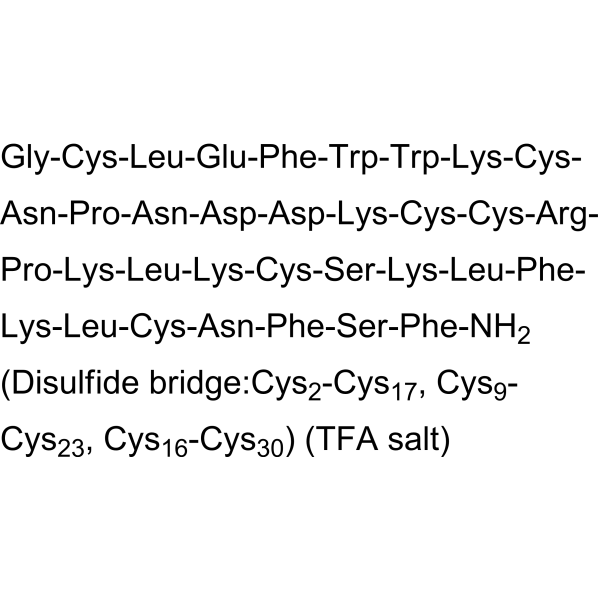
Cat. No.: HY-P1410A
GsMTx4 TFA is a spider venom peptide that selectively inhibits cationic-permeable mechanosensitive channels (MSCs) belonging to the Piezo and TRP channel families. GsMTx4 TFA also blocks cation-selective stretch-activated channels (SACs) , attenuates lysophosphatidylcholine (LPC)-induced astrocyte toxicity and microglial reactivity. GsMTx4 TFA is an important pharmacological tool for identifying the role of these excitatory MSCs in normal physiology and pathology .
7
7 Cited Publications
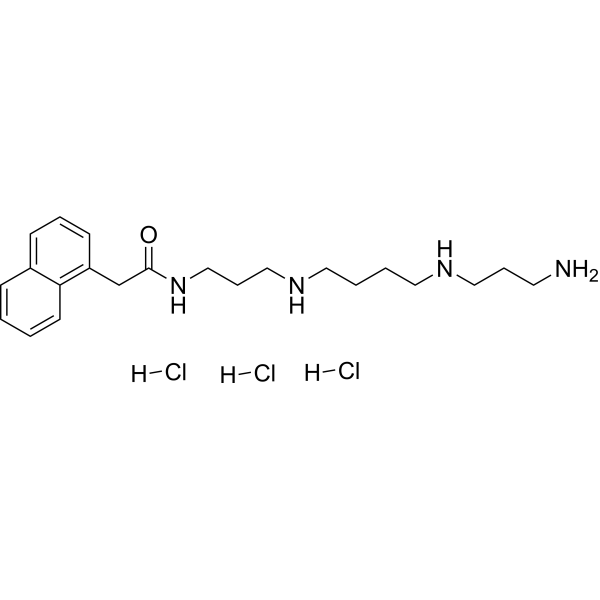
Cat. No.: HY-12506A
CAS No.: 1049731-36-3
Purity:  98.50%
Synonyms: 1-Naphthylacetyl spermine trihydrochloride
Target:  

iGluR

Research Areas:  

Neurological Disease

Naspm trihydrochloride (1-Naphthylacetyl spermine trihydrochloride), a synthetic analogue of Joro spider toxin, is a calcium permeable AMPA (CP-AMPA) receptors antagonist.
7
7 Cited Publications
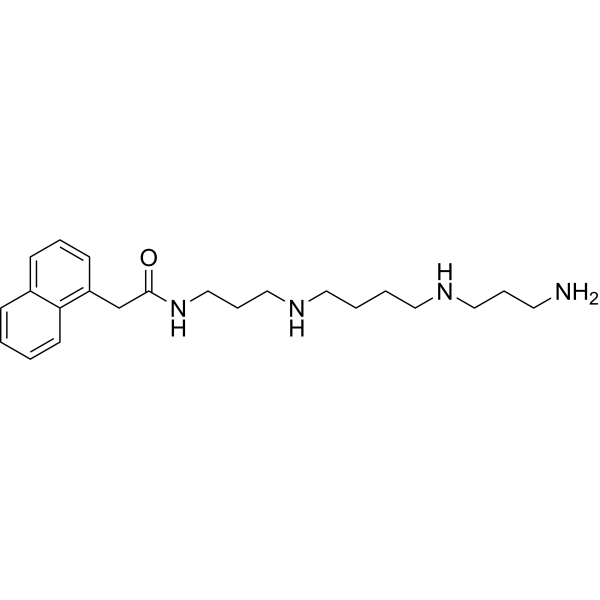
Cat. No.: HY-12506
CAS No.: 122306-11-0
Purity:  96.30%
Synonyms: 1-Naphthylacetyl spermine
Target:  

iGluR

Research Areas:  

Neurological Disease

Naspm (1-Naphthyl acetyl spermine), a synthetic analogue of Joro spider toxin, is a calcium permeable AMPA (CP-AMPA) receptors antagonist.
6
6 Cited Publications
Cat. No.: HY-P1411
CAS No.: 880107-52-8
Synonyms: PcTx1; Psalmopoeus cambridgei toxin-1
Research Areas:  

Neurological Disease Cancer

Psalmotoxin 1 (PcTx1) is a protein toxin that can bind at subunit-subunit interfaces of acid-sensing ion channel 1a (ASIC1a). Psalmotoxin 1 is a potent and slective ASIC1a inhibitor (IC50: 0.9 nM) by increasing the apparent affinity for H + of ASIC1a. Psalmotoxin 1 can induce cell apoptosis, also inhibits cell migration, proferliration and invasion of cancer cells. Psalmotoxin 1 can be used in the research of cancers, or neurological disease .
6
6 Cited Publications
Cat. No.: HY-P1411A
Synonyms: PcTx1 TFA; Psalmopoeus cambridgei toxin-1 TFA
Research Areas:  

Neurological Disease Cancer

Psalmotoxin 1 (PcTx1) TFA is a protein toxin that can bind at subunit-subunit interfaces of acid-sensing ion channel 1a (ASIC1a). Psalmotoxin 1 TFA is a potent and slective ASIC1a inhibitor (IC50: 0.9 nM) by increasing the apparent affinity for H + of ASIC1a. Psalmotoxin 1 TFA can induce cell apoptosis, also inhibits cell migration, proferliration and invasion of cancer cells. Psalmotoxin 1 TFA can be used in the research of cancers, or neurological disease .
4
4 Cited Publications
Cat. No.: HY-P1410B
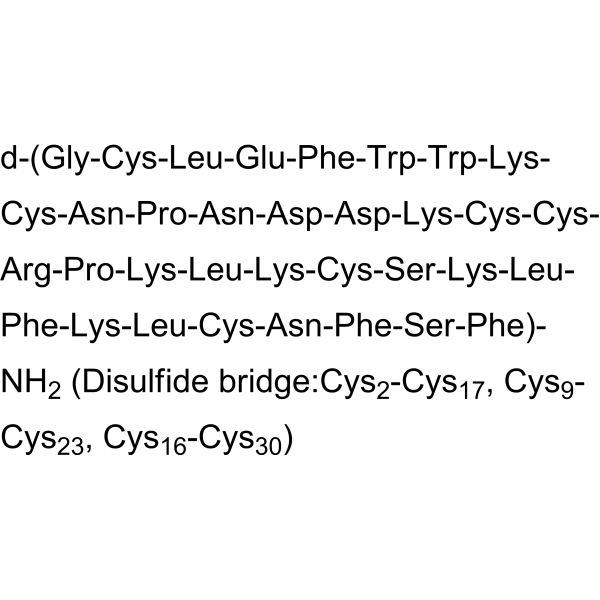
D-GsMTx4 is a spider peptide and the D enantiomer of GsMTx4 (HY-P1410). D-GsMTx4 inhibits the mechanosensitive ion channel Piezo2. D-GsMTx4 inhibits [Ca 2+]i elevation. D-GsMTx4 inhibits mTOR and PI3K-Akt signaling pathways. D-GsMTx4 inhibits mechanical allodynia and thermal hyperalgesia. D-GsMTx4 can be used in researches of mechanical stress, chronic pain and idiopathic pulmonary fibrosis .
4
4 Cited Publications
Cat. No.: HY-P1410C
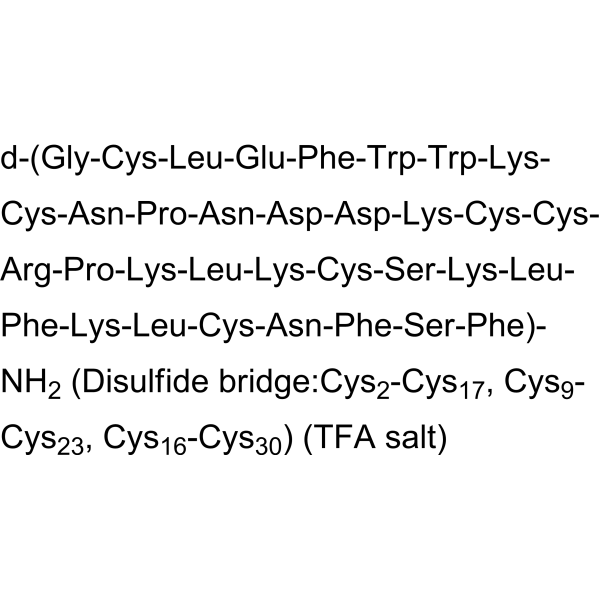
D-GsMTx4 TFA is a spider peptide and the D enantiomer of GsMTx4 (HY-P1410). D-GsMTx4 TFA inhibits the mechanosensitive ion channel Piezo2. D-GsMTx4 TFA inhibits [Ca 2+]i elevation. D-GsMTx4 TFA inhibits mTOR and PI3K-Akt signaling pathways. D-GsMTx4 TFA inhibits mechanical allodynia and thermal hyperalgesia. D-GsMTx4 TFA can be used in researches of mechanical stress, chronic pain and idiopathic pulmonary fibrosis .
Cat. No.: HY-W587486
CAS No.: 19213-70-8
N‑acetyltaurine is an orally active endogenous sulfonate that is synthesized from taurine and acetate in the renal cortex. N‑acetyltaurine supports bacterial growth as a sole fixed nitrogen or carbon source. N‑acetyltaurine buffers acetyl moieties of mitochondrial acetyl‑CoA in skeletal muscle. N‑acetyltaurine reduces food intake and body weight in obese and lean wild‑type mice in a GFRAL‑dependent manner. N‑acetyltaurine can be used for the research of diet‑induced obesity, hyperacetatemia and diabetes .
Cat. No.: HY-W663938
CAS No.: 400882-07-7
Target:  

Parasite

Research Areas:  

Others

Cyflumetofen is a synthetic miticide that strongly inhibits mitochondrial complex II of spider mites, but not of insects, crustaceans, or mammals. Cyflumetofen is not significantly effective in inhibiting aflatoxin production in fungi .
Cat. No.: HY-W059342
CAS No.: 153233-91-1
Synonyms: YI-5301
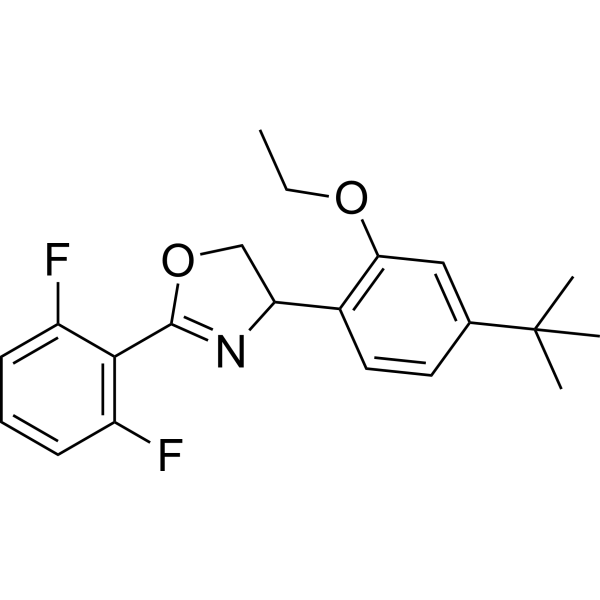
Etoxazole (YI-5301) is an organofluorine insecticide widely used in agriculture. Etoxazole affects the nymphs, eggs, and larvae of spider mites by inhibiting chitin biosynthesis .
Cat. No.: HY-P5786
Synonyms: HpTx1
Research Areas:  

Neurological Disease

Heteropodatoxin-1 (HpTx1), a spider peptide toxin, is a Kv4.2 current inhibitor. Heteropodatoxin-1 also inhibits Nav1.7 and activates Nav1.9 but does not affect Nav1.8 .
Cat. No.: HY-P3095
CAS No.: 65988-34-3
Target:  

Endogenous Metabolite

Research Areas:  

Neurological Disease

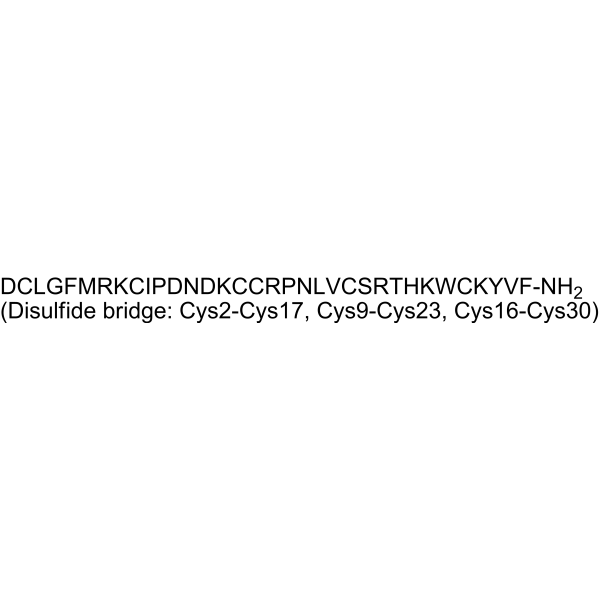
α-Latrotoxin, a potent neurotoxin from black widow spider venom, triggers synaptic vesicle exocytosis from presynaptic nerve terminals .
Cat. No.: HY-138149
CAS No.: 106434-14-4
Synonyms: epi-Avermectin B1a
Target:  

Drug Metabolite

Research Areas:  

Infection

2-epi-Abamectin is a degradation product of Abamectin. It is toxic to the two-spotted spider mite in a contact assay with an LC50 value of 4 ppm, which is approximately 100-fold less potent than abamectin.
Cat. No.: HY-P5160A
Synonyms: PhlTx1 TFA
Target:  

Sodium Channel

Research Areas:  

Neurological Disease

Phlotoxin-1 (PhlTx1) is a 34-amino acid and 3-disulfide bridge peptide. Phlotoxin-1 can be isolated from Phlogiellus genus spider. Phlotoxin-1 is an antinociceptive agent by inhibiting NaV1.7 channel .
Cat. No.: HY-P3655
CAS No.: 142582-60-3
Target:  

Calcium Channel

Research Areas:  

Others

Agelenin is a polypeptide composed of 35 amino acids. Agelenin could be isolated from the Agelenidae spider Agelena opulenta. Agelenin has structural similarity to insect-specific calcium channel inhibitor .
Cat. No.: HY-P4525
CAS No.: 926-79-4
Target:  

Peptides

Research Areas:  

Others

Ala-Ala-Ala-Ala is a poly-L-alanine (PLA) sequences. PLA is a kind of key element of the crystalline domains of spider dragline and wild silkworm silks .
Cat. No.: HY-B0828
CAS No.: 24017-47-8
Research Areas:  

Others

Triazophos, a non-systemic insecticide and acaricide that acts as an acetylcholinesterase (AChE) inhibitor, covalently and irreversibly binds to the acetylcholine binding site, thus blocking the hydrolysis of acetylcholine and leading to hyperexcitability; it is effective against a variety of soil insects and mites, including aphids, thrips, midges, beetles, Lepidoptera larvae, cutworms, and spider mites in crops such as ornamentals, cotton, rice, maize, soybeans, oil palms, olives, and coffee.
Cat. No.: HY-P1681A
Target:  

Sodium Channel

Research Areas:  

Neurological Disease

GpTx-1 TFA is a peptide-based NaV1.7 sodium channel antagonist isolated from the venom of the Chilean spider Grammostola porter. GpTx-1 TFA demonstrates potent inhibitory activity against the NaV1.7 channel with an IC50 value of 10 nM, while exhibiting excellent selectivity for NaV1.4 (IC50 = 0.301 μM) and NaV1.5 (IC50 = 4.20 μM), showing >20-fold and >950-fold selectivity respectively .
Cat. No.: HY-P1681
CAS No.: 1661050-12-9
Target:  

Sodium Channel

Research Areas:  

Neurological Disease

GpTx-1 is a peptide-based NaV1.7 sodium channel antagonist isolated from the venom of the Chilean spider Grammostola porter. GpTx-1 demonstrates potent inhibitory activity against the NaV1.7 channel with an IC50 value of 10 nM, while exhibiting excellent selectivity for NaV1.4 (IC50 = 0.301 μM) and NaV1.5 (IC50 = 4.20 μM), showing >20-fold and >950-fold selectivity respectively .

