
1. Search Result
Search Result
Results for "

Terminalia chebula

" in MedChemExpress (MCE) Product Catalog:

7

Inhibitors & Agonists

7

Natural
Products

Cat. No. Product Name Target Research Areas Chemical Structure
  • HY-N1996
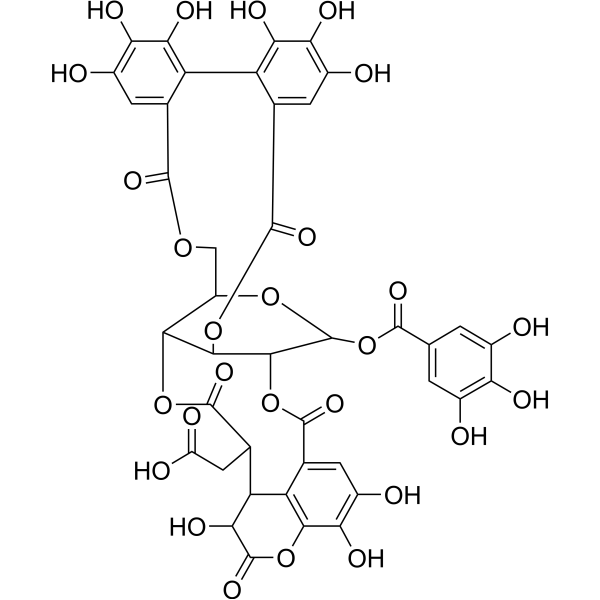
    Chebulagic acid
    5 Publications Verification

    COX Lipoxygenase SARS-CoV Influenza Virus Infection Inflammation/Immunology
    Chebulagic acid is a COX-LOX dual inhibitor isolated from the fruits of Terminalia chebula Retz, on angiogenesis. Chebulagic acid is a M2 serine to asparagine 31 mutation (S31N) inhibitor and influenza antiviral. Chebulagic acid also against SARS-CoV-2 viral replication with an EC50 of 9.76 μM.
    Chebulagic acid
  • HY-N4170
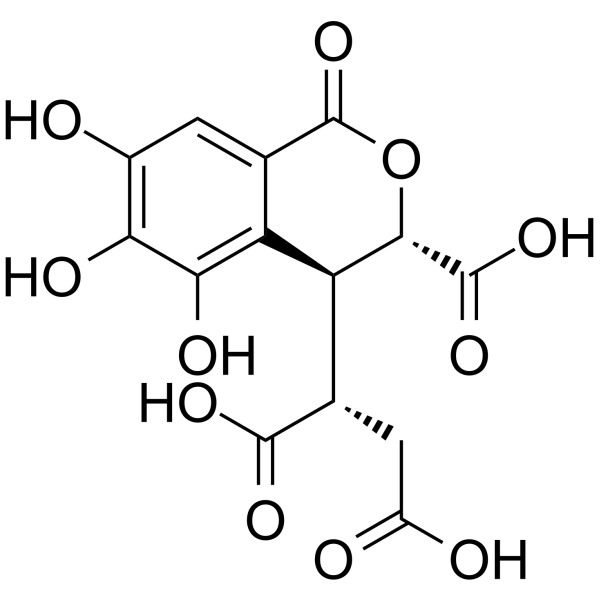
    Chebulic acid
    2 Publications Verification

    Keap1-Nrf2 Reactive Oxygen Species (ROS) Metabolic Disease
    Chebulic acid is a phenolic acid compound isolated from Terminalia chebula with strong antioxidant activity, which breaks protein cross-links induced by advanced glycation end products (AGEs) and inhibits the formation of AGEs. Chebulic acid is effective in controlling elevated metabolic parameters, oxidative stress, and liver damage, supporting its beneficial role in asthma, diabetes, and liver protection .
    Chebulic acid
  • HY-N12500

    Glycosidase Others
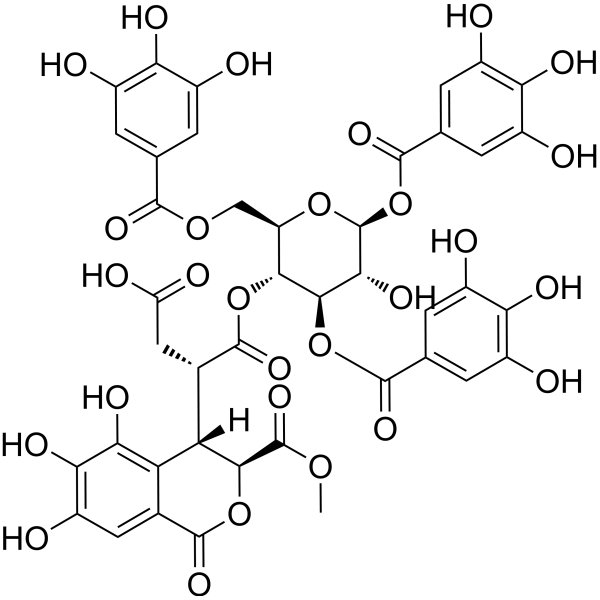
    1'-O-Methyl neochebulinate, hydrolyzable tannin, is an α-glucosidase inhibitor with IC50 value of 59.5 μM, isolated from the fruits of Terminalia chebula Retz .
    1'-O-Methyl neochebulinate
  • HY-N1996R

    Reference Standards COX Lipoxygenase SARS-CoV Influenza Virus Infection Inflammation/Immunology
    Chebulagic acid (Standard) is the analytical standard of Chebulagic acid. This product is intended for research and analytical applications. Chebulagic acid is a COX-LOX dual inhibitor isolated from the fruits of Terminalia chebula Retz, on angiogenesis. Chebulagic acid is a M2 serine to asparagine 31 mutation (S31N) inhibitor and influenza antiviral. Chebulagic acid also against SARS-CoV-2 viral replication with an EC50 of 9.76 μM.
    Chebulagic acid (Standard)
  • HY-N18656

    Bacterial Infection
    Terminalia chebula extract, derived from the fruit of the Terminalia chebula tree. Rich in bioactive compounds such as tannins, flavonoids, phenols, and organic acids like gallic acid and ellagic acid, this extract demonstrates a wide range of pharmacological activities. It acts as a natural laxative, supports digestive health, and exhibits potent antioxidant, anti-inflammatory, and antibacterial properties, effectively targeting various pathogenic bacteria, including Helicobacter pylori, Staphylococcus aureus, and Escherichia coli. Terminalia Chebula Extract also shows significant hepatoprotective effects, shielding the liver from damage through antioxidant and anti-inflammatory mechanisms. It has nephroprotective properties, alleviating renal dysfunction and enhancing kidney health by modulating inflammatory pathways. Additionally, the extract demonstrates neuroprotective activity, reducing neuronal damage and improving memory function. It has potential anti-diabetic effects, enhancing glucose uptake and reducing oxidative stress.
    Terminalia chebula extract
  • HY-114335

    NF-κB Fungal Infection Inflammation/Immunology Cancer
    Triphala, an Ayurvedic polyherbal formulation comprising of equiproportional fruit parts of Terminalia chebula, Terminalia bellerica, and Phyllanthus emblica . Triphala inhibits NF-κB activation. Triphala exerts antifungal action . Anti-adipogenic, anti-inflammatory, and anti-neoplastic activities.
    Triphala
  • HY-N4170R

    Reference Standards Keap1-Nrf2 Reactive Oxygen Species (ROS) Metabolic Disease
    Chebulic acid (Standard) is the analytical standard of Chebulic acid (HY-N4170). This product is intended for research and analytical applications. Chebulic acid is a phenolic acid compound isolated from Terminalia chebula with strong antioxidant activity, which breaks protein cross-links induced by advanced glycation end products (AGEs) and inhibits the formation of AGEs. Chebulic acid is effective in controlling elevated metabolic parameters, oxidative stress, and liver damage, supporting its beneficial role in asthma, diabetes, and liver protection .
    Chebulic acid (Standard)

Inquiry Online

Your information is safe with us. * Required Fields.

Salutation


Country or Region *

Applicant Name *


Organization Name *

Department *


Email Address *


Product Name *

Cat. No.


Requested quantity *

Phone Number *


Remarks

Inquiry Online

Inquiry Information

Product Name:
Cat. No.:
Quantity:
MCE Japan Authorized Agent:

