11 Results for "

UGT1A8

" in MedChemExpress (MCE) Product Catalog:
Products (11)

11 Results for "UGT1A8" in MCE Product Catalog:

  • Targets Recommended:
Cat. No.: HY-135582
CAS No.: 182507-22-8
Target:  

Estrogen Receptor/ERR

Research Areas:  

Endocrinology

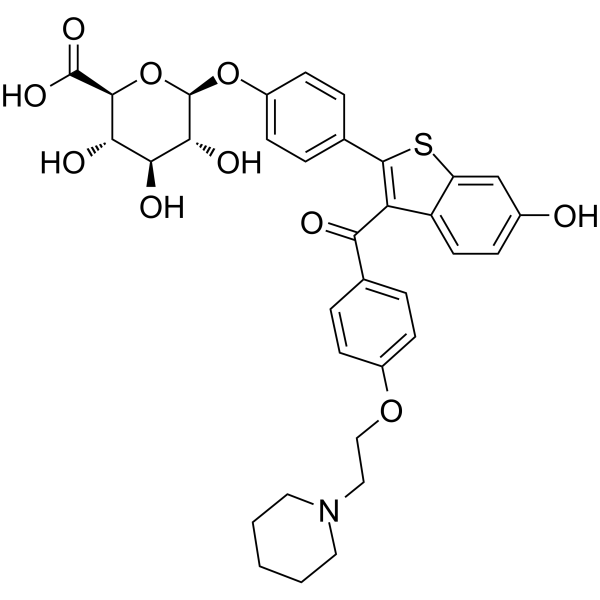
Raloxifene 4'-glucuronide is a primary metabolite of Raloxifene. Raloxifene 4'-glucuronide formation is mediated mostly by UGT1A10 and UGT1A8. Raloxifene 4'-glucuronide binds to estrogen receptor with an IC50 of 370 μM. . Raloxifene is a selective estrogen receptor modulator. Raloxifene activates TGFβ3 promoter as a full agonist at nanomolar concentrations, and inhibits the estrogen response element-containing vitellogenin promoter expression .
loading...
    loading...
Cat. No.: HY-RS15432
Research Areas:  

Others

UGT1A8 Human Pre-designed siRNA Set A contains three designed siRNAs for UGT1A8 gene (Human), as well as a negative control, a positive control, and a FAM-labeled negative control.

loading...
    loading...
Cat. No.: HY-E72110
Target:  

UGT

Research Areas:  

Others

Human UGT1A8 is a UDP-glucuronosyltransferase. Human UGT1A8 catalyzes the transfer of glucuronosyl group from UDPGA to Dihydrotestosterone, forming DHT monoglucuronide. Human UGT1A8 catalyzes the transfer of glucuronosyl group from UDPGA to DHT monoglucuronide, introducing a second glucuronosyl group at the C2 ' position of the latter to form DHT diglucuronide. Human UGT1A8 catalyzes the glucuronidation reactions of coumarins, anthraquinones, flavonoids, phenolic compounds, catechol estrogens, primary amines including 4-Aminobiphenyl, and some opioids .
loading...
    loading...
Cat. No.: HY-RS19083
Research Areas:  

Others

Ugt1a8 Mouse Pre-designed siRNA Set A contains three designed siRNAs for Ugt1a8 gene (Mouse), as well as a negative control, a positive control, and a FAM-labeled negative control.

loading...
    loading...
Cat. No.: HY-130046
CAS No.: 547-81-9
Purity:  99.04%
Synonyms: 16-epi-Estriol; 16β,17β-Estriol
Target:  

UGT Bacterial

Research Areas:  

Infection Inflammation/Immunology

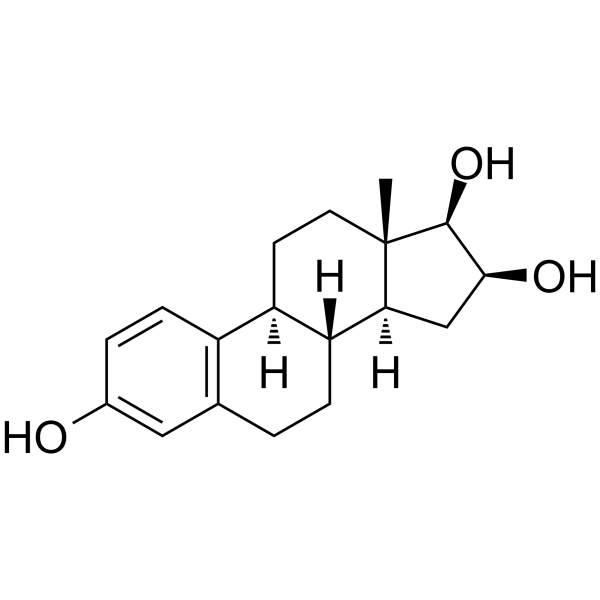
16-Epiestriol (16-epi-Estriol; 16β,17β-Estriol) is a natural stereoisomer of estriol and an anti-inflammatory agent that targets UGT. The Ki values of 16-Epiestriol against human UGT1A10 and UGT2B7 are 98.1 μM and 162 μM, respectively. As a glucuronidation substrate, 16-Epiestriol can be modified at the 3-OH, 16-OH and 17-OH sites by various UGT enzymes; in liver microsomes, the modification mainly occurs at the 16-OH and 17-OH sites, while reactions take place at all three sites in intestinal microsomes. 16-Epiestriol acts on the phase II inflammatory process by blocking edema mediated by prostaglandins and leukocyte infiltration. It lacks glycogenic activity or any effect on blood glucose levels, and serves as an important candidate molecule in the research of inflammatory diseases .
loading...
    loading...
Cat. No.: HY-135581
CAS No.: 174264-50-7
Target:  

Estrogen Receptor/ERR

Research Areas:  

Endocrinology

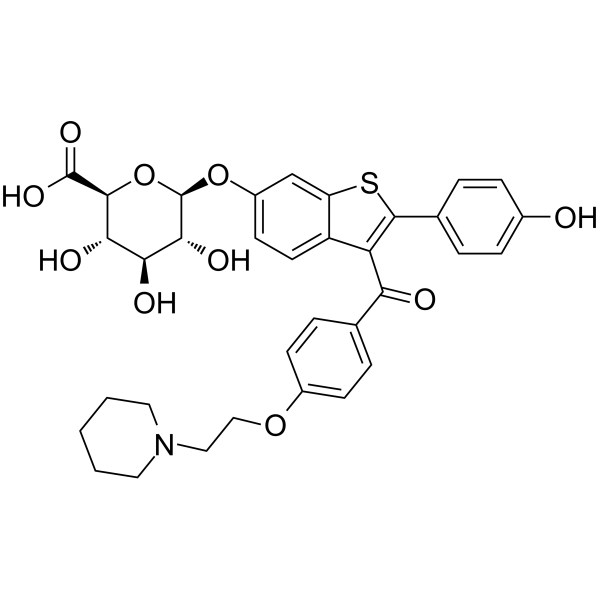
Raloxifene 6-glucuronide is a primary metabolite of Raloxifene. Raloxifene 6-glucuronide is mediated mostly by UGT1A1 and UGT1A8. Raloxifene 6-glucuronide binds to estrogen receptor with an IC50 of 290 μM. Raloxifene is a selective and nonsteroidal estrogen receptor modulator. Raloxifene activates TGFβ3 promoter as a full agonist at nanomolar concentrations, and inhibits the estrogen response element-containing vitellogenin promoter expression .
loading...
    loading...
Cat. No.: HY-135582S
CAS No.: 1279033-52-1
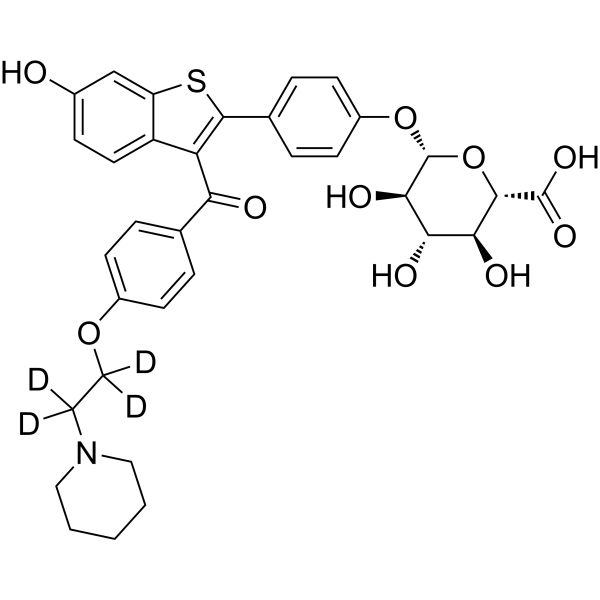
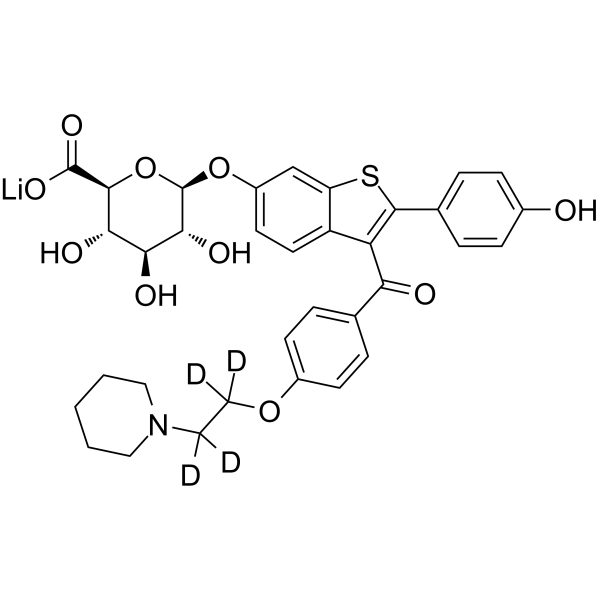
Raloxifene 4'-glucuronide-d4 is deuterated labeled Raloxifene 4'-glucuronide (HY-135582). Raloxifene 4'-glucuronide is a primary metabolite of Raloxifene. Raloxifene 4'-glucuronide formation is mediated mostly by UGT1A10 and UGT1A8. Raloxifene 4'-glucuronide binds to estrogen receptor with an IC50 of 370 μM. . Raloxifene is a selective estrogen receptor modulator. Raloxifene activates TGFβ3 promoter as a full agonist at nanomolar concentrations, and inhibits the estrogen response element-containing vitellogenin promoter expression .
loading...
    loading...
Cat. No.: HY-135581S1
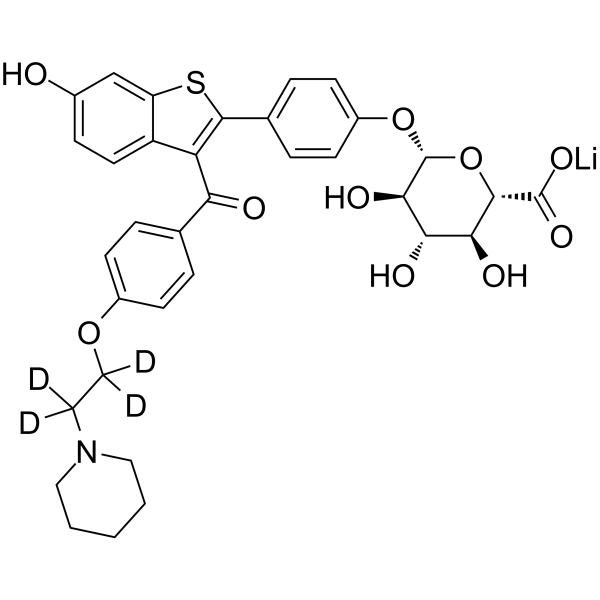
Raloxifene 6-glucuronide-d4 (lithium) is deuterium labeled Raloxifene 6-glucuronide. Raloxifene 6-glucuronide is a primary metabolite of Raloxifene. Raloxifene 6-glucuronide is mediated mostly by UGT1A1 and UGT1A8. Raloxifene 6-glucuronide binds to estrogen receptor with an IC50 of 290 μM. Raloxifene is a selective and nonsteroidal estrogen receptor modulator. Raloxifene activates TGFβ3 promoter as a full agonist at nanomolar concentrations, and inhibits the estrogen response element-containing vitellogenin promoter expression .
loading...
    loading...
Cat. No.: HY-135582S1
Raloxifene 4'-glucuronide-d4 (lithium) is deuterium labeled Raloxifene 4'-glucuronide. Raloxifene 4'-glucuronide is a primary metabolite of Raloxifene. Raloxifene 4'-glucuronide formation is mediated mostly by UGT1A10 and UGT1A8. Raloxifene 4'-glucuronide binds to estrogen receptor with an IC50 of 370 μM. . Raloxifene is a selective estrogen receptor modulator. Raloxifene activates TGFβ3 promoter as a full agonist at nanomolar concentrations, and inhibits the estrogen response element-containing vitellogenin promoter expression .
loading...
    loading...
Cat. No.: HY-W739842
CAS No.: 17834-04-7
Synonyms: 8-OH Warfarin
Target:  

Cytochrome P450

Research Areas:  

Cardiovascular Disease

8-Hydroxywarfarin (8-OH Warfarin) is a CYP2C9 inhibitor. 8-Hydroxywarfarin inactivates the anticoagulant activity of Warfarin (HY-B0687) via 8-hydroxylation. 8-Hydroxywarfarin serves as a glucuronidation substrate for UGT1A1, UGT1A8, UGT1A9, as well as wild-type/mutant UGT1A10. This reaction enhances its polarity, solubility and excretion efficiency, and the process is independent of phenylalanine 90 of UGT1A10. 8-Hydroxywarfarin can be used in studies related to thromboembolic diseases .
loading...
    loading...
Cat. No.: HY-N19800
CAS No.: 1231899-06-1
Anhydroicaritin-3,7-di-O-glucuronide is a diglucuronide metabolite of icaritin. Anhydroicaritin-3,7-di-O-glucuronide is also a conjugated metabolite derived from prenylated flavonoids of the genus *Epimedium* in rats. In an in vitro microsomal system, Anhydroicaritin-3,7-di-O-glucuronide is mainly catalyzed by UGT1A1 and UGT1A8. Anhydroicaritin-3,7-di-O-glucuronide is generated via sequential glucuronidation at the 3-OH and 7-OH sites of icaritin, or via further conversion from monoglucuronides of icaritin .
loading...
    loading...
  • 1

