16 Results for "

acetoacetic

" in MedChemExpress (MCE) Product Catalog:
Products (16)

16 Results for "acetoacetic" in MCE Product Catalog:

7
7 Publications Verification
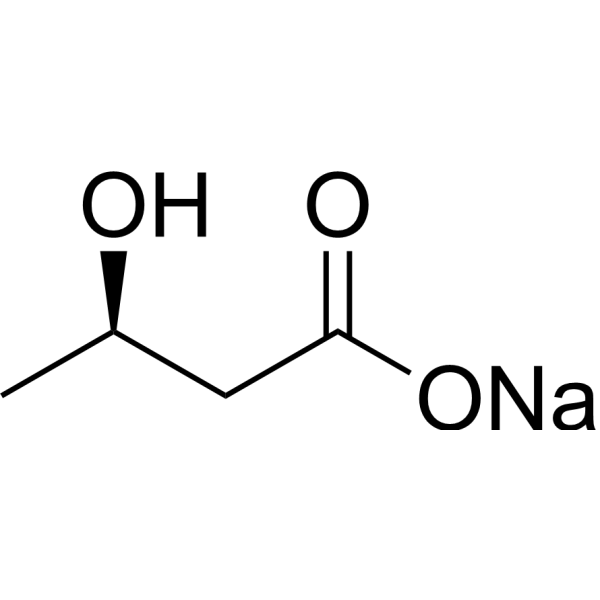
Cat. No.: HY-W015851
CAS No.: 13613-65-5
Synonyms: (R)-(-)-3-Hydroxybutanoic acid sodium; (R)-3-Hydroxybutyric acid sodium
(R)-3-Hydroxybutanoic acid ((R)-3-Hydroxybutyric acid) sodium is a metabolite converted from acetoacetic acid catalyzed by 3-hydroxybutyrate dehydrogenase. (R)-3-Hydroxybutanoic acid sodium can function as a nutrition source, and as a precursor for vitamins, antibiotics and pheromones .
loading...
    loading...
7
7 Publications Verification
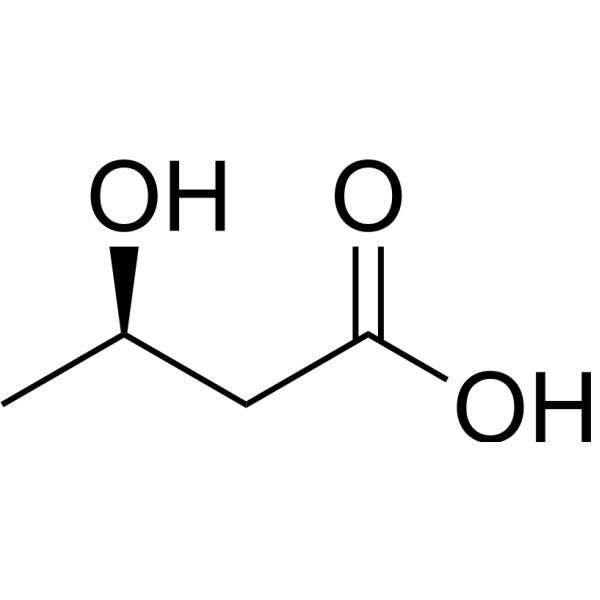
Cat. No.: HY-W051723
CAS No.: 625-72-9
Synonyms: (R)-(-)-3-Hydroxybutanoic acid; (R)-3-Hydroxybutyric acid
(R)-3-Hydroxybutanoic acid is a metabolite, and converted from acetoacetic acid catalyzed by 3-hydroxybutyrate dehydrogenase. (R)-3-Hydroxybutanoic acid has applications as a nutrition source and as a precursor for vitamins, antibiotics and pheromones .
loading...
    loading...
5
5 Cited Publications
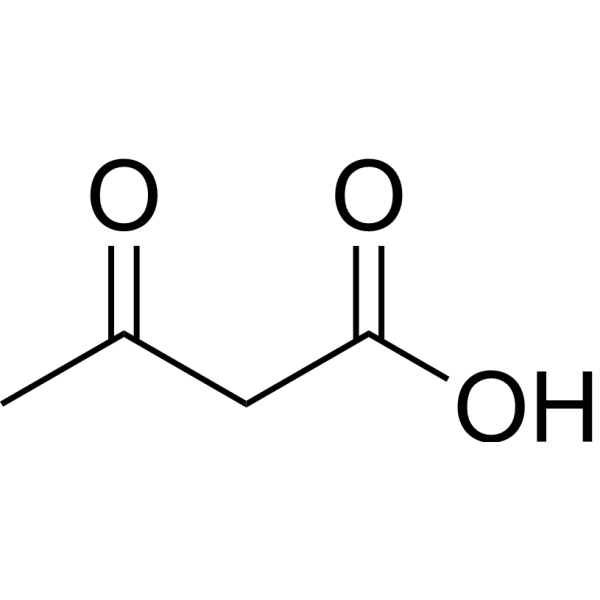
Cat. No.: HY-112540
CAS No.: 541-50-4
Acetoacetic acid is an oxidative stress inducer that affects the antioxidant enzyme system and lipoprotein metabolism. Acetoacetic acid induces oxidative stress by decreasing the mRNA expression and activity of superoxide dismutase (SOD), catalase (CAT), and glutathione peroxidase (GSH-Px), increasing MDA content, and inhibiting very low density lipoprotein (VLDL) assembly by downregulating apolipoprotein ApoB100, ApoE, and low density lipoprotein receptor (LDLR), leading to triglyceride (TG) accumulation in hepatocytes. Acetoacetic acid can be used to study metabolic diseases .
loading...
    loading...
5
5 Cited Publications
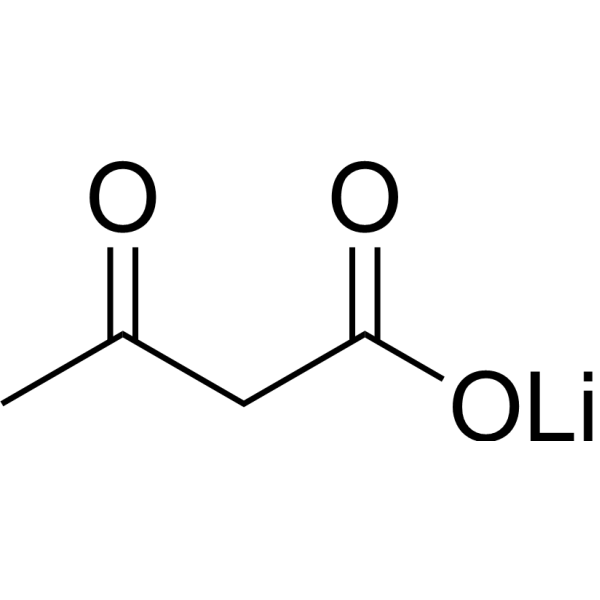
Cat. No.: HY-112540A
CAS No.: 3483-11-2
Purity:  ≥98.0%
Acetoacetic acid lithium is an oxidative stress inducer that affects the antioxidant enzyme system and lipoprotein metabolism. Acetoacetic acid lithium induces oxidative stress by decreasing the mRNA expression and activity of superoxide dismutase (SOD), catalase (CAT), and glutathione peroxidase (GSH-Px), increasing MDA content, and inhibiting very low density lipoprotein (VLDL) assembly by downregulating apolipoprotein ApoB100, ApoE, and low density lipoprotein receptor (LDLR), leading to triglyceride (TG) accumulation in hepatocytes. Acetoacetic acid lithium can be used to study metabolic diseases .
loading...
    loading...
1
1 Cited Publications
Cat. No.: HY-P10579
CAS No.: 2225868-19-7
Target:  

Ephrin Receptor

Research Areas:  

Cancer

123B9, a tumor-homing agent, is a potent and selective EphA2 agonist with a Kd value of 4.0 μM. 123B9 selectively targets the EphA2 tyrosine kinase receptor ligand-binding domain. 123B9 does not appreciably inhibit the ligand binding domains of the most closely related EphA3 and EphA4 receptors .
loading...
    loading...
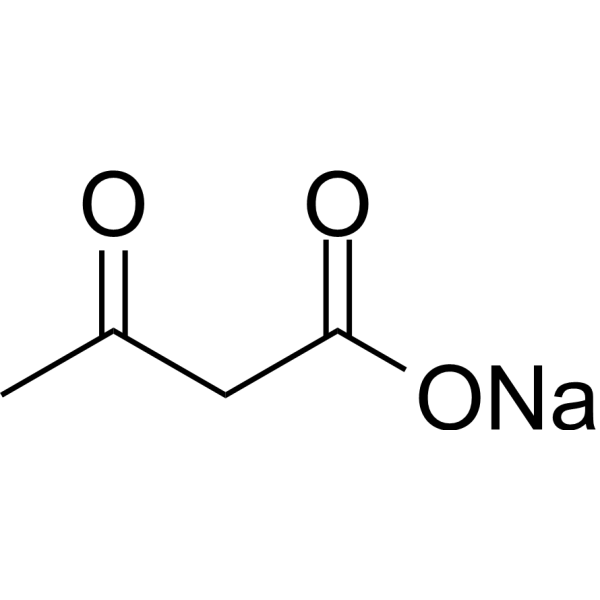
Cat. No.: HY-112540B
CAS No.: 623-58-5
Purity:  ≥98.0%
Acetoacetic acid sodium is an oxidative stress inducer that affects the antioxidant enzyme system and lipoprotein metabolism. Acetoacetic acid sodium induces oxidative stress by decreasing the mRNA expression and activity of superoxide dismutase (SOD), catalase (CAT), and glutathione peroxidase (GSH-Px), increasing MDA content, and inhibiting very low density lipoprotein (VLDL) assembly by downregulating apolipoprotein ApoB100, ApoE, and low density lipoprotein receptor (LDLR), leading to triglyceride (TG) accumulation in hepatocytes. Acetoacetic acid sodium can be used to study metabolic diseases .
loading...
    loading...
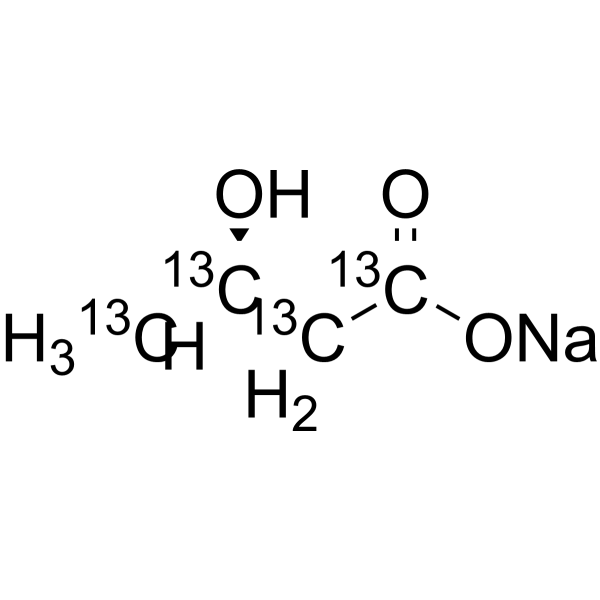
Cat. No.: HY-W015851S2
CAS No.: 2483735-72-2
Synonyms: (R)-(-)-3-Hydroxybutanoic acid-13C4 sodium; (R)-3-Hydroxybutyric acid-13C4 sodium
(R)-3-Hydroxybutanoic acid- 13C4 sodium is a 13C labeled (R)-3-Hydroxybutanoic acid (HY-W051723). (R)-3-Hydroxybutanoic acid is a metabolite converted from acetoacetic acid catalyzed by 3-hydroxybutyrate dehydrogenase. (R)-3-Hydroxybutanoic acid can function as a nutrition source, and as a precursor for vitamins, antibiotics and pheromones .
loading...
    loading...
Cat. No.: HY-W654002
(3R)-3-Hydroxybutyric acid-1- 13C is 13C labeled (R)-3-Hydroxybutanoic acid. (R)-3-Hydroxybutanoic acid is a metabolite, and converted from acetoacetic acid catalyzed by 3-hydroxybutyrate dehydrogenase. (R)-3-Hydroxybutanoic acid has applications as a nutrition source and as a precursor for vitamins, antibiotics and pheromones .
loading...
    loading...
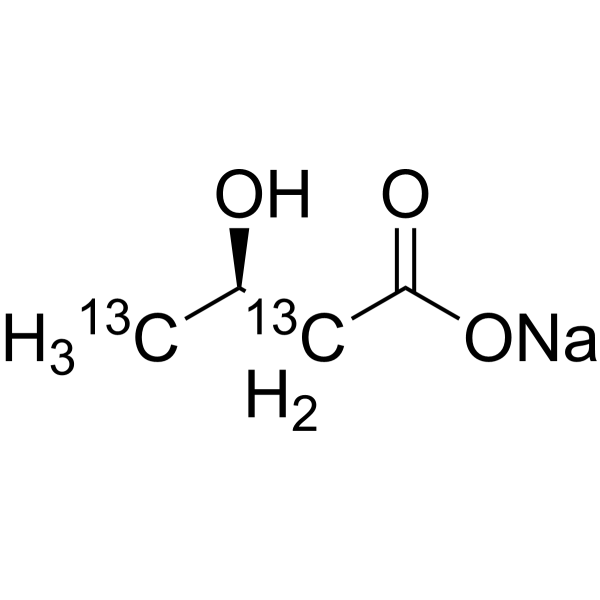
Cat. No.: HY-B0228S10
CAS No.: 202114-54-3
Synonyms: (R)-(-)-3-Hydroxybutanoic acid-13C2 sodium; (R)-3-Hydroxybutyric acid-13C2 sodium
(R)-3-Hydroxybutanoic acid- 13C2 sodium is the 13C labeled (R)-3-Hydroxybutanoic acid sodium (HY-W015851). (R)-3-Hydroxybutanoic acid sodium is a metabolite converted from acetoacetic acid catalyzed by 3-hydroxybutyrate dehydrogenase. (R)-3-Hydroxybutanoic acid sodium can function as a nutrition source, and as a precursor for vitamins, antibiotics and pheromones .
loading...
    loading...
Cat. No.: HY-112540AR
CAS No.: 3483-11-2
Acetoacetic acid (lithium) (Standard) is the analytical standard of Acetoacetic acid (lithium). This product is intended for research and analytical applications. Acetoacetic acid lithium is an oxidative stress inducer that affects the antioxidant enzyme system and lipoprotein metabolism. Acetoacetic acid lithium induces oxidative stress by decreasing the mRNA expression and activity of superoxide dismutase (SOD), catalase (CAT), and glutathione peroxidase (GSH-Px), increasing MDA content, and inhibiting very low density lipoprotein (VLDL) assembly by downregulating apolipoprotein ApoB100, ApoE, and low density lipoprotein receptor (LDLR), leading to triglyceride (TG) accumulation in hepatocytes. Acetoacetic acid lithium can be used to study metabolic diseases .
loading...
    loading...
Cat. No.: HY-W015851R
CAS No.: 13613-65-5
Synonyms: (R)-(-)-3-Hydroxybutanoic acid sodium (Standard); (R)-3-Hydroxybutyric acid sodium (Standard)
(R)-3-Hydroxybutanoic acid (sodium) (Standard) is the analytical standard of (R)-3-Hydroxybutanoic acid (sodium). This product is intended for research and analytical applications. (R)-3-Hydroxybutanoic acid ((R)-3-Hydroxybutyric acid) sodium is a metabolite converted from acetoacetic acid catalyzed by 3-hydroxybutyrate dehydrogenase. (R)-3-Hydroxybutanoic acid sodium can function as a nutrition source, and as a precursor for vitamins, antibiotics and pheromones[1][2].
loading...
    loading...
Cat. No.: HY-W051723R
CAS No.: 625-72-9
Synonyms: (R)-(-)-3-Hydroxybutanoic acid (Standard); (R)-3-Hydroxybutyric acid (Standard)
(R)-3-Hydroxybutanoic acid (Standard) is the analytical standard of (R)-3-Hydroxybutanoic acid. This product is intended for research and analytical applications. (R)-3-Hydroxybutanoic acid is a metabolite, and converted from acetoacetic acid catalyzed by 3-hydroxybutyrate dehydrogenase. (R)-3-Hydroxybutanoic acid has applications as a nutrition source and as a precursor for vitamins, antibiotics and pheromones[1][2].
loading...
    loading...
Cat. No.: HY-109166
CAS No.: 2253747-71-4
Target:  

Opioid Receptor

Research Areas:  

Neurological Disease

Amdakefalin is a μ and δ opioid receptors agonist with analgesic effects .
loading...
    loading...
Cat. No.: HY-E71773
Research Areas:  

Others

3-Oxoacid CoA-transferase (EC 2.8.3.5) is a mitochondrial CoA transferase that generates acetoacetyl-CoA by transferring the CoA group from succinyl-CoA to acetoacetic acid.
loading...
    loading...
Cat. No.: HY-W051723S2
Synonyms: (R)-(-)-3-Hydroxybutanoic acid-d; (R)-3-Hydroxybutyric acid-d
(R)-3-Hydroxybutanoic acid-d ((R)-(-)-3-Hydroxybutanoic acid-d) is the deuterium labeled (R)-3-Hydroxybutanoic acid (HY-W051723). (R)-3-Hydroxybutanoic acid is a metabolite, and converted from acetoacetic acid catalyzed by 3-hydroxybutyrate dehydrogenase. (R)-3-Hydroxybutanoic acid has applications as a nutrition source and as a precursor for vitamins, antibiotics and pheromones.
loading...
    loading...
Cat. No.: HY-P11769
CAS No.: 1186600-65-6
Synonyms: RM2
Target:  

CGRP Receptor

Research Areas:  

Cancer

RM2 is a GRPr antagonist. RM2 selectively binds to GRPr, blocks agonist-induced receptor internalization, and inhibits agonist-triggered intracellular calcium mobilization. RM2 can be used in studies related to prostate cancer .
loading...
    loading...
  • 1

