



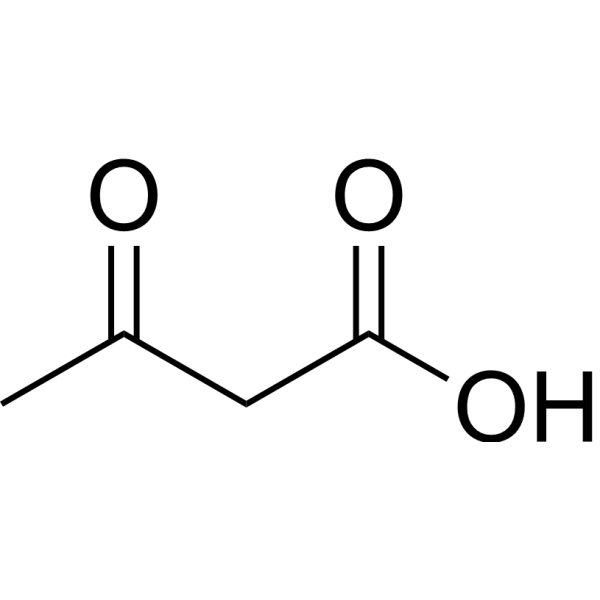
Acetoacetic acid
Based on 5 publication(s) in Google Scholar
Acetoacetic acid is an oxidative stress inducer that affects the antioxidant enzyme system and lipoprotein metabolism. Acetoacetic acid induces oxidative stress by decreasing the mRNA expression and activity of superoxide dismutase (SOD), catalase (CAT), and glutathione peroxidase (GSH-Px), increasing MDA content, and inhibiting very low density lipoprotein (VLDL) assembly by downregulating apolipoprotein ApoB100, ApoE, and low density lipoprotein receptor (LDLR), leading to triglyceride (TG) accumulation in hepatocytes. Acetoacetic acid can be used to study metabolic diseases.
Nos produits utilisent uniquement pour la recherche. Nous ne vendons pas aux patients.
- Pureté : 95.0%
- CAS No.: 541-50-4
- Formule: C4H6O3
- Masse moléculaire:102.09
-
Stockage:Powder -20°C, 3 years , 4°C, 2 years ; In solvent -80°C, 6 months , -20°C, 1 month

To place orders, for customer services and technical support, please contact: MedChemExpress USA
Tel: 609-228-6898 E-mail: [email protected] [email protected]


-
 Activité biologique
-
Chemical Information
-
Solvant et solubilité
- Protocole
- Pureté et documentation
- Références
-
 Help & FAQs


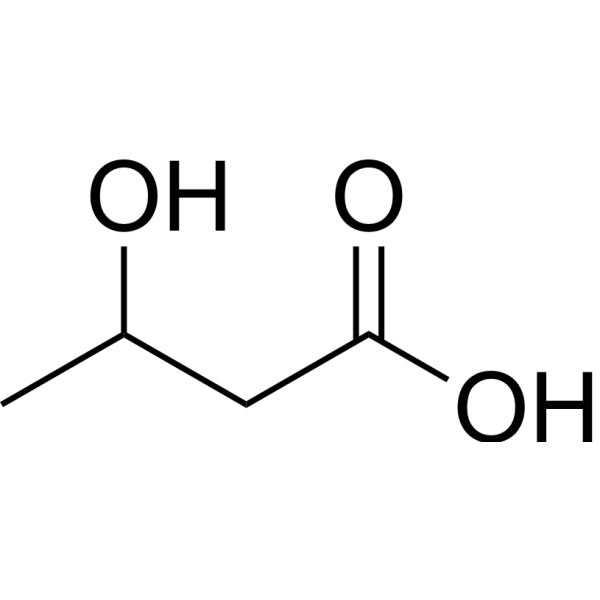
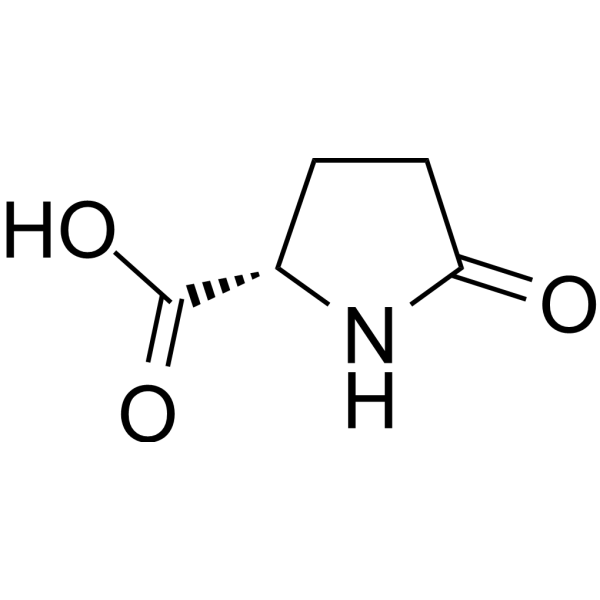
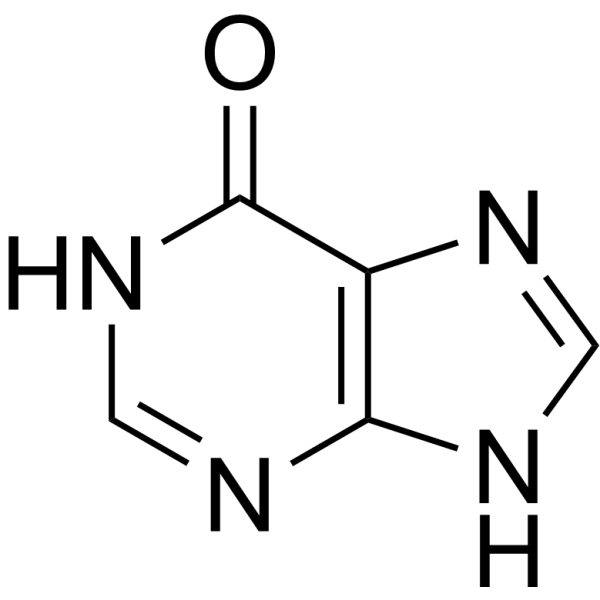
Publications Citing Use of MedChemExpress (MCE) Acetoacetic acid
More Customer Validation & Images

-
WB

-
Bio/Physico-chemical Assay

-
Bio/Physico-chemical Assay

Voir tous les produits spécifiques à Isoform Endogenous Metabolite
More

Activité biologique
Description
IC50 & Target
|
Human Endogenous Metabolite |
In Vitro
In the bovine hepatocyte experiment, Acetoacetic acid (0.6, 2.4, 4.8 mM; 24 h) dose-dependently reduces the mRNA expression and enzyme activity of superoxide dismutase (SOD), catalase (CAT), and glutathione peroxidase (GSH-Px), increases the malondialdehyde (MDA) content, induced oxidative stress, and downregulates the mRNA expression of apolipoprotein B100 (ApoB100), apolipoprotein E (ApoE), and low-density lipoprotein receptor (LDLR), inhibits the assembly of very low-density lipoprotein (VLDL), and leads to the accumulation of intracellular triglycerides (TG) and a decrease in the VLDL content in the culture medium[1].
MedChemExpress (MCE) has not independently confirmed the accuracy of these methods. They are for reference only. Further protocols information, click here.
-
Cell Line:Bovine hepatocytes
-
Concentration:0 (control), 0.6 mM, 2.4 mM, 4.8 mM
-
Incubation Time:24 h
-
Result:Significantly downregulated the mRNA expression of antioxidant enzymes (SOD, CAT, GSH-Px) and VLDL-related proteins (ApoB100, ApoE, LDLR) in a dose-dependent manner compared to the control group.
Increased intracellular malondialdehyde (MDA) content, a marker of oxidative stress, while the activities of SOD, CAT, and GSH-Px were reduced.
Resulted intracellular triglyceride (TG) accumulation, and significantly decreased the secretion of VLDL into the culture medium in a dose-dependent manner.


Chemical Information
-
CAS No. 541-50-4
-
Appearance Solid
-
Masse moléculaire 102.09
-
Formule C4H6O3
-
Color White to off-white
-
SMILES
CC(CC(O)=O)=O
-
Initial Source
-
Livraison
Room temperature in continental US; may vary elsewhere.
-
Stockage
Powder -20°C 3 years 4°C 2 years In solvent -80°C 6 months -20°C 1 month


Publications (5)
-
Journal Impact Factor
-
Most Recent
-
Nat Metab
β-hydroxybutyrate inhibits Plasmodium falciparum development and confers protection against malaria in mice. [Abstract]2025 Jul;7(7):1330-1343. PMID: 40410577 -
J Nanobiotechnology
The ketone body β-hydroxybutyrate alleviates CoCrMo alloy particles induced osteolysis by regulating NLRP3 inflammasome and osteoclast differentiation. [Abstract]2022 Mar 9;20(1):120. PMID: 35264201 -
Am J Physiol Cell Physiol
Acetoacetate and D- and L-β-hydroxybutyrate have distinct effects on basal and insulin-stimulated glucose uptake in L6 skeletal muscle cells. [Abstract]2024 Jun 1;326(6):C1710-C1720. PMID: 38708524
Acetoacetic acid purchased from MedChemExpress. Usage Cited in: Am J Physiol Cell Physiol. 2024 Jun 1;326(6):C1710-C1720. [Abstract]
Acetoacetic acid sodium (1 mM; 3 h) showed no effect on theexpression of ACAT or SCOT in L6 rat myotubes.
Acetoacetic acid purchased from MedChemExpress. Usage Cited in: Am J Physiol Cell Physiol. 2024 Jun 1;326(6):C1710-C1720. [Abstract]
Acetoacetic acid sodium (0.2, 1 mM; 3 h) showed significantly increased thebasal translocation of GLUT4 to the membrane relative toglucose in 0.2 mM, but no differences were found for the other condi-tions in L6 GLUT4 mycmyotubes.
Acetoacetic acid purchased from MedChemExpress. Usage Cited in: Am J Physiol Cell Physiol. 2024 Jun 1;326(6):C1710-C1720. [Abstract]
Acetoacetic acid sodium (0.2, 1 mM; 3 h; at the end ofthe 3 h treatment, 10 or 100 nM insulin for 20 min) decreased thebasal translocation of GLUT4 to the membrane in 0.2 mM with 100 nM insulin in L6 GLUT4 mycmyotubes.
-
J Leukoc Biol
2023 Jun 1;113(6):577-587. PMID: 36999365 -


Solvant et solubilité
In Vitro:
H2O : 50 mg/mL (489.76 mM; Need ultrasonic)
Please refer to the solubility information to select the appropriate solvent. Once prepared, please aliquot and store the solution to prevent product inactivation from repeated freeze-thaw cycles.
Storage method and period of stock solution: -80°C, 6 months; -20°C, 1 month. When stored at -80°C, please use it within 6 months. When stored at -20°C, please use it within 1 month.
* Note: If you choose water as the stock solution, please dilute it to the working solution, then filter and sterilize it with a 0.22 μm filter before use.
Please refer to the solubility information to select the appropriate solvent. Once prepared, please aliquot and store the solution to prevent product inactivation from repeated freeze-thaw cycles.
Storage method and period of stock solution: -80°C, 6 months; -20°C, 1 month. When stored at -80°C, please use it within 6 months. When stored at -20°C, please use it within 1 month.
* Note: If you choose water as the stock solution, please dilute it to the working solution, then filter and sterilize it with a 0.22 μm filter before use.
Concentration (start) × Volume (start) = Concentration (final) × Volume (final)

Protocole
-
RT-PCR
Reverse transcription technology uses RNA as a template to synthesize DNA. RT-PCR is simple, specific and sensitive, and can be used to detect gene expression levels and expression differences in cells; detect RNA virus content; clone cDNA sequences of specific genes.
-
RNA extraction experimental
By lysing cells, releasing RNA, and removing impurities such as proteins and DNA, high-purity RNA products are finally obtained. The commonly used traditional method is the guanidine isothiocyanate/phenol/chloroform method (Trizol), which is suitable for a variety of animal materials including animal tissues, microorganisms, cultured cells, etc., and most plant materials.
-
ROS/oxidative-stress fluorescent staining
ROS/oxidative-stress fluorescent staining uses cell-permeant fluorogenic probes that become fluorescent after oxidation inside cells or tissues; commonly used examples include DCFH-DA/DCFDA for broad cellular oxidant detection, DHE for superoxide-related signal detection, MitoSOX for mitochondrial superoxide-related signal detection, and CellROX probes for oxidative-stress-associated fluorescence readouts. The assay detects probe oxidation rather than a single ROS species unless the probe and analysis method have been chemically validated for that species. DCFH-DA enters cells, is deacetylated by intracellular esterases to DCFH, and produces fluorescent DCF after oxidation, so the readout is used as an operational measure of total cellular oxidative stress rather than a species-specific ROS measurement. DHE and MitoSOX can report superoxide-related oxidation, but red fluorescence alone can include non-specific ethidium-like oxidation products; HPLC or optimized spectral approaches are
-
Real Time qPCR (Q-PCR)
Real-time quantitative PCR (qPCR) quantifies an amplifiable nucleic-acid target by monitoring fluorescence during PCR cycling rather than measuring product only after amplification. The increase in fluorescence tracks accumulation of PCR product, and the quantification cycle (Cq; historically also Ct/CP) is related to the initial amount of target: samples containing more starting target generally reach the defined fluorescence threshold in fewer cycles.


Pureté et documentation
-
Fiche technique (272 KB)
-
SDS (615 KB)
- English - EN (615 KB)
- Français - FR (615 KB)
- Deutsch - DE (615 KB)
- Norwegian - NO (615 KB)
- Español - ES (615 KB)
- Swedish - SV (615 KB)
- Italian - IT (615 KB)
- Korean - KR (615 KB)
- Portuguese - PT (615 KB)
-
Instruction de manipulation (2659 KB)
Références


Complete Stock Solution Preparation Table
Please refer to the solubility information to select the appropriate solvent. Once prepared, please aliquot and store the solution to prevent product inactivation from repeated freeze-thaw cycles.
Storage method and period of stock solution: -80°C, 6 months; -20°C, 1 month. When stored at -80°C, please use it within 6 months. When stored at -20°C, please use it within 1 month.
| Optional Solvent | Concentration Solvent Mass | 1 mg | 5 mg | 10 mg | 25 mg |
|---|---|---|---|---|---|
| H2O | 1 mM | 9.7953 mL | 48.9764 mL | 97.9528 mL | 244.8820 mL |
| 5 mM | 1.9591 mL | 9.7953 mL | 19.5906 mL | 48.9764 mL | |
| 10 mM | 0.9795 mL | 4.8976 mL | 9.7953 mL | 24.4882 mL | |
| 15 mM | 0.6530 mL | 3.2651 mL | 6.5302 mL | 16.3255 mL | |
| 20 mM | 0.4898 mL | 2.4488 mL | 4.8976 mL | 12.2441 mL | |
| 25 mM | 0.3918 mL | 1.9591 mL | 3.9181 mL | 9.7953 mL | |
| 30 mM | 0.3265 mL | 1.6325 mL | 3.2651 mL | 8.1627 mL | |
| 40 mM | 0.2449 mL | 1.2244 mL | 2.4488 mL | 6.1220 mL | |
| 50 mM | 0.1959 mL | 0.9795 mL | 1.9591 mL | 4.8976 mL | |
| 60 mM | 0.1633 mL | 0.8163 mL | 1.6325 mL | 4.0814 mL | |
| 80 mM | 0.1224 mL | 0.6122 mL | 1.2244 mL | 3.0610 mL | |
| 100 mM | 0.0980 mL | 0.4898 mL | 0.9795 mL | 2.4488 mL |
* Note: If you choose water as the stock solution, please dilute it to the working solution, then filter and sterilize it with a 0.22 μm filter before use.


Acetoacetic acid Related Classifications
HY-112540 Related Classifications
 Powered by Bioz