14 Results for "

alkyl esters

" in MedChemExpress (MCE) Product Catalog:
Products (14)

14 Results for "alkyl esters" in MCE Product Catalog:

Cat. No.: HY-W145090
CAS No.: 1005-31-8
Synonyms: p-Dimethylaminopyridine N-oxide
Research Areas:  

Others

4-Dimethylaminopyridine N-oxide (p-Dimethylaminopyridine N-oxide) is an Efficient Oxidizing Agent for Alkyl Halides .
loading...
    loading...
Cat. No.: HY-141406
CAS No.: 48074-75-5
Target:  

PROTAC Linkers

Research Areas:  

Cancer

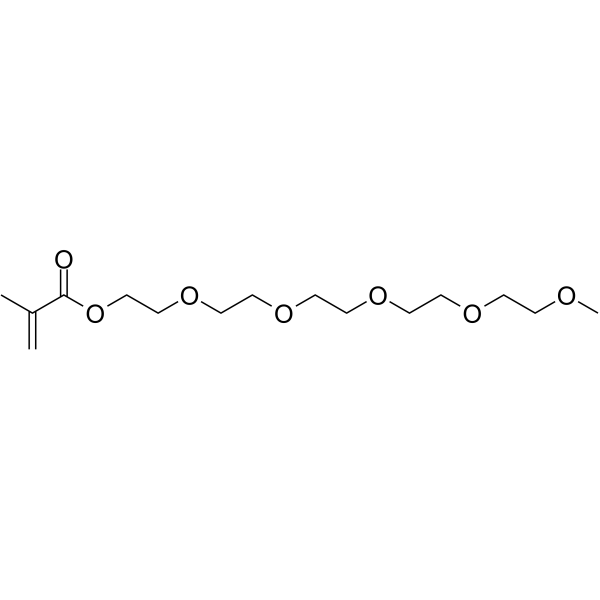
m-PEG5-2-methylacrylate is a PEG- and Alkyl/ester-based PROTAC linker can be used in the synthesis of PROTACs .
loading...
    loading...
Cat. No.: HY-141404
CAS No.: 1920109-55-2
Target:  

PROTAC Linkers

Research Areas:  

Cancer

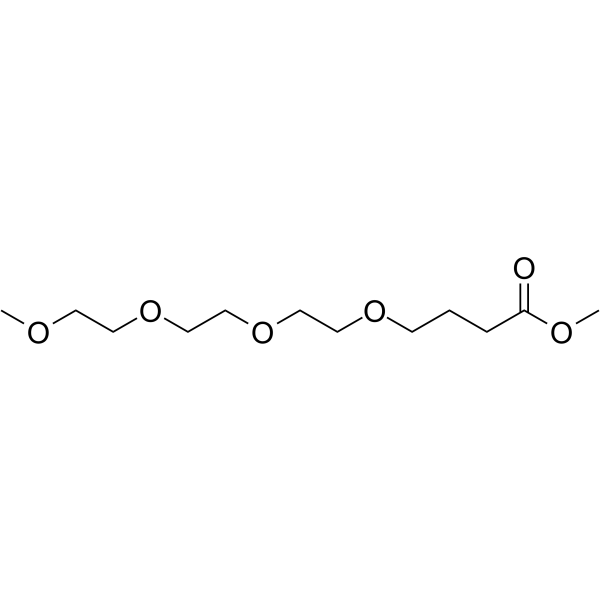
m-PEG4-CH2-methyl ester is a PEG- and Alkyl/ester-based PROTAC linker can be used in the synthesis of PROTACs .
loading...
    loading...
Cat. No.: HY-151271
Target:  

SARS-CoV

Research Areas:  

Infection

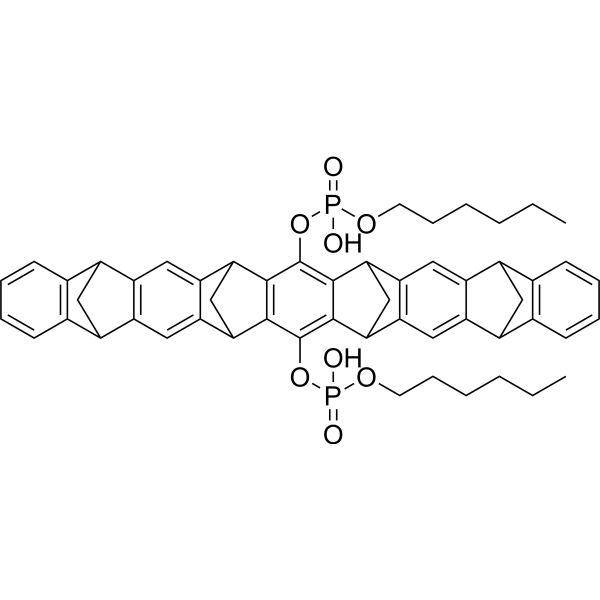
SARS-CoV-2-IN-27 is a two-armed diphosphate ester with C6 alkyl and molecular tweezers with extended length. SARS-CoV-2-IN-27 exhibits antiviral activity with IC50s of 1.0 μM and 1.7 μM against SARS-CoV-2 activity and the spike pseudoparticle transduction, respectively. SARS-CoV-2-IN-27 induces liposomal membrane disruption with an EC50 value of 6.5 μM .
loading...
    loading...
Cat. No.: HY-151271A
Target:  

SARS-CoV

Research Areas:  

Infection

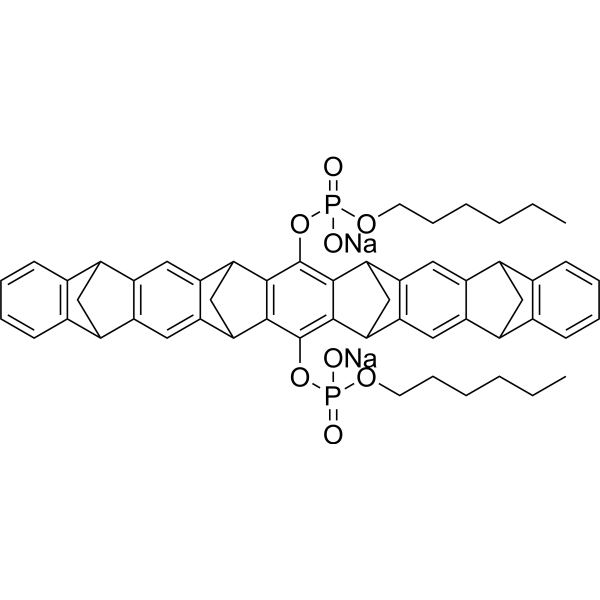
SARS-CoV-2-IN-27 disodium is a two-armed diphosphate ester with C6 alkyl and molecular tweezers with extended length. SARS-CoV-2-IN-27 disodium exhibits antiviral activity with IC50s of 1.0 μM and 1.7 μM against SARS-CoV-2 activity and the spike pseudoparticle transduction, respectively. SARS-CoV-2-IN-27 disodium induces liposomal membrane disruption with an EC50 value of 6.5 μM .
loading...
    loading...
Cat. No.: HY-151274
Target:  

SARS-CoV

Research Areas:  

Infection

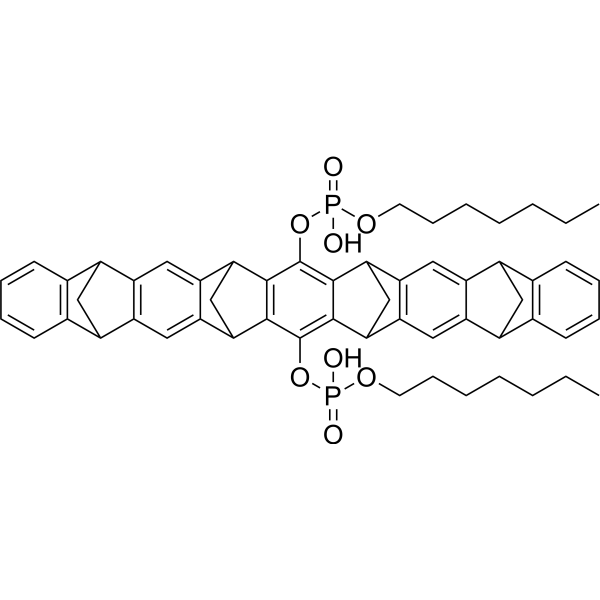
SARS-CoV-2-IN-28 is a two-armed diphosphate ester with C7 alkyl and molecular tweezers with extended length. SARS-CoV-2-IN-28 exhibits antiviral activity with IC50s of 0.4 μM and 1.0 μM against SARS-CoV-2 activity and the spike pseudoparticle transduction, respectively. SARS-CoV-2-IN-28 induces liposomal membrane disruption with an EC50 value of 4.4 μM .
loading...
    loading...
Cat. No.: HY-151274A
Target:  

SARS-CoV

Research Areas:  

Infection

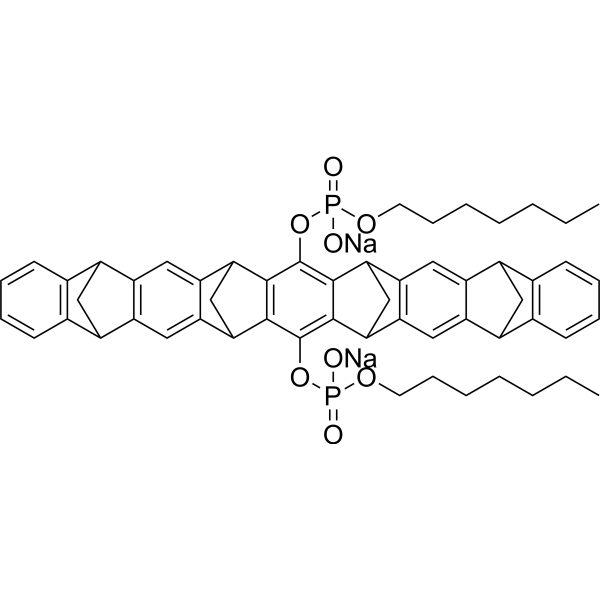
SARS-CoV-2-IN-28 disodium is a two-armed diphosphate ester with C7 alkyl and molecular tweezers with extended length. SARS-CoV-2-IN-28 disodium exhibits antiviral activity with IC50s of 0.4 μM and 1.0 μM against SARS-CoV-2 activity and the spike pseudoparticle transduction, respectively. SARS-CoV-2-IN-28 disodium induces liposomal membrane disruption with an EC50 value of 4.4 μM .
loading...
    loading...
Cat. No.: HY-W111403
CAS No.: 1305-78-8
Calcium oxide (CaO) acts as a heterogeneous base catalyst. Calcium oxide can be extracted not only from waste materials such as oyster shells, eggshells and crab shells, but also exhibits tolerance to low to moderate oil quality, free fatty acid and water content in raw materials. Calcium oxide can be used in biodiesel production, where it effectively catalyzes the transesterification of vegetable oils or animal fats to produce alkyl esters .
loading...
    loading...
Cat. No.: HY-E71104
Research Areas:  

Others

(R)-Specific secondary-alkylsulfatase (EC 3.1.6.19) from Rhodococcus ruber is involved in the biodegradation of alkyl sulfate esters used as detergents and released into the environment.
loading...
    loading...
Cat. No.: HY-W130596
CAS No.: 122-72-5
3-Phenylpropyl acetate is a member of the fragrance structural group Aryl Alkyl Alcohol Simple Acid Esters (AAASAE). 3-Phenylpropyl acetate has acute toxicity in rats and rabbits and shows no skin sensitization in guinea pigs. 3-Phenylpropyl acetate can be used as a fragrance ingredient .
loading...
    loading...
Cat. No.: HY-W923355
CAS No.: 99660-94-3
Synonyms: EPA-TG; Glycerol trieicosapentaenoate; TG(20:5/20:5/20:5)
Target:  

Others

Research Areas:  

Others

1,2,3-Trieicosapentaenoyl glycerol (EPA-TG) is a glycerol ester that can be obtained by the reaction of polyunsaturated fatty acids or lower alkyl esters with glycerol catalyzed by alkoxide ions . After two intravenous injections of the EPA-TG emulsion into rabbits, the EPA content in plasma and platelet phospholipids increased markedly . In another study, by administering the EPA-TG emulsion, the production of leukotriene B4 by polymorphonuclear leukocytes in rabbits was reduced by 40% .
loading...
    loading...
Cat. No.: HY-12386A
CAS No.: 678173-92-7
Target:  

Drug Intermediate

Research Areas:  

Others

(S)-4-(3-Thienyl) phenyl-α-methylacetic acid is the S-enantiomer of the racemate corresponding to 4-(3-Thienyl) phenyl-α-methylacetic acid. As a key synthetic precursor, 4-(3-Thienyl) phenyl-α-methylacetic acid is used to prepare the cyclooxygenase inhibitor S-Atliprofen .
loading...
    loading...
Cat. No.: HY-L036
1,605 compounds

Small molecule covalent inhibitors, or irreversible inhibitors, are a type of inhibitors that exert their biological functions by irreversibly binding to target through covalent bonds. Compared with non-covalent inhibitors, covalent inhibitors have obvious advantages in bioactivity, such that covalent warheads can target rare residues of a particular target protein, thus leading to the development of highly selective inhibitors and achieving a more complete and continued target occupancy in living systems. In recent years, the distinct strengths of covalent inhibitors in overcoming drug resistance had been recognized. However, toxicity can be a real challenge related to this class of therapeutics due to their potential for off-target reactivity and has led to these drugs being disfavored as a drug class. The drug design and optimization of covalent inhibitors has become a hot spot in drug discovery.

MCE covalent inhibitor library contains 1,605 small molecules including identified covalent inhibitors and other bioactive molecules having common covalent reactive groups as warheads, such as acrylamides, activated terminal acetylenes, Sulfonyl fluorides/esters, cloracetamides, alkyl halides, epoxides, aziridines, disulfides, etc.

Cat. No.: HY-L036P
6,081 compounds

Small molecule covalent inhibitors, or irreversible inhibitors, are a type of inhibitors that exert their biological functions by irreversibly binding to target through covalent bonds. Compared with non-covalent inhibitors, covalent inhibitors have obvious advantages in bioactivity, such that covalent warheads can target rare residues of a particular target protein, thus leading to the development of highly selective inhibitors and achieving a more complete and continued target occupancy in living systems. In recent years, the distinct strengths of covalent inhibitors in overcoming drug resistance had been recognized. However, toxicity can be a real challenge related to this class of therapeutics due to their potential for off-target reactivity and has led to these drugs being disfavored as a drug class. The drug design and optimization of covalent inhibitors has become a hot spot in drug discovery.

MCE covalent inhibitor library contains 6,081 small molecules including identified covalent inhibitors and other molecules having common covalent reactive groups as warheads, such as acrylamides, activated terminal acetylenes, sulfonyl fluorides/esters, cloracetamides, alkyl halides, epoxides, aziridines, disulfides, etc.

MCE Covalent inhibitor Library plus, with more powerful screening capability, further complement Covalent inhibitor Library (HY-L036) by adding some fragment compounds with covalent warheads.

  • 1

