Search Result
Results for "
alkynyl group
" in MedChemExpress (MCE) Product Catalog:
17
Biochemical Assay Reagents
| Cat. No. |
Product Name |
Target |
Research Areas |
Chemical Structure |
-
- HY-W040304
-
|
Alk-C16
|
PROTAC Linkers
|
Cancer
|
|
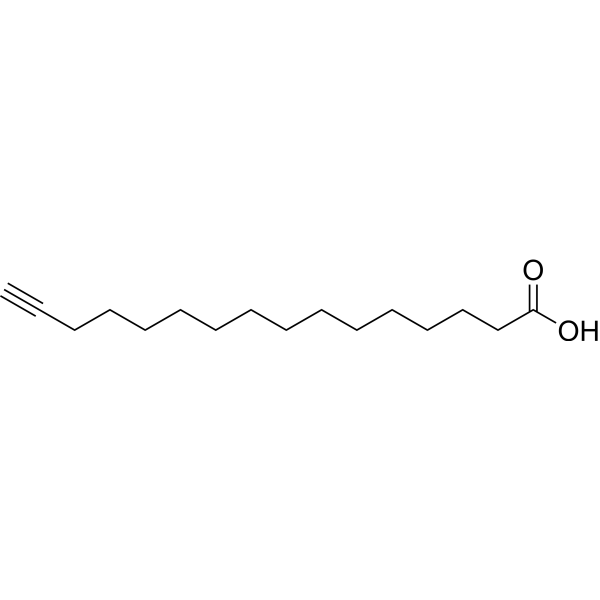
Alkynyl Palmitic Acid (Alk-C16) is an alkyl chain-based PROTAC linker that can be used in the synthesis of PROTACs . Alkynyl Palmitic Acid is a click chemistry reagent, it contains an Alkyne group and can undergo copper-catalyzed azide-alkyne cycloaddition (CuAAc) with molecules containing Azide groups.
|
-
-
- HY-140335
-
|
|
PROTAC Linkers
|
Cancer
|
|
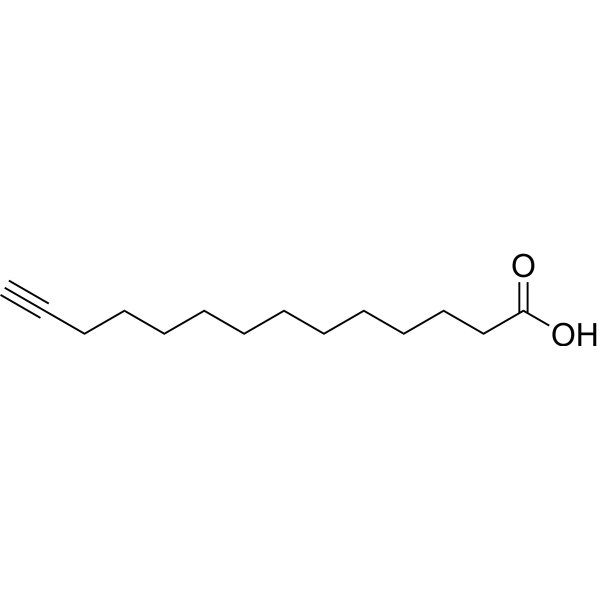
Alkynyl myristic acid is an alkyl chain-based PROTAC linker that can be used in the synthesis of PROTACs . Alkynyl myristic acid is a click chemistry reagent, it contains an Alkyne group and can undergo copper-catalyzed azide-alkyne cycloaddition (CuAAc) with molecules containing Azide groups.
|
-
-
- HY-126192
-
|
PiB; 6-OH-BTA-1
|
Amyloid-β
|
Neurological Disease
|
|
Pittsburgh Compound B (PiB) is a blood-brain barrier-permeable, specific Aβ deposition PET tracer that binds to Aβ(1-40) fibrils with a Ki value of 678.4 nM. Through click chemical modification (a clickable Pittsburgh Compound B derivative is prepared by introducing a PEG3 linker and an alkynyl group at the 6-hydroxy site of Pittsburgh Compound B, followed by covalent conjugation with azide-labeled fluorescent dyes or affinity tags via copper-catalyzed azide-alkyne cycloaddition (CuAAC)), Pittsburgh Compound B and its conjugates can be used for fluorescence imaging, ultrastructural studies, and enrichment and characterization of Aβ complexes. Pittsburgh Compound B is applicable to Alzheimer's disease research .
|
-
-
- HY-115495
-
|
|
Biochemical Assay Reagents
|
Others
|
|
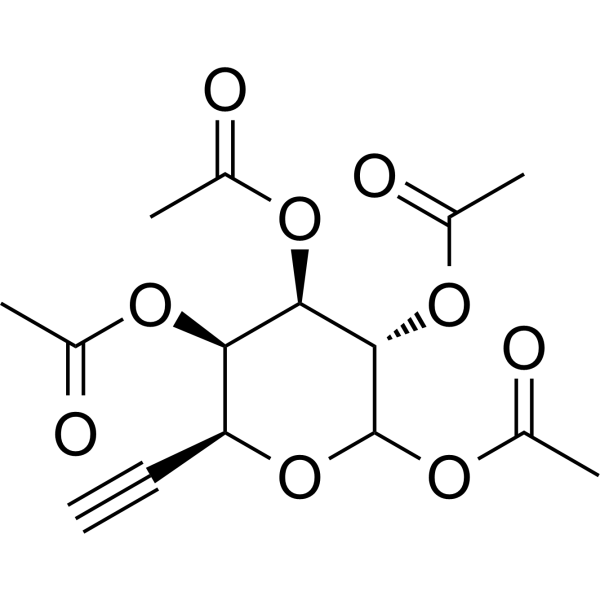
6-Alkynyl fucose is a tool in the study of protein O-fucosylation . 6-Alkynyl fucose is a click chemistry reagent, it contains an Alkyne group and can undergo copper-catalyzed azide-alkyne cycloaddition (CuAAc) with molecules containing Azide groups.
|
-
-
- HY-170528
-
|
|
PROTAC Linkers
|
Others
|
|
DBCO-PEG3-NHS is a biochemical assay reagent, that can be used to chemically modify proteins and antibodies with an alkynyl (DBCO) or N-hydroxysuccinimide (NHS) ester group. DBCO-PEG3-NHS can be used as a linker in PROTAC synthesis or for drug delivery and the development of biosensors and diagnostic reagents .
|
-
-
- HY-D2161A
-
|
|
Fluorescent Dye
|
Others
|
|
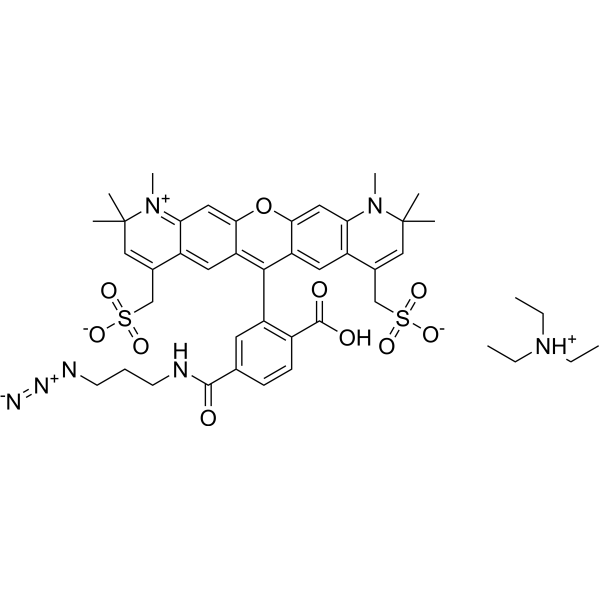
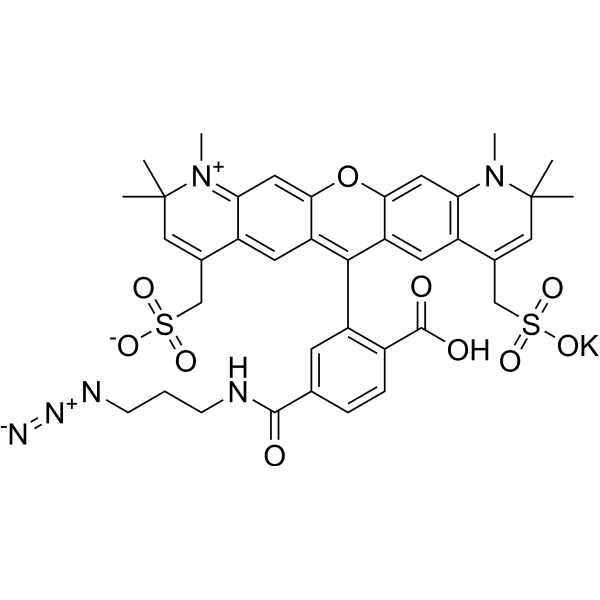
AF 594 azide (triethylamine) is an azide derivative of the red fluorescent dye AF 594, which has high fluorescence quantum yield and high photostability (maximum absorption wavelength of 586 nm, maximum emission wavelength of 613 nm). AF 594 azide (triethylamine) forms stable adducts by reaction of the azide group with alkynyl derivatives (terminal alkynes and cyclooctyne) .
|
-
-
- HY-W1049105
-
|
|
Biochemical Assay Reagents
|
Others
|
|
mPEG2000-Alkyne is a PEG derivative. The alkynyl group can react with azide in aqueous solution under the catalysis of monovalent copper. Polyethylene glycol derivatives can increase the solubility and stability of drugs, reduce the immunogenicity of peptides, and have good biocompatibility .
|
-
-
- HY-D2161
-
|
|
Fluorescent Dye
|
Others
|
|
AF 594 azide is an azide derivative of the red fluorescent dye AF 594, which has high fluorescence quantum yield and high photostability (maximum absorption wavelength of 586 nm, maximum emission wavelength of 613 nm). AF 594 azide forms stable adducts by reaction of the azide group with alkynyl derivatives (terminal alkynes and cyclooctyne). It contains an azide group and can undergo copper-catalyzed azide-alkyne cycloaddition (CuAAc) with molecules containing alkyne groups. It can also undergo ring strain-promoted alkyne-azide cycloaddition (SPAAC) with molecules containing DBCO or BCN groups .
|
-
-
- HY-D2112
-
|
|
Fluorescent Dye
|
Others
|
|
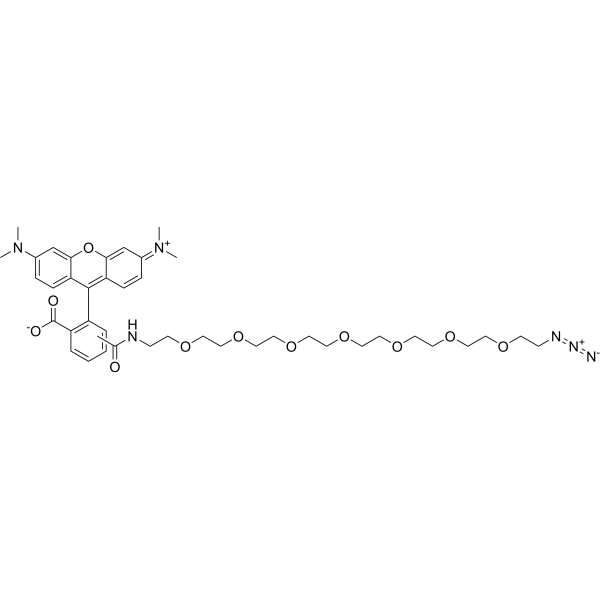
TAMRA-PEG7-N3 is a TAMRA (HY-135640) dye derivative containing 7 PEG units. TAMRA-PEG7-N3 undergoes copper-catalyzed azide-alkyne cycloaddition (CuAAc) with molecules containing an alkynyl group (N3). It also undergoes strain-promoted alkyne-azide cycloaddition (SPAAC) with molecules containing DBCO or BCN groups. It contains an azide group and can undergo copper-catalyzed azide-alkyne cycloaddition (CuAAc) with molecules containing alkyne groups. It can also undergo ring strain-promoted alkyne-azide cycloaddition (SPAAC) with molecules containing DBCO or BCN groups.
|
-
-
- HY-D2111
-
|
|
Fluorescent Dye
|
Others
|
|
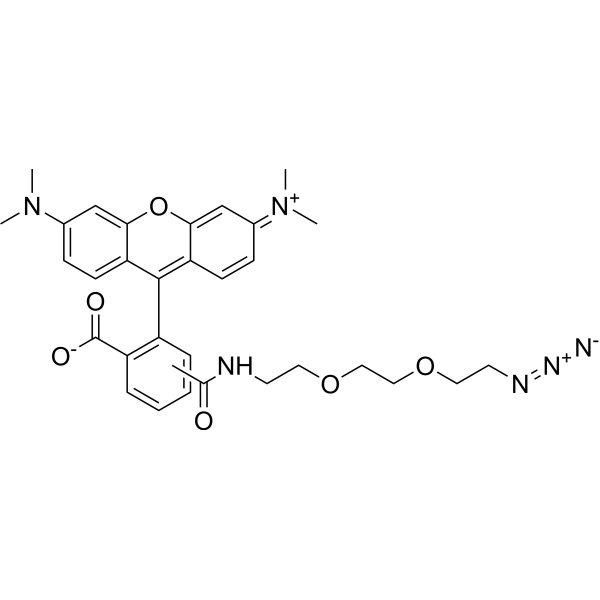
TAMRA-PEG2-N3 is a TAMRA (HY-135640) dye derivative containing 4 PEG units. TAMRA-PEG2-N3 undergoes copper-catalyzed azide-alkyne cycloaddition (CuAAc) with molecules containing an alkynyl group (N3). It also undergoes strain-promoted alkyne-azide cycloaddition (SPAAC) with molecules containing DBCO or BCN groups. It contains an azide group and can undergo copper-catalyzed azide-alkyne cycloaddition (CuAAc) with molecules containing alkyne groups. It can also undergo ring strain-promoted alkyne-azide cycloaddition (SPAAC) with molecules containing DBCO or BCN groups.
|
-
-
- HY-D2911
-
|
|
Biochemical Assay Reagents
|
Metabolic Disease
|
|
Pantetheine probe PP-3 (Compound PP-3) is an alkynyl group connector probe. Pantetheine probe PP-3 selectively enriches and maps modification sites (e.g., Ser231 on DHRS2). Pantetheine probe PP-3 is promising for research of metabolic disorders (e.g., fatty acid synthesis dysregulation) .
|
-
-
- HY-116879
-
|
(2E)-4-Oxo-2-nonen-8-ynal; alkynyl-4-ONE
|
Exosomes
Others
|
Cancer
|
|
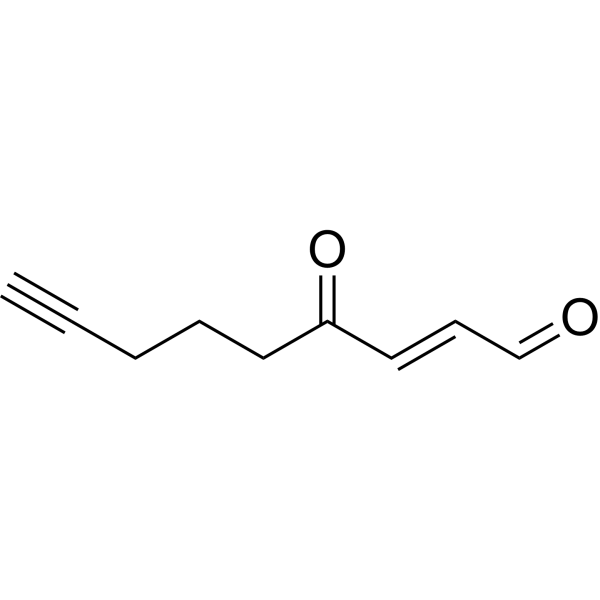
4-Oxo-2-Nonenal Alkyne ((2E)-4-Oxo-2-nonen-8-ynal; alkynyl-4-ONE) is a functionalized lipid electrophile that conjugated to the exosomes via the reaction of amino and aldehyde groups. 4-Oxo-2-Nonenal Alkyne can be used in tumor exosomes determination .
|
-
-
- HY-W1049091C
-
|
|
Biochemical Assay Reagents
|
Others
|
|
mPEG20000-Alkyne is a PEG derivative. The alkynyl group can react with azide in aqueous solution under the catalysis of monovalent copper. Polyethylene glycol derivatives can increase the solubility and stability of drugs, reduce the immunogenicity of peptides, and have good biocompatibility .
|
-
-
- HY-174969
-
|
|
Biochemical Assay Reagents
|
Others
|
|
Alkyne-PEG1000-Silane is a PEG derivative composed of silane, PEG, and alkynyl groups. Alkyne-PEG1000-Silane is a click chemistry reagent. It contains an Alkyne group, which can undergo copper-catalyzed azide-alkyne cycloaddition reaction (CuAAc) with molecules containing an Azide group. The Silane group enables Alkyne-PEG1000-Silane to modify surfaces such as glass and silicon .
|
-
-
- HY-174946
-
|
DPPE-PEG1-N3
|
Biochemical Assay Reagents
|
Others
|
|
DPPE-PEG1-azide (DPPE-PEG1-N3) is a PEG-modified lipid containing an azide group. DPPE-PEG1-azide can undergo a copper-catalyzed azide-alkyne cycloaddition reaction (CuAAc) with molecules containing an alkynyl group. It can also undergo ring strain-driven alkyne-azide cycloaddition (SPAAC) reactions with molecules containing DBCO or BCN groups .
|
-
-
- HY-174946A
-
|
DPPE-PEG5-N3
|
Biochemical Assay Reagents
|
Others
|
|
DPPE-PEG5-azide (DPPE-PEG5-N3) is a PEG-modified lipid containing an azide group. DPPE-PEG5-azide can undergo a copper-catalyzed azide-alkyne cycloaddition reaction (CuAAc) with molecules containing an alkynyl group. It can also undergo ring strain-driven alkyne-azide cycloaddition (SPAAC) reactions with molecules containing DBCO or BCN groups .
|
-
-
- HY-W457950
-
|
|
E3 Ligase Ligand-Linker Conjugates
Autophagy
Apoptosis
|
Cancer
|
|
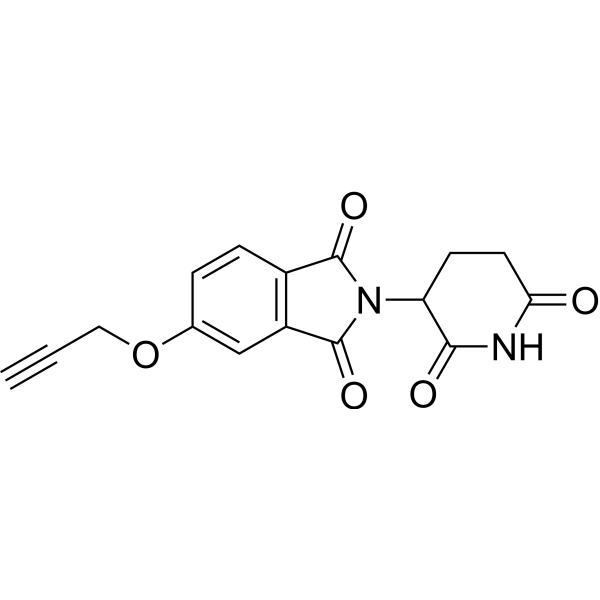
Thalidomide-5-propargyl is a propargyl-modified Thalidomide (HY-14658), that acts as a Cereblon ligand to recruit CRBN proteins. Thalidomide-5-propargyl use alkynyl group at the end to be directly used in the synthesis of triazoles in the synthesis of PROTAC molecules, and is a key intermediate in the synthesis of PROTAC molecules based on CRBN design .
|
-
-
- HY-157515
-
|
|
E3 Ligase Ligand-Linker Conjugates
|
Cancer
|
|
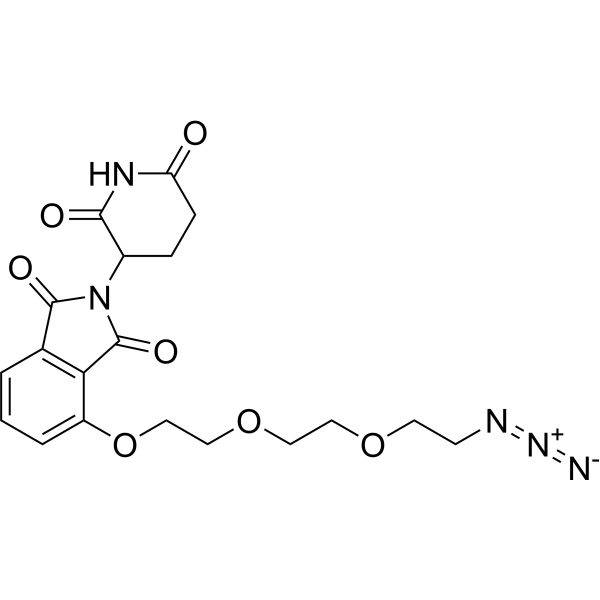
Thalidomide 4'-ether-PEG2-azide is a click chemistry modified cereblon (CRBN) inhibitor Thalidomide (HY-14658). Thalidomide 4'-ether-PEG2-azide contains an azide group and can undergo copper-catalyzed azide-alkyne cycloaddition reaction (CuAAc) with molecules containing alkynyl groups. Thalidomide 4'-ether-PEG2-azide can be used as a ligand of E3 ubiquitin ligase and Linker conjugates (E3 Ligase Ligand-Linker Conjugates) for the synthesis of PROTACs .
|
-
-
- HY-140875
-
|
|
Drug Intermediate
|
Others
|
|
Propargyl-PEG3-triethoxysilane contains a triethoxysilane moiety and an alkynyl group. Propargyl-PEG3-triethoxysilane can be used for material surface modification, biological molecule labeling, immobilization, and so on.
|
-
-
- HY-W1048860B
-
|
|
Biochemical Assay Reagents
|
Others
|
|
4-Arm PEG10000-alkyne is a multi-arm PEG derivative with alkynyl groups at each end of four arms attached to a pentaerythritol core. PEG alkyne can be used for PEGylation via copper-catalyzed click chemistry with azides .
|
-
-
- HY-W1048860D
-
|
|
Biochemical Assay Reagents
|
Others
|
|
4-Arm PEG40000-alkyne is a multi-arm PEG derivative with alkynyl groups at each end of four arms attached to a pentaerythritol core. PEG alkyne can be used for PEGylation via copper-catalyzed click chemistry with azides .
|
-
-
- HY-W1049091D
-
|
|
Biochemical Assay Reagents
|
Others
|
|
mPEG40000-Alkyne is a PEG derivative. The alkynyl group can react with azide in aqueous solution under the catalysis of monovalent copper. Polyethylene glycol derivatives can increase the solubility and stability of drugs, reduce the immunogenicity of peptides, and have good biocompatibility .
|
-
-
- HY-W1049091A
-
|
|
Biochemical Assay Reagents
|
Others
|
|
mPEG5000-Alkyne is a PEG derivative. The alkynyl group can react with azide in aqueous solution under the catalysis of monovalent copper. Polyethylene glycol derivatives can increase the solubility and stability of drugs, reduce the immunogenicity of peptides, and have good biocompatibility .
|
-
-
- HY-W1048860A
-
|
|
Biochemical Assay Reagents
|
Others
|
|
4-Arm PEG5000-alkyne is a multi-arm PEG derivative with alkynyl groups at each end of four arms attached to a pentaerythritol core. PEG alkyne can be used for PEGylation via copper-catalyzed click chemistry with azides .
|
-
-
- HY-W1049091
-
|
|
Biochemical Assay Reagents
|
Others
|
|
mPEG1000-Alkyne is a PEG derivative. The alkynyl group can react with azide in aqueous solution under the catalysis of monovalent copper. Polyethylene glycol derivatives can increase the solubility and stability of drugs, reduce the immunogenicity of peptides, and have good biocompatibility .
|
-
-
- HY-W1049091B
-
|
|
Biochemical Assay Reagents
|
Others
|
|
mPEG10000-Alkyne is a PEG derivative. The alkynyl group can react with azide in aqueous solution under the catalysis of monovalent copper. Polyethylene glycol derivatives can increase the solubility and stability of drugs, reduce the immunogenicity of peptides, and have good biocompatibility .
|
-
-
- HY-W1049091E
-
|
|
Biochemical Assay Reagents
|
Others
|
|
mPEG3400-Alkyne is a PEG derivative. The alkynyl group can react with azide in aqueous solution under the catalysis of monovalent copper. Polyethylene glycol derivatives can increase the solubility and stability of drugs, reduce the immunogenicity of peptides, and have good biocompatibility .
|
-
-
- HY-W1048860C
-
|
|
Biochemical Assay Reagents
|
Others
|
|
4-Arm PEG20000-alkyne is a multi-arm PEG derivative with alkynyl groups at each end of four arms attached to a pentaerythritol core. PEG alkyne can be used for PEGylation via copper-catalyzed click chemistry with azides .
|
-
-
- HY-174969C
-
|
|
Biochemical Assay Reagents
|
Others
|
|
Alkyne-PEG5000-Silane is a PEG derivative composed of silane, PEG, and alkynyl groups. Alkyne-PEG5000-Silane is a click chemistry reagent. It contains an Alkyne group, which can undergo copper-catalyzed azide-alkyne cycloaddition reaction (CuAAc) with molecules containing an Azide group. The Silane group enables Alkyne-PEG5000-Silane to modify surfaces such as glass and silicon .
|
-
-
- HY-174969A
-
|
|
Biochemical Assay Reagents
|
Others
|
|
Alkyne-PEG2000-Silane is a PEG derivative composed of silane, PEG, and alkynyl groups. Alkyne-PEG2000-Silane is a click chemistry reagent. It contains an Alkyne group, which can undergo copper-catalyzed azide-alkyne cycloaddition reaction (CuAAc) with molecules containing an Azide group. The Silane group enables Alkyne-PEG2000-Silane to modify surfaces such as glass and silicon .
|
-
-
- HY-174969B
-
|
|
Biochemical Assay Reagents
|
Others
|
|
Alkyne-PEG3400-Silane is a PEG derivative composed of silane, PEG, and alkynyl groups. Alkyne-PEG3400-Silane is a click chemistry reagent. It contains an Alkyne group, which can undergo copper-catalyzed azide-alkyne cycloaddition reaction (CuAAc) with molecules containing an Azide group. The Silane group enables Alkyne-PEG3400-Silane to modify surfaces such as glass and silicon .
|
-
-
- HY-173578
-
|
|
Biochemical Assay Reagents
|
Others
|
|
N-(2-Poc-ethyl)betulin amide is a triterpenoid with antiviral and antitumor activities. N-(2-Poc-ethyl)betulin amide contains a Poc (prop-2-yn-1-yloxycarbonyl) alkynyl protecting group, which allows for bioorthogonal reactions (such as click chemistry) and is used for targeted delivery and fluorescent labeling .
|
-
| Cat. No. |
Product Name |
Type |
-
- HY-D2161A
-
|
|
Fluorescent Dyes
|
|
AF 594 azide (triethylamine) is an azide derivative of the red fluorescent dye AF 594, which has high fluorescence quantum yield and high photostability (maximum absorption wavelength of 586 nm, maximum emission wavelength of 613 nm). AF 594 azide (triethylamine) forms stable adducts by reaction of the azide group with alkynyl derivatives (terminal alkynes and cyclooctyne) .
|
-
- HY-D2161
-
|
|
Fluorescent Dyes
|
|
AF 594 azide is an azide derivative of the red fluorescent dye AF 594, which has high fluorescence quantum yield and high photostability (maximum absorption wavelength of 586 nm, maximum emission wavelength of 613 nm). AF 594 azide forms stable adducts by reaction of the azide group with alkynyl derivatives (terminal alkynes and cyclooctyne). It contains an azide group and can undergo copper-catalyzed azide-alkyne cycloaddition (CuAAc) with molecules containing alkyne groups. It can also undergo ring strain-promoted alkyne-azide cycloaddition (SPAAC) with molecules containing DBCO or BCN groups .
|
-
- HY-D2112
-
|
|
Fluorescent Dyes
|
|
TAMRA-PEG7-N3 is a TAMRA (HY-135640) dye derivative containing 7 PEG units. TAMRA-PEG7-N3 undergoes copper-catalyzed azide-alkyne cycloaddition (CuAAc) with molecules containing an alkynyl group (N3). It also undergoes strain-promoted alkyne-azide cycloaddition (SPAAC) with molecules containing DBCO or BCN groups. It contains an azide group and can undergo copper-catalyzed azide-alkyne cycloaddition (CuAAc) with molecules containing alkyne groups. It can also undergo ring strain-promoted alkyne-azide cycloaddition (SPAAC) with molecules containing DBCO or BCN groups.
|
-
- HY-D2111
-
|
|
Fluorescent Dyes
|
|
TAMRA-PEG2-N3 is a TAMRA (HY-135640) dye derivative containing 4 PEG units. TAMRA-PEG2-N3 undergoes copper-catalyzed azide-alkyne cycloaddition (CuAAc) with molecules containing an alkynyl group (N3). It also undergoes strain-promoted alkyne-azide cycloaddition (SPAAC) with molecules containing DBCO or BCN groups. It contains an azide group and can undergo copper-catalyzed azide-alkyne cycloaddition (CuAAc) with molecules containing alkyne groups. It can also undergo ring strain-promoted alkyne-azide cycloaddition (SPAAC) with molecules containing DBCO or BCN groups.
|
-
- HY-D2911
-
|
|
Fluorescent Dyes
|
|
Pantetheine probe PP-3 (Compound PP-3) is an alkynyl group connector probe. Pantetheine probe PP-3 selectively enriches and maps modification sites (e.g., Ser231 on DHRS2). Pantetheine probe PP-3 is promising for research of metabolic disorders (e.g., fatty acid synthesis dysregulation) .
|
| Cat. No. |
Product Name |
Type |
-
- HY-W1049105
-
|
|
Biochemical Assay Reagents
|
|
mPEG2000-Alkyne is a PEG derivative. The alkynyl group can react with azide in aqueous solution under the catalysis of monovalent copper. Polyethylene glycol derivatives can increase the solubility and stability of drugs, reduce the immunogenicity of peptides, and have good biocompatibility .
|
-
- HY-W1049091C
-
|
|
Biochemical Assay Reagents
|
|
mPEG20000-Alkyne is a PEG derivative. The alkynyl group can react with azide in aqueous solution under the catalysis of monovalent copper. Polyethylene glycol derivatives can increase the solubility and stability of drugs, reduce the immunogenicity of peptides, and have good biocompatibility .
|
-
- HY-174969
-
|
|
Biochemical Assay Reagents
|
|
Alkyne-PEG1000-Silane is a PEG derivative composed of silane, PEG, and alkynyl groups. Alkyne-PEG1000-Silane is a click chemistry reagent. It contains an Alkyne group, which can undergo copper-catalyzed azide-alkyne cycloaddition reaction (CuAAc) with molecules containing an Azide group. The Silane group enables Alkyne-PEG1000-Silane to modify surfaces such as glass and silicon .
|
-
- HY-174946
-
|
DPPE-PEG1-N3
|
Biochemical Assay Reagents
|
|
DPPE-PEG1-azide (DPPE-PEG1-N3) is a PEG-modified lipid containing an azide group. DPPE-PEG1-azide can undergo a copper-catalyzed azide-alkyne cycloaddition reaction (CuAAc) with molecules containing an alkynyl group. It can also undergo ring strain-driven alkyne-azide cycloaddition (SPAAC) reactions with molecules containing DBCO or BCN groups .
|
-
- HY-174946A
-
|
DPPE-PEG5-N3
|
Biochemical Assay Reagents
|
|
DPPE-PEG5-azide (DPPE-PEG5-N3) is a PEG-modified lipid containing an azide group. DPPE-PEG5-azide can undergo a copper-catalyzed azide-alkyne cycloaddition reaction (CuAAc) with molecules containing an alkynyl group. It can also undergo ring strain-driven alkyne-azide cycloaddition (SPAAC) reactions with molecules containing DBCO or BCN groups .
|
-
- HY-W1048860B
-
|
|
Biochemical Assay Reagents
|
|
4-Arm PEG10000-alkyne is a multi-arm PEG derivative with alkynyl groups at each end of four arms attached to a pentaerythritol core. PEG alkyne can be used for PEGylation via copper-catalyzed click chemistry with azides .
|
-
- HY-W1048860D
-
|
|
Biochemical Assay Reagents
|
|
4-Arm PEG40000-alkyne is a multi-arm PEG derivative with alkynyl groups at each end of four arms attached to a pentaerythritol core. PEG alkyne can be used for PEGylation via copper-catalyzed click chemistry with azides .
|
-
- HY-W1049091D
-
|
|
Biochemical Assay Reagents
|
|
mPEG40000-Alkyne is a PEG derivative. The alkynyl group can react with azide in aqueous solution under the catalysis of monovalent copper. Polyethylene glycol derivatives can increase the solubility and stability of drugs, reduce the immunogenicity of peptides, and have good biocompatibility .
|
-
- HY-W1049091A
-
|
|
Biochemical Assay Reagents
|
|
mPEG5000-Alkyne is a PEG derivative. The alkynyl group can react with azide in aqueous solution under the catalysis of monovalent copper. Polyethylene glycol derivatives can increase the solubility and stability of drugs, reduce the immunogenicity of peptides, and have good biocompatibility .
|
-
- HY-W1048860A
-
|
|
Biochemical Assay Reagents
|
|
4-Arm PEG5000-alkyne is a multi-arm PEG derivative with alkynyl groups at each end of four arms attached to a pentaerythritol core. PEG alkyne can be used for PEGylation via copper-catalyzed click chemistry with azides .
|
-
- HY-W1049091
-
|
|
Biochemical Assay Reagents
|
|
mPEG1000-Alkyne is a PEG derivative. The alkynyl group can react with azide in aqueous solution under the catalysis of monovalent copper. Polyethylene glycol derivatives can increase the solubility and stability of drugs, reduce the immunogenicity of peptides, and have good biocompatibility .
|
-
- HY-W1049091B
-
|
|
Biochemical Assay Reagents
|
|
mPEG10000-Alkyne is a PEG derivative. The alkynyl group can react with azide in aqueous solution under the catalysis of monovalent copper. Polyethylene glycol derivatives can increase the solubility and stability of drugs, reduce the immunogenicity of peptides, and have good biocompatibility .
|
-
- HY-W1049091E
-
|
|
Biochemical Assay Reagents
|
|
mPEG3400-Alkyne is a PEG derivative. The alkynyl group can react with azide in aqueous solution under the catalysis of monovalent copper. Polyethylene glycol derivatives can increase the solubility and stability of drugs, reduce the immunogenicity of peptides, and have good biocompatibility .
|
-
- HY-W1048860C
-
|
|
Biochemical Assay Reagents
|
|
4-Arm PEG20000-alkyne is a multi-arm PEG derivative with alkynyl groups at each end of four arms attached to a pentaerythritol core. PEG alkyne can be used for PEGylation via copper-catalyzed click chemistry with azides .
|
-
- HY-174969C
-
|
|
Biochemical Assay Reagents
|
|
Alkyne-PEG5000-Silane is a PEG derivative composed of silane, PEG, and alkynyl groups. Alkyne-PEG5000-Silane is a click chemistry reagent. It contains an Alkyne group, which can undergo copper-catalyzed azide-alkyne cycloaddition reaction (CuAAc) with molecules containing an Azide group. The Silane group enables Alkyne-PEG5000-Silane to modify surfaces such as glass and silicon .
|
-
- HY-174969A
-
|
|
Biochemical Assay Reagents
|
|
Alkyne-PEG2000-Silane is a PEG derivative composed of silane, PEG, and alkynyl groups. Alkyne-PEG2000-Silane is a click chemistry reagent. It contains an Alkyne group, which can undergo copper-catalyzed azide-alkyne cycloaddition reaction (CuAAc) with molecules containing an Azide group. The Silane group enables Alkyne-PEG2000-Silane to modify surfaces such as glass and silicon .
|
-
- HY-174969B
-
|
|
Biochemical Assay Reagents
|
|
Alkyne-PEG3400-Silane is a PEG derivative composed of silane, PEG, and alkynyl groups. Alkyne-PEG3400-Silane is a click chemistry reagent. It contains an Alkyne group, which can undergo copper-catalyzed azide-alkyne cycloaddition reaction (CuAAc) with molecules containing an Azide group. The Silane group enables Alkyne-PEG3400-Silane to modify surfaces such as glass and silicon .
|
| Cat. No. |
Product Name |
|
Classification |
-
- HY-W040304
-
|
Alk-C16
|
|
Alkynes
PROTAC Synthesis
|
|
Alkynyl Palmitic Acid (Alk-C16) is an alkyl chain-based PROTAC linker that can be used in the synthesis of PROTACs . Alkynyl Palmitic Acid is a click chemistry reagent, it contains an Alkyne group and can undergo copper-catalyzed azide-alkyne cycloaddition (CuAAc) with molecules containing Azide groups.
|
-
- HY-115495
-
|
|
|
Alkynes
|
|
6-Alkynyl fucose is a tool in the study of protein O-fucosylation . 6-Alkynyl fucose is a click chemistry reagent, it contains an Alkyne group and can undergo copper-catalyzed azide-alkyne cycloaddition (CuAAc) with molecules containing Azide groups.
|
-
- HY-170528
-
|
|
|
DBCO
|
|
DBCO-PEG3-NHS is a biochemical assay reagent, that can be used to chemically modify proteins and antibodies with an alkynyl (DBCO) or N-hydroxysuccinimide (NHS) ester group. DBCO-PEG3-NHS can be used as a linker in PROTAC synthesis or for drug delivery and the development of biosensors and diagnostic reagents .
|
-
- HY-W1049105
-
|
|
|
Alkynes
|
|
mPEG2000-Alkyne is a PEG derivative. The alkynyl group can react with azide in aqueous solution under the catalysis of monovalent copper. Polyethylene glycol derivatives can increase the solubility and stability of drugs, reduce the immunogenicity of peptides, and have good biocompatibility .
|
-
- HY-D2161
-
|
|
|
Azide
|
|
AF 594 azide is an azide derivative of the red fluorescent dye AF 594, which has high fluorescence quantum yield and high photostability (maximum absorption wavelength of 586 nm, maximum emission wavelength of 613 nm). AF 594 azide forms stable adducts by reaction of the azide group with alkynyl derivatives (terminal alkynes and cyclooctyne). It contains an azide group and can undergo copper-catalyzed azide-alkyne cycloaddition (CuAAc) with molecules containing alkyne groups. It can also undergo ring strain-promoted alkyne-azide cycloaddition (SPAAC) with molecules containing DBCO or BCN groups .
|
-
- HY-D2112
-
|
|
|
Labeling and Fluorescence Imaging
Azide
|
|
TAMRA-PEG7-N3 is a TAMRA (HY-135640) dye derivative containing 7 PEG units. TAMRA-PEG7-N3 undergoes copper-catalyzed azide-alkyne cycloaddition (CuAAc) with molecules containing an alkynyl group (N3). It also undergoes strain-promoted alkyne-azide cycloaddition (SPAAC) with molecules containing DBCO or BCN groups. It contains an azide group and can undergo copper-catalyzed azide-alkyne cycloaddition (CuAAc) with molecules containing alkyne groups. It can also undergo ring strain-promoted alkyne-azide cycloaddition (SPAAC) with molecules containing DBCO or BCN groups.
|
-
- HY-D2111
-
|
|
|
Labeling and Fluorescence Imaging
Azide
|
|
TAMRA-PEG2-N3 is a TAMRA (HY-135640) dye derivative containing 4 PEG units. TAMRA-PEG2-N3 undergoes copper-catalyzed azide-alkyne cycloaddition (CuAAc) with molecules containing an alkynyl group (N3). It also undergoes strain-promoted alkyne-azide cycloaddition (SPAAC) with molecules containing DBCO or BCN groups. It contains an azide group and can undergo copper-catalyzed azide-alkyne cycloaddition (CuAAc) with molecules containing alkyne groups. It can also undergo ring strain-promoted alkyne-azide cycloaddition (SPAAC) with molecules containing DBCO or BCN groups.
|
-
- HY-W1049091C
-
|
|
|
Alkynes
|
|
mPEG20000-Alkyne is a PEG derivative. The alkynyl group can react with azide in aqueous solution under the catalysis of monovalent copper. Polyethylene glycol derivatives can increase the solubility and stability of drugs, reduce the immunogenicity of peptides, and have good biocompatibility .
|
-
- HY-157515
-
|
|
|
Azide
|
|
Thalidomide 4'-ether-PEG2-azide is a click chemistry modified cereblon (CRBN) inhibitor Thalidomide (HY-14658). Thalidomide 4'-ether-PEG2-azide contains an azide group and can undergo copper-catalyzed azide-alkyne cycloaddition reaction (CuAAc) with molecules containing alkynyl groups. Thalidomide 4'-ether-PEG2-azide can be used as a ligand of E3 ubiquitin ligase and Linker conjugates (E3 Ligase Ligand-Linker Conjugates) for the synthesis of PROTACs .
|
-
- HY-W1049091D
-
|
|
|
Alkynes
|
|
mPEG40000-Alkyne is a PEG derivative. The alkynyl group can react with azide in aqueous solution under the catalysis of monovalent copper. Polyethylene glycol derivatives can increase the solubility and stability of drugs, reduce the immunogenicity of peptides, and have good biocompatibility .
|
-
- HY-W1049091A
-
|
|
|
Alkynes
|
|
mPEG5000-Alkyne is a PEG derivative. The alkynyl group can react with azide in aqueous solution under the catalysis of monovalent copper. Polyethylene glycol derivatives can increase the solubility and stability of drugs, reduce the immunogenicity of peptides, and have good biocompatibility .
|
-
- HY-W1049091
-
|
|
|
Alkynes
|
|
mPEG1000-Alkyne is a PEG derivative. The alkynyl group can react with azide in aqueous solution under the catalysis of monovalent copper. Polyethylene glycol derivatives can increase the solubility and stability of drugs, reduce the immunogenicity of peptides, and have good biocompatibility .
|
-
- HY-W1049091B
-
|
|
|
Alkynes
|
|
mPEG10000-Alkyne is a PEG derivative. The alkynyl group can react with azide in aqueous solution under the catalysis of monovalent copper. Polyethylene glycol derivatives can increase the solubility and stability of drugs, reduce the immunogenicity of peptides, and have good biocompatibility .
|
-
- HY-W1049091E
-
|
|
|
Alkynes
|
|
mPEG3400-Alkyne is a PEG derivative. The alkynyl group can react with azide in aqueous solution under the catalysis of monovalent copper. Polyethylene glycol derivatives can increase the solubility and stability of drugs, reduce the immunogenicity of peptides, and have good biocompatibility .
|
Your information is safe with us. * Required Fields.
Inquiry Information
- Product Name:
- Cat. No.:
- Quantity:
- MCE Japan Authorized Agent:

