

21 Results for "

anionic lipid

" in MedChemExpress (MCE) Product Catalog:
Products (21)

21 Results for "anionic lipid" in MCE Product Catalog:

3
3 Cited Publications
Cat. No.: HY-141571
CAS No.: 67254-28-8
Purity:  98.70%
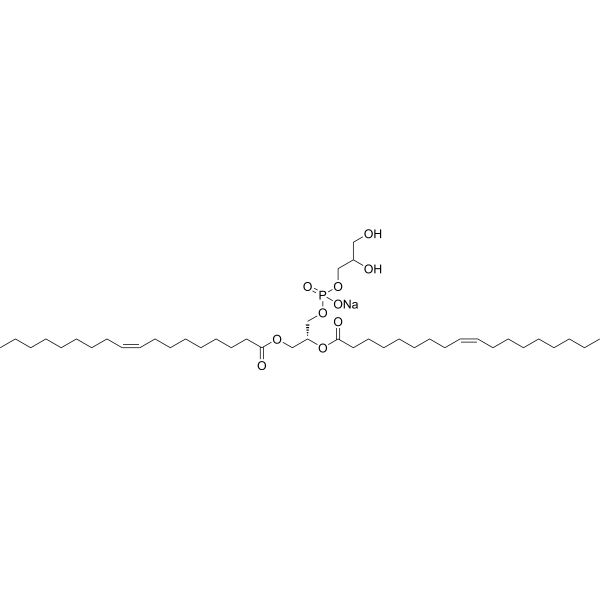
Synonyms: Dioleoylphosphatidylglycerol sodium
DOPG sodium is a naturally occurring anionic phospholipid, containing oleic acid (18:1) inserted at the sn-1 and sn-2 positions. DOPG can form a lipid bilayer in an aqueous solution and is used in the generation of micelles, liposomes, and other artificial membranes. DOPG also exhibits anti-inflammatory properties .
loading...
    loading...
2
2 Cited Publications
Cat. No.: HY-111915
CAS No.: 108392-02-5
Purity:  99.44%
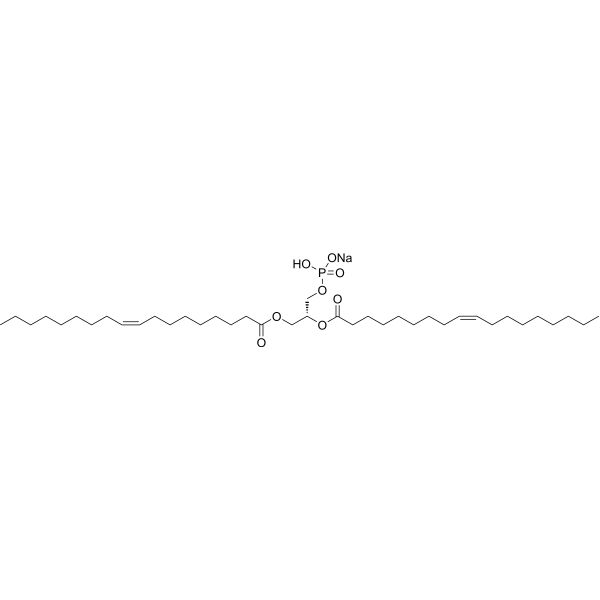
Synonyms: 18:1 PA sodium salt
1,2-Dioleoyl-sn-glycero-3-phosphate sodium salt (18:1 PA sodium salt) is an anionic lipid that can be used to prepare liposomes, micelles and artificial membranes .
loading...
    loading...
Cat. No.: HY-P0311
CAS No.: 184776-51-0
Target:  

Bacterial

Research Areas:  

Infection

LAH4, an alpha-helix of the designed amphipathic peptide antibiotic, exhibits potent antimicrobial, nucleic acid transfection and cell penetration activities. LAH4 possesses high plasmid DNA delivery capacities. LAH4 has a strong affinity for anionic lipids found in the outer membrane of bacterial membranes .
loading...
    loading...
Cat. No.: HY-148009
CAS No.: 2260669-35-8
Synonyms: 16:0-18:1 Cardiolipin sodium
Research Areas:  

Others

Cardiolipin (16:0/18:1/16:0/18:1) (16:0-18:1 Cardiolipin) sodium is a di-saturated mitochondrial-specific anionic phospholipid sodium salt containing the long-chain fatty acid palmitic acid (HY-N0830) and the monounsaturated fatty acid oleic acid (HY-N1446). Cardiolipin (16:0/18:1/16:0/18:1) sodium undergoes in-source fragmentation via diglyceride (DG)-H2O fragment formation and (DG-H2O) fragment loss pathways. Cardiolipin (16:0/18:1/16:0/18:1) sodium can be used in the synthesis of lipid nanodiscs for application in in situ mass spectrometry .
loading...
    loading...
Cat. No.: HY-W440986
CAS No.: 321595-13-5
Synonyms: DSPS sodium
Target:  

Liposome

Research Areas:  

Others

Distearoylphosphatidylserine sodium is an anionic phospholipid with stearic acid tails (18:0) and contains a carboxylic acid (COOH) and amine (NH2) in their head group. It has been used in the preparation of lipid-mixing vesicles, liposome, or artificial membrane. Due to the medium size of fatty acid chain, DLPS is used to form thinner membranes/walls.
loading...
    loading...
Cat. No.: HY-N6711
CAS No.: 57749-43-6
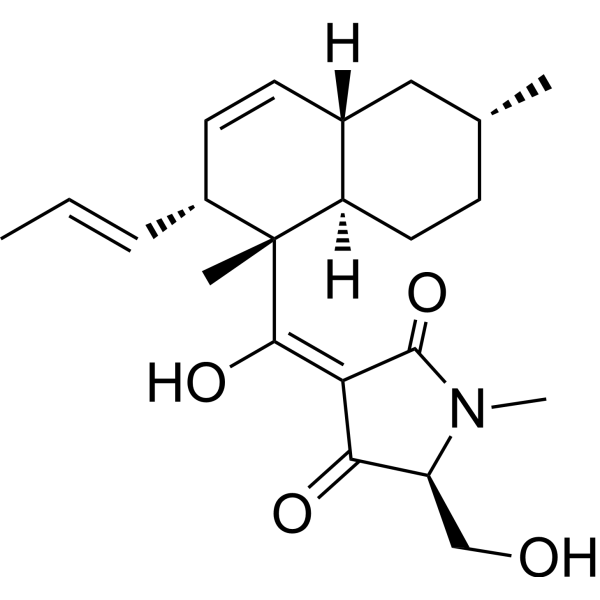
Equisetin is an N-methylserine-derived acyl tetramic acid, quorum sensing inhibitor (QSI), herbicides and antibiotics. Equisetin specifically inhibits the anionic carriers of substrates in the inner mitochondrial membrane. Equisetin inhibits the activity of HIV-1 integrase, 11β-HSD1, and 2,4-dinitrophenol (Dnp)-stimulated ATPase (IC50 = ~8 nmol per mg of protein). Equisetin exhibits growth inhibition of bacteria, anti-inflammatory, amelioration of lipid-associated disorders, and cytotoxic effects .
loading...
    loading...
Cat. No.: HY-W714524
CAS No.: 321863-21-2
Synonyms: 16:0-18:1 PS (POPS)
1-Palmitoyl-2-oleoyl-sn-glycero-3-PS sodium (16:0-18:1 PS (POPS)) is an anionic phosphatidylserine phospholipid with 16:0 (palmitoyl) and 18:1 (oleoyl) acyl chains. It serves as a component of biomimetic inner plasma membrane models and membrane vesicles for hemostatic response studies. 1-Palmitoyl-2-oleoyl-sn-glycero-3-PS sodium regulates membrane electrical properties by forming tethered bilayer lipid membranes. It enhances the stability of sHDL particles without altering the cholesterol efflux capacity of sHDL. 1-Palmitoyl-2-oleoyl-sn-glycero-3-PS sodium acts synergistically with phosphatidylcholine to support prothrombin activation. It serves as a component of the 4:1 POPC/POPS binary lipid bilayer model. 1-Palmitoyl-2-oleoyl-sn-glycero-3-PS sodium is applicable to research related to atherosclerosis .
loading...
    loading...
Cat. No.: HY-P0311A
Target:  

Bacterial

Research Areas:  

Infection

LAH4 TFA, an alpha-helix of the designed amphipathic peptide antibiotic, exhibits potent antimicrobial, nucleic acid transfection and cell penetration activities. LAH4 TFA possesses high plasmid DNA delivery capacities. LAH4 TFA has a strong affinity for anionic lipids found in the outer membrane of bacterial membranes .
loading...
    loading...
Cat. No.: HY-W725309
CAS No.: 384833-24-3
Synonyms: 1-Stearoyl-2-oleoyl-sn-glycero-3-phosphate sodium
18:0-18:1 PA (1-Stearoyl-2-oleoyl-sn-glycero-3-phosphate) sodium is an anionic lipid .
loading...
    loading...
Cat. No.: HY-P11430
CAS No.: 290360-66-6
Research Areas:  

Infection

UBI (31-38) is a Ubiquicidin-derived octapeptide and anti-bacterial agent. UBI (31-38) selectively interacts with anionic phospholipid membranes and restricts lipid lateral motion. UBI (31-38) induces anionic vesicle aggregation via electrostatic repulsion screening, and undergoes conformational changes in membrane-mimicking environments. UBI (31-38) can be used for the research of infection imaging probes .
loading...
    loading...
Cat. No.: HY-W590676
CAS No.: 63988-20-5
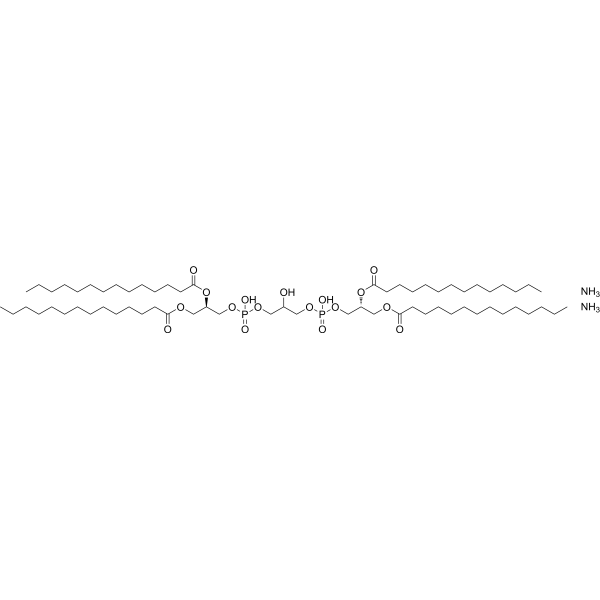
Synonyms: TMCL diammonium
Target:  

Liposome

Research Areas:  

Others

Tetramyristoylcardiolipin (TMCL) is an anionic lipid. Tetramyristoylcardiolipin can be used to study cell membrane function and drug delivery .
loading...
    loading...
Cat. No.: HY-W440985
CAS No.: 208757-51-1
Synonyms: 1,2-dilauroyl-sn-glycero-3-phospho-L-serine
Target:  

Liposome

Research Areas:  

Cancer

DLPS is an anionic phospholipid with lauric acid tails (12:0) and contains a carboxylic acid (COOH) and amine (NH2) in their head group. It has been used in the preparation of lipid-mixing vesicles, liposome, or artificial membrane. Due to the medium size of fatty acid chain, DLPS is used to form thinner membranes/walls.
loading...
    loading...
Cat. No.: HY-P10536
CAS No.: 1802175-40-1
Target:  

Bacterial

Research Areas:  

Infection

Temporin SHF is a broad-spectrum antimicrobial peptide that is active against Gram-positive and Gram-negative bacteria and yeasts, but does not have hemolytic activity. Temporin SHF disrupts the acyl chain stacking of anionic lipid bilayers, leading to cracks and disintegration of microbial membranes. Temporin SHF can be used in the development of antimicrobial drugs .
loading...
    loading...
Cat. No.: HY-142982
CAS No.: 81490-05-3
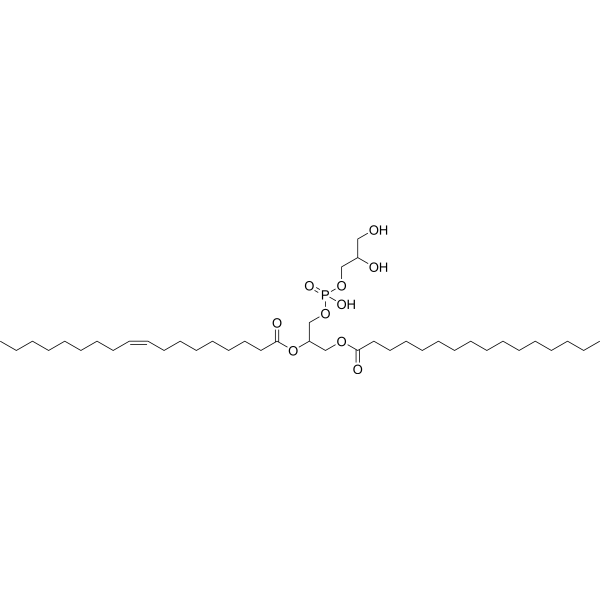
Palmitoyloleoylphosphatidylglycerol is an anionic surfactant lipid. Palmitoyloleoylphosphatidylglycerol suppresses Der p 2-stimulated inflammatory responses in lung epithelial cells and macrophages .
loading...
    loading...
Cat. No.: HY-W339758
CAS No.: 321883-64-1
Synonyms: 1,2-Didecanoyl-sn-glycero-3-phosphate sodium
10:0 PA (1,2-Didecanoyl-sn-glycero-3-phosphate) sodium is an anionic lipid that can be used to prepare nanoemulsions to improve the oral bioavailability of Etoposide (HY-13629) .
loading...
    loading...
Cat. No.: HY-P11353
CAS No.: 117138-19-9
Research Areas:  

Infection Cancer

HA2 peptide is a potent pH-responsive fusion peptide derived from hemagglutinin (HA), corresponding to the N-terminal fusion peptide domain consisting of 23 amino acid residues of HIV-1 gp41 envelope glycoprotein. HA2 peptide adopts a random coil structure under physiological pH conditions; in acidic endosomes, protonation of carboxyl groups reduces negative charge, inducing a transition to an α-helical conformation that can fuse with and destabilize the endosomal membrane. After binding to membranes, the N-terminal and middle regions of HA2 peptide mainly adopt a β-strand conformation, while the C-terminal region remains unstructured. HA2 peptide induces lipid mixing and promotes aqueous content leakage from large unilamellar vesicles whose lipid composition matches that of HIV-1 viruses and target T cells. HA2 peptide is anionic and can bind to cationic peptides to achieve siRNA condensation. HA2 peptide can be used in studies related to cancer and human immunodeficiency virus (HIV) infection .
loading...
    loading...
Cat. No.: HY-111915R
CAS No.: 108392-02-5
Synonyms: 18:1 PA sodium salt (Standard)
Research Areas:  

Cancer

1,2-Dioleoyl-sn-glycero-3-phosphate sodium salt (Standard) is the analytical standard of 1,2-Dioleoyl-sn-glycero-3-phosphate (sodium salt) (HY-111915). This product is intended for research and analytical applications. 1,2-Dioleoyl-sn-glycero-3-phosphate sodium salt (18:1 PA sodium salt) is an anionic lipid that can be used to prepare liposomes, micelles and artificial membranes .
loading...
    loading...
Cat. No.: HY-185588
Research Areas:  

Others

Anionic Liposomes (DOPG, 10mM) is a Phosphatidylglycerol (PG)-based-100% DOPG formulation. Anionic Liposomes (DOPG, 10mM) can be used for drug delivery and lipid-protein interactions.
loading...
    loading...
Cat. No.: HY-185587
Target:  

Liposome

Research Areas:  

Others

Anionic Liposomes (DOPG:DOPC (90:10 molar ratio, 10 mM)) is a type of artificial lipid vesicle with strong negative charge (Liposome), composed of 90% DOPG (HY-142980) and 10% DOPC. DOPG is a phosphatidylglycerol composed of unsaturated fatty acids (oleoyl groups), providing negative charges and membrane fluidity. DOPC acts as a neutral matrix lipid, mainly used to maintain the integrity and appropriate fluidity of the lipid bilayer, and does not change the net charge itself.
loading...
    loading...
Cat. No.: HY-L251
95 compounds

Ionizable lipids are a class of specialized, functional lipid molecules with pH-sensitive charge characteristics. They are primarily divided into two major categories: ionizable cationic lipids and ionizable anionic lipids, though the term typically specifies ionizable cationic lipids within the biomedical field. Structurally, these lipids consist of an ionizable hydrophilic headgroup, a biodegradable linker, and hydrophobic tails. Their primary application is serving as the key delivery vehicle in lipid nanoparticles (LNPs) to encapsulate negatively charged nucleic acid macromolecules, such as mRNA vaccines, siRNA therapeutics, and CRISPR gene-editing components. In a physiological, neutral environment, they remain electrically neutral to minimize systemic toxicity and prolong circulation time. Upon entering the acidic microenvironment of cellular endosomes, however, they undergo protonation to become positively charged, thereby inducing membrane fusion and enabling the highly efficient intracellular release of the nucleic acid cargo. Consequently, they serve as the technological cornerstone for bringing nucleic acid therapies into clinical application.

To accelerate the translational process of cutting-edge nucleic acid drugs, MCE has meticulously constructed an ionizable lipid compound library containing 95 high-performance molecules, aiming to provide researchers and pharmaceutical professionals with a high-throughput, multi-dimensional lipid screening platform.

