1. Search Result
Search Result
Results for "

biological test

" in MedChemExpress (MCE) Product Catalog:

16

Inhibitors & Agonists

4

Biochemical Assay Reagents

1

Peptides

3

Natural
Products

1

Isotope-Labeled Compounds

Cat. No. Product Name Target Research Areas Chemical Structure
  • HY-N6771
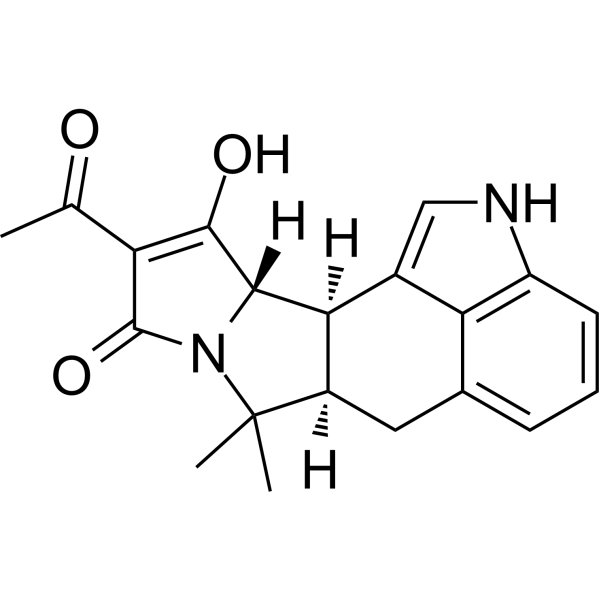
    Cyclopiazonic acid
    5+ Cited Publications

    Calcium Channel 5-HT Receptor MDM-2/p53 Apoptosis RSV Infection
    Cyclopiazonic acid is an endoplasmic reticulum calcium ATPase (ECAs) inhibitor and human respiratory syncytial virus (RSV) inhibitor (EC50 value of 4.13 μ M), which can reduce the antagonistic effect of 5-HT receptors in rat thoracic aorta, induce p53 dependent cell apoptosis and reproductive toxicity in mouse testes, and inhibit the biological activation of aflatoxin B [1][4][5].
    Cyclopiazonic acid
  • HY-W034953
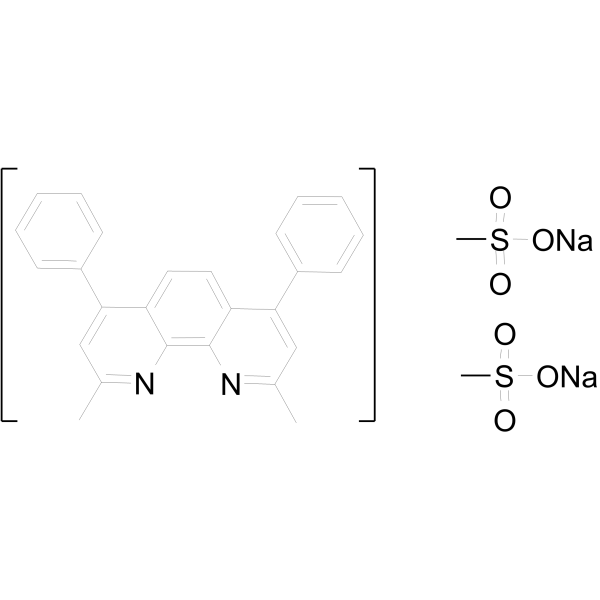
    Bathocuproine disulfonate disodium
    2 Publications Verification

    Biochemical Assay Reagents Others
    Bathocuproine disulfonate disodium (BCS) is an organic compound used as a highly sensitive colorimetric reagent for copper ions in biochemical and analytical applications. It has a bright yellow color and absorbs light at specific wavelengths, so it can be used to detect and quantify trace copper. In biochemical applications, BCS is commonly used to study the role of copper ions in various biological processes. Copper is an essential nutrient for many organisms, but it can also be toxic in high concentrations, so accurate measurement of copper levels is important to understand its impact on living systems. In terms of analysis, BCS is often used in environmental monitoring and water quality testing to detect copper pollution. It can detect copper even at very low concentrations, making it an invaluable tool for identifying potential sources of pollution and assessing the impact of industrial activities on aquatic ecosystems.
    Bathocuproine disulfonate disodium
  • HY-114362

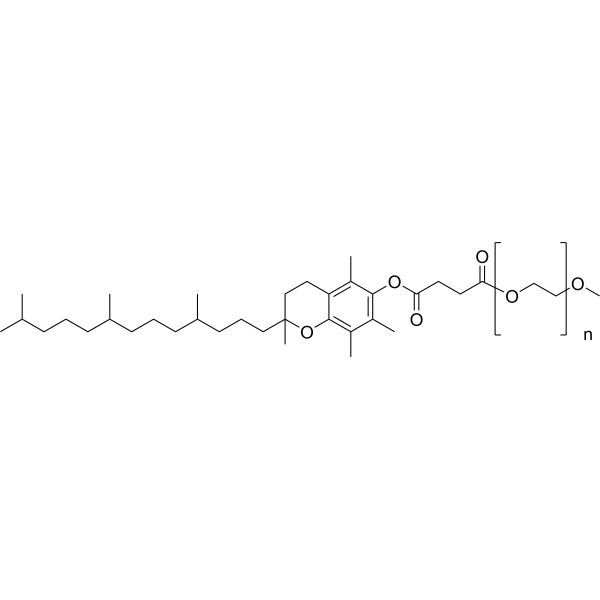
    TPGS-750-M

    Biochemical Assay Reagents Others
    DL-alpha-Tocopherol methoxypolyethylene glycol succinate (TPGS-750-M) is an amphiphile, acts as a surfactant. DL-alpha-Tocopherol methoxypolyethylene glycol succinate has a positive effect on Suzuki-Miyaura cross coupling. DL-alpha-Tocopherol methoxypolyethylene glycol succinate increases the styrene titer. DL-alpha-Tocopherol methoxypolyethylene glycol succinate is used in the stability test of NPYM-modified drugs in biological fluids .
    DL-alpha-Tocopherol methoxypolyethylene glycol succinate
  • HY-Y1083H

    Salt of lemery, 99%

    Biochemical Assay Reagents Others
    Potassium sulfate, 99% (Salt of lemery, 99%) can be used in biochemical tests for serum proteins, the determination of blood potassium and other potassium salts, and the preparation of protein capillary electrophoresis buffers. Potassium sulfate, 99% is a kind of biological materials or organic compounds that are widely used in life science research .
    Potassium sulfate, 99%
  • HY-131335

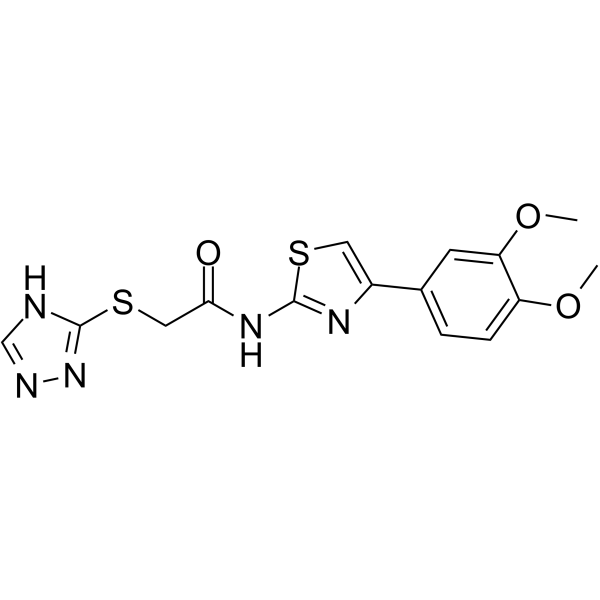
    p38 MAPK Inflammation/Immunology
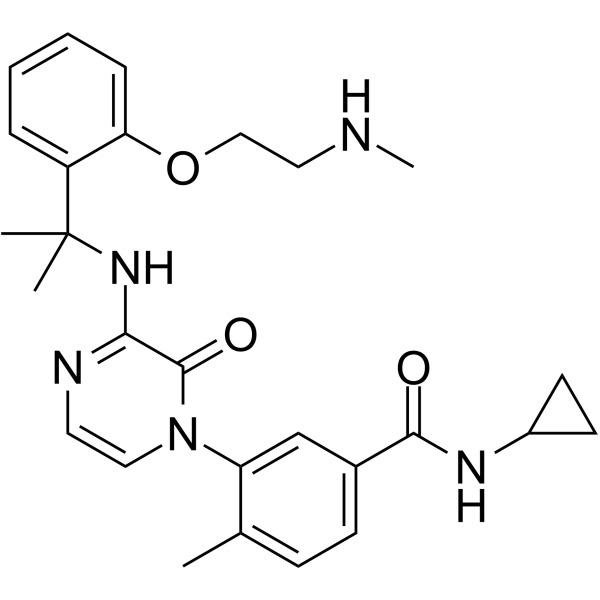
    p38α inhibitor 2 is a highly potent and selective p38α MAPK inhibitor, with a pIC50 of 9.6. p38α inhibitor 2 inhibits the hERG ion channel (IC50=27 μM) and shows a promising selectivity profile when tested in a panel of 51 other protein kinases (<30% inhibition at 10 μM concentration) and a panel of 141 other biological targets .
    p38α inhibitor 2
  • HY-W193844

    ZINC13684400

    GPR65 Inflammation/Immunology
    MLS001006105 (ZINC13684400) is a GPR65 allosteric agonist. MLS001006105 displays GPR65 allosteric agonist activity at pH 8.40 but not at lower pH .
    MLS001006105
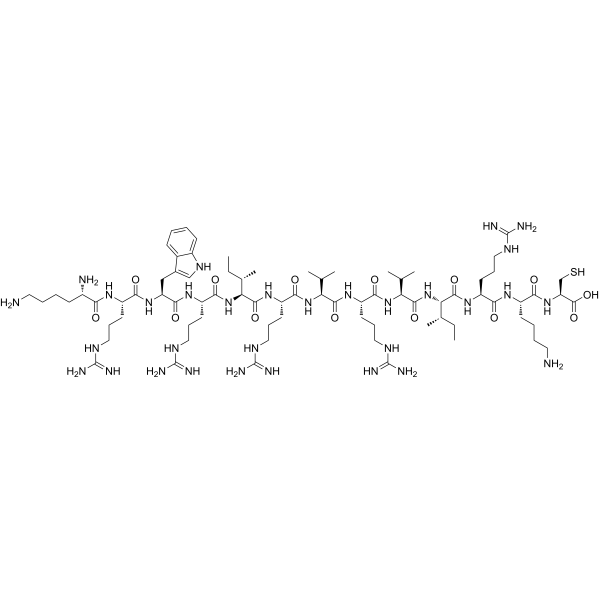
  • HY-P5486

    Bacterial Others
    Tet-20 is a biological active peptide. (Tet-20, is a synthetic cathelicidin-derived peptide. It was tested as infection-resistant coating for medical devices. When tethered on an implant surface Tet-20 exhibited broad antimicrobial activities both in vivo and in vitro. It can stop biofilm formation and appears to be non-toxic to eukaryotic cells)
    Tet-20
  • HY-W714137

    Lesquerellin; 6-Methylthiohexyl isothiocyanate

    Bacterial Infection
    (6-Isothiocyanatohexyl)(methyl)sulfane (Lesquerellin; 6-Methylthiohexyl isothiocyanate) is an isothiocyanate found in wasabi (W. japonica) and has various biological activities. (6-Isothiocyanatohexyl)(methyl)sulfane is active against the bacterium Bacillus subtilis and the fungus T. mentagrophytes (MIC=25 μg/mL). (6-Isothiocyanatohexyl)(methyl)sulfane also has anthelmintic activity against blue mussel (M. edulis). (6-Isothiocyanatohexyl)(methyl)sulfane has antifouling activity when applied to polyvinyl chloride (PVC) panels at a concentration of 50 μmol/cm2 in a conventional immersion test.
    (6-Isothiocyanatohexyl)(methyl)sulfane
  • HY-Y1083C

    Salt of lemery, for cell culture

    Biochemical Assay Reagents Others
    Potassium sulfate, for cell culture (Salt of lemery, for cell culture) can be used in biochemical tests for serum proteins, the determination of blood potassium and other potassium salts, and the preparation of protein capillary electrophoresis buffers. Potassium sulfate, for cell culture is a kind of biological materials or organic compounds that are widely used in life science research .
    Potassium sulfate, for cell culture
  • HY-W391625

    (Rac)-Epiligulyl oxide

    Fungal Cancer
    (Rac)-Dehydrocostus Lactone ((Rac)-Epiligulyl oxide) is a natural product with antiparasitic activity. (Rac)-Dehydrocostus Lactone can significantly inhibit the growth of Trypanosoma brucei rhodesiense. (Rac)-Dehydrocostus Lactone exhibits a broad spectrum of biological effects, including anti-inflammatory, anticancer, antiviral and antimicrobial activities. (Rac)-Dehydrocostus Lactone also has antifungal, antioxidant, antidiabetic, antiulcer and antihelminthic effects. (Rac)-Dehydrocostus Lactone exhibits different IC(50) values in cytotoxicity tests and has a high selectivity index .
    (Rac)-Dehydrocostus Lactone
  • HY-W040156

    Fungal Infection
    Oxadixyl is a fungicide with activity that inhibits the growth of fungi. Oxadixyl was tested during the malic fermentation of red wine, where its concentration may be affected. The biological activity of Oxadixyl helps to evaluate its effect on microorganisms during the winemaking process .
    Oxadixyl
  • HY-W040156R

    Fungal Reference Standards Infection
    Oxadixyl (Standard) is the analytical standard of Oxadixyl. This product is intended for research and analytical applications. Oxadixyl is a fungicide with activity that inhibits the growth of fungi. Oxadixyl was tested during the malic fermentation of red wine, where its concentration may be affected. The biological activity of Oxadixyl helps to evaluate its effect on microorganisms during the winemaking process .
    Oxadixyl (Standard)
  • HY-117831

    Endogenous Metabolite Bacterial Infection
    NSC-79887 is a nucleoside hydrolase (NH) inhibitor with activity against Bacillus anthracis. NSC-79887 is considered a good candidate inhibitor of nucleoside hydrolases for biological testing and further development. The pharmacokinetic (ADMET) prediction of NSC-79887 showed that all physicochemical parameters were within the acceptable range for human use .
    NSC-79887
  • HY-101040R

    Q203 (Standard); IAP6 (Standard)

    Reference Standards Bacterial Antibiotic Infection
    Oxadixyl (Standard) is the analytical standard of Oxadixyl. This product is intended for research and analytical applications. Oxadixyl is a fungicide with activity that inhibits the growth of fungi. Oxadixyl was tested during the malic fermentation of red wine, where its concentration may be affected. The biological activity of Oxadixyl helps to evaluate its effect on microorganisms during the winemaking process .
    Telacebec (Standard)
  • HY-W1123937C

    Biochemical Assay Reagents Others
    Biotin-PEG-CHO (with a molecular weight of 5000) is a biotin-attached PEG derivative that can be used for biotinylation of biological molecules or other material surfaces. Biotin can be easily detected through the biotin/streptavidin binding test, and is widely used in molecular targeted detection.
    Biotin-PEG5000-CHO
  • HY-N6771S

    Isotope-Labeled Compounds Infection
    Cyclopiazonic acid- 13C20 is the 13C-labeled Cyclopiazonic acid (HY-N6771). Cyclopiazonic acid is an endoplasmic reticulum calcium ATPase (ECAs) inhibitor and human respiratory syncytial virus (RSV) inhibitor (EC50 value of 4.13 μ M), which can reduce the antagonistic effect of 5-HT receptors in rat thoracic aorta, induce p53 dependent cell apoptosis and reproductive toxicity in mouse testes, and inhibit the biological activation of aflatoxin B .
    Cyclopiazonic acid-13C20

Inquiry Online

Your information is safe with us. * Required Fields.

Salutation


Country or Region *

Applicant Name *


Organization Name *

Department *


Email Address *


Product Name *

Cat. No.


Requested quantity *

Phone Number *


Remarks

Inquiry Online

Inquiry Information

Product Name:
Cat. No.:
Quantity:
MCE Japan Authorized Agent:

