



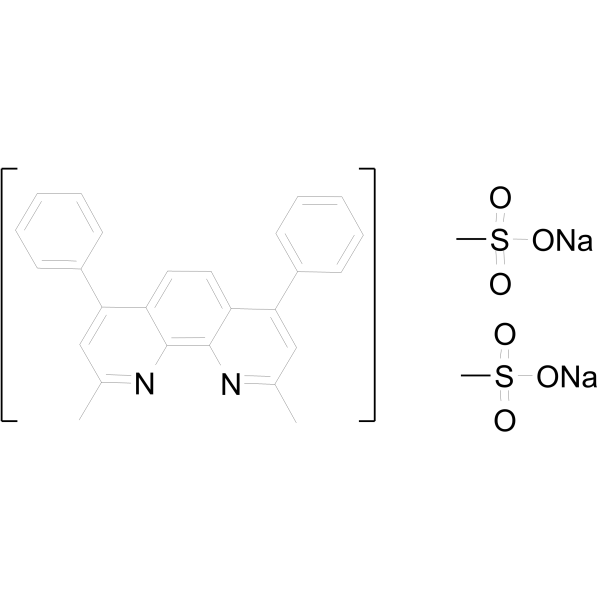
Bathocuproine disulfonate disodium
Based on 3 publication(s) in Google Scholar
Bathocuproine disulfonate disodium (BCS) is an organic compound used as a highly sensitive colorimetric reagent for copper ions in biochemical and analytical applications. It has a bright yellow color and absorbs light at specific wavelengths, so it can be used to detect and quantify trace copper. In biochemical applications, BCS is commonly used to study the role of copper ions in various biological processes. Copper is an essential nutrient for many organisms, but it can also be toxic in high concentrations, so accurate measurement of copper levels is important to understand its impact on living systems. In terms of analysis, BCS is often used in environmental monitoring and water quality testing to detect copper pollution. It can detect copper even at very low concentrations, making it an invaluable tool for identifying potential sources of pollution and assessing the impact of industrial activities on aquatic ecosystems.
For research use only. We do not sell to patients.
- Purity : 99.44%
- CAS No.: 52698-84-7
- Formula: C26H18N2Na2O6S2
- Molecular Weight:564.54
-
Storage:
4°C, protect from light, stored under nitrogen
* In solvent : -80°C, 6 months; -20°C, 1 month (protect from light, stored under nitrogen)

To place orders, for customer services and technical support, please contact: MedChemExpress USA
Tel: 609-228-6898 E-mail: [email protected] [email protected]


-
 Biological Activity
-
Chemical Information
-
Solvent & Solubility
- Purity & Documentation
-
 Help & FAQs


-
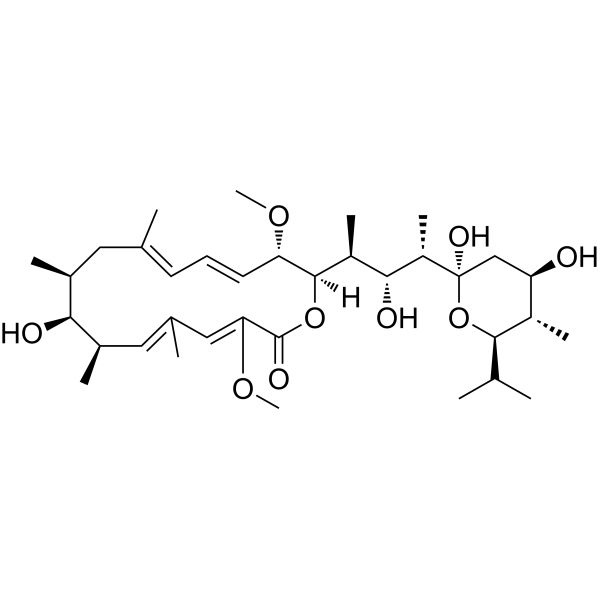
HY-100558
Bafilomycin A1V-ATPase Inhibitor -
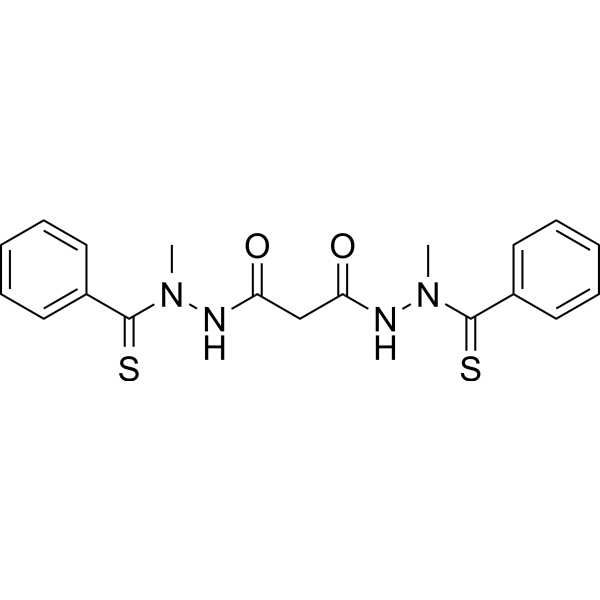
HY-12040
ElesclomolCuproptosis Inducer -
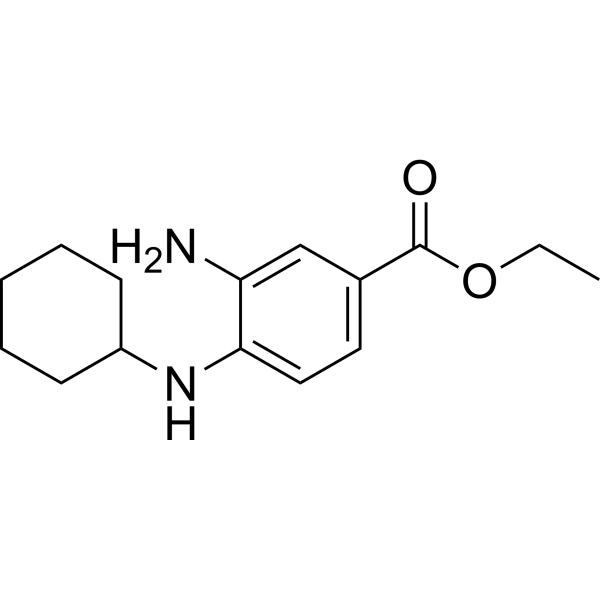
HY-100579
Ferrostatin-1Ferroptosis Inhibitor -
HY-B0215
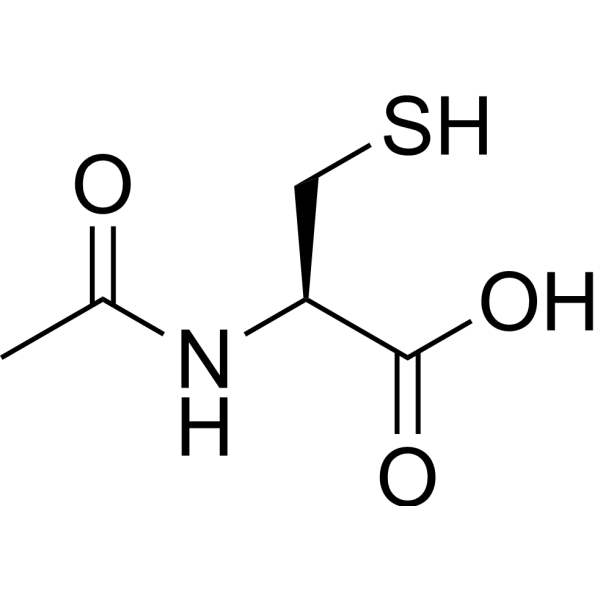
AcetylcysteineMucolytic Agent -
HY-16658B
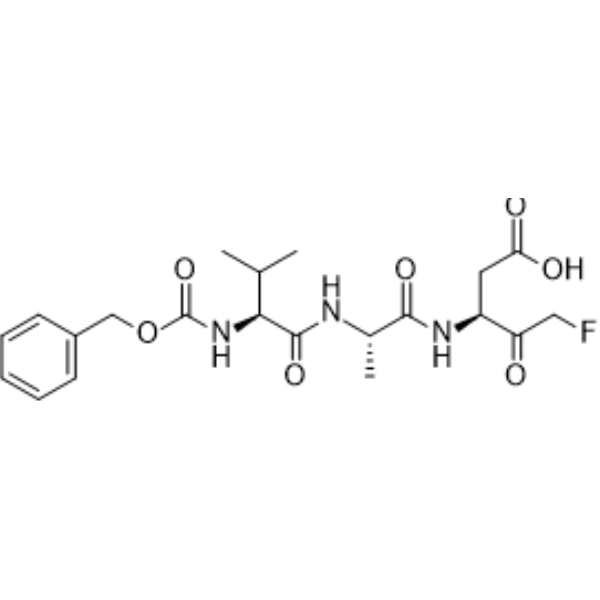
Z-VAD-FMKPan-Caspase Inhibitor -

HY-Y1878
Copper(Ⅱ) sulfateBiochemical Reagent -
HY-13205
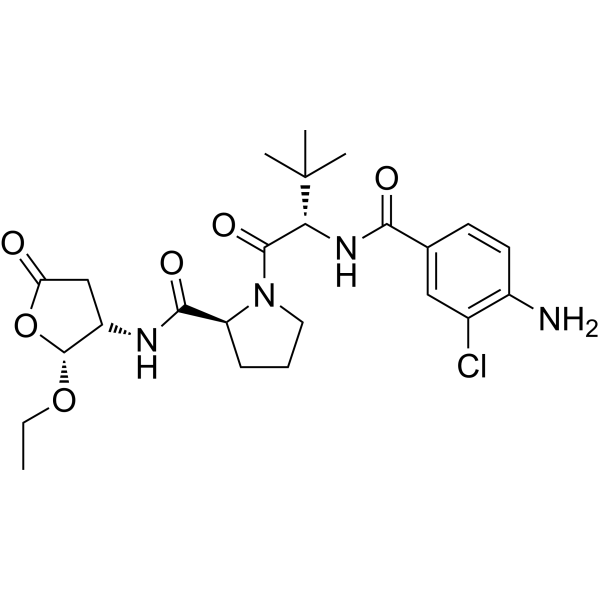
BelnacasanCaspase-1 Inhibitor -
HY-15908
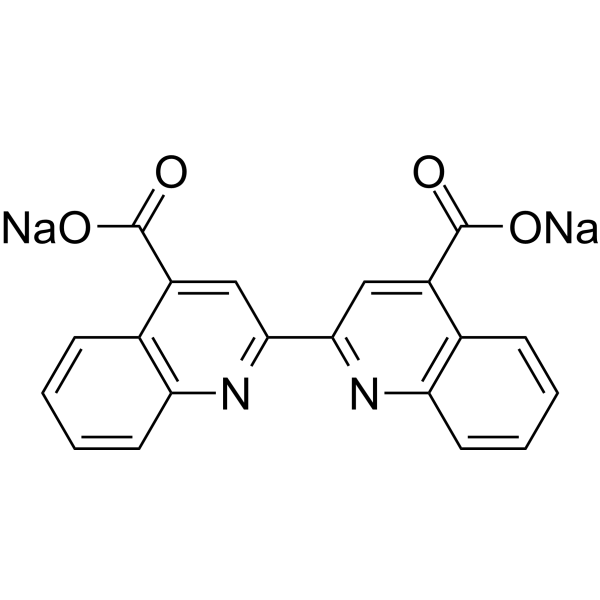
BCACu(I) Chelator -
HY-Y1841
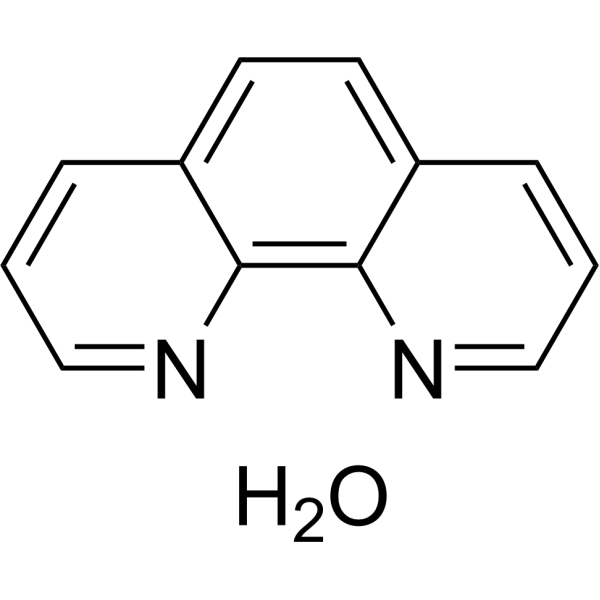
o-Phenanthroline monohydrateMMP Inhibitor -
HY-W004563
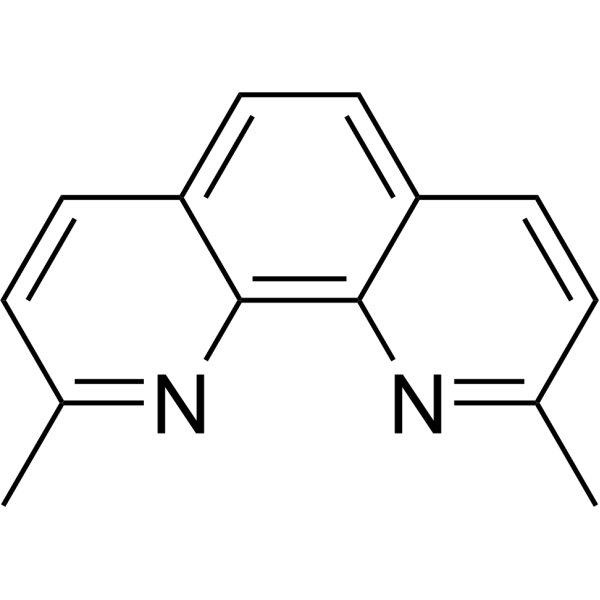
NeocuproineBiochemical Assay Reagent -

HY-D1056A1
Lipopolysaccharides, from E. coli O111:B4Endotoxin
Publications Citing Use of MedChemExpress (MCE) Bathocuproine disulfonate disodium
More Customer Validation & Images

-
Cell Proliferation/Viability Assay


Biological Activity
Description
In Vitro
Disodium bathocuproine disulfonate is a biochemical reagent that can be used as a biological material or organic compound for life science related research.
MedChemExpress (MCE) has not independently confirmed the accuracy of these methods. They are for reference only. .


Chemical Information
-
CAS No. 52698-84-7
-
Appearance Solid
-
Molecular Weight 564.54
-
Formula C26H18N2Na2O6S2
-
Color Off-white to light brown
-
SMILES
CC1=NC2=C(N=C3C)C(C(C4=CC=CC=C4)=C3)=CC=C2C(C5=CC=CC=C5)=C1.O=S(C)(O[Na])=O.O=S(C)(O[Na])=O
-
Shipping
Room temperature in continental US; may vary elsewhere.
-
Storage
4°C, protect from light, stored under nitrogen
* In solvent : -80°C, 6 months; -20°C, 1 month (protect from light, stored under nitrogen)


Publications (3)
-
Journal Impact Factor
-
Most Recent
-
-
Cell Death Dis
Endoplasmic reticulum stress related super-enhancers suppress cuproptosis via glycolysis reprogramming in lung adenocarcinoma. [Abstract]2025 Apr 19;16(1):316. PMID: 40253387 -
Fitoterapia
4, 9-dihydroxy-α-lapachone as a potent antiproliferation agent for triple-negative breast cancer via ferroptosis. [Abstract]2025 Jun:183:106567. PMID: 40280251
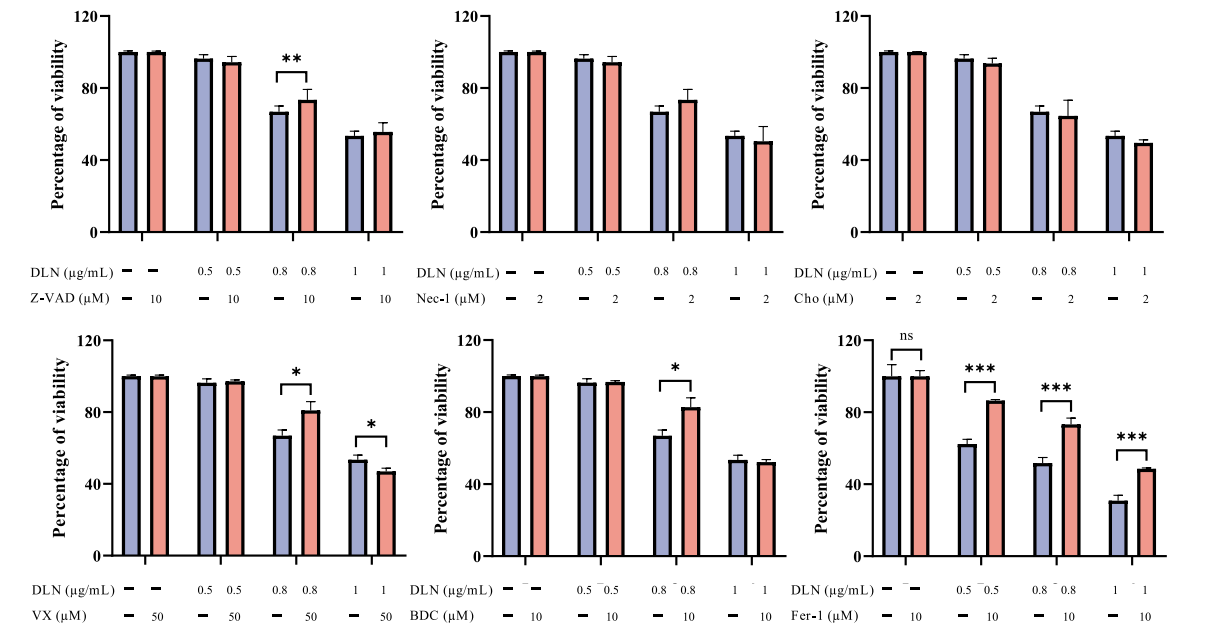
Bathocuproine disulfonate disodium purchased from MedChemExpress. Usage Cited in: Fitoterapia. 2025 Jun:183:106567. [Abstract]
Ferroptosis inhibitor could reverse the proliferation suppression of DLN on MDA-MB-231 cells. The cell viability assays of MDA-MB-231 cells treated with DLN and that combination with indicated survival pathway inhibitors for 72 h, including apoptosis inhibitor Z-VAD-FMK (10 μM), necroptosis inhibitor Necro-1 (2 μM), autophagy inhibitor Chloroquine (2 μM), pyroptosis inhibitor VX 765 (50 μM), cuproptosis inhibitor Bathocuproine disulfonate disodium (10 μM) or ferroptosis inhibitor Fer-1 (10 μM).


Solvent & Solubility
In Vitro:
H2O : 50 mg/mL (88.57 mM; Need ultrasonic)
Please refer to the solubility information to select the appropriate solvent. Once prepared, please aliquot and store the solution to prevent product inactivation from repeated freeze-thaw cycles.
Storage method and period of stock solution: -80°C, 6 months; -20°C, 1 month (protect from light, stored under nitrogen). When stored at -80°C, please use it within 6 months. When stored at -20°C, please use it within 1 month.
* Note: If you choose water as the stock solution, please dilute it to the working solution, then filter and sterilize it with a 0.22 μm filter before use.
Please refer to the solubility information to select the appropriate solvent. Once prepared, please aliquot and store the solution to prevent product inactivation from repeated freeze-thaw cycles.
Storage method and period of stock solution: -80°C, 6 months; -20°C, 1 month (protect from light, stored under nitrogen). When stored at -80°C, please use it within 6 months. When stored at -20°C, please use it within 1 month.
* Note: If you choose water as the stock solution, please dilute it to the working solution, then filter and sterilize it with a 0.22 μm filter before use.
Concentration (start) × Volume (start) = Concentration (final) × Volume (final)


Purity & Documentation
-
Data Sheet (250 KB)
-
SDS (394 KB)
- English - EN (394 KB)
- Français - FR (394 KB)
- Deutsch - DE (394 KB)
- Norwegian - NO (394 KB)
- Español - ES (394 KB)
- Swedish - SV (394 KB)
- Italian - IT (394 KB)
- Korean - KR (394 KB)
- Portuguese - PT (394 KB)
-
Handling Instructions (2659 KB)


Complete Stock Solution Preparation Table
Please refer to the solubility information to select the appropriate solvent. Once prepared, please aliquot and store the solution to prevent product inactivation from repeated freeze-thaw cycles.
Storage method and period of stock solution: -80°C, 6 months; -20°C, 1 month (protect from light, stored under nitrogen). When stored at -80°C, please use it within 6 months. When stored at -20°C, please use it within 1 month.
| Optional Solvent | Concentration Solvent Mass | 1 mg | 5 mg | 10 mg | 25 mg |
|---|---|---|---|---|---|
| H2O | 1 mM | 1.7714 mL | 8.8568 mL | 17.7135 mL | 44.2838 mL |
| 5 mM | 0.3543 mL | 1.7714 mL | 3.5427 mL | 8.8568 mL | |
| 10 mM | 0.1771 mL | 0.8857 mL | 1.7714 mL | 4.4284 mL | |
| 15 mM | 0.1181 mL | 0.5905 mL | 1.1809 mL | 2.9523 mL | |
| 20 mM | 0.0886 mL | 0.4428 mL | 0.8857 mL | 2.2142 mL | |
| 25 mM | 0.0709 mL | 0.3543 mL | 0.7085 mL | 1.7714 mL | |
| 30 mM | 0.0590 mL | 0.2952 mL | 0.5905 mL | 1.4761 mL | |
| 40 mM | 0.0443 mL | 0.2214 mL | 0.4428 mL | 1.1071 mL | |
| 50 mM | 0.0354 mL | 0.1771 mL | 0.3543 mL | 0.8857 mL | |
| 60 mM | 0.0295 mL | 0.1476 mL | 0.2952 mL | 0.7381 mL | |
| 80 mM | 0.0221 mL | 0.1107 mL | 0.2214 mL | 0.5535 mL |
* Note: If you choose water as the stock solution, please dilute it to the working solution, then filter and sterilize it with a 0.22 μm filter before use.


Bathocuproine disulfonate disodium Related Classifications
HY-W034953 Related Classifications
 Powered by Bioz