




1. Search Result
Search Result
Results for "

cathelicidin

" in MedChemExpress (MCE) Product Catalog:

20

Inhibitors & Agonists

20

Peptides

1

Recombinant Proteins

3

Antibodies

Cat. No. Product Name Target Research Areas Chemical Structure
  • HY-P1222
    LL-37, human
    Maximum Cited Publications
    6 Publications Verification

    Bacterial Infection
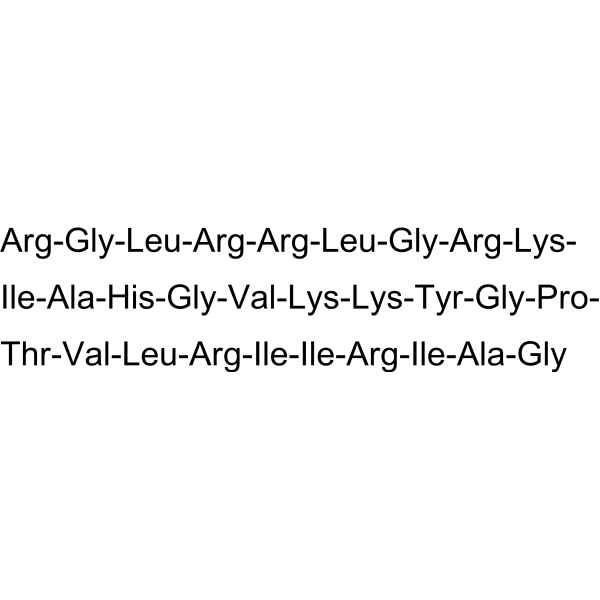
    LL-37, human is a 37-residue, amphipathic, cathelicidin-derived antimicrobial peptide, which exhibits a broad spectrum of antimicrobial activity. LL-37, human could help protect the cornea from infection and modulates wound healing .
    LL-37, human
  • HY-P1222A
    LL-37, human TFA
    Maximum Cited Publications
    6 Publications Verification

    Bacterial Infection
    LL-37, human TFA is a 37-residue, amphipathic, cathelicidin-derived antimicrobial peptide, which exhibits a broad spectrum of antimicrobial activity. LL-37, human TFA could help protect the cornea from infection and modulates wound healing .
    LL-37, human TFA
  • HY-P1222B
    LL-37, human acetate
    Maximum Cited Publications
    6 Publications Verification

    Bacterial Infection Inflammation/Immunology
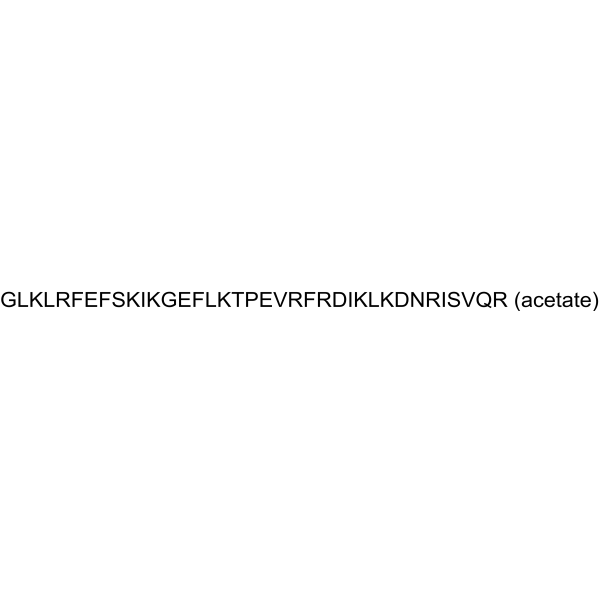
    LL-37, human acetate is a 37-residue, amphipathic, cathelicidin-derived antimicrobial peptide, which exhibits a broad spectrum of antimicrobial activity. LL-37, human acetate could help protect the cornea from infection and modulates wound healing .
    LL-37, human acetate
  • HY-P2460

    Bacterial Fungal Interleukin Related TNF Receptor Infection Inflammation/Immunology
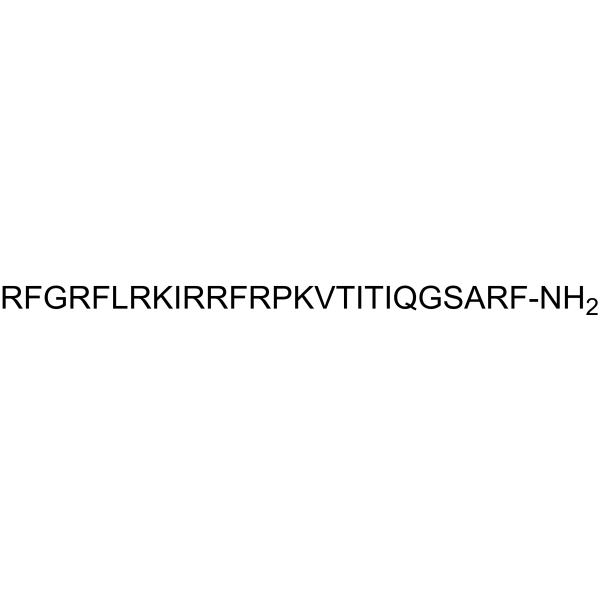
    SMAP‑29 is a cathelicidin antimicrobial peptide with LPS‑binding and anti‑inflammatory properties. SMAP‑29 exerts broad‑spectrum antimicrobial activity against bacteria, fungi and multidrug‑resistant isolates. SMAP‑29 kills pathogens by permeabilizing bacterial membranes, inducing depolarization and cell lysis, and also inhibits inflammatory cytokines while reducing lethality in septic shock and pneumonia models. SMAP-29 can be used for research on bacterial infections, drug-resistant infections, septic shock .
    SMAP-29
  • HY-P1513A

    Bacterial Infection
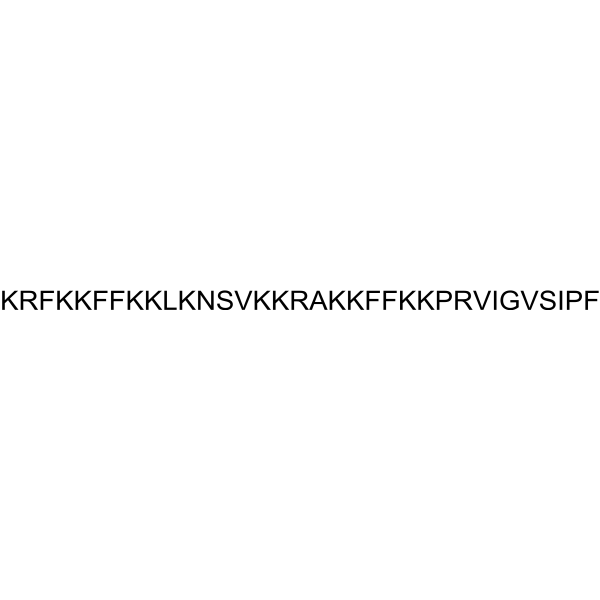
    LL-37 scrambled peptide acetate is a scrambled version of cathelicidin anti-microbial peptide LL-37. LL-37 scrambled peptide acetate can be used as a negative control of LL-37 peptide studies.
    LL-37 scrambled peptide acetate
  • HY-P5391

    Bacterial Others
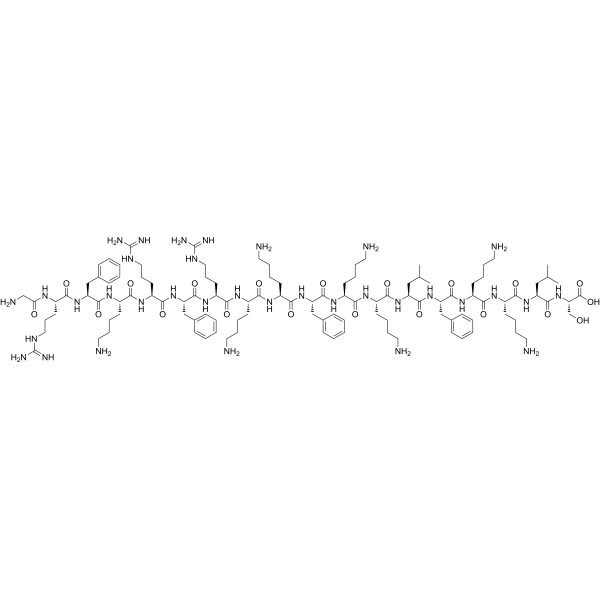
    LL-37(17-32) is a biological active peptide. (This peptide is an active segment of LL-37, a peptide derived from the C-terminal domain of human cathelicidin antimicrobial peptide. It has been reported that the LL17-32 peptide exhibits reversal effect on ABCG2-mediated multidrug resistance in cancer cell lines.)
    LL-37(17-32)
  • HY-P1884

    Bacterial Infection
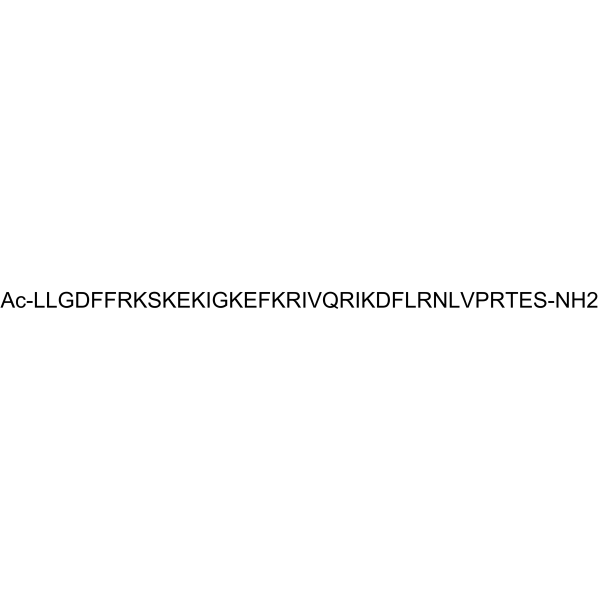
    LL-37, acetylated, amidated is a cathelicidin peptide LL-37 acetylated on the N-terminus and amidated on the C-terminus. The single human cathelicidin peptide LL-37 has antimicrobial and anti-biofilm activity against multiple Gram-positive and Gram-negative human pathogens, and has wound-healing effects on the host .
    LL-37, acetylated,amidated
  • HY-P10158

    Porcine cathelicidin PMAP-36

    Bacterial Infection
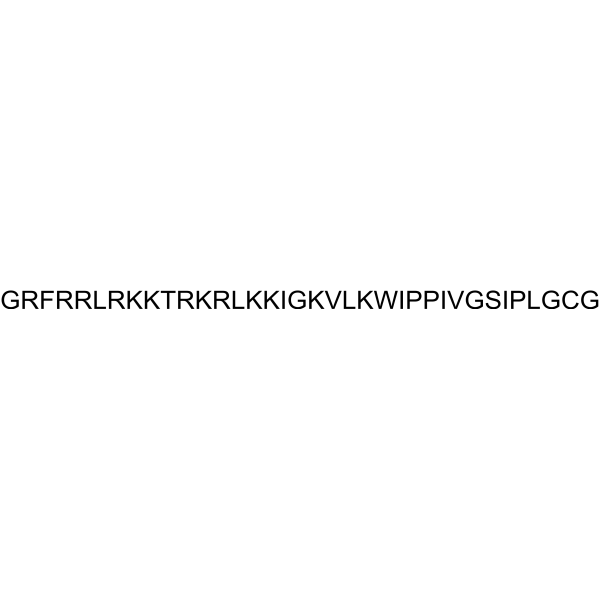
    PMAP-36 is an antimicrobial peptide, with sequence of GRFRRLRKKTRKRLKKIGKVLKWIPPIVGSIPLGCG. PMAP-36 with traditional antibiotics can enhance .
    PMAP-36
  • HY-P5486

    Bacterial Others
    Tet-20 is a biological active peptide. (Tet-20, is a synthetic cathelicidin-derived peptide. It was tested as infection-resistant coating for medical devices. When tethered on an implant surface Tet-20 exhibited broad antimicrobial activities both in vivo and in vitro. It can stop biofilm formation and appears to be non-toxic to eukaryotic cells)
    Tet-20
  • HY-P1513

    Bacterial Infection
    LL-37 scrambled peptide is a scrambled version of cathelicidin anti-microbial peptide LL-37. LL-37 scrambled peptide can be used as a negative control of LL-37 peptide studies.
    LL-37 scrambled peptide
  • HY-P4071

    cathelicidin-OH antimicrobial peptide

    Bacterial Infection
    OH-CATH is a natural antimicrobial peptide that can be isolated from the venom and tissue of Ophiophagus hannah (King Cobra) .
    OH-CATH
  • HY-P10345

    Bacterial Infection
    OP-145, an cathelicidin LL-37 derivative, is an antimicrobial peptide, and shows antibacterial activity against several MRSA strains. OP-145 can be used for research of chronic suppurative otitis media .
    OP-145
  • HY-P10160

    chCATH-2

    Bacterial Infection
    Cathelicidin-2 chicken is antimicrobial peptide. Cathelicidin-2 chicken shows potent bactericidal and fungicidal activity against chicken-specific salmonella isolates .
    Cathelicidin-2 (chicken)
  • HY-P11183

    Bacterial Toll-like Receptor (TLR) TNF Receptor Interleukin Related JNK NF-κB Infection Inflammation/Immunology
    Cathelicidin-PY is an antimicrobial peptide exhibiting strong antimicrobial property. Cathelicidin-PY inhibits the activation of TLR4 inflammatory response pathways induced by lipopolysaccharide (LPS) (HY-D1056). Cathelicidin-PY possesses strong antimicrobial and anti-inflammatory activities and low cytotoxic ability against RAW 264.7 cells. Cathelicidin-PY can be used for antimicrobial and anti-inflammatory research .
    Cathelicidin-PY
  • HY-P5057B

    Fluorescent Dye Bacterial Infection
    5-FAM-Ahx-LL-37 TFA is a 5-FAM (HY-66022) labeled LL-37, human (HY-P1222). The carboxyfluorescein group is attached via a 6-carbon spacer, 6-Aminohexanoic acid (Ahx, HY-B0236). LL-37, human is a 37-residue, amphipathic, cathelicidin-derived antimicrobial peptide, which exhibits a broad spectrum of antimicrobial activity .
    5-FAM-Ahx-LL-37 TFA
  • HY-P5446

    Bacterial Others
    BMAP-18 is a biological active peptide. (BMAP-18 is a truncated form of the antimicrobial peptide BMAP-27. Bovine myeloid antimicrobial peptide-27 (BMAP-27) belongs to the Cathelicidin family of peptides which displays rapid bactericidal activity against Staphylococcus aureus, Streptococcus uberis, and Escherichia coli. BMAP-27 is cytotoxic to human erythrocytes and neutrophils, although at higher than microbicidal concentrations. BMAP-18 displays much higher cell selectivity as compared to parental BMAP-27 because of its decreased hemolytic activity and retained antimicrobial activity.)
    BMAP-18
  • HY-P10431

    Sea snake cathelicidin

    Bacterial Infection Inflammation/Immunology
    Hc-CATH (Sea snake cathelicidin) is an antibacterial peptide with broad-spectrum. Hc-CATH inhibits Shigella dysenteriae and Klebsiella pneumoniae with MIC of 0.16 mM-20.67 mM. Hc-CATH exhibits anti-inflammatory efficacy .
    Hc-CATH
  • HY-P2457

    Bacterial Infection Inflammation/Immunology
    rCRAMP (rat) is the rat cathelin-related antimicrobial peptide. rCRAMP (rat) contributes to the antibacterial activity in rat brain peptide/protein extracts. rCRAMP (rat) is a potential key player in the innate immune system of rat CNS .
    rCRAMP (rat)
  • HY-P11242

    Bacterial NF-κB p38 MAPK JNK ERK TNF Receptor Interleukin Related Infection
    Cm-CATH2 is an antimicrobial peptide discovered from Chelonia mydas. Cm-CATH2 has a potent, broad-spectrum and rapid bactericidal ability by rapidly destroying the integrity of bacterial cell membranes. It shows strong activity against Gram-positive bacteria (such as VREF, Staphylococcus aureus), Gram-negative bacteria (such as Escherichia coli, Klebsiella pneumoniae), and fungi (such as Candida albicans) with MICs ranges from 1.17 to 18.75 μg/mL. Cm-CATH2 is also effective against various aquatic pathogenic bacteria. Cm-CATH2 not only inhibits biofilm formation but can also remove the formed biofilms. Cm-CATH2 has immunomodulatory functions and chemotactic effects on immune cells, and can inhibit the production of pro-inflammatory cytokines by macrophages stimulated by LPS (HY-D1056). Cm-CATH2 prevents the activation of NF-κB by inhibiting the degradation of IκBα, and also inhibits the phosphorylation of MAPK signaling pathways (p38, JNK, ERK). Cm-CATH2 demonstrates strong anti-infective ability in mouse peritonitis models and pneumonia models .
    Cm-CATH2
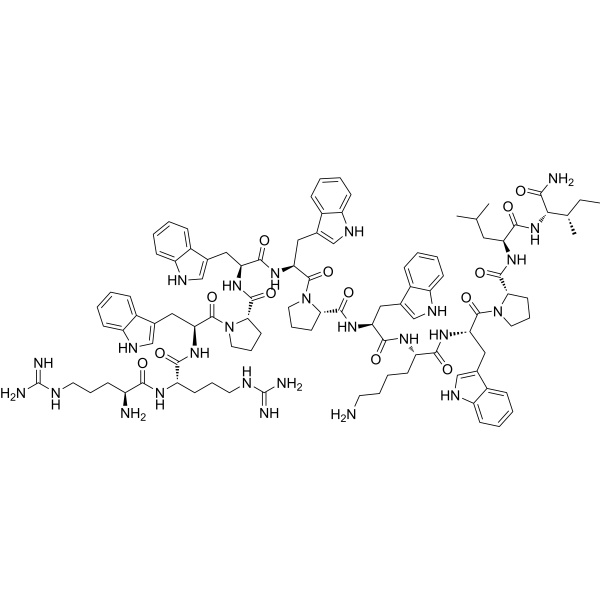
  • HY-P5483

    Bacterial Others
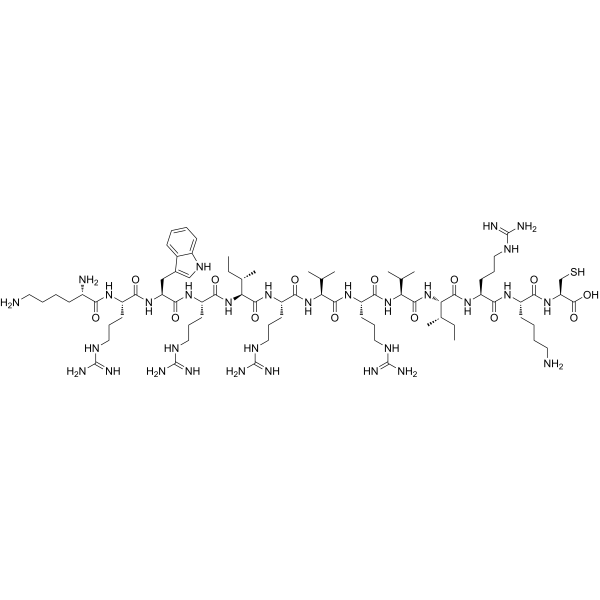
    Retro-indolicidin is a biological active peptide. (Reverse peptide of indolicidin (Rev4) is a 13-amino acid residue peptide based on the sequence of indolicidin. Indolicidin, a member of the cathelicidin protein family, is a 13-amino acid residue cationic, antimicrobial peptide-amide isolated from the cytoplasmic granules of bovine neutrophils. The synthetic peptide Rev4 has been shown to possess strong antimicrobial as well as protease inhibitory activities in vitro.)
    Retro-indolicidin

Inquiry Online

Your information is safe with us. * Required Fields.

Salutation


Country or Region *

Applicant Name *


Organization Name *

Department *


Email Address *


Product Name *

Cat. No.


Requested quantity *

Phone Number *


Remarks

Inquiry Online

Inquiry Information

Product Name:
Cat. No.:
Quantity:
MCE Japan Authorized Agent:

