16 Results for "

consumer

" in MedChemExpress (MCE) Product Catalog:
Products (16)

16 Results for "consumer" in MCE Product Catalog:

1
1 Cited Publications
Art. -Nr.: HY-W011926
CAS. Nr.: 605-45-8
Synonyms: DiPP
Target:  

Estrogen Receptor/ERR

Forschungsgebiete:  

Others

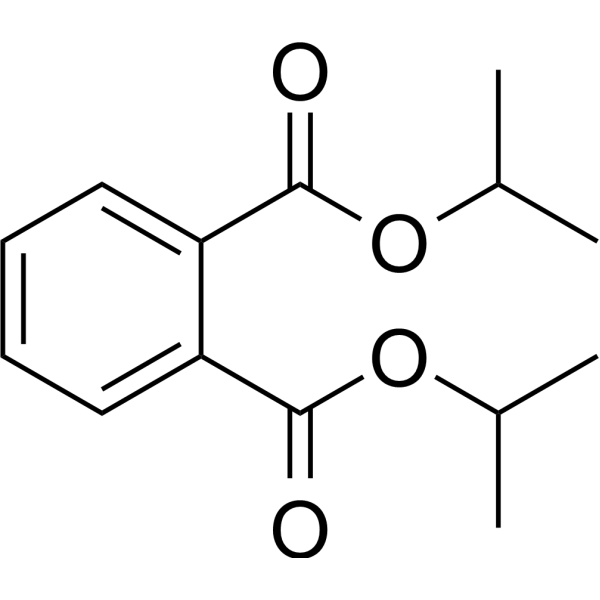
Diisopropyl phthalate (DiPP) is a phthalate diester, which is widely used as an additive in plastics and consumer products. Diisopropyl phthalate has a weak binding ability to the recombinant human estrogen receptor, with an IC50 of 41000 μM .
1
1 Cited Publications
Art. -Nr.: HY-W011927S
CAS. Nr.: 2483831-28-1
Synonyms: Bisphenol S (4,4'-Sulfonyldiphenol)-d8
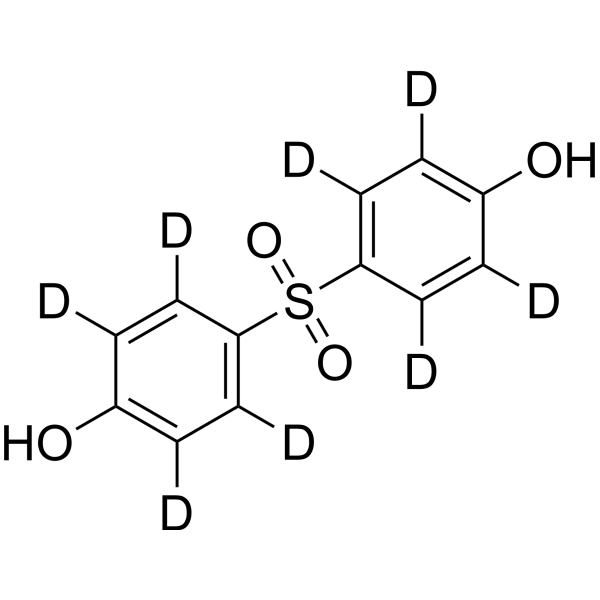
4,4'-Sulfonyldiphenol-d8 (Bisphenol S (4,4'-Sulfonyldiphenol)-d8) is the deuterium labeled 4,4'-Sulfonyldiphenol (HY-W011927).4,4'-Sulfonyldiphenol (Bisphenol S; Bis(4-hydroxyphenyl) sulfone), a substitute for Bisphenol A (HY-18260), is widely used in industrial and consumer products. 4,4'-Sulfonyldiphenol is an estrogen receptor (ER) agonist and can competitively bind to thyroid hormone receptors (TR) with IC50 values for TRα and TRβ are 2650 μM and 2294 μM respectively, thereby affecting breast development and reducing the expression of androgen receptor (AR) in fetal testes. 4,4'-Sulfonyldiphenol promotes the progression of glioblastoma by upregulating the EZH2 mediated PI3K/AKT/mTOR pathway. Under chronic exposure, 4,4'-Sulfonyldiphenol can cause significant lipid deposition and dyslipidemia in the mouse liver by upregulating JunB and Atf3, and has a role in causing obesity at low doses. 4,4'-Sulfonyldiphenol induces intestinal inflammation by altering the intestinal microbiome. 4,4'-Sulfonyldiphenol accelerates the progression of atherosclerosis in zebrafish embryo larvae.
1
1 Cited Publications
Art. -Nr.: HY-W011215
CAS. Nr.: 84-75-3
Dihexyl phthalate is one of the commonly used phthalate esters in various plastics and consumer products. Dihexyl phthalate is classified as a priority pollutant and an endocrine disruptor. Dihexyl phthalate can induce reactive oxygen species (ROS) accumulation, promote inflammation, and lead to significant increases in apoptosis and inflammation-related gene expression levels. Dihexyl phthalate can cause testicular atrophy and is a reproductive toxicant .
Art. -Nr.: HY-W017982
CAS. Nr.: 55965-84-9
Synonyms: CMI/MI
CMIT/MIT is a CMIT and MIT mixture. CMIT and MIT are powerful synthetic biocidal substances. CMIT and MIT are used as preservatives in various cosmetics and industrial products. CMIT and MIT are present in many water-soluble consumer products, such as shampoos, toothpastes. CMIT/MIT (3:1 mixture of CMIT and MIT) produces mitochondrial ROS via inhibiting mitochondrial complex I and II. CMIT/MIT (in 3:1 ratio) induces neurotoxicity through the upregulation of the MAPKs signaling pathways. CMIT/MIT can be used in the research of respiratory diseases and neuroblastoma .
Art. -Nr.: HY-W011927
CAS. Nr.: 80-09-1
Synonyms: Bisphenol S; Bis(4-hydroxyphenyl) sulfone
4,4'-Sulfonyldiphenol (Bisphenol S; Bis(4-hydroxyphenyl) sulfone), a substitute for Bisphenol A (HY-18260), is widely used in industrial and consumer products. 4,4'-Sulfonyldiphenol is an oally ative estrogen receptor (ER) agonist and can competitively bind to thyroid hormone receptors (TR) with IC50 values for TRα and TRβ are 2650 μM and 2294 μM respectively, thereby affecting breast development and reducing the expression of androgen receptor (AR) in fetal testes. 4,4'-Sulfonyldiphenol promotes the progression of glioblastoma by upregulating the EZH2 mediated PI3K/AKT/mTOR pathway. Under chronic exposure, 4,4'-Sulfonyldiphenol can cause significant lipid deposition and dyslipidemia in the mouse liver by upregulating JunB and Atf3, and has a role in causing obesity at low doses. 4,4'-Sulfonyldiphenol induces intestinal inflammation by altering the intestinal microbiome. 4,4'-Sulfonyldiphenol accelerates the progression of atherosclerosis in zebrafish embryo larvae .
Art. -Nr.: HY-B1119S
CAS. Nr.: 1020719-98-5
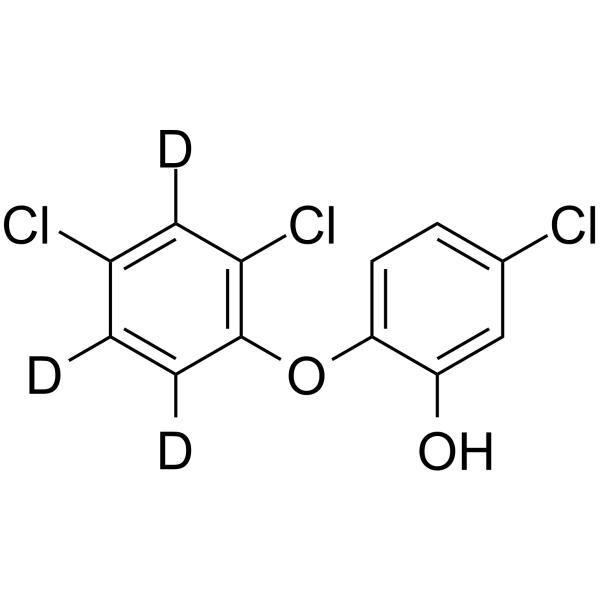
Triclosan-d3 is the deuterium labeled Triclosan. Triclosan is an antibacterial and antifungal agent found in consumer products, including soaps, detergents, toys, and surgical cleaning treatments .
Art. -Nr.: HY-W004293
CAS. Nr.: 112-70-9
Synonyms: Tridecyl Alcohol
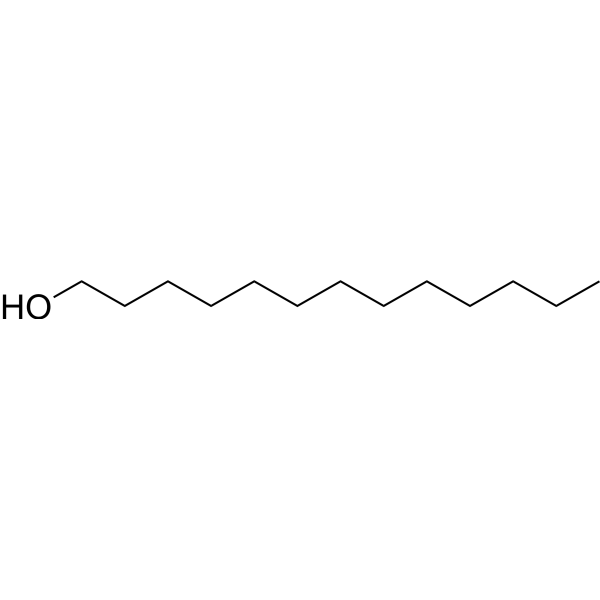
1-Tridecanol is an organic compound commonly used as a surfactant, lubricant, and stabilizer, among others. It can be used in some cleaning products, preservatives and plastic additives, and can help enhance their performance and stability. In addition, the compound is used in some industrial fields, for example in the manufacture of products such as cellulose and paints. Although the compound has no direct medical application, it plays an important role in consumer products and industrial production.
Art. -Nr.: HY-W014684
CAS. Nr.: 80-54-6
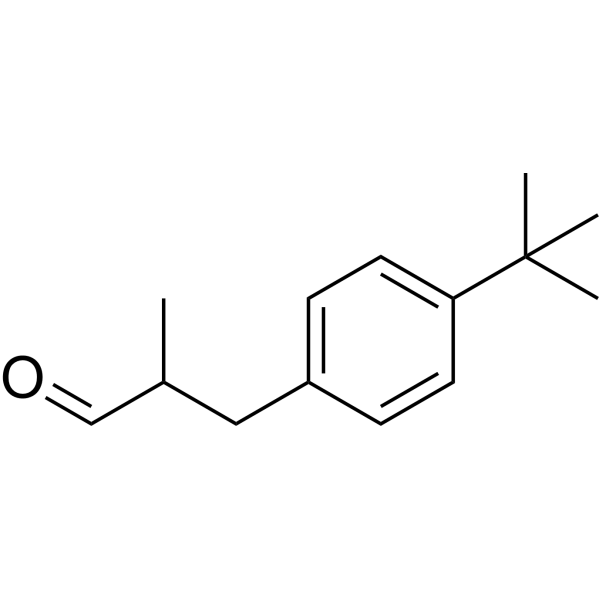
Lilial is a widely used synthetic fragrance and ester in consumer products. Lilial possesses estrogenic activity in vitro. Lilial can induce a toxic effect on mitochondria that causes a decrease in the viability of HaCaT cells. Lilial can increase NRF2 protein level in vitro. Lilial is able to target respiratory chain complexes, inhibit complexes I and II of the electron transport chain, increase the generation of reactive oxygen species, and decrease the level of intracellular ATP. Lilial can induce systemic toxicity in vivo. Lilial induces significant DNA strand breaks .
Art. -Nr.: HY-W105318
CAS. Nr.: 608-71-9
Synonyms: PBP
Target:  

TGF-beta/Smad Apoptosis

Forschungsgebiete:  

Cancer

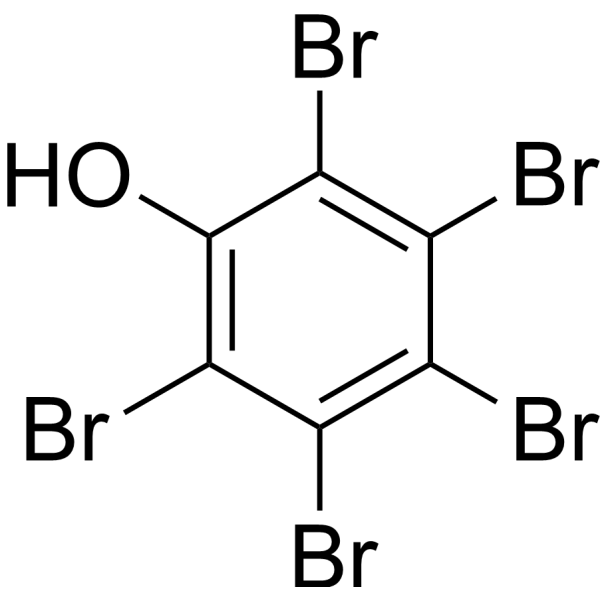
Pentabromophenol (PBP) is a brominated flame retardant (BFR) widely used in various consumer products to reduce the flammability of materials used in different utility items. Pentabromophenol can accelerate the degradation of transforming growth factor-β (TGF-β) receptors by promoting clathrin-mediated endocytosis, thereby inhibiting the TGF-β signaling pathway. Additionally, Pentabromophenol can also induce apoptosis in peripheral blood mononuclear cells (PBMCs) .
Art. -Nr.: HY-W011927R
CAS. Nr.: 80-09-1
Synonyms: Bisphenol S (Standard); Bis(4-hydroxyphenyl) sulfone (Standard)
4,4'-Sulfonyldiphenol (Bisphenol S; Bis(4-hydroxyphenyl) sulfone) (Standard) is the analytical standard of 4,4'-Sulfonyldiphenol (HY-W011927). This product is intended for research and analytical applications. 4,4'-Sulfonyldiphenol, a substitute for Bisphenol A (HY-18260), is widely used in industrial and consumer products. 4,4'-Sulfonyldiphenol is an estrogen receptor (ER) agonist and can competitively bind to thyroid hormone receptors (TR) with IC50 values for TRα and TRβ are 2650 μM and 2294 μM respectively, thereby affecting breast development and reducing the expression of androgen receptor (AR) in fetal testes. 4,4'-Sulfonyldiphenol promotes the progression of glioblastoma by upregulating the EZH2 mediated PI3K/AKT/mTOR pathway. Under chronic exposure, 4,4'-Sulfonyldiphenol can cause significant lipid deposition and dyslipidemia in the mouse liver by upregulating JunB and Atf3, and has a role in causing obesity at low doses. 4,4'-Sulfonyldiphenol induces intestinal inflammation by altering the intestinal microbiome. 4,4'-Sulfonyldiphenol accelerates the progression of atherosclerosis in zebrafish embryo larvae.
Art. -Nr.: HY-W011926S
CAS. Nr.: 2708282-44-2
Synonyms: DiPP-d4
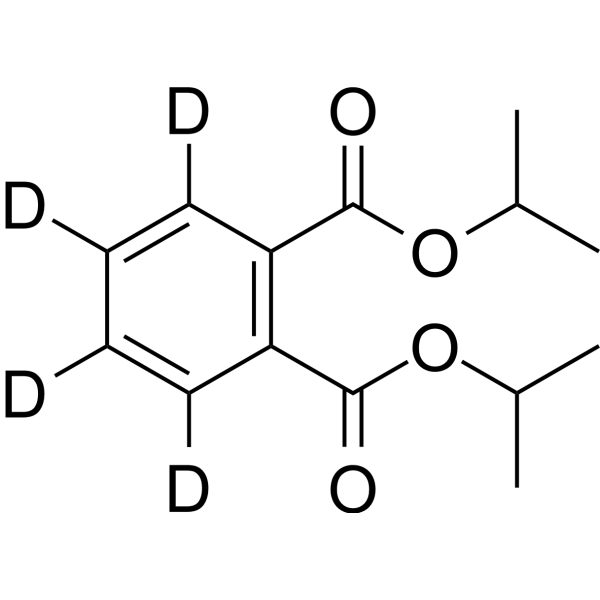
Diisopropyl phthalate-d4 (DiPP-d4) is the deuterium labeled Diisopropyl Phthalate (HY-W011926). Diisopropyl phthalate (DiPP) is a phthalate diester, which is widely used as an additive in plastics and consumer products. Diisopropyl phthalate has a weak binding ability to the recombinant human estrogen receptor, with an IC50 of 41000 μM .
Art. -Nr.: HY-W011215S
CAS. Nr.: 1015854-55-3
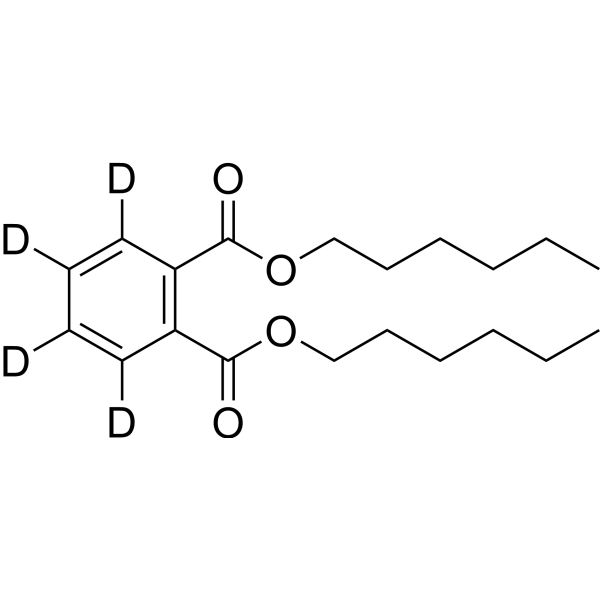
Dihexyl phthalate-3,4,5,6-d4 is the deuterium labeled Dihexyl phthalate-3,4,5,6. Dihexyl phthalate (HY-W011215) is one of the commonly used phthalate esters in various plastics and consumer products. Dihexyl phthalate is classified as a priority pollutant and an endocrine disruptor. Dihexyl phthalate can induce reactive oxygen species (ROS) accumulation, promote inflammation, and lead to significant increases in apoptosis and inflammation-related gene expression levels. Dihexyl phthalate can cause testicular atrophy and is a reproductive toxicant .
Art. -Nr.: HY-W014684R
CAS. Nr.: 80-54-6
Lilial (Standard) is the analytical standard of Lilial. This product is intended for research and analytical applications. Lilial is a widely used synthetic fragrance and ester in consumer products. Lilial possesses estrogenic activity in vitro. Lilial can induce a toxic effect on mitochondria that causes a decrease in the viability of HaCaT cells. Lilial can increase NRF2 protein level in vitro. Lilial is able to target respiratory chain complexes, inhibit complexes I and II of the electron transport chain, increase the generation of reactive oxygen species, and decrease the level of intracellular ATP. Lilial can induce systemic toxicity in vivo. Lilial induces significant DNA strand breaks .
Art. -Nr.: HY-W011926R
CAS. Nr.: 605-45-8
Synonyms: DiPP (Standard)
Forschungsgebiete:  

Others

Diisopropyl phthalate (Standard) (DiPP (Standard)) is the analytical standard of Diisopropyl phthalate (HY-W011926). This product is intended for research and analytical applications. Diisopropyl phthalate (DiPP) is a phthalate diester, which is widely used as an additive in plastics and consumer products. Diisopropyl phthalate has a weak binding ability to the recombinant human estrogen receptor, with an IC50 of 41000 μM .
Art. -Nr.: HY-W011215R
CAS. Nr.: 84-75-3
Dihexyl phthalate (Standard) is the analytical standard of Dihexyl phthalate (HY-W011215). This product is intended for research and analytical applications. Dihexyl phthalate is one of the commonly used phthalate esters in various plastics and consumer products. Dihexyl phthalate is classified as a priority pollutant and an endocrine disruptor. Dihexyl phthalate can induce reactive oxygen species (ROS) accumulation, promote inflammation, and lead to significant increases in apoptosis and inflammation-related gene expression levels. Dihexyl phthalate can cause testicular atrophy and is a reproductive toxicant .
Art. -Nr.: HY-L202
437 compounds

Flavor is an expression of smell and taste that is achieved through a variety of chemical processes triggered by molecules. Food flavor is an important attribute of food quality and in some cases determines consumers' food preferences. In addition to playing a key role in taste and smell, flavor molecules can also be involved in regulating metabolism and have an impact on health. In daily life, flavor molecules have absolute application value in food and spices. In scientific research, the study of flavor molecules is helpful to reveal the relationship between food intake and taste perception. Research on the combination behavior of flavor and food components can explore the retention, release and perception of flavor molecules. Most importantly, while exploring multi-sensory flavor perception, the food industry can fully mobilize the enthusiasm of researching new strategies for delicious and healthy food design.

Based on the FlavorDB database, collects and organizes 437 flavor molecules, which can be used in taste perception and other related studies.

  • 1

