41 Results for "

cyclin H

" in MedChemExpress (MCE) Product Catalog:
Products (41)

41 Results for "cyclin H" in MCE Product Catalog:

7
7 Publications Verification
Cat. No.: HY-10424
CAS No.: 802539-81-7
Purity:  99.90%
Synonyms: PHA-848125
Target:  

CDK Autophagy

Research Areas:  

Cancer

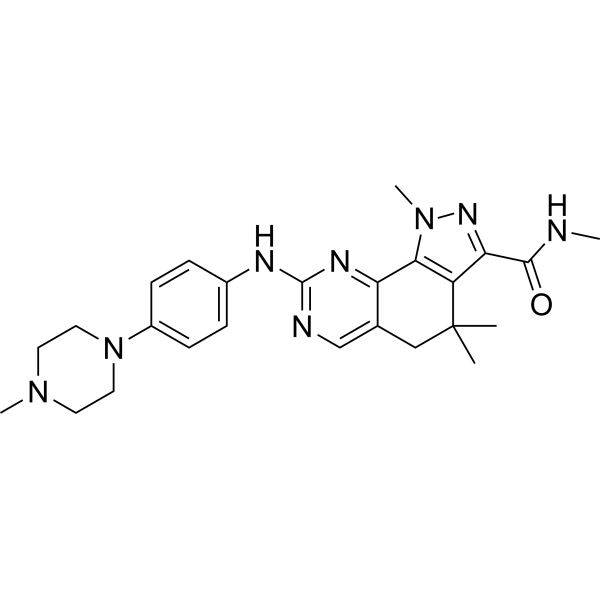
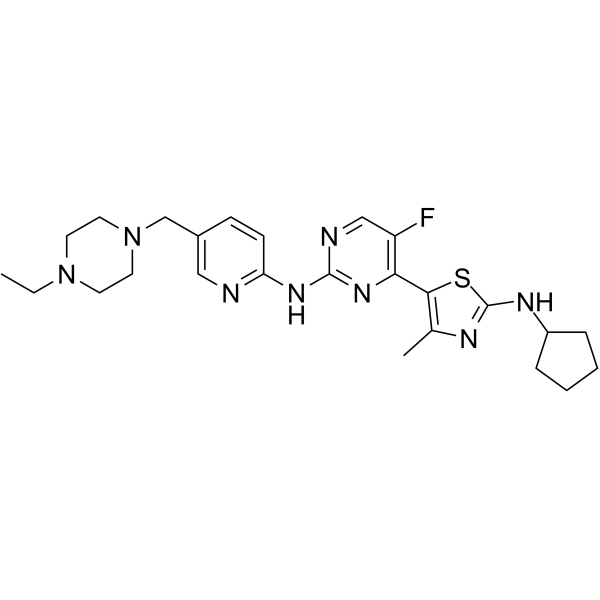
Milciclib (PHA-848125) is a potent, ATP-competitive and dual inhibitor of CDK and Tropomyosin receptor kinase (TRK), with IC50s of 45, 150, 160, 363, 398 nM and 53 nM for cyclin A/CDK2, cyclin H/CDK7, cyclin D1/CDK4, cyclin E/CDK2, cyclin B/CDK1 and TRKA, respectively.
loading...
    loading...
7
7 Publications Verification
Cat. No.: HY-11009
CAS No.: 164658-13-3
Purity:  98.90%
Target:  

CDK PKC

Research Areas:  

Cancer

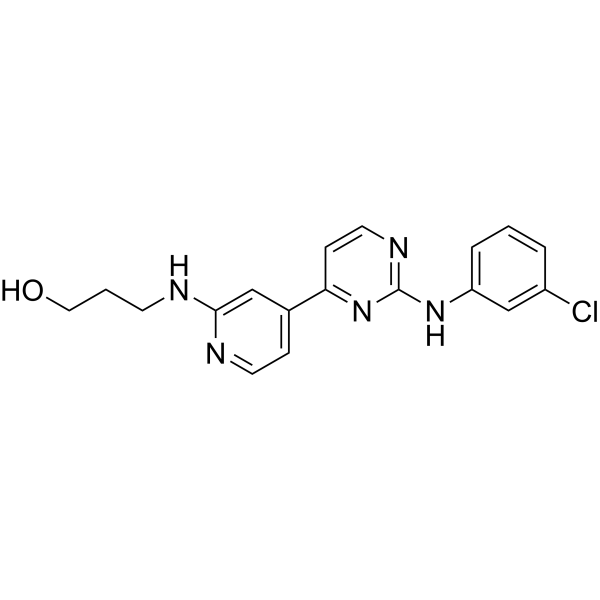
CGP60474, a highly potent anti-endotoxemic agent, is a potent cyclin-dependent kinase (CDK) inhibitor (IC50 values are 26, 3, 4, 216, 10, 200 and 13 nM for CDK1/B, CDK2/E, CDK2/A, CDK4/D, CDK5/p25, CDK7/H and CDK9/T, respectively). CGP60474 is a selective and ATP-competitive PKC inhibitor .
loading...
    loading...
7
7 Publications Verification
Cat. No.: HY-16462
CAS No.: 1263369-28-3
Target:  

CDK

Research Areas:  

Cancer

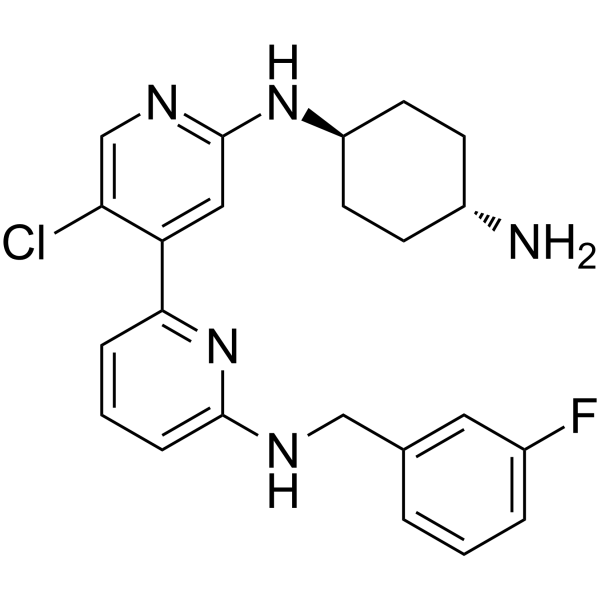
CDK9-IN-2 is a special cyclin-dependent kinase 9 (CDK9) inhibitor, extracted from patent WO/2012131594A1, compound CDKI(8), has an IC50 of 5 nM and 7 nM in H929 multiple myeloma(MM) cell line (72 hours) and A2058 skin cell line (72 hours), respectively.
loading...
    loading...
6
6 Cited Publications
Cat. No.: HY-B0366A
CAS No.: 969-33-5
Synonyms: Cyproheptadine HCl
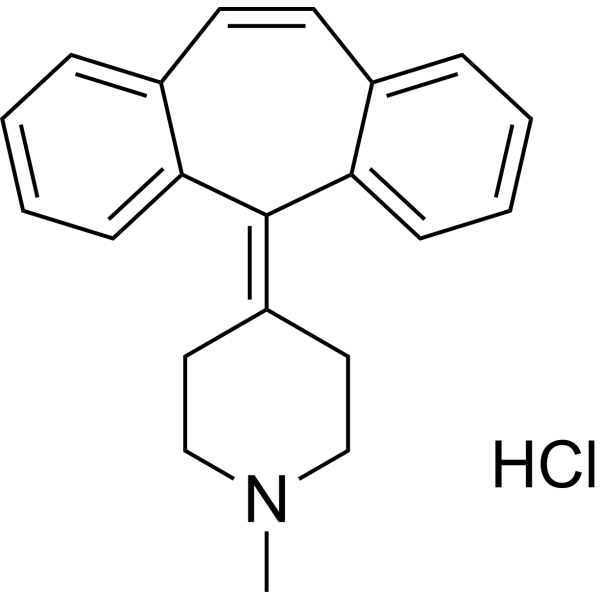
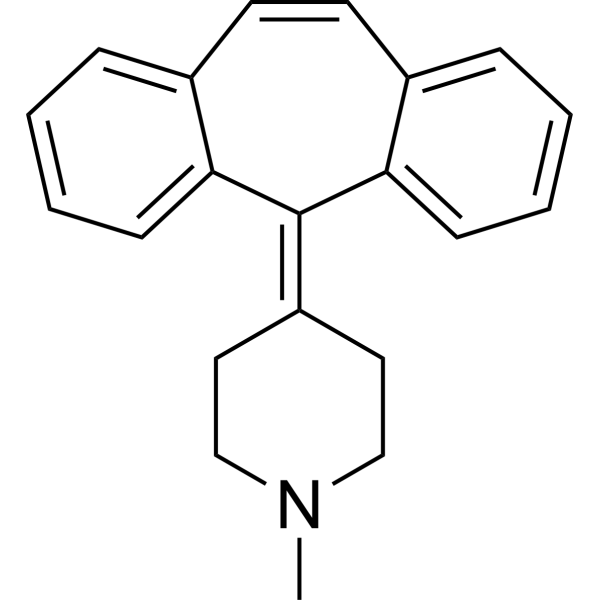
Cyproheptadine hydrochloride (Cyproheptadine HCl) acts as a p38 MAP kinase activator, CHK2 activator, histamine H1 receptor inhibitor and serotonin receptor inhibitor. Cyproheptadine hydrochloride mediates cell cycle arrest via G1 phase arrest, G1/S transition arrest, G0/G1 phase arrest, reduced expression of cyclins D1/D2/D3, upregulated expression of HBP1, p16, p21, p27, and decreased phosphorylation of retinoblastoma protein. Cyproheptadine hydrochloride induces Apoptosis by increasing PARP and cleaved PARP, as well as activating the mitochondrial caspase pathway. Cyproheptadine hydrochloride inhibits tumor growth with extremely low toxicity to normal cells. Cyproheptadine hydrochloride can be used in research related to hepatocellular carcinoma, multiple myeloma and acute myeloid leukemia .
loading...
    loading...
6
6 Cited Publications
Cat. No.: HY-B1622
CAS No.: 129-03-3
Cyproheptadine acts as a p38 MAP kinase activator, CHK2 activator, histamine H1 receptor inhibitor and serotonin receptor inhibitor. Cyproheptadine mediates cell cycle arrest via G1 phase arrest, G1/S transition arrest, G0/G1 phase arrest, reduced expression of cyclins D1/D2/D3, upregulated expression of HBP1, p16, p21, p27, and decreased phosphorylation of retinoblastoma protein. Cyproheptadine induces Apoptosis by increasing PARP and cleaved PARP, as well as activating the mitochondrial caspase pathway. Cyproheptadine inhibits tumor growth with extremely low toxicity to normal cells. Cyproheptadine can be used in research related to hepatocellular carcinoma, multiple myeloma and acute myeloid leukemia .
loading...
    loading...
6
6 Cited Publications
Cat. No.: HY-B1165
CAS No.: 41354-29-4
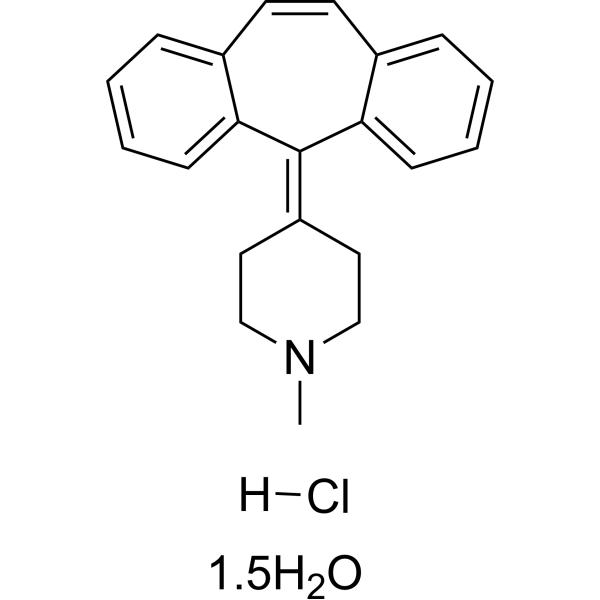
Cyproheptadine hydrochloride sesquihydrate acts as a p38 MAP kinase activator, CHK2 activator, histamine H1 receptor inhibitor and serotonin receptor inhibitor. Cyproheptadine hydrochloride sesquihydrate mediates cell cycle arrest via G1 phase arrest, G1/S transition arrest, G0/G1 phase arrest, reduced expression of cyclins D1/D2/D3, upregulated expression of HBP1, p16, p21, p27, and decreased phosphorylation of retinoblastoma protein. Cyproheptadine hydrochloride sesquihydrate induces Apoptosis by increasing PARP and cleaved PARP, as well as activating the mitochondrial caspase pathway. Cyproheptadine hydrochloride sesquihydrate inhibits tumor growth with extremely low toxicity to normal cells. Cyproheptadine hydrochloride sesquihydrate can be used in research related to hepatocellular carcinoma, multiple myeloma and acute myeloid leukemia .
loading...
    loading...
2
2 Cited Publications
Cat. No.: HY-18981
CAS No.: 5928-25-6
Synonyms: (+)-Decursin
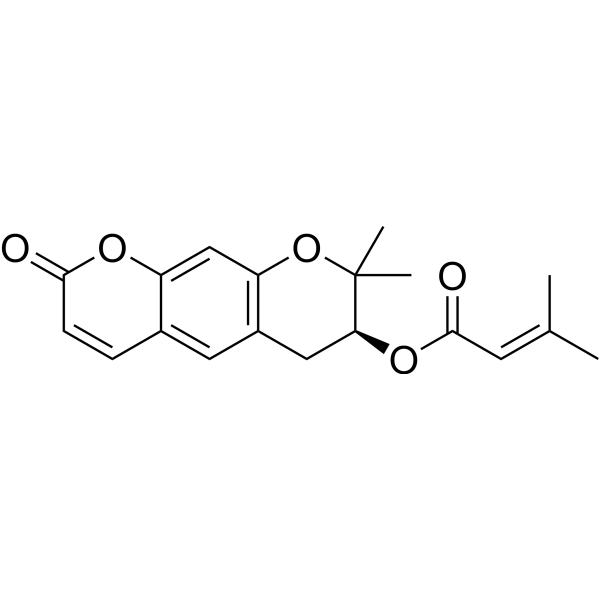
Decursin ((+)-Decursin) is a potent anti-tumor agent. Decursin also is a cytotoxic agent and a potent protein kinase C activator. Decursin induces apoptosis and cell cycle arrest at G1 phase. Decursin decreases the expression of CDK2, CDK4, CDK6, cyclin D1 protein at 48 h. Decursin inhibits cell proliferation and migration. Decursin shows anti-tumor, anti-inflammatory and analgesic activities .
loading...
    loading...
1
1 Cited Publications
Cat. No.: HY-18340
CAS No.: 294646-77-8
Synonyms: CR8, (R)-Isomer
Research Areas:  

Neurological Disease Cancer

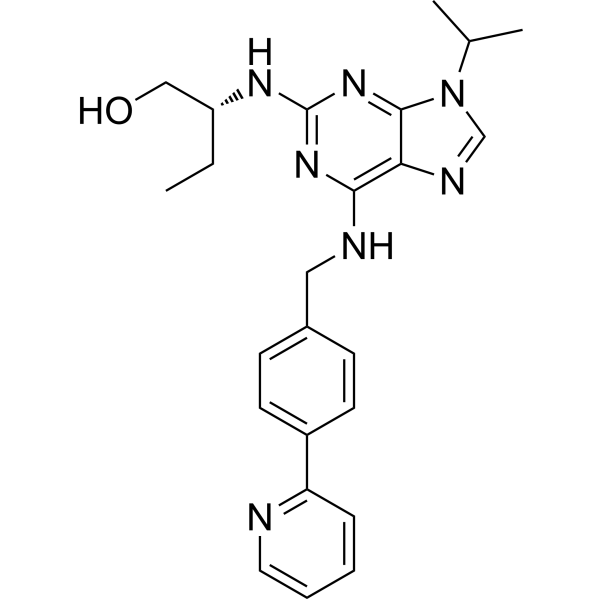
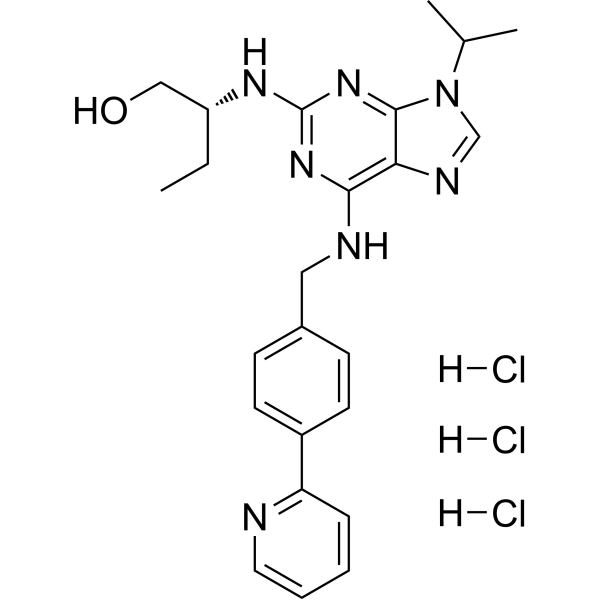
(R)-CR8, a second-generation analog of Roscovitine, is a potent CDK1/2/5/7/9 inhibitor. (R)-CR8 inhibits CDK1/cyclin B (IC50=0.09 μM), CDK2/cyclin A (0.072 μM), CDK2/cyclin E (0.041 μM), CDK5/p25 (0.11 μM), CDK7/cyclin H (1.1 μM), CDK9/cyclin T (0.18 μM) and CK1δ/ε (0.4 μM). (R)-CR8 induces apoptosis and has neuroprotective effect . (R)-CR8 acts as a molecular glue degrader that depletes cyclin K .
loading...
    loading...
1
1 Cited Publications
Cat. No.: HY-18340A
CAS No.: 1786438-30-9
Synonyms: CR8, (R)-Isomer trihydrochloride
Research Areas:  

Neurological Disease Cancer

(R)-CR8 (CR8) trihydrochloride, a second-generation analog of Roscovitine, is a potent CDK1/2/5/7/9 inhibitor. (R)-CR8 trihydrochloride inhibits CDK1/cyclin B (IC50=0.09 μM), CDK2/cyclin A (0.072 μM), CDK2/cyclin E (0.041 μM), CDK5/p25 (0.11 μM), CDK7/cyclin H (1.1 μM), CDK9/cyclin T (0.18 μM) and CK1δ/ε (0.4 μM). (R)-CR8 trihydrochloride induces apoptosis and has neuroprotective effect . (R)-CR8 trihydrochloride acts as a molecular glue degrader that depletes cyclin K .
loading...
    loading...
Cat. No.: HY-172085
CAS No.: 3099543-90-2
Research Areas:  

Cancer

SH514 is an orally active IRF4 inhibitor (IC50 = 2.63 μM). SH514 binds to the IRF4-DBD domain, thereby inhibiting the interaction of IRF4 protein with DNA (KD = 1.28 μM). SH514 can inhibit the proliferation of IRF4-high-expressing NCI-H929 and MM.1R cells, and displays no cytotoxicity for normal cells. SH514 significantly downregulates the expression of IRF4 downstream target genes concentration-dependently. SH514 inhibits the expression of cell cycle-related proteins CDC2, Cyclin B1, Cyclin D1, Cyclin E1, and CMYC in Multiple Myeloma cells. SH514 can induce DNA damage and increase the expression of γH2AX. SH514 effectively inhibits the proliferation of multiple myeloma tumors .
loading...
    loading...
Cat. No.: HY-163944
CAS No.: 3081311-94-3
LL-K12-18 is a CDK12 kinase inhibitor and a dual-site molecular glue. LL-K12-18 inhibits human CDK12 with an IC50 value of 283.9 nM, and selectively degrades cyclin K via the ubiquitin-proteasome system by stabilizing the CDK12-DDB1 complex. LL-K12-18 downregulates DNA damage response genes, reduces the phosphorylation level of CTD Ser2 in RNA polymerase II, and modulates biomarkers such as ATM, RAD51, γ-H2AX and cleaved PARP, thereby effectively inducing apoptosis and inhibiting proliferation of breast cancer cells. LL-K12-18 exhibits high target selectivity and serves as a research tool for studies on triple-negative breast cancer .
loading...
    loading...
Cat. No.: HY-112450
CAS No.: 500735-47-7
Target:  

CDK

Research Areas:  

Cancer

Olomoucine II is a potent CDK inhibitor with IC50 values of 0.06, 0.1, 0.45, 7.6, 19.8 µM for CDK9/cyclin T, CDK2/cyclin E, CDK7/cyclin H, CDK1/cyclin B, CDK4/cyclin D1, respectively. Olomoucine II shows antiproliferative activity .
loading...
    loading...
Cat. No.: HY-147409
CAS No.: 2075750-05-7
Target:  

CDK

Research Areas:  

Cancer

Ulecaciclib is an orally activitive inhibitor of cyclin-dependent kinase (CDK), with Ki values of 0.62 μM (CDK2/Cyclin A), 0.2 nM (CDK4/Cyclin D1), 3 nM (CDK6/Cyclin D3), and 0.63 μM (CDK7/Cyclin H), respectively. Ulecaciclib can cross blood brain barrier and has good pharmacokinetic characteristics .
loading...
    loading...
Cat. No.: HY-B1165R
CAS No.: 41354-29-4
Cyproheptadine hydrochloride sesquihydrate (Standard) is the analytical standard of Cyproheptadine hydrochloride sesquihydrate (HY-B1165). This product is intended for research and analytical applications. Cyproheptadine hydrochloride sesquihydrate acts as a p38 MAP kinase activator, CHK2 activator, histamine H1 receptor inhibitor and serotonin receptor inhibitor. Cyproheptadine hydrochloride sesquihydrate mediates cell cycle arrest via G1 phase arrest, G1/S transition arrest, G0/G1 phase arrest, reduced expression of cyclins D1/D2/D3, upregulated expression of HBP1, p16, p21, p27, and decreased phosphorylation of retinoblastoma protein. Cyproheptadine hydrochloride sesquihydrate induces Apoptosis by increasing PARP and cleaved PARP, as well as activating the mitochondrial caspase pathway. Cyproheptadine hydrochloride sesquihydrate inhibits tumor growth with extremely low toxicity to normal cells. Cyproheptadine hydrochloride sesquihydrate can be used in research related to hepatocellular carcinoma, multiple myeloma and acute myeloid leukemia .
loading...
    loading...
Cat. No.: HY-E70675
Target:  

CDK

Research Areas:  

Cancer

CDK20 is a major controller of cell cycle checkpoints, which regulate cell growth and proliferation and perform a role in the development of many malignancies. CDK20 is thought to have Cyclin-dependent activating kinase (CAK) activity for CDK2 when it is complexed with Cyclin H. CDK20/CycH Recombinant Human Active Protein Kinase can be used to study the function of CDK20/CycH .
loading...
    loading...
Cat. No.: HY-149261
CAS No.: 3039928-21-4
Target:  

Autophagy CDK

Research Areas:  

Cancer

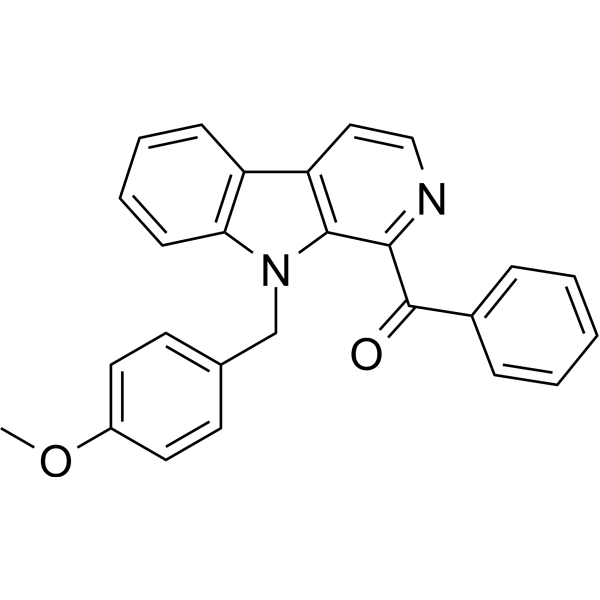
H1k, a Eudistomin Y derivative, is a lysosome-targeted antiproliferation agent. H1k increases the autophagy signal and downregulate the expression of cyclin-dependent kinase (CDK1) and cyclin B1. H1k can be used in research of cancer .
loading...
    loading...
Cat. No.: HY-10424R
CAS No.: 802539-81-7
Synonyms: PHA-848125 (Standard)
Research Areas:  

Cancer

Milciclib (Standard) is the analytical standard of Milciclib. This product is intended for research and analytical applications. Milciclib (PHA-848125) is a potent, ATP-competitive and dual inhibitor of CDK and Tropomyosin receptor kinase (TRK), with IC50s of 45, 150, 160, 363, 398 nM and 53 nM for cyclin A/CDK2, cyclin H/CDK7, cyclin D1/CDK4, cyclin E/CDK2, cyclin B/CDK1 and TRKA, respectively.
loading...
    loading...
Cat. No.: HY-E70676
Target:  

CDK

Research Areas:  

Cancer

CDK20 is a major controller of cell cycle checkpoints, which regulate cell growth and proliferation and perform a role in the development of many malignancies. CDK20 is thought to have Cyclin-dependent activating kinase (CAK) activity for CDK2 when it is complexed with Cyclin H. CDK20/CycT1 Recombinant Human Active Protein Kinase is an ortholog of CDK20 .
loading...
    loading...
Cat. No.: HY-147716
CAS No.: 2415156-27-1
Target:  

CDK

Research Areas:  

Cancer

CDK8-IN-6 (compound 9) is a potent cyclin-dependent kinase 8 (CDK8) inhibitor with an Kd of 13 nM. CDK8-IN-6 shows cytotoxicity for MOLM-13, OCI-AML3, MV4-11, NRK and H9c2 cells with IC50s of 11.2, 7.5, 8.6, 20.5, 12.5-25 µM, respectively. CDK8-IN-6 has the potential for the research of AML-cancer .
loading...
    loading...
Cat. No.: HY-18981R
CAS No.: 5928-25-6
Synonyms: (+)-Decursin (Standard)
Decursin (Standard) is the analytical standard of Decursin. This product is intended for research and analytical applications. Decursin ((+)-Decursin) is a potent anti-tumor agent. Decursin also is a cytotoxic agent and a potent protein kinase C activator. Decursin induces apoptosis and cell cycle arrest at G1 phase. Decursin decreases the expression of CDK2, CDK4, CDK6, cyclin D1 protein at 48 h. Decursin inhibits cell proliferation and migration. Decursin shows anti-tumor, anti-inflammatory and analgesic activities [4].
loading...
    loading...

